
Covid-19: Long Haul

https://www.bbc.com/news/av/world-us-canada-58918869 Some people with Long Haul Covid-19 are having to relearn how to walk and talk.

https://www.bbc.com/news/uk-england-leicestershire-59674203. Patients who were hospitalized are still affected at 5 months and one year after they are released from the hospital. Being female and obese are big risk factors. The article says “Long Covid has the potential to become highly prevalent as a new long-term condition.”

One more:

https://www.ncbi.nlm.nih.gov/pmc/articles/PMC8146298/ ” While the precise definition of long COVID may be lacking, the most common symptoms reported in many studies are fatigue and dyspnoea that last for months after acute COVID-19. Other persistent symptoms may include cognitive and mental impairments, chest and joint pains, palpitations, myalgia, smell and taste dysfunctions, cough, headache, and gastrointestinal and cardiac issues.”
“One puzzling feature of long COVID is that it affects survivors of COVID-19 at all disease severity. Studies have discovered that long COVID affects even mild-to-moderate cases and younger adults who did not require respiratory support or hospital or intensive care. Patients who were no longer positive for SARS-CoV-2 and discharged from the hospital, as well as outpatients, can also develop long COVID [24,30,31,41,50]. More concerningly, long COVID also targets children, including those who had asymptomatic COVID-19, resulting in symptoms such as dyspnoea, fatigue, myalgia, cognitive impairments, headache, palpitations, and chest pain that last for at least 6 months [51–53].”

And the symptoms? “The most common ongoing symptoms were fatigue, muscle pain, physically slowing down, poor sleep and breathlessness.”

Yes, the same as mine.

My initial evaluation of Long Haul Covid-19 patients will cover three areas:

1. Behavioral Health. Are they having brain fog, feeling slowed, feeling like they can’t think? Is that what happened during the Covid-19 or did the opposite happen? Were they manic/ADHD/OCD etc? What happened in the weeks leading up to getting sick? Any major worries or life trauma? Lose a job, a relationship, someone in the family die? I am looking for a dopamine antibody pattern.

2. Musculoskeletal Chronic Fatigue. What muscles work and which muscles don’t work? If they need to lie in bed for 20 hours a day, both slow and fast twitch muscles are affected. If they are short of breath, they should have pulmonary function tests, including a loaded and unloaded walk test. Are their oxygen saturations dropping? They also need a sleep study. Check for sleep apnea. Any signs of ongoing infection with anything? Teeth, sinuses, ears, throat, lungs, stomach, lower gut, urinary, skin.

3. Musculoskeletal Fibromyalgia. WHEN do their muscles hurt? Is it after eating? Do they fall asleep after they eat or does their blood pressure drop after eating? What diet changes have they made? Are there things they have identified that they can’t eat? Gluten, lactose, meat, sucrose, fructose, nightshades, whatever. I am looking for antibodies to lysogangliosides.

Treatment:

High antibody levels can be lowered somewhat just with “lifestyle changes” aka no drugs.

A. Treat infection if present. Look for strep A with an ASO, since we have an occult one that is in the lungs, not the throat. For fungal infection, even just on the skin, lower blood sugar as much as tolerated. This may mean a ketotic diet.

B. Treat behavioral health with drugs if emergent. If suicidal or really losing it (meaning job/relationships/whatever), then drugs may be needed. But not forever. Avoid benzodiazepines. Check for addictions.

C. Lower antibody levels:
a. Lower stress. Many people will resist this. Counseling highly recommended, ‘cept they are all swamped. Have the person draw the three circles: a day in the present life, their ideal life and then what their body wants. Listen to the body.

b. You can sweat antibodies out: hot baths, hot shower, steam room, sauna, exercise. Daily in the morning, because cortisol rises when we get up, and so levels should be lowered.

c. Is there a stimulant that works for this person to calm them down? Or an antidepressant if they are slowed instead of sped up. The relatives of dopamine that work for ME are coffee caffeine and terbutaline. Ones that do NOT work for me include albuterol and tea caffeine. Ones that I have not tried include theophylline, that new relative of albuterol and ADHD meds like adderall. This will be individual to the person because we all make different antibodies. We are looking for a drug that displaces the dopamine antibodies. For people who are slowed or have brain fog, the stimulants may not work. I would try the SSRI antidepressants first, like sertraline and citalopram, unless the patient tells me they don’t work or make them anxious. I would screen for PTSD. For high PTSD scores and high ACE scores, I would use the old tricyclics, mirtazapine (which is NOT a benzodiazepine), wellbutrin or trazodone. Again, avoid benzodiazepines. Also check how much alcohol and marijuana are on board, because those are definitely going to make brain fog worse. The functional medicine people are treating mystery patients with hyperbaric oxygen chambers and I suspect that this works for the people with blocker tubulin antibodies.

d. Muscle pain/fibromyalgia symptoms. Avoid opioids, they will only work temporarily and may addict. Avoid muscle relaxants, they will only work temporarily. Again, the tricyclics may help. The newer antiseizure drugs that are indicated for fibromyalgia are possibilities, though as an “old” doctor I am conservative about “new” drugs. Gabapentin, pregabalin, and if the person is sped up, antiseizure medicines that are used for mania. GENTLE exercise. The line between me having a good day today and overdoing is knife thin. On the overdoing days I go to bed at 5 pm. I went to sleep at 5 pm yesterday and 6:30 last night. I sang for church last night and even though I’d driven myself there, one of the quartet offered to drive me home. “Do I look that grey?” I asked. “Yes.” he said. I turn grey from fatigue and it can be sudden. Right now it’s after my second meal. If I am active, I will fall asleep after lunch if I can. If I go really light on lunch, I crash right after dinner. And remember, I am one of the lucky people who only have fast twitch muscles affected, not fast and slow twitch.

I am adding this to yesterday’s Ragtag Daily Prompt: hopeful.

My end of life plan

My End of Life Plan and Wishes are as follows:

1. My plan is that my life should end after a half day of skiing for free at age 125 or older.
2. My wish is to ski quite brilliantly, smoothly and gracefully, though not as aggressively as at age 110 and below.
3. My plan is that other skiers will ask who that brilliant skier is and that all the lift operators will know.
4. My plan is that I will have a delicious lunch, with a glass of champagne, in a condo overlooking the slopes.
5. I plan to have a hot tub and then a massage from one of the many handsome men who flirt with me.
6. My plan is that I will sit in a comfortable leather armchair with my feet on a foot stool, while three of my male friends vie to be the one to bring me the second glass of champagne.
7. My wish is that I will not need any cosmetic surgery or false eyes or ears or teeth or joints or heart valves and will retain my spleen, teeth, gall bladder, appendix and brain in full operating order.
8. My plan is that I will not be on prescriptions, medicines, vitamins, supplements, medical foods, or nutraceuticals nor under the care of any quacks of any sort.
9. My wish is that my male flirts will all think that I am not a day over 75.
10. My wish is that I will be listening to live music, a woodwind quartet or string quartet, just dropped in to say hello, along with three of my great grandchildren, showing off their olympic ski medals, summa cum laude graduation documents, or Nobel prizes.
11. My plan is that after the quartet leaves, I will fall asleep….
12. ….and not wake up, and that though my attendants are sad, none of them throws themselves off the balcony over the cliff and are all surprised at my true age and at the bountiful gifts I have left to each of them with proof that a long life and compounded interest have excellent results. My children, grandchildren and great grandchildren will live long and prosper as well.

http://www.nutraceutical.com/
http://www.fda.gov/Food/GuidanceRegulation/GuidanceDocumentsRegulatoryInformation/MedicalFoods/ucm054048.htm

The photograph is from 2014.

pigs and fishes

is it ok

if I don’t make sense for a little while?

this is hard

it’s really hard
sometimes
to communicate

I never did
join the mainstream
of medicine

I went to class
to medical school
and wondered
and noticed
that the classes resembled
descriptions of cults
how they train people

and I thought
I am not joining any cult

and I kept my mouth shut

in the elevator
when another student says
“The other day
I threw out all of my husband’s plaid shirts.
I hate them.
They are too low class.”
If he loves them, you’ve hurt him, right?
and I think
I could say
“Yes, I hate it
when my husband
wears my plaid skirt
he stretches them all out
and ruins them.”
I would be outed
even more than I already am
as weird.

I don’t say a word
I just think
words

Medical school is four years
Residency is three
I am quiet there too
impression that I am shy
which is a lie
even so, the faculty fear me

I hear, 25 years later

and I am surprised

5 foot four
130 pounds

what the hell is there to fear?

though a boyfriend says
“You turn into an ogre
when you are angry.”

but I am quiet
in medical school
in residency
except when a patient
needs me
to speak

morph to ogre
morph to werewolf
if needed

as I get older
slowly
slowly
I learn
more subtelty

mostly from my children
who are subtle
and very very smart

at any rate

I never bought in to
the give opioids to everyone

and eventually
it turns out
that my intuition
or instinct
or whatever the hell you want to call it
study of addiction from the experience
and reading in college
matches
the studies
that come out

now I have another one
an intuition

the data is catching up with me

it’s funny
in my small community

I feel so lonely
after 21 years
mother’s death, sister’s death, father’s death
divorce
single mother 2 children
niece don’t go there
I am labeled by the medical community
I hear that the senior doctor
in the community
tells a woman midlevel
at a party
that I am crazy

maybe so

but I was right about opioids

pigs and fishes

is it ok

if I don’t make sense for a little while?

maybe
just maybe

they could listen to me this time

but I don’t think

they
will

that would be ok
but it is hurting people
and I can’t bear that

so I put myself
back in the traces

once in a massage
I thought
I can’t bear this
I am not strong enough
and suddenly I was in a dream world
where my back was enormous
huge
unending
and I thought, oh, I can bear this
thank you
I think

I put myself back in the traces
I am an ox
I plant my hooves

I begin
to pull
hard

pigs and fishes

even as I cry

The photograph is from 2014. Two pairs of glasses frames ago….

be careful who lasers your hoohoo

be sure whatever you do do
you’re careful who lasers your hoohoo
vaginal rejuvenation
should not be self done by the patient
the person who fires the laser
should having training and not just in tasers
hoohoo lasers are selling like hotcakes
making money for yahoos who clambake
no yahoo should do do your hoohoo
else you and your honey will boohoo

written in 2018.

I don’t make this shit up: http://www.cbc.ca/news/opinion/vaginal-rejuvenation-1.4782406
hoohoo: https://www.urbandictionary.com/define.php?term=hoohoo

alternative medicine

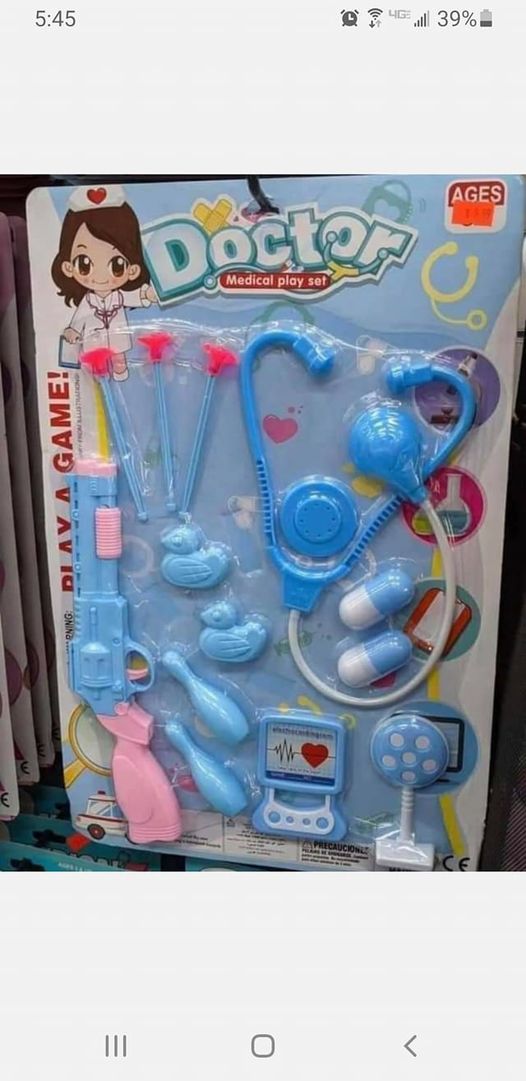
Ok, I got this picture off Facebutt. I CONFESS. But I really want a doctor kit like this: so I can practice alternative medicine. I am disabled from Family Practice and I have to apply for disability payments (miles of paperwork) and I hear that even as a contractee I can apply for unemployment (miles more paperwork) and I see my hospital bill on line for the ER visit where I had chest pain and shortness of breath and the ER doc didn’t even give me an aspirin, so I want to know why I should pay them $900 and I am going to apply for reduced payments because last year I made 42 K, less then the nurses at Jefferson Healthcare (EVEN MORE PAPERWORK FOR THE REDUCED PAYMENTS) and really, it all sounds rather exhausting and I’d rather let the paranoia rise and hide under the bed. Where the OCD and ADHD will make me arrange the dust bunnies and dust elephants by size.

So this looks like a great doctor kit. If the patient sees me and doesn’t do a darn thing that I say, I shoot them with the gun in the forehead. If they do a little but not really very much, I set up the bowling pins and shoot them with the gun while I talk about how irritating it is to have patients use MY TAX DOLLARS though MEDICARE MEDICAID ACTIVE MILITARY DUTY AND THE VETERANS ADMINISTRATION NOT TO MENTION SOCIAL SECURITY DISABILITY to get advice and not follow it.

If they are merely disrespectful and tell me what Dr. Google says, I say “Duck.” and throw one at them. If they say, “I don’t take any farmasuiticals.” and bring a bag with the 12 supplement and vitamin pills they take daily, I give them the plastic pills to replace all their stupid supplements. “Here, take this. If it doesn’t work, I have suppositories, but they are four times this size so some people complain that they are uncomfortable.”

I am not sure WHAT the thing in the lower right corner is. A hair dryer? A fentenyl lollipop? Part of an old fashioned telephone?

Anyhow, someone find me one of these kits and send it to me. Pretty please. I am not allowed to do Family Medicine any more and really want to get started on Alternative Medicine.

Connections between Pain, Opioid use, Suicide and Opioid Use Disorder.

Excellent blog by Janaburson: https://janaburson.wordpress.com/2019/01/14/complex-connections-pain-opioid-use-suicide-and-opioid-use-disorder/

The picture is the tree with berries that the robins are eating, outside my clinic window. They clear it from the top down. Deer come too and stand on their back legs to reach up for berries.

The chances of a poet reaching us are slim

I wrote this after working at Madigan Army Hospital in 2009 for three months as a temporary doctor. I am posting it here because Shoreacres sent me this link about poetry and medicine.

____________________

I would pray if I could. It seems ludicrous to pray for a poet, but there it is.

It started with two soldiers. The Army was embedding a behavioral health specialists (the new politically correct term for mental health specialists) in units starting before 2010. Soldiers were trained in suicide prevention, instructed to stay with a buddy if they made any comments about suicide. A soldier was to walk his or her buddy directly to the behavioral health specialist or to to higher rank. As soldiers went on their fourth and fifth tours, post traumatic stress disorder, depression and traumatic brain injuries were rampant. Unfortunately, psychologists basically felt like they were putting Power Ranger band-aids on hemorrhaging brain arteries. It wasn’t working.

A soldier was accompanying a convoy in Iraq when an IED went off. Right through the bottom of a convoy truck. The driver died screaming from an arterial groin bleed. Two of the eight soldiers were killed. The truck was abandoned and the rest of the convoy got back to the safe (mostly) zone. That soldier had the glassed ghost look in her eyes and got quiet. The usual response was to avoid someone’s eyes and hope for the best, but another soldier wouldn’t let her alone. She kept asking, “Tell me. What happened?”

The first soldier finally snarled out part of the story.

The second soldier pinned a poem to her pillow, describing the event. Our first soldier came in screaming and threw the crumpled ball of paper at her chest. “That’s not what happened! That’s not how I felt! Not even close!”

“Well, what DID happen!” The rest of the unit tried to hide in plain sight or disappeared to the bathroom or got really interested in books or watching the same video over and over, but the two of them stood face to face and went at it. Words, not fists. The crumpled paper was retrieved, the poem rewritten. It took two weeks before soldier one suddenly said, “That’s it. That’s pretty good. For a poem.” But she was back, her gruff foul mouthed efficient self.

Of course it wouldn’t have gone anywhere if the behavioral health specialist hadn’t joked about it to his superiors. The Army was really desperate. In spite of all the work, the suicide rate was still challenging the combat death rate, and there just weren’t enough people to deploy.

The Army went looking for poets. Four were promptly deployed into units. Two of them turned out to be pretty useless, but the other two: the units thrived. Word started getting around. The poets were swamped with people from other units.

The recruiting campaign: “We want you, yes we do, poet show your heart so true!” was painful, but the Army did not care. And poets stepped forward from within the ranks! Don’t ask, don’t tell turned on it’s head. In spite of the medical community’s cries for waiting until more scientific studies were done, and the press and cartoonists drawing pictures recruiters welcoming wimpy pale asthenic writers with open arms, the Army embedded a poet in every unit, right beside the behavioral health specialist. Oh, of course they tried prose too. The academics had a field day fighting about why prose didn’t work. But it didn’t.

It’s the height of irony that we’re cut off with everything we need, except a poet. A water source, food, ammunition. We’re holding our position. Our back up poet is dead ten days ago, but our main poet got an IED blast. Traumatic brain injury, two weeks ago. We can’t get him out, of course. You would think someone would bleed if they were that bad, but he just can’t hold on to any memory. The soldiers tell him their stories, he struggles and tries, but he can barely hold on to one line. Can’t read, though he can write. Can’t see very well either.

The whole unit is starting to look glass-eyed and haunted. Smith asked to go in the jail yesterday and for the door to be closed. He promptly started screaming. It got quiet after a while so they went in. He was sitting on bunk. “Ok.” he said. “I might come back tomorrow.” Some soldiers are writing their own limericks or free verse. It’s ironic that it hurts morale so much, knowing there’s help available. Knowing the chances of a poet reaching us in time are very slim.

________________________

I will use this for the Ragtag Daily Prompt: comeback.

community health

For the Ragtag Daily Prompt #69: community.

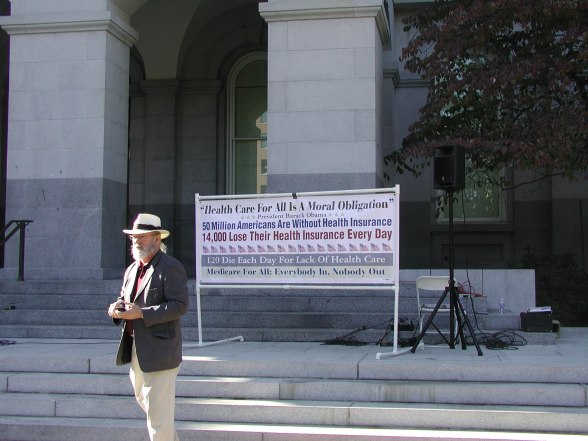
The photograph is from 2010, when the mad as hell doctors toured California to talk about single payer health care, medicare for all.

Small communities rolled out the welcome:

mad2synchro 006.JPG

In this community, every table was sponsored by local health groups: clinic, the health department, mental health, addiction treatment. In small communities everyone knows someone who has lost their health, their health insurance and/or their job and home.

Here we are setting up for another program:

OLYMPUS DIGITAL CAMERA

People asked questions:

mad2synchro 040.JPG

And they listened and responded:

mad2synchro 041.JPG

The health care industry has money. The insurance companies are for profit and make enormous profits. But in the end you and I have VOTES. When we stand up as a nation and say that we want medicare for all, Congress will listen. Stand up.

The mandate for health care already is a law: no one can be turned away from an emergency room. But as things stand, we do not take care that the person in the emergency room has care after the emergency room. The hospital may take the person’s house. We already have the government doing no profit care for over 50% of the care in the US: Medicare, Medicaid, active duty military and the Veterans Association. It is time to shut down the for profit insurance companies that refuse medicines, refuse care, refuse to answer their phones, tell me on the phone “we don’t have a fax”, the parent company tells me a medicine is covered and then the part D drug coverage still refuses: it is BEYOND TIME TO SHUT THEM DOWN.

Is the goal of health care profit? Or is it care for our citizens, support for families, works like the police and the fire station: we all support each other. Stand up, shout and VOTE.


Make America sick again: diabetes

The trend in diabetes treatment is clear: keep Americans sick.

The guidelines say that as soon as we diagnose type II diabetes, we should start a medicine. Usually metformin.

A recent study says that teaching patients to use a glucometer and to check home blood sugars is useless. The key word here is teach, because when I get a diabetic transferring into my clinic, the vast majority have not been taught much of anything.

What is the goal for your blood sugar? They don’t know.

What is normal fasting? What is normal after you eat? What is the difference between checking in the morning and when should you check it after a meal? What is a carbohydrate? What is basic carbohydrate counting?

I think that the real problem is that the US medical system assumes that patients are stupid and doesn’t even attempt to teach them. And patients just give up.

New patient recently, diabetes diagnosed four years ago, on metformin for two years, and has no idea what the normal ranges of fasting and postprandial (after eating) are. Has never had a glucometer.

When I have a new type II diabetic, I call them. I schedule a visit.

At the visit I draw a diagram. Normal fasting glucose is 70-100. Borderline 110 to 125. Two measurements fasting over 125 means diabetes.

After eating: normal is 70-140. Borderline 140-200. Over 200 means diabetes.

Some researchers are calling Alzheimer’s “Type IV diabetes”. The evidence is saying that a glucose over 155 causes damage: to eyes, brain, kidneys, small vessels and peripheral nerves.

Ok, so: what is the goal? To have blood sugars mostly under 155. That isn’t rocket science. People understand that.

Next I talk about carbohydrates. Carbohydrates are any food that isn’t fat or protein. Carbohydrates range from simple sugars: glucose and fructose, to long chain complicated sugars. Whole fruits and vegetables have longer chain carbohydrates, are absorbed slowly, the body breaks them down slowly and the blood sugar rises more slowly. Eat green, yellow, orange vegetables. A big apple is 30 grams of carbohydrate, a small one is 15, more or less. A tablespoon of sugar is 15 grams too. A coke has 30 grams and a Starbuck’s 12 ounce mocha has 62. DO NOT DRINK SWEETENED DRINKS THEY ARE EVIL AND TOOLS OF THE DEVIL. The evidence is saying that the fake sugars cause diabetes too.

Meals: half the small plate should be green, yellow or orange vegetables. A deck of card size “white” food: grains, potatoes, pasta, whole wheat bread, a roll, whatever. A deck of card size protein. Beans and rice, yes, but not too much rice.

For most diabetics, they get 3 meals and 3 snacks a day. A meal can have up to 30 grams of carbohydrate and the snacks, 15 grams.

Next I tell them to get a glucometer. Check with their pharmacy first. The expensive part is the testing strips, so find the cheapest brand. We have a pharmacy that will give the person a glucometer and the strips for it are around 4 for a dollar. Many machines have strips that cost over a dollar each.

I set the patient up with the diabetic educator. The insurance will usually cover classes with the educator and the nutritionist but only in the first year after diagnosis. So don’t put it off.

For type II diabetes, the insurance will usually only cover once a day glucose testing. So alternate. Test 3 days fasting. Test 1-2 hours after a meal on the other days. Test after a meal that you think is “good”. Also after a meal that you think is “bad”. I have had long term diabetics come in and say gleefully “I found a dessert that I can eat!” The numbers are not always what people expect. And there are sneaky sources of carbohydrate. Coffeemate and the coffee flavorings, oooo, those are REALLY BAD.

For most of my patients, the motivated ones, they have played with the glucometer for at least a week by the time they see the diabetic educator. I have had a person whose glucose was at 350 in the glucose testing. The diabetic educator called and scolded me for not starting metformin yet. The diabetic educator called me again a week later. “The patient brought their blood sugars down!” she said. “She’s under 200 after eating now! Maybe she doesn’t need the metformin, not yet!” Ah, that is my thought. If we don’t give people information and a tool to track themselves, then why would they bother? They eat the dessert and figure that the medicine will fix it or they can always get more medicine.

Type I diabetes has to have insulin. If a type II diabetic is out of control, high sugars, for long enough, they too will need insulin. The cells in the pancreas that make insulin are killed by prolonged high blood sugars.

I went to a lunch conference, paid for by a pharmaceutical company, at the AAFP conference in September. The drug company said start people on metformin at diagnosis and if they are not in control in 3 months, start a second medicine, the drug company’s new and improved and better and beastly expensive medicine!!!

Yeah, I don’t think so. All of my patients are smart and they all can figure it out. Some get discouraged and some are already on insulin, but they are still all smart.

Fight back against the moronization of US citizens. Keep America healthy, wealthy and wise.

hypertension: The 2017 Clinical Guidelines

A visual guide to the new hypertension guidelines: https://www.medpagetoday.com/cardiology/hypertension/69399
In writing: http://www.acc.org/latest-in-cardiology/ten-points-to-remember/2017/11/09/11/41/2017-guideline-for-high-blood-pressure-in-adults
I don’t watch television news, so I always hear about these things from patients first. “What do you think of the new hypertension guidelines?”

“Haven’t heard about them yet, so I don’t know.” Seems pretty embarrassing really, doesn’t it? Shouldn’t I be alerted as a doctor before it hits the news?

First of all, these guidelines are NOT JNC 9.

What is JNC 9, you ask?

One of the messy complications of medicine for people in the US and in the world, is that there is not ONE set of guidelines. There are multiple sets of guidelines. Take mammograms, for example. The US Preventative Task Force* said that the evidence in their review could not differentiate between yearly and every other year mammograms. They said you could do it every other year. The American Cancer Society and the Susan Koman Foundation yapped and had different guidelines, do it yearly. So as a physician I have to not only pay attention to the guidelines but know who is putting them out. The radiologists wanted yearly mammograms too, surprise, surprise.

And do you think some of it is driven by money? Well, it’s the US.

JNC 8 is the Eighth Joint National Committee and put out guidelines in 2014. Their job is to review all of the big hypertension studies since JNC 7 and put out new guidelines. JNC 8 took over a year, was multidisciplinary, and the final document was 400+ pages.

They said that if a patient was over 60, their blood pressure should be taken standing up, and the goal was under 150/90. Under 60, sitting, goal under 140/90. Normal is 120/70 and below.

Then there are pages and pages of recommendations about which medicines to use and in special circumstances, that is: diabetes, kidney failure, heart disease, atrial fibrillation, etc, etc.

The cardiologists promptly started yelling about how JNC 8 is wrong and they put out a huge study saying that people have less heart attacks if their blood pressure is 125/80 or below.

But… the heart is not the only organ in the body. My patients are 77% over age 50 and 48% over 65. Once a person hits 80, their blood pressure may drop when they stand up. Most do. And low blood pressure, well, it’s bad for the over 80 crowd to get poor blood flow to the brain or to the kidneys or to faint and break things. That is why JNC 8 is multidisciplinary: because we need geriatrics and psychiatry and ortho and family medicine to be part of the guidelines.

So these NEW and IMPROVED guidelines. Well, who is putting them out? American Heart Association, American College of Cardiology, and a bunch of other mostly heart related organizations. And they are comparing it to JNC 7, not JNC 8. JNC 8 is being ignored. This document is a mere 192 pages, with the “short” version being 112 pages.

It says that blood pressure 130/80 to 140/90 is stage I hypertension, not prehypertension, and that we should treat it with lifestyle changes. Drugs are still to be recommended at anything over 140/90, though honestly, I start with lifestyle there too. Over 180/120 is now “hypertensive crisis”, consult your doctor immediately. 140-180/90-120 is stage II hypertension.

How will this change my practice? I am still thinking about the new guidelines and who has skin in the game. The AAFP (American Academy of Family Practice) put out a link to the guidelines and then a cautious comment to the effect of “We are studying how we should respond to this.”

Before this came out, I would tell people the JNC 8 goals. I do stand the people over 60 up, most of the time. I also tell people that the cardiologists want their blood pressure lower. And then that the cardiologists mostly ignore hypertension and cholesterol guidelines anyhow. If I follow the guidelines and then the patient sees a cardiologist, the cardiologist usually changes something. Guidelines be damned.

It comes down partly to a patient’s goal. I have people come in and say, “I don’t want to die of dementia!!” I see that as an opening. “What DO you want to die from?” People have different ideals. Some say, “I don’t want to die!” but then many do think about it. Sometimes this changes their ideas about what they want treated and what they don’t want treated.

Not everyone’s blood pressure drops in their 80s. Some people develop hypertension in their 90s. I tell them. They say, “I’m not taking a drug!”

I reply, “Let’s talk about strokes.”

They usually are not afraid of sudden death, but they don’t want the disability of a stroke. Many choose medicine after all.

One of the issues with guidelines is complexity. I could spend 20 minutes with a patient just talking about hypertension guidelines and choices of drugs and side effects and why they should be on an ace inhibitor or ARB if they have diabetes…. and there are guidelines for EVERYTHING. Sometimes conferences feel like all the specialists yelling: only half of diabetics are controlled, only one third of hypertensives are controlled, family doctors aren’t screening for urinary incontinence enough, osteoporosis, lung cancer, stop smoking! And then what my patient really needs is to talk about their adult child, in jail for addiction, and how frightened they are about overdose and the grandchild and the future…..

JNC-8 flowchart: http://www.nmhs.net/documents/27JNC8HTNGuidelinesBookBooklet.pdf
JNC-8: https://jamanetwork.com/journals/jama/fullarticle/1791497
*lots of guidelines: https://www.uspreventiveservicestaskforce.org/