Cognitive behavioral therapy

Dr. Aaron Beck, father of cognitive behavioral therapy, died this week, November 2021, at age 100.

Oddly enough, the best explanations of cognitive behavioral therapy that I’ve read is on a writing website. It talks about writing down all of the horrible thoughts and then going back and writing counter thoughts. Psychologists have been talking at me at medical conferences for years about cognitive behavioral therapy, but they never explained it. They said we could do it in clinic. I thought cynically that maybe I could if I knew what the hell it was.

And the explanation by the author is oddly similar to what I think of as the angel and devil on my shoulders. It turns out that I do do it in clinic.

When I react to some event, I let the devil out first. It has a fit about whatever is happening, writes poems, is reactive, paranoid and full of anger and grief. It often imagines over the top terrible things happening to the person or people that did whatever it is. Then the angel wakes up and says, wait. What are you saying? What you are imagining and cursing that person with is WAY worse then what they did. The angel writes the poems of forgiveness.

So I have been doing a homemade form of cognitive behavioral therapy.

However, I would say that it can be overused. We need to listen to patients carefully. If they are in an abusive relationship, it should not be papered over with cognitive behavioral therapy. A friend and I have been comparing terrible childhoods. His involved being beaten without reason.

I said recently that what people hit with in my family is words. They make grief and fear into stories, funny stories, that make people laugh. Shame and humiliation and reliving the feelings. I said that I am reactive and pay close attention to words. But I have reason, back to age 2. I said that books are my refuge because the words are not about me, they don’t shame me, they do not humiliate me, and if I read a book twice, it has the same words. Home, love and safe.

In my maternal family, if I said that I was not comfortable with a comment, I was told that I took things too seriously, that I have no sense of humor, that I can’t take a joke. Gaslight and then dismiss any objection. That is how one side of my family loves. I do not like it. Unsurprisingly, they do not love me, or at least I do not feel loved.

And my friend said, your family, your childhood, was worse than mine.

One of my talents in clinic is that I can listen to insane family stories. I can listen because my family is insane. They are cruel. At least, it feels like cruelty and horror to me. I didn’t ever try to find out if a family story is true. I listen and then say, yes. I think it is appropriate for you to feel angry/sad/horrified/appalled/scared/hurt/whatever.

Somehow that listening and validation is huge. I have people come in and say, “I NEED AN ANTIDEPRESSANT.” They want to supress the feelings. So I had time in my clinic: why do you need an antidepressant? Tell me the story. Fill me in. What are you feeling and why?

And more than half the time after the story, after validation, I ask, “Do you need an antidepressant?”

The person thinks. “No. I don’t think so. Let me think about it. I feel better.”

“Ok. Do you want to schedule a follow up?”

Half do. Half say: “No, let me wait and see. I will if I need it.”

Mostly they don’t need it. They have emptied out the awful feelings in the exam room and they aren’t so awful after all. I say that it sounds like a pretty normal response and I would feel that way too. Because I would. Once the feelings, the monstrous feelings, are in the light of day, they relax and evaporate, dissipate like mist, fly home to the Beloved. Goodbye, dark feelings. You are appropriate and you are loved.

Blessings, Dr. Beck, and thank you.

released like stars

I have had strep A sepsis and pneumonia twice. It was terrifying and I ended up having to take care of myself. I would be dead if I was not a physician.

Not to be named obscure website helped to sustain me, because it was a place I could go while I was alone, terrified and very very ill. The bout in 2014 took me out of clinic for six months and then I was barely able to work seeing half my usual number of patients. My local hospital refused to help me, but other people did. I am deeply deeply grateful to the people who did help me, including people on everything2.com that I have never met.

I wrote this in June 2014.

released like stars

________________

My sister used to tell me

“Everything2 is like a brain.

That’s what attracted me.

All the nodes, like neurons

Connected to each other more and more.”

Or something like that.


Isn’t it annoying?

Now that I’ve taken that memory out

Dusted it off

Embellished it

Who knows what she really said


Flashes of light now

And some where I blank out entirely

For just a moment

Only when I’ve eaten

I’m still avoiding carbs


Could be absence seizures

But she said seizures hurt

These do not hurt

And are accompanied by muscle twitches

Or muscles rolling gently across my frame


I am scared at first

Because I think they are neurons

Bursting into brain flame

And burning out

Brief candles


But I don’t think that’s right either

I think it is plaques

Deposits of antibody

Small pushpins in the wrong place

Being released like stars

Covid-19: working in healthcare

So, should healthcare workers be required to have Covid-19 vaccines?

Yes.

What is the precedent?

Take tuberculosis, for example. Airborne, very contagious. I was born in a Knoxville, Tennessee tuberculosis sanatorium, because my mother coughed blood a month before she was due and got quarantined for active tuberculosis. Yes, the state could quarantine my mother. I was removed immediately at birth because tuberculosis doesn’t cross the placenta. The antibodies do, but the infection doesn’t. However, newborns usually catch it and die very quickly. I was lucky. My father and grandparents took care of me for 5 months. Then my mother was allowed out (after 6 months total) but was not strong enough to take care of me. So I was taken to my maternal grandparents for the next four months, and did not touch my mother until I was 9 months old.

My mother was taking 36 pills a day at home, because you have to use multiple drugs to kill tuberculosis. It develops drug resistance very very quickly.

Well, so what, you say?

Healthcare workers in the United States are routinely checked with a ppd for tuberculosis. If it is positive, you cannot work until further testing. If you have latent tuberculosis, you are treated. If you have active tuberculosis, the treatment is longer and more complicated, here: https://www.cdc.gov/tb/topic/infectioncontrol/default.htm

My cousin then said, “Well, you don’t have to show the tuberculosis test to go in a restaurant!”

Well, not right NOW, because currently tuberculosis is under more or less reasonable control in the US. Remember that guy who came in to the US with active multi drug resistant tuberculosis and knowingly exposed everyone on that airplane? Great. I remember reading about that and thinking what a selfish jerk he was. And then the group of unimmunized people who went to India and all got measles. The US at that time did not bar anyone from returning, but asked them to finish a 3 week quarentine before returning to the US. One person did not do that. There was a measles outbreak in the midwest which cost the CDC (and therefore you and me because those is tax dollars) millions to trace, quarantine and clean up. So there was discussion at that time about whether the policy should be changed and we should not allow US citizens with known infectious diseases to come in on airplanes. We DON’T allow immigrants in with infectious diseases: they are tested for tuberculosis if coming from countries where it is endemic.

So, if we had a huge outbreak of tuberculosis, we WOULD have quarantines and shut downs.

I have tested a patient for tuberculosis, about two years ago. Her son had been diagnosed with active tuberculosis. We tested her with a blood test and then repeated it in three months. Negative, hooray. In residency I also saw a case of miliary tuberculosis. That is where the tuberculosis is growing so well in the lungs that it looks like little grains of rice in the lungs on imaging. Not a good thing.

My cousin: “You shouldn’t have to put something in your body to work.”

If you have tuberculosis, you do not get to work in healthcare, because you can kill your patients. I think that this is a good thing, to not kill our patients.

I am submitting this to the Ragtag Daily Prompt: starspangled. Keep America Healthy, how about that?

Admitting diagnosis: old guy, don’t know

I wrote this in 2010, after I worked for three months at Madigan Army Hospital. I really enjoyed working there. It was the first time since residency that I had worked in a big hospital — 450 beds — and in a not rural setting. I kept asking to work with residents and eventually the Captain and I worked it out to both our satisfactions.

______________________________________

During my three months temp job at a nearby Army Hospital, I am asked to help the Family Medicine Inpatient Team (FMIT) whenever a faculty member is sick or out or deployed, which turns out to be fairly often. I enjoy this because I want to work with residents, Family Practice doctors in training. It is very interesting to be at a training program, watch the other faculty and work at a 400 bed hospital instead of my usual 25 bed one.

Two patients need to be admitted at the same time on our call day, so the second year resident takes one and I take the other. The report on mine is an 82 year old male veteran, coughing for three weeks, emergency room diagnosis is pneumonia.

The resident soon catches up with me because her person is too sick and gets diverted to the ICU. Mr. T, our gentleman, is a vague historian. He says that he has always coughed since he quit smoking 15 years ago and he can’t really describe his problem. He’d gotten up at 4:30 to walk around the assisted living; that is normal for him because he still does some o the maintenance. He had either felt bad then or after going back to sleep in a chair and waking at 10. “I didn’t feel good. I knew I shouldn’t drive.”

He’s had a heart attack in the past and heart bypass surgery. Records are vague. The radiologist reads the chest xrays essentially as, “Looks just like the one 3 months ago but we can’t guarantee that there isn’t a pneumonia or something in there.” He has a slightly elevated white blood cell count, no fever, and by then I do a Mini-mental status exam. He scores 22 out of 30. That could mean right on the edge of moderate dementia, or it could be delirium. I get his permission to call his wife.

“Oh, his memory has been bad since he spent a year in a chair telling them not to amputate his toes. And he was on antibiotics the whole time. He wasn’t the same after that. This morning he just said he didn’t feel right and that he shouldn’t drive.” So his wife called an ambulance.

The third year chief resident comes by and wants to know the admitting diagnosis. “Old guy, don’t know.” is my reply. “Either pneumonia or a urinary tract infection or a heart attack maybe with delirium or dementia or both.

The second year is helping me put in the computer orders, because I am terrible at it still. She could put them in upside down and asleep. “Why are we admitting him, anyhow? We can’t really find anything wrong, why not just send him home?”

“We can’t send him home because he can’t tell us what’s wrong. He might have an infection but he might not, and he has a really bad heart. If we send him home and he has a heart attack tonight, we would feel really bad. And he might die.”

I was getting a cold. I had planned to ask to work a half day but half the team was out sick so I just worked. But by morning I had no voice and felt awful. I call in sick.

At noon the phone rings. It is the second year. “You know Mr. T, who we admitted last night?”

“Yes,” I say.

“He had that heart attack during the night. Got taken to the cath lab. You made me look really good.” We had worked on the assumption that it could be early in a heart attack though the first labs and the ECG were negative. I had insisted on cardiac monitoring and repeating the enzymes. The resident had finished the note after I left and the night team had gotten the second and abnormal set of enzymes.

82 year olds are tricky. With some memory loss he couldn’t tell us much except that “I don’t feel right.” He was right not to drive and we were right to keep him in the hospital. And if it had all been normal in the morning, I still would not have felt bad about it. The residents are looking for a definitive diagnosis, but sometimes it’s “Old guy, don’t know,” until you do know.

Graced

Poem: Graced

I touched base with the psychologist

not one I know

just one who was around

asked if I could talk
for 15 minutes

indeed, he said
a difficult situation

you know that the person won’t change

echo
won’t change won’t change

I believed this
for two days

then I remembered
why I am a doctor
my secret weapon
my healing talent

I always have faith in change

everyone
has choices

“I can’t stop smoking.”
says the man

“My father quit three years ago.
55 years of two packs a day,
unfiltered Camels.”

“Camels!” says the man
“Those are bad!”

“You can quit too.
It might take more than one try.”

Why would I go to work
to talk about hypertension
exercise, birth control
obesity, heart attacks

unless at my core

I believe each person has choices?

Sometimes the choices
are between miserable
and horrible

life and death

still
whether a person is 9 or 90

they are graced
by choice

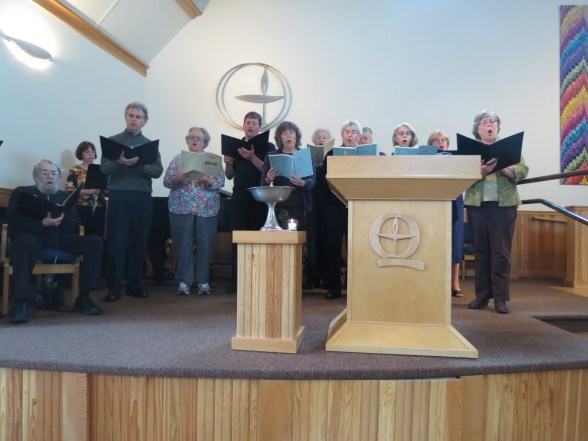
The photograph is from May 2012, at the memorial for my sister. My father is on the left, sitting, wearing oxygen.

Adverse Childhood Experiences 12: welcome to the dark

Welcome to the dark, everyone.

When you think about it, all the children in the world are adding at least one Adverse Childhood Experience score and possibly more, because of Covid-19. Some will add more than one: domestic violence is up with stress, addiction is up, behavioral health problems are up, some parents get sick and die, and then some children are starving.

From the CDC Ace website:

“Overview:Adverse Childhood Experiences (ACEs) are potentially traumatic events that occur in childhood. ACEs can include violence, abuse, and growing up in a family with mental health or substance use problems. Toxic stress from ACEs can change brain development and affect how the body responds to stress. ACEs are linked to chronic health problems, mental illness, and substance misuse in adulthood. However, ACEs can be prevented.”

Well, can they be prevented? Could Covid-19 be prevented? I question that one.

I have a slightly different viewpoint. I have an ACE Score of 5 and am not dead and don’t have heart disease. I spent quite a bit of time thinking about ACE scores and that it’s framed as kids’ brains are damaged.

I would argue that this is survival wiring. When I have a patient where I suspect a high ACE score, I bring it up, show them the CDC web site and say that I think of it as “crisis wiring” not “damaged”. I say, “You survived your childhood. Good job! The low ACE score people do not understand us and I may be able to help you let go of some of the automatic survival reactions and fit in with the people who had a nice childhood more easily.”

It doesn’t seem useful to me to say “We have to prevent ACE scores.” Um. Tsunamis, hurricanes, Covid-19, wars… it seems to me that the ACE score wiring is adaptive. If your country is at war and you are a kid and your family sets out to sea to escape, well, you need to survive. If that means you are guarded, untrusting, suspicious and wary of everyone, yeah, ok. You need to survive. One of my high ACE Score veterans said that the military loved him because he could go from zero to 60 in one minute. Yeah, me too. I’ve worked on my temper since I was a child. Now it appears that my initial ACE insult was my mother having tuberculosis, so in the womb. Attacked by antibodies, while the tuberculosis bacillus cannot cross the placenta, luckily for me. And luckily for me she coughed blood at 8 months pregnant and then thought she had lung cancer and was going to die at age 22. Hmmm, think of what those hormones did to my wiring.

So if we can’t prevent all ACE Scores, what do we do? We change the focus. We need to understand crisis wiring, support it and help people to let go of the hair trigger that got them through whatever horrid things they grew up with. 16% of Americans have a score of 4 or more BEFORE Covid-19. We now have a 20 or 25 year cohort that will have higher scores. Let’s not label them doomed or damaged. Let’s talk about it and help people to understand.

I read a definition of misery memoirs today. I don’t scorn them. I don’t like the fake ones. I don’t read them, though I did read Angela’s Ashes. What I thought was amazing about Angela’s Ashes is that for me he captures the child attitude of accepting what is happening: when his sibling is dying and they see a dog get killed and he associates the two. And when he writes about moving and how their father would not carry anything, because it was shameful for a man to do that. He takes it all for granted when he is little because that is what he knows. One book that I know of that makes a really difficult childhood quite amazing is Precious Bane, by Mary Webb. Here is a visible disability that marks her negatively and yet she thrives.

A friend met at a conference is working with traumatic brain injury folks. They were starting a study to measure ACE scores and watch them heal, because they were noticing the high ACE score people seem to recover faster. I can see that: I would just say, another miserable thing and how am I going to work through it. Meanwhile a friend tells me on the phone that it’s “not fair” that her son’s senior year of college is spoiled by Covid-19. I think to myself, uh, yes but he’s not in a war zone nor starving nor hit by a tsunami and everyone is affected by this and he’s been vaccinated. I think he is very lucky. What percentage of the world has gotten vaccinated? He isn’t on a ventilator. Right now, that falls under doing well and also lucky in my book. And maybe that is what the high ACE score people have to teach the low ACE score people: really, things could be a lot worse. No, I don’t trust easily and I am no longer feeling sorry about it. I have had a successful career in spite of my ACE score, I ran a clinic in the way that felt ethical to me, I have friends who stick with me even through PANDAS and my children are doing well. And I am not addicted to anything except I’d get a caffeine headache for a day if I had none.

For the people with the good childhood, the traumatic brain injury could be their first terrible experience. They go through the stages of grief. The high ACE score people do too, but we’ve done it before, we are familiar with it, it’s old territory, yeah ok jungle again, get the machete out and move on. As the world gets through Covid-19, with me still thinking that this winter looks pretty dark, maybe we can all learn about ACE scores and support each other and try to be kind, even to the scary looking veteran.

Take care.

Mask refusal in the 1918-1919 influenza pandemic

This is from an article about the history of medicine, about people refusing to wear masks in the 1918-1919 influenza pandemic:

“Adherence is based on three concepts: individualism versus collectivism; trust versus fear; and willingness to obey social distance rules. Jay Van Bavel opines that some countries tend to be more individualistic,16 and therefore more likely to reject rules and ignore attempts by public health authorities to “nudge” behavior change with risk messages or appeals for altruism. In collectivist cultures, people are more likely to do what is deemed best for society. Trust and fear are also significant influences on human behavior.17 In countries with political division, people are less likely to trust advice from one side or the other and are more likely to form pro- and anti- camps. This may also undermine advice issued by public health professionals. The last and most difficult to attain is social distancing. Human beings are social animals with bodies and brains designed and wired for connection. A pandemic, in many ways, goes against our instinct to connect. Behavioral psychologist Michael Sanders argues that if everybody breaks the rules a little bit, the results are not dissimilar to many people not following the rules at all.18

From another article:

“It was the worst pandemic in modern history.

The 1918 influenza virus swept the globe, killing at least 50 million people worldwide.

In the US, the disease devastated cities, forcing law enforcement to ban public meetings, shut down schools, churches, and theaters, and even stop funerals.

In total, 675,000 Americans died from the Spanish flu, named after the disease’s early presence in Spain.”

I read a book on the 1918-1919 influenza. It started in the U.S. The photograph that haunts me is the bodies stacked five deep in the hallways of San Francisco Hospitals.

And in a third article:

“The scenes in Philadelphia appeared to be straight out of the plague-infested Middle Ages. Throughout the day and night, horse-drawn wagons kept a constant parade through the streets of Philadelphia as priests joined the police in collecting corpses draped in sackcloths and blood-stained sheets that were left on porches and sidewalks. The bodies were piled on top of each other in the wagons with limbs protruding from underneath the sheets. The parents of one small boy who succumbed to the flu begged the authorities to allow him the dignity of being buried in a wooden box that had been used to ship macaroni instead of wrapping him a sheet and having him taken away in a patrol wagon.”

A CDC article about the history of the 1918-1919 influenza says this:

“The fully reconstructed 1918 virus was striking in terms of its ability to quickly replicate, i.e., make copies of itself and spread infection in the lungs of infected mice. For example, four days after infection, the amount of 1918 virus found in the lung tissue of infected mice was 39,000 times higher than that produced by one of the comparison recombinant flu viruses.14

Furthermore, the 1918 virus was highly lethal in the mice. Some mice died within three days of infection with the 1918 virus, and the mice lost up to 13% of their body weight within two days of infection with the 1918 virus. The 1918 virus was at least 100 times more lethal than one of the other recombinant viruses tested.14 Experiments indicated that 1918 virus’ HA gene played a large role in its severity. When the HA gene of the 1918 virus was swapped with that of a contemporary human seasonal influenza A (H1N1) flu virus known as “A/Texas/36/91” or Tx/91 for short, and combined with the remaining seven genes of the 1918 virus, the resulting recombinant virus notably did not kill infected mice and did not result in significant weight loss.14

The 1918-1919 influenza virus was sequenced and studied in 2005. We did not have the tools before that. Frozen bodies were exhumed with the permission of Inuit tribes to find the virus.

Later, that same article talks about future pandemics:

“When considering the potential for a modern era high severity pandemic, it is important; however, to reflect on the considerable medical, scientific and societal advancements that have occurred since 1918, while recognizing that there are a number of ways that global preparations for the next pandemic still warrant improvement.”

Let us now travel back to a worse epidemic: the plague in the Middle Ages:

“Did you know? Between 1347 and 1350, a mysterious disease known as the “Black Death” (the bubonic plague) killed some 20 million people in Europe—30 percent of the continent’s population. It was especially deadly in cities, where it was impossible to prevent the transmission of the disease from one person to another.”

I am hoping that people will awaken, get their vaccines, wear their masks and stop Covid-19 in its’ tracks, so that our death rate resembles the 1918-1919 Influenza. Not the Middle Ages plague.

even if

even if

I never see you again
you never speak to me again
you never love your bearish parts
you never let yourself get angry
you never let yourself get sad
you never let yourself feel
you tell yourself you are happy
you tell yourself everything is the way it should be

even if

I never see you again

I still love you
I still forgive you

I still love you

I hope that you truly do

find happiness

Top ten causes of death: US 2020

Top ten causes of death US 2020, according to JAMA, here.

Total deaths: 3,358.814
Contrast total deaths in 2019, at 2,854,838. That number had been on a very slow rise since 2015 (2,712,630) to 2019 (2,854,838). That increase over four years is 142,208 people. Then the death rate suddenly jumps 503,976 people in one year. Ouch. I cannot say that I understand vaccine refusal.

1. Coronary artery disease: 690,882
Heart disease still wins. And it went up 4.8%. It is suspected that people were afraid to go to doctors and hospitals. I saw one man early on in the pandemic for “constipation”. He had acute appendicitis. I sent him to the ER and his appendix was removed that day. He thanked me for seeing him in person. Might have missed that one over zoom.

2. Cancer deaths: 598,932
This is cancer deaths, not all of the cancers.

3. Covid-19: 345,342
I have had various people complain that covid-19 is listed as the cause of death when the person has a lot of other problems: heart disease, cancer, heart failure. The death certificate allows for more than one cause but we are supposed to list the final straw first. I cannot list old age, for example. I have to list: renal failure (kidneys stopped working) due to anorexia (stopped eating) due to dementia. That patient was 104 and had had dementia for years. But dementia is not listed as the final cause. So if the person is 92, in a nursing home for dementia and congestive heart failure, gets covid-19 and dies, covid-19 is listed first, and then the others.

4. Unintentional injuries: 192,176
Accidents went up, not down, which is interesting since lots of people were not in their cars. However, remember that the top of the list for unintentional injuries is overdose death, more by legal than illicit drugs. If there is no note, it’s considered unintentional. Well, unless there is a really high blood level of opioids and benzos and alcohol. Then it becomes intentional. They do not always check, especially if the person is elderly. The number rose 11.1%, which seems like a lot of people.

5. Stroke: 159,050
This rose too.

6. Chronic lower respiratory diseases: 151,637
This went down a little. This is mostly COPD and emphysema. So why would it go down? Well, I think bad lung disease people were dying of covid-19, right?

7. Alzheimer’s: 133,182
This seems to belie me putting renal failure due to anorexia due to Alzheimer’s. I think they actually read the forms and would put that as Alzheimer’s rather than renal failure, because it is not chronic renal disease.

8. Diabetes: 101,106
This rose too. 15.4%, again, probably partly because people avoided going to clinic visits. Also perhaps some stress eating. Carbohydrate comfort.

9. Influenza and pneumonia: 53,495
So this went up too in spite of a lot less influenza. Other pneumonias, presumably.

10. Kidney disease: 52,260
This went up.

And what fell out of the top ten, to be replaced by covid-19?

11. Suicide: 44,834
This actually went down a little. What will it do in 2021?

So what will 2021 look like? I don’t know. It depends what the variants of covid-19 do, depends on what sort of influenza year we have, depends on whether we are open or closed, depends if we bloody well help the rest of the world get vaccinated so that there is not a huge continuing wave of variants.

Today the Johns Hopkins covid-19 map says that deaths in the US stand at 608,818 from covid-19. If we subtract the 2020 covid-19 deaths, we stand at 263,495 deaths from covid-19 so far this year. Will we have more deaths in the US from covid-19 than in 2020? It is looking like yes, unless more people get immunized fast.

Take care.

outfits inappropriate for work 2

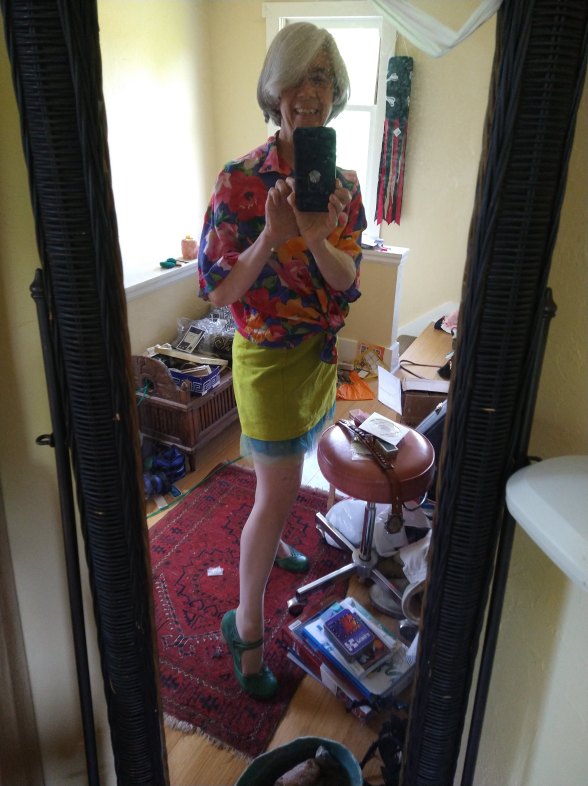
When pneumonia nearly takes me out, I want COLOR. I think I managed it with this. The skirt is not only silly, but a little short for me to wear to work….