Tubulin and antibodies

This is very science dense because I wrote it for a group of physicians. I keep thinking that physicians are scientists and full of insatiable curiosity but my own experience with to date 25 specialists since 2012 would say that many are not curious at all. This continues to surprise and sadden me.

______________________________

All science starts with theories. Mothers of children with PANS/PANDAS reactions had to fight to get the medical community to believe that their children had changed after an infection and that symptoms of Obsessive Compulsive disorder and all the other symptoms were new and unexpected and severe. This is a discussion of tubulin and how antibodies work, theorizing based on my own adult experience of PANS. I was diagnosed by a psychiatrist in 2012. No specialist since has agreed yet no specialist has come up with an “overaching diagnosis” to explain recurrent pneumonia with multiple other confusing symptoms.

The current guidelines for treating PANS/PANDAS are here: https://www.liebertpub.com/doi/full/10.1089/cap.2016.0148. This section discusses four antibodies that are a common thread in PANS/PANDAS patients. Antibodies to dopamine 1 receptors, dopamine 2 receptors, tubulin and lysoganglioside.

Per wikipedia “Tubulin in molecular biology can refer either to the tubulin protein superfamily of globular proteins, or one of the member proteins of that superfamily.” Tubulin is essential in cell division and also makes up the proteins that allow movement of cilia, flagella and muscles in the human body. There are six members of the tubulin superfamily, so there are multiple kinds.

Antibodies are complicated. Each person makes different antibodies, and the antibodies can attach to a different part of a protein. For example, there is more than one vaccine for the Covid-19 virus, attaching to different parts of the virus and alerting the body to the presence of an infection. Viruses are too small to see yet have multiple surface sites that can be targets for a vaccine. When a cell or a virus is coated with antibodies, other immune cells get the signal to attack and kill cells. At times the body makes antibodies that attach to healthy cells, and this can cause autoimmune disease.

Antibodies also can act like a key. They can block a receptor or “turn it on”. Blockade is called an antagonist when a pharmaceutical blocks a receptor and “turning it on” is called an agonist. As an example of how an agonist and antagonist work, take the pharmaceutical buprenorphine. Buprenorphine is a dual agonist/antagonist drug. In low doses it works as an agonist at opioid receptors. At high doses it is an antagonist and blocks the receptors. It also has strong receptor affinity. This means that it will replace almost all other opioids at the receptor: oxycodone, hydrocodone, morphine, heroin. The blockage and ceiling dose make it an excellent choice for opioid overuse. Higher doses do not give a high nor cause overdose and when a person is on buprenorphine, other opioids do not displace the buprenorphine and give no effect.

Similarly, a tubulin antibody could be an agonist or an antagonist or both. As an agonist, it would block function. My version of PANS comes with a weird version of chronic fatigue. When I am affected, my fast twitch muscles do not work right and I instantly get short of breath and tachycardic. I suspect that my lung cilia are also affected, because that would explain the recurrent pneumonias. My slow twitch muscles are fine. With this fourth round of pneumonia I needed oxygen for over a year, but with oxygen my slow twitch muscles do fine. We have fast twitch fatiguable muscles, fast twitch non-fatiguable, and slow twitch. With six families of tubulin and multiple subfamilies and every person making different antibodies, it is no wonder that each person’s symptoms are highly variable.

Currently the testing for the four antibodies is experimental. It is not used for diagnosis. When I had pneumonia in 2012 and 2014, the antibodies had not yet been described. There is now a laboratory in New York State that will test for them but insurance will not cover the test, it costs $1000 as of last year, and it is not definitive nor useful yet anyhow.

There are studies going on of antibodies in ME-CFS, fibromyalgia, chronic lyme disease, PANS/PANDAS and Long Covid. Recently antibodies from humans with fibromyalgia were injected into mice. The antibodies caused fibromyalgia symptoms in the mice: https://www.sciencedaily.com/releases/2021/07/210701120703.htm. One of the barriers to diagnosis and treatment of fibromyalgia is that science has not found a marker in common that we can test for. Even the two inflammatory markers that we use (C-reactive protein and Erythrocyte Sedimentaion rate) are negative in fibromyalgia. This doesn’t mean that people do not have pain or that it is not real, it just means we have not found the markers. It may be that the markers are diverse antibodies and there is not a single marker.

The research is fascinating and gives me hope. It boggles the mind, doesn’t it?

For the Ragtag Daily Prompt boggle.

Adverse Childhood Experiences 14: Hope

I keep reading bits about despair and about how a generation of children is being “ruined” by the pandemic.

Not so, I say. There is hope. We need to support each other to survive and then to thrive.

This generation WILL have a higher than average ACE score. If the Adverse Childhood Experience scale is from zero to eight, children in this time period will have at least one higher point than average and many will have three or four or more. Loss of a parent, a sibling, beloved grandparents during covid. Increases in domestic violence, child abuse and addiction. These are all part of the ACE score.

What does this do to children? They have survival brain wiring. They will do their best to survive what is happening. A friend and I both have high ACE scores, 5 or more, and we are both oppositional defiant. We showed this in different ways. He grew up in the same community. He escaped from home and knew all the neighbors. He walked to the local church and attended at age 3 or 4. He has lived in this community all his life.

His oppositional defiance showed up at home, where he consistently refused to obey. And in school, where he confounded and disobeyed teachers and passed anyhow.

My family moved every 1-5 years. I hated moving. I wouldn’t talk to kids in a new school for a year. It was very difficult. So my oppositional defiance was very very internal. I hid in books and in my head. In 6th grade I got in trouble for hiding novels inside the school book I’d already read. I also would just not listen and my respect for the teacher got even lower when she would be angry that I knew the answer to the question once she’d repeated it. I wasn’t listening because I was bored. She was the first teacher that I thought, well, she is not very bright. The next year they stuck me in the honors class and I stopped being bored, though I still questioned practically every opinion every teacher had. I wanted evidence and I did not believe it just because the teacher said it.

I am not saying that oppositional defiance is in every high ACE score. I don’t know that. Why oppositional defiance? Imagine you are a small child and you are beaten. There isn’t rhyme or reason. You can’t predict when the adult will be out of control. Why would you behave “well” if it makes no difference? You might as well do what you want, because nothing you do will change the adult. Or imagine you are a small child who is with one person, passed to another, then to another. You may not exactly trust adults after two or three repetitions. And you want to survive.

There is an increase in addictions, behavioral health diagnoses, and chronic illness in adults with a high ACE score. A researcher when I first heard a lecture about it said, “We think perhaps that addiction is a form of self medication.” I thought, oh, my gosh, how are we ever going to treat THIS? Well, we have to figure that out now, and we’ve had 30 years to work on it.

I was very comfortable with the oppositional defiant patients in clinic. I got very good at not arguing with them and not taking their behavior personally. They might show up all spiky and hostile and I might be a little spiky and gruff back: sometimes that was enough. I think the high ACE score people often recognize each other at some level, though not always a conscious one. With some people I might bring up ACE scores and ask about their childhood. Sometimes they wanted to discuss it. Sometimes they didn’t. Either was ok.

One thing we should NOT do is insist that everyone be “nice”. We had a temporary doctor who told us her story. Her family escaped Southeast Asia in a boat. They had run out of water and were going to die when they were found by pirates. The pirates gave them water. They made it to land and were in a refugee camp for eight years or so. She eventually made it to the US. She was deemed too “undiplomatic” for our rural hospital. I wondered if people would have said that if they knew her history and what she had been through. It’s not exactly a Leave it to Beaver childhood, is it? When she was telling us about nearly dying of thirst in the boat, my daughter left her chair and climbed on my lap. She was under ten and understood that this was a true and very frightening story.

We can support this generation of children. This has been and is still being Adverse Experiences for adults as well. Family deaths, job loss, failure of jobs to support people, inflation. Remember the 1920s, after World War I and the last pandemic, of influenza. “On October 28, 1919, Congress passed the National Prohibition Act, also known as the Volstead Act, which provided enabling legislation to implement the 18th Amendment.” (wikipedia). There were forces trying to legislate behavior, as there are now. The result in 1920s of making alcohol illegal was speakeasies, illegal alcohol, and violence. Some people acted wild after WWI and the influenza pandemic and some people tried to lock down control, by controlling other peoples’ behavior. It did not work then and it will not work now. The wildness is out of control grief, I think, grief dysfunctional and drinking and shooting and doing anything and everything, legal or not. We remember how the 1920s ended too. Let us not repeat that. Let us mourn and grieve and support each other and support each other’s decisions and autonomy.

Blessings.

Why care for addicts?

I posted this in November, 2015. I am reposting it.

_________________

Why care for addicts?

Children. If we do addiction medicine and help and treat addicts, we are helping children and their parents and our elderly patients’ children. We are helping families, and that is why I chose Family Practice as my specialty.

Stop thinking of addiction as the evil person who chooses to buy drugs instead of paying their bills. Instead, think of it as a disease where the drug takes over. Essentially, we have trouble with addicts because they lie about using drugs. But I think of it as the drug takes over: when the addict is out of control, the drug has control. The drug is not just lying to the doctor, the spouse, the parents, the family, the police: the drug is lying to the patient too.

The drug says: just a little. You feel so sick. You will feel so much better. Just a tiny bit and you can stop then. No one will know. You are smart. You can do it. You have control. You can just use a tiny bit, just today and then you can stop. They say they are helping you, but they aren’t. Look how horrible you feel! And you need to get the shopping done and you can’t because you are so sick…. just a little. I won’t hurt you. I am your best friend.

I think of drug and alcohol addiction as a loss of boundaries and a loss of control. I treat opiate overuse patients and I explain: you are here to be treated because you have lost your boundaries with this drug. Therefore it is my job to help you rebuild those boundaries. We both know that if the drug takes control, it will lie. So I have to do urine drug tests and hold you to your appointments and refuse to alter MY boundaries to help keep you safe. If the drug is taking over, I will have you come for more frequent visits. You have to keep your part of the contract: going to AA, to NA, to your treatment group, giving urine specimens. These things rebuild your internal boundaries. Meanwhile you and I and drug treatment are the external boundaries. If that fails, I will offer to help you go to inpatient treatment. Some people refuse and go back to the drug. I feel sad but I hope that they will have another chance. Some people die from the drug and are lost.

Addiction is a family illness. The loved one is controlled by the drug and lies. The family WANTS to believe their loved one and often the family “enables” by helping the loved one cover up the illness. Telling the boss that the loved one is sick, procuring them alcohol or giving them their pills, telling the children and the grandparents that everything is ok. Everything is NOT ok and the children are frightened. One parent behaves horribly when they are high or drunk and the other parent is anxious, distracted, stressed and denies the problem. Or BOTH are using and imagine if you are a child in that. Terror and confusion.

Children from addiction homes are more likely to be addicts themselves or marry addicts. They have grown up in confusing lonely dysfunction and exactly how are they supposed to learn to act “normally” or to heal themselves? The parents may have covered well enough that the community tells them how wonderful their father was or how charming their mother was at the funeral. What does the adult child say to that, if they have memories of terror and horror? The children learn to numb the feelings in order to survive the household and they learn to keep their mouths shut: it’s safer. It is very hard to unlearn as an adult.

I have people with opiate overuse syndrome who come to see me with their children. I have drawings by children that have a doctor and a nurse and the words “heroes” underneath and “thank you”. I  have had a young pregnant patient thank me for doing a urine drug screen as routine early in pregnancy. “My friend used meth the whole pregnancy and they never checked,” she said, “Now her baby is messed up.”

Addiction medicine is complicated because we think people should tell the truth. But it is a disease precisely because it’s the loss of control and loss of boundaries that cause the lying. We should be angry at the drug, not the person: love the person and help them change their behavior. We need to stop stigmatizing and demeaning addiction and help people. For them, for their families, for their children and for ourselves.

Adverse Childhood Experiences 12: welcome to the dark

Welcome to the dark, everyone.

When you think about it, all the children in the world are adding at least one Adverse Childhood Experience score and possibly more, because of Covid-19. Some will add more than one: domestic violence is up with stress, addiction is up, behavioral health problems are up, some parents get sick and die, and then some children are starving.

From the CDC Ace website:

“Overview:Adverse Childhood Experiences (ACEs) are potentially traumatic events that occur in childhood. ACEs can include violence, abuse, and growing up in a family with mental health or substance use problems. Toxic stress from ACEs can change brain development and affect how the body responds to stress. ACEs are linked to chronic health problems, mental illness, and substance misuse in adulthood. However, ACEs can be prevented.”

Well, can they be prevented? Could Covid-19 be prevented? I question that one.

I have a slightly different viewpoint. I have an ACE Score of 5 and am not dead and don’t have heart disease. I spent quite a bit of time thinking about ACE scores and that it’s framed as kids’ brains are damaged.

I would argue that this is survival wiring. When I have a patient where I suspect a high ACE score, I bring it up, show them the CDC web site and say that I think of it as “crisis wiring” not “damaged”. I say, “You survived your childhood. Good job! The low ACE score people do not understand us and I may be able to help you let go of some of the automatic survival reactions and fit in with the people who had a nice childhood more easily.”

It doesn’t seem useful to me to say “We have to prevent ACE scores.” Um. Tsunamis, hurricanes, Covid-19, wars… it seems to me that the ACE score wiring is adaptive. If your country is at war and you are a kid and your family sets out to sea to escape, well, you need to survive. If that means you are guarded, untrusting, suspicious and wary of everyone, yeah, ok. You need to survive. One of my high ACE Score veterans said that the military loved him because he could go from zero to 60 in one minute. Yeah, me too. I’ve worked on my temper since I was a child. Now it appears that my initial ACE insult was my mother having tuberculosis, so in the womb. Attacked by antibodies, while the tuberculosis bacillus cannot cross the placenta, luckily for me. And luckily for me she coughed blood at 8 months pregnant and then thought she had lung cancer and was going to die at age 22. Hmmm, think of what those hormones did to my wiring.

So if we can’t prevent all ACE Scores, what do we do? We change the focus. We need to understand crisis wiring, support it and help people to let go of the hair trigger that got them through whatever horrid things they grew up with. 16% of Americans have a score of 4 or more BEFORE Covid-19. We now have a 20 or 25 year cohort that will have higher scores. Let’s not label them doomed or damaged. Let’s talk about it and help people to understand.

I read a definition of misery memoirs today. I don’t scorn them. I don’t like the fake ones. I don’t read them, though I did read Angela’s Ashes. What I thought was amazing about Angela’s Ashes is that for me he captures the child attitude of accepting what is happening: when his sibling is dying and they see a dog get killed and he associates the two. And when he writes about moving and how their father would not carry anything, because it was shameful for a man to do that. He takes it all for granted when he is little because that is what he knows. One book that I know of that makes a really difficult childhood quite amazing is Precious Bane, by Mary Webb. Here is a visible disability that marks her negatively and yet she thrives.

A friend met at a conference is working with traumatic brain injury folks. They were starting a study to measure ACE scores and watch them heal, because they were noticing the high ACE score people seem to recover faster. I can see that: I would just say, another miserable thing and how am I going to work through it. Meanwhile a friend tells me on the phone that it’s “not fair” that her son’s senior year of college is spoiled by Covid-19. I think to myself, uh, yes but he’s not in a war zone nor starving nor hit by a tsunami and everyone is affected by this and he’s been vaccinated. I think he is very lucky. What percentage of the world has gotten vaccinated? He isn’t on a ventilator. Right now, that falls under doing well and also lucky in my book. And maybe that is what the high ACE score people have to teach the low ACE score people: really, things could be a lot worse. No, I don’t trust easily and I am no longer feeling sorry about it. I have had a successful career in spite of my ACE score, I ran a clinic in the way that felt ethical to me, I have friends who stick with me even through PANDAS and my children are doing well. And I am not addicted to anything except I’d get a caffeine headache for a day if I had none.

For the people with the good childhood, the traumatic brain injury could be their first terrible experience. They go through the stages of grief. The high ACE score people do too, but we’ve done it before, we are familiar with it, it’s old territory, yeah ok jungle again, get the machete out and move on. As the world gets through Covid-19, with me still thinking that this winter looks pretty dark, maybe we can all learn about ACE scores and support each other and try to be kind, even to the scary looking veteran.

Take care.

Top ten causes of death: US 2020

Top ten causes of death US 2020, according to JAMA, here.

Total deaths: 3,358.814
Contrast total deaths in 2019, at 2,854,838. That number had been on a very slow rise since 2015 (2,712,630) to 2019 (2,854,838). That increase over four years is 142,208 people. Then the death rate suddenly jumps 503,976 people in one year. Ouch. I cannot say that I understand vaccine refusal.

1. Coronary artery disease: 690,882
Heart disease still wins. And it went up 4.8%. It is suspected that people were afraid to go to doctors and hospitals. I saw one man early on in the pandemic for “constipation”. He had acute appendicitis. I sent him to the ER and his appendix was removed that day. He thanked me for seeing him in person. Might have missed that one over zoom.

2. Cancer deaths: 598,932
This is cancer deaths, not all of the cancers.

3. Covid-19: 345,342
I have had various people complain that covid-19 is listed as the cause of death when the person has a lot of other problems: heart disease, cancer, heart failure. The death certificate allows for more than one cause but we are supposed to list the final straw first. I cannot list old age, for example. I have to list: renal failure (kidneys stopped working) due to anorexia (stopped eating) due to dementia. That patient was 104 and had had dementia for years. But dementia is not listed as the final cause. So if the person is 92, in a nursing home for dementia and congestive heart failure, gets covid-19 and dies, covid-19 is listed first, and then the others.

4. Unintentional injuries: 192,176
Accidents went up, not down, which is interesting since lots of people were not in their cars. However, remember that the top of the list for unintentional injuries is overdose death, more by legal than illicit drugs. If there is no note, it’s considered unintentional. Well, unless there is a really high blood level of opioids and benzos and alcohol. Then it becomes intentional. They do not always check, especially if the person is elderly. The number rose 11.1%, which seems like a lot of people.

5. Stroke: 159,050
This rose too.

6. Chronic lower respiratory diseases: 151,637
This went down a little. This is mostly COPD and emphysema. So why would it go down? Well, I think bad lung disease people were dying of covid-19, right?

7. Alzheimer’s: 133,182
This seems to belie me putting renal failure due to anorexia due to Alzheimer’s. I think they actually read the forms and would put that as Alzheimer’s rather than renal failure, because it is not chronic renal disease.

8. Diabetes: 101,106
This rose too. 15.4%, again, probably partly because people avoided going to clinic visits. Also perhaps some stress eating. Carbohydrate comfort.

9. Influenza and pneumonia: 53,495
So this went up too in spite of a lot less influenza. Other pneumonias, presumably.

10. Kidney disease: 52,260
This went up.

And what fell out of the top ten, to be replaced by covid-19?

11. Suicide: 44,834
This actually went down a little. What will it do in 2021?

So what will 2021 look like? I don’t know. It depends what the variants of covid-19 do, depends on what sort of influenza year we have, depends on whether we are open or closed, depends if we bloody well help the rest of the world get vaccinated so that there is not a huge continuing wave of variants.

Today the Johns Hopkins covid-19 map says that deaths in the US stand at 608,818 from covid-19. If we subtract the 2020 covid-19 deaths, we stand at 263,495 deaths from covid-19 so far this year. Will we have more deaths in the US from covid-19 than in 2020? It is looking like yes, unless more people get immunized fast.

Take care.

Liars and the lying lies they tell

This blog post: hanging from a telephone wire intrigues me.

Why do the liars lie?

I disagree with Ms. Kennedy.

The liars lie for the same reason that addicts lie. They are not lying to you or to me. They are lying to themselves FIRST. They want to believe what they say.

“My marriage is perfect.”

“I love all my children the same.”

“I never make an error.”

“I talk to my mother every Sunday morning because we are so close and love each other so much.”

“I can see right in to your head.”

“I don’t care about anything.”

“I am happy all the time.”

Whew. A totally easy list to come up with and I could go on and on and on…. and so could you. When someone says something like this… I am always (fill in blank) or I never (fill in blank)… stop. Think. They want to believe it. They might like you to believe it too. They might even kind of know that it’s a lie and very convincing one but the best liars have convinced themselves.

I saw it in clinic all the time. Over and over and over.

It’s the glitter that gives it away. When they come in all glittery and sparkly and their eyes shine and they are too beautiful for words and they charm your socks right off…. check your wallet. They are an addict or a manipulator or they WANT SOMETHING FROM YOU. And there are people who just do it automatically. They lie all the time.

Whatever. When someone reminds me of my mother or my sister… or the other extremely well trained enablers on the maternal side of my stupid family…. ooooooo. The person has my full focused attention. Which thing is the lie? What do they want? What are they going to try to get out of me?

When I trained in buprenorphine treatment, the guy (enabler) that I was dating was horrified. “You can’t treat addicts!” he said.

“Why not?” I asked.

“They LIE.”

I laughed. “ALL patients lie. There are studies. They lie about whether they are taking their blood pressure medicine. They lie about how much salt they are eating. They lie about exercising. The first question I ask if someone’s blood pressure is too high, is “Are you taking the medicine?” More than half the time I get a sheepish, “Yeah, well, no, I ran out of it two weeks ago.” “Yeah, well, then I can’t tell if it’s working or not, can I? And you’ll have to redo the stupid labs once you have taken it for two weeks and come back for another check.” “Ok, ok, I get it.” If you lie to your doctor, well, you might get hurt. Tell them about the pills your friend gave you, tell them about the supplements, and that infected toe? Might help if you tell the truth about it. Even though it was when you um inserted well we were just, like he has an infected um. That is important information and changes which antibiotics I use plus now I want to check for chlamydia and gonorrhea and same sex male so we gotter talk about HIV prophylaxis and this is a 15 minute clinic visit? I am now running late and annoyed. You need another visit in 1-2 days or else I gonna hospitalize yo dumb self.

And WHY do people, and especially people in addiction, lie to themselves?

Damage. ACE scores. Adverse Childhood Experience Scores. They wish that they were that close to their mother. They long for a perfect marriage. They were beaten in secret by the perfect father. The famous man, their grandfather, sexually abused them. The list is endless.

And how do we help? The person I just stopped dating told me that his children said to him “My picker’s broke.” Our pickers are not really broken. We are attracted to the people who can teach us.

In the book Passionate Marriage, the author writes about how we are attracted to the people who have what we lack. What we want to learn. What we are afraid of. What we need to learn. I needed to learn how to really look at anyone I date with my full on intuition right away and also that it is seriously Not Nice of me to get curious, activate my inner scientist and stick around. I recognize the projection on me at some point and then the scientist in me is intrigued. Really? The most recent one said that inside me there is a sweet innocent joyous tiny girl.

Well, I thought. No, not really. There certainly is a baby. But it’s a baby honey badger or a baby Iron Bitch Alien Lizard. Don’t care what you call it. But it is about as sweet as a pissed off porcupine or skunk. Polecat. Octopoggles done got us! Squirting ink and sliding into an impossibly small space and escaping from the acquarium over and over until the captors let me go…..

And that was actually the moment I should have spoken up. Calmly. Kindly. “Um, no. I was never a sweet innocent joyous tiny girl. I was bathed in antibodies to tuberculosis in the womb and no doubt alcohol and my parents were newly married and I came out saying, “What is happening now? Some new torture? Augh! Bright lights! Is there food? I am really really hungry. Feed me or I will eat YOU.” And then I lost my mother for nine months so that I would not catch tuberculosis from her and die. I didn’t really understand it. I thought people kept giving me away and that you couldn’t trust those evil adults.

In the end this is all actually necessary, says the Passionate Marriage author. WHAT? WHAT? Well, in a truly loving relationship, both people will withdraw the projection. The projection is the “falling in love” where the person is golden, perfect, your true love. No, they aren’t. But you love that aspect of them that you want/need/can’t do. True love is when you withdraw the projection and you see the real person and you love them.

It isn’t easy. But people do it. Birds do it, squirrels do it, trees do it, even elementary bees do it… let’s do it… let’s fall in love.

Free fall

I feel safest with the fallen

Everyone falls
No one is good

I am afraid
Of the people who
pretend to be good

the fallen
don’t pretend

We fell down down down
like an eternity
like it would never end

We were bad
depressed drunk addicted
liars cowards thieves

We held our arms out
There was nothing to stop us
Free fall

All we could do
was pray

We prayed
As best we could
With all our hearts
If we had no words

Falling angels
Caught us

Helped us
Claw our way back

Some people fall
Are still falling
Fall forever

Are they crazy
Or do they choose
To stay with the angels?

The people who say
They are good

We look at them

We know they haven’t fallen

They are lying to us
They are lying to themselves
They are lying to the Beloved
They want to be good
They want what they say to be true

But it isn’t

I meet the eyes of another fallen
Knowledge

I can see the memory
Of infinite free fall
In their eyes.

Qia and the liars

Qia is in her first year of college, 1200 miles from home. She joins the ski team, hoping to ski. There really aren’t mountains in Wisconsin. They are hills. She doesn’t have a car so she has to get rides to the ski hill. She does get demo skis, because she is on the team. It’s mostly guys, a few women. The guys chug a beer at the top of each run. The runs are ice after the first time down. It is very poorly lit and very cold. Qia is afraid of the ice and the guys and the drinking.

At Christmas she goes home, to Virginia. She really wants ski pants, she tells her mother. She is cold. She is still skiing in spite of the drinking and the scary guys and the ice. They yell at her to go faster but she goes the speed where she will not die. It doesn’t matter anyhow. She goes to a formal race and they have three foot tall trophies for the boys and nothing, not even a ribbon, for the women.

At home, her father is laughing. He is giggling, silly. He doesn’t make any sense. He gives Qia the creeps. Her mother sails along like nothing is wrong. Qia’s little sister has gone from the extroverted life of the party to locked down so hard that her eyes are stones. Fungk, thinks Qia.

Her father loses his down jacket, leaving it somewhere. Then he borrows her mothers and loses it too. Qia’s sister has out grown hers. On Christmas morning there are two down jackets and a pair of ski pants.

The ski pants are two sizes too small. Her father laughs. The down jackets are the ugliest colors, cheaply made, junk. Qia watches her mother and sister try to smile.

Qia leaves the ski pants and returns to Wisconsin. She gets a spider bite. It spreads. She goes to the doctor. He gives a laugh of relief and says it is shingles. He has to explain what shingles is. “It either means you are very run down or have severe stress.” Qia laughs. Worst Christmas of her life so far.

She realizes the problem. Her father has been abducted by fairies and a changeling put in his place. She reads everything she can find about changelings. Adult changelings are rare but not unknown. She pulls out every stop on top of her heavy schedule to learn about how to fight fairies. She can’t afford to hire a fighter. She finds an iron sword at a second hand shop. She hangs around the gyms and watches the fairy fighters fight. She goes home and practices every move. She collects herbs.

She sets things up before spring break. She arrives home and asks her mother and sister to go with her to a specialist in changelings and fighting fairies. Qia is sad but confident. Her mother and sister both cry after watching the movie about the behavior of changelings. Qia asks her mother and sister to help her.

They both refuse.

Qia can’t understand it. But she has studied and read the books. She will do it alone.

She meets with her father. She tells him how awful and frightening Christmas was. She tells him how ashamed and scared she was. She reads him a letter that her sister wrote to her, emotionless, about having to watch him when he is curled in a fetal ball at the top of the stairs. Her mother asked her sister to watch him, so he wouldn’t hurt himself. Her sister says that she wanted to go out with her friends. Her sister is in tenth grade.

Her father doesn’t say a word.

Qia begs him to tell her the key. The word that will open the portal. She shows him the sword and lists all of her herbs and describes her training. She tells him that after she defeats the fairies he will go home and her real father will be returned. She says that she knows he isn’t happy here, with mortals.

He doesn’t say a word to her for the rest of spring break. Her mother and sister do not say a word about it either. Her father drinks more heavily. Qia returns to college.

Qia refuses to come home for the summer. She stays in Wisconsin. She does not want to be around any of them.

Her sister is three years younger. Qia wishes that she could scoop her up and take her to Wisconsin. Qia frets and is in pain. Qia’s second year starts and her sister is in eleventh grade.

Qia’s mother calls. Qia’s sister is on her way. 3000 miles away. “At the last minute, C invited her to live with them in Seattle.” says Qia’s mother. “C was leaving the next day. Your sister decided and went with her. It’s a relief because your sister was getting A’s on tests but refusing to turn in homework, so overall she was getting D’s. ” Qia is relieved. C and S have a son named after her father. He is younger than her sister. Qia also has a cousin 6 years older who lived with C and S and still lives in Seattle. Qia wishes her little sister the best.

Years later, after her mother has died, Qia asks her father about it. By now her father is back and the changeling is gone. I was angry, says her father. But your sister was getting into lots of trouble. Really bad trouble. What could I do, locked in fairyland. He does not go into what Qia’s sister was doing.

And after her father dies, Qia finds a letter. The letter is from C to her mother. It is talking about her sister going to live with C and S. My mother lied to me, thinks Qia. I am not surprised. I wonder why she lied to me. Qia thinks it is probably because her mother set it up with C and did not tell her sister. Qia thinks that her mother lied to her sister. Qia thinks how much that would have hurt her sister: that her mother chose the changeling over her. Her sister would have been terribly hurt and angry.

But so many are dead, what does it matter? Qia’s mother is dead. Her father is dead. Her sister is dead. C’s son is longest dead. S is dead. Even the changeling is dead. Friends in fairyland let Qia know. Actually, Qia and C are the only ones left living.

C did not lie to Qia or her sister directly. She let Qia’s mother do the lying.

Qia does not talk to C again.

Qia is tired of liars.

______________________________________________________________________________________________________________________________

This is not a story about fairies. It is about alcohol or any addiction. We must support families, because the whole family becomes ill. Triangulation, lies, competition, enabling. In my maternal family, the enablers die before the enablees. I have chosen to leave the system and I refuse to be either an enabler or enablee. If you are in that sort of system, you may find that the family resists you leaving and tries to draw you back in to it. When you do finally succeed in leaving, there will be a strong reaction. When the pirahnas run out of food, they eat each other. Stand back and don’t get drawn back in. The newest victim will need to make their own decision to stay or leave.

Deep Vein Thrombosis

Our clinic had a band back before 2009. Me and 4 of the nurses. We were into heavy metal. This was when I was working for Port Townsend Family Physicians. The county let me go and PTFP changed their name. Could not have been because we wore our band regalia to work, right? After all, it was Halloween.

Maybe they were afraid that the songs would catch on.

Little blue pill

Don’t code in the waiting room

Evidence based BM

Probiotics make you psychotic

Better that way

Alcohol is better than benzos

Mr. Sable is Unable

Buprenorphine: better n morphine

EMR means Eat My Rear

The 18 Patient Blues

Idaho Gigolo

I played flute and saw. J played fiddle and air siren. The others, well, you should ask them. I think all the tapes got burned by the hospital. Too bad, so sad.

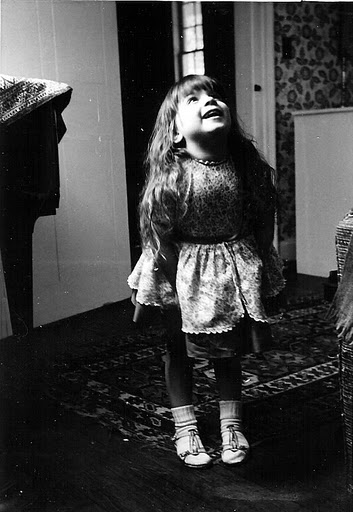
I can’t credit the photographer. I don’t know who took it.