wrong side up

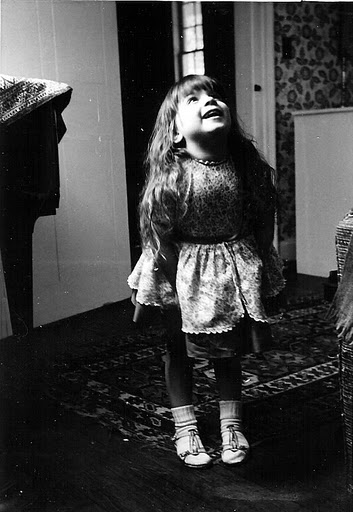

I posted this in November, 2015. I am reposting it.
_________________
Why care for addicts?
Children. If we do addiction medicine and help and treat addicts, we are helping children and their parents and our elderly patients’ children. We are helping families, and that is why I chose Family Practice as my specialty.
Stop thinking of addiction as the evil person who chooses to buy drugs instead of paying their bills. Instead, think of it as a disease where the drug takes over. Essentially, we have trouble with addicts because they lie about using drugs. But I think of it as the drug takes over: when the addict is out of control, the drug has control. The drug is not just lying to the doctor, the spouse, the parents, the family, the police: the drug is lying to the patient too.
The drug says: just a little. You feel so sick. You will feel so much better. Just a tiny bit and you can stop then. No one will know. You are smart. You can do it. You have control. You can just use a tiny bit, just today and then you can stop. They say they are helping you, but they aren’t. Look how horrible you feel! And you need to get the shopping done and you can’t because you are so sick…. just a little. I won’t hurt you. I am your best friend.
I think of drug and alcohol addiction as a loss of boundaries and a loss of control. I treat opiate overuse patients and I explain: you are here to be treated because you have lost your boundaries with this drug. Therefore it is my job to help you rebuild those boundaries. We both know that if the drug takes control, it will lie. So I have to do urine drug tests and hold you to your appointments and refuse to alter MY boundaries to help keep you safe. If the drug is taking over, I will have you come for more frequent visits. You have to keep your part of the contract: going to AA, to NA, to your treatment group, giving urine specimens. These things rebuild your internal boundaries. Meanwhile you and I and drug treatment are the external boundaries. If that fails, I will offer to help you go to inpatient treatment. Some people refuse and go back to the drug. I feel sad but I hope that they will have another chance. Some people die from the drug and are lost.
Addiction is a family illness. The loved one is controlled by the drug and lies. The family WANTS to believe their loved one and often the family “enables” by helping the loved one cover up the illness. Telling the boss that the loved one is sick, procuring them alcohol or giving them their pills, telling the children and the grandparents that everything is ok. Everything is NOT ok and the children are frightened. One parent behaves horribly when they are high or drunk and the other parent is anxious, distracted, stressed and denies the problem. Or BOTH are using and imagine if you are a child in that. Terror and confusion.
Children from addiction homes are more likely to be addicts themselves or marry addicts. They have grown up in confusing lonely dysfunction and exactly how are they supposed to learn to act “normally” or to heal themselves? The parents may have covered well enough that the community tells them how wonderful their father was or how charming their mother was at the funeral. What does the adult child say to that, if they have memories of terror and horror? The children learn to numb the feelings in order to survive the household and they learn to keep their mouths shut: it’s safer. It is very hard to unlearn as an adult.
I have people with opiate overuse syndrome who come to see me with their children. I have drawings by children that have a doctor and a nurse and the words “heroes” underneath and “thank you”. I have had a young pregnant patient thank me for doing a urine drug screen as routine early in pregnancy. “My friend used meth the whole pregnancy and they never checked,” she said, “Now her baby is messed up.”
Addiction medicine is complicated because we think people should tell the truth. But it is a disease precisely because it’s the loss of control and loss of boundaries that cause the lying. We should be angry at the drug, not the person: love the person and help them change their behavior. We need to stop stigmatizing and demeaning addiction and help people. For them, for their families, for their children and for ourselves.

And does this bird have any scruples?
For the Ragtag Daily Prompt: scruple.
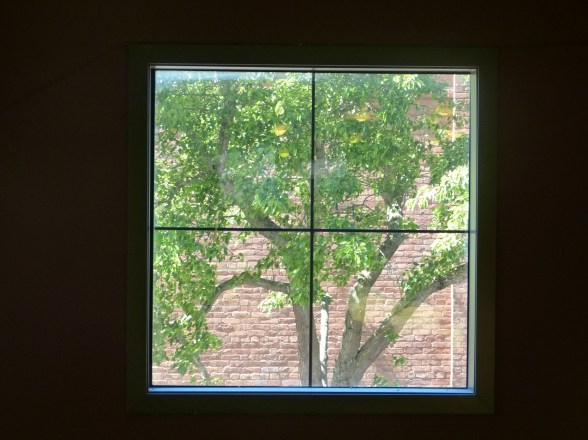
I really did not want a tour of the DMV.
I arrive early, just as they open the doors, and there is already a line. We file in, each taking a paper number. The people in front go straight up to the desks. One window processes two people in only ten minutes each and then promptly puts up a closed sign. I guess it’s exhausting, working so fast.
Everyone waiting looks strained or sullen or stressed at the DMV. Shoulders hunched, heads down, the ones in power suits on their phones, but the phones keep cutting off in the DMV. Some sort of special shielding, I would bet.
I have number 17 and get to go to a window after 2 hours.
The clerk smiles at me. She is pale, pale, but has horns and pitch black wings, no feathers, like a bat.
“Unitarian!” she says, grinning.
“Um,” I say, eyeing the wings.
She looks wicked and then her wings are classic white feathered. She is browner and well, I’d guess Filipino. “Worried?” she says.
“No.” I say. “Tired. Sad. Curious.”
“What would you prefer to see?” she says and morphs. Now she has one bat wing that changes to black feathers then through rainbow feathers, to the snowy white feathers on the other side. Her skin tone is very dark on her right hand and then lighter across to pale with red freckles on her left hand.
“Nice.” I say.
“Which heaven would you like?”
“Unitarians do not believe in hell. Send me back.”
“You just got here. Violently and by surprise.” she wrinkles her nose. “Riots again. Sorry about that. We have opened a Unitarian space.”
“No. Send me back.”
She sighs and pulls down a heavy paper file. All the papers have gold edges, except for those with black. “You found your true love.”
“Yes. So what. We didn’t have time to make it work.”
“Don’t you want to wait until she dies so you can head down at the same time?”
“No. She’s only 32. And there is work to do.”
She is paging through the file. She snaps it shut. “Two week vacation. The minimum required. Go to the door on the right.”
I sigh. I want to argue but I’ve done that before. She will add on an extra week for every word I say.
My memories are intact here. Of all the lives. It’s always a bit overwhelming when I first arrive.
I go to the door on the right. A small page with grey tattered wings opens the door for me. I think it is a boy but he is wearing a Tinkerbell style tunic.
“I am your guide today.” No, it is a girl. I think. They may be able to morph that too.
We go in the door. My guide is shedding feathers, one every few steps. I pick one up. “Sorry.” she says. “Puberty. So, where do you want to spend your two weeks?” We are in a half circle shape hall, with hallways branching off. The hallways have no end that I can see and there are open doors all along them.
“I just want to go back.”
She pats my arm absently. “Oh, yes, they told me. You have to take breaks. You are wonderful, though, we love you.” She is leading me to one of the halls towards the left. We go past two doors and to the third. “See?” she says. “Unitarians. Of course, they can come in and out and go in all the others and argue with everyone. We wouldn’t want them to get bored.”
The room is empty at the moment. “And I guess they are all in other places!” The room across the hall seems to be a classic hell, with demons and pitchforks and a grim rocky landscape with pits of burning tar. I can see a dinosaur caught in tar, and a really huge crowd of people. There is a lot of screaming.
“Some people insist.” says my guide. “Where to next? Evangelical? Valhalla is rather fun for males and certain females, we’ve got fluffy clouds and harps, or are you more interested in touring Asian, African, Australian? We do have paleolithic sites and many people are interested in Egyptian themes. The cliff dwellers interest many as well. “
“Atheist.”
She frowns. “Of course, but that room shuts down consciousness and you have to have two weeks of consciousness before you can go back.” She is leading me back into the central half hall.
“Ok,” I say, giving in. “I am not trying to be difficult, you know.”
“Yes, and everyone told me correctly that you are difficult. All the ones that go back over and over are difficult. And there are more every year.”
“Take me somewhere new, ok?” I am looking now at the frieze over the door that will take me back. Two weeks. I can manage. I am resigned. The frieze is cupids and then male odalisques, then female, then leopards, and then they are cupid fauns with horns on their heads, morphing towards adulthood. Yet the carved letters stay the same:
Deus Machina Verum
and I follow my guide into another hallway to find a place for my two weeks.
_________________________
This poem inspires me to post today’s story: https://narble.blog/2021/08/17/if-there-are-no-dogs-in-heaven/
I think the hell in heaven also fits today’s Ragtag Daily Prompt: scorch.

You are sick as shit.
You go to the ER.
You finally feel safe, on a bed, they will save me, you think.
The nurse is on autopilot. He does not seem concerned. You are shaking a little as he arranges you on the bed. He puts the heart monitor stickers on and hooks you up. Blood pressure cuff, pulse ox. Blood pressure is fine, pulse is a bit fast, at 110.
You notice he is not making eye contact.
“I’m cold.” you whisper.
He doesn’t reply. He keeps messing with the wires. He puts the call button next to your hand. He leaves and returns with a warm blanket. It feels wonderful. He doesn’t say a word.
You feel better under the warmth.
The respiratory therapist wheels in the ECG machine. You smile at her but again, no eye contact. She puts more stickers on you. “Hold a deep breath.” The ECG spits out. She takes it and leaves.
The radiology tech wheels the portable xray machine in. You watch his face but don’t bother to smile. He looks everywhere but at you. It’s a bit creepy. Are they all robots? It’s 3 pm, not 3 am. “Lean forward,” says the tech, putting the radiology cartridge behind you. “Take a deep breath and hold it.” He takes the cartridge and leaves.
The nurse is back. Puts in the iv and draws 5 tubes of blood. You are shivering a little. He doesn’t seem to notice. You think about another warm blanket. The iv fluid starts and you can feel it running cold into your arm.
There is a child crying in the ER, in some other room. You start noticing the noises. Machines beeping. People typing on computer keyboards. No one is talking. The kid gives a howl of protest, rising and then is abruptly quiet.
Your hands and feet are tingling and burning. You writhe a little under the blanket. Sensation is returning to your hands and feet. It hurts but it is also good. You were at the point where all your feeling had shrunk to a tiny spark in the center of your chest. As the iv fluid runs, feeling slowly spreads out from that.
The doctor comes in. Grumpy, clearly. “Lean forward.” Listens to your chest. “Sounds clear.”
“It’s been hurting for 5 days. It hurts to breathe. Burns.” You are anxious as hell. BELIEVE ME.
The ER doc gives a little shrug. “Oxygen sats are fine.” He does a half-assed exam. He leaves.
You look at your feet, taking your socks off. Because he didn’t. There are two black spots, a couple millimeters across, old blood. Those are new.
You press the call button.
Time goes by. The nurse floats back in.
“Look. Tell the doctor to look. These are petechiae.” You point to the black spots.
If the nurse had laser vision, your feet would be burned. The nurse glares at your feet. He goes out.
The doc comes in and looks at your feet.
“They are petichiae. I have an infection.”
He gives a tiny shrug. “Your chest xray looks clear. Your labs are normal. You are not running a fever.”
“I am on azithromycin for walking pneumonia. I suddenly felt like all the fluid was running out of my arms and legs. I am worried that I am septic.”
“Blood pressure is fine. You are really really anxious.”
You are furious. It probably shows on your face. You are terrified.
“Could it be an antibiotic reaction?”
Shrug. “No rash.”
“Except the petechiae.” A sign of sepsis.
“I will change the antibiotics. Clindamycin.” He leaves.
You lie back, terrified. He doesn’t believe you. He is sending you home, septic. You will probably die.
The nurse comes in. Removes the iv and unhooks the monitor and the blood pressure cuff. You get dressed, numb and frightened and cold. The nurse goes out and returns. He recites the patient instructions in a bored voice and gives you the first dose of clindamycin.
You walk shakily to the door of the emergency room. To go home. While you are septic and they don’t believe you. You know what happens with sepsis: your blood pressure will drop and then organ damage and then IF you survive you could have heart damage or lung damage or brain damage and you might not anyhow.
You go home.

So, should healthcare workers be required to have Covid-19 vaccines?
Yes.
What is the precedent?
Take tuberculosis, for example. Airborne, very contagious. I was born in a Knoxville, Tennessee tuberculosis sanatorium, because my mother coughed blood a month before she was due and got quarantined for active tuberculosis. Yes, the state could quarantine my mother. I was removed immediately at birth because tuberculosis doesn’t cross the placenta. The antibodies do, but the infection doesn’t. However, newborns usually catch it and die very quickly. I was lucky. My father and grandparents took care of me for 5 months. Then my mother was allowed out (after 6 months total) but was not strong enough to take care of me. So I was taken to my maternal grandparents for the next four months, and did not touch my mother until I was 9 months old.
My mother was taking 36 pills a day at home, because you have to use multiple drugs to kill tuberculosis. It develops drug resistance very very quickly.
Well, so what, you say?
Healthcare workers in the United States are routinely checked with a ppd for tuberculosis. If it is positive, you cannot work until further testing. If you have latent tuberculosis, you are treated. If you have active tuberculosis, the treatment is longer and more complicated, here: https://www.cdc.gov/tb/topic/infectioncontrol/default.htm
My cousin then said, “Well, you don’t have to show the tuberculosis test to go in a restaurant!”
Well, not right NOW, because currently tuberculosis is under more or less reasonable control in the US. Remember that guy who came in to the US with active multi drug resistant tuberculosis and knowingly exposed everyone on that airplane? Great. I remember reading about that and thinking what a selfish jerk he was. And then the group of unimmunized people who went to India and all got measles. The US at that time did not bar anyone from returning, but asked them to finish a 3 week quarentine before returning to the US. One person did not do that. There was a measles outbreak in the midwest which cost the CDC (and therefore you and me because those is tax dollars) millions to trace, quarantine and clean up. So there was discussion at that time about whether the policy should be changed and we should not allow US citizens with known infectious diseases to come in on airplanes. We DON’T allow immigrants in with infectious diseases: they are tested for tuberculosis if coming from countries where it is endemic.
So, if we had a huge outbreak of tuberculosis, we WOULD have quarantines and shut downs.
I have tested a patient for tuberculosis, about two years ago. Her son had been diagnosed with active tuberculosis. We tested her with a blood test and then repeated it in three months. Negative, hooray. In residency I also saw a case of miliary tuberculosis. That is where the tuberculosis is growing so well in the lungs that it looks like little grains of rice in the lungs on imaging. Not a good thing.
My cousin: “You shouldn’t have to put something in your body to work.”
If you have tuberculosis, you do not get to work in healthcare, because you can kill your patients. I think that this is a good thing, to not kill our patients.
I am submitting this to the Ragtag Daily Prompt: starspangled. Keep America Healthy, how about that?

Today is PANS/PANDAS awareness day. I wrote this a couple weeks ago.
___________________________________
No pandas
I don’t have PANDAS because in the United States we barely believe in it in children and we don’t at all in adults.
I don’t have PANDAS because even though one psychiatrist said I did, he retired, and the next one says I don’t. Then not sure then no. They don’t agree.
I don’t have PANDAS because my primary care doctor won’t read the guidelines even after I have been her patient for seven years.
I don’t have PANDAS because my pulmonologist has never heard of it.
I don’t have PANDAS because it would be a lot easier to put me on a mood stabilizer to shut me up than listen to me.
I don’t have PANDAS because I am labelled difficult because I am afraid to take a mood stabilizer because I do not get a fever or a white count so my main symptom of infection is that other doctors think that I am manic though I am hypoxic and short of breath. They want to fix my mood while I want to not die of pneumonia, so our goals are at odds.
I don’t have PANDAS because I am a doctor and if I had PANDAS my fellow local doctors would feel guilty that they have told each other that I am bipolar and manic for the last 18 years and have shunned me at the county medical meetings and won’t even send me the invitations, except for the one that forwards them. He says he has given them my email and he doesn’t understand why they don’t send me the invitations.
I don’t have PANDAS because Seattle Children’s doesn’t allow the Cunningham Panel to be drawn and they say there is not enough evidence yet.
I don’t have PANDAS because I can’t afford to pay $925 on my own for the Cunningham Panel and anyhow my antibody level is back to whatever is my new baseline, higher than before no doubt.
I don’t have PANDAS because the other doctors are frightened: if I have PANDAS then who else does and if I have chronic fatigue caused by hypoxia and fibromyalgia and it’s related to PANDAS then who else would they have to test and neuropsychiatric is a whole different thing from psychiatric and we swear that we don’t know what causes chronic fatigue and fibromyalgia.
I don’t have PANDAS because I am an adult who lives in the US though if I was in Canada or Europe I could in fact have PANDAS.
I don’t have PANDAS because in the United States we barely believe in it in children and we don’t at all in adults.


I know that it sucks for US nurses and doctors and hospitals to say this. You are having to intubate and take care of and watch people die, who have refused vaccination. You are really really tired and discouraged and sick of death and sick of working way too many hours without a break.
However, I think it’s time to give up on the oppositional defiant section of the United States, say “ok, boomer” or twenty two year old or seventy old and send the rest of the vaccines to people who want it and who would be happy and grateful and glad. If we don’t help vaccinate the rest of the world, we’ll see more strains. They might morph to something milder than Delta. They might turn into something worse and more lethal.
Send the vaccine to people who want it.

Welcome to the dark, everyone.
When you think about it, all the children in the world are adding at least one Adverse Childhood Experience score and possibly more, because of Covid-19. Some will add more than one: domestic violence is up with stress, addiction is up, behavioral health problems are up, some parents get sick and die, and then some children are starving.
From the CDC Ace website:
“Overview:Adverse Childhood Experiences (ACEs) are potentially traumatic events that occur in childhood. ACEs can include violence, abuse, and growing up in a family with mental health or substance use problems. Toxic stress from ACEs can change brain development and affect how the body responds to stress. ACEs are linked to chronic health problems, mental illness, and substance misuse in adulthood. However, ACEs can be prevented.”
Well, can they be prevented? Could Covid-19 be prevented? I question that one.
I have a slightly different viewpoint. I have an ACE Score of 5 and am not dead and don’t have heart disease. I spent quite a bit of time thinking about ACE scores and that it’s framed as kids’ brains are damaged.
I would argue that this is survival wiring. When I have a patient where I suspect a high ACE score, I bring it up, show them the CDC web site and say that I think of it as “crisis wiring” not “damaged”. I say, “You survived your childhood. Good job! The low ACE score people do not understand us and I may be able to help you let go of some of the automatic survival reactions and fit in with the people who had a nice childhood more easily.”
It doesn’t seem useful to me to say “We have to prevent ACE scores.” Um. Tsunamis, hurricanes, Covid-19, wars… it seems to me that the ACE score wiring is adaptive. If your country is at war and you are a kid and your family sets out to sea to escape, well, you need to survive. If that means you are guarded, untrusting, suspicious and wary of everyone, yeah, ok. You need to survive. One of my high ACE Score veterans said that the military loved him because he could go from zero to 60 in one minute. Yeah, me too. I’ve worked on my temper since I was a child. Now it appears that my initial ACE insult was my mother having tuberculosis, so in the womb. Attacked by antibodies, while the tuberculosis bacillus cannot cross the placenta, luckily for me. And luckily for me she coughed blood at 8 months pregnant and then thought she had lung cancer and was going to die at age 22. Hmmm, think of what those hormones did to my wiring.
So if we can’t prevent all ACE Scores, what do we do? We change the focus. We need to understand crisis wiring, support it and help people to let go of the hair trigger that got them through whatever horrid things they grew up with. 16% of Americans have a score of 4 or more BEFORE Covid-19. We now have a 20 or 25 year cohort that will have higher scores. Let’s not label them doomed or damaged. Let’s talk about it and help people to understand.
I read a definition of misery memoirs today. I don’t scorn them. I don’t like the fake ones. I don’t read them, though I did read Angela’s Ashes. What I thought was amazing about Angela’s Ashes is that for me he captures the child attitude of accepting what is happening: when his sibling is dying and they see a dog get killed and he associates the two. And when he writes about moving and how their father would not carry anything, because it was shameful for a man to do that. He takes it all for granted when he is little because that is what he knows. One book that I know of that makes a really difficult childhood quite amazing is Precious Bane, by Mary Webb. Here is a visible disability that marks her negatively and yet she thrives.
A friend met at a conference is working with traumatic brain injury folks. They were starting a study to measure ACE scores and watch them heal, because they were noticing the high ACE score people seem to recover faster. I can see that: I would just say, another miserable thing and how am I going to work through it. Meanwhile a friend tells me on the phone that it’s “not fair” that her son’s senior year of college is spoiled by Covid-19. I think to myself, uh, yes but he’s not in a war zone nor starving nor hit by a tsunami and everyone is affected by this and he’s been vaccinated. I think he is very lucky. What percentage of the world has gotten vaccinated? He isn’t on a ventilator. Right now, that falls under doing well and also lucky in my book. And maybe that is what the high ACE score people have to teach the low ACE score people: really, things could be a lot worse. No, I don’t trust easily and I am no longer feeling sorry about it. I have had a successful career in spite of my ACE score, I ran a clinic in the way that felt ethical to me, I have friends who stick with me even through PANDAS and my children are doing well. And I am not addicted to anything except I’d get a caffeine headache for a day if I had none.
For the people with the good childhood, the traumatic brain injury could be their first terrible experience. They go through the stages of grief. The high ACE score people do too, but we’ve done it before, we are familiar with it, it’s old territory, yeah ok jungle again, get the machete out and move on. As the world gets through Covid-19, with me still thinking that this winter looks pretty dark, maybe we can all learn about ACE scores and support each other and try to be kind, even to the scary looking veteran.
Take care.
Home to the Longette & Longette Lite
Intelligence that is not artificial: we are real.
BLIND WILDERNESS
in front of the garden gate - JezzieG
Discover and re-discover Mexico’s cuisine, culture and history through the recipes, backyard stories and other interesting findings of an expatriate in Canada
Or not, depending on my mood
All those moments will be lost in time, like tears in rain!
An onion has many layers. So have I!
Exploring the great outdoors one step at a time
Some of the creative paths that escaped from my brain!
Books, reading and more ... with an Australian focus ... written on Ngunnawal Country
Engaging in some lyrical athletics whilst painting pictures with words and pounding the pavement. I run; blog; write poetry; chase after my kids & drink coffee.
Coast-to-coast US bike tour
Generative AI
Climbing, Outdoors, Life!
imperfect pictures
Refugees welcome - Flüchtlinge willkommen I am teaching German to refugees. Ich unterrichte geflüchtete Menschen in der deutschen Sprache. I am writing this blog in English and German because my friends speak English and German. Ich schreibe auf Deutsch und Englisch, weil meine Freunde Deutsch und Englisch sprechen.
En fotoblogg
Books by author Diana Coombes
NEW FLOWERY JOURNEYS
in search of a better us
Less Noise. More Meaning
Art from the Earth
𝖠𝗇𝗈𝗍𝗁𝖾𝗋 𝖶𝗈𝗋𝖽𝖯𝗋𝖾𝗌𝗌.𝖼𝗈𝗆 𝗌𝗂𝗍𝖾.
Taking the camera for a walk!!!
From the Existential to the Mundane - From Poetry to Prose
1 Man and His Bloody Dog


You must be logged in to post a comment.