fog


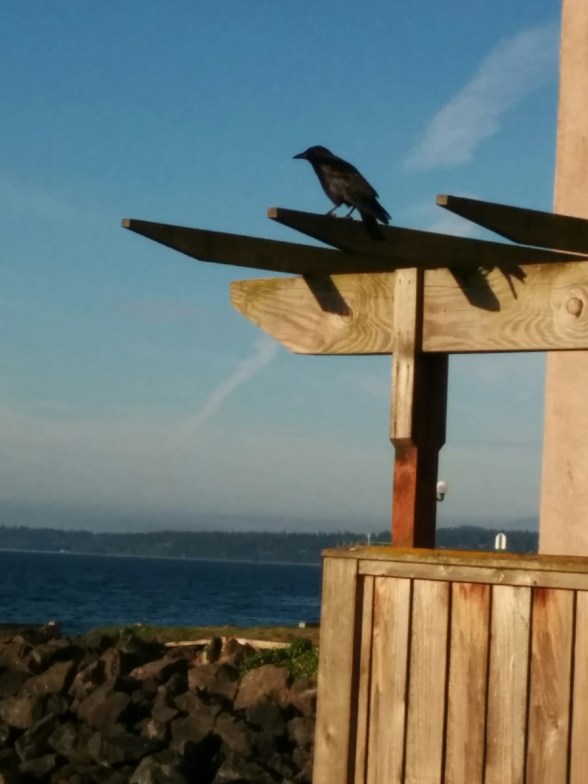

Sometimes emotions are vast. I do not think our culture deals with grief very easily. Grief then becomes a vast pit, stuffed inside us. I sent the Falling Angels poems to friends and family. One older friend said that the poems were too sad and was I that sad all the time?
I replied, no, I am not sad all the time. The sadness is in the poems because there are very few people that I know that are comfortable with sadness and grief. So I put it in to poetry, because I do not want to stuff it. We need to let grief come out and let the tears flow and let it go.
For the Ragtag Daily Prompt: vast.
It seems to be one of my irritable days
They come rolling round in the month of May
I don’t feel friendly and don’t want to play
It seems to be one of my irritable days
It seems to be one of those days when I’m mad
At nothing particular. I feel really bad
I hate those damn tourists who always wear plaid
I really intensely dislike feeling sad
I haven’t felt quite this bad since last year
But I’m not one to cry. I don’t like weak tears
I’m not one to let myself feel any fears
I haven’t felt this bad for almost a year
It seems to be one of those days when I’m mad
I think I’ll go pick a nice fight with that lad
He looks too damn happy and just too damn glad
When I’m punching his lights out I won’t feel so sad
It seems to be one of my irritable days
Going to work on them just doesn’t pay
My boss’s revenge just goes on for days
Today it’s so bad that I can’t even pray
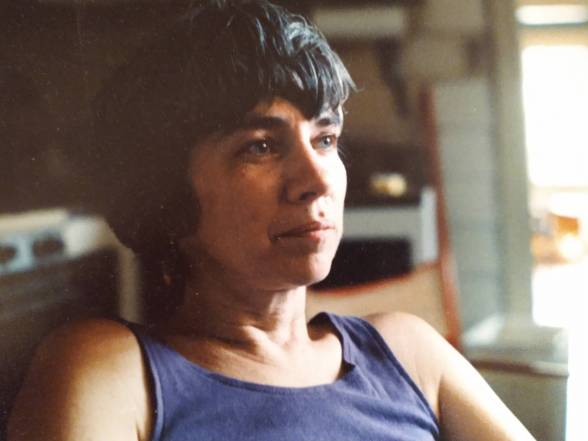
Helen Burling Ottaway, my mother, died May 15, 2000. I wrote this poem in the early 2000s. Her birthday was May 31, right near Memorial Day. Mother’s Day always falls near her death.
I am putting up a series of poems that I titled Falling angels, after a dream, where all the stars in the sky started falling. I was frightened and then realized that they were all angels. Then I was more frightened.
I think we need poetry and dreams and angels during this difficult time. Even if the angels are all falling.
I took the photograph of my mother. A friend loaned me his 35mm camera and I took one roll of pictures and gave the camera back to him. Almost all of the photographs I took were portraits.

For the Ragtag Daily Prompt: melancholy.

There is a fascinating essay on an obscure unethical website, titled Online Community Dynamics. I keep thinking about it. It inspires today’s poem.
people being people
people being people
they are often scared
huddle
in groups
it’s safest if a leader
identifies an enemy
so that everyone can come together
in hate
the leader
tells the group
who to hate
and why
whether it is true or not
I started out writing
under the title
mean stupid people
but that isn’t right
and anyhow I’d rather find a way
to forgive
again
and again
and again
so I started again
with the title
people being people
maybe we will mature as a species
some day
who do you hate?
now look in the mirror
and ask
who have you forgiven
today?

Welcome to the dark, everyone.
When you think about it, all the children in the world are adding at least one Adverse Childhood Experience score and possibly more, because of Covid-19. Some will add more than one: domestic violence is up with stress, addiction is up, behavioral health problems are up, some parents get sick and die, and then some children are starving.
From the CDC Ace website:
“Overview:Adverse Childhood Experiences (ACEs) are potentially traumatic events that occur in childhood. ACEs can include violence, abuse, and growing up in a family with mental health or substance use problems. Toxic stress from ACEs can change brain development and affect how the body responds to stress. ACEs are linked to chronic health problems, mental illness, and substance misuse in adulthood. However, ACEs can be prevented.”
Well, can they be prevented? Could Covid-19 be prevented? I question that one.
I have a slightly different viewpoint. I have an ACE Score of 5 and am not dead and don’t have heart disease. I spent quite a bit of time thinking about ACE scores and that it’s framed as kids’ brains are damaged.
I would argue that this is survival wiring. When I have a patient where I suspect a high ACE score, I bring it up, show them the CDC web site and say that I think of it as “crisis wiring” not “damaged”. I say, “You survived your childhood. Good job! The low ACE score people do not understand us and I may be able to help you let go of some of the automatic survival reactions and fit in with the people who had a nice childhood more easily.”
It doesn’t seem useful to me to say “We have to prevent ACE scores.” Um. Tsunamis, hurricanes, Covid-19, wars… it seems to me that the ACE score wiring is adaptive. If your country is at war and you are a kid and your family sets out to sea to escape, well, you need to survive. If that means you are guarded, untrusting, suspicious and wary of everyone, yeah, ok. You need to survive. One of my high ACE Score veterans said that the military loved him because he could go from zero to 60 in one minute. Yeah, me too. I’ve worked on my temper since I was a child. Now it appears that my initial ACE insult was my mother having tuberculosis, so in the womb. Attacked by antibodies, while the tuberculosis bacillus cannot cross the placenta, luckily for me. And luckily for me she coughed blood at 8 months pregnant and then thought she had lung cancer and was going to die at age 22. Hmmm, think of what those hormones did to my wiring.
So if we can’t prevent all ACE Scores, what do we do? We change the focus. We need to understand crisis wiring, support it and help people to let go of the hair trigger that got them through whatever horrid things they grew up with. 16% of Americans have a score of 4 or more BEFORE Covid-19. We now have a 20 or 25 year cohort that will have higher scores. Let’s not label them doomed or damaged. Let’s talk about it and help people to understand.
I read a definition of misery memoirs today. I don’t scorn them. I don’t like the fake ones. I don’t read them, though I did read Angela’s Ashes. What I thought was amazing about Angela’s Ashes is that for me he captures the child attitude of accepting what is happening: when his sibling is dying and they see a dog get killed and he associates the two. And when he writes about moving and how their father would not carry anything, because it was shameful for a man to do that. He takes it all for granted when he is little because that is what he knows. One book that I know of that makes a really difficult childhood quite amazing is Precious Bane, by Mary Webb. Here is a visible disability that marks her negatively and yet she thrives.
A friend met at a conference is working with traumatic brain injury folks. They were starting a study to measure ACE scores and watch them heal, because they were noticing the high ACE score people seem to recover faster. I can see that: I would just say, another miserable thing and how am I going to work through it. Meanwhile a friend tells me on the phone that it’s “not fair” that her son’s senior year of college is spoiled by Covid-19. I think to myself, uh, yes but he’s not in a war zone nor starving nor hit by a tsunami and everyone is affected by this and he’s been vaccinated. I think he is very lucky. What percentage of the world has gotten vaccinated? He isn’t on a ventilator. Right now, that falls under doing well and also lucky in my book. And maybe that is what the high ACE score people have to teach the low ACE score people: really, things could be a lot worse. No, I don’t trust easily and I am no longer feeling sorry about it. I have had a successful career in spite of my ACE score, I ran a clinic in the way that felt ethical to me, I have friends who stick with me even through PANDAS and my children are doing well. And I am not addicted to anything except I’d get a caffeine headache for a day if I had none.
For the people with the good childhood, the traumatic brain injury could be their first terrible experience. They go through the stages of grief. The high ACE score people do too, but we’ve done it before, we are familiar with it, it’s old territory, yeah ok jungle again, get the machete out and move on. As the world gets through Covid-19, with me still thinking that this winter looks pretty dark, maybe we can all learn about ACE scores and support each other and try to be kind, even to the scary looking veteran.
Take care.
I am posting this for today’s Ragtag Daily Prompt: action.
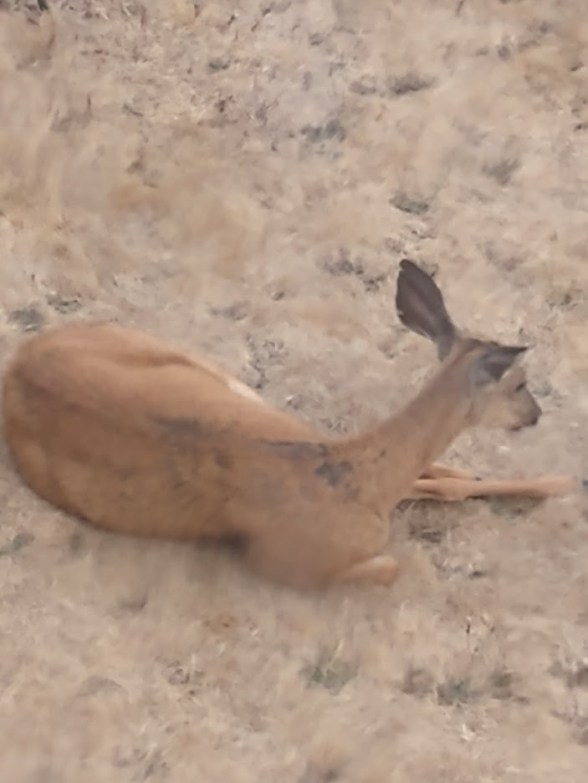
Well, for every action there is an equal and opposite reaction, right? Which could be a nap. This is taken with my phone zoomed from an upstairs window, right in my back yard. Voyeur, yep, that’s me, spying on my Giant Long Earred Yard Rats, also sometimes called Deer.
All of my 911 memories are still swirling around. I think everyone is exhausted and grieving. Please take care of yourselves today and I hope you have a safe place to take a nap, like my Giant Yard Rats.

This is a poem that I wrote in 2015 or before. It was previously posted here and on everything2.com. I just read a blog where two hockey dads are dead of covid-19. The author is writing about grief. I wrote this when I was struggling with grief and how to really let it in.
grounded
grief is an ox
that stands in the room with me
and overshadows
everything
no
grief
is a plow
pulled by an ox
I try to guide it
in the furrows
no
grief is the heavy ground
the plow turns it
the ox pulls
I guide it
in the furrows
no
I am grieving
I let it be close
I don’t push it
in to an ox
in to a plow
in to the earth
I let it in
I grieve
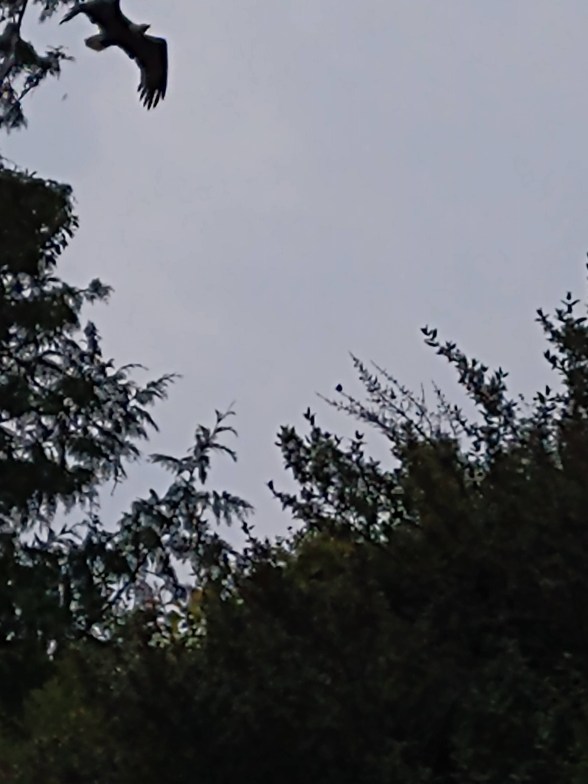
I have photographed lots of eagles in trees. Now I am trying to catch them in flight. It’s tricky. Against a gray sky, I am still happy with this one.
She is mistress of all she surveys.
For today’s Ragtag Daily Prompt.
BLIND WILDERNESS
in front of the garden gate - JezzieG
Discover and re-discover Mexico’s cuisine, culture and history through the recipes, backyard stories and other interesting findings of an expatriate in Canada
Or not, depending on my mood
All those moments will be lost in time, like tears in rain!
An onion has many layers. So have I!
Exploring the great outdoors one step at a time
Some of the creative paths that escaped from my brain!
Books, reading and more ... with an Australian focus ... written on Ngunnawal Country
Engaging in some lyrical athletics whilst painting pictures with words and pounding the pavement. I run; blog; write poetry; chase after my kids & drink coffee.
Coast-to-coast US bike tour
Generative AI
Climbing, Outdoors, Life!
imperfect pictures
Refugees welcome - Flüchtlinge willkommen I am teaching German to refugees. Ich unterrichte geflüchtete Menschen in der deutschen Sprache. I am writing this blog in English and German because my friends speak English and German. Ich schreibe auf Deutsch und Englisch, weil meine Freunde Deutsch und Englisch sprechen.
En fotoblogg
Books by author Diana Coombes
NEW FLOWERY JOURNEYS
in search of a better us
Personal Blog
Raku pottery, vases, and gifts
𝖠𝗇𝗈𝗍𝗁𝖾𝗋 𝖶𝗈𝗋𝖽𝖯𝗋𝖾𝗌𝗌.𝖼𝗈𝗆 𝗌𝗂𝗍𝖾.
Taking the camera for a walk!!!
From the Existential to the Mundane - From Poetry to Prose
1 Man and His Bloody Dog
Homepage Engaging the World, Hearing the World and speaking for the World.
Anne M Bray's art blog, and then some.
My Personal Rants, Ravings, & Ruminations
 KO Rural Mad As Hell Blog
You must be logged in to post a comment.