
Covid-19: in flew Enza

Survey shows 6 in 10 Americans will delay or skip flu shots this year.

Oh, dear. Not going to get your influenza shot? I am. Well, you say, YOU are on oxygen and have tricky lungs and keep yammering about imaginary Pandas.

Yes, and you should get your vaccine anyhow, even if you are healthy as a hoss.

If not for yourself, for everyone else. Because usually influenza kills 12,000 to 61,000 US citizens a year and gosh, guess what it will do to post-Covid long haulers. Um, kill, I would expect. And with a very low influenza winter last winter, because covid and masks and social distancing, immunity is down and the infectious disease folks are anticipating that it could be a worse than usual influenza year. How many people have long covid? This just in: More than half of covid survivors experience post acute sequelae to covid 19 (PASC) at 6 months after. ““The most common PASC involved functional mobility impairments, pulmonary abnormalities, and mental health disorders,” wrote Destin Groff, Penn State College of Medicine and Milton S Hershey Medical Center, Hershey, Pennsylvania, and colleagues. ”These long-term PASC effects occur on a scale that could overwhelm existing health care capacity, particularly in low- and middle-income countries.”

AND not only that, even if you or your friend or mother or grandmother don’t die of influenza, far more people clog up emergency rooms and doctor’s offices. The “CDC estimates that influenza has resulted in between 9 million – 45 million illnesses, between 140,000 – 810,000 hospitalizations and between 12,000 – 61,000 deaths annually since 2010.”* And the doctors and nurses and emergency people and nursing home employees and first responders are already short staffed and tired. So if you won’t get your flu vaccine for the general public, get it for the first responders.

AND before you tell me that “the vaccine gave me flu”, hello, it takes up to two weeks for the flu vaccine to confer immunity, and so if you got influenza two days later, you didn’t get it from the vaccine, you got it because you got the vaccine too late. Vaccine complications, well, I have seen one complication in my 30 years of Family Medicine, and it was someone I knew, not a patient. And half the people who tell me that “the vaccine gave me flu”, stomach flu with diarrhea and barfing is not influenza. It’s more likely to be a hangover than anything else. I see a lot more post alcohol “stomach flus” than true food poisoning. Quit drinking so much alcohol, ok?

And while you are at it, you’d better get the Covid-19 vaccine while it is still available free. And before you get on an airplane for Thanksgiving or go Trick or Treating with all those little germ spreaders or fly off to see family at Christmas/Kwanza/Winter break/whatever. Two weeks before, at least. Like, NOW. Or don’t, whatever, just don’t whine to ME about more deaths.

This public service message has been brought to you by a beneficent alien lizard. Feel free to send money.

*https://www.cdc.gov/flu/about/burden/index.html

Admitting diagnosis: old guy, don’t know

I wrote this in 2010, after I worked for three months at Madigan Army Hospital. I really enjoyed working there. It was the first time since residency that I had worked in a big hospital — 450 beds — and in a not rural setting. I kept asking to work with residents and eventually the Captain and I worked it out to both our satisfactions.

______________________________________

During my three months temp job at a nearby Army Hospital, I am asked to help the Family Medicine Inpatient Team (FMIT) whenever a faculty member is sick or out or deployed, which turns out to be fairly often. I enjoy this because I want to work with residents, Family Practice doctors in training. It is very interesting to be at a training program, watch the other faculty and work at a 400 bed hospital instead of my usual 25 bed one.

Two patients need to be admitted at the same time on our call day, so the second year resident takes one and I take the other. The report on mine is an 82 year old male veteran, coughing for three weeks, emergency room diagnosis is pneumonia.

The resident soon catches up with me because her person is too sick and gets diverted to the ICU. Mr. T, our gentleman, is a vague historian. He says that he has always coughed since he quit smoking 15 years ago and he can’t really describe his problem. He’d gotten up at 4:30 to walk around the assisted living; that is normal for him because he still does some o the maintenance. He had either felt bad then or after going back to sleep in a chair and waking at 10. “I didn’t feel good. I knew I shouldn’t drive.”

He’s had a heart attack in the past and heart bypass surgery. Records are vague. The radiologist reads the chest xrays essentially as, “Looks just like the one 3 months ago but we can’t guarantee that there isn’t a pneumonia or something in there.” He has a slightly elevated white blood cell count, no fever, and by then I do a Mini-mental status exam. He scores 22 out of 30. That could mean right on the edge of moderate dementia, or it could be delirium. I get his permission to call his wife.

“Oh, his memory has been bad since he spent a year in a chair telling them not to amputate his toes. And he was on antibiotics the whole time. He wasn’t the same after that. This morning he just said he didn’t feel right and that he shouldn’t drive.” So his wife called an ambulance.

The third year chief resident comes by and wants to know the admitting diagnosis. “Old guy, don’t know.” is my reply. “Either pneumonia or a urinary tract infection or a heart attack maybe with delirium or dementia or both.

The second year is helping me put in the computer orders, because I am terrible at it still. She could put them in upside down and asleep. “Why are we admitting him, anyhow? We can’t really find anything wrong, why not just send him home?”

“We can’t send him home because he can’t tell us what’s wrong. He might have an infection but he might not, and he has a really bad heart. If we send him home and he has a heart attack tonight, we would feel really bad. And he might die.”

I was getting a cold. I had planned to ask to work a half day but half the team was out sick so I just worked. But by morning I had no voice and felt awful. I call in sick.

At noon the phone rings. It is the second year. “You know Mr. T, who we admitted last night?”

“Yes,” I say.

“He had that heart attack during the night. Got taken to the cath lab. You made me look really good.” We had worked on the assumption that it could be early in a heart attack though the first labs and the ECG were negative. I had insisted on cardiac monitoring and repeating the enzymes. The resident had finished the note after I left and the night team had gotten the second and abnormal set of enzymes.

82 year olds are tricky. With some memory loss he couldn’t tell us much except that “I don’t feel right.” He was right not to drive and we were right to keep him in the hospital. And if it had all been normal in the morning, I still would not have felt bad about it. The residents are looking for a definitive diagnosis, but sometimes it’s “Old guy, don’t know,” until you do know.

Graced

Poem: Graced

I touched base with the psychologist

not one I know

just one who was around

asked if I could talk
for 15 minutes

indeed, he said
a difficult situation

you know that the person won’t change

echo
won’t change won’t change

I believed this
for two days

then I remembered
why I am a doctor
my secret weapon
my healing talent

I always have faith in change

everyone
has choices

“I can’t stop smoking.”
says the man

“My father quit three years ago.
55 years of two packs a day,
unfiltered Camels.”

“Camels!” says the man
“Those are bad!”

“You can quit too.
It might take more than one try.”

Why would I go to work
to talk about hypertension
exercise, birth control
obesity, heart attacks

unless at my core

I believe each person has choices?

Sometimes the choices
are between miserable
and horrible

life and death

still
whether a person is 9 or 90

they are graced
by choice

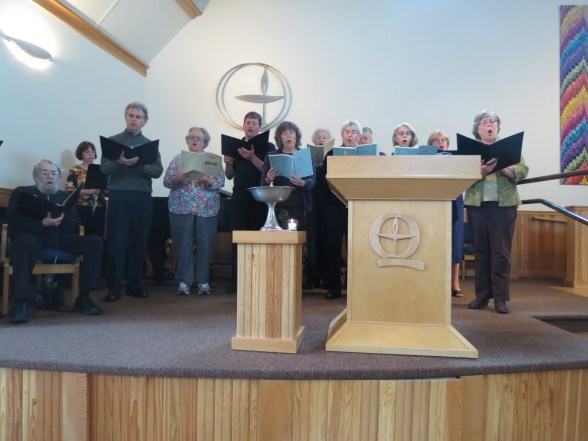
The photograph is from May 2012, at the memorial for my sister. My father is on the left, sitting, wearing oxygen.

No pandas

Today is PANS/PANDAS awareness day. I wrote this a couple weeks ago.

PANDAS PHYSICIANS NETWORK: PANS/PANDAS AWARENESS DAY

___________________________________

No pandas

I don’t have PANDAS because in the United States we barely believe in it in children and we don’t at all in adults.

I don’t have PANDAS because even though one psychiatrist said I did, he retired, and the next one says I don’t. Then not sure then no. They don’t agree.

I don’t have PANDAS because my primary care doctor won’t read the guidelines even after I have been her patient for seven years.

I don’t have PANDAS because my pulmonologist has never heard of it.

I don’t have PANDAS because it would be a lot easier to put me on a mood stabilizer to shut me up than listen to me.

I don’t have PANDAS because I am labelled difficult because I am afraid to take a mood stabilizer because I do not get a fever or a white count so my main symptom of infection is that other doctors think that I am manic though I am hypoxic and short of breath. They want to fix my mood while I want to not die of pneumonia, so our goals are at odds.

I don’t have PANDAS because I am a doctor and if I had PANDAS my fellow local doctors would feel guilty that they have told each other that I am bipolar and manic for the last 18 years and have shunned me at the county medical meetings and won’t even send me the invitations, except for the one that forwards them. He says he has given them my email and he doesn’t understand why they don’t send me the invitations.

I don’t have PANDAS because Seattle Children’s doesn’t allow the Cunningham Panel to be drawn and they say there is not enough evidence yet.

I don’t have PANDAS because I can’t afford to pay $925 on my own for the Cunningham Panel and anyhow my antibody level is back to whatever is my new baseline, higher than before no doubt.

I don’t have PANDAS because the other doctors are frightened: if I have PANDAS then who else does and if I have chronic fatigue caused by hypoxia and fibromyalgia and it’s related to PANDAS then who else would they have to test and neuropsychiatric is a whole different thing from psychiatric and we swear that we don’t know what causes chronic fatigue and fibromyalgia.

I don’t have PANDAS because I am an adult who lives in the US though if I was in Canada or Europe I could in fact have PANDAS.

I don’t have PANDAS because in the United States we barely believe in it in children and we don’t at all in adults.

Covid-19: Emotional weather

I do not think of emotions as bad or good. None of them are bad or good. They are information, controlled by electrical impulses and hormones, evolved over millions of years (or endowed by our creator, for those who swing that way).

I don’t dismiss emotions. I listen to them.

I think of myself as an ocean. There is all sorts of stuff happening in the depths that I don’t understand. Probiotics, for example. I don’t take them. If not for penicillin, I’d be dead many times over, from strep A pneumonia twice and other infections. I don’t think we understand probiotics yet. We don’t understand the brain, either.

The emotions are the weather in my life. I don’t really control them but they don’t control my ocean, either. Some days are sunny and gorgeous and then a storm may blow up. I am afraid of hurricanes, one destroyed my grandparents’ house in North Carolina, on the outer banks. I think all the cousins still mourn that house. And I miss my grandparents too, all of them. And my parents and my one sister.

See? The weather got “bad” there for a moment, but it isn’t bad. Storms have their own beauty though we hope to batten the hatches and that not too much damage is done. Maybe there is rain, scattered showers, sun breaks, a lenticular cloud. In the Pacific Northwest on the coast, the weather can change very quickly and we have microclimates. My father lived 17 miles away, but inland from me and in a valley. It was warmer in the summer and colder in the winter.

My goal with my weather emotions is to pay attention to them, let the storms blow in and out, and try not to harm anyone else because of my weather. When my sister was in hospice, we had a sign up in my small clinic. It said that my sister was in hospice with cancer and that clinic would be cancelled at some point with little warning. Patients were kind and gentle with me. And then it was cancelled, when she died. I got cards from people. They were so kind, thank you, thank you, and I could barely take it in. My maternal family then dealt with grief by having lawsuits. I don’t think that is a good way to deal with grief, but we just see things differently. Maybe it’s the right way for them. I don’t know.

Whenever I was having internal emotional weather that stirred me up, I would tell my nurse or office manager. Because they will sense my weather and need to know what is up. I had enormous support from them during a divorce, while my partners treated me horribly. My nurses and office manager knew me and my partners didn’t. My partners distanced me as if a divorce were catching. Whatever. Their loss.

Sometimes patients sensed that I was upset. I could tell by their faces. If they didn’t ask, I would. Bring the emotions out. Reassure them that I AM grumpy but not at them. Stuff in my own life. No worries.

Sometimes clinic is about a patient’s weather. They ask if they can tell me something. Often it is prefaced by “Maybe I need an antidepressant.” or “I feel really bad.” When they tell the story, usually I would say, “I think it is perfectly reasonable and normal that you feel angry/hurt/shocked/horrified/grieved/upset.” And then I would ask about an antidepressant or a counselor and most of the time, the person would say, “Well, I don’t think I need it right now.” What they needed was to know that their weather was NORMAL and REASONABLE.

I am seeing things on Facebutt and on media saying that mental health problems and behavioral health problems are on the rise. Maybe we should reframe that. Maybe we could say, “The weather is really bad right now for everyone and it’s very frightening and it is NORMAL and REASONABLE to feel frightened/appalled/angry/in denial/horrified/confused/agitated/anxious or WHATEVER you feel.” This weather is unprecedented in my lifetime, but as a physician who had very bad influenza pneumonia in 2003 and then read about the 1918-19 influenza, I have been expecting this. Expecting a pandemic. Expecting bad weather. This will pass eventually, we will learn to cope, be gentle with yourself and be gentle with others. Everyone is frightened, grieving, angry, in denial or in acceptance. The stages of grief are normal.

Hugs and prayers for all of us to endure this rough weather and help each other and ourselves..

I took the photograph in color. My program made a black and white version. It looks like the back of a stegosaurus to me, a dinosaur now living as a mountain.

For the Ragtag Daily Prompt: rainbow. Because sometimes the rain and sun combine to make a rainbow.

send the remaining vaccine to another country

I know that it sucks for US nurses and doctors and hospitals to say this. You are having to intubate and take care of and watch people die, who have refused vaccination. You are really really tired and discouraged and sick of death and sick of working way too many hours without a break.

However, I think it’s time to give up on the oppositional defiant section of the United States, say “ok, boomer” or twenty two year old or seventy old and send the rest of the vaccines to people who want it and who would be happy and grateful and glad. If we don’t help vaccinate the rest of the world, we’ll see more strains. They might morph to something milder than Delta. They might turn into something worse and more lethal.

Send the vaccine to people who want it.

phoenix rising

Written in 2009.

Set a torch to me
Why don’t you?

It’s not the tearing sound of fabric
A small rip
And now a tear
That I feel

It’s the torch

I’ve been here before
A job where the idealistic came
As moths to the flame
Self-immolation
Because they had ideals

I watched and burned and rose

It’s the torch
The flames that rise
As the witch is burned
Tilts back her head
In ecstasy and knowledge
Eager to learn what she can
From these burning brands

In the burning we learn
In pain we learn
If we can remain open
Ashes fall to the ground
Buckets of water
Wash any remains to grey mud
Gone, punished
Relief for the frightened
An example has been set

No but what stirs at night
Moon or none
What rises from the mud
The ashes
Takes form
Takes flight
Laughing

Set a torch to me
Why don’t you?
And see what is created

Adverse Childhood Experiences 12: welcome to the dark

Welcome to the dark, everyone.

When you think about it, all the children in the world are adding at least one Adverse Childhood Experience score and possibly more, because of Covid-19. Some will add more than one: domestic violence is up with stress, addiction is up, behavioral health problems are up, some parents get sick and die, and then some children are starving.

From the CDC Ace website:

“Overview:Adverse Childhood Experiences (ACEs) are potentially traumatic events that occur in childhood. ACEs can include violence, abuse, and growing up in a family with mental health or substance use problems. Toxic stress from ACEs can change brain development and affect how the body responds to stress. ACEs are linked to chronic health problems, mental illness, and substance misuse in adulthood. However, ACEs can be prevented.”

Well, can they be prevented? Could Covid-19 be prevented? I question that one.

I have a slightly different viewpoint. I have an ACE Score of 5 and am not dead and don’t have heart disease. I spent quite a bit of time thinking about ACE scores and that it’s framed as kids’ brains are damaged.

I would argue that this is survival wiring. When I have a patient where I suspect a high ACE score, I bring it up, show them the CDC web site and say that I think of it as “crisis wiring” not “damaged”. I say, “You survived your childhood. Good job! The low ACE score people do not understand us and I may be able to help you let go of some of the automatic survival reactions and fit in with the people who had a nice childhood more easily.”

It doesn’t seem useful to me to say “We have to prevent ACE scores.” Um. Tsunamis, hurricanes, Covid-19, wars… it seems to me that the ACE score wiring is adaptive. If your country is at war and you are a kid and your family sets out to sea to escape, well, you need to survive. If that means you are guarded, untrusting, suspicious and wary of everyone, yeah, ok. You need to survive. One of my high ACE Score veterans said that the military loved him because he could go from zero to 60 in one minute. Yeah, me too. I’ve worked on my temper since I was a child. Now it appears that my initial ACE insult was my mother having tuberculosis, so in the womb. Attacked by antibodies, while the tuberculosis bacillus cannot cross the placenta, luckily for me. And luckily for me she coughed blood at 8 months pregnant and then thought she had lung cancer and was going to die at age 22. Hmmm, think of what those hormones did to my wiring.

So if we can’t prevent all ACE Scores, what do we do? We change the focus. We need to understand crisis wiring, support it and help people to let go of the hair trigger that got them through whatever horrid things they grew up with. 16% of Americans have a score of 4 or more BEFORE Covid-19. We now have a 20 or 25 year cohort that will have higher scores. Let’s not label them doomed or damaged. Let’s talk about it and help people to understand.

I read a definition of misery memoirs today. I don’t scorn them. I don’t like the fake ones. I don’t read them, though I did read Angela’s Ashes. What I thought was amazing about Angela’s Ashes is that for me he captures the child attitude of accepting what is happening: when his sibling is dying and they see a dog get killed and he associates the two. And when he writes about moving and how their father would not carry anything, because it was shameful for a man to do that. He takes it all for granted when he is little because that is what he knows. One book that I know of that makes a really difficult childhood quite amazing is Precious Bane, by Mary Webb. Here is a visible disability that marks her negatively and yet she thrives.

A friend met at a conference is working with traumatic brain injury folks. They were starting a study to measure ACE scores and watch them heal, because they were noticing the high ACE score people seem to recover faster. I can see that: I would just say, another miserable thing and how am I going to work through it. Meanwhile a friend tells me on the phone that it’s “not fair” that her son’s senior year of college is spoiled by Covid-19. I think to myself, uh, yes but he’s not in a war zone nor starving nor hit by a tsunami and everyone is affected by this and he’s been vaccinated. I think he is very lucky. What percentage of the world has gotten vaccinated? He isn’t on a ventilator. Right now, that falls under doing well and also lucky in my book. And maybe that is what the high ACE score people have to teach the low ACE score people: really, things could be a lot worse. No, I don’t trust easily and I am no longer feeling sorry about it. I have had a successful career in spite of my ACE score, I ran a clinic in the way that felt ethical to me, I have friends who stick with me even through PANDAS and my children are doing well. And I am not addicted to anything except I’d get a caffeine headache for a day if I had none.

For the people with the good childhood, the traumatic brain injury could be their first terrible experience. They go through the stages of grief. The high ACE score people do too, but we’ve done it before, we are familiar with it, it’s old territory, yeah ok jungle again, get the machete out and move on. As the world gets through Covid-19, with me still thinking that this winter looks pretty dark, maybe we can all learn about ACE scores and support each other and try to be kind, even to the scary looking veteran.

Take care.

in fog

For the Ragtag Daily Prompt: myocarditis.

There is myocarditis and pericarditis in some 20 something year olds after the Pfizer vaccine. However, the amount of myocarditis and pericarditis is ten times as much in 20 something year olds unvaccinated with Covid-19. The myocarditis and pericarditis with the vaccine is short term. There is also a recent study just out of over 43, 000 people in Great Britan indicating that unvaccinated people with Delta variant Covid-19 are 2.26 times more likely to be hospitalized as unvaccinated with the Alpha variant.

The fog is burning off. It is becoming clearer and clearer that the vaccine is way safer than the Delta variant Covid-19 infection. It is still too late, too late, for some people.

https://www.newscientist.com/article/mg25133462-800-myocarditis-is-more-common-after-covid-19-infection-than-vaccination/