wearing sunglasses in the rain

Trigger warning: this is about dementia. I wrote this over ten years ago.

wearing sunglasses in the rain

I am weeping for you both

you have cared for her
for better or worse, for richer or poorer, in sickness and health

and she has lost her memory

you told me on the phone
that it’s not that bad

you say it again in the room

I knew before I saw her
that it was bad, very bad, much worse
she is only 60

she becomes agitated when we try to weigh her
old style doctor’s scale
frightens her to try to step up.
gentle caregiver that you have hired
pushes her, until I say stop, stop, stop
her weight does not matter

shuffling gait
she is frightened to be in a new place
I ask her questions gently
she does not want to sit in the chair in the exam room
“No!” she says “No!”
I leave the room until she’s calmer

when I return
I give her choices
“Shall I examine you first with my stethoscope
or shall I talk to your husband?”
I choose for her, the latter
she relaxes, a little
later, I tell her each step before I do it
she is slightly tense when I lay the stethoscope
on her thin shoulders, but she doesn’t fight

she tenses as I ask her husband questions
about the memory loss
ten years now, a steady course
I ask him what he understands about the prognosis
he shifts uncomfortably
and I ask her if she would like to wait in the waiting room
while I talk to him
Firm and clear: “Yes, I would.”

She is not in the room now
he says that she is not too bad
the picture comes slowly in to focus
mild memory loss, is what he thinks

there are three stages of memory loss, I say
mild, the short fibers, where short term memory is affected
we forget what someone just said
moderate, the medium axons
we forget the recipe that we’ve know for 50 years
we forget how to do math
we forget names and how to get to the store
we forget how to operate the car
severe, the long axons
executive function
we do not initiate things
we forget to get dressed
we forget how to speak
we forget our potty training

his eyes grow sadder and sadder

at last, we return to being a baby
we forget everything
at last, we remember the womb
we no longer want to eat

is she forgetting to eat?

he is not ready to answer

as we leave the room
he says that she is not sleeping well
she seems to be awake at night
eyes closed
but her fingers are moving, as in play
he doesn’t speak to her
he needs to sleep and thinks she should too

should he give her a sleeping pill?

maybe she is happy, I say
maybe in bed in the dark
you are there and it is safe
no one is making her get dressed
no one is making her bathe
maybe that is where she wants to be awake
I would not give her a sleeping pill

the dogs are in the room
he says
and the tv is on just a little
maybe she is happy

he is wearing sun glasses
as they cajole and help her in to the van

he is wearing sun glasses
though it is overcast, low clouds and raining

sometimes it is so hard
to say what I see
to try to say the truth

sometimes the truth is not gentle
but sometimes the truth is love

I am weeping for you both

written 2010

Time marching

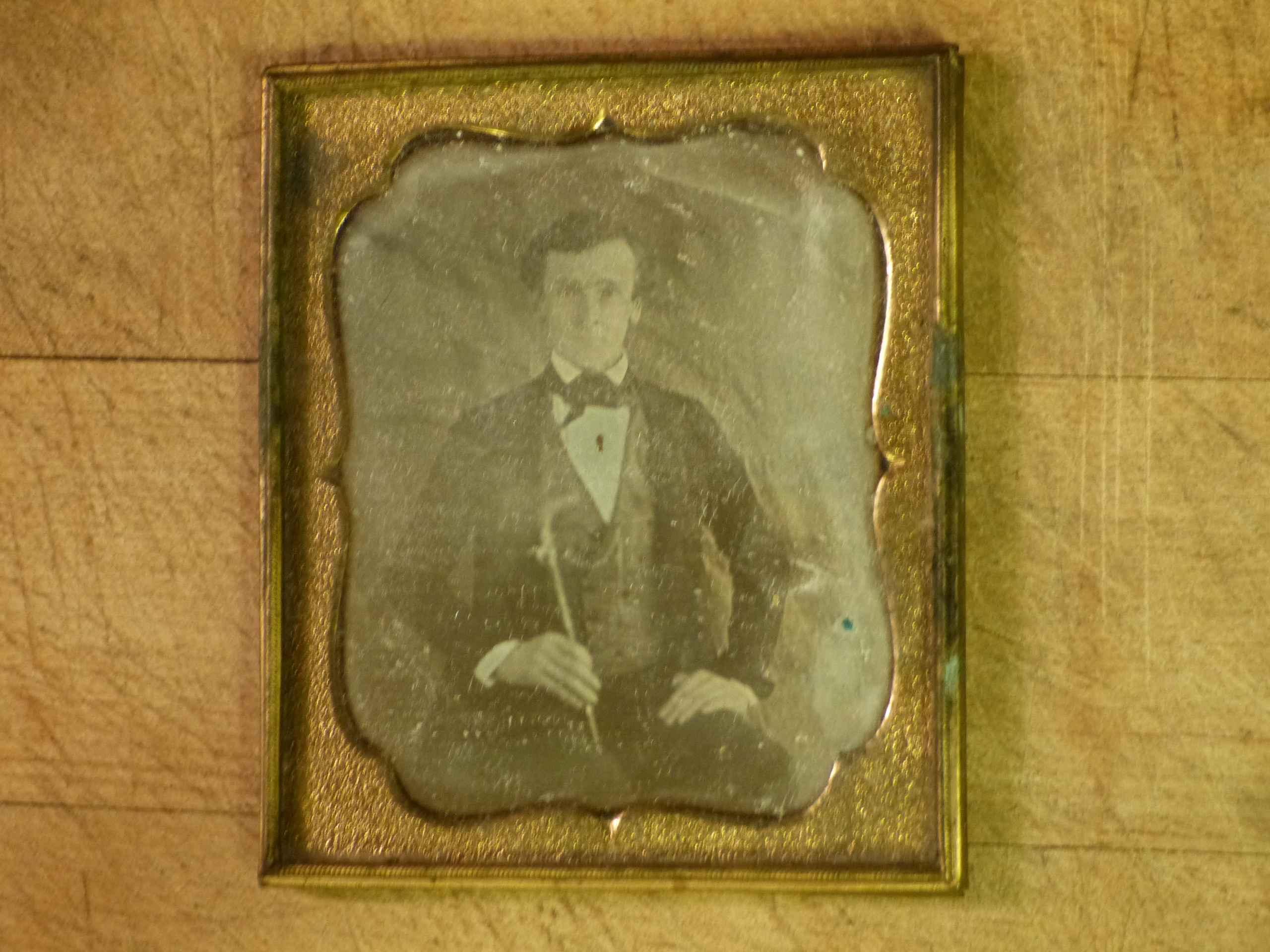
This is a tintype. “Tintype photography was invented in France in the 1850s by a man named Adolphe-Alexandre Martin. Tintypes saw the rise and fall of the American Civil War, and have persisted through the 20th century and into modern times.” — from here.

I do not know who this young man is, nor the year. I asked my maternal uncle before he died and he denied any knowledge of the person. He was the family historian and archivisit.

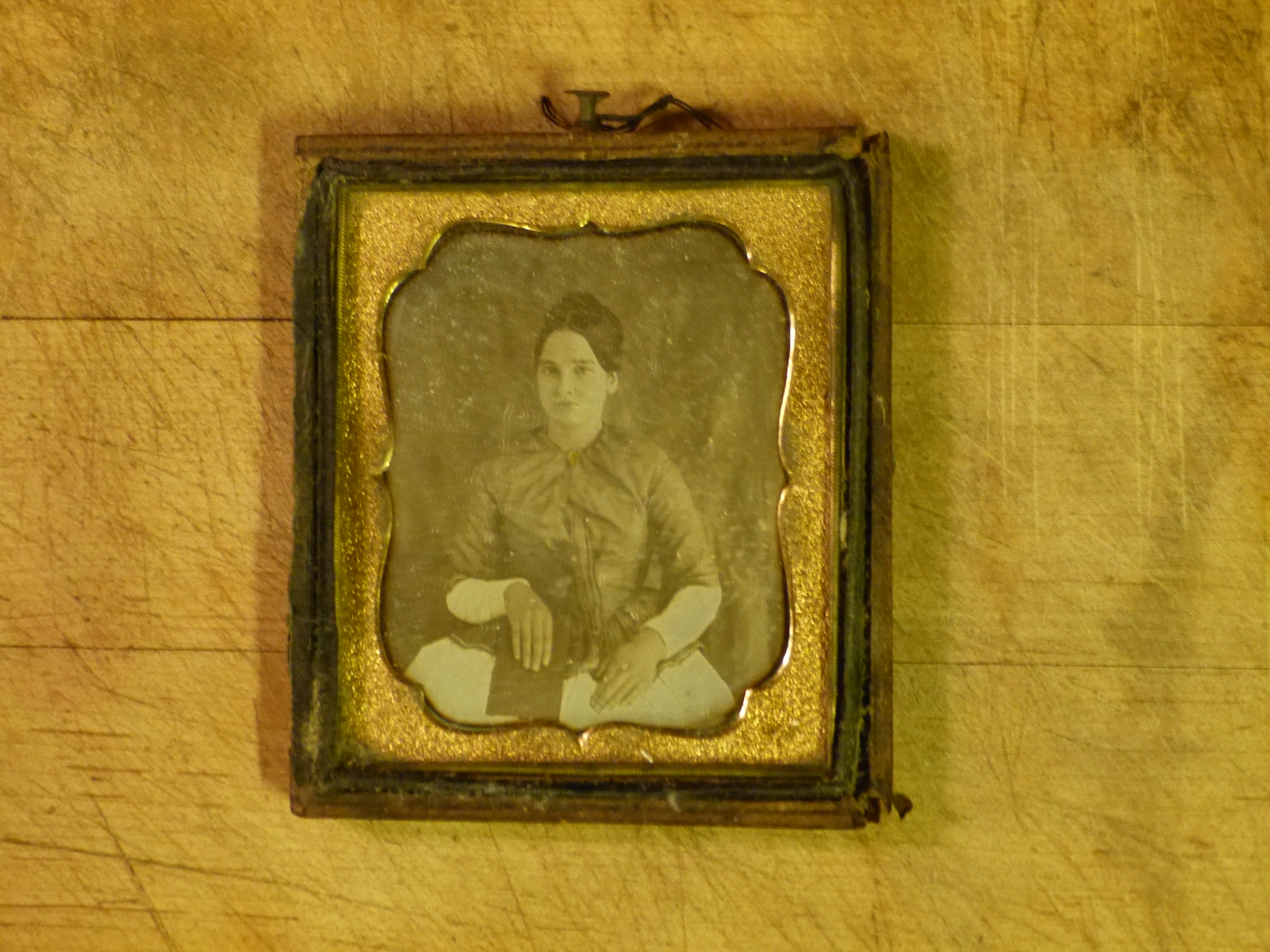
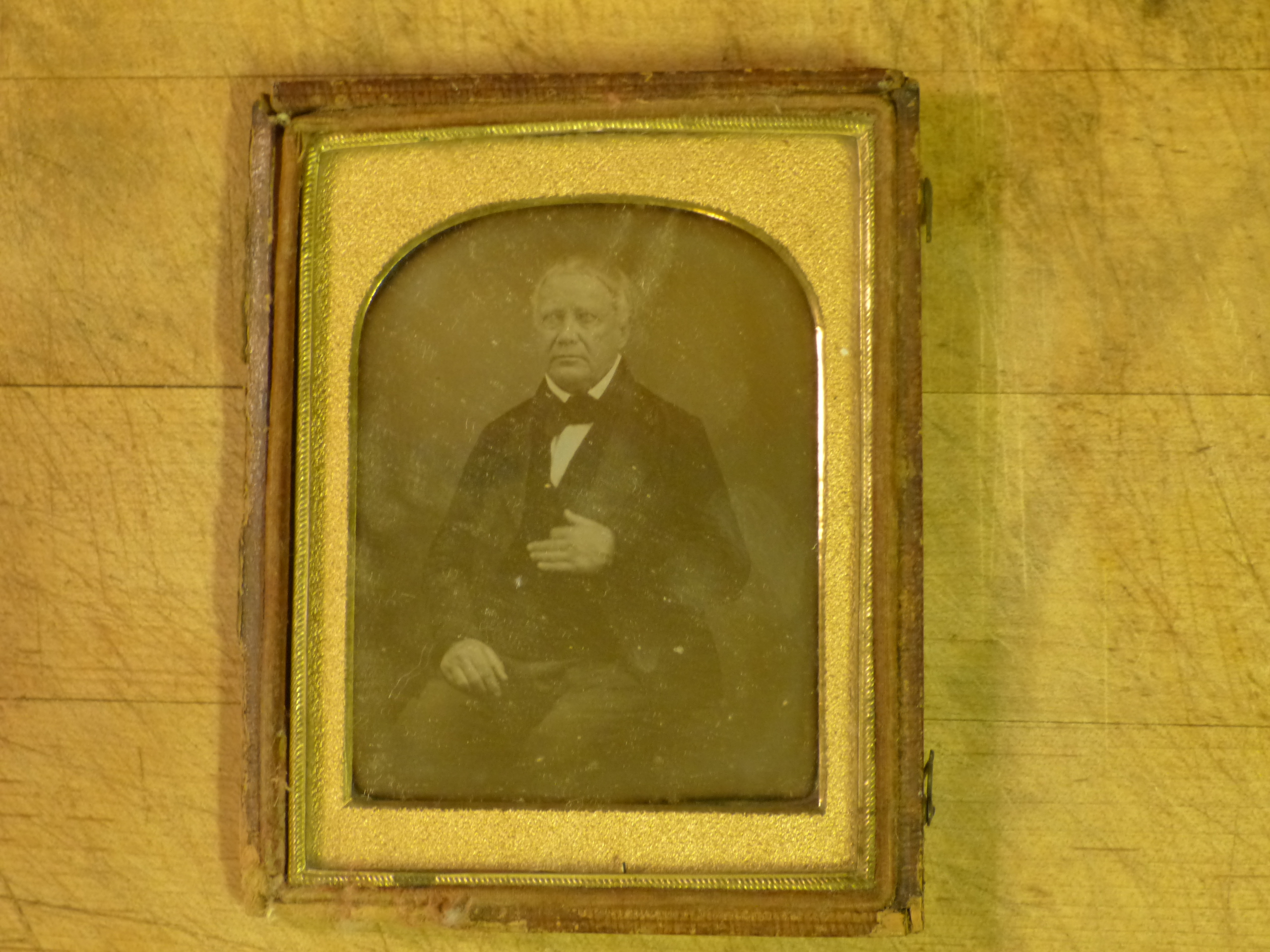
However, I have four tintypes in the box of china doll furniture clothes and accessories. My sister and I received a box of jewelry and the tintypes from my Great Aunt Esther Parr. She was my maternal grandmother’s sister and married Russel Parr. Her maiden name was White, a daughter of George White, the Congregationalist Minister who ran Anatolia College in Turkey and then moved to Greece. My sister and I divided the box of jewelry and the tintypes. There were eight so we took turns picking. We used them for dollhouse portraits, not realizing that they were real photographs. I wonder if the tintypes are from the Parr side of the family.

Last month I was missing my father on February 12. I was a month off. His birthday was today, Malcolm Kenyon Ottaway, born in 1938. I miss him now, too.

I will label more photographs, since I appear to have inherited the maternal family paper archive. There are people that I don’t know, though, and my parents are gone. My mother’s siblings have died as well. I am so glad I still have my father’s sisters.

Ask your parents about the pictures and the objects they keep, before they are gone and you lose the story. Time marches on.

For the Ragtag Daily Prompt: March.

AtoZ Theme Reveal

My theme for the April AtoZ blog challenge this year is art. I think it will mostly be my mother’s art. She died in 2000 of ovarian cancer. My only sibling died in 2012 of breast cancer and my father in 2013 of emphysema. And I have the art: my parents were both packrats and trying to deal with the house and an out of date will took about three years. Moving stuff around, getting rid of stuff. The art initially went in to a storage unit and then into my house. My mother Helen Burling Ottaway was prolific! And she kept every single piece of art and her diaries back to high school! I found a suitcase with my grandfather’s poetry as well: that will be for another day.

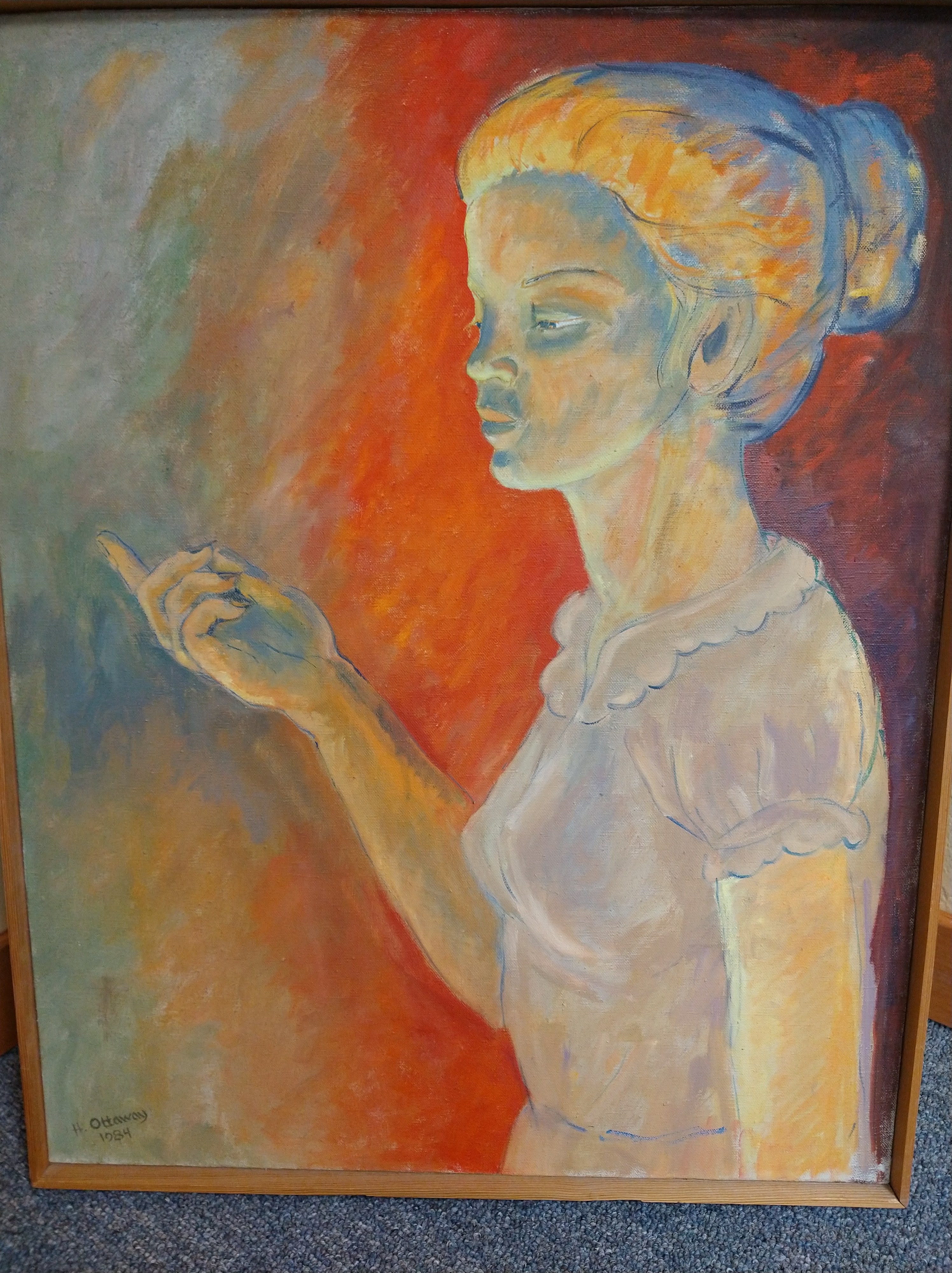
This painting is of my sister. My mother started oils later in her career and Michael Platt, a DC artist, said something like, “Quit doing tiny things. Do something big.” My mother started doing life size and larger than life portraits in chalk pastel and in oils. This painting captures my sister when she was twenty: emotions. I like it but I also think that it is frightening.

Christine Robbins Ottaway age 20, by Helen Burling Ottaway, oil, 1984

http://www.a-to-zchallenge.com/

saved

when your parents die
you will find what they saved

you will find things in the house
that you do not know why they saved

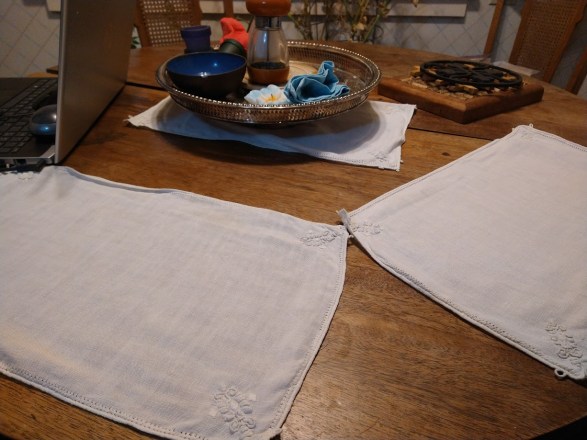
you may find linens carefully folded
and papers from the past

the linens embroidered by ancestors
but you cannot ask which ones

photographs of people you don’t know
and which are not labeled

a reference to a ring that your great aunt had
but she has been dead since 1986

when you go to your parents’ house
ask them what they have saved

ask them why it has been saved

ask them now
because when they are gone
it is too late

to ask about what they saved

________________________

There are also families estranged, where they have cut ties or emigrated or escaped abuse, and have reason not to save anything or speak about it.

We want freedom but we want love too. For the Ragtag Daily Prompt: freedom.

The Introverted Thinker in New York

The Introverted Thinker is eight. Her mother takes her out of school for a week to go to New York City.

They leave her sister and her father behind.

Her mother complains about the school paperwork. “Never let school get in the way of your children’s education,” she says. “That’s what my father says.”

The IT is not sure what all this means. But she is excited.

They go on an airplane. She gets to sit by the window. She can see the ground and it is squares like a quilt with hills. It is so beautiful! She is amazed, magic!

In New York City they go to the house of an old friend of her mother’s. The old friend is old and wears dresses to the ground and a lot of jewelry. The house is dark and there are many things in it. The IT is told that the things are antiques and she must not touch anything. She walks around carefully in the dark places, looking at all of the strange things while her mother talks to the old friend. They talk about the past and people that she does not know.

Her mother takes her to museums on some days. Some are art museums. The IT is already used to art museums because her mother is an artist. The museum is like an art gallery only much bigger and the ceilings are very high. A lot of the art is very big too.

One museum is different. Natural History, says her mother. There are dinosaur bones. The IT can’t touch them either but they are wonderful. Huge animals from the past that are not here any more! She loves it.

They fly home. First she has to thank the old friend with the house like a museum, only darker. Then they go to the plane. This time there are some clouds so the IT can’t see as much, but she still gets to see the quilt of the land.

She decides that she likes museums and she likes natural history. Especially dinosaurs.

released like stars

I have had strep A sepsis and pneumonia twice. It was terrifying and I ended up having to take care of myself. I would be dead if I was not a physician.

Not to be named obscure website helped to sustain me, because it was a place I could go while I was alone, terrified and very very ill. The bout in 2014 took me out of clinic for six months and then I was barely able to work seeing half my usual number of patients. My local hospital refused to help me, but other people did. I am deeply deeply grateful to the people who did help me, including people on everything2.com that I have never met.

I wrote this in June 2014.

released like stars

________________

My sister used to tell me

β€œEverything2 is like a brain.

That’s what attracted me.

All the nodes, like neurons

Connected to each other more and more.”

Or something like that.


Isn’t it annoying?

Now that I’ve taken that memory out

Dusted it off

Embellished it

Who knows what she really said


Flashes of light now

And some where I blank out entirely

For just a moment

Only when I’ve eaten

I’m still avoiding carbs


Could be absence seizures

But she said seizures hurt

These do not hurt

And are accompanied by muscle twitches

Or muscles rolling gently across my frame


I am scared at first

Because I think they are neurons

Bursting into brain flame

And burning out

Brief candles


But I don’t think that’s right either

I think it is plaques

Deposits of antibody

Small pushpins in the wrong place

Being released like stars

Straddle this place

Straddle this place, where we look at history again and again, admit horror and mistakes and cruelty, and work together to build a future.

For the Ragtag Daily Prompt: straddle.

Admitting diagnosis: old guy, don’t know

I wrote this in 2010, after I worked for three months at Madigan Army Hospital. I really enjoyed working there. It was the first time since residency that I had worked in a big hospital — 450 beds — and in a not rural setting. I kept asking to work with residents and eventually the Captain and I worked it out to both our satisfactions.

______________________________________

During my three months temp job at a nearby Army Hospital, I am asked to help the Family Medicine Inpatient Team (FMIT) whenever a faculty member is sick or out or deployed, which turns out to be fairly often. I enjoy this because I want to work with residents, Family Practice doctors in training. It is very interesting to be at a training program, watch the other faculty and work at a 400 bed hospital instead of my usual 25 bed one.

Two patients need to be admitted at the same time on our call day, so the second year resident takes one and I take the other. The report on mine is an 82 year old male veteran, coughing for three weeks, emergency room diagnosis is pneumonia.

The resident soon catches up with me because her person is too sick and gets diverted to the ICU. Mr. T, our gentleman, is a vague historian. He says that he has always coughed since he quit smoking 15 years ago and he can’t really describe his problem. He’d gotten up at 4:30 to walk around the assisted living; that is normal for him because he still does some o the maintenance. He had either felt bad then or after going back to sleep in a chair and waking at 10. “I didn’t feel good. I knew I shouldn’t drive.”

He’s had a heart attack in the past and heart bypass surgery. Records are vague. The radiologist reads the chest xrays essentially as, “Looks just like the one 3 months ago but we can’t guarantee that there isn’t a pneumonia or something in there.” He has a slightly elevated white blood cell count, no fever, and by then I do a Mini-mental status exam. He scores 22 out of 30. That could mean right on the edge of moderate dementia, or it could be delirium. I get his permission to call his wife.

“Oh, his memory has been bad since he spent a year in a chair telling them not to amputate his toes. And he was on antibiotics the whole time. He wasn’t the same after that. This morning he just said he didn’t feel right and that he shouldn’t drive.” So his wife called an ambulance.

The third year chief resident comes by and wants to know the admitting diagnosis. “Old guy, don’t know.” is my reply. “Either pneumonia or a urinary tract infection or a heart attack maybe with delirium or dementia or both.

The second year is helping me put in the computer orders, because I am terrible at it still. She could put them in upside down and asleep. “Why are we admitting him, anyhow? We can’t really find anything wrong, why not just send him home?”

“We can’t send him home because he can’t tell us what’s wrong. He might have an infection but he might not, and he has a really bad heart. If we send him home and he has a heart attack tonight, we would feel really bad. And he might die.”

I was getting a cold. I had planned to ask to work a half day but half the team was out sick so I just worked. But by morning I had no voice and felt awful. I call in sick.

At noon the phone rings. It is the second year. “You know Mr. T, who we admitted last night?”

“Yes,” I say.

“He had that heart attack during the night. Got taken to the cath lab. You made me look really good.” We had worked on the assumption that it could be early in a heart attack though the first labs and the ECG were negative. I had insisted on cardiac monitoring and repeating the enzymes. The resident had finished the note after I left and the night team had gotten the second and abnormal set of enzymes.

82 year olds are tricky. With some memory loss he couldn’t tell us much except that “I don’t feel right.” He was right not to drive and we were right to keep him in the hospital. And if it had all been normal in the morning, I still would not have felt bad about it. The residents are looking for a definitive diagnosis, but sometimes it’s “Old guy, don’t know,” until you do know.