rural doctoring

I read Grampa’s Solo Visits this am and it makes me laugh.

Since I have been a family doctor in my town of 9000 for 22 years, the grocery store and coffee shops can be interesting. When I moved here, my daughter was two and my son was seven. We have three grocery stores. I usually go to the one 7 blocks from my house. I would see patients. My diabetics would sometimes look guilty and scurry away when they saw me. Another patient comes to peer in my cart.

“I want to know if YOU are eating healthy food.” he says.

I laugh.

“I don’t see any vegetables.” he says.

“I am in a CSA,” I say. “I get a box from the farm once a week.”

He frowns. “Do you get to choose?”

“No,” I say. “But since I hate throwing vegetables out, we eat more vegetables. Also, we eat ones that are unfamiliar. The first time I got celery root, I had to look it up. I didn’t know what it was.”

He nods. “Hmmm. Ok. We want to be sure you practice what you preach.”

I laugh again. “I sneak in to get the ice cream at midnight, ok? And where is YOUR cart?”

“My wife has it,” he says. “You don’t get to see it.”

“Ok, then. Have a great day.”

When we were first in town, occasionally someone would come start talking about their health in a store.

“I can’t discuss your health in front of my children. HIPAA.”

“Oh,” they’d say, “Uh, yeah. I should call the clinic Monday?”

“Yes, please.”

We had a coffee shop that made the best pastries that I’ve had since I was an exchange student in Denmark. I wished they’d make tiny pastries, bite size, for the diabetic folks. Those folks would slide a newspaper over their plate when I walked in with my family. They looked terribly guilty. I might nod, but I wouldn’t say anything. Sometimes they would confess at the next visit.

There are lots of jobs in small towns where people are very much public figures. Not just doctors, but the people who work for the city and the county, the ones who redo the taxes for homes, the realtors, all sorts.

After I was divorced, another doc at the hospital asks, “Dating someone new?”

I frown, “How do you know?”

She grins, “He lives on my street. I saw you.”

Dang it. The rumor mill is very very efficient and can often be fabulously wrong. That time it was correct, though I don’t think she passed it around. Other people live on the street.

A few days ago someone that looked familiar walks by me. “What are you doing with so-and-so?”

I laugh. “Rumors abound.” I say. “You would not believe the rumors!”

I took the photograph of the coyote yesterday, driving home. Stopped dead in my lane, no one else on the road. People will be stopped in the road here, talking to each other in two cars going opposite directions, or talking to a friend on foot.
Lung swelling and long covid

I wrote this in 2017, about influenza. However, I think covid-19 can do the same thing. Part of long covid is letting the lungs really heal, which means infuriating amounts of rest and learning to watch your own pulse. Watching the pulse is easier then messing around with a pulse oximeter. The very basics of pulse is that normal beats per minute is 60 to 100. If your pulse is 70 in bed and 120 after you do the dishes, you need to go back to bed or the couch and REST.

From 2017: Influenza is different from a cold virus and different from bacterial pneumonia, because it can cause lung tissue swelling.

Think of the lungs as having a certain amount of air space. Now, think of the walls between the air spaces getting swollen and inflamed: the air space can be cut in half. What is the result?

When the air space is cut down, in half or more, the heart has to work harder. The person may be ok when they are sitting at rest, but when they get up to walk, they cannot take a deeper breath. Their heart rate will rise to make up the difference, to try to get enough oxygen from the decreased lung space to give to the active muscles.

For example, I saw a person last week who had been sick for 5 days. No fever. Her heart rate at rest was 111. Normal is 60 to 100. Her oxygen level was fine at rest. Her oxygen level would start dropping as soon as she stood up. She had also dropped 9 pounds since I had seen her last and she couldn’t afford that. I sent her to the emergency room and she was admitted, with influenza A.

I have seen more people since and taken two off work. Why? Their heart rate, the number of beats in one minute, was under 100 and their oxygen level was fine. But when I had them walk up and down a short hall three times, their heart rates jumped: to 110, 120. Tachycardia. I put them off from work, to return in a week. If they rest, the lung swelling will have a chance to go down. If they return to work and activity, it’s like running a marathon all day, heart rate of 120. The lungs won’t heal and they are liable to get a bacterial infection or another viral infection and be hospitalized or die.

I had influenza in the early 2000s. My resting heart rate went from the 60s to 100. When I returned to clinic after a week, I felt like I was dying. I put the pulse ox on my finger. My heart rate standing was 130! I had seen my physician in the hospital that morning and he’d gotten a prescription pad and wrote: GO TO BED! He said I was too sick to work and he was right. I went home. It took two months for the swelling to go down and I worried for a while that it never would. I dropped 10 pounds the first week I was sick and it stayed down for six months.

Since the problem in influenza is tissue swelling, albuterol doesn’t work. Albuterol relaxes bronchospasm, lung muscle tightness. Cough medicine doesn’t work very well either: there is not fluid to cough up. The lungs are like road rash, bruised, swollen, air spaces smaller. Steroids and prednisone don’t work. Antiviral flu medicine helps if you get it within the first 72 hours!

You can check your pulse at home. Count the number of beats in one minute. That is your heart rate. Then get up and walk until you are a little short of breath (or a lot) or your heart is going fast. Then count the rate again. If your heart rate is jumping 20-30 beats faster per minute or if it’s over 100, you need to rest until it is better. Hopefully it will only be a week, and not two months like me!


Feel free to take this to your doctor. I was not taught this: I learned it on the job.

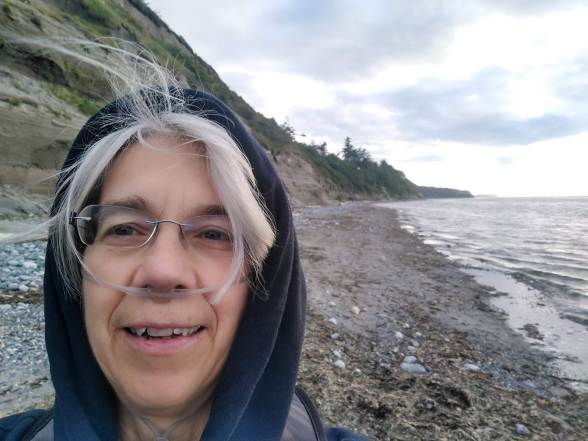
I took the photograph, a stealthie, in June 2021, when I was still on oxygen continuously.

Normalizing our behavioral health response

I keep seeing headlines: MENTAL HEALTH IS WORSE. TEENS ARE STRESSED. ADULTS ARE STRESSED. DRUGS AND ALCOHOL AND DOMESTIC VIOLENCE ARE UP.

Like they shouldn’t be? This isn’t news. It is expected, because we are in a pandemic, the death rate is up, people are frightened, the scientific news changes daily and now we add a war.

OF COURSE PEOPLE ARE ANXIOUS AND STRESSED. And when stress goes up, substance “overuse” goes up too. Add fenanyl to the mix and the overdose death rate is up. Should I call it the “overuse” death rate to be politically correct? I do think that it is stupid to stigmatize “overuse”. But I also do not like the term “overuse”. Addiction may be stigmatized, but to me addiction means the drug or alcohol or gambling has taken over the person’s brain and it is the addiction that is lying to the person and to me. It makes it much easier for me to watch for relapse if I think of it as the habit or substance in control. There is no stigma there: the person is deeply ill and needs help. Part of the help is recognizing relapse. I look for signs.

With behavioral health we learn to watch for signs. The latest guidelines say that we should screen for behavioral health problems at well people visits. One in ten people are depressed and the lifetime incidence is higher.

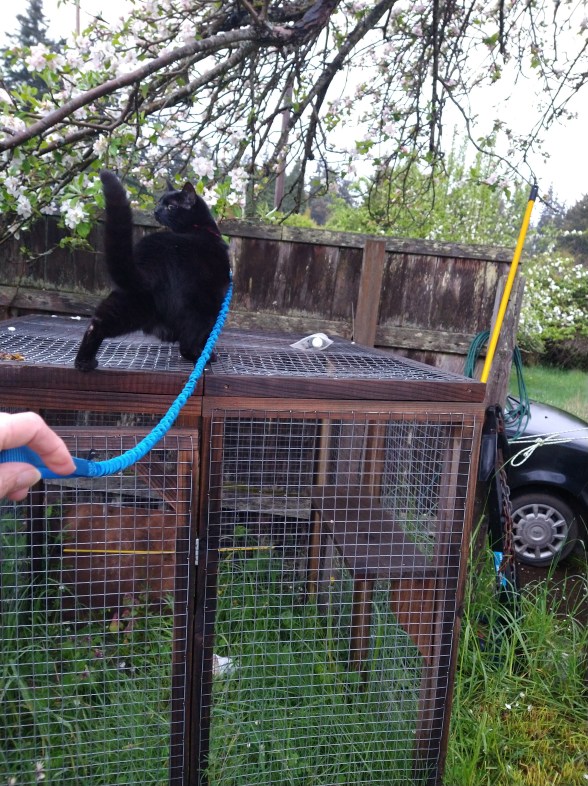
The online and news articles sound surprised that there is an increase in behavioral health problems. Why would anyone be surprised? We have evolved emotions along with logic and emotions help us to survive. If you are a child in a war zone or a family with abuse or domestic violence, your brain wires to survive the crisis as best you can. These are ACE scores, Adverse Childhood Experiences. Every child’s ACE score is going up during the pandemic. Adults can develop PTSD, depression, anxiety: of course. This is how our species survive. It isn’t FUN but it is not a disaster either. We can help each other. We can listen to each other. We may have to say “I can only listen to this for ten minutes,” and set a timer. There was a cartoon with a father with a stop watch. The daughter is complaining as fast as she can. He stops her: “There. You have had your one minute of whining today.” Limit the news if it is driving you bananas or you feel more depressed or frightened. Turn off the television: if you live in a safe place, go for a walk. I have goldfinches and pine siskins arguing with each other in my front yard. The cats are hugely entertained by this. The cats only go out with harness and leash. I may need to follow Sol Duc up trees. She leaped on top of the outdoor cat cage yesterday, four feet up. I was surprised. No wonder they can catch birds: from a stand to four feet up and she is about ten months old. And see? We are distracted by the cat and relax a little.

If you are not trying to escape a war zone or something else horrible, give yourself the gentle gifts: things that make you relax. Stupid cat videos, old music, reread a beloved book, a gentle walk outside. Yesterday I “walked” Elwha. He spent the whole walk sitting on the porch watching the birds. Two birds landed in the grass and he immediately morphed to hunter, but was still on a leash. I saw a pair of robins in the back yard. One was holding something in her beak. A gift for the other? Nest building? Nestlings already?

My other go to is the trees. I go lean on a tree when I feel overwhelmed. The trees do not seem to mind. Rocks don’t either and I am very grateful.

Blessings.

Our rhododendrons are blooming.

#ACE scores #behavioral health #emotion #fear #normal emotional response

Stages of Peace Playlist I

Dang, I’ve got a lot of stages. So it is a long playlist! I can’t complain (yes I can), after all, I wrote the stages. Hmm, to work, to work, to play, to PEACE.

Twisting words- The Grass is Blue – Dolly Parton

Confusion- Get it Worked On -Delbert McClinton

Denial- Old Number 7- The Devil Makes Three

Bargaining – Gallows Pole- Alvin Youngblood Hart

Anger- Joanne Little- Sweet Honey in the Rock

Bitterness -The Wound That Never Heals – Jim White

Revenge -Silver Dagger- Dolly Parton

Acting Out – Pills I Took- Hank Williams III

Oppositional Defiance- All Hail- The Devil Makes Three

Grief -Days Like These – Over the Rhine

Acceptance- In my time of dying – Alvin Youngblood Hart

Forgiveness -Jesus on the Mainline – Mississippi Fred McDowell

Healing- I be your water- Sweet Honey in the Rock

Hope – So Glad I’m Here- Sweet Honey in the Rock

Reconciliation – You are loved, Victoria Williams

Peace – Everybody Ought to Know (and) Redemption Song- Sweet Honey in the Rock

S is for Shame

I am reading Kim Addonizio’s Ordinary Genius for a Centrum poetry class.

She challenges white poets: why don’t you write about racisim?

I write that we are afraid. I think it is more than that: it is shame. Thinking about her words, I thought about one of my mother’s pieces of art and how it makes me uncomfortable. And that my discomfort with it is new. I wrote this poem.

Race forward

Kim Addonizio asks
Why don’t white poets write about race?

Chickenshits, I think.
Afraid. We are afraid.
My mother called one color Nigger Pink.
She says, “It’s the color that only looks good on black people.”
She looks wicked as she says it and I know that I never should.
She didn’t think she was racist nor a feminist.

One time she says, “Maybe I am a feminist.”
“Why do you say that?” I ask.
“We had a group of women who went to plant trees. None of them could dig a hole.”
“Oh,” I say.
“They didn’t know how to use a shovel!”

She might be horrified how many high school graduates today would call a spade a shovel.

A mentor art teacher says, “Stop being small,” to her. “Get bigger.”
She starts pastel portraits, larger than life.
One that I love is titled “One Fist of Iron.”
Now: don’t lie. What race do you think the person is? And what gender?

Did you guess correctly?
African American and male.

Another friend tells me he is trying to get his father to stop calling Brazil nuts nigger toes.
My mother told me that term too.
And that it was unacceptable.
At my friend’s father’s birthday, I focus my camera on the birthday man.
He holds a bowl of nuts. He says to himself, “I will now eat a politically incorrect nut.” and the camera clicks. I love this photograph because he is 90 and white and reluctantly changing his wicked words.

My mother says there might be hope when a small black child trick or treats her house in black face, in Alexandria, Virginia, in the 1990s.

I think there IS hope, even though the race seems slow and painful and there is so much anger
Look in the mirror, white poets.
And write the words.

One Fist of Iron, by Helen Burling Ottaway

The photograph at the beginning of this is not my mother. It is her mother’s mother, Mary Robbins White. I have pictures of five generations of women with that serious expression. She was the wife of George White, the Congregationalist Minister who was president of Anatolia College in Turkey. They and my grandmother and siblings were escorted to the Turkish border in 1916. George White and his wife were two of the main witnesses of the genocide of the Armenians in Turkey.

Let us not stand by and witness more genocides.

ATOZBLOGGINGCHALLENGE2022 #art #Women artists #Helen Burling Ottaway #ATOZCHALLENGE #APRILATOZ

For more information about the #AtoZChallenge, check out this link.

Blessing

Blessing

You have my blessing to travel
Now, then forever.

You have my blessing to travel
With your guitar.

Go, with my blessing, travel.
Or don’t, as you will.

You have my blessing to hunt.
Now, then, forever.

You have my blessing to hunt
With your guns.

Go, with my blessing, hunt
Or don’t, as you will.

You have my blessing to sing.
Now, then, forever.

You have my blessing to sing
With your guitar.

Go, with my blessing, sing.
Or don’t, as you will.

You have my blessing to travel
But not with me.

You have my blessing to hunt
But not with me.

You have my blessing to sing
But not with me.

You have my blessing, not me.
Now, then, forever.

________________________

For the Ragtag Daily Prompt: grief.

J is for joy

I am blogging A to Z about artists, particularly women artists and mostly about my mother, Helen Burling Ottaway.

I am nearly done traveling and I am running out of photographs of Helen Ottaway’s work! J could be for jonquil but there are none in this watercolor. But I think it is a joyous and messy bouquet, typical of my mother. She would complain about her garden, how it was riotous chaotic beauty rather than neat rows. But I loved her garden and her bouquets and her paintings, untamed and joyous!

This watercolor is from 1994, the year before my parents moved from Alexandria, Virginia to Chimacum, Washington. My grandmother’s house two doors down from my parent’s house was sold. Someone came to my parents’ house and said, “They are ripping out the garden!” The new owners tore out the beautiful and elaborate garden that my grandmother had paid her granddaughter in law to design and build. Many uncommon plants, torn out and in a pile on the sidewalk. The whole neighborhood of gardeners turned out to take the plants home and replant them. The garden was replaced with bushes and two rows of marigolds down the path. I suspect that that household was shunned by the neighborhood gardeners for years after that and I wondered if my grandmother would haunt them. I do not have marigolds in my garden! My mother shrugged and said, “Well, they own the property.” but she could barely stand to walk by it.

I think the bouquet is from my mother’s own garden, a mix of humble and more exotic flowers. I love the purple and it gives me joy.

ATOZBLOGGINGCHALLENGE2022 #art #Women artists #Helen Burling Ottaway #ATOZCHALLENGE

wearing sunglasses in the rain

Trigger warning: this is about dementia. I wrote this over ten years ago.

wearing sunglasses in the rain

I am weeping for you both

you have cared for her
for better or worse, for richer or poorer, in sickness and health

and she has lost her memory

you told me on the phone
that it’s not that bad

you say it again in the room

I knew before I saw her
that it was bad, very bad, much worse
she is only 60

she becomes agitated when we try to weigh her
old style doctor’s scale
frightens her to try to step up.
gentle caregiver that you have hired
pushes her, until I say stop, stop, stop
her weight does not matter

shuffling gait
she is frightened to be in a new place
I ask her questions gently
she does not want to sit in the chair in the exam room
“No!” she says “No!”
I leave the room until she’s calmer

when I return
I give her choices
“Shall I examine you first with my stethoscope
or shall I talk to your husband?”
I choose for her, the latter
she relaxes, a little
later, I tell her each step before I do it
she is slightly tense when I lay the stethoscope
on her thin shoulders, but she doesn’t fight

she tenses as I ask her husband questions
about the memory loss
ten years now, a steady course
I ask him what he understands about the prognosis
he shifts uncomfortably
and I ask her if she would like to wait in the waiting room
while I talk to him
Firm and clear: “Yes, I would.”

She is not in the room now
he says that she is not too bad
the picture comes slowly in to focus
mild memory loss, is what he thinks

there are three stages of memory loss, I say
mild, the short fibers, where short term memory is affected
we forget what someone just said
moderate, the medium axons
we forget the recipe that we’ve know for 50 years
we forget how to do math
we forget names and how to get to the store
we forget how to operate the car
severe, the long axons
executive function
we do not initiate things
we forget to get dressed
we forget how to speak
we forget our potty training

his eyes grow sadder and sadder

at last, we return to being a baby
we forget everything
at last, we remember the womb
we no longer want to eat

is she forgetting to eat?

he is not ready to answer

as we leave the room
he says that she is not sleeping well
she seems to be awake at night
eyes closed
but her fingers are moving, as in play
he doesn’t speak to her
he needs to sleep and thinks she should too

should he give her a sleeping pill?

maybe she is happy, I say
maybe in bed in the dark
you are there and it is safe
no one is making her get dressed
no one is making her bathe
maybe that is where she wants to be awake
I would not give her a sleeping pill

the dogs are in the room
he says
and the tv is on just a little
maybe she is happy

he is wearing sun glasses
as they cajole and help her in to the van

he is wearing sun glasses
though it is overcast, low clouds and raining

sometimes it is so hard
to say what I see
to try to say the truth

sometimes the truth is not gentle
but sometimes the truth is love

I am weeping for you both

written 2010

Playlist: Stages of Grief 3

Stages of Grief Playlist 3

All women all the time today. Grieving for their men or our culture. Fighting back.

Denial

Dolly Parton: The Grass is Blue

Bargaining

Ann Peebles: I can’t stand the rain

Anger

Lily Allen: Not Fair

Acting Out/Fighting Back

Sweet Honey in the Rock: Give Your Hands to Struggle

Revenge

Dolly Parton: Silver Dagger

Grief

Tricia Walker: The Heart of Dixie

Acceptance

Bessie Smith: You been a good old wagon