Mother Nature is not too worried about clutter.
For the Ragtag Daily Prompt: clutter.

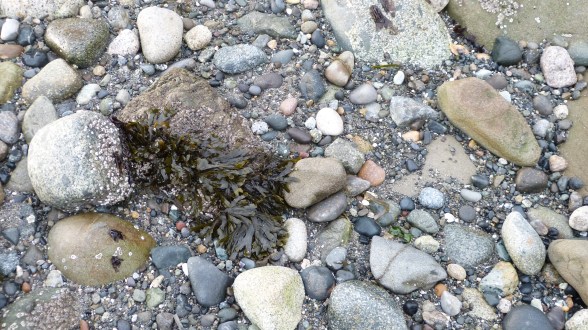
Mother Nature is not too worried about clutter.
For the Ragtag Daily Prompt: clutter.
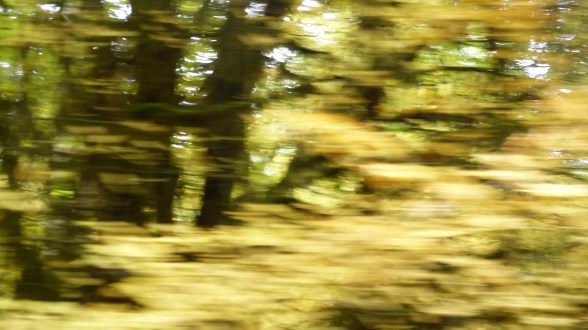
Can you feel safe while being in motion?
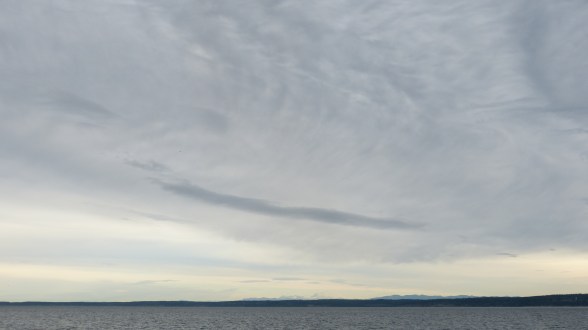
I took this last week from Marrowstone Island. The clouds were figured and changing fast. The sky over the water is so big. We look for the meaning in the cloud.
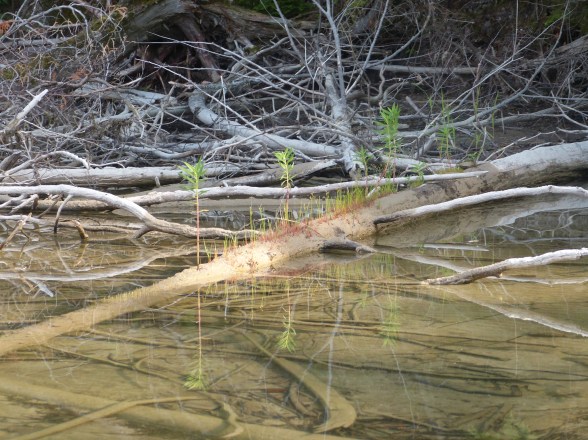
I posted this in November, 2015. I am reposting it.
_________________
Why care for addicts?
Children. If we do addiction medicine and help and treat addicts, we are helping children and their parents and our elderly patients’ children. We are helping families, and that is why I chose Family Practice as my specialty.
Stop thinking of addiction as the evil person who chooses to buy drugs instead of paying their bills. Instead, think of it as a disease where the drug takes over. Essentially, we have trouble with addicts because they lie about using drugs. But I think of it as the drug takes over: when the addict is out of control, the drug has control. The drug is not just lying to the doctor, the spouse, the parents, the family, the police: the drug is lying to the patient too.
The drug says: just a little. You feel so sick. You will feel so much better. Just a tiny bit and you can stop then. No one will know. You are smart. You can do it. You have control. You can just use a tiny bit, just today and then you can stop. They say they are helping you, but they aren’t. Look how horrible you feel! And you need to get the shopping done and you can’t because you are so sick…. just a little. I won’t hurt you. I am your best friend.
I think of drug and alcohol addiction as a loss of boundaries and a loss of control. I treat opiate overuse patients and I explain: you are here to be treated because you have lost your boundaries with this drug. Therefore it is my job to help you rebuild those boundaries. We both know that if the drug takes control, it will lie. So I have to do urine drug tests and hold you to your appointments and refuse to alter MY boundaries to help keep you safe. If the drug is taking over, I will have you come for more frequent visits. You have to keep your part of the contract: going to AA, to NA, to your treatment group, giving urine specimens. These things rebuild your internal boundaries. Meanwhile you and I and drug treatment are the external boundaries. If that fails, I will offer to help you go to inpatient treatment. Some people refuse and go back to the drug. I feel sad but I hope that they will have another chance. Some people die from the drug and are lost.
Addiction is a family illness. The loved one is controlled by the drug and lies. The family WANTS to believe their loved one and often the family “enables” by helping the loved one cover up the illness. Telling the boss that the loved one is sick, procuring them alcohol or giving them their pills, telling the children and the grandparents that everything is ok. Everything is NOT ok and the children are frightened. One parent behaves horribly when they are high or drunk and the other parent is anxious, distracted, stressed and denies the problem. Or BOTH are using and imagine if you are a child in that. Terror and confusion.
Children from addiction homes are more likely to be addicts themselves or marry addicts. They have grown up in confusing lonely dysfunction and exactly how are they supposed to learn to act “normally” or to heal themselves? The parents may have covered well enough that the community tells them how wonderful their father was or how charming their mother was at the funeral. What does the adult child say to that, if they have memories of terror and horror? The children learn to numb the feelings in order to survive the household and they learn to keep their mouths shut: it’s safer. It is very hard to unlearn as an adult.
I have people with opiate overuse syndrome who come to see me with their children. I have drawings by children that have a doctor and a nurse and the words “heroes” underneath and “thank you”. I have had a young pregnant patient thank me for doing a urine drug screen as routine early in pregnancy. “My friend used meth the whole pregnancy and they never checked,” she said, “Now her baby is messed up.”
Addiction medicine is complicated because we think people should tell the truth. But it is a disease precisely because it’s the loss of control and loss of boundaries that cause the lying. We should be angry at the drug, not the person: love the person and help them change their behavior. We need to stop stigmatizing and demeaning addiction and help people. For them, for their families, for their children and for ourselves.

And does this bird have any scruples?
For the Ragtag Daily Prompt: scruple.
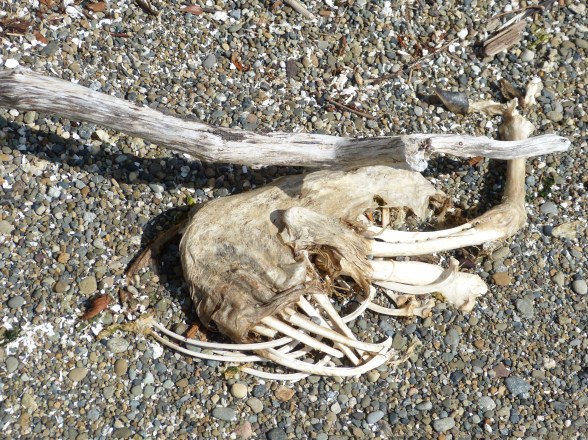
For the Ragtag Daily Prompt: afterlife.

For the Ragtag Daily Prompt: glum.
I walked in the woods yesterday and it lifts me. I couldn’t be glum there. It was so beautiful.

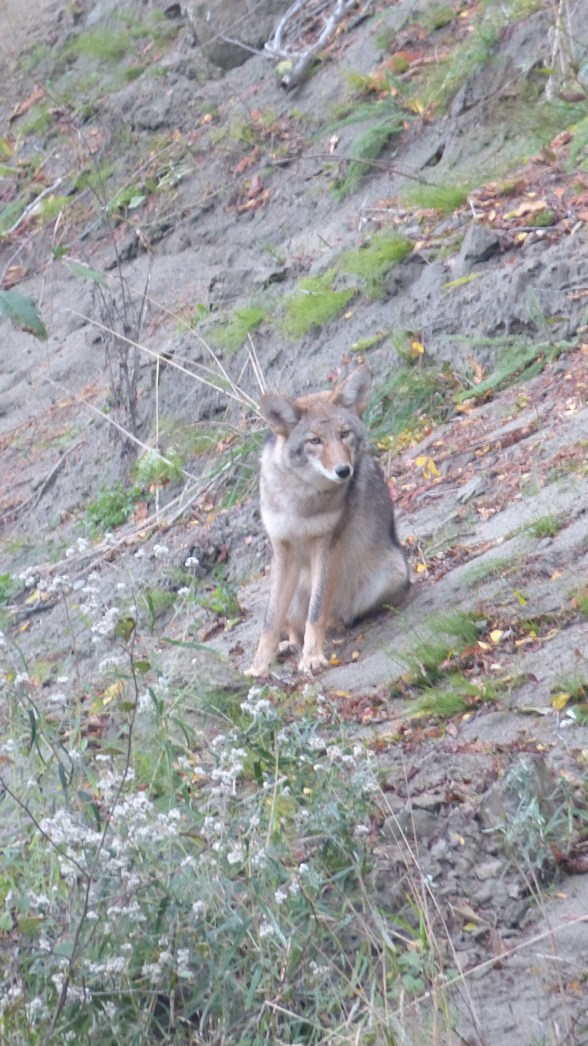
Yesterday B and I walk about a mile and a half of beach on Marrowstone Island. We see five other people total. There are long stretches with no one in sight anywhere.
Way down the beach there is a sand cliff. A coyote runs half way across the exposed face and stops. It looks precarious. We watch it. “That’s weird,” says B. “They don’t hang out in plain sight.”
It scrabbles and runs the rest of the way across. It stops and turns and sits. Watching us.
I laugh.
B. frowns. “They don’t DO that.”
“I think it’s listening to us. We’ve been singing and laughing.” We are goofballs on the beach. Wordplay. We’ve both been coming up with advertising songs. Horrors, ear worms.
“They don’t do that.” he says, “Can you take your camera out slowly?”
I have my Panasonic FZ150, 24x zoom. I get some shots. B is acting nonchalant, hunting for agates again. He finds more than me from both practice and I am busy taking pictures and being distracted by other pretty rocks, not just clear agates. He is disciplined. I am a generalist.
I get lovely shots. We zigzag back and forth on the beach, trying to look at ALL the rocks. “If you are hunting like this, other animals think you are foraging. Birds and animals will ignore you. I can get really close to them.”
The coyote is watching us. “He’s listening to us, really!”
“Maybe he wants to know what we are foraging for.”
“Rocks.”
“He’s hungry. Or he’s young.” We don’t really know it’s a he.
I start singing. I zigzag closer and take more pictures. She is flicking her ears at the song.
“She doesn’t seem rabid.”
“There isn’t much rabies out here.”
“Bats.” I say. I’ve researched it twice in the last 8 years.
“Yes, but not mammals.”
I start a video and sing to the coyote. I sing The Fox, though I leave out the verses about Old Mother Flipperflopper and the hunters. Coyote flips her ears and turns her head. She is checking where B is since he is moving further down the beach. I finish the song and turn off the video. “Thank you!” I say.
We walk again.
When we turn around, there is Coyote. She has shadowed us down the beach, and she slips into the brush at the foot of the cliff. She is quickly not visible.
“Humph.” says B.
I laugh.
Later, we look up and a larger animal is coming toward me. We both startle, but it is in a submissive posture. A dog, not a coyote, with a red collar. We both thought it was a coyote for a moment. It comes up to me and is very friendly. Then to B. Then back to it’s owner, who limps into sight.
“Wow, I thought it was another bigger coyote for a minute.”
“Me too. I thought it was coming right after you.”
“It’s owner looks frail and old.”
“Our age.”
“No way!” laugh.
“Yes.”
I don’t think so, but maybe. I was more focused on the dog.
I find two clear agates, but come back with two windbreaker pockets with other rocks. B only finds one that meets his specifications. My two really aren’t up to the quality he wants. Well, one is borderline and one doesn’t qualify.

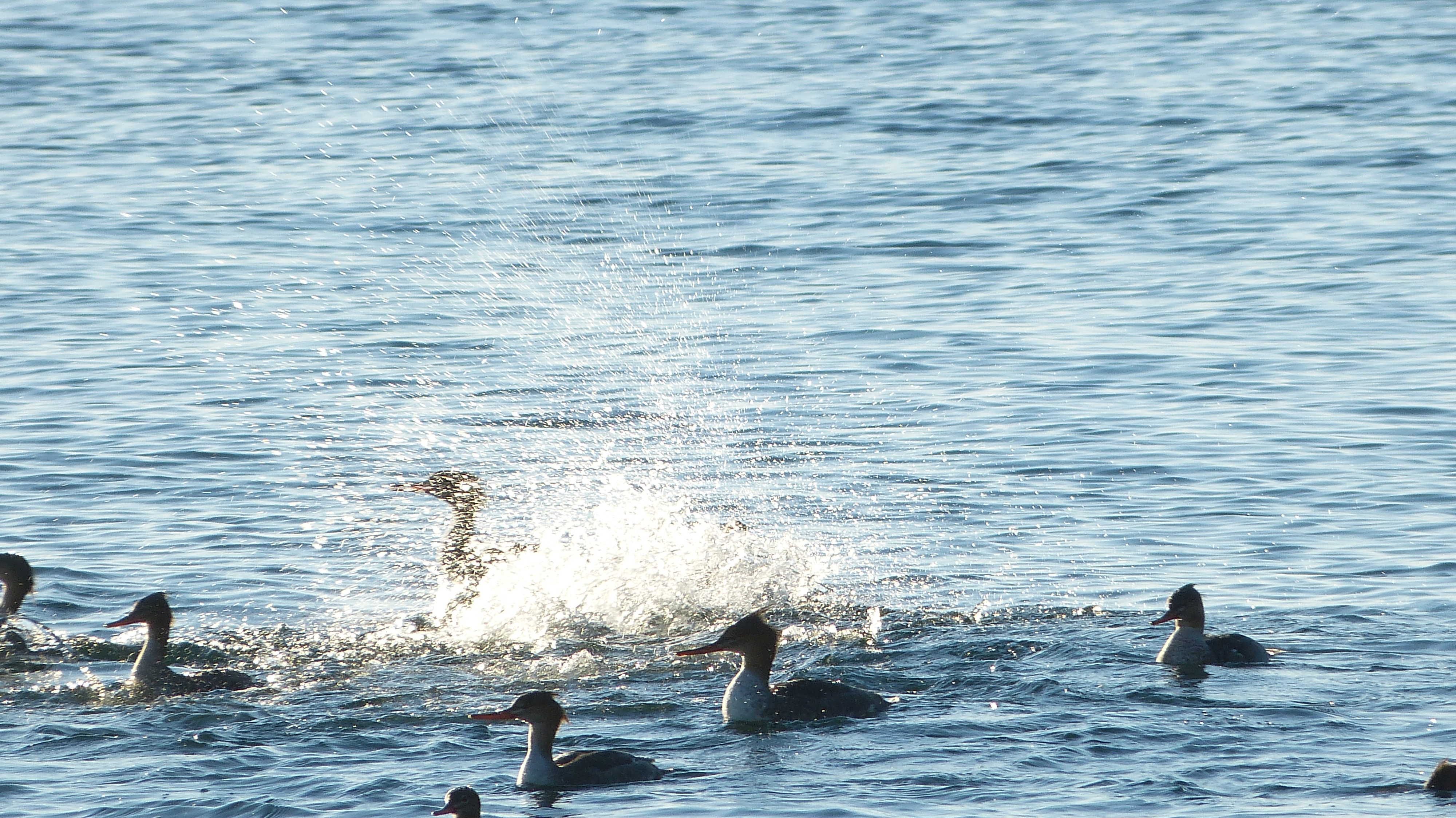
The mergansers were enjoying the sun just as much as we were yesterday.
For the Ragtag Daily Prompt: amirite?
Home to the Longette & Longette Lite
Intelligence that is not artificial: we are real.
BLIND WILDERNESS
in front of the garden gate - JezzieG
Discover and re-discover Mexico’s cuisine, culture and history through the recipes, backyard stories and other interesting findings of an expatriate in Canada
Or not, depending on my mood
All those moments will be lost in time, like tears in rain!
An onion has many layers. So have I!
Exploring the great outdoors one step at a time
Some of the creative paths that escaped from my brain!
Books, reading and more ... with an Australian focus ... written on Ngunnawal Country
Engaging in some lyrical athletics whilst painting pictures with words and pounding the pavement. I run; blog; write poetry; chase after my kids & drink coffee.
Coast-to-coast US bike tour
Generative AI
Climbing, Outdoors, Life!
imperfect pictures
Refugees welcome - Flüchtlinge willkommen I am teaching German to refugees. Ich unterrichte geflüchtete Menschen in der deutschen Sprache. I am writing this blog in English and German because my friends speak English and German. Ich schreibe auf Deutsch und Englisch, weil meine Freunde Deutsch und Englisch sprechen.
En fotoblogg
Books by author Diana Coombes
NEW FLOWERY JOURNEYS
in search of a better us
Less Noise. More Meaning
Art from the Earth
𝖠𝗇𝗈𝗍𝗁𝖾𝗋 𝖶𝗈𝗋𝖽𝖯𝗋𝖾𝗌𝗌.𝖼𝗈𝗆 𝗌𝗂𝗍𝖾.
Taking the camera for a walk!!!
From the Existential to the Mundane - From Poetry to Prose
1 Man and His Bloody Dog


You must be logged in to post a comment.