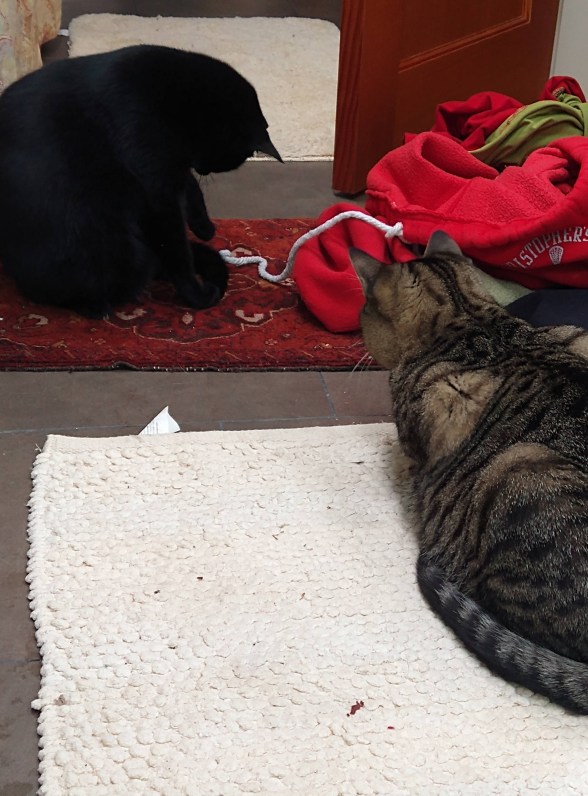
Fear

When someone tries to hit me
I fight back
I didn’t worry much in clinic
even when patients yelled
it indicated they were upset
and usually I knew why

Not much fear there.

So what do I fear?

Abandonment
and lies
the one who says they care
that we will be friends
even that they love me
and later walk away

But that has already happened
more than once
and I survive
and the Beloved is still here
and there
and everywhere I am
and everywhere you are
and everything is connected
so there is no fear
and even a chance
that abandoned
I still thrive

____________________

The photograph is from Marrowstone Island in July 2022.

Neurogognitive effects of Long Covid I

Here is the first part of my notes from this lecture: May 24, 2023 Neurocognitive effects of Long Covid (International) part 2, by Dr. Struminger PhD, neuropsychologist.

I am trying to make this fairly clear to almost anyone. Some words may be unfamiliar to start with, but I will bet that you can sort it out. I would be happy to try to clarify any part if needed. These are my notes from the first half of this lecture, fleshed out to be clearer.

This is the Schmidt Initiative for Long Covid Global in English with real time translation into Arabic, French, Spanish, Portuguese and closed captions. Session recordings: https://app.box.com/s/onh1ma57ttjpi2c19qqxvmdao0kd2nsr

Dr. Struminger said that 1/4 to 1/3 of Long Covid patients have cognitive symptoms. A study comparing Long Covid patients with people who never got Covid-19 shows the Long Covid people to be three times more likely to have attention deficits or confusion. Part of the barrier to treatments is to define the problem, figure out the mechanisms and then start studying treatments. She said that she would share a few proposed mechanisms for cognitive impairment in Long Covid, but that it is probably multifactorial and it’s a rat’s nest. (Ok, I said rat’s nest. Dr. Struminger did not use that term.)

There are two main phenotypes of Long Covid brain problems: Hypoxic/anoxic and Frontal/subcortical. In hypoxic/anoxic certain brain functions are intact: Attention, visuospatial, cognitive fluency and memory encoding. There is impairment in problem solving and memory retention. This pattern is associated with the people who were hospitalized, deathly ill, on ventilators, or heart/lung bypass machines.

Frontal/subcortical is more common in the people who were never hospitalized and were not on a ventilator or ECMO machine. It can show up even in people who seemed to have mild Covid-19. The impairment is in attention, cognitive fluency and memory encoding, while the intact functions are visuospatial, memory retention and problem-solving.

Here are those lists in a table, HA for hypoxic/anoxic and FS for Frontal/subcortical.

Attention: HA intact, FS impaired
Visuospatial skills: HA intact, FS intact
Cognitive fluency: HA Intact, FS impaired
Memory Encoding: HA intact, FS impaired
Memory retention: HA impaired, FS intact
Problem-Solving: HA impaired, FS intact

The two types probably have different mechanisms and the super sick are more often the hypoxic anoxic. And there can be a mixed or both presentation.

Neuropsychologists test people to see what parts of the brain are working. Testing locally usually takes about four hours or more. Some brain functions have been mapped to parts of the brain but others are still mysterious. Efforts continue to match function to neuroanatomy. Going through each of the brain functions, some are mapped and others are not.

Attention is mapped and mediated by the frontal lobes. Attention is impacted by physical fatigue, dysautonomia, pain, shortness of breath, further impacted by emotional symptoms. It is REALLY easy to get stuck in a vicious cycle where physical symptoms or pain or hypoxia decrease attention function, which in turn makes physical symptoms worse. For example, hypoxia can decrease attention, which makes the person anxious and tachycardic, which in turn affects attention more.

The frontal lobes are very sensitive to hypoxic damage and to inflammation. Any inflammation in the body messes with them. The frontal lobes need oxygen and glucose. If a person can’t breathe, this messes up attention; if they are dizzy, it messes up attention.

Cognitive fluency. The anatomical correlates are less clear. Probably frontal and temporal, vulnerable to hypoxia and broad networks in the brain, vulnerable to physiological and mood disturbance. So vulnerable to the same things as the frontal lobes.

Learning and memory: Map to the hippocampi – sensitive to hypoxia and can be injured while the rest of the brain is comparatively unscathed. People have difficulty with retention of new information and not just attention/encoding problems. Neuropsychology distinguishes between attention/encoding and retention/recall problems. Those are different. In alzheimer’s, there is trouble retaining new information, even though people can encode it. In the frontal/subcortical long covid brain fog, there is more difficulty with attention/encoding. That is, if the person is tachycardic or in pain or dizzy or short of breath, it is more difficult to pay attention and encode information into memory.

Executive functioning. Frontal lobe: sensitive to hypoxia and metabolic dysregulation, significantly impacted by physical symptoms and mood disturbance.

The hypoxic/anoxic pattern has effects more like Alzheimer’s or a dementia. The frontal/subcortical is more like a concussion or traumatic brain injury. Neither sounds great, but there is more healing from the second than the first. Treatments for now are coming from the Alzheimer’s/dementia established treatments or from the concussion/traumatic brain injury established treatments. The first part of treatment is rest, rest, rest, and try to keep the brain from getting overwhelmed. I will write more about the ongoing changing recommendations.

More at: https://hsc.unm.edu/echo/partner-portal/echos-initiatives/long-covid-global-echo.html

The photograph is a screen shot of the brain from below from one of the conferences. There were over 300 people attending this zoom lecture, which is encouraging and hopeful.

For the Ragtag Daily Prompt: covert. The covert damage from Covid-19 is being sorted out.

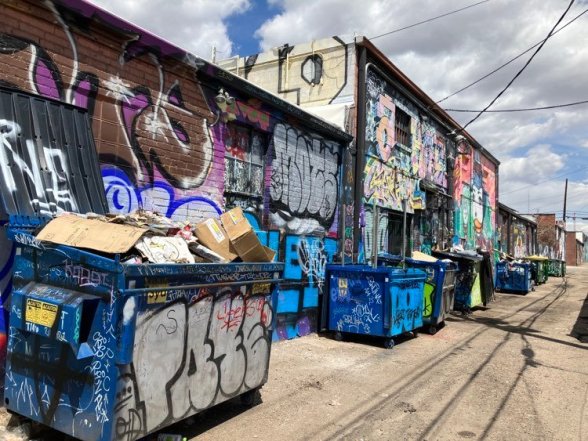
Colorful

It has been horrible to have the zombies take over cities, but the surprise has been color. The zombies love color and it mesmerizes them. We all carried paints and spray paint and brushes for the zombies at first. Hand a zombie any paint and they won’t bite you! People quickly realized that the more brightly we color everything, the less chance of being bitten. Now our clothes are rainbows of riotous color, black suits gone forever. There are now well known zombie artists, hired to brighten and decorate nearly anything.

For the Ragtag Daily Prompt: zombie.

Keep it simple

Sometimes I just despair as I read new guidelines. Don’t you? Maybe you are not a physician and don’t try to keep all of this impossible stuff in your head. Mine is full. Tilt.

Diabetes alone: if someone has type II diabetes, there are specific blood pressure guidelines, cholesterol guidelines, we are to do a hgbA1C lab test every six months minimum and more often if they are out of control, and a urine microalbumin/creatinine ratio yearly. If that starts being abnormal we are to start one of two classes of blood pressure medicines even if they have normal blood pressure.

Oh, and don’t forget: a yearly eye test and we are supposed to check their feet at EVERY visit to make sure they are not getting diabetic ulcers.

Got that? And that is just type II diabetes. And there are a whole raft of medicines, about forty right now. Some are weekly shots, some are daily tablets, some are twice a day or with every meal and they all have their own side effects, how fun. Check drug interactions, are their kidneys ok? Is their liver ok? Diabetes increases the risk of heart attack and stroke and don’t forget those feet.

Diabetes is one of the most complicated sets of guidelines, but there are a rather appalling number of guidelines. Maybe we should sic an AI on that job: Mr. Smith has type II diabetes poorly controlled, hypertension, erectile dysfunction, feels a little short of breath and has a bruise on his left shin after tripping yesterday. Please, AI, organize a twenty minute visit to cover as many things as possible efficiently and have the note finished and followup arranged by the end of it. Then it turns out that what Mr. Smith really wants to talk about is his niece who has just overdosed and nearly died from heroin, so everything else goes out the window. Maybe I should see him weekly for the next month.

Do you want to keep it simple and stay out of the doctor’s office and more importantly out of the hospital? If you are 25 and healthy, you don’t much care because old is unimaginable.

But there is a very nice study that looked at just five things regarding health, over 28 years for men and 34 for women: “The researchers looked at NHS and HPFS data on diet, physical activity, body weight, smoking, and alcohol consumption that had been collected from regularly administered, validated questionnaires.”

Here is an article about the study: https://www.health.harvard.edu/blog/healthy-lifestyle-5-keys-to-a-longer-life-2018070514186

Here is the study: https://www.ahajournals.org/doi/10.1161/CIRCULATIONAHA.117.032047

So let’s break the five things down. Here are the more formal definitions: “Using data from the Nurses’ Health Study (1980–2014; n=78 865) and the Health Professionals Follow-up Study (1986–2014, n=44 354), we defined 5 low-risk lifestyle factors as never smoking, body mass index of 18.5 to 24.9 kg/m2, ≥30 min/d of moderate to vigorous physical activity, moderate alcohol intake, and a high diet quality score (upper 40%), and estimated hazard ratios for the association of total lifestyle score (0–5 scale) with mortality.”

First: never smoking. I would add never vaping and not living in a cave and burning wood and hopefully not living right next to a 12 lane superhighway, all of which are bad for the lungs. Ok, while we are at it, don’t use methamphetamines or heroin or cocaine or krocodil, right? They didn’t even include those in the study.

Second: Body mass index 18.5-25. If you aren’t there, it is diet and exercise that need to change.

Third: Thirty minutes or more per day of moderate to vigorous physical activity. That can be ten minute intervals. Three can have an enormous effect on number two.

Fourth: moderate alcohol intake. Ok, alcohol is bad for the heart, period. So is tobacco. They defined moderate as less than or equal to “5 to 15 g/d for women and 5 to 30 g/d for men”. Let’s do the math: a 12 ounce beer that is 5% has 14gm of alcohol. Here: https://www.niaaa.nih.gov/alcohols-effects-health/overview-alcohol-consumption/what-standard-drink. The 8.9% 16 ounce beer at our local pub has quite a bit more. Here is a website where you can calculate how much alcohol is in a drink: https://www.rethinkingdrinking.niaaa.nih.gov/Tools/Calculators/Cocktail-Calculator.aspx.

Fifth: Diet. There is an overwhelming amount of confusing information on the internet and some of it is not only confusing but wrong. “Diet quality in the NHS, HPFS, and NHANES was assessed with the Alternate Healthy Eating Index score (Methods in the online-only Data Supplement), which is strongly associated with the onset of cardiometabolic disease in the general population.” I have not assessed my own Alternate Healthy Eating Index score. However, there are a couple very straightforward things that help with diet. First: No sweetened drinks. That means that sugary coffee with the syrup should go. I quit drinking mochas when I read that a 12 ounce one has 62 grams of carbohydrate. I would rather have a small dark chocolate. And sodas are just evil and juice not much better. Eat the fruit instead. Second: eat vegetables, every meal. A fruit is not a vegetable and no, potato chips don’t count. I mean a green or yellow or red vegetable. You can saute any vegetable, or any that I can think of. I am not counting grains as a vegetable, so pasta, pizza, potato chips and so forth do not count. Beans do count. Third: the DASH diet recommends only a tablespoon of sweetener per day. That is not very much. You can make that cheesecake slice last a week! A small piece of dark chocolate daily or tablespoon size chunk of that cheesecake.

I had a diabetic patient who would be fine, fine, fine, then out of control. “WHAT are you eating? And drinking?” The first time it was two 16 ounce Mochas a day. Then he was fine for a year and a half. Then labs went haywire again. “What are you drinking?” “Well,” he said, not wanting to admit it, “Ok, I decided to try Caramel Machiattos.” “No, no, no! You can’t do that! You’ll end up on insulin!” “Ok, ok, got it, got it.”

And what is the difference if I try to do those five things, you ask, skeptical. “We estimated that the life expectancy at age 50 years was 29.0 years (95% CI, 28.3–29.8) for women and 25.5 years (95% CI, 24.7–26.2) for men who adopted zero low-risk lifestyle factors. In contrast, for those who adopted all 5 low-risk factors, we projected a life expectancy at age 50 years of 43.1 years (95% CI, 41.3–44.9) for women and 37.6 years (95% CI, 35.8–39.4) for men.The projected life expectancy at age 50 years was on average 14.0 years (95% CI, 11.8–16.2) longer among female Americans with 5 low-risk factors compared with those with zero low-risk factors; for men, the difference was 12.2 years (95% CI, 10.1–14.2).”

____________________

I took the photograph from Marrowstone Island. What does a healthy seal diet look like? I am so lucky to have miles of beach to hike, as long as I watch the tides and don’t mind rain.


Make space for the difficult feelings

I am watching a four part video from the UK about illness and trauma.

The first part is about how trauma memories are stored differently from regular memories. Regular memories are stored in files, like stories in a book or a library.

Trauma memories are stored in the amygdala and often are disjointed and broken up and have all of the sensory input from the worst parts, including the emotions.

The therapist is talking about healing: that our tendency is to turn away from the trauma, smooth it over and try to ignore it.

However, the amygdala will not allow this. It will keep bringing the trauma up. And that is actually its’ job, to try to warn and protect us from danger!

The therapist counsels finding a safe time and place and safe person (if you have one) and then making space for the trauma to come back up. One approach is to write out the story, going through that most traumatic part, but not stopping there. What happened next? Writing the story and then putting it aside. Writing it again the next day and doing this for four days. As the story is rewritten and has an ending, even if it is not a happy ending, the story is eventually moved from the amygdala to the regular files. People can and do heal. They may need a lot of time and help, but they can heal.

I am not saying that four days of writing stories is enough. That is one approach, but nothing works for everyone and people need different sorts of help. There are all sorts of paths to healing.

In my Family Practice clinic I would see people in distress. With some gentle prompting and offering space, they would tell me about trauma and things happening in their personal life or work life. Things that were feeling so overwhelming that they could not tell their families or friends and they just could not seem to process the feelings about it. I would keep asking what was happening and give them the space to tell the story. Many times when they reached the present they would stop. There would be a silence. Then I would say, “It seems perfectly reasonable that you feel terrible, frightened, horrified, grieved, whatever they were feeling, with that going on.” And there was often a moment where the person looked inwards, at the arc of the story, and they too felt that their feelings were reasonable.

I would offer a referral to a counselor. “Or you can come back. Do you want to come back and talk about it if you need to?”

Sometimes they would take the referral. Sometimes they would schedule to come back. But nearly half the time they would say, “Let me wait and see. I think I am ok. I will call if I need to. Let me see what happens.”

When a person goes through trauma, many people cut them off. They don’t want to hear about it. They say let it go. They may avoid you. You will find out who your true friends are, who can stand by you when you are suffering. I have trouble when someone tries to show up in my life and wants to just pretend that nothing happened. “Let’s just start from now and go forward.” A family member said that to me recently. Um, no. You do not get to pretend nothing happened or say, “I wanted to stay out of it.” and now show back up. No. No. You are not my friend and will not be. And I am completely unwilling to trade silence about my trauma for your false friendship.

Yet rather than anger, I feel grief and pity. Because this family member can’t process his own trauma and therefore can’t be present for mine. Stunted growth.

People can heal but they need help and they need to choose to do the work of healing.

The four videos are here: https://www.panspandasuk.org/trauma.

This song is a darkly funny illustration: she may be trying to process past trauma, but the narrator doesn’t want anything to do with it. And he may not have the capacity to handle it. He may have his own issues that he has not dealt with. And maybe they both need professionals.

This too two to

This two too to I want to remember.
Licking? Touch for certain, together.
Warmth and safety and rest and trust.
The trust eroded as you run away
over and over. You say always but
you say other things that I can’t believe.
And yet my heart is stubborn still.
This two too to I want to remember.

____________________

Poem series: This. This too. This too two.

This too two

This too two I want to remember.
Disagreeing. Respectful nearly always.
You say, “You argue with everything.”
“I think about both sides.” I say.
“And if I am alone I discuss both with myself.”
You roll your eyes and I grin and continue.
This too two I want to remember.

This too

This too I want to remember.
Discussions of the world together.
The mysteries of science and sweatpants strings.
String theory and medicine, cabbages and kings.
Why the sea is boiling hot and whether pigs have wings.
This too I want to remember.

Catch and release

The chances of you changing are quite small.
I know from very early in our time.
Why God makes angels that will one day fall.
We could be sent to teach each other rhymes
or something else. I wonder at it daily.
My heart opens like a flower even so.
The candle just at dusk burns quite palely.
I wonder what excuse you’ll use to go.
It’s a comic denouement I see at last.
You denigrate my knowledge and my skill.
After exposure you refuse to wear a mask
or test. I rise in anger at ill will.
It’s comic that I’ve liked your busy mind.
Respect for mine is nil: you elk’s behind.