This video is from 2011. I was invited to be a speaker and had ten minutes to present the Mad as Hell Doctor program, talking about single payer healthcare, medicare for all.
If there is a good thing to get from Covid-19, for me it is single payer healthcare. Because doctors and nurses and staff are worn out, sick, quitting, dying. We need people to take out sick appendixes. We need people to work in nursing homes. We need to support our medical people and I am NOT talking about insurance corporations. They are making more profit than ever. Twenty percent of every dollar paid to them or more.
People say, but it’s socialized medicine, to have medicare for all. Well, no. The only socialized medicine in the US currently is the Veterans Administration. No one that I talk to wants to take away Veterans benefits. Or any of the other government programs: medicare, medicaid, active duty military. The oldest, the poorest and disabled and the people defending our country.
But physicians can do a better job if they are not worrying about prior authorization from 500 + companies, each with multiple different insurance contracts, and who can change what they cover at any time. I get emails all the time: we have changed what we cover. Great. Like I have time to read and learn 500+ insurance contracts. I memorize medicare rules and they change too. Medicare for all, one set of rules and then if you ask if something is covered, we will know.
I am not the only physician who wants single payer: Physicians for a National Healthcare Program.
The answer is yes, yes, yes. And there would be a continuous ongoing battle about what is covered and what isn’t but that already happens. For two reasons: medicine changes continuously as the science changes and there is a vocal strong fringe, which is occasionally correct. I don’t trust the fringe, but then I don’t trust insurance companies, herbal medicine makers or politicians either.
_____________________________
I can’t credit the videographer because I did not know that the video was being taken or that it was posted. I found out when a new patient said she was seeing me because of my video. I had to look it up.
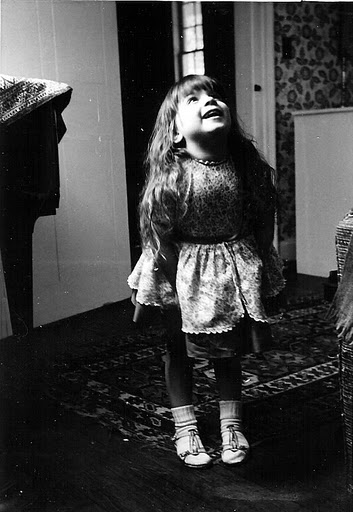
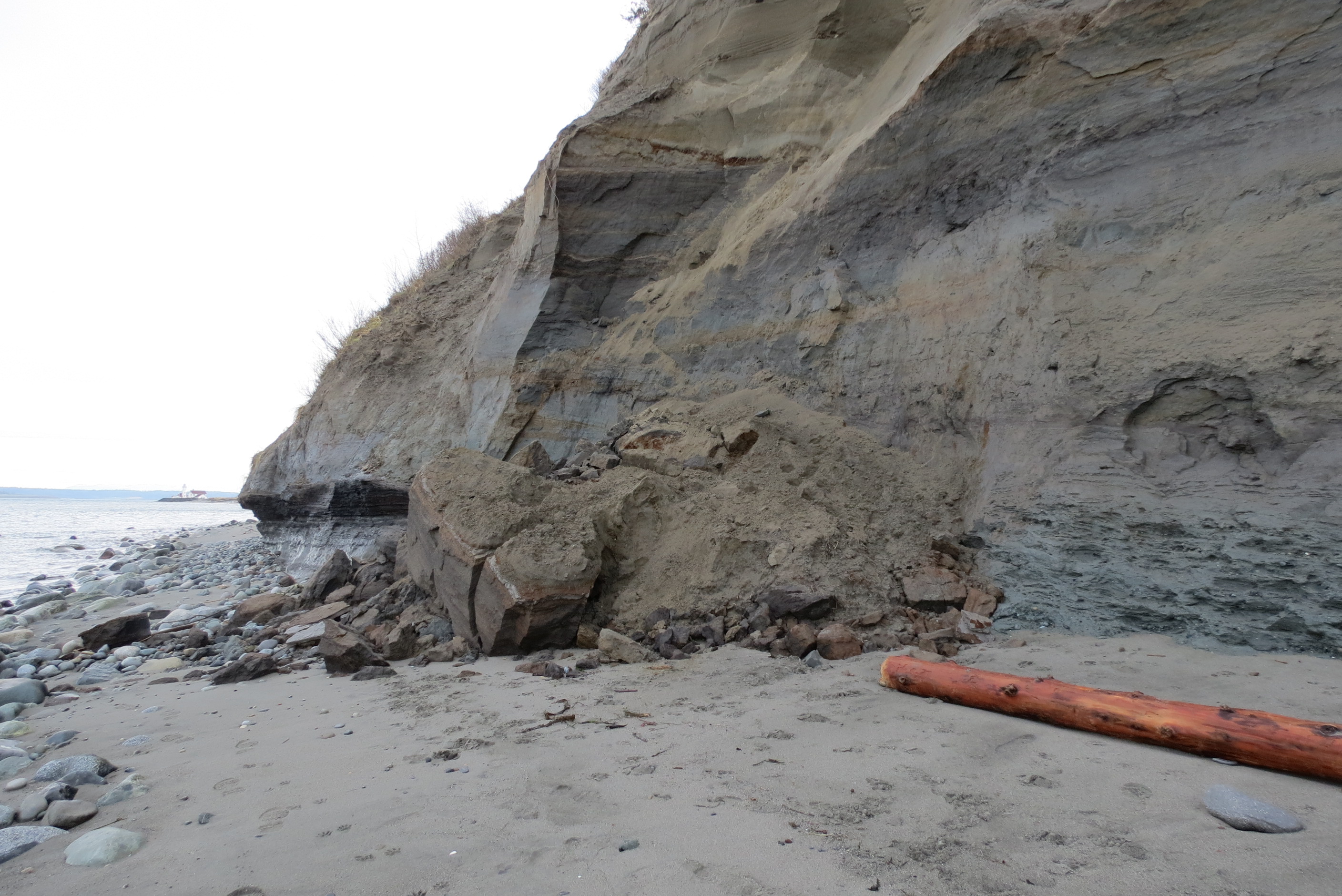
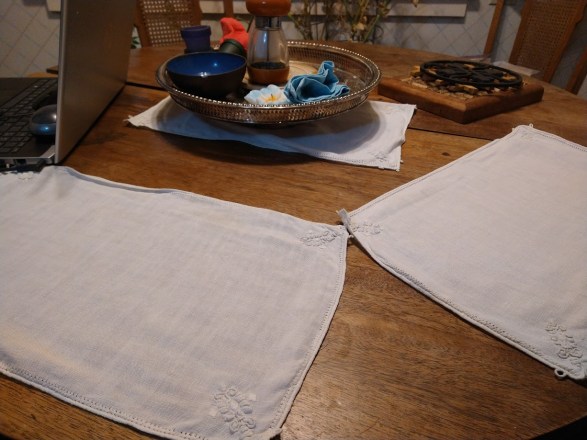
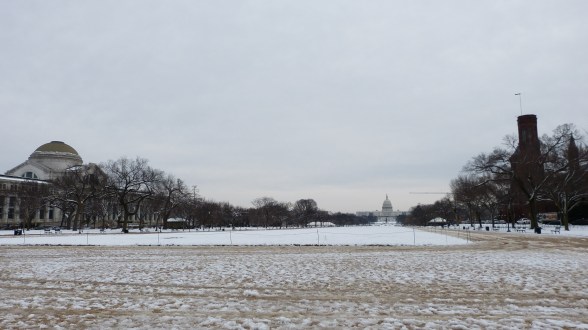
These are etchings by my mother, Helen Burling Ottaway, who died in 2000.
All four are done with the same etching plate.
Winter is done first. The zinc plate is covered with a protective layer and then she draws with tools, including dental tools. The plate is placed in an acid bath. The acid etches where the drawings are, different depths. The protective layer is removed. The plate is inked. Most of the ink is gently wiped off and the plate is placed on the press. Wet paper is laid on the plate and the heavy wool covers are folded down over that. The press is run. The wool is folded back on the other side and the paper is lifted and laid to dry.
The plate is re inked for each one.
She puts the protective cover back on the plate and adds the buds for spring. These are etched. Winter is now gone, the plate has changed. She prints all of the spring series.
Next is summer. Leaves are added. She prints those.
Last is autumn. Now there are leaves on the ground as well. She does some the plates with more than one ink color. This was one of her largest etchings. She did a small series first, where the etchings were about 4 by 6 inches. This was 18 by 24. She had a really big etching press. I don’t know who has it, my sister took it to California and it disappeared.
I have the etchings and I have all the plates. I can’t run this series, I could only run autumn. I grew up surrounded by my mother doing art, etchings, watercolors, oils, lithography, a constant sketchbook and crafts. I took a painting class a few years ago. The instructor says, “Acrylics are NOT watercolors.” I reply, “I know how to DO watercolors.” I was being quite creative with the acrylics only I automatically used the watercolor techniques that I grew up with.
The photograph doesn’t really do them justice. I will have to take some more. Plus I have her slides in some of the boxes left from when my father died. More cataloging.
Boa Black would often wait in the yard, watching. What was she waiting for?
These:
Boa really liked the fawns. She would wait and watch the path into my second lot.
I have a 1930 house and a 1930 garage. The garage is on the lot line and one side extends five feet into a second lot, that is set at 90 degrees to the house lot. I quit mowing the second lot when I was divorced, working, and had two kids. I talked to the neighbors on the block and no one objected. The lot is hidden from the road by a huge bank of rosa rugosa.
The deer have used the lot in some years to stash young fawns while they made their rounds.
This is taken with a 26X zoom, so the fawn saw me but did not get spooked. Actually the fawn was hopping around in the second lot and managed to look guilty when I first saw it. Uh-oh, mom told me to stay hidden. It lay down and tried to pretend it had been behaving the entire time.
Boa Cat died in early 2020, after 17 years with me, a kitten from the pound. In memorium.
Over KwanChunChrisSoliday, we discuss bicycles. We now have a plethora of electric bicycles, so we need a phrase that describes the “old” style bicycle. We came up with acoustic or analog. I like acoustic bicycle, because it sings.
My friend B-from-Arlington (BfA): “But they don’t make noise.” He didn’t approve of either idea.
“Well, we had spoke bells, and playing cards. My bikes make noise.” Sometimes it’s me making it.
We are riding on a rails to trails path in Northern Virginia. Seven of us and me on oxygen. It’s only my second bike ride since March 2021, when my lungs fell apart. We are all on acoustic bicycles.
I feel pretty strong for most of it, 14.5 miles. It seems flat, though it is a very gentle downgrade, until the last 0.5 mile, which is gently up hill. Oh, my lungs don’t like that bit at all and by now my muscles are saying Why are we doing this? I am relieved when we get to the coffee shop destination. Three of us will stay there, while the other four will ride back and get the cars. I hang out with K-f-A, BfA’s spouse, and their son. Their son examines my phone, asks why it has four camera eyes. I have no idea, so he proceeds to figure it out. We play with the slow motion camera for a while.
We know what a penny farthing is, and safety bicycles and tricycles. The early safety bicycles did not have brakes and had wooden rims and wooden spokes. My brother outlaw has one, from the 1880 or 90s. Another friend collects penny farthings and has one that is entirely of cast iron. It would be a little bumpy and the seat is pretty hard. It is also massively heavy. So now we add acoustic bicycles to the electric ones.
I am thinking about the roaring twenties a lot. I think people went a little nuts, not because of the war, but because they had difficulty being emotionally honest about the influenza pandemic. I think we humans will do it again to forget the deaths, to go into denial, to refuse to grieve.
Yes, that is my prediction.
Be very quiet, I am hunting wabbits.
Be careful in our future roaring twenties. Money will flow like honey and people will go nuts. Hold fast, hunker down, don’t go out without your macintosh, wear clean underwear. Remember what your mother told you, remember what your father tells you. Because that was followed by the Depression and that is one risk.
I don’t know if it will start this spring or next spring. Ok, I AM hoping that my son and future daughter-in-law can get married in early May, since they’ve put it off for two years. But. The 1918-19 influenza was really three years, not two. It tailed off. Half the people in the world got it. In Samoa, half the adults died, or was it 70%? They had little exposure to infection but a ship brought it. They KNEW they were high risk, but a sailor didn’t know he was sick yet.
Why a roaring twenties? Because we want to forget this pandemic, as the last one was forgotten. Our history books say that the Roaring Twenties was about the end of World War I. We teach lots about that. We barely mention the influenza world pandemic. I am reading a book about the 1918-19 influenza pandemic published in 2018. The author says that it is only now, 100 years later, that we are starting to really tell the stories of that pandemic. She gathers stories from all over the world, including stores of different infection control strategies in two cities. One guessed right and one guessed wrong, and in the wrong one, way more people died.
I read about that 1918-19 pandemic after influenza nearly killed me in 2003. I was 42, healthy, a physician, a mother, an athlete. I had NO risk factors except stress. Now it looks like it was a PANS reaction, but at the time, neither my doctor nor I could figure out why I was short of breath and tachycardic walking across a room for two months. Fatigue, chest pain, tachycardia, shortness of breath. Hmmm, what does that sound like? My partners thought I was faking and I was so sick that I could barely communicate. The stresses were my mother dying of ovarian cancer in May 2000 and my marriage being pretty on the rocks and me working way too hard. My psychiatrist said I should take time off. I said, I can’t. He said, you’d better. Then I got flu. “See?” he said. The body decides, not the conscious brain. He was correct, damn him.
The book I read in 2004 looked dry and medical from the outside. It had pages and pages of footnotes. It had photographs of Los Angeles. They knew the influenza was coming towards them like a wave and they tried to get ready. Bodies under sheets were stacked five deep in the hallways of the hospitals. It hit that fast. People, usually age 20-50, turned blue and fell over dead. WHY? It was the immune response. The 20-50 year olds had a better immune response than the 50 and older and their lungs would swell until there was no airspace left. Even then, that pandemic death rate was only 1-2 % in the US. But it was so fast and spread so quickly that everything was disrupted because it was the workers that were deathly ill and at home and there was no one to work.
People wore masks in public, except for the mask refusers, but not in their homes. So entire families would get ill. I don’t think they had figured out viral loads yet. If you are the last one standing, and you are trying to take care of a spouse and six children, you were high risk from viral load and exhaustion.
The Roaring Twenties WAS a way to grieve, it’s just a dysfunctional one. The stages of grief: denial, bargaining, anger, grief and acceptance. My sister said that acting out and revenge ought to be added as stages of grief. She died of breast cancer after fighting it for 8 years. Roaring is denial and bargaining and acting out and revenge, all at once. Everyone grieves differently, remember that. There is not an order to the stages of grief and you don’t do them once. You do them over and over and over.
I am a Cheerful Charlie, right?
War is one way to forget/deny/act out. Let’s not do that. Let’s not have a civil war of forgetfulness and denial.
Waiting for the ferry to Bainbridge, I am watching a man working on an I beam, with a cheerful yellow umbrella clamped to it. The old overpass is being taken down and a new ferry terminal is going up.
I get Ms Bun and the blanket from my church silent auction fundraiser. She did not have many bids, so I bid on her.
When I get her, I wonder who to give her to.
I am gone for two weeks, with a cat sitter coming in daily. The cats are bigger but still kittens. They are amazed when I get home. They are so surprised. I get the impression that they thought I was gone forever.
They are even more delighted when I go to bed. They purr and purr and purr. I am staying! They are very happy.
Today I have to get groceries. When I return, I see who Ms Bun is for. She helps take care of the cats when I am not here, and they both cuddle in her lap.
Taken on a visit to the Baltimore Aquarium a number of years ago. You would think it would be a fish, but it isn’t. Dolphins and whales sing, but do fish sing?
Discover and re-discover Mexicoβs cuisine, culture and history through the recipes, backyard stories and other interesting findings of an expatriate in Canada
Engaging in some lyrical athletics whilst painting pictures with words and pounding the pavement. I run; blog; write poetry; chase after my kids & drink coffee.
Refugees welcome - FlΓΌchtlinge willkommen I am teaching German to refugees. Ich unterrichte geflΓΌchtete Menschen in der deutschen Sprache. I am writing this blog in English and German because my friends speak English and German. Ich schreibe auf Deutsch und Englisch, weil meine Freunde Deutsch und Englisch sprechen.
You must be logged in to post a comment.