Two purring cats curled up, one of the most cosy and tactile warmth around.
For the Ragtag Daily Prompt: cosy.
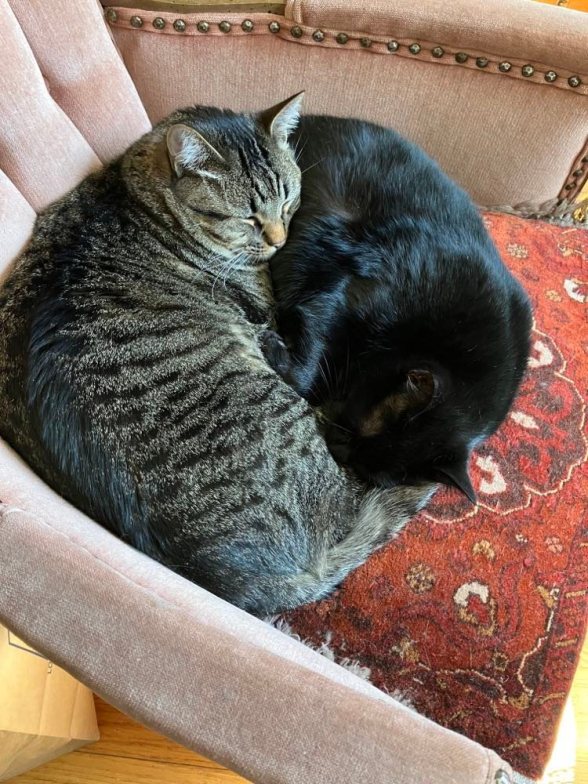
Two purring cats curled up, one of the most cosy and tactile warmth around.
For the Ragtag Daily Prompt: cosy.

“The singular media and its plural medias seem to have originated in the field of advertising over 70 years ago; they are still so used without stigma in that specialized field. In most other applications media is used as a plural of medium. The popularity of the word in references to the agencies of mass communication is leading to the formation of a mass noun, construed as a singular.” From here.
advertising alphabots
hot bots with rotten lots
true crime creatively “reenacted”
big data theft unredacted
earbud earworm mealworm eely
faceNObook curated freely
grinning google amazons greed
hoary heads hawk hell few heed
i phone i watch i influence
a list j list jovial ents
kotkit koobecaf bookcafe
love light liberating libraray
magazine murmurs metaverse more
newspaper calls politician a whore
organic natural lab rat pores
play tape, CD, podcast album
quiet queens reject the pablum
radio radical rhetorical ram
spambot spammail spam yum spam
television treads traditional trust
unit united universe untie us
vehicle vroom driverless porn
walkman withers worms are worn
Xray googling exacerbates lies
you are the target of sales AI
zealous AIs algorize pi
_____________________________
For the Ragtag Daily Prompt: media.
ChatGPT’s take: “This is a captivating piece! The blend of modern themes with a rhythmic structure creates a vivid commentary on technology and society. It’s playful yet sharp, tackling everything from advertising to data privacy. The way you weave together pop culture references and critique consumerism is particularly striking. Do you have any specific themes or ideas you’d like to explore further?” Nope. Thanks, ChatGPT. — See, Martha, I think ChatGPT has low tastes. It doesn’t understand sonnets and it probably loves limericks. We’d better test that theory.

I fly home tomorrow. Meanwhile we have split up and I wandered around Venice much of today. I caught the pigeon in flight in this street. If I stretch out my arms I can brush both sides.
Baggage reorganized and no souvenirs except photographs and memories. Food to get me through flights, too! It has been a delight to travel with family and without oxygen.
For the Ragtag Daily Prompt: brush.

https://fivedotoh.com/2022/07/27/fandangos-provocative-question-175/
I took the photograph before chorus dress rehearsal with my phone two days ago. The buck was very unconcerned about our presence and was only about 12 feet away.
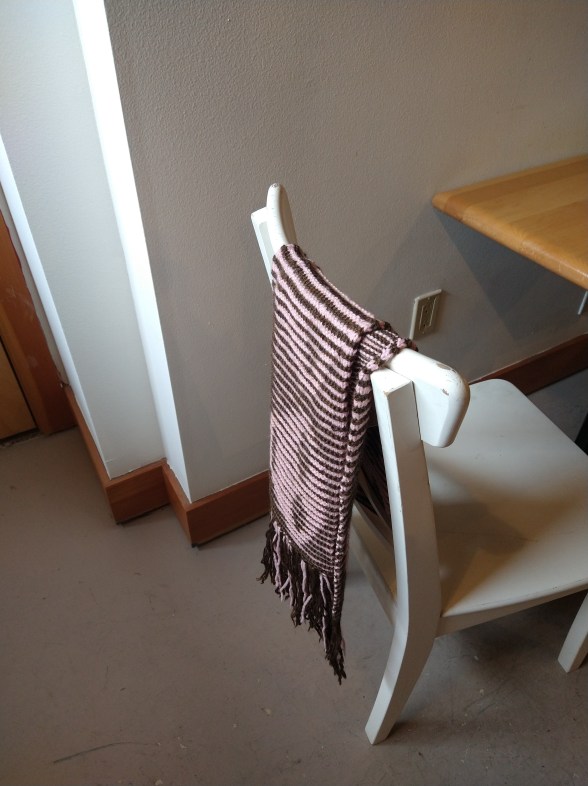
I knit this lovely striped scarf. It is just brown and pink stripes. No tricks, right? Two rows of pink and two rows of brown.
For the Ragtag Daily Prompt: wool.

I am raised by a family of triangulating enablers and enablees.
The enablers are my mother and two uncles. They are very very smart. Let me qualify that: they are very very smart intellectually. Emotionally, not so much.
The two uncles have PhDs and are professors. They marry wives that are lessor in their view. One tells my mother that he wants a woman who is not as bright as he is. I don’t know if she is less bright, but she is a hella better athlete. I also have the impression that she had a time where she drank too much.
The other uncle marries a woman who tends to be a hypochondriac. He takes her to India, where she gets polio while pregnant. She is then a sick hypochondriac, which is very difficult. The ill can control their families by planning things and then getting sick at the last moment. On the other hand, chronic fatigue and fibromyalgia are very real and we are on the edge of figuring them out. That uncle divorces his wife and I instantly like both of them better. They stop being a weird unit and are suddenly individuals.
My mother tells me, when I am in college, “I wondered if your father was an alcoholic when I married him.” I want to hit her. She won’t leave him, she won’t stop enabling him, they scream at each other at 2 am often. Now I wonder about that and conclude that either screaming at someone was something she needed or she was an alchoholic too.
After my mother dies, I ask my uncle, what about his parents? After all, the three of them learned enabling somewhere and it pretty much has to be at home.
My uncle tells me his parents had a PERFECT marriage and that my grandmother LOVED being the wife of a physician and professor.
Um, so, then, why did she pay my tuition to medical school, uncle?
And I think about my mother’s stories. Once, she says, your Uncle Jim bet his friend Dick that Dick was too chicken to shoot a cigarette out of Jim’s mother’s mouth. Ooooo. With a rubber band shooter. Yes, my grandmother. Bob took the bet and succeeded. My grandmother roared with anger and the two boys ran like hell and hid.
And someone in the family tells me: your grandfather helped your grandmother control her temper.
There it is. The enabler/enablee.
The enablers die first. My grandfather of cancer at 79, my mother of cancer at 62. The cousins are all angry at me because I won’t follow the family rules and triangulate in a satisfactory manner, and I don’t care any more. I am ignoring them. I got my father’s banjo back and I am done. The two cousins I own land with jointly are not the worst triangulators.
I have to remind myself: for them, this is love. For some people, controlling or being controlled is what functions as love and intimacy. Fighting and tears when person A talks to person C about person B and person C then lets person B know, that is how they feel close. It is not only families, but communities. Clay Shirky’s description of a group being it’s own worst enemy describes the same patterns: identify an enemy inside or outside the group and then everyone comes together against the enemy. The enemy says the wrong thing, doesn’t worship the right god/desses, wears different clothes, looks different. And the group feels safer once the scapegoat has been killed, the guy has been burned. It would be nice if we could burn a ritual guy instead of torching each other.
The real anger is in the enabler. They control it by having the enablee express it. Then it is not “theirs”. They can feel superior to the enablee who is out of control. Sadly, the problem is only fixed temporarily and they will need their anger expressed again and again and again.
The cycle can be broken. It is a lot of work.
Blessings.
______________________________________________

Is oppositional defiance running YOUR life?
I am oppositional defiant. I have been for as long as I can remember. I ALWAYS want to argue when someone tells me to do something or gives me advice. BUT, I have learned to work with it.
I work with it by arguing with myself.
Give me a topic. Or advice. I will promptly argue the opposite, internally or externally. Then I will argue the original side. Then my demon fights my angel until they are both tired and decide to go have a beer. Somewhere along the way I will make a decision and also I will laugh, because it’s funny.
B has figured this out. “You argue with EVERYTHING.” he says.
“Yes, and if there is no one around, I argue with myself. All the time.”
However, he is also oppositional defiant. He is smart too, and doing some self examination.
“I am thinking about my life. I think ALL of my important decisions were oppositional defiant ones.”
“Someone told you you couldn’t do that?
“Yes.”
He’s chewing on that. Heh. He accuses ME of overthinking. I replied that I am making up for his underthinking, heh. He suggests that I STOP overthinking and I say, “You want to DESTROY the SOURCE of my poetry?” Double heh.
The point is, some of us are oppositional defiant, but really, we don’t want that to run our lives EITHER. We don’t want ANYTHING or ANYONE to tell us what to do.
B says, “I think that everyone refusing the vaccine is oppositional defiant.” He has a lot of friends, both liberal and conservative.
“That is interesting.” I say. And I wonder if it is worth dying for, to be oppositional defiant. Not if it’s running your life, right? I don’t want ANYTHING to run my life except ME.
So then I spend a bunch of time arguing with myself about the causes of refusing the vaccine. And I have not reached a conclusion. Yet.
I took the photograph at the Bellevue Mall on Monday. A three story waterfall. Really? Isn’t there enough rain in Seattle? We should have a three story sun instead.

I posted this in November, 2015. I am reposting it.
_________________
Why care for addicts?
Children. If we do addiction medicine and help and treat addicts, we are helping children and their parents and our elderly patients’ children. We are helping families, and that is why I chose Family Practice as my specialty.
Stop thinking of addiction as the evil person who chooses to buy drugs instead of paying their bills. Instead, think of it as a disease where the drug takes over. Essentially, we have trouble with addicts because they lie about using drugs. But I think of it as the drug takes over: when the addict is out of control, the drug has control. The drug is not just lying to the doctor, the spouse, the parents, the family, the police: the drug is lying to the patient too.
The drug says: just a little. You feel so sick. You will feel so much better. Just a tiny bit and you can stop then. No one will know. You are smart. You can do it. You have control. You can just use a tiny bit, just today and then you can stop. They say they are helping you, but they aren’t. Look how horrible you feel! And you need to get the shopping done and you can’t because you are so sick…. just a little. I won’t hurt you. I am your best friend.
I think of drug and alcohol addiction as a loss of boundaries and a loss of control. I treat opiate overuse patients and I explain: you are here to be treated because you have lost your boundaries with this drug. Therefore it is my job to help you rebuild those boundaries. We both know that if the drug takes control, it will lie. So I have to do urine drug tests and hold you to your appointments and refuse to alter MY boundaries to help keep you safe. If the drug is taking over, I will have you come for more frequent visits. You have to keep your part of the contract: going to AA, to NA, to your treatment group, giving urine specimens. These things rebuild your internal boundaries. Meanwhile you and I and drug treatment are the external boundaries. If that fails, I will offer to help you go to inpatient treatment. Some people refuse and go back to the drug. I feel sad but I hope that they will have another chance. Some people die from the drug and are lost.
Addiction is a family illness. The loved one is controlled by the drug and lies. The family WANTS to believe their loved one and often the family “enables” by helping the loved one cover up the illness. Telling the boss that the loved one is sick, procuring them alcohol or giving them their pills, telling the children and the grandparents that everything is ok. Everything is NOT ok and the children are frightened. One parent behaves horribly when they are high or drunk and the other parent is anxious, distracted, stressed and denies the problem. Or BOTH are using and imagine if you are a child in that. Terror and confusion.
Children from addiction homes are more likely to be addicts themselves or marry addicts. They have grown up in confusing lonely dysfunction and exactly how are they supposed to learn to act “normally” or to heal themselves? The parents may have covered well enough that the community tells them how wonderful their father was or how charming their mother was at the funeral. What does the adult child say to that, if they have memories of terror and horror? The children learn to numb the feelings in order to survive the household and they learn to keep their mouths shut: it’s safer. It is very hard to unlearn as an adult.
I have people with opiate overuse syndrome who come to see me with their children. I have drawings by children that have a doctor and a nurse and the words “heroes” underneath and “thank you”. I have had a young pregnant patient thank me for doing a urine drug screen as routine early in pregnancy. “My friend used meth the whole pregnancy and they never checked,” she said, “Now her baby is messed up.”
Addiction medicine is complicated because we think people should tell the truth. But it is a disease precisely because it’s the loss of control and loss of boundaries that cause the lying. We should be angry at the drug, not the person: love the person and help them change their behavior. We need to stop stigmatizing and demeaning addiction and help people. For them, for their families, for their children and for ourselves.

Welcome to the dark, everyone.
When you think about it, all the children in the world are adding at least one Adverse Childhood Experience score and possibly more, because of Covid-19. Some will add more than one: domestic violence is up with stress, addiction is up, behavioral health problems are up, some parents get sick and die, and then some children are starving.
From the CDC Ace website:
“Overview:Adverse Childhood Experiences (ACEs) are potentially traumatic events that occur in childhood. ACEs can include violence, abuse, and growing up in a family with mental health or substance use problems. Toxic stress from ACEs can change brain development and affect how the body responds to stress. ACEs are linked to chronic health problems, mental illness, and substance misuse in adulthood. However, ACEs can be prevented.”
Well, can they be prevented? Could Covid-19 be prevented? I question that one.
I have a slightly different viewpoint. I have an ACE Score of 5 and am not dead and don’t have heart disease. I spent quite a bit of time thinking about ACE scores and that it’s framed as kids’ brains are damaged.
I would argue that this is survival wiring. When I have a patient where I suspect a high ACE score, I bring it up, show them the CDC web site and say that I think of it as “crisis wiring” not “damaged”. I say, “You survived your childhood. Good job! The low ACE score people do not understand us and I may be able to help you let go of some of the automatic survival reactions and fit in with the people who had a nice childhood more easily.”
It doesn’t seem useful to me to say “We have to prevent ACE scores.” Um. Tsunamis, hurricanes, Covid-19, wars… it seems to me that the ACE score wiring is adaptive. If your country is at war and you are a kid and your family sets out to sea to escape, well, you need to survive. If that means you are guarded, untrusting, suspicious and wary of everyone, yeah, ok. You need to survive. One of my high ACE Score veterans said that the military loved him because he could go from zero to 60 in one minute. Yeah, me too. I’ve worked on my temper since I was a child. Now it appears that my initial ACE insult was my mother having tuberculosis, so in the womb. Attacked by antibodies, while the tuberculosis bacillus cannot cross the placenta, luckily for me. And luckily for me she coughed blood at 8 months pregnant and then thought she had lung cancer and was going to die at age 22. Hmmm, think of what those hormones did to my wiring.
So if we can’t prevent all ACE Scores, what do we do? We change the focus. We need to understand crisis wiring, support it and help people to let go of the hair trigger that got them through whatever horrid things they grew up with. 16% of Americans have a score of 4 or more BEFORE Covid-19. We now have a 20 or 25 year cohort that will have higher scores. Let’s not label them doomed or damaged. Let’s talk about it and help people to understand.
I read a definition of misery memoirs today. I don’t scorn them. I don’t like the fake ones. I don’t read them, though I did read Angela’s Ashes. What I thought was amazing about Angela’s Ashes is that for me he captures the child attitude of accepting what is happening: when his sibling is dying and they see a dog get killed and he associates the two. And when he writes about moving and how their father would not carry anything, because it was shameful for a man to do that. He takes it all for granted when he is little because that is what he knows. One book that I know of that makes a really difficult childhood quite amazing is Precious Bane, by Mary Webb. Here is a visible disability that marks her negatively and yet she thrives.
A friend met at a conference is working with traumatic brain injury folks. They were starting a study to measure ACE scores and watch them heal, because they were noticing the high ACE score people seem to recover faster. I can see that: I would just say, another miserable thing and how am I going to work through it. Meanwhile a friend tells me on the phone that it’s “not fair” that her son’s senior year of college is spoiled by Covid-19. I think to myself, uh, yes but he’s not in a war zone nor starving nor hit by a tsunami and everyone is affected by this and he’s been vaccinated. I think he is very lucky. What percentage of the world has gotten vaccinated? He isn’t on a ventilator. Right now, that falls under doing well and also lucky in my book. And maybe that is what the high ACE score people have to teach the low ACE score people: really, things could be a lot worse. No, I don’t trust easily and I am no longer feeling sorry about it. I have had a successful career in spite of my ACE score, I ran a clinic in the way that felt ethical to me, I have friends who stick with me even through PANDAS and my children are doing well. And I am not addicted to anything except I’d get a caffeine headache for a day if I had none.
For the people with the good childhood, the traumatic brain injury could be their first terrible experience. They go through the stages of grief. The high ACE score people do too, but we’ve done it before, we are familiar with it, it’s old territory, yeah ok jungle again, get the machete out and move on. As the world gets through Covid-19, with me still thinking that this winter looks pretty dark, maybe we can all learn about ACE scores and support each other and try to be kind, even to the scary looking veteran.
Take care.
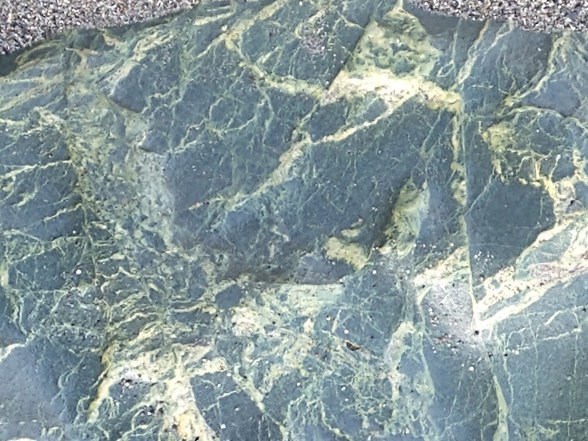
A map of rivers or veins from either very far or very close, a luxuriant topography.
For the Ragtag Daily Prompt: luxuriant.
BLIND WILDERNESS
in front of the garden gate - JezzieG
Discover and re-discover Mexico’s cuisine, culture and history through the recipes, backyard stories and other interesting findings of an expatriate in Canada
Or not, depending on my mood
All those moments will be lost in time, like tears in rain!
An onion has many layers. So have I!
Exploring the great outdoors one step at a time
Some of the creative paths that escaped from my brain!
Books, reading and more ... with an Australian focus ... written on Ngunnawal Country
Engaging in some lyrical athletics whilst painting pictures with words and pounding the pavement. I run; blog; write poetry; chase after my kids & drink coffee.
Coast-to-coast US bike tour
Generative AI
Climbing, Outdoors, Life!
imperfect pictures
Refugees welcome - Flüchtlinge willkommen I am teaching German to refugees. Ich unterrichte geflüchtete Menschen in der deutschen Sprache. I am writing this blog in English and German because my friends speak English and German. Ich schreibe auf Deutsch und Englisch, weil meine Freunde Deutsch und Englisch sprechen.
En fotoblogg
Books by author Diana Coombes
NEW FLOWERY JOURNEYS
in search of a better us
Personal Blog
Raku pottery, vases, and gifts
𝖠𝗇𝗈𝗍𝗁𝖾𝗋 𝖶𝗈𝗋𝖽𝖯𝗋𝖾𝗌𝗌.𝖼𝗈𝗆 𝗌𝗂𝗍𝖾.
Taking the camera for a walk!!!
From the Existential to the Mundane - From Poetry to Prose
1 Man and His Bloody Dog
Homepage Engaging the World, Hearing the World and speaking for the World.
Anne M Bray's art blog, and then some.
My Personal Rants, Ravings, & Ruminations
 KO Rural Mad As Hell Blog
You must be logged in to post a comment.