The Brewer’s Big Horses

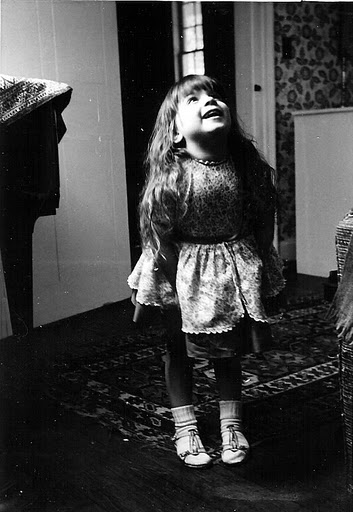
This is one of the Songs to Raise Girls, songs that I learned before Kindergarten. A very weird list of songs.

This song comes from my maternal grandfather. My mother said that it was a Congregationalist temperance song….

The photograph is Morris D. Temple and his grandson, F. Temple Burling. F. Temple Burling is my maternal grandfather. I am related to Temple Pumps. According to my mother’s stories, Morris Temple was more interested in Japanese art than in Temple Pumps and the company eventually folded. I don’t know if that is true, or if it was a different Temple then Morris. However, my middle name is Temple.

This song is one that I don’t have memorized, though I know the tune. I have my mother’s handwritten lyrics, with her drawings framing it. There is a tape of my grandfather singing it in the Library of Congress, according to my mother. I would like to go listen to it some time.

I’ve copied it just how my mother wrote it out. There might be an issue about political correctness, but I have a picture of Morris Temple in the 1860s, in his civil war uniform, with a sword. You will have to wait for that post to see which side he fought for….. I presume that my mother wrote it down as she was taught it. I am not sure who talked like this in Iowa in the 1880s, but maybe it was most people.

The Brewers’ Big Horses

O, the brewer’s big horses, comin’ down de road
A totin’ along old Lucifer’s load
Dey step so high and dey step so free
But them big horses can’t run over me

Chorus:
O no! boys O no!
De turnpike’s free where ever I go
I’m a temperance ingine don’t you see
So them big horses can’t run ovah me
Repeat with “toot toot toots”

O de liquo’ men been actin lak de own de place
A livin’ off de sweat o’ de po’ man’s face
Dey’s fat and sassy as dey can be
But deir big horses can’t run ovah me

Chorus

I’ll harness dem horses to de temperance cart
I’ll hit ’em with the gad fo’ to give ’em a start
I’ll teach ’em how fo’ to haw an’ gee
So them big horses can’t run ovah me

Chorus

It took me a while to find this song on the internet. It is listed in temperance songs in wikipedia: https://en.wikipedia.org/wiki/Temperance_songs and is mentioned in The Christian Advocate under lyrics: The Brewers Big Horses. It is listed as written in 1913 by JB Herbert and HS Taylor. Isn’t it interesting that Budweiser still uses the Brewer’s Big Horses in advertising?

Again, this is a song I was learning way before I know what a brewer or a turnpike was. My parents stopped singing a bunch of songs when they realized that I was memorizing all of them. They did not want me singing certain songs in Kindergarten.

They did not need to worry. I shut up when I got to school, because no one wanted to sing and no one knew the songs. They all talked about television and we didn’t have one.

I was very disappointed in school. Not enough singing and it was lonely.

Deep Vein Thrombosis

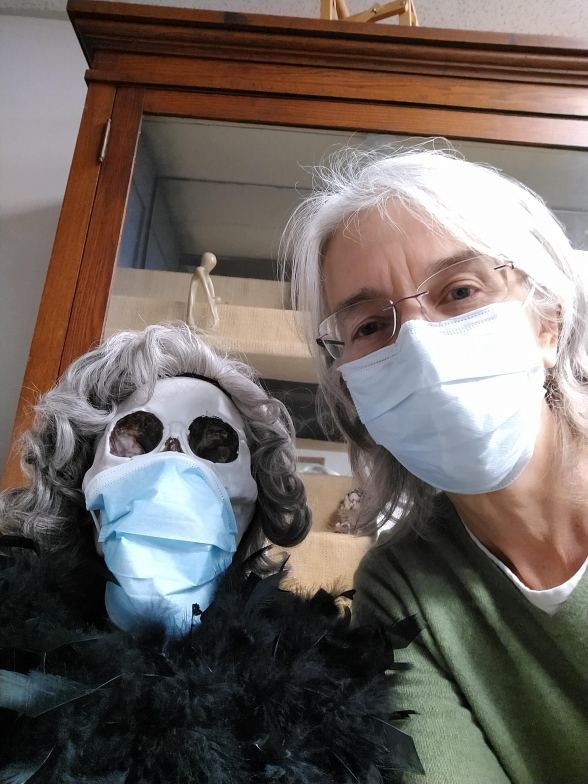
Our clinic had a band back before 2009. Me and 4 of the nurses. We were into heavy metal. This was when I was working for Port Townsend Family Physicians. The county let me go and PTFP changed their name. Could not have been because we wore our band regalia to work, right? After all, it was Halloween.

Maybe they were afraid that the songs would catch on.

Little blue pill

Don’t code in the waiting room

Evidence based BM

Probiotics make you psychotic

Better that way

Alcohol is better than benzos

Mr. Sable is Unable

Buprenorphine: better n morphine

EMR means Eat My Rear

The 18 Patient Blues

Idaho Gigolo

I played flute and saw. J played fiddle and air siren. The others, well, you should ask them. I think all the tapes got burned by the hospital. Too bad, so sad.

I can’t credit the photographer. I don’t know who took it.

Revolution in prior authorizations

I had a small one doc family practice clinic for ten years. Spent more time with patients. The trade off was that if they need a prior authorization, they had to come in for a visit. I would call the insurance company from the room face to face counselling and coordination of care and all that crap. This did a number of things:

1. I could bill for the time.

2. The patient saw how the insurance company treats us and our offices. The rep on the line would try to call me by my first name since doctors rarely call. I would say, “No, please call me Dr. Ottaway.”

3. The patients sometimes had called their insurances already and been told “Have your doctor call.” When I would call, the company rep would sometimes say, “We don’t cover that.” The patient would be outraged and say, “But I called YESTERDAY.” The rep would say, “I only talk to doctors. The part of the company that talks to patients is a different part.” The insurance companies can’t triangulate their way out of that.

4. I would end the call by saying, “This has been a face to face with the patient call, you have been on speaker phone and I am documenting the call and the time in the patient’s chart.” At first the calls took 25-30 minutes. Some companies apparently flagged me, and would say “Yes.” if I called, and get me off the phone as fast as possible. They really do not like it being documented in the chart.

5. Insurance companies sometimes drop patients on purpose because the person has gotten more expensive. I had a snow bird from Alaska whose insurance had dropped him. He said he’d paid on time. I said, come in if you want and I will call them. I spent 45 minutes on the phone where they made multiple excuses, lied (we can’t send you a copy of his insurance because we don’t have a fax after they’d said he was not allowed to leave Alaska and I said, “For how long? What do you mean? You don’t insure him if he’s out of the state? Send me a copy of his insurance contract!”) I finally realize that they have dropped him on purpose because he’s been diagnosed with diabetes. I say “Ok, look, I am staying on the phone until he’s reinstated and I don’t care how long it takes. And if you hang up on me I will contact the insurance commissioner in Alaska and Washington states.”

6. Patients are truly outraged at how a physician is treated when she calls an insurance company herself. I have to give my name, my NPI number, my address, my phone number, my fax number, the patient name, the patient address, the patient phone number the patient insurance number and sometimes have to do it every time someone transfers me. When they see me spend 25-30 minutes on the phone to get a prior auth, especially if it is refused, they are up in arms.

I think it would be truly revolutionary if every doc in the country called an insurance company with a patient in the room and documented the conversation in the chart. Wouldn’t that be fun?

Gonna be a revolution, yeah…..

Why is she really here?

For the Ragtag Daily Prompt: object. I strenuously and loudly object to medicine meaning pills.

During my three months temp job at a nearby Army Hospital in 2010, I wanted to work with residents, Family Practice doctors in training. I finished residency in 1996 and have worked in rural clinics and hospitals for 14 years. I want more rural family practice doctors and I agitated to work with the residents in training.

The Family Practice Department had actually hired me to do clinic. They are swamped and trying to hire temporary and permanent providers as quickly as they can. Six different temp companies called me about the same job, so the word is definitely out.

Initially the department head explained that I was there to do clinic, but she changed her mind. I was cheerful about the electronic medical records. Learning a new electronic medical record is awful, but I was happy to be there, excited about working with residents and in a hospital more than 16 times as big as my usual small town hospital. Most importantly, I was patient with the computer. I have finally realized that computers don’t actually speak English. They speak computer and they are dumb as rocks and they make no effort to understand what I am saying. They don’t care. So it is no use getting mad at the dumb thing when it crashes or when it doesn’t do what I want: I have to go find someone who knows the exact language that the stupid machine will understand.

Since I was cheerful, my department head let me do what I want. I was on the clinic schedule every day, but it was empty. I would arrive and see walk-in active duty people from 6:30 to 8:00. At the same time, I would email the department head and ask what I was doing that day. Half the time, a physician was sick or had a family crisis, so she would move people around and put me with the residents. If not, I would open clinic.

I enjoyed the “Attending Room” duty. Family Practice Residents have their MD but then go through three years of training. The first year residents must precept every clinic patient. That is, they see the person and then come discuss the case with the faculty. Second year residents were required to precept two patients per half day and third year residents had to do one; and all obstetric cases were precepted.

Back when I was in residency and the dinosaurs roamed the earth, no one ever read any of my notes. This has changed. Every note that is precepted must be read by the attending and co-signed. After three years hating the electronic medical record that my small hospital bought, it was very interesting to see a different system. In some ways it was better and in some worse.

We had one or two “Attendings” in the faculty room, no more than three residents per attending. One case stands out, more because of the resident than the patient. He was a first year.

He described an elderly woman in her 80s, there for headaches. Two weeks of headaches, getting a bit worse. History of present illness, past medical history, medicines, allergies, family history, social history and the physical exam. He said, “She’s tried tylonol and ibuprofen, but they aren’t helping that much.” He frowned. “She doesn’t seem to want another medicine.”

“No?” I said.

“No.” he said. “I started to talk about medicines. It doesn’t sound like migraines and she doesn’t have anything that’s really worrisome for a tumor……but she doesn’t seem to want a headache medicine.”

“Why is she really here?”

He looked more confused. “What do you mean?”

“Why is she really here?”

“I don’t know.”

“You already said why. Think about the history.” He frowned. I said, “Ok, you said that she was worried that she was going to have a stroke. Are these headaches likely to be a precursor of a stroke?”

“No.”

“Right. But that is why she’s here, because that is what she’s worried about. Look at her blood pressure, see what her last cholesterol was, talk to her about what symptoms ARE worrisome for strokes. Find out if a family member or friend has had a recent stroke. She doesn’t need a medicine. She is here for reassurance.”

“Oh.” he said. He left and came back.

“How did it go?”

“She was happy. She didn’t want a medicine. Her blood pressure is great, her cholesterol is great, we talked about strokes and she left.”

“That’s real medicine. Forget the diagnosis if the visit seems confusing. Ask yourself what is your patient worried about? What are they afraid of? Don’t focus on giving people medicine all the time. Ask yourself, why are they really here?”

And that is why I wanted to work with residents. It’s not all diagnosis and treatment. It is people and thinking about what they want and what they are worried about.

Why is she really here?

__________________________________

previously published on everything2.com
According to dictionary.com, precept is a noun. Medical school and residency have verbed it. Hey, get updated, dictionary.com!

The extroverted feeler and the teacher

For the Ragtag Daily Prompt: brace.

My sister was an extroverted feeler.

In fourth grade, she started getting sick a lot. My mother noticed a pattern. My sister was sick on Monday. She was avoiding school like crazy.

My parents were having difficulty figuring it out. EF’s grades were great. She was unhappy.

Then my parents went to a parent teacher conference.

My mother told this story: “The teacher said that EF came to her desk and asked to borrow a paper clip. Later, she came and asked to borrow a second paperclip. The teacher then produced the two paper clips. “Your daughter made braces with the paperclips. For her teeth!” The paperclips were bent.

“Um. Don’t you think that is sort of creative?” asked my mother.

“No.” said the teacher.

My mother would laugh telling the story and say, “After that, I pretty much let EF miss every Monday. I would not have wanted to go to school with that teacher either.”

More Dawn

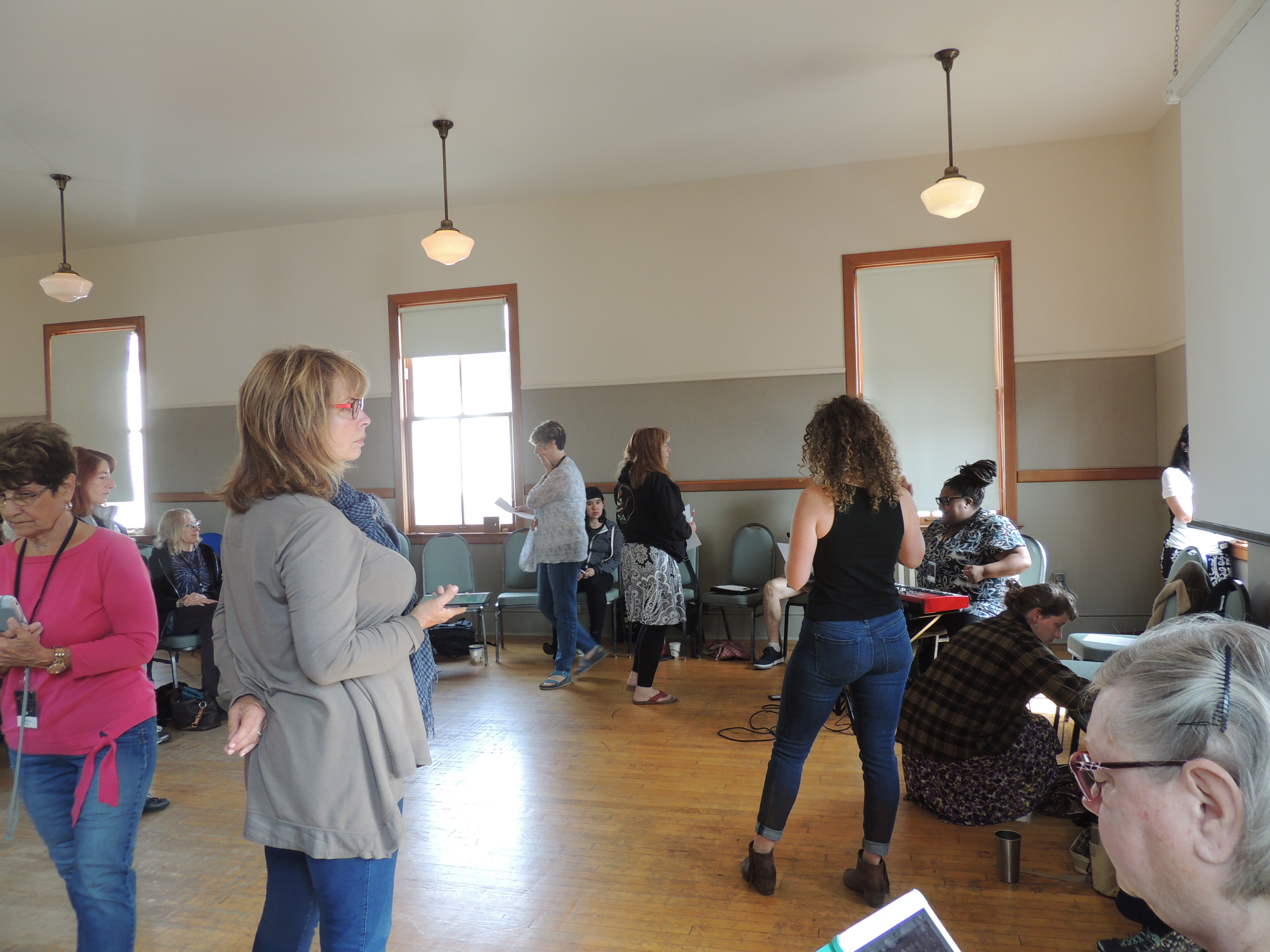
Here is one of the Voiceworks Classes with Dawn Pemberton. My biggest problem is I want to go to all five or six classes that are running simultaneously and then there are people playing music in the halls, on the porch, singing in the practice rooms!

And we’re on our feet practicing singing soul.

DSCN3532

Voiceworks!

This is the last day of Centrum’s Voiceworks. I am vacationing at home except that it feels like I’ve been transported to a land of song and music, for a whole week.

I don’t want it to end.

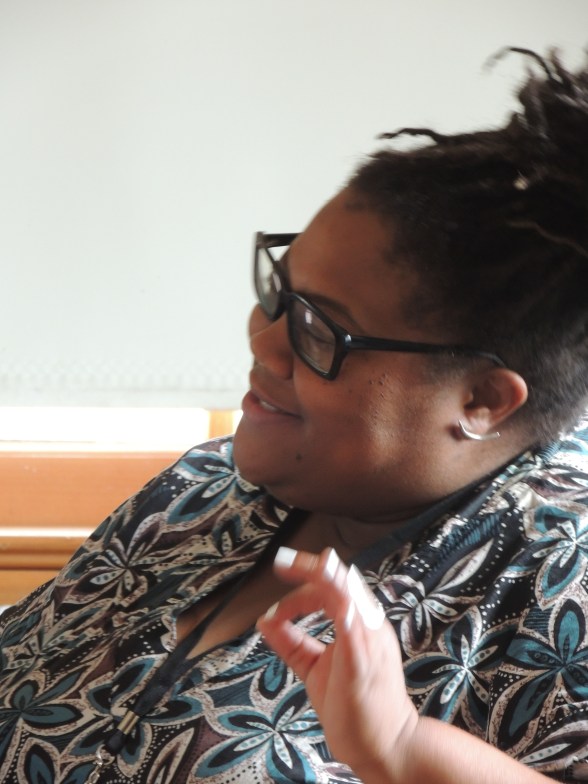
This is Dawn Pemberton, a British Columbia singer and choral director and teacher. Her classes have been on soul and an acapella chorus. From the Voiceworks pamphlet: “SheΒ  can be found tearing it up as vocalist, teacher, adjudicator and choir director.” She directs the Roots ‘n’ Wings Women’s Choir and teaches all over Canada.

Her classes have been an absolute joy and inspiration. Soul, acapella and yesterday a body rhythm and stomp class. I could do the body rhythm but when I started listening to it I was so mesmerized that I lost my place. Found it again, but I couldn’t do it and listen.

I ask Dawn if she plays near here, but she says it is very difficult to come in to the US from Canada to perform: borders again. I am very sad about that. I’ll have to go to Vancouver, BC to hear her and her chorus!

And here she is singing Say Something. And her choirs.

Thanks and shout out to Centrum and to all of the teachers and other students, about 170 people coming together for joyous noise!

Make America sick again: diabetes

The trend in diabetes treatment is clear: keep Americans sick.

The guidelines say that as soon as we diagnose type II diabetes, we should start a medicine. Usually metformin.

A recent study says that teaching patients to use a glucometer and to check home blood sugars is useless. The key word here is teach, because when I get a diabetic transferring into my clinic, the vast majority have not been taught much of anything.

What is the goal for your blood sugar? They don’t know.

What is normal fasting? What is normal after you eat? What is the difference between checking in the morning and when should you check it after a meal? What is a carbohydrate? What is basic carbohydrate counting?

I think that the real problem is that the US medical system assumes that patients are stupid and doesn’t even attempt to teach them. And patients just give up.

New patient recently, diabetes diagnosed four years ago, on metformin for two years, and has no idea what the normal ranges of fasting and postprandial (after eating) are. Has never had a glucometer.

When I have a new type II diabetic, I call them. I schedule a visit.

At the visit I draw a diagram. Normal fasting glucose is 70-100. Borderline 110 to 125. Two measurements fasting over 125 means diabetes.

After eating: normal is 70-140. Borderline 140-200. Over 200 means diabetes.

Some researchers are calling Alzheimer’s “Type IV diabetes”. The evidence is saying that a glucose over 155 causes damage: to eyes, brain, kidneys, small vessels and peripheral nerves.

Ok, so: what is the goal? To have blood sugars mostly under 155. That isn’t rocket science. People understand that.

Next I talk about carbohydrates. Carbohydrates are any food that isn’t fat or protein. Carbohydrates range from simple sugars: glucose and fructose, to long chain complicated sugars. Whole fruits and vegetables have longer chain carbohydrates, are absorbed slowly, the body breaks them down slowly and the blood sugar rises more slowly. Eat green, yellow, orange vegetables. A big apple is 30 grams of carbohydrate, a small one is 15, more or less. A tablespoon of sugar is 15 grams too. A coke has 30 grams and a Starbuck’s 12 ounce mocha has 62. DO NOT DRINK SWEETENED DRINKS THEY ARE EVIL AND TOOLS OF THE DEVIL. The evidence is saying that the fake sugars cause diabetes too.

Meals: half the small plate should be green, yellow or orange vegetables. A deck of card size “white” food: grains, potatoes, pasta, whole wheat bread, a roll, whatever. A deck of card size protein. Beans and rice, yes, but not too much rice.

For most diabetics, they get 3 meals and 3 snacks a day. A meal can have up to 30 grams of carbohydrate and the snacks, 15 grams.

Next I tell them to get a glucometer. Check with their pharmacy first. The expensive part is the testing strips, so find the cheapest brand. We have a pharmacy that will give the person a glucometer and the strips for it are around 4 for a dollar. Many machines have strips that cost over a dollar each.

I set the patient up with the diabetic educator. The insurance will usually cover classes with the educator and the nutritionist but only in the first year after diagnosis. So don’t put it off.

For type II diabetes, the insurance will usually only cover once a day glucose testing. So alternate. Test 3 days fasting. Test 1-2 hours after a meal on the other days. Test after a meal that you think is “good”. Also after a meal that you think is “bad”. I have had long term diabetics come in and say gleefully “I found a dessert that I can eat!” The numbers are not always what people expect. And there are sneaky sources of carbohydrate. Coffeemate and the coffee flavorings, oooo, those are REALLY BAD.

For most of my patients, the motivated ones, they have played with the glucometer for at least a week by the time they see the diabetic educator. I have had a person whose glucose was at 350 in the glucose testing. The diabetic educator called and scolded me for not starting metformin yet. The diabetic educator called me again a week later. “The patient brought their blood sugars down!” she said. “She’s under 200 after eating now! Maybe she doesn’t need the metformin, not yet!” Ah, that is my thought. If we don’t give people information and a tool to track themselves, then why would they bother? They eat the dessert and figure that the medicine will fix it or they can always get more medicine.

Type I diabetes has to have insulin. If a type II diabetic is out of control, high sugars, for long enough, they too will need insulin. The cells in the pancreas that make insulin are killed by prolonged high blood sugars.

I went to a lunch conference, paid for by a pharmaceutical company, at the AAFP conference in September. The drug company said start people on metformin at diagnosis and if they are not in control in 3 months, start a second medicine, the drug company’s new and improved and better and beastly expensive medicine!!!

Yeah, I don’t think so. All of my patients are smart and they all can figure it out. Some get discouraged and some are already on insulin, but they are still all smart.

Fight back against the moronization of US citizens. Keep America healthy, wealthy and wise.