Surreal surroundings

It was so gorgeous up on Hurricane Ridge yesterday! I think the wildflowers are surreal: whole mountainsides of wildflowers and the more you look, the more different ones you see. I am just starting to learn their names.

https://www.nps.gov/olym/planyourvisit/visiting-hurricane-ridge.htm

For the Ragtag Daily Prompt: surreal.

I think the orange flower is a paintbrush, but it is not showing up here, on the wildflower identification site.

Another site: https://www.intangibility.com/inw/Wildflowers/Indian-Paintbrush.html

If anyone can identify it more closely, let me know!

Hurricane Ridge

Yesterday I woke to low clouds and slight sky spitting. A friend and I drove up to Hurricane Ridge and climbed Hurricane Hill. I am delighted that I can do it without oxygen! I get short of breath if I climb AND try to talk. He had to do most of the talking.

We drove out of the cloud as we got to Port Angeles and it was just gorgeous on top of Hurricane Ridge. There were lots of people up there. Tons of wildflowers, too and views of the Olympic Mountains. At the top we were looking at Vancouver Island and Canada to the north across the strait. A beautiful climb and a beautiful day.

For Cee’s Flower of the Day.

https://www.nps.gov/olym/planyourvisit/visiting-hurricane-ridge.htm

I think this is Oregon Sunshine, Eriophyllum lanatum, or else it’s an arnica. There are a lot of yellow wildflowers, here.

bleed

even when your heart is broken, monday still comes, every week
you pick yourself up, dust yourself off, make a list of your work
no one in the bank, the post office, the store sees your life bleed

_____________________________

For Ronovan Write’s Sijo Wednesday # 18: use regret.

Covid-19: Long Haul III

The CDC has guidelines for Long Covid and it can qualify for disability in the United States.

Here: https://www.cdc.gov/coronavirus/2019-ncov/long-term-effects/index.html

And here: “As of July 2021, β€œlong COVID,” also known as post-COVID conditions, can be considered a disability under the Americans with Disabilities Act (ADA). Learn more: Guidance on β€œLong COVID” as a Disability Under the ADA, Section

Here is the list of “most common” symptoms from the CDC:

General symptoms

  • Tiredness or fatigue that interferes with daily life
  • Symptoms that get worse after physical or mental effort (also known as β€œpost-exertional malaise”)
  • Fever

Respiratory and heart symptoms

  • Difficulty breathing or shortness of breath
  • Cough
  • Chest pain
  • Fast-beating or pounding heart (also known as heart palpitations)

Neurological symptoms

  • Difficulty thinking or concentrating (sometimes referred to as β€œbrain fog”)
  • Headache
  • Sleep problems
  • Dizziness when you stand up (lightheadedness)
  • Pins-and-needles feelings
  • Change in smell or taste
  • Depression or anxiety

Digestive symptoms

  • Diarrhea
  • Stomach pain

Other symptoms

  • Joint or muscle pain
  • Rash
  • Changes in menstrual cycles

There are recommendations for a work up by physicians. Depending on symptoms, this may include labs, ECG, echocardiogram (heart ultrasound), CT scan and other tests.

A friend has just gone through those four tests . They are “normal” except for her heart rate. At rest her heart rate is 70 with a normal oxygen level. Walking, her heart rate jumps to 135. Over 100 is abnormal in this athlete who is NOT exerting heavily.

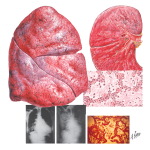
So WHAT is going on with NORMAL testing? I think this is “Covid-19 Viral Pneumonia”, a complication of Covid-19, just as “Influenza Viral Pneumonia” is a complication of influenza. Ralph Netter MD has an illustration of lungs from a person who died of influenza viral pneumonia: the lungs are swollen and inflamed and bruised. WHY is the testing “normal” then? The swelling is throughout the lungs, so a chest x-ray sees it as all the same density and a CT scan also sees it as all the same density. The lungs may have mildly decreased breath sounds, but the sounds are even throughout the lungs. The useful TEST is a walk test. I have tested patients with “walking pneumonia” in clinic for years: get a resting heart rate and oxygen level. Then have my patient walk up and down the hall three times and sit back down. Watch the heart rate and oxygen level. If the heart rate jumps 30 beats up or is over 100, the person needs to continue rest until the heart rate stays under 100 or jumps less than 30 beats. It is important to observe the heart rate until they recover. Sometimes the oxygen saturation will drop as the heart rate comes down, and some people qualify for oxygen. Steroids do not seem to work for this. The length of time to healing is not totally surprising, because a lobar pneumonia that is visible on chest xray takes 6-8 weeks to fully clear. It is not too amazing that a bad walking pneumonia could also take 6 weeks or more to clear. If the person returns to work too soon, they prolong the lung inflammation and they are at risk for exhaustion and for a secondary pneumonia. The treatment is REST REST REST and support.

Do they need oxygen? Currently oxygen is covered only if the person’s oxygen saturation drops down to 88%. However, I think that oxygen would help recovery and make them less exhausted. With my first walking pneumonia, which was influenza, my walking heart rate was 135 and my resting heart rate was 100. Both were abnormal for me. Neither I nor my physician could figure it out. This was in 2003. I did look in my Netter book: I took one look at the painting of the influenza lungs and shut the book. “Oh.” I thought. “That’s why I can’t breathe.” The image is here, though I wish it were bigger.

It took two months for my heart rate to come down, the lung swelling to improve, and me to return to work. I read the text of Dr. Netter’s image a year later and then I read an entire book about the 1918-1919 influenza. Since then I have walked people who come in complaining of exhaustion after a “cold” or “bad cough”. Viruses can cause this and so can bacteria: mycoplasma pneumonia, chlamydia pneumonia, pneumococcal pneumonia, legionella and strep A. If the fever is gone, the infection has probably resolved, but it still can take days or weeks for the lung tissue to recover.

For Covid-19, I would add a third test: walking with weights. We test cardiac patients by asking if they can carry two bags of groceries up a flight of stairs. That is 3 Mets, a measure of the heart load. We need to measure the lung load as well. If the lung tissue is swollen, the amount of airspace is cut down and can be half normal. The heart attempts to take up the slack. The person may tolerate a heart rate of 135 for a while, but it is like running a marathon. If they are older or have heart disease, this can trigger a heart attack. I would walk the person carrying hand weights, and see the recovery.

Also, brain fog is unsurprising. If your oxygen level is borderline, it is darn hard to think. I write really strange songs when I am hypoxic. I get goofy and feel weird. The fast heart rate also feels like anxiety: I think that the body is trying to tell me to rest.

The definition of Long Covid is symptoms after 30 days. Please see your physician if you are still ill and continue to have symptoms.

Blessings.

Here is a recent article about T-cells and inflammation in the lungs of Covid-19 patients: https://www.ncbi.nlm.nih.gov/pmc/articles/PMC8460308/

and this: https://www.frontiersin.org/articles/10.3389/fimmu.2020.589380/full

peace me

peace me, loves
peace me, strangers
peace me, Beloved
free us from dangers

peace as a river
peace as a wave
peace as a verb
peace saves

peace my heart
peace all of ours
peace all the friends
peace the wars

peace a gift
peace a joy
peace fearless always
no war toys

peace apparent
peace dove
peace triumphant
peace love

peace me, loves
peace me, strangers
peace me, Beloved
free us from danger

I kept the paper cup in the picture, because the cup is animals and plants, but the cup also is a pair of lungs. Breathe peace. And breathe for all the people recovering from covid-19, short haul and long haul. And breathe love and shelter and support to all those grieving for our dead and let us grieve too.

For the Ragtag Daily Prompt: apparent. And for peace.

Covid-19: Hope for Long Haul

I want to offer hope to the people with Long Covid-19. Having been through four bad pneumonias, with increasingly long recovery times, and now disabled for doing Family Medicine, I have experience to share. First I want to talk about chronic fatigue and fibromyalgia.

I am a piler, not a filer. Including in my brain. I have been adding to the chronic fatigue and fibromyalgia pile since I was in medical school.

In residency a new patient questions me. “Do you believe in chronic fatigue?” he says, nearly hostile.

“Yes,” I reply, “but I don’t know what it is or what causes it or how to fix it.”

For years different causes were suggested. Often infections: EBV, mononucleosis, lyme disease. Some people didn’t have any infection. I did note even in residency that my chronic fatigue patients all had one thing in common: they were exhausting.

Does that sound terrible? They were all type A, high achievers, often super high energy. Often they got sick or crashed when they were working three jobs, or working 20 hours a day on their own business, or doing something that sounded insanely exhausting and unsustainable. And most of them wanted that back. “Ok, wait. You were working 20 hours a day, seven days a week, got sick and THAT is what you want to get back to?”

None of the chronic fatigue people seemed to be type B.

Eventually I read that one in ten people with ANY severe infection can get chronic fatigue.

Then I work with the U of Washington Telepain Clinic, on zoom. They start studying functional MRIs of the brains of people with fibromyalgia.

They use a thumbscrew. They put a measurable amount of pressure on a person with no fibromyalgia. The person reports 3-4 out of 10 pain. The brain lights up a certain amount in the pain centers on the MRI. The doctors can SEE it. Then they test the fibromyalgia people with the same amount of thumbscrew pressure. The fibromyalgia people report 8-9/10 pressure and they are not lying. The pain centers in the brain light up correspondingly more. So they ARE feeling 8-9/10 pain.

Is this a muscle problem? A brain problem? Or both?

It appears to be both. Chronic fatigue and fibromyalgia and other disorders with pain out of proportion to the physical findings were being called “central pain processing disorders”.

I thought of chronic fatigue as a sort of switch. As if at a certain level of stress or exhaustion or infection the body would throw a switch. And force the person to rest.

I wondered if the type B people just rested and got over it, while the type A people fought it like tigers. Which seemed to make it worse.

And now we have Covid-19. The study getting my attention is saying that 20%, or 1 in five people age 18-64, have Long Haul symptoms. Over 65 it is 25%, one in four. And it can happen in people with no preexisting conditions. Preexisting conditions or not, this sucks. The two biggest complaints are lung related and muscle related.

I have chronic fatigue following my third pneumonia in 2014. I might be just a little type A. I went back to work too soon (6 months after the pneumonia) and after a half day would crash asleep at 3 pm. For another 6 months. Now that I have had the fourth pneumonia and have been off for a year and been on oxygen, I feel better than I have since before 2014, even though I still need oxygen part time. Guess I was in denial about the chronic fatigue. NOT ME!

So, dear reader, learn from me and don’t be like me. The biggest thing that I have had to get through my thick type A skull is that when my body wants rest, I need to rest. This can be hella annoying, as my son would say. I have to pay attention to my energy level and decide what to do. And some of my precious energy has to go to things like laundry and paying bills! How very frustrating. My markers are energy level and also pulse. My pulse tells me when I need oxygen and when I am really sick. With the first pneumonia back in 2003, influenza, my resting pulse stayed at 100. My normal then was about 65. When I stood up, my pulse went to 135. It was EXHAUSTING to stand up. I had to rest half way up one flight of stairs. It was hard to walk two blocks to pick my daughter up from primary school. And I looked fine. Neither my doctor nor I could figure it out. I finally guessed that it was lung tissue swelling and hoped it would go down eventually. It did, but it was a full two months and my doctor partners thought I was malingering. I tried not to wish it on them. It sucked and I felt awful back at work, but my pulse had finally come down. We even did a heart ultrasound, but all it showed was a fast heart rate. My chest film looked “normal”, because the tissue swelling is throughout the lungs, so it cannot be seen on a chest xray. It was very weird, but I recovered. And all the descriptions of Long Covid sound like my lung swelling. Fast heart rate, difficulty breathing, muscle pain and terrible fatigue. Go back to the couch.

Go back to the couch and wait. Do what you have to but if your heart rate is over 100 when you get up, you have to rest. Otherwise you will prolong it. Seriously.

More later. Peace me and sending love and peace.

Anna’s hummingbirds can survive below freezing temperatures by slowing their metabolism at night, until it warms up in the morning. Talk about resting!


Covid-19 and walking pneumonia

I wrote this essay in July 2017. Before Covid-19. It is clear that Covid-19 is also causing a walking pneumonia. People are exhausted when they get out of bed. No fever, they may not cough much, but if they get up, they can feel exhausted. The key to this is the heart rate, the pulse. If the pulse jumps 30 points faster or more, this implies lung swelling and reduced lung capacity. Right now, the only treatment we have is rest and time to heal. I should know, I’ve had really bad walking pneumonia four times: the first two times I was out for two months. The third time 6 months with 6 more months half days and chronic fatigue. The fourth time put me on oxygen.

I want to offer hope to the people with Long Covid-19. Having been through four bad pneumonias, with increasingly long recovery times, and now disabled for doing Family Medicine, I have experience to share. I will write more about that in the next essay.

From 2017: Walking pneumonia is changing.

The classic bugs are four “atypical bacteria”:

mycoplasma pneumonia
chlamydia pneumonia (this is not the STD chlamydia. Different one.)
legionella
pertussis (whooping cough)

However, streptococcus pneumonia can also be a walking pneumonia OR a lobar pneumonia. In a lobar pneumonia the person usually is short of breath, running a fever of 102-104, and they point to where it is: hurts in the right upper chest. On chest x-ray there will be consolidation: whited out from fluid or swelling instead of nice ribs and dark air. They are often tachycardic and hypoxic.

In walking pneumonia the person often has no or minimal fever, they just feel tired or short of breath when they do things, and the chest xray can be “clear”. It isn’t really “normal”, it’s just that the bacteria or virus affects the entire lungs and causes some swelling throughout and doesn’t white it out.

“Double” pneumonia is when the chest film is whiting out on both sides. We also see the lungs whiting out with ARDS — acute respiratory distress syndrome. So after trauma in a car wreck and lots of broken ribs, the lungs can be bruised too and white out. Ow. Influenza virus can cause lung swelling and in the 1917-1918 flu infected military recruits lungs were swelling shut. They would turn blue and die.

“My” strep that I’ve had pneumonia with twice is streptococcus A, not strep pneumonia. It causes strep throat mostly though it can invade and cause sepsis or pneumonia or cellulitis. There are currently 4000+ known strains of strep A, and some are resistant to antibiotics or can cause kidney damage or do all sorts of nasty things. I think that “my” strep is resistant to azithromycin.

The current guidelines say to treat walking pneumonia with azithromycin. However, a paper came out this year saying that resistance to azithromycin is rising among streptococcus pneumonia and that nearly 50% of strains tested were resistant. Uh-oh. That means that azithomycin doesn’t work and the person can get sicker and may die. I talked to a pulmonologist in Seattle when I needed help with someone. He said that he would have said there weren’t any resistant strep pneumo strains here in Washington except that he had one intubated and in the ICU right then. “I’m convinced now, ” he said.

A lobar pneumonia is easier to diagnose. Abnormal chest x-ray, reasonably healthy people run a high white blood cell count (so my frail folks, immunosupressed folks and 90 year olds don’t raise their white blood cell count), and a fever (ditto) and look sick. The walking pneumonia people come in saying they have been coughing for 3 weeks or 4 weeks or two months. I am doing more lab testing because of the resistance.

This winter I have seen 6 different causes of walking pneumonia here: influenza A, respiratory syncytial virus (In more than one person over 60. That is NOT who the books say it should affect. It’s supposed to mostly cause bronchiolitis in babies and preemies), pertussis, strep pneumococcus, strep A and none of the above. All looking pretty much the same, but with different treatment.

https://wwwnc.cdc.gov/eid/article/15/8/08-1187_article
https://www.cdc.gov/pneumonia/atypical/mycoplasma/index.html
http://www.medscape.com/viewarticle/820736
https://www.cdc.gov/drugresistance/threat-report-2013/pdf/ar-threats-2013-508.pdf#page=79
RSV: http://kidshealth.org/en/parents/rsv.html
Mycoplasma resistance to azithromycin has been reported too: http://erj.ersjournals.com/content/36/4/969

Lung swelling and long covid

I wrote this in 2017, about influenza. However, I think covid-19 can do the same thing. Part of long covid is letting the lungs really heal, which means infuriating amounts of rest and learning to watch your own pulse. Watching the pulse is easier then messing around with a pulse oximeter. The very basics of pulse is that normal beats per minute is 60 to 100. If your pulse is 70 in bed and 120 after you do the dishes, you need to go back to bed or the couch and REST.

From 2017: Influenza is different from a cold virus and different from bacterial pneumonia, because it can cause lung tissue swelling.

Think of the lungs as having a certain amount of air space. Now, think of the walls between the air spaces getting swollen and inflamed: the air space can be cut in half. What is the result?

When the air space is cut down, in half or more, the heart has to work harder. The person may be ok when they are sitting at rest, but when they get up to walk, they cannot take a deeper breath. Their heart rate will rise to make up the difference, to try to get enough oxygen from the decreased lung space to give to the active muscles.

For example, I saw a person last week who had been sick for 5 days. No fever. Her heart rate at rest was 111. Normal is 60 to 100. Her oxygen level was fine at rest. Her oxygen level would start dropping as soon as she stood up. She had also dropped 9 pounds since I had seen her last and she couldn’t afford that. I sent her to the emergency room and she was admitted, with influenza A.

I have seen more people since and taken two off work. Why? Their heart rate, the number of beats in one minute, was under 100 and their oxygen level was fine. But when I had them walk up and down a short hall three times, their heart rates jumped: to 110, 120. Tachycardia. I put them off from work, to return in a week. If they rest, the lung swelling will have a chance to go down. If they return to work and activity, it’s like running a marathon all day, heart rate of 120. The lungs won’t heal and they are liable to get a bacterial infection or another viral infection and be hospitalized or die.

I had influenza in the early 2000s. My resting heart rate went from the 60s to 100. When I returned to clinic after a week, I felt like I was dying. I put the pulse ox on my finger. My heart rate standing was 130! I had seen my physician in the hospital that morning and he’d gotten a prescription pad and wrote: GO TO BED! He said I was too sick to work and he was right. I went home. It took two months for the swelling to go down and I worried for a while that it never would. I dropped 10 pounds the first week I was sick and it stayed down for six months.

Since the problem in influenza is tissue swelling, albuterol doesn’t work. Albuterol relaxes bronchospasm, lung muscle tightness. Cough medicine doesn’t work very well either: there is not fluid to cough up. The lungs are like road rash, bruised, swollen, air spaces smaller. Steroids and prednisone don’t work. Antiviral flu medicine helps if you get it within the first 72 hours!

You can check your pulse at home. Count the number of beats in one minute. That is your heart rate. Then get up and walk until you are a little short of breath (or a lot) or your heart is going fast. Then count the rate again. If your heart rate is jumping 20-30 beats faster per minute or if it’s over 100, you need to rest until it is better. Hopefully it will only be a week, and not two months like me!


Feel free to take this to your doctor. I was not taught this: I learned it on the job.

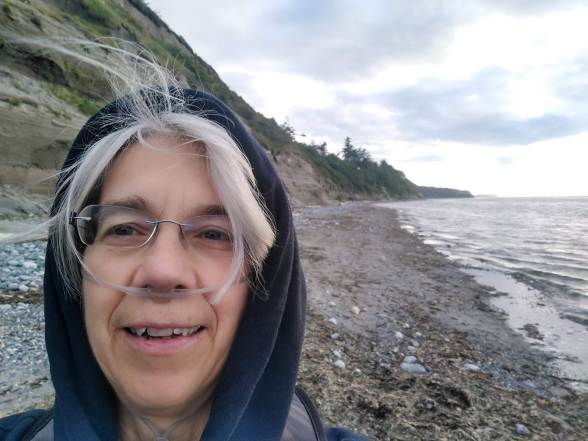
I took the photograph, a stealthie, in June 2021, when I was still on oxygen continuously.

from blue to breathe

I attended a medical conference on line yesterday and today and it made me very blue. At first it just frustrated me, because it is about increasing behavioral health access. Isn’t that a good thing? Yes, but they completely missed the biggest barrier for primary care: TIME.

With the current US medical corporate money extracting insurance non-caring system, primary care is increasingly forced into 20 or 15 or 10 minute visits. I fought my hospital district when they said “See patients for one thing only.” I replied “That is unethical and dangerous: if it is a diabetic with an infected toe, I HAVE to check their kidney function, because antibiotic dose must be adjusted if their kidney function is reduced.” And there are at least two and maybe three problems there: infection, and if the diabetes is out of control that worsens the infection, and then kidney function. And actually I have to be sure anyone going on antibiotics has good kidney function or adjust my dose. I am very very good at this, but it takes time. I can work with complex patients, with veterans, with opiate overuse, with depression: but none of this is a simple template slam dunk. A study more than a decade ago says that the “average” primary care patient had 5 chronic illnesses. My patients don’t want to come in for each one separately and anyhow, if they have kidney problems I have to pay attention when I pick medicines for their high blood pressure. None of it can be separated out. That is why medicine is complicated.

Someone asked why can’t I just post the price of a “simple” visit for a sore throat. But a sore throat can be viral, can be strep A, can be a paralyzed vocal cord, can be a throat abscess, can be vocal cord cancer. I can’t tell ahead of time. I can’t. Early on during covid, a patient called and wanted a Zoom visit for abdominal pain that he said was constipation. I said “No, I can’t do abdominal pain over Zoom safely.” I can’t ASSUME it is constipation. It was appendicitis and he had his appendix out that evening. He called from his hospital bed the next day to thank me for making him come in.

The conference made me blue because they ignored my questions about why they were not advocating for primary care to have more time with patients. They claim to be all about change, but changing the US medical system? Nope. Do not want to talk about that. But I do want to talk about it. You can help by letting Congress know: single payer or medicare for all. That insurance company gets 20 cents of every dollar to profit and wastes tons of money forcing doctors’ offices to call for prior authorization. And if we have single payer, think of all the small businesses that will start because the terror about health insurance will disappear! I think it would reduce everyone’s stress, except the insurance CEOs. And they have earned more than enough, goodbye greed.

I am also tired of specialists telling me that primary care needs to do MORE. When I get told that I am not doing enough about hypertension, bladder leakage, depression and stopping smoking, and then 20 other specialists lecture me. Ok, so one minute per topic to fulfill what all of them think I should do? I want a primary care conference where primary care doctors are celebrated: cases are presented where the specialist says what a brilliant job the primary care doctor did.

I received a consult letter from a cancer doctor a few years ago. He wrote that I had diagnosed the earliest case of chronic leukemia that he had ever seen and that he was impressed and the patient would do fine. That’s the conference that I want to go to: where primary care and specialists talk about that and we inspire more doctors to do primary care.

You can learn more and how to talk to your congressperson here: HealthCare Now: https://www.healthcare-now.org/

or at Physicians for a National Healthcare Program: https://pnhp.org

And put your vote and your money towards healthcare, not health insurance.