Top ten causes of death, US, 2020, and doctor time pressure

https://www.cdc.gov/nchs/fastats/leading-causes-of-death.htm

There is an article about US doctors, that primary care would have to work around the clock to apply all of the guidelines, here: https://news.uchicago.edu/story/primary-care-doctors-would-need-more-24-hours-day-provide-recommended-care.

Yes, but this is not new news. There was a trio of articles twenty years ago that said the same thing. And the guidelines have only expanded. Primary care is doing the same thing it has always done: what it can. Meanwhile we go to “Continuing Medical Education” and the other specialists ALL say we are not doing enough, we need to do more. Makes a woman cynical, don’t it?

Family Practice is a specialty, did you know that? We do a three year residency. Internal medicine is also three years, but many then “sub specialize” — further training in cardiology or rheumatology or nephrology, and etc. Sometimes we get a primary care doctor who doesn’t do the extra years but gets interested in something and they learn to subspecialize. We had a pulmonologist on the peninsula here, best I’ve worked with, who had not done the fellowship but learned it on the job. She was excellent and is now retired.

So you as a patient need to be aware of the top ten causes of death and do some thinking. Heart is still number one, in spite of Covid-19. All the cancer deaths are number two, but that’s only a fraction of the cancers. You want cancer screening, to pick it up before it is lethal. Pap smears, colon cancer screening, get your skin checked. Covid-19 is number three in 2020. Let’s look at the list.

US top ten causes of death, 2020.

  • Heart disease: 696,962
  • Cancer: 602,350
  • COVID-19: 350,831
  • Accidents (unintentional injuries): 200,955
  • Stroke (cerebrovascular diseases): 160,264
  • Chronic lower respiratory diseases: 152,657
  • Alzheimerโ€™s disease: 134,242
  • Diabetes: 102,188
  • Influenza and pneumonia: 53,544
  • Nephritis, nephrotic syndrome, and nephrosis: 52,547

The list changes. What has fallen out of the top ten, since Covid-19 was not on the list back in 2019? “Intentional self-harm” aka suicide, was number ten in 2019.

Let’s go through the list one at a time and give you some basic tools and ideas about prevention, since your physician doesn’t have enough time to deal with all of it.

  1. Heart: The people who have not seen a doctor for twenty years, um, go see a doctor. If you have high blood pressure for twenty years, you will also have heart failure, which means pump failure. This is bad and will kill you. Check in at least every three to five years. In the US currently, you are a “new” patient after three years, so it’s best to show up just before that three year mark. Call ahead, everyone is short staffed. Check blood pressure, cholesterol and quit smoking (that includes pot, also bad for the heart), cocaine is very effective at trashing the heart, alcohol is bad for it, so is methamphetamines, and any other silly and stupid substance “overuse”. Kratom? Bad. Fake pot? Also bad. Turn off the tube or computer and go for a daily walk. Outside. Without headphones or earbuds. Try to figure out the bird noises, ok? Eat more vegetables. Don’t be stupid.
  2. Cancer: do the screening tests. Get the HPV vaccine for your children. Get pap smears. Use sun screen. Get your colonoscopy when you hit that age. Want to read about a screening test? Go to this site: https://uspreventiveservicestaskforce.org/uspstf/home . This is the clearing house for the current guidelines AND THEY CHANGE. They get updated. The vaccines are all here too. Get them.
  3. Covid-19. If you aren’t vaccinated then I don’t even want to talk to you, unless you are seriously immunosuppressed and your docs told you not to. Otherwise your brain has been taken over by non-scientist crazy whackos. IMHO.
  4. Accidents have been rising up the list and currently number one is opioid overuse deaths. Do not buy pills on the street because even if they claim to be oxycodone they may actually be fentanyl. The drug cartels aren’t so good at diluting the fentanyl enough to not kill you. If you are on prescribed opioids you should have a shot to reverse it (narcan shot or nasal spray) and your family or friends should know where it is and how to use it. Next is guns and cars. Guns should be locked up with the ammunition locked up separately when you are not working as a policemen or hunting a deer or rhinoceros. Cars should not be driven under the influence and hello seat belts. Oh, let’s see, wear your helmet on the bicycle, roller blades, e-bike, jet-skateboard or whatever. Wear a life jacket in the boat. Don’t point Axe towards your face and try to light the spray on fire.
  5. Stroke. This is all the same stuff as heart. And also Covid-19 increases your risk of stroke.
  6. Chronic lower respiratory disease: this is mostly caused by tobacco, tobacco, tobacco, marijuana, tobacco, asbestos, tobacco and woodsmoke or firefighting. Smoke is bad. Vapor is smoke, ok? See your doctor to get help quitting smoking. My father quit after 55 years of 2 packs a day of unfiltered Camels, so don’t tell me you can’t. Also it takes an average of 8 tries or so to quit. Yes you can.
  7. Alzheimer’s: keep your brain active, eyes are important, ears are important, eat those vegetables and if you live where I do, vitamin D in the winter.
  8. Diabetes: sweet drinks are bad. Fake sweet drinks are bad. A coke has 32 grams of carbohydrate. A Starbuck’s mocha 12 oz has 60. Quit drinking sweet drinks. Your goal is no more than 15 grams of sweetener a day. Now, what exactly is a carbohydrate? It’s anything edible that is not fat or protein. However, there are lots of very low carbohydrate vegetables out there. A cup of kale only has 8 grams of carbohydrate. Sweet peas and sugar beets have a lot more. Diabetics and everyone else should have at least half of every meal be vegetables, green and yellow and orange. Fruit is sweeter and all of the portion sizes (except kale) are less than you’d like to eat. Prevention is good.
  9. Influenza and pneumonia. Get your flu shot. There are two pneumonia shots and the first is given at age 65 and the second at 66. Except in people with heart or lung problems, then they get the vaccine early and repeat at 65 and 66. I think we are going to have a group of people who always mask on planes. I am one of them.
  10. Nephritis and etc. This is kidneys. What can affect your kidneys? Pills and illegal drugs, mostly. All pills that are absorbed are metabolized (which means broken down) by either the liver or the kidneys. Kidney function goes down slowly over a lifetime with age. We are seeing a huge rise in kidney problems because of too many pills. Yes, supplements too. Natural does not mean safe and what the heck is natural about a pill anyhow? Take as few pills as possible. Take ALL the pills to show your doctor. Ok, your doctor might be clueless about supplements. We had one person nearly hit the liver transplant stage until she showed my partner her supplement’s new label “Can affect the liver.” Holy cow. Should say “Can kill you.” So back to prevention: my baseline was that people should have blood lab basic testing every five years before age 50 and every three years after that if they were on NO PILLS. If they are on ANY pills, I recommend yearly testing. Did you know that the supplement companies can change what is in the pill at any time without telling you? Isn’t that reassuring? Heck no.
  11. There are still a long list of other causes of death. Liver disease, intentional self-harm, and on.

Since your doctor does not have time to think about all of this every time you stop by, it’s partly up to you. I don’t trust Dr. Google at all, but the sites I go to are the CDC, the Mayo Clinic, NIH, AAFP (American Academy of Family Practice). I look at lots of quack sites too, to see what is being sold, but I am not advertising them!

Be careful out there.

The photograph is Elwha watching the four point buck and wondering if it will eat him or not. From last week.

Parasympathy

In 2013, Catherine Hodes, director of the Safe Homes Project (a domestic-violence program), started a workshop called “Is it Conflict or Abuse?” An abusive dynamic, she argues, requires one person to have power over the other, whereas conflict involves two people struggling for power. The distinction can be confusing, and in some cases “both people feel like they’re being abused, because they’re not getting their needs met or they’re not getting their way.”

From the Atlantic Monthly article: That’s it, you’re dead to me. September 2022 p. 14.

I think this is a fascinating idea, in the article that questions the internet wisdom of getting rid of “toxic people” in one’s life. When we cut off someone we consider “toxic”, we aren’t peaceing them, are we? Peace me, peace you, how do we actively peace people instead of being afraid, on guard, at war. I think everyone is more afraid after the two years of Covid 19 pandemic and all of the deaths and the Long Haul Covid and war. Everyone has a shorter fuse, everyone is stressed.

Remember that stress activates the sympathetic nervous system, the fight or flight system. The body makes less thyroid and less sex hormones and makes more adrenaline and cortisol. Cortisol is a steroid and great for short term, but bad for long term. If we are continually stressed, cortisol messes up the immune system and we get auto-immune disorders, the body attacking its’ own cells. The adrenaline raises our heart rate and blood pressure, neither of which are good for the heart long term. When the thyroid hormone is on the low side, we feel tired. The adrenaline makes us feel wired and we have trouble sleeping. The cortisol makes us more likely to get sick and raises blood sugar too. The low sex hormones, well, women can stop menses and men start asking for viagra.

So we as a world, need to learn to downregulate the sympathetic nervous system and go back to parasympathetic. The relaxed one. The one where we have less adrenaline and less high cortisol and more thyroid and our gut works and sex works again. How do we get there?

Breathing is one way. Slow breathing: 5 seconds in and 5 seconds out. Work up to 20 minutes. One of my veterans said he was not used to feeling relaxed, it felt weird. Ok, it may feel weird, but maybe we need to practice it. He did. There is circular breathing too, 5 seconds in, 5 hold, 5 out, 5 hold. Zen meditation, facing a wall for 40 minutes, works too. We try not to follow the thoughts. The thoughts pop up anyhow, but not following them down the rabbit hole is interesting and challenging. Mindful mediation and Jon Kabat Zinn’s books and tapes work as well. It takes practice. Practice peace, practice relaxing. Doesn’t that sound like a lovely practice?

Stupid cat videos work for me too. Laughter works. What makes you laugh? I like the silly animal videos, the moose playing with the wind chimes, three baby bears rescued (with care) from a dumpster, with the truck driving off to avoid momma bear. Rocking, knitting, sewing, fishing, walking the beach, cuddling a baby, dancing, listening to music, playing music. Which works for you? Silly movies. I don’t like horror movies, and I love cartoons and animation. Engage the child at heart for the parasympathetic nervous system.

In high school my daughter said that most fights were stupid. “One person says something without thinking. The other person goes off and gets upset. She stops talking to person one, who has no idea what is going on, and they often talk to their friends. So there is this big fight over some dumb comment.”

I don’t think it ends with high school, sadly enough. And before we label someone “toxic”, maybe we need to wander off and breathe, or watch a silly cat video. Whatever works for you that doesn’t hurt others.

We need more parasympathy in the world. Yep, I just made that word up. Relax and if you can’t or won’t, consider practicing.

Peace you and please peace me.

https://my.clevelandclinic.org/health/body/23266-parasympathetic-nervous-system-psns

https://healthnews.com/family-health/healthy-living/how-to-activate-the-parasympathetic-nervous-system/

August 19, 2022

Unexpected hero

When I first think about divorce, I call my sister.

I say, “I am thinking about a divorce.”

She replies, “YOU don’t want to be a single mom.”

I think, well, crap, that is true. Me: “I AM a single mom. It’s just that one of them is FIFTY.”

My sister proceeds to tell me how difficult it is to be a single mother.

I have to self examine my OWN prejudices against single mothers.

Then I wade in, to solo and couples counseling, for a year. My ex fires our couples counselor after a YEAR. He says the counselor is on my side. “We have been talking to him for a year!” I protest.

“I want a new one,” says my then husband.

I find a new one. I am filling out the paperwork. It asks, what is your goal?

That is the moment I decide: I write “Amicable divorce.”

The two years before that moment, I am not sure. I am trying very very hard to see if it can be fixed. But it takes two to tango and my then husband will not tango. Not one step.

We were each attracted to something specific in the other person. My then husband did not want to work at any sort of traditional job. His father would come home angry from work for years. I loved working, always.

I was a terribly serious child, growing up in an alcoholic family, and I have food insecurity. That is, at some deep level, I always worry about whether there will be food. When I meet my then husband he says that his goal is “To have fun every day.”

This slays me. Have fun? And he WAS fun. Biking, jitterbug dancing, he was a tennis and golf pro, he was smart, well read, divorced from a marriage of convenience to a lesbian to cover so she could be a small town librarian. Really? Yes, really. I demanded to see the divorce papers before we got married. My then husband thought I was very very funny and I thought he was too.

When we divorce, people tell me he will never pay child support. He won’t stay in contact with the kids. There are a lot of opinions.

Wrong, wrong, wrong. My ex returns to school, gets a “displaced homemaker scholarship” because he was a househusband (yeah, I said he was smart). He goes to nursing school and gets an RN. “You’ve yammered about medicine at me for fourteen years, I might as well.”

He gave me hell about us living in an “old person’s” town. Then in nursing school he calls. “Hey, I’m doing a rotation. Guess what it is.”

“Don’t know, what?”

“Nursing home.”

I laugh.

“I LOVE these OLD PEOPLE.” he says. And he DOES. He is wonderful with them. He works in a nursing home for years. He gives scholarships to the medical assistants when they leave for nursing school. He brings coffee to his medical assistants and the other staff. He drives by on his day off because one elderly woman will only take her medicine if he gives it to her. He gets pianos for the nursing homes. He does memory loss concerts, where he tries to engage memory loss folks. We store music as entire songs, or entire albums, so if someone starts a song, they can often go through the whole thing. He can sometimes get someone singing who no longer can string a sentence together. Families love it.

Early in covid he calls me. “I have covid.”

“Sh-t.” I say. “Are you ok?”

“Oh, yeah. Everyone at the facility has it. Two staff didn’t so we sent them home. We are working sick because there isn’t anyone else.”

“Holy crap.”

“Yeah, it’s a little depressing. My memory loss folks can look ok at the start of the shift and are dead by the end.”

A quarter of the patients die. This is before the vaccine. My ex sails through covid, says he doesn’t feel bad, for him it’s just a cold. He says, “I miss some of them.” Yeah, holy crap.

So another hero. And he paid the child support every single month and stayed in touch with his kids in his own odd way. “Mom, he tells me about his golf shots,” says my daughter. I laugh, “Yeah. Well, he loves you.” “I don’t care about golf.” she says. “I know, me either,” I say.

The photograph was taken with my camera by my friend Amelia in 2014, I think. It is me and my ex, seven years after the divorce was final.

I read this to my ex prior to posting. Posted with his approval.

Adverse Childhood Experiences 14: Hope

I keep reading bits about despair and about how a generation of children is being “ruined” by the pandemic.

Not so, I say. There is hope. We need to support each other to survive and then to thrive.

This generation WILL have a higher than average ACE score. If the Adverse Childhood Experience scale is from zero to eight, children in this time period will have at least one higher point than average and many will have three or four or more. Loss of a parent, a sibling, beloved grandparents during covid. Increases in domestic violence, child abuse and addiction. These are all part of the ACE score.

What does this do to children? They have survival brain wiring. They will do their best to survive what is happening. A friend and I both have high ACE scores, 5 or more, and we are both oppositional defiant. We showed this in different ways. He grew up in the same community. He escaped from home and knew all the neighbors. He walked to the local church and attended at age 3 or 4. He has lived in this community all his life.

His oppositional defiance showed up at home, where he consistently refused to obey. And in school, where he confounded and disobeyed teachers and passed anyhow.

My family moved every 1-5 years. I hated moving. I wouldn’t talk to kids in a new school for a year. It was very difficult. So my oppositional defiance was very very internal. I hid in books and in my head. In 6th grade I got in trouble for hiding novels inside the school book I’d already read. I also would just not listen and my respect for the teacher got even lower when she would be angry that I knew the answer to the question once she’d repeated it. I wasn’t listening because I was bored. She was the first teacher that I thought, well, she is not very bright. The next year they stuck me in the honors class and I stopped being bored, though I still questioned practically every opinion every teacher had. I wanted evidence and I did not believe it just because the teacher said it.

I am not saying that oppositional defiance is in every high ACE score. I don’t know that. Why oppositional defiance? Imagine you are a small child and you are beaten. There isn’t rhyme or reason. You can’t predict when the adult will be out of control. Why would you behave “well” if it makes no difference? You might as well do what you want, because nothing you do will change the adult. Or imagine you are a small child who is with one person, passed to another, then to another. You may not exactly trust adults after two or three repetitions. And you want to survive.

There is an increase in addictions, behavioral health diagnoses, and chronic illness in adults with a high ACE score. A researcher when I first heard a lecture about it said, “We think perhaps that addiction is a form of self medication.” I thought, oh, my gosh, how are we ever going to treat THIS? Well, we have to figure that out now, and we’ve had 30 years to work on it.

I was very comfortable with the oppositional defiant patients in clinic. I got very good at not arguing with them and not taking their behavior personally. They might show up all spiky and hostile and I might be a little spiky and gruff back: sometimes that was enough. I think the high ACE score people often recognize each other at some level, though not always a conscious one. With some people I might bring up ACE scores and ask about their childhood. Sometimes they wanted to discuss it. Sometimes they didn’t. Either was ok.

One thing we should NOT do is insist that everyone be “nice”. We had a temporary doctor who told us her story. Her family escaped Southeast Asia in a boat. They had run out of water and were going to die when they were found by pirates. The pirates gave them water. They made it to land and were in a refugee camp for eight years or so. She eventually made it to the US. She was deemed too “undiplomatic” for our rural hospital. I wondered if people would have said that if they knew her history and what she had been through. It’s not exactly a Leave it to Beaver childhood, is it? When she was telling us about nearly dying of thirst in the boat, my daughter left her chair and climbed on my lap. She was under ten and understood that this was a true and very frightening story.

We can support this generation of children. This has been and is still being Adverse Experiences for adults as well. Family deaths, job loss, failure of jobs to support people, inflation. Remember the 1920s, after World War I and the last pandemic, of influenza. “On October 28, 1919, Congress passed the National Prohibition Act, also known as the Volstead Act, which provided enabling legislation to implement the 18th Amendment.” (wikipedia). There were forces trying to legislate behavior, as there are now. The result in 1920s of making alcohol illegal was speakeasies, illegal alcohol, and violence. Some people acted wild after WWI and the influenza pandemic and some people tried to lock down control, by controlling other peoples’ behavior. It did not work then and it will not work now. The wildness is out of control grief, I think, grief dysfunctional and drinking and shooting and doing anything and everything, legal or not. We remember how the 1920s ended too. Let us not repeat that. Let us mourn and grieve and support each other and support each other’s decisions and autonomy.

Blessings.

Covid-19: Long Haul III

The CDC has guidelines for Long Covid and it can qualify for disability in the United States.

Here: https://www.cdc.gov/coronavirus/2019-ncov/long-term-effects/index.html

And here: “As of July 2021, โ€œlong COVID,โ€ also known as post-COVID conditions, can be considered a disability under the Americans with Disabilities Act (ADA). Learn more: Guidance on โ€œLong COVIDโ€ as a Disability Under the ADA, Section

Here is the list of “most common” symptoms from the CDC:

General symptoms

  • Tiredness or fatigue that interferes with daily life
  • Symptoms that get worse after physical or mental effort (also known as โ€œpost-exertional malaiseโ€)
  • Fever

Respiratory and heart symptoms

  • Difficulty breathing or shortness of breath
  • Cough
  • Chest pain
  • Fast-beating or pounding heart (also known as heart palpitations)

Neurological symptoms

  • Difficulty thinking or concentrating (sometimes referred to as โ€œbrain fogโ€)
  • Headache
  • Sleep problems
  • Dizziness when you stand up (lightheadedness)
  • Pins-and-needles feelings
  • Change in smell or taste
  • Depression or anxiety

Digestive symptoms

  • Diarrhea
  • Stomach pain

Other symptoms

  • Joint or muscle pain
  • Rash
  • Changes in menstrual cycles

There are recommendations for a work up by physicians. Depending on symptoms, this may include labs, ECG, echocardiogram (heart ultrasound), CT scan and other tests.

A friend has just gone through those four tests . They are “normal” except for her heart rate. At rest her heart rate is 70 with a normal oxygen level. Walking, her heart rate jumps to 135. Over 100 is abnormal in this athlete who is NOT exerting heavily.

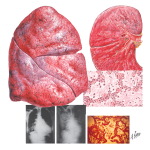
So WHAT is going on with NORMAL testing? I think this is “Covid-19 Viral Pneumonia”, a complication of Covid-19, just as “Influenza Viral Pneumonia” is a complication of influenza. Ralph Netter MD has an illustration of lungs from a person who died of influenza viral pneumonia: the lungs are swollen and inflamed and bruised. WHY is the testing “normal” then? The swelling is throughout the lungs, so a chest x-ray sees it as all the same density and a CT scan also sees it as all the same density. The lungs may have mildly decreased breath sounds, but the sounds are even throughout the lungs. The useful TEST is a walk test. I have tested patients with “walking pneumonia” in clinic for years: get a resting heart rate and oxygen level. Then have my patient walk up and down the hall three times and sit back down. Watch the heart rate and oxygen level. If the heart rate jumps 30 beats up or is over 100, the person needs to continue rest until the heart rate stays under 100 or jumps less than 30 beats. It is important to observe the heart rate until they recover. Sometimes the oxygen saturation will drop as the heart rate comes down, and some people qualify for oxygen. Steroids do not seem to work for this. The length of time to healing is not totally surprising, because a lobar pneumonia that is visible on chest xray takes 6-8 weeks to fully clear. It is not too amazing that a bad walking pneumonia could also take 6 weeks or more to clear. If the person returns to work too soon, they prolong the lung inflammation and they are at risk for exhaustion and for a secondary pneumonia. The treatment is REST REST REST and support.

Do they need oxygen? Currently oxygen is covered only if the person’s oxygen saturation drops down to 88%. However, I think that oxygen would help recovery and make them less exhausted. With my first walking pneumonia, which was influenza, my walking heart rate was 135 and my resting heart rate was 100. Both were abnormal for me. Neither I nor my physician could figure it out. This was in 2003. I did look in my Netter book: I took one look at the painting of the influenza lungs and shut the book. “Oh.” I thought. “That’s why I can’t breathe.” The image is here, though I wish it were bigger.

It took two months for my heart rate to come down, the lung swelling to improve, and me to return to work. I read the text of Dr. Netter’s image a year later and then I read an entire book about the 1918-1919 influenza. Since then I have walked people who come in complaining of exhaustion after a “cold” or “bad cough”. Viruses can cause this and so can bacteria: mycoplasma pneumonia, chlamydia pneumonia, pneumococcal pneumonia, legionella and strep A. If the fever is gone, the infection has probably resolved, but it still can take days or weeks for the lung tissue to recover.

For Covid-19, I would add a third test: walking with weights. We test cardiac patients by asking if they can carry two bags of groceries up a flight of stairs. That is 3 Mets, a measure of the heart load. We need to measure the lung load as well. If the lung tissue is swollen, the amount of airspace is cut down and can be half normal. The heart attempts to take up the slack. The person may tolerate a heart rate of 135 for a while, but it is like running a marathon. If they are older or have heart disease, this can trigger a heart attack. I would walk the person carrying hand weights, and see the recovery.

Also, brain fog is unsurprising. If your oxygen level is borderline, it is darn hard to think. I write really strange songs when I am hypoxic. I get goofy and feel weird. The fast heart rate also feels like anxiety: I think that the body is trying to tell me to rest.

The definition of Long Covid is symptoms after 30 days. Please see your physician if you are still ill and continue to have symptoms.

Blessings.

Here is a recent article about T-cells and inflammation in the lungs of Covid-19 patients: https://www.ncbi.nlm.nih.gov/pmc/articles/PMC8460308/

and this: https://www.frontiersin.org/articles/10.3389/fimmu.2020.589380/full

Achievement

My first achievement for today’s Ragtag Daily Prompt is spelling achievement. And no, I did not spell it correctly on the first try.

My daughter has finished her first two years of teaching eighth grade, during Covid-19. She taught remotely until March of 2021 and then in person. She worked on her teaching certificate the first year and finished her Masters last month. She is SOOOO amazing!

Hooray for ALL of the teachers who continued to teach during Covid-19, remotely, in person, hugs and prayers and sending love.

behavioral health, cancer, and the immune system

There are more and more articles about immune causes of “behavioral health” diagnoses.

The latest I’ve read is about schizophrenia:

https://www.nature.com/articles/s41598-020-63776-0

Auto-antibodies are antibodies that we make against something else that then attack a part of ourselves. The most well know version of an auto-antibody is Rheumatic Fever, where an antibody to streptococcus A attacks the joints or skin or heart. I had a patient in Colorado who needed a new heart valve at age 10 or 11 because of Rheumatic Fever.

I have written a lot about PANDAS and PANS (respectively Pediatric Autoimmune Neuropsychiatric Disorders Associated with Strep A and Pediatric Acute Neuropsychiatric Syndrome) because an older psychiatrist was suspicious that I have PANS. I have had pneumonia four times and it is accompanied by anxiety and fear, part of which turns out to be hypoxia and tachycardia. I think a heart rate of 135 makes just about ANYONE feel anxious. It feels awful.

But what about other Behavioral Health Diagnoses? Remember, we are on the DSM V, the fifth manual of psychiatric diagnoses. We have not had markers or a clear cause. That is, we are aware that serotonin is low in the intracellular spaces in the brain with depression but we don’t know what the mechanism is, what the cause is and what exactly is happening in the neuron or brain cells. A paper on a particular rat neuron said that there were 300 different types of serotonin receptors on that neuron. Blocking one type caused rats to act in an obsessive compulsive manner. But there are 299 others and then combinations. Whew, there is a lot to be learned about the brain.

Fibromyalgia can be caused by autoantibodies, at least some of the cases: https://www.sciencedaily.com/releases/2021/07/210701120703.htm

Chronic fatigue: https://pubmed.ncbi.nlm.nih.gov/34441971/

Lupus and fibromyalgia overlap: https://pubmed.ncbi.nlm.nih.gov/9207710/

Autoimmune disorders are more common in women. We think this is because of pregnancy. The woman’s immune system has to tolerate a pregnancy where half the genetic material is from the father. Yet the immune system also has to recognize “not me, infection” and be able to distinguish that from the pregnancy. This is tricky. The most common autoimmune disorder currently is believed to be Hashimoto’s Thyroiditis, where there are self antibodies to the thyroid. Post covid could potentially beat this out.

Chronic fatigue and fibromyalgia have been orphan diseases in that we do not have an inflammation marker that defines them. The ESR (erythrocyte sedimentation rate) and CRP (um) are usually normal. These are often elevated in rheumatological disorders. Not having a marker doesn’t mean that the muscles are not painful and doesn’t mean that the fatigue is not real.

I am hopeful that we are on the cusp of a true revolution in medicine, with more understanding of the immune system and behavioral health disorders, as well as post covid, fibromyalgia and chronic fatigue. I worked at the National Cancer Institute in the 1980s before medical school, with Steve Rosenberg, MD. He was trying to get the immune system to fight cancer.

Now there has been a cancer treatment with 100% success: an immune treatment for people with rectal cancer with a particular immune profile. This is AMAZING! https://www.zmescience.com/science/experimental-trial-cancer-complete-remission-02725735/

Only 18 patients, but 100% success! No surgery.

The patch for the National Cancer Institute shows a man fighting a crab: Cancer, the crab. Dr. Rosenberg talked about Sysiphus, who was rolling a stone up a mountain eternally while it rolled back on him. From here: Later legend related that when Death came to fetch him, Sisyphus chained Death up so that no one died. Finally, Ares came to aid Death, and Sisyphus had to submit. In the meantime, Sisyphus had told his wife, Merope, not to perform the usual sacrifices and to leave his body unburied. Thus, when he reached the underworld, he was permitted to return to punish her for the omission. Once back at home, Sisyphus continued to live to a ripe old age before dying a second time.

Maybe the stone has reached a resting place. Blessings and peace you. Please peace me.

Covid-19: Hope for Long Haul

I want to offer hope to the people with Long Covid-19. Having been through four bad pneumonias, with increasingly long recovery times, and now disabled for doing Family Medicine, I have experience to share. First I want to talk about chronic fatigue and fibromyalgia.

I am a piler, not a filer. Including in my brain. I have been adding to the chronic fatigue and fibromyalgia pile since I was in medical school.

In residency a new patient questions me. “Do you believe in chronic fatigue?” he says, nearly hostile.

“Yes,” I reply, “but I don’t know what it is or what causes it or how to fix it.”

For years different causes were suggested. Often infections: EBV, mononucleosis, lyme disease. Some people didn’t have any infection. I did note even in residency that my chronic fatigue patients all had one thing in common: they were exhausting.

Does that sound terrible? They were all type A, high achievers, often super high energy. Often they got sick or crashed when they were working three jobs, or working 20 hours a day on their own business, or doing something that sounded insanely exhausting and unsustainable. And most of them wanted that back. “Ok, wait. You were working 20 hours a day, seven days a week, got sick and THAT is what you want to get back to?”

None of the chronic fatigue people seemed to be type B.

Eventually I read that one in ten people with ANY severe infection can get chronic fatigue.

Then I work with the U of Washington Telepain Clinic, on zoom. They start studying functional MRIs of the brains of people with fibromyalgia.

They use a thumbscrew. They put a measurable amount of pressure on a person with no fibromyalgia. The person reports 3-4 out of 10 pain. The brain lights up a certain amount in the pain centers on the MRI. The doctors can SEE it. Then they test the fibromyalgia people with the same amount of thumbscrew pressure. The fibromyalgia people report 8-9/10 pressure and they are not lying. The pain centers in the brain light up correspondingly more. So they ARE feeling 8-9/10 pain.

Is this a muscle problem? A brain problem? Or both?

It appears to be both. Chronic fatigue and fibromyalgia and other disorders with pain out of proportion to the physical findings were being called “central pain processing disorders”.

I thought of chronic fatigue as a sort of switch. As if at a certain level of stress or exhaustion or infection the body would throw a switch. And force the person to rest.

I wondered if the type B people just rested and got over it, while the type A people fought it like tigers. Which seemed to make it worse.

And now we have Covid-19. The study getting my attention is saying that 20%, or 1 in five people age 18-64, have Long Haul symptoms. Over 65 it is 25%, one in four. And it can happen in people with no preexisting conditions. Preexisting conditions or not, this sucks. The two biggest complaints are lung related and muscle related.

I have chronic fatigue following my third pneumonia in 2014. I might be just a little type A. I went back to work too soon (6 months after the pneumonia) and after a half day would crash asleep at 3 pm. For another 6 months. Now that I have had the fourth pneumonia and have been off for a year and been on oxygen, I feel better than I have since before 2014, even though I still need oxygen part time. Guess I was in denial about the chronic fatigue. NOT ME!

So, dear reader, learn from me and don’t be like me. The biggest thing that I have had to get through my thick type A skull is that when my body wants rest, I need to rest. This can be hella annoying, as my son would say. I have to pay attention to my energy level and decide what to do. And some of my precious energy has to go to things like laundry and paying bills! How very frustrating. My markers are energy level and also pulse. My pulse tells me when I need oxygen and when I am really sick. With the first pneumonia back in 2003, influenza, my resting pulse stayed at 100. My normal then was about 65. When I stood up, my pulse went to 135. It was EXHAUSTING to stand up. I had to rest half way up one flight of stairs. It was hard to walk two blocks to pick my daughter up from primary school. And I looked fine. Neither my doctor nor I could figure it out. I finally guessed that it was lung tissue swelling and hoped it would go down eventually. It did, but it was a full two months and my doctor partners thought I was malingering. I tried not to wish it on them. It sucked and I felt awful back at work, but my pulse had finally come down. We even did a heart ultrasound, but all it showed was a fast heart rate. My chest film looked “normal”, because the tissue swelling is throughout the lungs, so it cannot be seen on a chest xray. It was very weird, but I recovered. And all the descriptions of Long Covid sound like my lung swelling. Fast heart rate, difficulty breathing, muscle pain and terrible fatigue. Go back to the couch.

Go back to the couch and wait. Do what you have to but if your heart rate is over 100 when you get up, you have to rest. Otherwise you will prolong it. Seriously.

More later. Peace me and sending love and peace.

Anna’s hummingbirds can survive below freezing temperatures by slowing their metabolism at night, until it warms up in the morning. Talk about resting!

Covid-19 and walking pneumonia

I wrote this essay in July 2017. Before Covid-19. It is clear that Covid-19 is also causing a walking pneumonia. People are exhausted when they get out of bed. No fever, they may not cough much, but if they get up, they can feel exhausted. The key to this is the heart rate, the pulse. If the pulse jumps 30 points faster or more, this implies lung swelling and reduced lung capacity. Right now, the only treatment we have is rest and time to heal. I should know, I’ve had really bad walking pneumonia four times: the first two times I was out for two months. The third time 6 months with 6 more months half days and chronic fatigue. The fourth time put me on oxygen.

I want to offer hope to the people with Long Covid-19. Having been through four bad pneumonias, with increasingly long recovery times, and now disabled for doing Family Medicine, I have experience to share. I will write more about that in the next essay.

From 2017: Walking pneumonia is changing.

The classic bugs are four “atypical bacteria”:

mycoplasma pneumonia
chlamydia pneumonia (this is not the STD chlamydia. Different one.)
legionella
pertussis (whooping cough)

However, streptococcus pneumonia can also be a walking pneumonia OR a lobar pneumonia. In a lobar pneumonia the person usually is short of breath, running a fever of 102-104, and they point to where it is: hurts in the right upper chest. On chest x-ray there will be consolidation: whited out from fluid or swelling instead of nice ribs and dark air. They are often tachycardic and hypoxic.

In walking pneumonia the person often has no or minimal fever, they just feel tired or short of breath when they do things, and the chest xray can be “clear”. It isn’t really “normal”, it’s just that the bacteria or virus affects the entire lungs and causes some swelling throughout and doesn’t white it out.

“Double” pneumonia is when the chest film is whiting out on both sides. We also see the lungs whiting out with ARDS — acute respiratory distress syndrome. So after trauma in a car wreck and lots of broken ribs, the lungs can be bruised too and white out. Ow. Influenza virus can cause lung swelling and in the 1917-1918 flu infected military recruits lungs were swelling shut. They would turn blue and die.

“My” strep that I’ve had pneumonia with twice is streptococcus A, not strep pneumonia. It causes strep throat mostly though it can invade and cause sepsis or pneumonia or cellulitis. There are currently 4000+ known strains of strep A, and some are resistant to antibiotics or can cause kidney damage or do all sorts of nasty things. I think that “my” strep is resistant to azithromycin.

The current guidelines say to treat walking pneumonia with azithromycin. However, a paper came out this year saying that resistance to azithromycin is rising among streptococcus pneumonia and that nearly 50% of strains tested were resistant. Uh-oh. That means that azithomycin doesn’t work and the person can get sicker and may die. I talked to a pulmonologist in Seattle when I needed help with someone. He said that he would have said there weren’t any resistant strep pneumo strains here in Washington except that he had one intubated and in the ICU right then. “I’m convinced now, ” he said.

A lobar pneumonia is easier to diagnose. Abnormal chest x-ray, reasonably healthy people run a high white blood cell count (so my frail folks, immunosupressed folks and 90 year olds don’t raise their white blood cell count), and a fever (ditto) and look sick. The walking pneumonia people come in saying they have been coughing for 3 weeks or 4 weeks or two months. I am doing more lab testing because of the resistance.

This winter I have seen 6 different causes of walking pneumonia here: influenza A, respiratory syncytial virus (In more than one person over 60. That is NOT who the books say it should affect. It’s supposed to mostly cause bronchiolitis in babies and preemies), pertussis, strep pneumococcus, strep A and none of the above. All looking pretty much the same, but with different treatment.

https://wwwnc.cdc.gov/eid/article/15/8/08-1187_article
https://www.cdc.gov/pneumonia/atypical/mycoplasma/index.html
http://www.medscape.com/viewarticle/820736
https://www.cdc.gov/drugresistance/threat-report-2013/pdf/ar-threats-2013-508.pdf#page=79
RSV: http://kidshealth.org/en/parents/rsv.html
Mycoplasma resistance to azithromycin has been reported too: http://erj.ersjournals.com/content/36/4/969

Lung swelling and long covid

I wrote this in 2017, about influenza. However, I think covid-19 can do the same thing. Part of long covid is letting the lungs really heal, which means infuriating amounts of rest and learning to watch your own pulse. Watching the pulse is easier then messing around with a pulse oximeter. The very basics of pulse is that normal beats per minute is 60 to 100. If your pulse is 70 in bed and 120 after you do the dishes, you need to go back to bed or the couch and REST.

From 2017: Influenza is different from a cold virus and different from bacterial pneumonia, because it can cause lung tissue swelling.

Think of the lungs as having a certain amount of air space. Now, think of the walls between the air spaces getting swollen and inflamed: the air space can be cut in half. What is the result?

When the air space is cut down, in half or more, the heart has to work harder. The person may be ok when they are sitting at rest, but when they get up to walk, they cannot take a deeper breath. Their heart rate will rise to make up the difference, to try to get enough oxygen from the decreased lung space to give to the active muscles.

For example, I saw a person last week who had been sick for 5 days. No fever. Her heart rate at rest was 111. Normal is 60 to 100. Her oxygen level was fine at rest. Her oxygen level would start dropping as soon as she stood up. She had also dropped 9 pounds since I had seen her last and she couldn’t afford that. I sent her to the emergency room and she was admitted, with influenza A.

I have seen more people since and taken two off work. Why? Their heart rate, the number of beats in one minute, was under 100 and their oxygen level was fine. But when I had them walk up and down a short hall three times, their heart rates jumped: to 110, 120. Tachycardia. I put them off from work, to return in a week. If they rest, the lung swelling will have a chance to go down. If they return to work and activity, it’s like running a marathon all day, heart rate of 120. The lungs won’t heal and they are liable to get a bacterial infection or another viral infection and be hospitalized or die.

I had influenza in the early 2000s. My resting heart rate went from the 60s to 100. When I returned to clinic after a week, I felt like I was dying. I put the pulse ox on my finger. My heart rate standing was 130! I had seen my physician in the hospital that morning and he’d gotten a prescription pad and wrote: GO TO BED! He said I was too sick to work and he was right. I went home. It took two months for the swelling to go down and I worried for a while that it never would. I dropped 10 pounds the first week I was sick and it stayed down for six months.

Since the problem in influenza is tissue swelling, albuterol doesn’t work. Albuterol relaxes bronchospasm, lung muscle tightness. Cough medicine doesn’t work very well either: there is not fluid to cough up. The lungs are like road rash, bruised, swollen, air spaces smaller. Steroids and prednisone don’t work. Antiviral flu medicine helps if you get it within the first 72 hours!

You can check your pulse at home. Count the number of beats in one minute. That is your heart rate. Then get up and walk until you are a little short of breath (or a lot) or your heart is going fast. Then count the rate again. If your heart rate is jumping 20-30 beats faster per minute or if it’s over 100, you need to rest until it is better. Hopefully it will only be a week, and not two months like me!


Feel free to take this to your doctor. I was not taught this: I learned it on the job.

I took the photograph, a stealthie, in June 2021, when I was still on oxygen continuously.