Climbing the walls

When my father died, he left me a will written more than 40 years earlier. He and my mother and my maternal grandparents were all pack rats. It was a house and two barns and ten years worth of some mail. A mess.

After working on it for a year, I felt like I was in knots and couldn’t relax. I was quite sick of counseling and wanted to do body work instead. I found a massage person and worked with him for over a year.

On the first visit he talked to me and then had me stand and walk around. “You are head forward and your toes are gripping the floor.” “I am not!” I said, lifting my toes. He was right, though. I had to relearn how to walk for two weeks, lifting my toes up.

I went to see him once last spring, knotted up again. I thought I was much better at unknotting during the work. I asked, “So am I pretty relaxed?”

He laughed. “You’re NEVER relaxed. Your baseline is 7/10 but you notice that you are tight when you get up to a 9 or 10.” He said that relaxed was 1-3.

I was hurt and annoyed. All that work and he’d never said that and never given me tools. I tried to contact him by email but he either didn’t remember what he said or just wouldn’t deal with it.

I was grumpy.

Meanwhile in clinic, I was teaching the breathing technique to try to relax, to go from sympathetic fight or flight, to parasympathetic. Breath in for a slow count of 4 seconds, then out for a slow count of 4 seconds. I thought, well, I should do it more too. I decide that when I wake up, I will do the breathing technique.

It promptly put me back to sleep. I have used slowing my breathing to go to sleep. I also had three years in college and after where I did daily zen meditation, facing the wall, on a zafu, for forty minutes. Add my flute playing and singing in chorus for the last 24 years and I can do the count way past four. My mind, however, is a very busy place, and meditation often felt like letting a cage full of crazy monkeys out. They all wanted attention. My understanding of zen is that I am supposed to let the monkeys show up but not hold on to them, converse with them, or let them hold the floor. Return to the breath.

When we wake up, we have a cortisol burst in the morning. It gets us going. I am pretty sure that I have some adrenaline too. The slowed breathing calms that right down. According to the pain clinics, twenty minutes of slowed breathing calms almost everyone down into the parasympathetic state. I don’t think that the high Adverse Childhood Experience people are used to parasympathetic. Honestly, looking at the movies and television and video games, I think our culture is not used to it either.

The breathing in the morning is working. My neck and shoulder muscles are more relaxed (in spite of computer use). Maybe I am down to a 5/10! That would be huge progress, right?

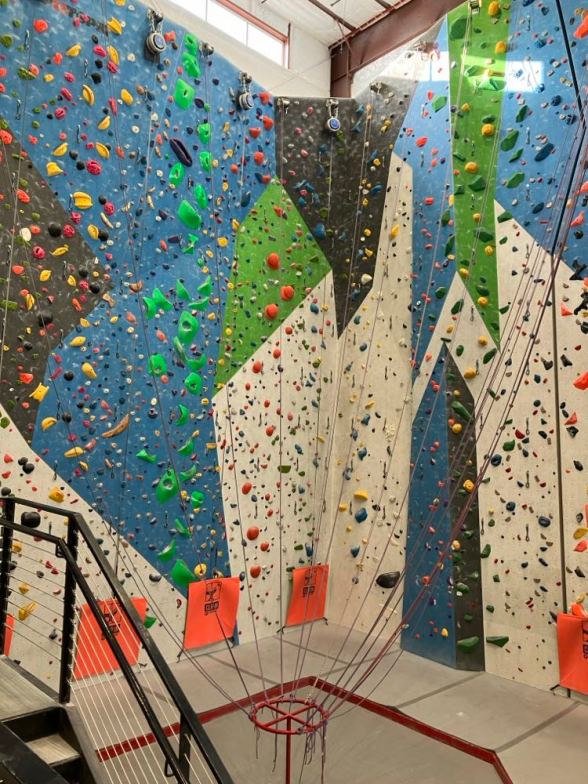
And my muscles love the climbing walls, too. Not that I am that good at it, but my muscles really like the intensity and focus. It is so different from clinic, where everything is focused on listening to the patient, typing as they talk, watching, sensing, trying to get a handle on what is happening with them. The wall is like clinic in focus, but my whole body is involved and there is lots of reaching and stretching out of that contained focus.

Sol Duc seems to be good at slow breathing. Cats go from 1/10 to 10/10 in just a heartbeat, or that’s my impression.

There is no alabaster in this house. Not a bit. Perhaps I will meditate on that.

For the Ragtag Daily Prompt: meditate and alabaster.

Mind

Facing a wall or lying in bed
breathe slow: four seconds in
one two three four
four seconds out
one two three four
keeping count

or facing a wall sitting
on a zafu, bell rings to start
how can forty minutes be so long?
fall asleep and body weaves
waking me up OH don’t hit the wall
adrenaline then slithering down
towards sleep again

zen mind, blank mind?
my mind wanders off again and again
what is for dinner? grocery list?
that annoying thing or person
at school or work
the mind busy as a squirrel
burying nuts and digging them back up

bring the mind back again
again again again
to the breath the wall letting go
of this well trodden mind trail
only to have the mind wander off
down another: this with briars
and falling into a pond
that has ice and cold

back shake like a dog
shake it off
focus on the breath the wall again
vivid multicolor cats
with paisley and stripes and spots
there is the BELL
forty minutes

Bow to the wall
and stretch
get up
ready zafu for the next time
meditation
mind

_____________________

Written today for the Ragtag Daily Prompt: blank.

The translation that I originally learned is here.

Tenacity

Two skills needed in primary care are tenacity and listening. That is a combination that can make a diagnosis. Here is an example.

In residency, many years ago, I have a patient with developmental delay. He lives in a group home. He can’t talk though makes some noises. The group home staff bring him to me. His head is misshapen because his mother had measles in her pregnancy.

The staff says, “We think his head hurts. He just isn’t behaving right.”

“Did he fall?”

“We don’t think so.”

“Fever? Nasal congestion? Cough?”

“No.”

“How long?”

“Over the last week.”

I do an exam. I really can’t see his tympanic membranes because of his skull shape.

“Maybe he has an ear infection. I can’t see. We’ll try antibiotics, but if he is not improving, bring him back. In five days.”

They bring him back. “He’s no better.”

I get on the phone. I need a CT scan of his head and the group home say he won’t stay still. I need anesthesia to sedate him for the CT scan. It takes two tries and quite a bit of phone explaining with both the anesthesia department and the radiology department. Persistence. I am looking for a subdural bleed in his head from a fall, or a sinus infection, or something.

It is done and I get a call. Not from radiology or anesthesia but from the ear, nose and throat surgical resident. He is very excited. “Your patient!”

“Yes,” I say.

“He has a pseudocyst! In his sinuses! He has abnormally large sinuses and this is the biggest pseudocyst anyone here has ever seen!”

“Um, ok.” Honestly, I’ve never heard of a pseudocyst. It turns out to be packed nasal drainage in the sinus. Bad ones can erode through bone into the brain. Certainly that seems like the cause of the headache!

“We are taking him to surgery!”

Residency can be pretty weird, when someone gets really excited about a rare disease or interesting trauma case or whatever. I found that I was entirely happy just doing health maintenance exams and encouraging people to quit smoking and exercise and drink less. However, I was also good at finding weird things.

The ear, nose and throat surgeons in training were very happy about the surgery. The group home staff were happy too. “He’s back to his old self. Thank you!”

It took tenacity to set up the head CT. It’s important to listen to the families and caregivers too, because they know the person better than I do. They were right: his head hurt. And we found out why and were able to treat it.

For the Ragtag Daily Prompt: tenacity.

Water is tenacious too, wearing down stone and wood and glass.

Spirit take flight

Death from memory loss is a mixed bag for families.

In the past, the average time to death from Alzheimer’s was 8 years. I don’t find a number on the CDC website, CDC Alzheimer’s. I find these statistics:

  • Alzheimer’s disease is one of the top 10 leading causes of death in the United States.2
  • The 6th leading cause of death among US adults.
  • The 5th leading cause of death among adults aged 65 years or older.3

The site also says that the number of people with Alzheimer’s doubles every five years after age 65. Sigh. Those numbers are the same ones that they taught me years ago, in a different format. 6% at age 60, then 2% more every year. By 70, 26%, by 80, 46%, by 90 66%. Like hypertension, if you live long enough, you may well get it. And yet, I have had patients over 100 years old with intact memories.

The death of a family member with memory loss can have complicated grief. On the one hand, loss and grief. On the other, a burden is lifted. If the person is in memory care, the cost may be very heavy. In our town, the memory care facility costs $7000 per month. That is a heavy burden to carry when the person no longer recognizes the family or speaks. The family may feel hugely relieved when their person passes and at the same time, feel guilty. This is someone that they love and loved. And yet, they are relieved by death. I think of it as a patient of mine described it: “The grief group at the hospital said that my husband isn’t gone. I said, yes he is, he just left his body.” It is very very hard for a family to watch their loved one deteriorate, lose skills, become confused and/or frightened and/or paranoid and the process can happen for years. With an average death at 8 years, some people live beyond 8. Maybe 12 years. It is very hard.

Blessings on those who care for the memory loss people and the families who do their best for them. Alzheimer’s is one sort of dementia, but we now have many. Pick’s disease, frontotemporal dementia, Parkinson’s dementia, multi stroke dementia, alcohol induced dementia, illegal drug dementia, primary progressive supranuclear palsy, and others.

The spirit has already taken wing and let the body follow.

For the Ragtag Daily Prompt: wing.

My son took the photograph while he was visiting.

Here is the top ten causes of death in 2022: https://www.cdc.gov/nchs/data/databriefs/db492.pdf.

No, really!

No, really! I am a mature adult! I swear! My inner child has grown up!

Well, maybe not at the end of October.

My friend P took the photographs with my phone in 2022.

For the Ragtag Daily Prompt: maturity.

You will be labeled

If you get sick
with something the doctors don’t understand
you will be labeled
unstable
mental
bipolar
crazy.

They will try to drug you.

How do you tell
when they are right
and you are crazy
brain on fire
and when you aren’t?

Don’t ask me.
I’m a Family Practice doc
and I’m rural
and I’m a girl.

I’m the one they make fun of
in the medical schools.
“The rural doctor
transferred this patient.”

Yes we did.
Because we knew it was something
different
that needed more
than we had
in our small town
in our small hospital.

Once a neurosurgeon says,
“You are transferring the patient
because it’s Friday
and you don’t want to work
on the weekend.”
“She needs an MRI,” I say
“and we don’t have one.”
and transfer her anyway.
I call two days later.
After the MRI, she is in
the operating room
for a tumor in her spine.
He doesn’t call me back
but I hope he remembers.
I certainly do, after years
and years.

If you get sick
with something the doctors don’t understand
you will be labeled
unstable
mental
bipolar
crazy.

Practicing Conflict II

Practicing conflict II

In Practicing conflict, I wrote about practicing conflict by arguing different sides of a topic inside my head. I wrote that I don’t fear conflict and have learned to enjoy arguing with myself. I am a physician and physicians argue all the time.

What? No they don’t. Well, the doctor persona does not argue with the patient much. Some doctors give orders to patients, others try to negotiate, some try to convince. But behind the scenes, doctors are more like the Whacky Racer Car with the Cave Guys, running with their feet and hitting each other with clubs.

In residency in Family Practice at OHSU in Portland, Oregon, I start on General Surgery during internship. This is in the early 1990s and there was not much in the way of “disruptive physician” rules. I have to cover Trauma and Plastic Surgery and General Surgery at night on call. The resident is present but I get paged first for patients on the floor. I learn that I should go to all Trauma pages in the emergency room. If I know what is happening with the new Trauma patient, it’s a lot easier to handle the phone calls for more drugs and so forth. Also, the resident is less mean to me.

We attend the Trauma β€œGrand Rounds”. These are unreassuring to a new intern. A resident presents a trauma patient, giving the history in the accepted formal order. The Faculty Trauma Surgeons interrupt, disagree with management of the patient and yell. They yell at the resident and at each other. The upper level residents yell too, being well trained. The Trauma Surgeons do not agree with each other. They are inflammatory and rude. I am shocked initially: medicine is not a cookbook, is not simple and it appears that it is a controversial mess. It turns out that medicine IS a controversial mess.

There is not as much yelling on the next rotation. At that time Trauma Surgeons yelled more than any other set of doctors that I ran across. They yelled in the ER, at each other, at the staff, at the nurses, at the residents. The culture has changed, I suspect, but that’s how it was then.

I take Advanced Trauma Life Support as a third year resident. The Trauma Surgeons at OHSU helped write the course. They don’t agree with it. On some questions the teaching Surgeon says, β€œThe answer to this question is (c), β€œ followed by muttering loudly, β€œthough I totally don’t agree with that and I would do (b).” Another Trauma resident or surgeon then might start arguing with him, but they moved on pretty quickly, to teach the current agreed best practices in the book. Which change every few years. Great.

Years later (2009) I join the Mad as Hell Doctors, to go across the US talking about single payer. They are a group from Oregon. Physicians for a National Healthcare Program are a bit cautious with us the first year: we might be whackos. We have an RV with our logo and we have a small fleet of cars and what do you think we do in the cars? We argue. Or discuss. Or whatever you want to call it. We spend the driving dissecting issues and how to present things best and tearing apart the last presentation and rebuilding our ideas. The group does 36 presentations in 24 days. Each presentation takes an hour to set up, two hours to do and another hour to break down and debrief. We get more and more exhausted and cranky and um, well, argumentative, as the trip proceeds. Even though I think of the Whacky Racer Cave Guys running with their feet and bonking each other with clubs, this is the most wonderful group of doctors I have ever been with. A common goal that we all want to get to, discussing and disagreeing on strategy all the way! I feel closer to those physicians in a week then I feel to any of the physicians that I’ve worked with for the last 9 years in my small town. Conflict with a common goal.

Doctors are TRAINED to argue, even with themselves, to document every decision in the chart with reasons why they have reached that decision. And that they have thought about all of the reasons for say, a low potassium, thought of every possible cause and worked their way through testing. The testing always has two strands. One strand is rule out the things that could kill the person NOW, even if rare. The other strand is what is common? You have to think about both at the same time, always. And argue with yourself about which tests should be done, in what order, what is most important, how do you treat the person while awaiting results, and have I missed anything? And if we aren’t sure, we call another doctor, run it by them, wait for them to shoot holes in our logic or to say, no, I can’t think of anything else.

We can deal with conflict. We must deal with conflict. The world is too small not to deal with conflict, with disagreements, with different viewpoints and positions and ideas. If doctors can do it every single day at work, then everyone else can too. Trying to see all the positions and possible diagnoses saves lives in medicine. We need to extrapolate that to everything else. Try to see other positions, try to understand them, to respect them. We can and we must.

Blessings.

Here are the Whacky Racers:

And Madashell Doctors blog: http://madashelldoctors.com/category/uncategorized/page/3/

For the Ragtag Daily Prompt: discuss.

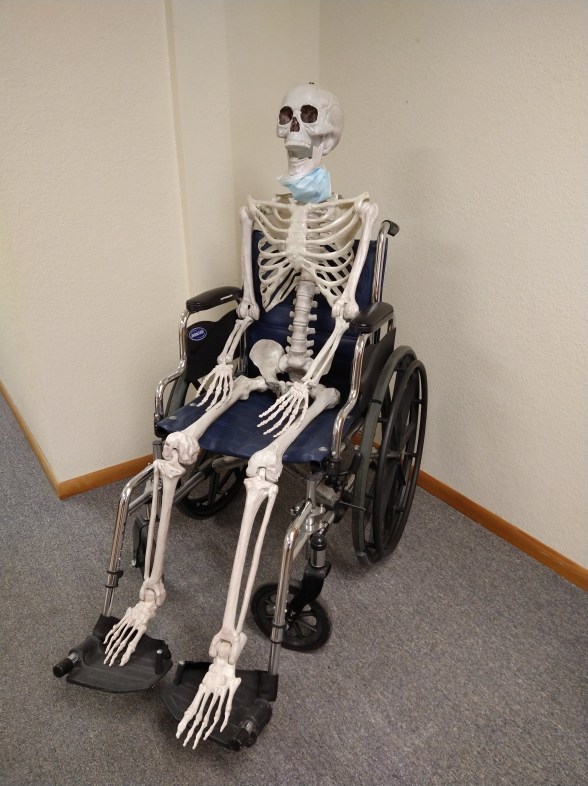
The photograph is from my clinic once we had stopped seeing patients and were selling everything. Mordechai was our clinic skeleton, made of plastic, from China. This was in January 2021.

Autoimmune OCD and my daughter shops my closet

https://www.nature.com/articles/s41398-021-01700-4

The article is a proposal for diagnostic criteria for autoimmune obsessive compulsive disorder, a relatively rare version of OCD. Important because the treatment has to include searching for infection that triggers the antibody response, which in turn attacks the brain. Antibiotics to treat a “psychiatric” disorder. Mind and body connection, right?

The ironic thing about this new proposed diagnosis is that I do not have obivious OCD in any way, shape or form. It is masked by packrat. Also, my OCD is focused. When I was working, it was focused on patients. My clinic charts were thorough, 100% of the time. I was brutally thorough and wouldn’t skip anything. The result was that I got a reputation for being an amazing diagnostician. Usually it was because I wanted ALL the puzzle pieces and the ones that don’t fit are the ones that interested me. They have to all fit. Either the patient is lying or the diagnosis is not as simple as it appears. Occam’s Razor be damned, people can have more than one illness.

In fact, an article 20 years ago looked at average patient panels and said that the average primary care patient has 4-5 chronic illnesses. Hypertension, diabetes, emphysema, tobacco overuse disorder, alcohol overuse disorder, well, yeah. And then the complex ones had 9 or more complex illnesses. You can’t see the person for one thing, because if the diabetic has a toe infection, you’d better look at their kidney function because the antibiotic dose can kill their kidneys if you don’t adjust it. So do not tell me to see the patient for one thing. Malpractice on the hoof. Completely crazy and evil that administrators tell doctors to do that.

No one looking at my house would ever think I have any OCD. I am not a hoarder (ok, books) but the packrat force is strong in me. My daughter did not inherit that gene. She is a minimalist. However, she has come to appreciate the packrat a little.

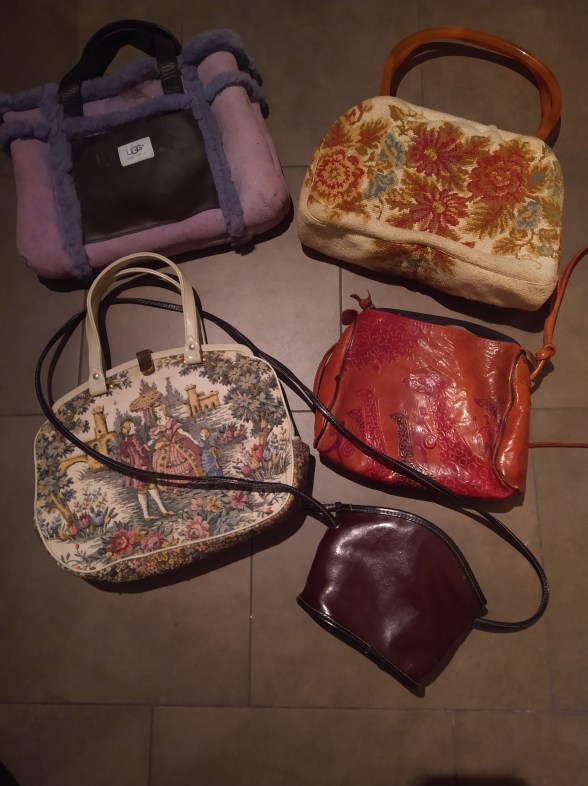
This summer she said that her purse is wearing out. As a minimalist she has one purse. I ask, “Would you like to see if I have one that you like?” It so happens that as I was trying to recover from pneumonia, a local garage sale had 20+ year old designer purses for $3 each, because the house was going on the market. Got to get rid of the stuff.

“Yes, please.” says my daughter.

I start with the weird ones that I know she will not want. I get eye rolls. But I am progressing towards the purses that are close to the one she has. At last I produce a small leather purse, the right size, in good shape, and she sits up. “Let me see that one.” Like Eeyore with his popped balloon, putting it in a jar and taking it out, she tries putting her phone and wallet in the purse and taking it out. “Yes, I like this!” She calls it “Shopping mom’s closet.” I think it is delightfully comic. The benefits of a packrat mother.

Back to the Nature article and OCD. The diagnostic criteria are gaining steam. Having watched a conference this summer about Pandas and Pans, mine is mild. Some young people have a version where killer T cells invade the brain and kill neurons. I had a moment of panic when the conference was discussing a case, but then I thought, if I had the neuron killing kind I would be dead or demented by now.

Instead, I’m just a little neurologically unusual.

stranded mermaid, cilia and tubulin

I took this photograph last summer at North Beach. I thought she looks like a stranded mermaid, thrown up on shore. I couldn’t move her, she was twice my length. The rock attachment had come too, up from our sea beds.

Happy solstice. Today marks the one year day from when I realized that I was having my fourth round of pneumonia, with hypoxia, agitation, fast twitch muscle dysfuntion and felt sick as could be. I am way better but not well. That is, I still need oxygen to play flute, to sing, to do heavy exercise and to carry anything heavy. Which is WAY better then having to wear oxygen all the time. Today I find a connection between the lungs and the brain, in quanta magazine. This video talks about a new found connection between cilia and the brain. We were taught that cilia and flagella are for locomotion, powered by tubulin. However, this shows that cilia behave like neurons and there is a connection. Since my peculiar illness seems to involve cilia dysfunction in my muscles and lungs, so that I get pneumonia, and the brain, because I am wired when it hits, this is a fascinating connection. If neurons developed from cilia, the dual illness makes a lot more sense. Hooray for quantum mechanics! We use it in medicine every single day.

Happy solstice! Here comes the sun!