Sometimes you need a lighthouse to reach safe harbor.
For today’s Ragtag Daily Prompt: harbor.


Sometimes you need a lighthouse to reach safe harbor.
For today’s Ragtag Daily Prompt: harbor.

Can a tree be a packrat?
Taken at the Poulsbo’s Fish Park when I had my heart test.
For the Ragtag Daily Prompt: packrat.
I am taking a writing class and our next book is on cultural appropriation.
This interests me. I tend to be a little gender blind and race blind when I meet people. I am using my super skill instead. My skill is developed from a really scary childhood: I read the stuffed emotions. The stuff people are hiding.
No way, you say. Oh, yes, I say.
My sister described coming home from high school and stopping when she walked into the house. She was trying to sense what was going on. Were our parents fighting? Was our father drunk? Yes, he was drunk, but which stage?
We talked about the stages and which we hated most.
Stage goofy/silly was annoying but not toxic. We said we had homework.
Stage asleep in a fetal ball in the upstairs hallway. My sister said she would step over him to get to her room.
Stage maudlin. We both agreed this was the worst. He would cry and say, “You can tell me anything.” Once he caught me in that stage and I was in tears by the time my mother got home. I left the room. The next morning mother said, “He said you two were discussing the cat’s disappearance.” I didn’t answer. We never said a word about the cat. I didn’t know if he was lying or was too drunk to remember it the next day, so made it up. Don’t care. Avoid.
He was never physically abusive. He and my mother would scream at each other at 1 or 2 am through most of high school. Reading her diaries, she writes that she drinks too much. I think they were both alcoholics, thought the family story is that he was the bad one. But I can’t imagine yelling with a drunk at 1 or 2 am for an hour. What is the point? They are drunk. So either she was drunk too or needed to fight.
Emotionally abusive, yes, both parents. My mother would take any show of fear or grief and tell it as a very very funny story to every person she ran into. Is it any surprise that I had to go into therapy after she died to learn to feel fear or grief? My sister would say, “She’s got her stone face on,” about me. Um, yeah, I am NOT going to let my family see my emotions…
Anyhow, that is what I read in people when I first meet them. It’s not the suit, the clothes, the make up, the race, the gender. I pretty much ignore those. I was fashion blind in junior high, a girl geek, could not read the code and did not care. I had given up on socializing with my fellow students. I was hopelessly bad at it. I did a lot better with the adults around my parents. I could have actual conversations with them.
I had one patient who was transgender where I couldn’t remember which direction. I didn’t care, either. That was a really angry person. Anger is always covering other emotions, so I avoided pronouns and tried to be as gentle as possible.
I complained to a counselor once that I can’t turn this “off”. And that it’s fine in clinic with patients, but it screws with my relationships with my peer doctors. They do not like it if I “read” them.
It took me years, but I finally realized that I have to use my clinic skills with everyone. I can’t turn off “reading” any more than you turn off your eyes when you meet a new person. But I can be as gentle with everyone as I am in clinic. I realized that as I started on a trip and the trip was amazing, everyone was so nice.
This reading is a product of a high ACE Score: Adverse Childhood Experiences. I score about a 5. One of my patients set off my ACE alarms on the first visit. I asked if he had had a rough childhood and gave a very short explanation of ACE scores. “Oh, I am a ten out of ten,” he said. He was, too. Ran away from home at age 6 or 8.
The ACE scores of all the children are rising from the last two years. The war will raise them even more, worse for the children there and the kids trying not to starve in Afganistan and Syria and world wide.
It will be interesting to read about cultural appropriation. But I don’t care much: I don’t “see” those things when I meet someone.
Hugs and blessings.
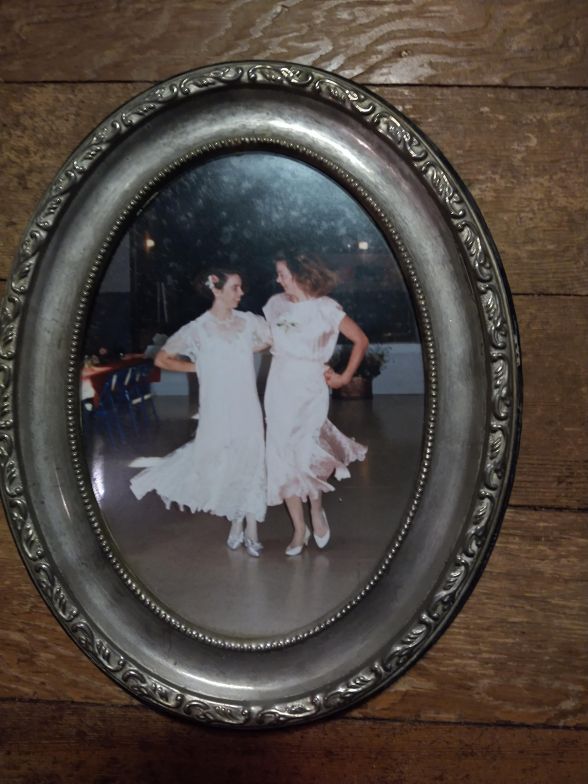
The photograph is me and my sister Chris in 1987, before my wedding. We were dancing before the wedding. She died in 2012 after 7 years of breast cancer.
Doctors and nurses and hospital staff are the last caregivers for the elderly alcoholics and addicts who are alone, whose families have finally cut them off. I think this song illustrates their pain. We try to take care of them.
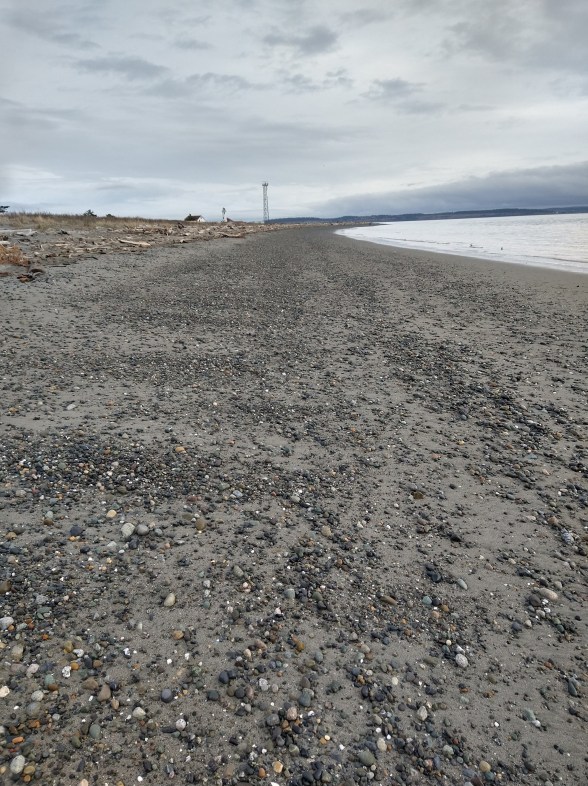
Some days this beach is mostly sand. Yesterday it is rocks and more rocks, pebbles, stones, sand, beautiful. We are having lots of cliff collapse and new rocks are washing down. I was walking on North Beach last week when I heard bits of cliff fall. I turn and look and a nice one foot by 8 inch boulder falls from the top and rolls towards me, very fast. I stumble backwards and trip over a big boulder in the sand. I don’t hit my head and get knocked out and I don’t get hit by the falling rock.

I start back a little and another section of cliff rains rock. The tide is fairly far out, so I walk near the water until I am back where there is no cliff. Scary. Sometimes large sections collapse all at once. Death occurs by blunt trauma rather than suffocation.

My emotions are like the beach. Some days clear and sun and sand. Other days LOTS of new rocks. Other days stormy and the tide is very high and pulling at the sand and clay cliffs.
I receive a valentine from my daughter. She says she loves me. She says she misses the beach and the water most of all.
I find agates and they are beautiful. Some are clear and some are not and new ones keep arriving.
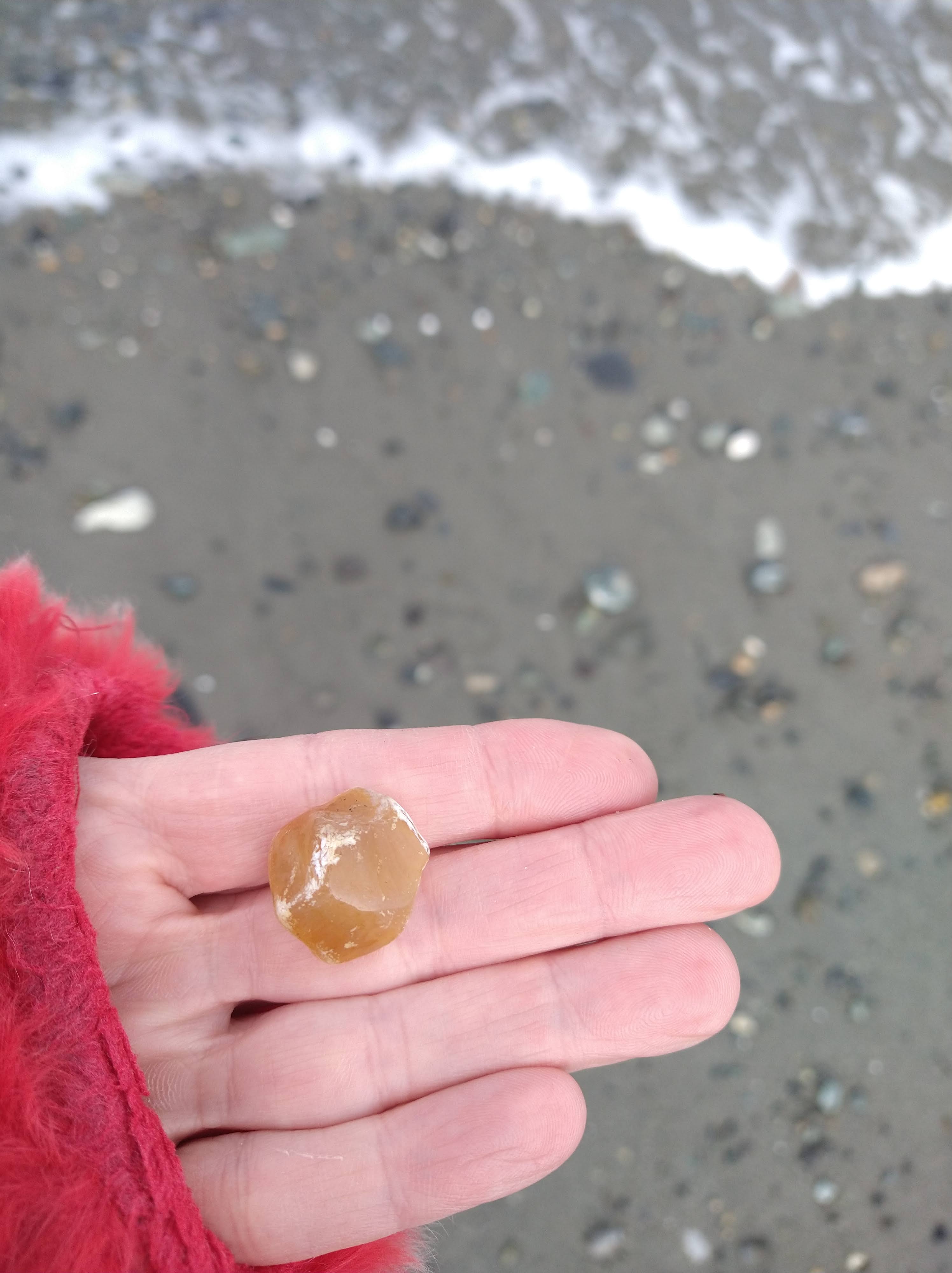
Let the light shine through, in spite of the weather.
________________________
For the Ragtag Daily Prompt: pebble.

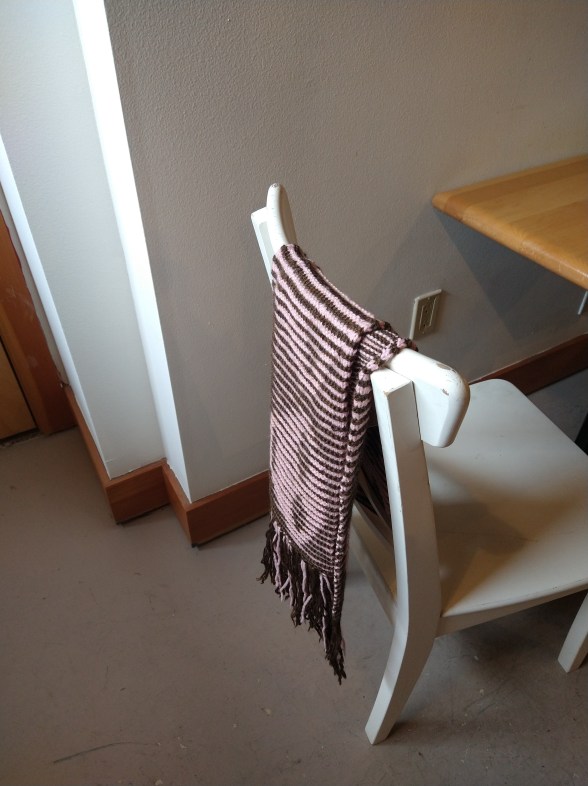
I knit this lovely striped scarf. It is just brown and pink stripes. No tricks, right? Two rows of pink and two rows of brown.
For the Ragtag Daily Prompt: wool.

I am raised by a family of triangulating enablers and enablees.
The enablers are my mother and two uncles. They are very very smart. Let me qualify that: they are very very smart intellectually. Emotionally, not so much.
The two uncles have PhDs and are professors. They marry wives that are lessor in their view. One tells my mother that he wants a woman who is not as bright as he is. I don’t know if she is less bright, but she is a hella better athlete. I also have the impression that she had a time where she drank too much.
The other uncle marries a woman who tends to be a hypochondriac. He takes her to India, where she gets polio while pregnant. She is then a sick hypochondriac, which is very difficult. The ill can control their families by planning things and then getting sick at the last moment. On the other hand, chronic fatigue and fibromyalgia are very real and we are on the edge of figuring them out. That uncle divorces his wife and I instantly like both of them better. They stop being a weird unit and are suddenly individuals.
My mother tells me, when I am in college, “I wondered if your father was an alcoholic when I married him.” I want to hit her. She won’t leave him, she won’t stop enabling him, they scream at each other at 2 am often. Now I wonder about that and conclude that either screaming at someone was something she needed or she was an alchoholic too.
After my mother dies, I ask my uncle, what about his parents? After all, the three of them learned enabling somewhere and it pretty much has to be at home.
My uncle tells me his parents had a PERFECT marriage and that my grandmother LOVED being the wife of a physician and professor.
Um, so, then, why did she pay my tuition to medical school, uncle?
And I think about my mother’s stories. Once, she says, your Uncle Jim bet his friend Dick that Dick was too chicken to shoot a cigarette out of Jim’s mother’s mouth. Ooooo. With a rubber band shooter. Yes, my grandmother. Bob took the bet and succeeded. My grandmother roared with anger and the two boys ran like hell and hid.
And someone in the family tells me: your grandfather helped your grandmother control her temper.
There it is. The enabler/enablee.
The enablers die first. My grandfather of cancer at 79, my mother of cancer at 62. The cousins are all angry at me because I won’t follow the family rules and triangulate in a satisfactory manner, and I don’t care any more. I am ignoring them. I got my father’s banjo back and I am done. The two cousins I own land with jointly are not the worst triangulators.
I have to remind myself: for them, this is love. For some people, controlling or being controlled is what functions as love and intimacy. Fighting and tears when person A talks to person C about person B and person C then lets person B know, that is how they feel close. It is not only families, but communities. Clay Shirky’s description of a group being it’s own worst enemy describes the same patterns: identify an enemy inside or outside the group and then everyone comes together against the enemy. The enemy says the wrong thing, doesn’t worship the right god/desses, wears different clothes, looks different. And the group feels safer once the scapegoat has been killed, the guy has been burned. It would be nice if we could burn a ritual guy instead of torching each other.
The real anger is in the enabler. They control it by having the enablee express it. Then it is not “theirs”. They can feel superior to the enablee who is out of control. Sadly, the problem is only fixed temporarily and they will need their anger expressed again and again and again.
The cycle can be broken. It is a lot of work.
Blessings.
______________________________________________
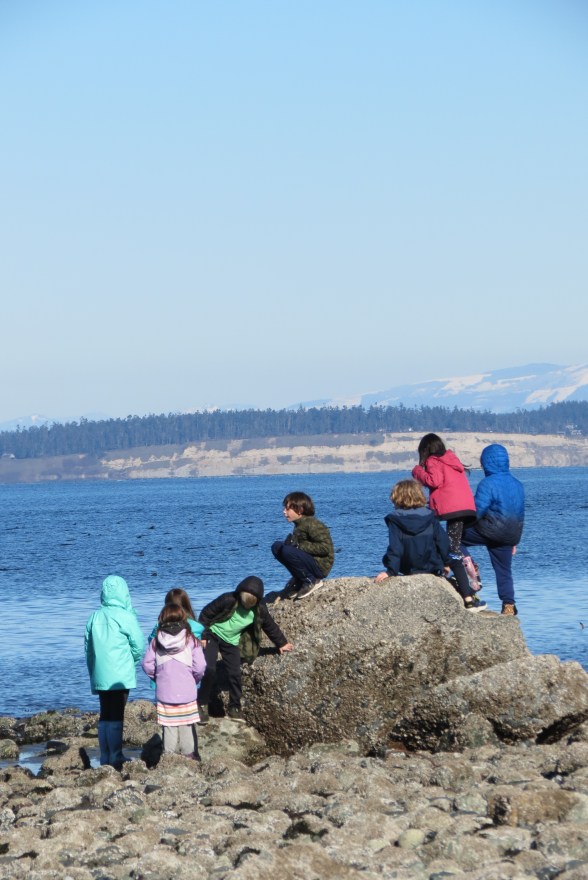
This was my most amazing beach find yesterday: the sight of a group of kids playing normally, no masks.
The war horrors bring us down, but we must remember hope. This gives me hope too:
Also for the Ragtag Daily Prompt: peace.

I was looking at the rock in the center when I took this. But now in the photograph, it’s the circle around the rock that interests me. An interesting metaphor: what are we missing when we focus on one thing or one person? All the surroundings?

you are so beautiful
I love you so much
and I see you
so clearly
I look at you
I wish
you could see me
you see the darkness
the bear
you carry with you
and project
on me
you hold the bear
at a distance
you see it
all the time
in other people
when the bear comes
I hold open my arms
and welcome it
and I don’t yell
the bear roars
with dripping teeth
tries to terrify me
and I reach for it
me too
I say
come meet
my monsters
all my monsters
anger fear grief
shame
come out
the bear
stares at them
they hold out
their arms
the bear bows
his head
and we surround him
and welcome him
and love him
the bear cries
because you don’t love him
the bear cries
and cries and cries
we hold the bear
and cuddle him
and feed him
and try to warm him
and do the best we can
but we are not you
you come towards me
seeing the bear
fortified by my monsters
you attack
and my monsters hide
and hide your bear
and you stand
sword ready
to split us apart
confused
where is the bear?
you are sure
you see a bear
but it is gone
and I am a little girl
the naked sword is raised
the gun is loaded
you and weapons ready
no bear
you lower the gun
the sword
and make excuses
and leave
and the bear
hugs us all
thanks us
as you leave
the bear walks faster
nearly a shambling run
and dissolves into you
we wave
my monsters and I
we wave goodbye again
send love
to you and your bear
For the Ragtag Daily Prompt: myopic.
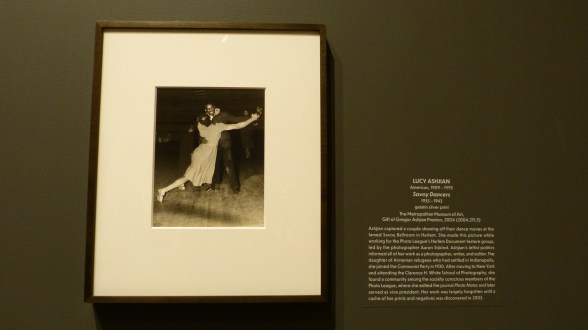
I am thinking about the roaring twenties a lot. I think people went a little nuts, not because of the war, but because they had difficulty being emotionally honest about the influenza pandemic. I think we humans will do it again to forget the deaths, to go into denial, to refuse to grieve.
Yes, that is my prediction.
Be very quiet, I am hunting wabbits.
Be careful in our future roaring twenties. Money will flow like honey and people will go nuts. Hold fast, hunker down, don’t go out without your macintosh, wear clean underwear. Remember what your mother told you, remember what your father tells you. Because that was followed by the Depression and that is one risk.
I don’t know if it will start this spring or next spring. Ok, I AM hoping that my son and future daughter-in-law can get married in early May, since they’ve put it off for two years. But. The 1918-19 influenza was really three years, not two. It tailed off. Half the people in the world got it. In Samoa, half the adults died, or was it 70%? They had little exposure to infection but a ship brought it. They KNEW they were high risk, but a sailor didn’t know he was sick yet.
Why a roaring twenties? Because we want to forget this pandemic, as the last one was forgotten. Our history books say that the Roaring Twenties was about the end of World War I. We teach lots about that. We barely mention the influenza world pandemic. I am reading a book about the 1918-19 influenza pandemic published in 2018. The author says that it is only now, 100 years later, that we are starting to really tell the stories of that pandemic. She gathers stories from all over the world, including stores of different infection control strategies in two cities. One guessed right and one guessed wrong, and in the wrong one, way more people died.
I read about that 1918-19 pandemic after influenza nearly killed me in 2003. I was 42, healthy, a physician, a mother, an athlete. I had NO risk factors except stress. Now it looks like it was a PANS reaction, but at the time, neither my doctor nor I could figure out why I was short of breath and tachycardic walking across a room for two months. Fatigue, chest pain, tachycardia, shortness of breath. Hmmm, what does that sound like? My partners thought I was faking and I was so sick that I could barely communicate. The stresses were my mother dying of ovarian cancer in May 2000 and my marriage being pretty on the rocks and me working way too hard. My psychiatrist said I should take time off. I said, I can’t. He said, you’d better. Then I got flu. “See?” he said. The body decides, not the conscious brain. He was correct, damn him.
The book I read in 2004 looked dry and medical from the outside. It had pages and pages of footnotes. It had photographs of Los Angeles. They knew the influenza was coming towards them like a wave and they tried to get ready. Bodies under sheets were stacked five deep in the hallways of the hospitals. It hit that fast. People, usually age 20-50, turned blue and fell over dead. WHY? It was the immune response. The 20-50 year olds had a better immune response than the 50 and older and their lungs would swell until there was no airspace left. Even then, that pandemic death rate was only 1-2 % in the US. But it was so fast and spread so quickly that everything was disrupted because it was the workers that were deathly ill and at home and there was no one to work.
People wore masks in public, except for the mask refusers, but not in their homes. So entire families would get ill. I don’t think they had figured out viral loads yet. If you are the last one standing, and you are trying to take care of a spouse and six children, you were high risk from viral load and exhaustion.
The Roaring Twenties WAS a way to grieve, it’s just a dysfunctional one. The stages of grief: denial, bargaining, anger, grief and acceptance. My sister said that acting out and revenge ought to be added as stages of grief. She died of breast cancer after fighting it for 8 years. Roaring is denial and bargaining and acting out and revenge, all at once. Everyone grieves differently, remember that. There is not an order to the stages of grief and you don’t do them once. You do them over and over and over.
I am a Cheerful Charlie, right?
War is one way to forget/deny/act out. Let’s not do that. Let’s not have a civil war of forgetfulness and denial.
Let us remember clearly and lean on each other.
I think this fits the Ragtag Daily Prompt: inflammable.
My sister’s blog: https://e2grundoon.blogspot.com/2009/01/chemo-not-in-vain.html . She died on March 29, 2012. The start of the blog is here: https://e2grundoon.blogspot.com/2002/02/ .
Blessings.
______________
I got Cheerful Charlie from Pogo comics: read the Albert Alligator section. https://comicstrips.fandom.com/wiki/List_of_Pogo_characters
More recently, Downton Abby used Cheerful Charlie. https://downtonabbey.fandom.com/wiki/The_Cheerful_Charlies
BLIND WILDERNESS
in front of the garden gate - JezzieG
Discover and re-discover Mexico’s cuisine, culture and history through the recipes, backyard stories and other interesting findings of an expatriate in Canada
Or not, depending on my mood
All those moments will be lost in time, like tears in rain!
An onion has many layers. So have I!
Exploring the great outdoors one step at a time
Some of the creative paths that escaped from my brain!
Books, reading and more ... with an Australian focus ... written on Ngunnawal Country
Engaging in some lyrical athletics whilst painting pictures with words and pounding the pavement. I run; blog; write poetry; chase after my kids & drink coffee.
Coast-to-coast US bike tour
Generative AI
Climbing, Outdoors, Life!
imperfect pictures
Refugees welcome - Flüchtlinge willkommen I am teaching German to refugees. Ich unterrichte geflüchtete Menschen in der deutschen Sprache. I am writing this blog in English and German because my friends speak English and German. Ich schreibe auf Deutsch und Englisch, weil meine Freunde Deutsch und Englisch sprechen.
En fotoblogg
Books by author Diana Coombes
NEW FLOWERY JOURNEYS
in search of a better us
Personal Blog
Raku pottery, vases, and gifts
𝖠𝗇𝗈𝗍𝗁𝖾𝗋 𝖶𝗈𝗋𝖽𝖯𝗋𝖾𝗌𝗌.𝖼𝗈𝗆 𝗌𝗂𝗍𝖾.
Taking the camera for a walk!!!
From the Existential to the Mundane - From Poetry to Prose
1 Man and His Bloody Dog
Homepage Engaging the World, Hearing the World and speaking for the World.
Anne M Bray's art blog, and then some.
My Personal Rants, Ravings, & Ruminations
 KO Rural Mad As Hell Blog
You must be logged in to post a comment.