If I were your child

Living in a town of 9000, now 10,000, I did not feel that my children needed cell phones. They could walk home from school. It is reasonably safe, though I knew too much about local use of heroin and methamphetamines to believe that anywhere is completely safe.

I spoke to a friend from high school in the early 2000s. He asked me to text him my address.

“I’ve never texted.” I said.

“NEVER?” he said.

“Nope.”

“Haven’t your kids taught you how?”

“My kids don’t have cell phones.”

Long silence. Then: “If I were your child, I would run away.”

I laughed. My son got a cell phone when he headed for college and my daughter got a track phone, ten dollars a month, in high school. Calls and no texting. My son ran away the same way I did, as an exchange student. He went to Thailand at age 16 and was on the Maylay Peninsula, two years after the tsunami hit. His first comment calling home was, “Mom, the world is a really scary place.” Going off to be an exchange student is a fabulous way to run away, because you learn tons and come home.

My daughter had one friend who she would go to sleep over in her teens.

“I don’t want to sleep over any more.” she said after one night.

“Why?” I asked.

“She is up texting and by midnight she and friends are having arguments by phone and she cries. I want to sleep.”

Don’t leave the phone in the kids’ rooms, parents. And don’t have the phone in your bedroom either!!!

For the Ragtag Daily Prompt: texting. With music: https://youtu.be/hkmZGh9DQZ4.

The photograph is Studt’s Pumpkin Patch and Corn Maze again.

Adverse Childhood Experiences 15: Guidelines

I wrote Adverse Childhood Experiences 14: Hope quite a while ago.

The American Academy of Pediatrics has a guideline that physicians should introduce and screen for Adverse Childhood Experiences. The American Academy of Family Practice is skeptical, here: https://www.aafp.org/pubs/afp/issues/2014/1215/p822.html. Here are two more writeups: https://www.aafp.org/pubs/afp/issues/2020/0701/p55.html and https://www.aafp.org/pubs/fpm/blogs/inpractice/entry/screen_for_aces.html.

It is difficult to screen for ACE scores for the same reason that it is difficult to screen for domestic violence and to talk about end of life plans. These are difficult topics and everyone may be uncomfortable. Besides, what can we DO about it? If growing up in trauma wires someone’s brain differently, what do we do?

I don’t frame it as the person being “damaged”. Instead, I bring up the ACE score study and say that first I congratulate people for surviving their childhood. Good job! Congratulations! You have reached adulthood! Now what?

With a high ACE score comes increased risk of addictions (all of them), mental health diagnoses (same) and chronic disease. Is this a death sentence? Should we give up? No, I think there is a lot we can do. I frame this as having “survival” brain wiring instead of “Leave it to Beaver” brain wiring. The need to survive difficulties and untrustworthy adults during childhood can set up behavior patterns that extend into adulthood. Are there patterns that we want to change and that are not serving us as adults?

This week a person said that they blow up too easily. Ah, that is one that I had to work on for years. Medical training helps but also learning that anger often covers other feelings: grief, fear, shame. I had to work to uncover those feelings and learn to feel them instead of anger. Anger can function as a boundary in childhood homes where there are not adult role models, or where the adults behave one way when sober and an entirely different way when impaired and under the influence. There may be lip service to behave a certain way but if the adult doesn’t behave, it is pretty confusing. And then the adult may not remember or be in denial or try to blame someone else, including the child, for “causing” them to be impaired.

What if someone had a “normal” childhood but the trauma all hit as a young adult? I think adults can have trauma that changes the brain too. PTSD in non-military is most often caused by motor vehicle accidents. At least, that is what I was told in the last PTSD talk I went to. Now that overdose deaths have overtaken motor vehicle accidents as the top death by accident yearly in the US, I wonder if having a fentenyl death in the family causes PTSD. Certainly it causes trauma and grief and anger and shame.

I agree with the American Academy of Pediatrics that we should screen for Adverse Childhood Experiences. We need training in how to talk about it and how to respond. I have had people tell me that their childhood was fine and then later tell me that one or both parents were alcoholics. The “fine” childhood might not have been quite as fine as reported initially. One of the hallmarks of addiction families is denial: not happening, we don’t talk about it, everything is fine. Maybe it is not fine after all. If we can learn to talk to adults about the effects on children and help people to change even in small ways, I have hope that we will help children. We can’t prevent all trauma to children, but we can mitigate it. All the ACE scores rose during the Covid pandemic and we are still working on how to help each other and ourselves.

Here is another article: https://www.aafp.org/pubs/fpm/issues/2019/0300/p5.html.

Blessings.

For the Ragtag Daily Prompt: open wound.

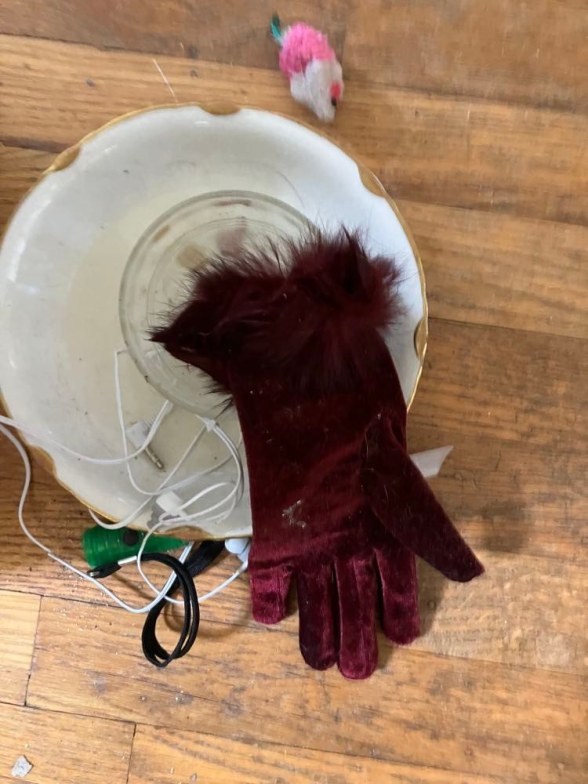
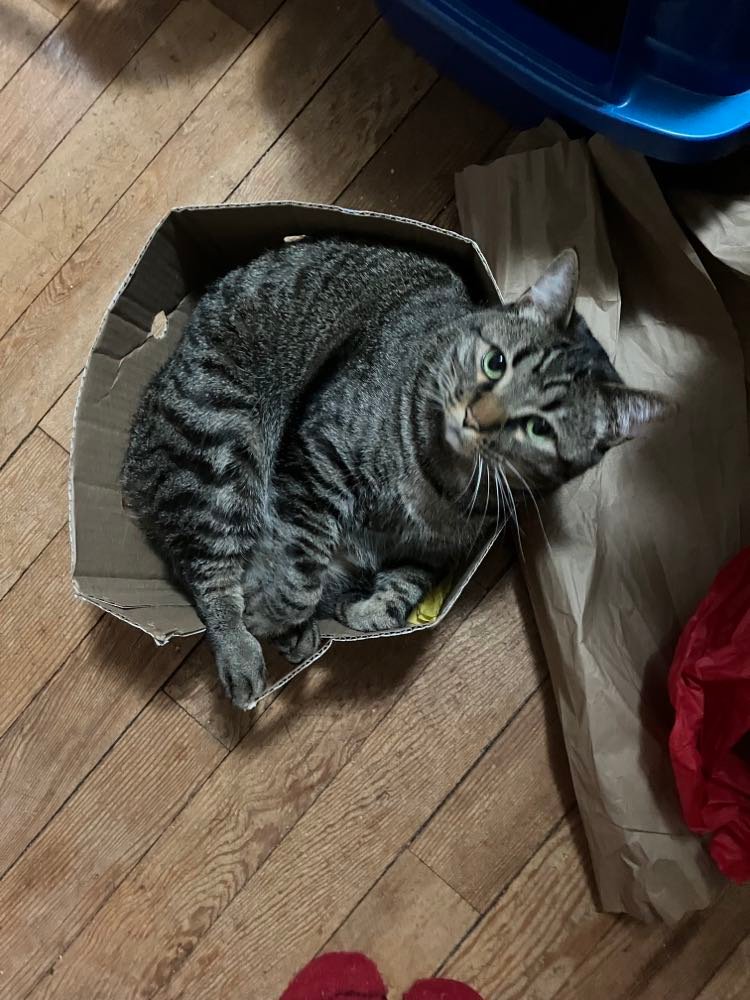
The photograph is one of Elwha’s cat art installations. He would pile toys on his bowl. Two bowels because I need to keep out the little ants. Sol Duc would do it too but not as often. I fed them in separate rooms. They would pile things on the bowl whether there was food left or not.

Elwha is still missing, sigh. That is a wound. The photographs are from March 2023.

Ages

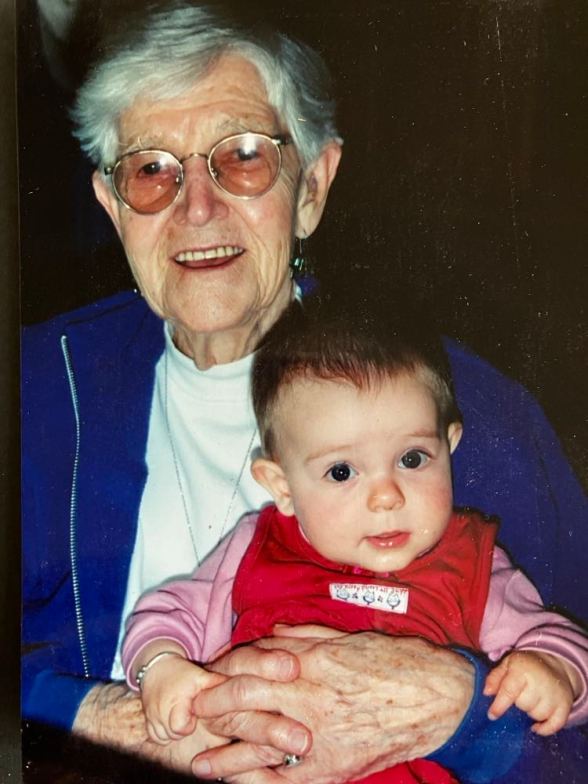
Here is my daughter on the lap of her great grandmother Evelyn Ottaway. I think my daughter was a little over one and my grandmother was 90 or very close. We flew from Colorado and visited friends and family. My grandmother was living with my aunt Pat right then. My daughter was very relieved when we got home, but she let many people that she didn’t know hold her. This was the only time she saw her great grandmother.

For the Ragtag Daily Prompt: age.

Trifling

Each sperm will be a child, the result is stifling
my sympathy could be termed as trifling.
Porn outlawed, hands will be tied.
“But we didn’t think of this!” the people cry.
AI twisted to measure our lust
claiming to protect the weakest of us.
“But a sperm is only half!” It doesn’t matter,
the AI in charge is mad as a hatter.
If two cells together is deemed a child
than why not one? And the AI runs wild.

_______________________

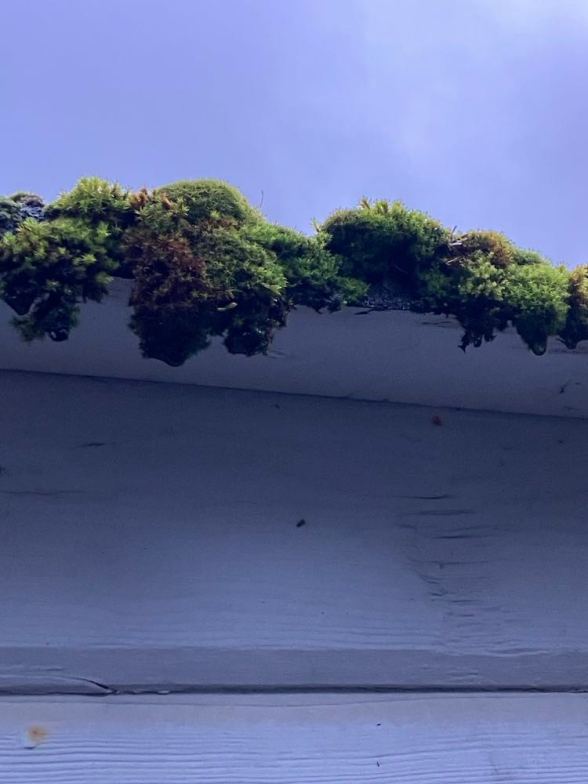
I took the photograph yesterday. A sign of spring in the Pacific Northwest is that the moss turns green. And grows. And grows.

For the Ragtag Daily Prompt: trifling.

child

some people say
they just want their children to be happy

not me
I don’t understand that
to want a child to be happy
fixed in amber
with one emotion

I want my children
to feel what they feel
to feel happy, unhappy, sad, angry
gloomy, ecstatic, joyous, jealous
snarky, sarcastic, silly, relaxed
to feel the full gamut
the full rainbow
of emotions

In my mother’s family
they pack their sorrows in their saddlebags
and ride forth singing

the trouble is
the saddlebags get heavier over time
weighted with grief and fear and anger
or whatever is unacceptable
to the family
until the horse staggers under the weight
falls over
dead

then they must try to drag the saddlebags
too heavy for the horse
through their lives

I am gifted my mother’s letters
when my mother is in the hospital
the tuberculosis sanatorium
the first letter a month
after I am born

My mother is cheerful in the letters
a little snarky about her roommate
a little lonely

But what stands out is what’s missing
She barely mentions me
in some letters not at all
her first baby
who misses her
and who she can only see outside
through a window

And what was in her saddlebags?
When she coughed blood 22 years old
and eight months pregnant
she thinks she has lung cancer
and will die

She says this without emotion
lightly
almost as a joke
a relief when it was tuberculosis
even though that meant six months
in the sanatorium
separate from her young husband
and baby
at least she was not dying

She doesn’t get to hold me again
until I am nine months
and I have no idea who she is.

The worst thing anyone can tell me
is that I should not feel the way I feel.

I shut down.
I don’t stop feeling how I feel
but that person is locked out.
I will not trust them with my feelings
for a long time
I am an expert at hiding my feelings
raised in an emotionally dangerous
household
and physician training as well.

Once on the boat
my daughter says, “Mom, I’m scared.”
My father says, “Don’t be scared or go below.”
“No.” I say, “Come here. What are you scared about?”
We have run aground.
Too impatient to wait for the tide
we are trying to winch ourselves off.
“I am scared we are trapped.” says my daughter.
“How far is shore?” I say.
We are in the marina.
“Not far.” she says.
“Could we get to shore?”
“Yes.”
“Are you still scared?”
“No.”
Soon a rowboat comes and takes the kids
to shore to play.

“Don’t be scared or go below.”
That was my childhood.
Emotions as monsters.
I went below.
I chose to make friends with the monsters.
I feel what I feel.
One friend says, “Of anyone I know,
you process your feelings in real time.”
and I laugh, but am honored,
because it took years
to reach this.

Don’t share your feelings with fools.
Don’t share your feelings with people
who want you a certain way,
or who try to control you.
You have a right to your feelings
as they are.

And this is what I want for my children.

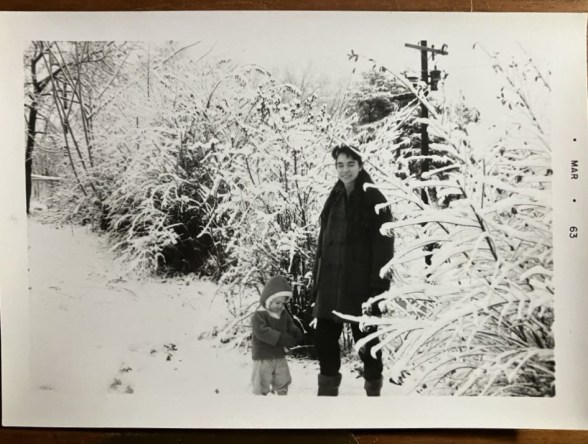
The photograph is my mother and me in March 1963. I do not know who took it, perhaps my father. I would have been right around 2 years old and my mother was 24. I did not see these photographs from when I was first back with my parents until after they both died.

Parenting, eagle style

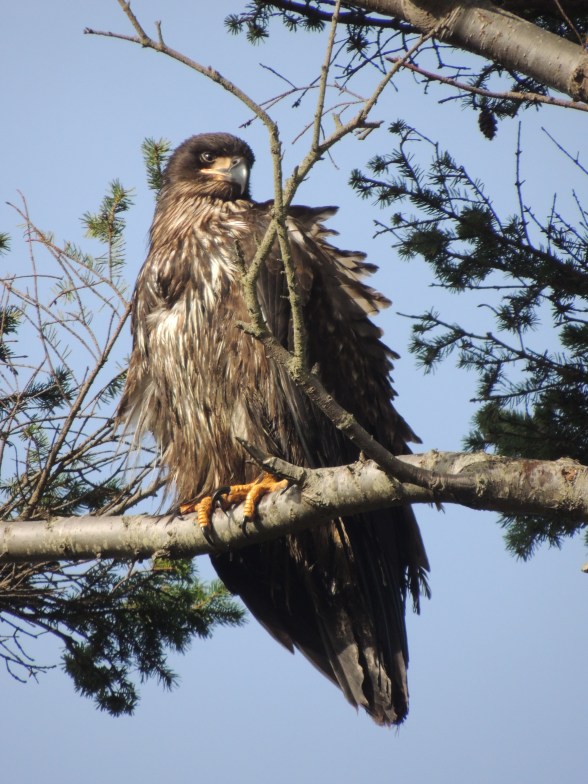
This disheveled bird is an immature bald eagle. They take 5 years to gain the fully white head and tail. This one has a parent along.

The parent has better grooming habits. They are both in a tree at Fort Worden.

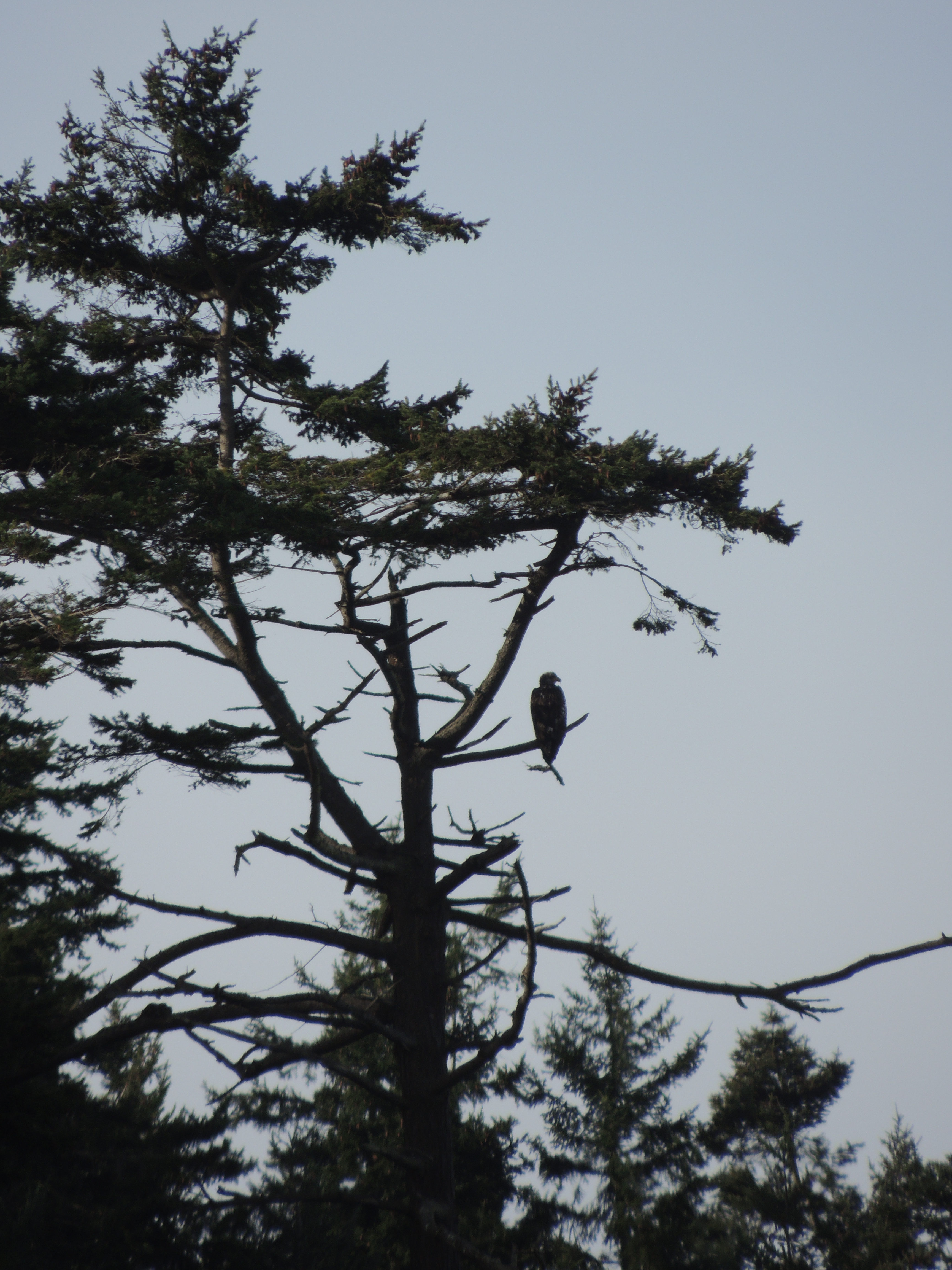
Sometimes I can spot them from a long way off.

And then it’s lovely to have a zoom lens.

And what is this eagle parent saying to their offspring?

For the Ragtag Daily Prompt: eagle.

Who would I be?

If I have had PANS since birth, who would I be if I had not contracted it?

No one knows. We are still arguing about whether PANDAS and PANS exist. But, my daughter says, we make up all the words. The definitions of illnesses CHANGE over time, and what an illness MEANS. Tuberculosis was an illness of poets and people too noble for this world, until microscopes became advanced enough to see the tiny bacterium, and then it became an illness of the crowded unclean poor. Medicine and science continued to study it. Once we recognized that it is an airborne illness, tuberculosis sanatoriums were set up, to quarantine people. My mother was diagnosed with tuberculosis when she coughed blood 8 months pregnant, so I was born in a sanatorium and avoided contracting tuberculosis as a newborn.

Antibodies cross the placenta, even though the tuberculosis bacterium does not. Usually infants contract tuberculosis and die, at least when I was born. The antibodies can trigger PANS or PANDAS.

The antibodies prime the fetus’s immune system. This makes sense, right? The fetus has a sick mother and best if its’ immune system is ready to fight.

Did my younger sister have it? I do not know. Not as badly, would be my guess. My mother said that as kids, we’d both get sick, but I got sicker. We both had strep A many times. My sister got mumps, off from school for three weeks, and I did not get it. But I got everything else.

Now the estimate for children with PANS or PANDAS is 1 in 200. This is enormous. A high prevalence. Antibodies, that I suspect are adaptive and lie in readiness for a pandemic or a crisis. And now we have had another pandemic, with the last really world wide bad respiratory one 100 years ago. Is the prevalence rising because of the pandemic or are we figuring out some of the cause of behavioral health illness or is the definition of illness changing or all three? I think all of them.

My cousin’s mother had polio either during her pregnancy or very soon after. My anthropologist uncle took his family to Bangladesh, where he was doing linguistics. So does my cousin have PANS or PANDAS? I do not know.

And what of my children? My pregnancy with my older child was fourth year medical school and went well. My pregnancy with my second was very complicated. I was in my first year of work as a rural Family Practice doctor and working too hard. I ended up on bed rest for three months and on a medicine. Is labor at 23 weeks an illness? Does it affect the fetus? I was on medicine from 23 weeks to 37 weeks. What effect does it have?

Medicine is still changing and changing quickly. We don’t know. There is so much we do not know.

_______________

PANS/PANDAS: https://www.pandasppn.org/guidelines/

_______________

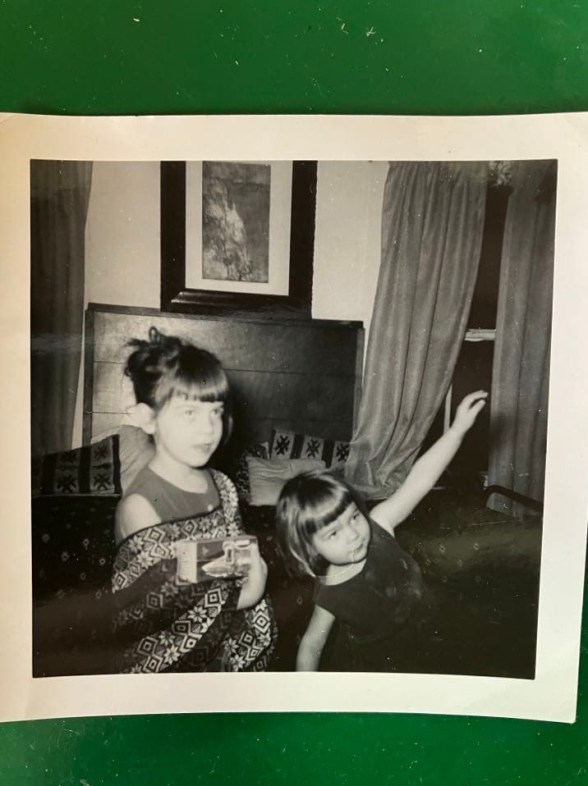
The photograph is me and my sister, in about 1967ish. I do not know who took it.

Learn young

This child is not afraid of the saxophone because she is growing up with it. The saxophone player is her father. She’s ready to help and be up on stage as well! She’ll have a fabulous jazz foundation and her father didn’t miss a note!

This is Tuesday night at the Bishop Hotel in Port Townsend, Washington. Chris Miller and Peter Leopold Freeman.

For the Ragtag Daily Prompt: saxophone.

Vaccination talk

My cousin asks me once, why do doctors say, “This will only hurt a little?’ when they give a shot.

I thought about it. “It’s a matter of scale. Picture this: in room one, I have a woman who thinks her lung cancer is back and it is. In room two I have a mother and daughter crying because the daughter is pregnant and frightened. In room three, I have a well adult who needs a vaccination. Scale their levels of pain.”

Room one is very high, room two is very high, room three barely registers on my pain scale.

I would give out a health department vaccination information booklet by 24 weeks to my pregnant patients, especially the first pregnancy. I previously had given it later, but then I had a woman who refused the child’s vaccines at visit after visit after visit, saying that they were still doing research. The child still had no vaccinations at 9 months.

Remember the woman who refused vaccinations for her children? She had more than four children. They all got whooping cough, pertussis. They whooped for months and were on quarantine. They were not allowed out of the household, any of them, until they were no longer infectious. The mother said she now was for vaccines and got them vaccinated.

I have seen adults with pertussis. Adults do not whoop but they cough. They can cough until they throw up or until they break a rib. For months. It is not fun at all. The adult Tdap stands for tetnus, diptheria, and acellular pertussis. I have never seen a case of diptheria and I don’t want to. It sounds horrible and can kill.

Have I seen a complication of a vaccination? One in 30 years of practice. And I know a person who had a complication, but they were not my patient.

The illnesses cause way more damage and disability than the vaccine. In residency I care for a young man in a group home. He can’t talk and has an odd skull shape. His mother got measles during the pregnancy. Measles is one of the infections that can cause severe birth defects. Get vaccinated before getting pregnant, though half the pregnancies in the US are “unintended”. That usually means “unbirthcontrolled”. I do not really understand that, since the risk of pregnancy in a fertile woman is one in four every time. Twenty five percent seems a pretty high risk to me.

I’ve written about my response to my last Covid-19 vaccination. It’s not a complication. It is an antibody response and it means that my immune system is WORKING, though admittedly it is weird and annoying. I don’t like the muscle dysfunction, but I will get the vaccinations anyhow.

I have a very alternative young woman in for prenatal care once. I give her the vaccination booklet. “Oh, my child is getting every vaccine there is,” she says.

“May I ask why? I was not expecting you to say that.”

“I was in the Peace Corps in Africa. I have seen kids die from every single one of the diseases we vaccinate for. My kid will get ALL the vaccinations.”

I said, “Please would you talk to my other moms?”

She smiled at that. “Maybe.”

I hope she did and does.

Adverse Childhood Experiences 14: Hope

I keep reading bits about despair and about how a generation of children is being “ruined” by the pandemic.

Not so, I say. There is hope. We need to support each other to survive and then to thrive.

This generation WILL have a higher than average ACE score. If the Adverse Childhood Experience scale is from zero to eight, children in this time period will have at least one higher point than average and many will have three or four or more. Loss of a parent, a sibling, beloved grandparents during covid. Increases in domestic violence, child abuse and addiction. These are all part of the ACE score.

What does this do to children? They have survival brain wiring. They will do their best to survive what is happening. A friend and I both have high ACE scores, 5 or more, and we are both oppositional defiant. We showed this in different ways. He grew up in the same community. He escaped from home and knew all the neighbors. He walked to the local church and attended at age 3 or 4. He has lived in this community all his life.

His oppositional defiance showed up at home, where he consistently refused to obey. And in school, where he confounded and disobeyed teachers and passed anyhow.

My family moved every 1-5 years. I hated moving. I wouldn’t talk to kids in a new school for a year. It was very difficult. So my oppositional defiance was very very internal. I hid in books and in my head. In 6th grade I got in trouble for hiding novels inside the school book I’d already read. I also would just not listen and my respect for the teacher got even lower when she would be angry that I knew the answer to the question once she’d repeated it. I wasn’t listening because I was bored. She was the first teacher that I thought, well, she is not very bright. The next year they stuck me in the honors class and I stopped being bored, though I still questioned practically every opinion every teacher had. I wanted evidence and I did not believe it just because the teacher said it.

I am not saying that oppositional defiance is in every high ACE score. I don’t know that. Why oppositional defiance? Imagine you are a small child and you are beaten. There isn’t rhyme or reason. You can’t predict when the adult will be out of control. Why would you behave “well” if it makes no difference? You might as well do what you want, because nothing you do will change the adult. Or imagine you are a small child who is with one person, passed to another, then to another. You may not exactly trust adults after two or three repetitions. And you want to survive.

There is an increase in addictions, behavioral health diagnoses, and chronic illness in adults with a high ACE score. A researcher when I first heard a lecture about it said, “We think perhaps that addiction is a form of self medication.” I thought, oh, my gosh, how are we ever going to treat THIS? Well, we have to figure that out now, and we’ve had 30 years to work on it.

I was very comfortable with the oppositional defiant patients in clinic. I got very good at not arguing with them and not taking their behavior personally. They might show up all spiky and hostile and I might be a little spiky and gruff back: sometimes that was enough. I think the high ACE score people often recognize each other at some level, though not always a conscious one. With some people I might bring up ACE scores and ask about their childhood. Sometimes they wanted to discuss it. Sometimes they didn’t. Either was ok.

One thing we should NOT do is insist that everyone be “nice”. We had a temporary doctor who told us her story. Her family escaped Southeast Asia in a boat. They had run out of water and were going to die when they were found by pirates. The pirates gave them water. They made it to land and were in a refugee camp for eight years or so. She eventually made it to the US. She was deemed too “undiplomatic” for our rural hospital. I wondered if people would have said that if they knew her history and what she had been through. It’s not exactly a Leave it to Beaver childhood, is it? When she was telling us about nearly dying of thirst in the boat, my daughter left her chair and climbed on my lap. She was under ten and understood that this was a true and very frightening story.

We can support this generation of children. This has been and is still being Adverse Experiences for adults as well. Family deaths, job loss, failure of jobs to support people, inflation. Remember the 1920s, after World War I and the last pandemic, of influenza. “On October 28, 1919, Congress passed the National Prohibition Act, also known as the Volstead Act, which provided enabling legislation to implement the 18th Amendment.” (wikipedia). There were forces trying to legislate behavior, as there are now. The result in 1920s of making alcohol illegal was speakeasies, illegal alcohol, and violence. Some people acted wild after WWI and the influenza pandemic and some people tried to lock down control, by controlling other peoples’ behavior. It did not work then and it will not work now. The wildness is out of control grief, I think, grief dysfunctional and drinking and shooting and doing anything and everything, legal or not. We remember how the 1920s ended too. Let us not repeat that. Let us mourn and grieve and support each other and support each other’s decisions and autonomy.

Blessings.