Are you insinuating that I am lazy?
I am conserving resources.
For the Ragtag Daily Prompt.
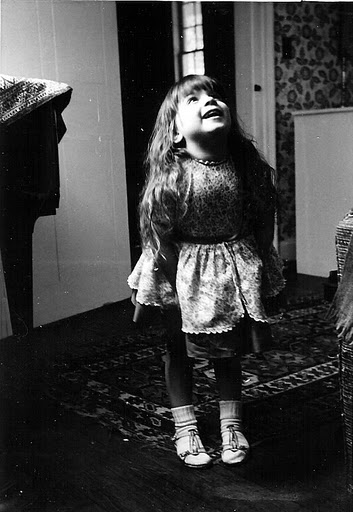


Good morning and Happy New Year’s Day!
This is taken from Fort Flagler on Marrowstone Island.
For the Ragtag Daily Prompt: light.


For the Ragtag Daily Prompt: finale. It’s the end of the year, the sun will set on another year!
Hoppy Newt Oar, everyone, and hope and prayers for next year.
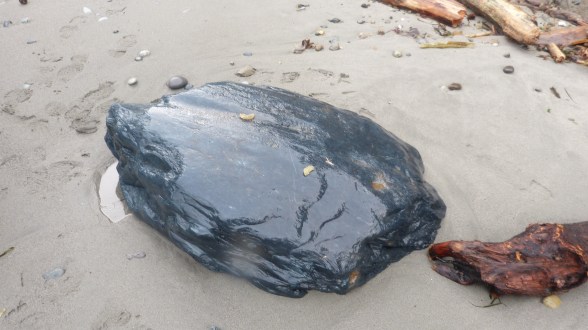
We keep running across boulders that we can’t bring home. Good thing, or my house would REALLY be cluttered. I only bring home rocks that I can fit in my reticule.
For today’s Ragtag Daily Prompt.

These are the layers of sand and clay that wash out with the winter storms. The tides get very high and new rocks are exposed and trees come down. We do not want to be standing beneath them when they collapse or >>ZAP<<.
This is for the Ragtag Daily Prompt: zap.
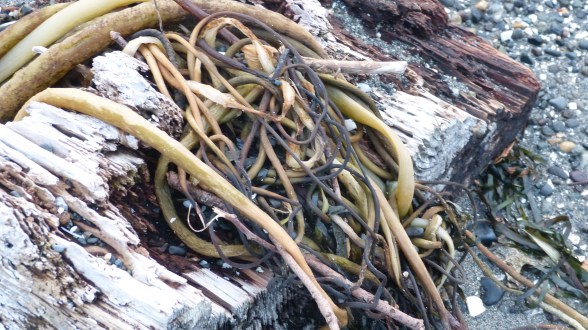
For the Ragtag Daily Prompt: twist.

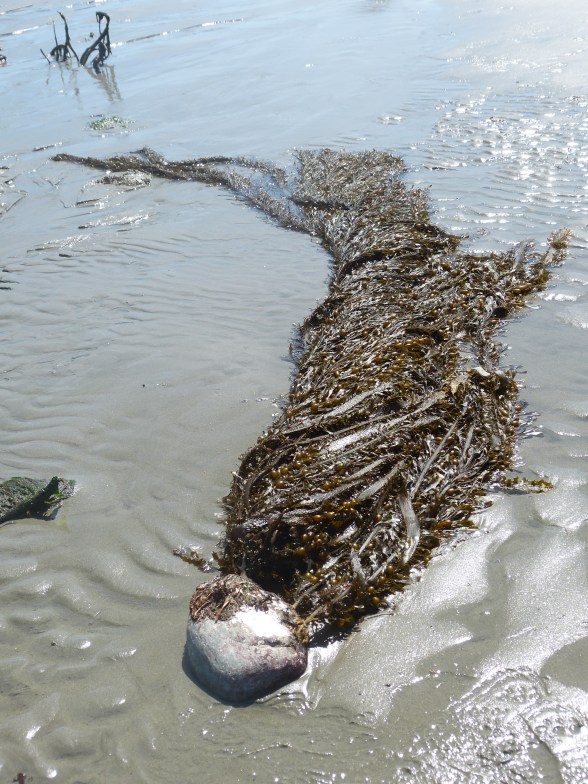
Aftermath to the storms, with the beach littered with the trees washed down the river.
It looks like noon on Christmas morning too: trashed.
You work at healing
For years
You dive in the swamp
Of your psyche
Turn over the mud
Tunnel through it
Breath it
See lilies arise
From the muck
The Beloved is a deer
Dainty hooves
In the swamp
At last you come
To bedrock
So you rest
Bedrock
You think
Until you notice
A chink in the rock
You look away
You avoid it
At last you look
It isn’t going away
The Beloved is a bittern
In the reeds
Fluid leaks
From the chink
Foul black bilious
Acidic
Burning holes in the slanted rock
Again you look away
But not for long
You step forward
Touch the rock
I am present you say
Who is there?
The stream of foul black
Increases
Pours from a widening crack
Beloved is a tiger
Paw against the rock
You see the acid burning
Her paw
But she does not run
She stands guard
Who are you?
You whisper
The rock crumbles
There is a child
“Go away” says the child
Ancient
No you say
Beloved and I
Stay present
The black is swirling around you
It’s hard to keep your footing
Beloved, an orca
Steadies you, swimming
No one stays says the child
We stay present you say
I was born I loved I was abandoned When I was afraid
We are present now you say
Swimming by the Beloved
Hand on black fin
I was abandoned When I grieved
We are here now you say
I was abandoned In my despair
We are here you say
You say
You fought
Out of love
You argued
Out of love
You gave
Out of love
Please child
Let us cradle you
The child is silent
The tide is slowing
The rock has crumbled away
A trickle of clear water bubbles
You will stay? says the child
We stay you say
Beloved is a whale
Singing in space
Singing to the stars
Am I lovable? says the child
You and Beloved
Earth and sky
Wind and trees
Moon and stars
Answer yes
Am I loved?
Yes
Yes
8/27/2007

I am writing this on Christmas morning.
The good news is this: National Guard Empties Bedpans and Clips Toenails at Nursing Homes. “In Minnesota, an ambitious initiative is training hundreds of Guard members to become certified nursing assistants and relieve burned-out nursing home workers.” (1) Well, hooray, the National Guard is called out to help, because the nursing homes are out of staff and we aren’t supposed to abuse our elderly. I think this is AMAZING. And the National Guard may learn some things about work and the elderly too. Hoorah and Hooray!
The bad news is a snippet from New York State: Omicron is milder, BUT the exception may be children. (2) Child cases of Covid-19 are going up really fast and hospital admissions of children. ICU work is hard hard hard, but child and infant ICU is even harder. Blessings on the nurses who do this and the physicians too. When I did my pediatrics rotation way back in Richmond, VA, in a tertiary care hospital, I had children who were dying: one with a brain tumor, one with liver cancer, one with Wilm’s disease. Hard work. I chose Family Practice. I have still had pediatric patients die, including an 18 month old where I had taken care of mother through the pregnancy, but not terribly many. Even less in the last ten years since my average patient was about age 70. All of my kids in the last ten years were complicated: one with Down’s, another a leukemia survivor, others. Children can be very medically complicated. I had two adults who had survived infant heart surgery as well. They were set up with UW’s Adults who had Childhood Heart Surgery Clinic, though that is not the correct name. I am pretty happy to have that sort of back up only two hours away. They both had pretty awesome heart murmurs and that midline chest zipper scar. Ouch.
So, why post this on Christmas? If the cases are rising in children, maybe that will inspire some folks to get vaccinated or at least not yell at family who refuse to bring small children to an unvaccinated Christmas gathering. Judging by the posts on the doctor mom facebook group, there is quite a bit of family yelling going on. Stand down, folks, and respect other peoples’ boundaries.
The problem is, if enough children are sick, we run out of beds. And staff. “As of Thursday, there were 1,987 confirmed or suspected pediatric covid-19 patients hospitalized nationally, a 31 percent jump in 10 days, according to a Washington Post analysis.” (3)
Blessings.
2. https://www.nytimes.com/2021/11/23/us/covid-cases-children.html
3. https://www.washingtonpost.com/health/2021/12/24/omicron-children-hospitalizations-us/
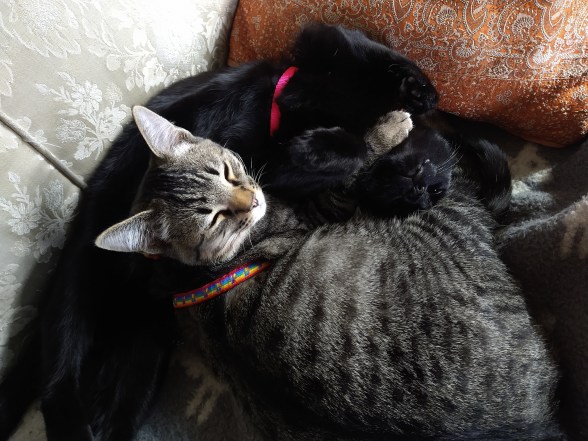
I hope that you feel loved, loved, loved.
They look pretty angelic at the moment, don’t they?
For the Ragtag Daily Prompt: gift.
Home to the Longette & Longette Lite
Intelligence that is not artificial: we are real.
BLIND WILDERNESS
in front of the garden gate - JezzieG
Discover and re-discover Mexico’s cuisine, culture and history through the recipes, backyard stories and other interesting findings of an expatriate in Canada
Or not, depending on my mood
All those moments will be lost in time, like tears in rain!
An onion has many layers. So have I!
Exploring the great outdoors one step at a time
Some of the creative paths that escaped from my brain!
Books, reading and more ... with an Australian focus ... written on Ngunnawal Country
Engaging in some lyrical athletics whilst painting pictures with words and pounding the pavement. I run; blog; write poetry; chase after my kids & drink coffee.
Coast-to-coast US bike tour
Generative AI
Climbing, Outdoors, Life!
imperfect pictures
Refugees welcome - Flüchtlinge willkommen I am teaching German to refugees. Ich unterrichte geflüchtete Menschen in der deutschen Sprache. I am writing this blog in English and German because my friends speak English and German. Ich schreibe auf Deutsch und Englisch, weil meine Freunde Deutsch und Englisch sprechen.
En fotoblogg
Books by author Diana Coombes
NEW FLOWERY JOURNEYS
in search of a better us
Less Noise. More Meaning
Art from the Earth
𝖠𝗇𝗈𝗍𝗁𝖾𝗋 𝖶𝗈𝗋𝖽𝖯𝗋𝖾𝗌𝗌.𝖼𝗈𝗆 𝗌𝗂𝗍𝖾.
Taking the camera for a walk!!!
From the Existential to the Mundane - From Poetry to Prose
1 Man and His Bloody Dog


You must be logged in to post a comment.