Change is confusing!

I am Elwha, cat.

This two weeks has been stressful, with confusing changes. Mother comes home daily with smells of another cat. About a month ago she began rushing around and moving many things. Sol Duc and I were locked out of a room on the main floor and then out of a room on the lower floor. Then Mother continued to hurry and she even washed some of the rocks. Why would she wash rocks? We were concerned.

Then people came. Three people. One was large and he chased me! His name is Trey, he is loud, he knows my name! I ran!. Mother would pick me up and she even handed me to him. Then he was very nice and less loud and patted my belly appropriately, but after he put me down, I still did not like when he would chase me with loud noises!

There is a small female person and a less small female person, Joanne and Camille. They both held me but they are quieter and did not chase me. Trey and Joanne stayed in one of the shut rooms and Camille in the other! We asked to investigate, but were refused. This is confusing. They left after two nights, gone! Mother seemed to enjoy them very much. Trey called me “cat brother” but I am not so sure.

Mother still smells of the other cat. Daily! She left for three nights and Dennis came in. He does not stay for the night, but he is good. We miss Mother.

Mother came back, but today was more frightening. She put on our harnesses for outdoors and we went in the carriers. But instead of letting us out when we got outside, we went in the car! Then we slid forward once. Mother said, “I was trying not to hit a deer, sorry.” We cried, Sol Duc and me. Mother brought the carriers into a place with many frightened animal smells. Another woman took the top off my carrier. She and Mother talked, a lot. She gave me two shots. I let her. She let me get off the metal table. I got in the carrier with my sister. It is very small but if we squeeze together, we both fit. The other woman laughed and said, “I can’t believe they both fit in there.”

Mother put us both in the bigger carrier and brought us home. We are very very happy to be home.

Not immune

I am attending multiple Zoom conferences on Long Covid and Chronic Fatigue and PANS/PANDAS and fibromyalgia. The speakers are talking hard science, digging in to the immune system to figure out what is wrong. Then they can find a drug to fix it.

Maybe it doesn’t need to be fixed. I think the immune system is smarter than we are and it knows that Covid-19 is a really really bad virus. What the immune system wants is to keep from getting any other infections so it shuts us down. It hits the chronic fatigue button, so we stay home or in bed. It hits the fibromyalgia button so that it hurts to move: we stay home or in bed. It hits the PANS button so that antibodies seriously change our behavior and we stay home or in bed. Anyone see a theme here? I think that the immune “over-response” is not an over-response. It’s not broken. It is trying to reduce exposure and just maybe we should pay attention. I thought that in residency, in the early 1990s, when chronic fatigue patients would interview me to see if I “believed” in chronic fatigue. Heck yeah, I said, but I don’t know what it is or how to fix it. My chronic fatigue patients had something in common: they were all either working 12-14 hour days continuously when they crashed, or they overworked and had insane stress, deaths of loved ones, car wrecks, accused of a crime, something horrible. The workers all wanted “to get back to where I was.” I would ask, “You want to work 12-14 hours a day again?” “Yes!” they’d say, “I want to be just like I was in the past!” “Um, but that’s what crashed you. Do you think maybe your body is not up to that?” “FIX ME.” I would try to improve things, but fix them back to what crashed them? No way and anyhow, that is not really sane.

There are some levels of illness where we have to intervene. In really bad PANDAS, antibodies to the brain are followed by macrophages that destroy brain cells. I was horrified and wanted to run around screaming “NOT MY BRAIN!” when I heard that. Then I thought, don’t be silly, I am in my 60s and if I had brain eating cells it would have happened by now. I consider myself really really lucky to have the mildest version. At least, that’s what it seems to be. (Officially we don’t believe in PANS or PANDAS in adults in the US but we do in Europe and Canada. Ironic.) With that version, especially in children, I am all for intervention, as soon as possible. And it’s not that I do not think we should intervene in these illnesses. I just think we need to step back and think a little and just maybe listen to our bodies and listen to the immune system. Slow down. Breathe. Watch some stupid cat videos. Whatever makes you relax and laugh. Reduce stress. Limit stupid hyper news to 15 minutes a day and not before bed, ok? Reduce the drama.

I am liking movies less and less. The drama bugs and bores me. I might last an hour. I have nearly quit going to our downtown movie house because it’s always “moving” and art films. Bleagh, drama. Also when it’s about illness or addiction, I want to argue with it. Easy lying endings which are nothing like reality. I like cartoons and sometimes superheroines, but it’s all drama too. I am tired of people behaving badly and don’t want to watch it on tv or a movie. There’s enough for me in the real world. I think it’s time to bring back musicals. I would watch them. Maybe. My father’s last movie was Blazing Saddles. He refused to ever go to another movie. I think I understand that now.

None of us are immune to stress or immune to infection. A person might be immune to Covid-19, or they might be immune until the tenth or hundredth strain shows up. I chose Family Practice for my specialty because I wanted to have children and be able to see them. I thought about Obstetrics-Gynecology or General Surgery, because I loved babies and loved surgery, but the Ob-Gyn residency was 4 years and General Surgery was 7 years and I was starting medical school five years out of college. Choose the more flexible and portable specialty and go rural.

Doctors and nurses are burning out because hospitals and administrators “maximize production”. Hospitals and administrators are stupid and destroying medicine. It’s not about money, it’s about helping people and science and healing. Having it be about money is soul-destroying and causes moral injury to any ethical provider. If we’d prefer unethical ones, keep on the present path. Otherwise we need single payer health care so that any physician or nurse can take care of whoever shows up. The system is breaking down more and more and it is hard to watch. Another nail of stress in the coffin of ethical medicine. I suppose when enough people die, change will come.

My working theory is that anyone can get one of these immune system illnesses: chronic fatigue, fibromyalgia, PANS/PANDAS and so forth. Medicine says that Hashimoto’s Thyroiditis, antibodies to the thyroid is the most common autoimmune disorder, but that may change. The evidence is mounting that Long Covid and these other “vague” illnesses are immune system shifts. Immune systems in “Code Red”, let’s not catch anything else. Are they an illness or are they our immune system trying to keep us quiet to protect us? I think the latter. Time may tell. I am listening to the science and listening to my body, both.

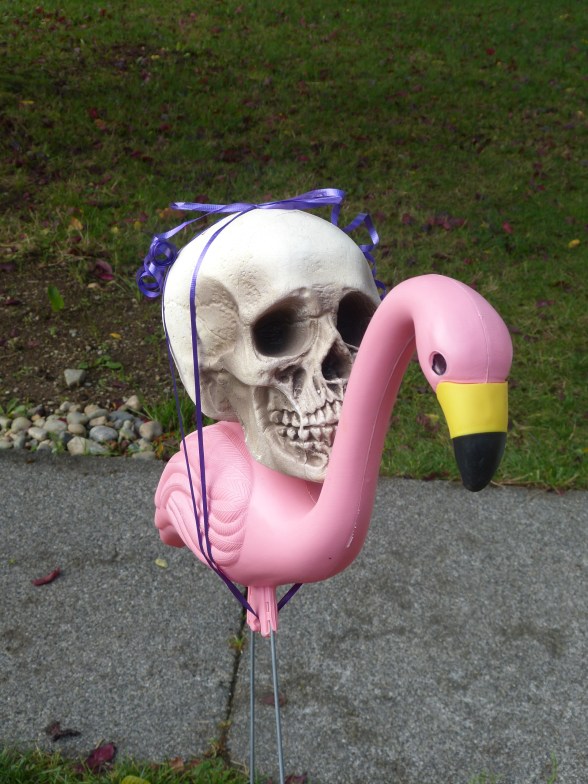
The photographs are from 2016, when a flock appeared in my yard. They demanded money to be moved to the next house.

For the Ragtag Daily Prompt: fiddlesticks. Oh, fiddlesticks, we have to figure out the very very complicated immune system. Or listen to it.

Sometimes wise

Sometimes the wisest thing to do
is to refuse to watch the news
to go for a walk alone
and then go quietly home

For the Ragtag Daily Prompt: wise.

Quieting the sympathetic fight or flight state to the parasympathetic relaxed state: http://www.wisebrain.org/ParasympatheticNS.pdf.

This is one of the pieces Rainshadow Chorale is working on:

drkottaway’s werewolf theory

Papers about antibodies and immune system responses are proliferating. About Chronic Lyme disease, fibromyalgia, chronic fatigue, long haul Covid-19. We are near the tipping point of understanding vastly much more about the immune system, though understanding what is happening and being able to “fix” it are poles apart. You have to invent the germ theory before you can invent an antibiotic.

Allopathic medicine currently says that behavioral health disorders are caused by “neurotransmitter imbalances” in the brain. That’s a bunch of vague hooey, isn’t it? There is one mouse neuron that has been studied and has 300 different kinds of receptors for serotonin. Scientists blocked one and the mice acted obsessive compulsive. That was one kind of receptor. They are trying to figure out the other 299 and what they do in combination. Does this sound like we understand the brain? No, it doesn’t.

BUT there are papers about antibodies. Antibodies can mimic neurotransmitters, like dopamine, like serotonin, like adrenaline, like norepinephrine. Hmmmm. With multiple different types of receptors for each neurotransmitter, the antibodies could be specific for some receptors and not others. The antibodies could block the receptor, like the wrong key in a lock. Or the antibody could act like a key and turn the receptor on.

One barrier to understanding Long Haul Covid-19 and chronic fatigue as autoimmune diseases is that they do not cause a rise in the usual inflammatory markers. Those are the ESR (erythrocyte sedimentation rate) and CRP (um, I forget — oh, C-reactive protein). This does not mean that there is no inflammation or that these are not autoimmune disorders. This means we have not found a diagnostic marker. Rheumatoid arthritis can be “sero-positive”, with a positive rheumatoid factor marker. Or it can be “sero-negative”, with a negative rheumatoid factor lab, but it’s still rheumatoid arthritis.

What does this have to do with werewolves? Great question! I am thinking about the adaptive advantage of making antibodies to our own neurotransmitter receptors. How could that POSSIBLY be an advantage? What it means is that when someone is very very ill, or very very stressed, or both, at a certain point the immune system starts making crisis antibodies. These cause neurotransmitter and other symptoms. Brain fog, obsessive compulsive disorder, anxiety, muscle pain, fatigue and on down some very long lists. A recent study of fibromyalgia patients looked at 8 antibodies. One was an antibody to the GABA receptor. All of the patients had some of the antibodies, none of them had all of them, and they all had different patterns. So there is no marker and the neurotransmitter antibody could explain brain function changes.

Why werewolves? I am thinking of the old legends that are embedded in multiple countries and languages. Werewolves, demons, vampires, angels. My fourth pneumonia has left a problem: I can’t tolerate gluten any more. We did the antibody tests last week. I think they will be negative, because my gluten intolerance is relatively mild. I can have a tiny bit. People with bad celiac really can’t have any. I may have an antibody that is either a low level or one that has not been described yet. So with repeated infections, four pneumonias plus the exposure to my mother’s antibodies to tuberculosis in the womb, I now have what is looking like a permanent change in diet. This pneumonia started in March 2021, so it’s over a year. I had diverticulitis after that in August. I ate a piece of tempura two months later and thought, ooops, that has gluten! The next day I hurt in the same place as the diverticulitis and decided that I would stay well away from gluten for a while.

The adaptive advantage of having antibodies that change our diet or character or make us stronger or weaker would be to force us to change. To leave a community. To ask for help. To hide during a pandemic. To fight or be suspicious of everyone. Being a grumpy werewolf might save your life in a pandemic, as long as you don’t break any laws and eat someone. A friend likes the dark and hibernates and likes protein best: vampire or bear? I am not sure, maybe a vampire bear. Chronic fatigue seems to “save” or at least stop people from working 20 hours a day and driving themselves to illness. I am not saying that chronic fatigue is good or fun: but it might be adaptive. Brain fog and stiff muscles: zombies, anyone?

Can we do anything to prevent ourselves from getting these mysterious but probably autoimmune disorders? Yes. Lower stress. BUT WE ARE IN A PANDEMIC. Yes, but we can still lower stress. Here are three things to do:

  1. Do not work yourself into the ground, into illness, into the grave. Take breaks.
  2. BREATHE. A simple exercise to quiet the nervous system is to breathe in four seconds and out for seconds. You have to pay attention or count, unless you do it as part of facing a wall meditating, but it works. The veterans I worked with agreed that this works and they are not an easy crowd to please.
  3. LOLCATS or whatever makes you laugh. Sit under a tree. Throw rocks in the water at the beach. Play with a child’s toy with or without the child. (Remember to share.) Sit in a rocking chair and rock gently. Go for a walk, slowly, no ear buds. Listen to the birds. Watch the tops of trees move in the wind. This quiets the sympathetic fight or flight response and switches us to the relaxed parasympathetic. Do this every day at least once.

These all quiet the nervous system which in turn quiets the immune system.

But wait, some people are in a war zone or a disaster zone or an earthquake! Yes. Help them. Get them out. Send something locally or internationally. Give something to your local “buy nothing” group or Heifer or one of the groups in your town: Rotary, Soroptmists, Elks, your local Area Aging help group.

And that is Drkottaway’s Werewolf Theory, a work in progress, under study. I need NIH West. Contact me to start the fund drive.

____________

References:

Overview of fibromyalgia: https://www.verywellhealth.com/autoimmunity-neuroinflammation-in-fibromyalgia-5197944

Fibromyalgia as an autoimmune disorder: https://spondylitis.org/research-new/fibromyalgia-might-be-an-autoimmune-disorder-a-new-study-says/

They have given human antibodies from fibromyalgia patients to mice. The mice get fibromyalgia. https://www.nature.com/articles/s41584-021-00679-y

I took the photograph of Sol Duc today.

Covid-19: long haul II

A few days ago my primary care doctor texts that she wonders if I have the autoimmune form of fibromyalgia.

Red alert. I have not heard about this.

I did a search last night and find this: https://www.sciencedaily.com/releases/2021/07/210701120703.htm.

Now, if you have been paying attention, you know that I was diagnosed with PANDAS in 2012, though Isuspect that it is really PANS. Both are autoimmune disorders. I also think that long haul covid is the same thing or something similar.

Meanwhile, they are now saying Covid-19 Long Haul may ALSO be an autoimmune disorder. Multiple sites below.

There is a paper in Nature that I don’t have access to, annoyingly enough. The fibromyalgia story in the above story is that they have spun antibodies down from human serum of affected and unaffected people and then injected them into mice. The mice get fibromyalgia symptoms from the affected antibodies but not from the unaffected ones. The symptoms in the mice go away when the antibodies fade out, in a few weeks. Aha.

The long haul story says that death from Covid-19 may be an autoimmune response, the antibodies going really nuts and making people bleed or their lungs close down. That is, swell shut. They have been drawing blood to study at different stages of Covid-19 and also checking autopsy patients. Usually autoimmune diseases are more prevalent in women then men but Covid-19 seems to be worse in men. This: “The mechanisms behind the production of such autoantibodies aren’t yet clear. Widespread and long-term inflammation during severe COVID-19 may cause the immune system to produce antibodies to pieces of the virus it wouldn’t normally recognize. Some of those pieces might resemble human proteins enough to trigger the production of autoantibodies.

Excessive inflammation could also boost production of autoantibodies that had previously only existed in the body at very low levels. Vaccination against COVID-19 is much less inflammatory than infection with the virus. In a separate study that looked at COVID vaccination, none of the healthy volunteers developed autoantibodies.” (2)(*)

Here is another fibromyalgia paper: https://www.verywellhealth.com/autoimmunity-neuroinflammation-in-fibromyalgia-5197944. That paper lists the autoantibodies that they are finding in fibromyalgia including gangliosides. The fourth antibody in PANDAS/PANS is anti-lysoganglioside. Aha! So this is sparking a serious revolution in medicine: it is looking like many of the mysterious and difficult to describe and quantify diseases may be autoantibody disorders. The anti-ganglioside antibodies were found in 71% of fibromyalgia patients. There are seven antibodies listed, including one to serotonin. In PANS, they are blaming two anti-dopamine antibodies. None of the fibromyalgia patients had ALL seven, but all of them had some of them. A different pattern in every patient, because we all make different antibodies. Fascinating.

One more: https://pubmed.ncbi.nlm.nih.gov/28339361/. People with lupus are more likely to have fibromyalgia and visa versa. “Increasing evidence indicates that N-methyl-D-aspartate receptors (NMDARs) play a major role in the induction and maintenance of central sensitisation with chronic pain. In this study, we evaluated the role of anti-NMDAR antibodies in the development of FM in patients with SLE.” Lupus and fibromyalgia share an autoantibody. Holy cats. NMDA is ALSO a neurotransmitter. Makes me wonder quite a bit about “psychiatric” disorders.

Remember that we make up all the words. So the autoimmune diseases are usually found by testing for a few antibodies. In the most common autoimmune disorder, hypothyroidism, we usually check the TSH and T4 level, so patient hormone levels rather than antibody levels. Over the last 30 years, we are able to test for more antibodies. Systemic lupus erythematosis, celiac, rheumatoid arthritis, juvenile rheumatoid arthritis. When I was in medical school in 1989, the rheumatology book was an inch and a half thick and there were loads of different patterns of disease. I am sure it is twice as thick now. Our initial test for autoimmune disease is for inflammation: an antinuclear antibody and an erythrocyte sedimentation rate. Some people have rheumatoid arthritis but their RF is negative: they have “sero-negative” rheumatiod arthritis, which is more likely “a different autoantibody that we have not tracked down” rheumatoid arthritis. In chronic fatigue and fibromyalgia, the antinuclear antibody and erythrocyte sedimentation rate are usually normal. I suspect both disorders of being “post” inflammation.

My prediction is a serious medical revolution, where we start regularly testing for autoantibodies. Whether that will be something like a pregnancy test but with hundreds of autoantibodies tested for, or whether there are some key indicator ones that we can find, is not clear. At any rate, trauma, stress and infection all increase the likelihood of getting one of these disorders and we have to figure out how to lower the load of all three.

Do you think people are instinctively quitting their jobs?

I had a phone visit with my pulmonologist yesterday. She was running about 35 minutes late, I sat on Zoom until she showed up. She looks exhausted. “We have less doctors and more patients.” she says. “I was on call for the critical care unit last week and I am on call Monday and Tuesday.” “Please take care of yourself,” I say, “We really need you.” She is smiling the whole time. She is worried about me dropping weight and I am worried about her.

Prayers and blessings all around.


1. https://www.cedars-sinai.org/newsroom/covid-19-can-trigger-self-attacking-antibodies/
2. https://www.nih.gov/news-events/nih-research-matters/autoimmune-response-found-many-covid-19
1. https://www.cedars-sinai.org/newsroom/covid-19-can-trigger-self-attacking-antibodies/
2. https://www.nih.gov/news-events/nih-research-matters/autoimmune-response-found-many-covid-19
3. https://thehill.com/policy/healthcare/591528-long-covid-study-author-explains-four-factors-that-can-predict-how-you-get
4. https://www.the-scientist.com/news-opinion/studies-identify-risk-factors-for-long-covid-69648
5. https://www.dailymail.co.uk/health/article-10436473/Is-people-sicker-Covid-19.html
*If that paragraph does not make people get the vaccine, they are living completely in a mad dream world, IMHO.
6. https://www.nih.gov/news-events/nih-research-matters/misdirected-antibodies-linked-severe-covid-19

For the Ragtag Daily Prompt: flickering. As in flickering hope.

Covid-19: Long Haul

https://www.bbc.com/news/av/world-us-canada-58918869 Some people with Long Haul Covid-19 are having to relearn how to walk and talk.

https://www.bbc.com/news/uk-england-leicestershire-59674203. Patients who were hospitalized are still affected at 5 months and one year after they are released from the hospital. Being female and obese are big risk factors. The article says “Long Covid has the potential to become highly prevalent as a new long-term condition.”

One more:

https://www.ncbi.nlm.nih.gov/pmc/articles/PMC8146298/ ” While the precise definition of long COVID may be lacking, the most common symptoms reported in many studies are fatigue and dyspnoea that last for months after acute COVID-19. Other persistent symptoms may include cognitive and mental impairments, chest and joint pains, palpitations, myalgia, smell and taste dysfunctions, cough, headache, and gastrointestinal and cardiac issues.”
“One puzzling feature of long COVID is that it affects survivors of COVID-19 at all disease severity. Studies have discovered that long COVID affects even mild-to-moderate cases and younger adults who did not require respiratory support or hospital or intensive care. Patients who were no longer positive for SARS-CoV-2 and discharged from the hospital, as well as outpatients, can also develop long COVID [24,30,31,41,50]. More concerningly, long COVID also targets children, including those who had asymptomatic COVID-19, resulting in symptoms such as dyspnoea, fatigue, myalgia, cognitive impairments, headache, palpitations, and chest pain that last for at least 6 months [51–53].”

And the symptoms? “The most common ongoing symptoms were fatigue, muscle pain, physically slowing down, poor sleep and breathlessness.”

Yes, the same as mine.

My initial evaluation of Long Haul Covid-19 patients will cover three areas:

1. Behavioral Health. Are they having brain fog, feeling slowed, feeling like they can’t think? Is that what happened during the Covid-19 or did the opposite happen? Were they manic/ADHD/OCD etc? What happened in the weeks leading up to getting sick? Any major worries or life trauma? Lose a job, a relationship, someone in the family die? I am looking for a dopamine antibody pattern.

2. Musculoskeletal Chronic Fatigue. What muscles work and which muscles don’t work? If they need to lie in bed for 20 hours a day, both slow and fast twitch muscles are affected. If they are short of breath, they should have pulmonary function tests, including a loaded and unloaded walk test. Are their oxygen saturations dropping? They also need a sleep study. Check for sleep apnea. Any signs of ongoing infection with anything? Teeth, sinuses, ears, throat, lungs, stomach, lower gut, urinary, skin.

3. Musculoskeletal Fibromyalgia. WHEN do their muscles hurt? Is it after eating? Do they fall asleep after they eat or does their blood pressure drop after eating? What diet changes have they made? Are there things they have identified that they can’t eat? Gluten, lactose, meat, sucrose, fructose, nightshades, whatever. I am looking for antibodies to lysogangliosides.

Treatment:

High antibody levels can be lowered somewhat just with “lifestyle changes” aka no drugs.

A. Treat infection if present. Look for strep A with an ASO, since we have an occult one that is in the lungs, not the throat. For fungal infection, even just on the skin, lower blood sugar as much as tolerated. This may mean a ketotic diet.

B. Treat behavioral health with drugs if emergent. If suicidal or really losing it (meaning job/relationships/whatever), then drugs may be needed. But not forever. Avoid benzodiazepines. Check for addictions.

C. Lower antibody levels:
a. Lower stress. Many people will resist this. Counseling highly recommended, ‘cept they are all swamped. Have the person draw the three circles: a day in the present life, their ideal life and then what their body wants. Listen to the body.

b. You can sweat antibodies out: hot baths, hot shower, steam room, sauna, exercise. Daily in the morning, because cortisol rises when we get up, and so levels should be lowered.

c. Is there a stimulant that works for this person to calm them down? Or an antidepressant if they are slowed instead of sped up. The relatives of dopamine that work for ME are coffee caffeine and terbutaline. Ones that do NOT work for me include albuterol and tea caffeine. Ones that I have not tried include theophylline, that new relative of albuterol and ADHD meds like adderall. This will be individual to the person because we all make different antibodies. We are looking for a drug that displaces the dopamine antibodies. For people who are slowed or have brain fog, the stimulants may not work. I would try the SSRI antidepressants first, like sertraline and citalopram, unless the patient tells me they don’t work or make them anxious. I would screen for PTSD. For high PTSD scores and high ACE scores, I would use the old tricyclics, mirtazapine (which is NOT a benzodiazepine), wellbutrin or trazodone. Again, avoid benzodiazepines. Also check how much alcohol and marijuana are on board, because those are definitely going to make brain fog worse. The functional medicine people are treating mystery patients with hyperbaric oxygen chambers and I suspect that this works for the people with blocker tubulin antibodies.

d. Muscle pain/fibromyalgia symptoms. Avoid opioids, they will only work temporarily and may addict. Avoid muscle relaxants, they will only work temporarily. Again, the tricyclics may help. The newer antiseizure drugs that are indicated for fibromyalgia are possibilities, though as an “old” doctor I am conservative about “new” drugs. Gabapentin, pregabalin, and if the person is sped up, antiseizure medicines that are used for mania. GENTLE exercise. The line between me having a good day today and overdoing is knife thin. On the overdoing days I go to bed at 5 pm. I went to sleep at 5 pm yesterday and 6:30 last night. I sang for church last night and even though I’d driven myself there, one of the quartet offered to drive me home. “Do I look that grey?” I asked. “Yes.” he said. I turn grey from fatigue and it can be sudden. Right now it’s after my second meal. If I am active, I will fall asleep after lunch if I can. If I go really light on lunch, I crash right after dinner. And remember, I am one of the lucky people who only have fast twitch muscles affected, not fast and slow twitch.

I am adding this to yesterday’s Ragtag Daily Prompt: hopeful.

Pediatric autoimmune neuropsychiatric syndrome

Yes, well, PANS rather than PANDAS. PANDAS is just a cooler acronym. Who wants a syndrome named after a kitchen implement? Not me. And probably tuberculosis (my mom’s) was the initial insult and then I was one of those kids who gets Strep A at least yearly. My daughter too, but my son only had Strep A once.

This is actually Pseudoautoimmune. That is, the antibodies that show up to Strep A attack parts of ourselves. It buggers up the acronym so they are not calling in PPANS. Yet. And eventually they will have to drop the Pediatric, so then it’s back to PANS. Oh, well, I can live with a stupid acronym.

My current theory is that the four antibodies that they’ve found so far are an interesting back up crisis system. Either stress or infection can set them off. Once the antibody levels are high, a person gets

1. Either brain fog or some variation of ADHD/OCD/Manic-depressive/TICS/Oppositional Defiance/etc. The brain fog can be labeled depression or memory loss, partly depending on the age of the person.

2. Muscle weirdness: either super strong/super endurance or slow twitch/fast twitch/both muscle dysfunction. With slow and fast twitch muscle dysfunction, theoretically that would be a source of at least some of the chronic fatigue. Chronic fatigue pretty much happens over night and is triggered by one in ten severe infections and/or stress. Though possibly more with Covid-19. The latest estimates are 30% of everyone infected has some form of Long Covid.

3. Anti lysoganglioside. I am still studying lysogangliosides. They lyse ganglions. In theory if this blocks the lysogangliosides, there could be a higher risk of cancer. If the ganglions are lysed more, well, more brain dysfunction and memory loss. I also noticed that I had tremendous muscle pain if I ate the wrong things. This could then be the mechanism for some of the fibromyalgia people.

How to fight this?

It’s not going to be popular in medicine, particularly allopathic, because the main treatments that I can think of are NOT DRUGS.

1. Look for infection and treat it. Penicillin is cheap. High dose if the person doesn’t respond. I don’t look septic when I am near septic: no elevated white blood cell count and no fever. It’s the urine output multiplied by 5, that is, 10 liters instead of 2 liters in 24 hours, that is the clue. This time I did not get to that point and it was milder. Though I need oxygen.

2. Quiet the immune system. Teach the slow breathing that we are using for chronic pain and our anxious people and PTSD veterans. Going from the ramped up hyper crazy sympathetic nervous system state to the quiet relaxed parasympathetic nervous system is a skill that I think anyone can learn. The immune system calms down in the parasympathetic state and antibody levels will drop. The naturopaths want to give tons of pills (that they sell from their clinic or get a kick back from the on line company) for β€œimmune dysfunction” but most of it is crap. Yes, crap. So the naturopaths won’t like this idea either.

3. For the anti lysoganglioside, I’ve treated this by changing my diet. When my antibodies are high, I have to keep my blood sugar as low as possible which means I go keto. As the antibodies come down, I can add foods back in. I am eating everything now except gluten. The gluten is annoying but Things Could Be Worse. Lots worse. This time I figured out that gluten, fructose and sucrose were culprits but not lactose and as I get better rice, potatoes and corn are fine. I dislike soy and always have, except for soy sauce and tamari. Tofu tastes like squishy cardboard to me, yuk. The gluten thing may get better, but since it appears that the baseline of the antibodies rises with each infection/attack, it might not. I will ask for celiac testing in January if I haven’t improved by now. I am not a β€œbad” celiac who gets terrible symptoms if there is a whiff of gluten. A little doesn’t bother me. French toast two weeks ago brought back the diverticular symptoms and kept hurting for a week. This did motivate me to hold off on gluten. Especially in the holidays and traveling. Again, everyone makes different antibodies, so the food patterns could be highly variable in different people. How very very interesting.

4. Treat the psychiatric stuff. If antibiotics and slow breathing and other parasympathetic exercises don’t help the person, then add the psychiatric drugs. But I’d try the above three first, unless the person is suicidal or threatening others. I am a drug minimalist. Eat food, exercise, have friends, work some, play lots and avoid pills. Including vitamins and supplements.

And that’s the basic plan for treating PANS. The symptoms of Long Haul Covid-19 bear a strong resemblance to my four pneumonias: brain fog or psychiatric problems, shortness of breath, fatigue, muscle pain. Therefore I would try similar treatments which may help some people with Long Haul Covid-19, chronic fatigue and fibromyalgia.

We will see if I make any headway at all.

___________________________________________

For more about PANS/PANDAS: https://home.liebertpub.com/news/revised-treatment-guidelines-released-for-pediatric-acute-onset-neuropsychiatric-syndrome-pans-pandas/2223

Stress and the sympathetic nervous system

People talk about adrenal fatigue: what is it that they mean? And how can we address it?

When we are relaxed, or less stressed, we make more sex hormones and thyroid hormone.

When we are in a crisis, or more stressed, we make more adrenaline and cortisol.

The pain conference I went to at Swedish Hospital took this a step further. They said that chronic pain and PTSD patients are in a high sympathetic nervous system state. The sympathetic nervous system is the fight or flight state. It’s great for emergencies: increases heart rate, dilates air passages in the lungs, dilates pupils, reduces gut mobility, increases blood glucose, and tightens the fascia in the muscles so that you can fight or run. But…. what if you are in a sympathetic nervous system state all the time? Fatigue, decreased sex drive, insomnia and agitated or anxious. And remember the tightened fascia? Muscle pain.

When we are relaxed, the parasympathetic system is in charge. Digesting food, resting, sexual arousal, salivation, lacrimation, urination, and defecation. So saliva, tears, urine, and bowel movements, not to mention digesting food and interest in sex. And muscles relax.

If the sympathetic nervous system is in overdrive, how do we shut it off? I had an interesting conversation with a person with PTSD last week, where he said that he finds that all his muscles are tight when he is watching television. He can consciously relax them.

“Do they stay relaxed?” I asked.

“I don’t know.” he replies, “but my normal is the hyperalert state.”

“Maybe the hyperalert state, the sympathetic state, is what you are used to, rather than being your normal.”

He sat and stared at me. A different idea….

So HOW do we switch over from the sympathetic to the parasympathetic state?

Swedish taught a breathing technique.

Twenty minutes. Six breaths per minute, either 5 seconds in and 5 seconds out, or 6 in and 4 out. Your preference. And they said that after 15 minutes, people switch from the sympathetic to the parasympathetic state.

Does this work for everyone? Is it always at 15 minutes? I don’t know yet. But now I am thinking hard about different ways to switch the sympathetic to parasympathetic.

Meditation.
Slow walking outside.
Rocking: a rocking chair or glider.
Breathing exercises.
Massage: but not for people who fear being touched. One study of a one hour massage showed cortisol dropping by 50% on average in blood levels. That is huge.
Playing: (one site says especially with children and animals. But it also says we are intelligently designed).
Yoga, tai chi, and chi kung.
Whatever relaxes YOU: knitting, singing, working on cars, carving, puttering, soduku, jigsaw puzzles, word searches, making bean pictures or macaroni pictures, coloring…..and I’ll bet the stupid pet photos and videos help too….

My patient took my diagrams and notes written on the exam table paper home. He is thinking about the parasympathetic state: about getting to know it and deliberately exploring it.

More ideas: http://www.wisebrain.org/ParasympatheticNS.pdf

I like this picture of Princess Mittens. She looks as if she has her head all turned around. Isn’t that how we get with too much sympathetic and not enough parasympathetic nervous system action?

does chronic pain kill you?

Another writer sent me this story, saying that chronic pain killed Prince, not an overdose.

http://www.rawstory.com/2016/05/prince-did-not-die-from-pain-pills-he-died-from-chronic-pain/

My response is complex.

1. Is chronic pain an “illness” in it’s own right?

My answer is yes and no. It’s complicated and our understanding is evolving. Right now I think of chronic pain as a switch in the brain that gets thrown. It can be thrown by adverse childhood experiences, by infection, by trauma or war or abuse, by too much stress… or a combination of any of these.

2. Why a switch in the brain?

In fibromyalgia patients we can’t find much on physical exam, except that the pain seems out of proportion to the exam. Ditto with chronic fatigue, reflex sympathetic dystrophy, TMJ, etc. However, now we can image the brain with a functional MRI and watch which parts are lighting up and how much. A study of “normal” and fibromyalgia patients involved a standardized pain stimulus: a thumbscrew. (Kinky, right?) The normal patients said the pain stimulus was 3-4 out of 10 and their brains lit up a certain amount. The fibromyalgia patients said the same pain stimulus was 7-8 out of 10 and the pain parts of the brain lit up MORE corresponding to their pain level. So they are not lying… and it IS in their heads. Sort of. We aren’t sure whether the muscle is yelling more than normal or whether the brain is hypersensitive or both. My guess would be both.

And I think this is an adaptation. It is to get us to rest, heal, calm down, introspect, stop being type A, etc. Boy, do we suck at it. Though recently I had a person in clinic who said what their body wanted to do was nothing. They just wanted to lie around. I said, well, ok, so when can you do that? They did, for two weeks, at the holidays. And my patient said, “One day I had a cup of tea and a book and the cat on my lap and the dog at my feet. I realized that my adrenaline system was turning off and I felt calm and relaxed. Healed.” Back at work the person cannot always maintain it but is getting better at it.

3. What does this have to do with Prince?

The problem is that for 20 years we treated chronic pain with opiates. Unfortunately on continuous opiates, the brain cells change in many people and “down-regulate” the opiate receptors. Less receptors, the pain rises. The person needs more opiate. The brain removes more receptors. So two myths: one that if you have chronic pain and take medicine as directed, you can’t get addicted. Only dependent. Since that is a myth, the DSM-V has combined addiction and dependence into one diagnosis: opioid overuse syndrome. It is a spectrum, not two separate responses.

The second myth is that if you give enough opioid, it will help the pain. Well, no. UW Pain and Addiction Clinic says that on average pain is reduced about 30% by opiods, whatever the dose. And high doses start causing some weirdΒ  hyperalgesias. I’ve weaned two people from over 100mg methadone daily down to 20-30mg. It took two years. They felt better on the lower dose after they got through withdrawal symptoms and a short term increase in the pain receptors complaining at them. And they are much less likely to overdose and die.

Page two here http://www.supportprop.org/wp-content/uploads/2014/01/PROP_OpioidPrescribing.pdf discusses current knowledge about opioids.

4. So like, Prince?

He may have died from a combination of fatigue and sedating drugs. If you get enough sedating drugs, then you stop breathing. Opioids are the biggest offenders combined with alcohol or sleep medicine like ambien or benzodiazepines like valium or ativan or alprazolam or muscle relaxants like methacarbomal or a combination of all of the above. I am a strict physician about urine drugs screens and I do the dip in clinic in front of the person. Way too often, the person does not tell me about the alprazolam or whatever until I am holding the dip over the cup…. and that’s when they tell me. They got it from the ER or a friend or two years ago or … took their dog’s. Really.

He may have died from influenza, if he had it, with sedating drugs. Bad influenza causes lung tissue swelling and can mess up your oxygenation. Your heart has to take up the slack and go faster. If you are trying to work and your heart rate is well above normal, it’s exhausting. It can kill you.

He may have died from overwork, another infection, sedating medicines…. but not directly from chronic pain. Chronic pain slows us but I do not think it kills us*. What kills us is trying to treat it with a pill instead of resting and doing gentle exercise and saying: What does my body want?


5. Overdose?

Also, are we talking about an accidental overdose? Are we talking about drug abuse? Are we talking about accidental death or suicide or do we as a society think that addiction deserves overdose death but a person taking medicine for chronic pain is a tragedy? Aren’t we a bit judgemental?

Prince may have taken a pain pill as directed but taken it with too many other controlled substances or with alcohol or while sick and exhausted. Overdose means too high a dose. If it was two percocets, alcohol, flu and xanax…. it could be an accidental poisoning.

6. Are you sure?

No. Medicine changes. Our understanding of the brain changes. Science is about change and deepening understanding. We are barely getting started on the brain and I would say that we are in preschool there.


*Stress alone can cause heart attacks and sudden death:Β  Β  http://www.health.harvard.edu/blog/stress-cardiomyopathy-a-different-kind-of-heart-attack-201509038239

The photograph is from a week ago, part of my Maxfield Parish cloud series, zoomed way in to the mountains across the water.