Matter

If something doesn’t matter, is it anti-matter?

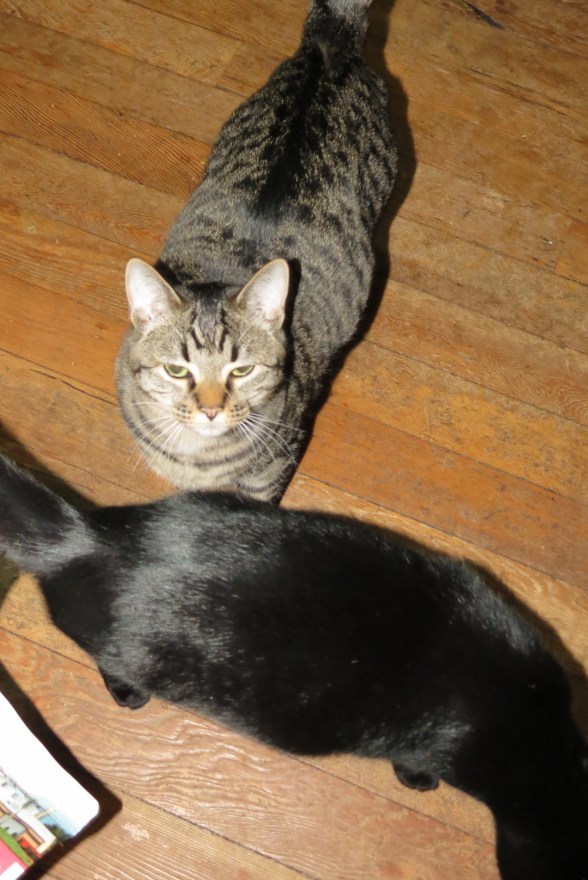
Lily’s person moved two days ago, much closer. Supposedly to a place where Lily the cat can go, but instead of a private room, there is a roommate. It took me a month to get Lily cat to let me pat her, so the roommate won’t work. We are all very very frustrated. And next week daily treatments for Lily’s person start, thirty minutes away, without enough warning to get volunteer drivers. So it will be me. I am tired. But I suppose it’s anti-matter, right? We were given 24 hours notice by the nursing home and by the physicians about both the move and the treatment and they wanted to start the treatment the same day that she was moving. Whether we can provide all the transport seems to be irrelevant.

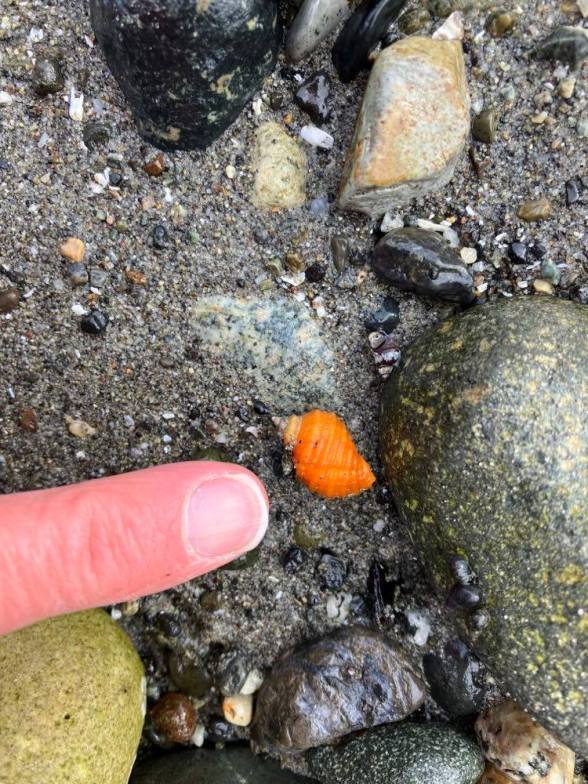
The stealthie is from Whidby Island. Right, I’m just an irrelevant shadow as far as the medical dysfunctional machine is concerned.

For the Ragtag Daily Prompt: irrelevant.

Stand up

I am in a large room, like an expensive hotel lobby. There is a large black bowl like structure, fountain size, but without a fountain. There is a big woman bullying me. She is making me dump containers of ice into the bowl structure. It will overflow and I will be blamed. Another woman whispers to me: “You have to sing a song about abuse, so that people will know that she is making you do this.” I know songs about abuse but at that moment I can’t think of any. Then I do. I remember a song my mother sang, this verse:

“Two little babies, crying for bread. With none to give them, don’t you wish that you were dead. Don’t you wish you were a single girl again.”

I wake up. The song is about a young woman, married, whose husband is drinking up his paycheck. She and the babies are starving and he beats them. Not a pretty picture of marriage, is it?

I wake up. One way to think about dreams is that each person in the dream represents an aspect of ourselves. So WHY is my inner bully showing up? I don’t like this!

That day my friend goes from the hospital to a nursing home for rehab. I speak to three people on the team, because my friend has a cardiology appointment the next day and I want to be sure that she will be taken to the visit. She is going to a nursing home 40 minutes away.

On the appointment day, I call the rehab just after 9 am when the internet says they open. There are three choices: two halls and a main office. I leave a message on hall one. I call back and leave a message on hall two. I wait another ten minutes and call the office. No answer, I leave a third message. I wait until 9:30 and call again. This time that inner voice with gumption is fired up: “I need a call back by 11:30 or I will drive up there, I need to know that my friend has transport to cardiology for her 12:45 appointment.”

I get a call back at 10:30. The rehab person introduces herself. “Oh, we can’t transport her because she just got here yesterday.”

“You don’t understand,” I say. “This visit is to make sure her heart is ok after restarting a medicine. It is not optional.”

“We can’t transport her.”

“I am sick, I can’t transport her. What is your name? What is your position? Who is in charge of the facility? What about her heart, your facility has no concerns if her heart is poisoned?”

“Just a moment.” Papers rattle. “Oh, we DO have transport arranged. Someone else wrote it down and I didn’t see it.”

“Oh, thank you so much. I was so worried!”

I go to the appointment, masked. The driver says my friend was a last minute addition. The visit goes well. I am on the tail end of a cold, not covid, and I am very tired from trying to be sure that my friend gets good care. I think THAT is what the dream is about, the inner strong voice who is not going to let my friend be abandoned, be bullied, be ignored. She is too ill to fight for herself so I am fighting for her. And I am formidable.

For the Ragtag Daily Prompt: gumption.

You will be labeled

If you get sick
with something the doctors don’t understand
you will be labeled
unstable
mental
bipolar
crazy.

They will try to drug you.

How do you tell
when they are right
and you are crazy
brain on fire
and when you aren’t?

Don’t ask me.
I’m a Family Practice doc
and I’m rural
and I’m a girl.

I’m the one they make fun of
in the medical schools.
“The rural doctor
transferred this patient.”

Yes we did.
Because we knew it was something
different
that needed more
than we had
in our small town
in our small hospital.

Once a neurosurgeon says,
“You are transferring the patient
because it’s Friday
and you don’t want to work
on the weekend.”
“She needs an MRI,” I say
“and we don’t have one.”
and transfer her anyway.
I call two days later.
After the MRI, she is in
the operating room
for a tumor in her spine.
He doesn’t call me back
but I hope he remembers.
I certainly do, after years
and years.

If you get sick
with something the doctors don’t understand
you will be labeled
unstable
mental
bipolar
crazy.

Passe

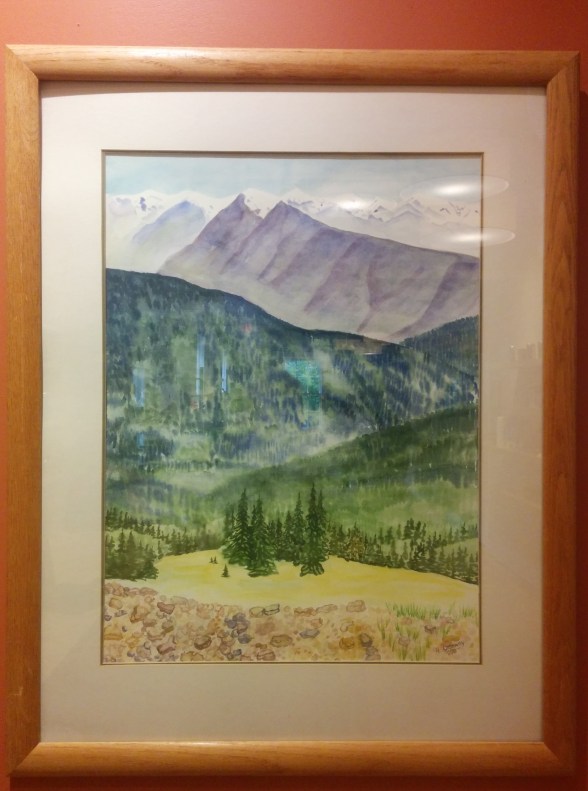
Today’s Ragtag Daily Prompt is anachronism. I guess that would be Helen Burling Ottaway’s watercolors, since an AI can do them, and my work as a physician. The American Academy of Family Practice (AAFP) wrote: “So, the AAFP looked into an AI assistant for clinical review that can “pull the data together in a problem-oriented manner and give you a snapshot of exactly what’s going on with your patient without having to search and click and find things.”

Um. Ok, I am thinking of a patient who was about to be transferred from our small hospital to a bigger one. His notes came across my desk. I called the hospitalist. No less then four physicians during the hospitalization, starting with the emergency room physician, had written that his abdomen was “flat, soft, non-tender, no masses”. What this told me was that 1. Not one of them had done an exam. 2. Not one of them had read my notes nor the surgeon’s notes. 3. The bigger hospital was going to laugh themselves silly if they did an exam. Why? He had an 8 by 8 inch enormous umbilical hernia present for 20+ years, which had not gotten fixed yet because of other medical issues.

Great. So let’s make it worse by having an AI pick out what is important from the patient record and have it make up exams, which people are too lazy to do. Physicians are too lazy to do. People, you had better read every single note your doctor or nurse practitioner or physician’s assistant writes, because you want to go on record in writing when they get it wrong. It is an absolute horror show. Read your notes, because your doctor is most likely not reading the notes from the specialists. I find it amazing, horrifying and sloppy.

I learned to paint watercolors from my mother. I am not primarily an artist, but I learned all sorts of techniques from her. We do not learn from plugging an idea into a computer. We learn from doing. And yes, it is work to learn techniques, but it is worth it!

As I was going to Washington, DC

As I was going to Washington, DC

I met insurance CEOs who said “Whee”!

500 Insurance CEOs said Weeee!

Have ten insurance plans EEEEEach!

Every plan has it’s own website!

Every plan is different, password for each site!

Every plan refuses coverage for different treatments, right?

Every plan demands prior authorization, doctor’s office up all night

If they refuse chemotherapy the doctor has to fight?

Prior auths, treatments, passwords, plans

Insurance companies, all those demands

As I was going to DC

How many passwords will I need?

______________________

For the Ragtag Daily Prompt: snail.

I was pricing health insurance in case I get well enough to work more. I can get an $800 a month with a $8000 deductible or a $1435 a month with a $2000 deductible. I would very much like to work part time treating Long Covid. But, ironically enough, looks like I can’t afford health insurance. It costs more than the malpractice would. Ironic, huh? It’s not like we need doctors. (I do not have a medical release yet anyhow, but time to do research. It’s making me gloomy.)

You know, if we do get Artificial Intelligence, it will take one look at the United States Medical non-system, decide we are insane, and wipe us out.

And honestly, when I was working for the hospital clinics, I thought the most brilliant person in our office was the woman who could extract a prior authorization from so many insurance companies. I would send the referral to print and half the time she would have it authorized by the time the patient got to the front desk. And why do we waste all that brilliance on giving health insurance companies a profit of 20 cents out of every dollar? That is $20,000,000 out of $100,000,000. Looks worse with bigger numbers, doesn’t it?

Physicians for a National Healthcare Program: https://pnhp.org/.

In the box

Wednesday was interesting and frustrating and part was beautiful.

The beautiful part was arriving at the Kingston, Washington ferry dock early. I took photographs of the quite gorgeous light display while I waited for the 6:25 ferry.

On the other side, I drove to Swedish Hospital, Cherry Hill. There I had another set of pulmonary function tests. The technician was very good. She said that since I have a normal forced vital capacity it does not look like asthma. However, a ratio was at 64% of normal, which is related to small airways.

“Have you had allergy testing?” she asks, “And a methacholine challenge?”

“Yes,” I say. “Both. In 2014. No allergies at all and the methacholine was negative.”

“Hmmmm.” she says.

Afterwards we call pulmonary. I have an appointment on this next Wednesday but we call and ask if there is a cancellation and I can get seen today, since I am two hours from home already.

Yes, there is, but I have to hurry to Issaquah, Washington.

There is an accident on the I90 bridge, so I do not think I will make it. But I am there by ten and the pulmonologist will see me. I check in, fill out paperwork, wait, go in the room, a medical assistant asks questions.

The pulmonologist comes in. He is nice and is able to pull up the chest CT from 2012, two of them since the first one “couldn’t rule out cancer”. Since I am referred for hypoxia without a clear cause, he questions me about my heart. Echocardiogram, zio patch (2), bubble study, yeah, it has all been normal. I describe getting sick and tachycardic and hypoxic and coughing.

“Do you cough anything up?”

“No.”

“Do you cough now?”

“Yes, if I exercise or get tired.”

He is like many physician specialists that I have seen. He has a number of pulmonary diagnoses, or boxes. Emphysema, COPD, lung cancer, bronchiectasis, chronic bronchitis, the progressive muscular disorders. All of those are ruled out in the past. So he puts me in the asthma box.

“I thought asthma was ruled out with the methacholine.” I say.

“Well, you have SOMETHING going on in the lower airways, and it was present in the 2021 and the 2012 pulmonary function tests. Maybe an asthma medicine will help.”

I mention ME-CFS and my muscles not working right, but he only deals with lungs. He won’t say a word about those disorders.

Sigh. I do not get the improvement with albuterol that diagnoses asthma on the pfts and never have. The formal reading of the pfts is that I do not meet criteria for asthma but there is something in the lower airways.

Monsters, maybe? I’ll try the inhaler, though with skepticism. Antibodies seem like a better guess, but antibodies are outside this pulmonologist’s set of boxes.

________________________

The photograph is from Swedish, Cherry Hill, bird’s eye view from the balcony.

Methacholine test.
Integrated behavioral health

The buzzwords now in Family Medicine. Integrated behavioral health in primary care. I am finding it a bit annoying.

Integrated does not mean race in this context. It just means the clinic should have a behavioral health person.

I suppose that is a good idea maybe, or might seem like one. But what do they think I have been doing for thirty years? Ignoring behavioral health?

Really, primary care is half or more behavioral health, if a primary care doctor gives people time and pays attention. People have an average of 8 colds a year. Why do they come in for cold number 4 if it is no worse than all the others? Because the cold in not really why they are coming in. The cold is the excuse. Notice that the person is there, that they are not that sick, that they do not care that you are not going to prescribe antibiotics.

I have my hand reaching for the door when an older patient says, “May I ask you something?” She came in for something that she didn’t seem to care about, so I am not surprised. I turn back. “Yes.”

“I have friends, in another state. They had a baby. The baby is very disabled.”

I sit down. This is more than 15 years ago, so I do not remember what the baby had. Hydrocephalus. Cerebral palsy. Something that requires multiple doctors and physical therapy and the parents are grieving.

“What bothers me most is that they have to struggle so much for services. There is very little support and very little money set aside. One of the parents has quit their job. It is a full time job taking care of this child and they are frightened about the future. Is this really what it’s like?”

And that is the real reason for the visit. “Yes,” I say. “It can be very difficult to access services, you have to track down the best people in your area, some physicians won’t pay much attention and others are wonderful. And the same with physical therapists and everyone else. Tell them to find some of the other parents of these children. Get them to recommend people. And the parents have to be sure to take care of themselves and each other.”

She frowns. “It’s a nightmare. Their life completely changed from what they thought. First baby. And it is overwhelming.”

“I am sorry. You are welcome to come back and ask me questions or just talk.”

“Thank you. I might.”

“Do you need a counselor?”

“No, I’m fine. I am just worried about them and feel helpless.”

“It sounds like staying in touch is the best thing you can do.”

“Ok.”

The true reason for the visit is often something entirely different from what the schedule says. Sometimes people are there without even knowing why they came in. “Can I ask a question?” That is key. Saying to see people for one thing is criminal and terrible medicine and makes behavioral health worse. There is so much we can do in primary care just by listening for these questions and making time for them.

I have nothing against adding a behavioral health person to the clinic. They talked about “embedding” a behavioral health person in each group of soldiers back in 2010, when I worked at Madigan Army Hospital for three months. I always pictured digging a hole in my clinic floor, capturing a counselor, and then cementing them in the hole. I would have to feed them, though. I always thought that was sort of a barrier. One more mouth to feed. I found it more useful to contact counselors, ask what they wanted to work with, learn who knew addiction medicine, learn who was good with children or families or trauma. And ask patients to tell me who they liked and why. I integrated behavioral health in my community, not just in my clinic, because there is no one counselor who is right for everyone.

Rebel in clinic

Right before my hospital district informed me that they no longer wanted my services, I was rebelling. The fight from my perspective, was over good patient care. They had set a quota. 18 patients a day. One every 20 minutes and one 40 minute visit. 8 am to noon and 1 pm to 5. I argued and argued and argued. I knew finishing the note in the room took me 25 minutes on the hateful electronic medical record and I had averaged 16 patients a day my whole career. I was not fast but I was super thorough and had just gotten an excellent report on a chart review and had been told that I was a great diagnostician. Which was mostly due to my nearly OCD thoroughness. I was not diplomatic with the hospital administration.

One day I was feeling wicked, just wicked. I had a brainstorm and started whistling softly. The other two doctors and PA were all in the same small office.

One took the bait. “What is that? I know that song.”

“Oh, we are singing it in chorus. For some reason it is in my head today.” So I sang this song.

I did not have the words memorized. I swear that the temperature in the room dropped and the male doctors hunched in their chairs.

“Yeah, don’t know why that one keeps playing in my head.” I said. “I hope you can all come to the concert!”

But answer came there none.

I took the photograph at Quimper Family Medicine, the clinic I opened after the hospital clinic kicked me out. The skeleton was named Mordechai in a contest. This is from 2014. Mordechai lived in our waiting room every October, with different outfits.

Is this a tree?

Is this a tree?

I would not call this a tree. I would call it a cone. It contains seeds. It is not a tree.

A pregnancy is called an embryo until 8 weeks after conception and then a fetus until birth. It is not a baby, any more than a seed is a tree. Here is a link to a picture of the embryo developing:

https://en.wikipedia.org/wiki/Human_embryonic_development#/media/File:HumanEmbryogenesis.svg

It’s a bit difficult to call the embryo a baby.

After 8 weeks (10 weeks from the last menstrual period) the developing pregnancy is called a fetus. It cannot survive outside the womb. A term pregnancy is 37 weeks, and the due date is at 40 weeks. The earliest survival, certainly not natural, is around 24 weeks. This takes heavy intervention and technology, a premature infant on a ventilator for months. There is risk of damage to the eyes from high oxygen and risk of spontaneous brain bleed and cerebral palsy, because the newborn can weigh half a pound. Once born, the fetus is termed a baby.

This is important from a medical standpoint and pounded into us as physicians. WHY? Because in a trauma situation, the life of the mother comes first. In Obstetrics and Family Medicine, the life of the mother comes first. In Oncology, the life of the mother comes first. My sister was diagnosed with stage IIIB ductal breast cancer at age 41. She was engaged and it turned out that she was pregnant. She wrote this essay on her blog, Butterfly Soup:

The hardest loss of breast cancer.

She had an abortion and chose chemotherapy, because it was her or the fetus. If she had chemotherapy pregnant, at that time she was told that it would probably kill the fetus or cause terrible birth defects. If she held off on chemotherapy for seven months, her oncologist thought she would die. She had a very very aggressive cancer and she already had a daughter who needed her.

She lived until age 49, with multiple rounds of chemotherapy, radiation, gamma knife radiation, whole brain radiation. And she lived until her daughter was 13. Without the abortion, her physicians thought she would have died when her daughter was 7.

My ethics in medicine are that patients have autonomy. I would NOT have wanted my sister to choose to refuse chemo and try to bring a baby to term while dying of breast cancer. However, it was HER CHOICE, not mine. It was private and no one else’s business and how dare people make moral judgements about another person’s medical choices. I give my patients CHOICES. They can choose not to treat cancer and go into hospice. They can choose surgery or refuse it. They can choose to treat opioid addiction or refuse. They may die of a heroin overdose and I grieve. I try to convince them to go to treatment and I give them nalaxone to try to reverse overdoses. I refuse a medication or treatment that I think will harm my patients, but my patients have autonomy and choices. That extends to women and pregnancy as well.

It is NOT a baby in the womb, however emotionally attached people are to this image. It is an embryo first and then a fetus. And in a car wreck, the woman comes first and the fetus second.

For the Ragtag Daily Prompt: explain.

Caduceus Hair

A physician says to me, “You might have had more friends and been more successful in your career if you had been put on medication a long time ago.”

I think, “You f—ing bitch.” Nothing shows on my face. The doctor face is pleasant on the surface and the stone face that guards my feelings is deeper. I could show you the snakes and you would turn to stone but I would go to jail.

Your words don’t go away. They fester, a deep deep wound. I ask my other doctor, “If my only symptom of pneumonia is my mood, no white count, no fever, how would I know if I had pneumonia if I were medicated?”

I think back. Age twenty five with belly pain, emergency room, CT scan and then a sigmoidoscopy. I couldn’t eat, it hurt so bad. The emergency room offers me valium. “No,” I say, “my father is an alcoholic. I won’t take that.” I am sent to counseling. The counselor, smug, blonde, polished, wants to send me to her husband, a psychiatrist, for drugs. “No,” I say, “my father is an alcoholic. I want talk therapy not drugs.” I am very very afraid.

Things get better.  I tell the counselor thank you. “You can’t stop now,” she says, “You must continue the counseling. Or you will have problems later on.” I go once more. She says I must keep coming. I speak to a family friend, a PhD psychologist, who encourages me to say no. I cancel. No regrets.

I am not an alcoholic. I don’t smoke. I don’t use pot nor CBD. I never tried cocaine or meth or opioids or crack. I can tell an addict by their charm: the sick people are not charming nor the people in for maintenance. The moment a person tries to charm me I wonder what they want.

The physician is wrong and cruel besides. Valium is addictive and is still overused. I could have taken the path of psychiatric medicine but I chose not to.

I will find another doctor who is less stupid and cruel. They do exist. I know, because I am one.

____________________________