Working theory

I attended two Zoom one hour programs on Long Covid this week.

Thursday from the University of Arizona, 330 people logged on, hard science with thirty minutes of information about Mast Cell Activation Syndrome. They said 17% of the population, which is huge, if it’s correct. This is not mastocytosis, the cancer. This is the immune system going rather batshit. Though I would frame it differently, as the immune system fighting a really difficult battle.

Friday from the University of Washington. I don’t know how many were logged on. This was at a much more aimed right at the physicians level. People sent in questions and they collated and gave answers. They promised to answer some of the questions later on. My question was whether a high Adverse Childhood Experience Score predisposed to Mast Cell Activation and they did not address that.

So mast cells apparently can produce over 1000 different signals: cytokines, histamines, proteases and I don’t know what all. They are all over our bodies (are you creeped out? I am a little.) near the boundaries: skin, nose, gastrointestinal tract, genitals. They produce different signals depending on what is happening. The Thursday researcher basically said that they could affect nearly any system in the body.

I’ve heard of mastocytosis and even had a patient with it, but Mast Cell Activation Syndrome was barely on my radar. I am not sure if 17% of the population is at risk or has it. It is tricky to diagnose, because the best lab test is a rather tricky and rare one, and it is sort of an orphan illness: few doctors know about it and it does not fit neatly into any specialties. Patients have seen an average of ten specialists before they get diagnosed. Hmmm. Sounds familiar.

This researcher has a ton of papers out, that I have not started reading yet. MCAS is implicated in Ehlers-Danlos, a connective tissue disease and in ME/CFS (myalgic encephalomyelitis/chronic fatigue syndrome) as well as POTS (postural orthostatic tachycardia syndrome) and can get triggered by Covid-19. Well.

The good thing is that treatment is quieting the sympathetic nervous system to let the parasympathetic take over. The sympathetic is the fight or flight hyper one. Parasympathetic is the rest, relax, mellow out, slow heart rate, blood pressure down, digestion and quiet one. I think United States culture is crazy fight or flight most of the time (We’re number one!– so what?) and the pandemic has put the whole world into fight or flight mode. Crazy.

Back in Family Medicine residency, 1993-96, I had a number of ME/CFS, chronic fatigue patients. They tended to be hyper sensitive to medicines and have all sorts of symptoms which were fluid and changable and difficult to pin down. What I noticed though is that many of them had been super high acheivers or working multiple jobs or crazy high stress, until they hit some sort of wall. Often an infection but not always. The ones I saw wanted to go back to working 18 hours a day. I said, “Um, that’s how you got this, I do not think that is a good goal.” This often pissed people off. Even back then, I thought that chronic fatigue was a body reset, where the body rebels, some sort of switch is thrown, and people rest whether they want to or not. Some do recover but it can take ages. The Thursday speaker seems to think it’s the mast cells doing this.

The UW speakers were careful. They said we do not know how long Long Covid lasts. One said they do not like to diagnose POTS, because POTS is usually permanent and the Long Covid tachycardia usually resolves. They are seeing people who got sick 2-3 years ago and are still sick, but they also have people who have recovered in 9-12 months. They do not know if patients are entirely recovered or whether there will be other problems later. They also aren’t sure that the chronic fatigue like symptoms are the same as the rest of the ME/CFS. Remember when dementia was Alzheimer’s? Now there are all sorts of different dementia diagnoses, Lewy body, frontotemporal, Huntington’s, stroke dementia, alcoholic dementia, Parkinson’s, Alzheimer’s, and others. When I was in residency, we had hepatitis A, hepatitis B and non A non B. Now we are up to G or beyond. Medicine changes and it’s moving as fast as possible for both acute Covid-19 and Long Covid.

The mast cell reasearcher talked about getting the sympathetic and parasympathetic nervous systems back in balance. I think maybe we ALL need that. Every person in the whole world. One way to quiet the sympathetic nervous system is to slow your breathing. Try it. For five minutes, or three minutes. Slow breath in for a count of four or five and slow breath out for a count of five. Let your brain roam around and fuss, but let go of each thought as it passes by and return to counting and breathing.

Slow in, slow out.

Practice and heal.

_____________________

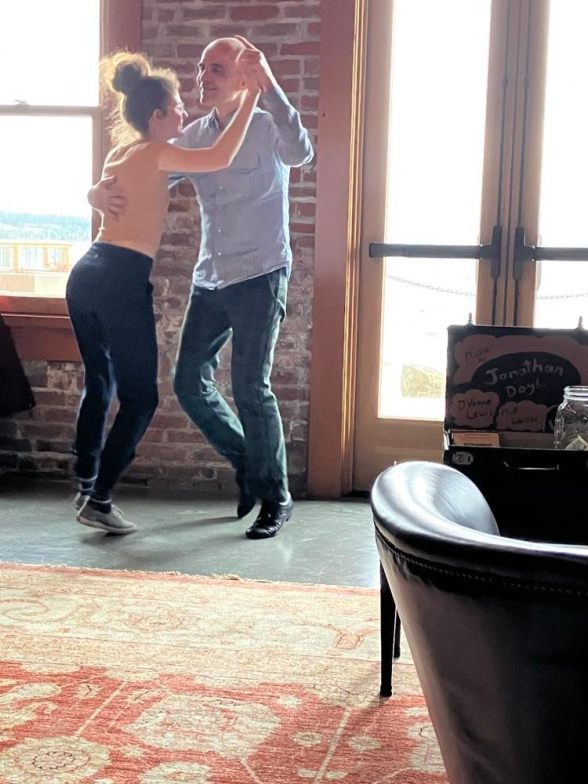
The musicians are Johnathan Doyle and a friend. They were fabulous, last Tuesday at the Bishop Hotel.

.

What the body wants

My lungs are much much better than a year ago, shown by no problem at altitude at rest. Of course, I did not exercise heavily above 5000 feet, but walked a lot.

The last three days I have been waking up very very stiff, knees hurting when I walk downstairs, and throat closed again.

I think it’s about work. I am contemplating going back to work. I am getting a clear “not yet” message from my body. I was sick for two years and it’s only been a month that my muscles have been working normally. Same with lungs. So I think the stiffness is the body resisting.

In clinic sometimes I would have people draw two charts. A pie chart of a day. The first chart is how they are spending their days now. The second chart is what they want. In order to do more of what you want, you have to do less of something you are presently doing. What are you going to cut out? Not food or sleep or baths or maintaining the home. How about television?

Anyhow, I added a third chart, to do a few days after the first two. Draw a pie chart of what your body wants. I had one person say, “But my body just wants to sit and do nothing!” I said, “So when are you going to do that?” At first she said, I can’t, I can’t, I can’t. After a while she said maybe. Then she rearranged work and took a two week vacation. She said, “After a week, one day I had a book, a cup of tea, the cat on my lap, the dog on my feet, and suddenly my body just entirely relaxed. And then it stayed relaxed.”

She went back to work. “Are you still relaxed?” I asked. “Not all the time, but when I start tightening up, it’s often because I am taking on someone else’s problem. I am learning to let it be their problem, not mine.”

I am listening to my body too. What does it want? Not yet, for work. I have some work at home, or some jobs to do there first.

Wise body, I am listening.

Long Covid and post pneumonia update

I was up above 5000 feet last week and did not need oxygen.

This is wonderful! I was on oxygen continuously from March of 2021 for a year and a half. I was really getting better and then had my Covid booster in early October. I crashed again. Do I regret the shot? No, because the crash is because antibodies went back up. Only some of them, though. My muscles and lungs were not working well again, but brain was fine (ok, some people do not like my brain, but they are idiots) and aside from having to avoid gluten, no digestive stuff.

About a month ago I really started feeling my fast twitch muscles work again. It was two years in March since this fourth pneumonia and I’ve had something Long Covid like after each one. Recovery took 2 months in 2003, 2 months in 2012 and 6 months off in 2014 and then an ongoing mild chronic fatigue, so I worked about half of a regular family medicine schedule. I saw 7-10 people per day instead of 16-22. I was also a single parent running a business with two children, so that has a lot of energy draw as well.

On the second morning there, my pulse was 61 and oxygen level 98% on room air. HOORAY! I am back to baseline from 2014. Since it took 2 years to recover, I really do not want to do this again. No more pneumonia. I have had two more rounds of Covid, but apparently the super high antibody level made it really really mild. An immunologist tested the antibodies since I keep getting pneumonia. He said I have the highest Covid antibody level he’s ever seen. Protective was over 50 and mine was 25,000. I seem to be darn good at making antibodies.

Now what? I have felt better for the last month. I still get tired and have about a half day of the energy level from my 20s or 30s, which was high. I am hiking, up to 6 miles in a day twice two weeks ago. Now to start biking and maybe running. I don’t like to run but it’s good training. I want to ski next winter at least one day. Maybe I will swim too. I used to swim a mile twice a week, but it’s been a long time. Also my swim team daughter expressed scorn for my freestyle stroke. Sigh, children are born to humble us, which sucks.

I am still trying to see if I can work with Long Covid patients. I have rather too much experience with something very like it. But I think I would like to enjoy feeling well for a month or two, first!

Hooray! I hope other Long Covid folks are working their way out of the woods too.

Nano-influencer

I am thinking about what to say about what I do when I meet new people.

I am getting rather tired of saying I’m a family doc, but I am only working a little because I had my fourth pneumonia, on oxygen for a year and a half, blah, blah, blah. Too much information. I also am tired of the reaction to “doctor”. People are weird about jobs, they categorize and are often hierarchical.

So, how do I describe myself?

Disabled divorcee, not employed? Um, still TMI.

Writer? I have one friend who introduces himself as a “junk mail writer”. He won’t tell them that his clients are the Smithsonian and the Kennedy Center and so forth unless they ask more questions. Some people just dismiss him instantly.

Blogger? No, I don’t think so.

I looked up an article on “influencers”. It is ostensibly written for companies looking to place products on blogs or whatever platform and it breaks the influencers down into groups. With 1000 followers, I am categorized as a “nano-influencer”. That cracked me up. I think it would be fun to see what reaction I get to that instead of to Family Practice doctor.

I just repaid my license for two more years. I still am very interested in working with Long Covid people, but I do not want to run my own business again. So, I am considering approaches. And do I really want to risk another pneumonia? Well, being alive is a risk, after all. And it always ends the same way.

Blessings from your nano-influencer!

_____________________

For the Ragtag Daily Prompt: influencer.

I took the photograph at the start of the Swinging by the Sound dance weekend.

Here is a fabulous video of a Shag Dance warm up and then couple dancing. Wow!

Who would I be?

If I have had PANS since birth, who would I be if I had not contracted it?

No one knows. We are still arguing about whether PANDAS and PANS exist. But, my daughter says, we make up all the words. The definitions of illnesses CHANGE over time, and what an illness MEANS. Tuberculosis was an illness of poets and people too noble for this world, until microscopes became advanced enough to see the tiny bacterium, and then it became an illness of the crowded unclean poor. Medicine and science continued to study it. Once we recognized that it is an airborne illness, tuberculosis sanatoriums were set up, to quarantine people. My mother was diagnosed with tuberculosis when she coughed blood 8 months pregnant, so I was born in a sanatorium and avoided contracting tuberculosis as a newborn.

Antibodies cross the placenta, even though the tuberculosis bacterium does not. Usually infants contract tuberculosis and die, at least when I was born. The antibodies can trigger PANS or PANDAS.

The antibodies prime the fetus’s immune system. This makes sense, right? The fetus has a sick mother and best if its’ immune system is ready to fight.

Did my younger sister have it? I do not know. Not as badly, would be my guess. My mother said that as kids, we’d both get sick, but I got sicker. We both had strep A many times. My sister got mumps, off from school for three weeks, and I did not get it. But I got everything else.

Now the estimate for children with PANS or PANDAS is 1 in 200. This is enormous. A high prevalence. Antibodies, that I suspect are adaptive and lie in readiness for a pandemic or a crisis. And now we have had another pandemic, with the last really world wide bad respiratory one 100 years ago. Is the prevalence rising because of the pandemic or are we figuring out some of the cause of behavioral health illness or is the definition of illness changing or all three? I think all of them.

My cousin’s mother had polio either during her pregnancy or very soon after. My anthropologist uncle took his family to Bangladesh, where he was doing linguistics. So does my cousin have PANS or PANDAS? I do not know.

And what of my children? My pregnancy with my older child was fourth year medical school and went well. My pregnancy with my second was very complicated. I was in my first year of work as a rural Family Practice doctor and working too hard. I ended up on bed rest for three months and on a medicine. Is labor at 23 weeks an illness? Does it affect the fetus? I was on medicine from 23 weeks to 37 weeks. What effect does it have?

Medicine is still changing and changing quickly. We don’t know. There is so much we do not know.

_______________

PANS/PANDAS: https://www.pandasppn.org/guidelines/

_______________

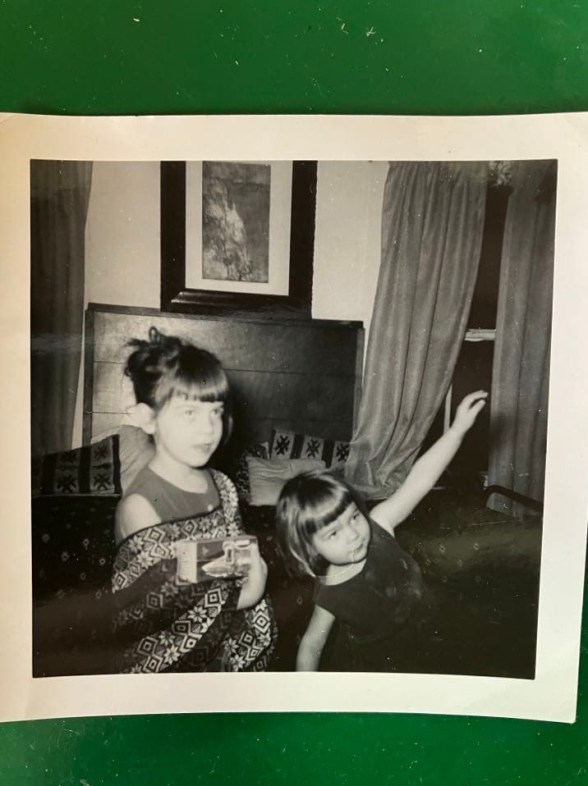
The photograph is me and my sister, in about 1967ish. I do not know who took it.

As I was going to Washington, DC

As I was going to Washington, DC

I met insurance CEOs who said “Whee”!

500 Insurance CEOs said Weeee!

Have ten insurance plans EEEEEach!

Every plan has it’s own website!

Every plan is different, password for each site!

Every plan refuses coverage for different treatments, right?

Every plan demands prior authorization, doctor’s office up all night

If they refuse chemotherapy the doctor has to fight?

Prior auths, treatments, passwords, plans

Insurance companies, all those demands

As I was going to DC

How many passwords will I need?

______________________

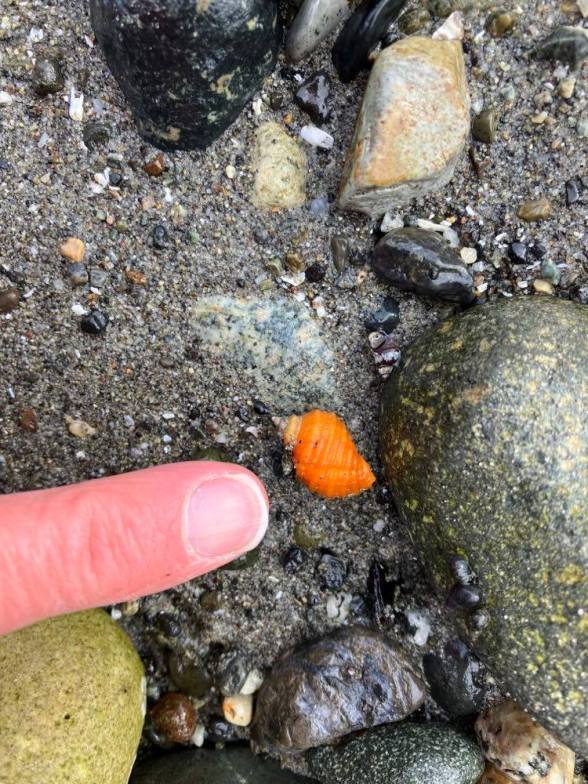
For the Ragtag Daily Prompt: snail.

I was pricing health insurance in case I get well enough to work more. I can get an $800 a month with a $8000 deductible or a $1435 a month with a $2000 deductible. I would very much like to work part time treating Long Covid. But, ironically enough, looks like I can’t afford health insurance. It costs more than the malpractice would. Ironic, huh? It’s not like we need doctors. (I do not have a medical release yet anyhow, but time to do research. It’s making me gloomy.)

You know, if we do get Artificial Intelligence, it will take one look at the United States Medical non-system, decide we are insane, and wipe us out.

And honestly, when I was working for the hospital clinics, I thought the most brilliant person in our office was the woman who could extract a prior authorization from so many insurance companies. I would send the referral to print and half the time she would have it authorized by the time the patient got to the front desk. And why do we waste all that brilliance on giving health insurance companies a profit of 20 cents out of every dollar? That is $20,000,000 out of $100,000,000. Looks worse with bigger numbers, doesn’t it?

Physicians for a National Healthcare Program: https://pnhp.org/.

Keep it simple

Sometimes I just despair as I read new guidelines. Don’t you? Maybe you are not a physician and don’t try to keep all of this impossible stuff in your head. Mine is full. Tilt.

Diabetes alone: if someone has type II diabetes, there are specific blood pressure guidelines, cholesterol guidelines, we are to do a hgbA1C lab test every six months minimum and more often if they are out of control, and a urine microalbumin/creatinine ratio yearly. If that starts being abnormal we are to start one of two classes of blood pressure medicines even if they have normal blood pressure.

Oh, and don’t forget: a yearly eye test and we are supposed to check their feet at EVERY visit to make sure they are not getting diabetic ulcers.

Got that? And that is just type II diabetes. And there are a whole raft of medicines, about forty right now. Some are weekly shots, some are daily tablets, some are twice a day or with every meal and they all have their own side effects, how fun. Check drug interactions, are their kidneys ok? Is their liver ok? Diabetes increases the risk of heart attack and stroke and don’t forget those feet.

Diabetes is one of the most complicated sets of guidelines, but there are a rather appalling number of guidelines. Maybe we should sic an AI on that job: Mr. Smith has type II diabetes poorly controlled, hypertension, erectile dysfunction, feels a little short of breath and has a bruise on his left shin after tripping yesterday. Please, AI, organize a twenty minute visit to cover as many things as possible efficiently and have the note finished and followup arranged by the end of it. Then it turns out that what Mr. Smith really wants to talk about is his niece who has just overdosed and nearly died from heroin, so everything else goes out the window. Maybe I should see him weekly for the next month.

Do you want to keep it simple and stay out of the doctor’s office and more importantly out of the hospital? If you are 25 and healthy, you don’t much care because old is unimaginable.

But there is a very nice study that looked at just five things regarding health, over 28 years for men and 34 for women: “The researchers looked at NHS and HPFS data on diet, physical activity, body weight, smoking, and alcohol consumption that had been collected from regularly administered, validated questionnaires.”

Here is an article about the study: https://www.health.harvard.edu/blog/healthy-lifestyle-5-keys-to-a-longer-life-2018070514186

Here is the study: https://www.ahajournals.org/doi/10.1161/CIRCULATIONAHA.117.032047

So let’s break the five things down. Here are the more formal definitions: “Using data from the Nurses’ Health Study (1980–2014; n=78 865) and the Health Professionals Follow-up Study (1986–2014, n=44 354), we defined 5 low-risk lifestyle factors as never smoking, body mass index of 18.5 to 24.9 kg/m2, β‰₯30 min/d of moderate to vigorous physical activity, moderate alcohol intake, and a high diet quality score (upper 40%), and estimated hazard ratios for the association of total lifestyle score (0–5 scale) with mortality.”

First: never smoking. I would add never vaping and not living in a cave and burning wood and hopefully not living right next to a 12 lane superhighway, all of which are bad for the lungs. Ok, while we are at it, don’t use methamphetamines or heroin or cocaine or krocodil, right? They didn’t even include those in the study.

Second: Body mass index 18.5-25. If you aren’t there, it is diet and exercise that need to change.

Third: Thirty minutes or more per day of moderate to vigorous physical activity. That can be ten minute intervals. Three can have an enormous effect on number two.

Fourth: moderate alcohol intake. Ok, alcohol is bad for the heart, period. So is tobacco. They defined moderate as less than or equal to “5 to 15 g/d for women and 5 to 30 g/d for men”. Let’s do the math: a 12 ounce beer that is 5% has 14gm of alcohol. Here: https://www.niaaa.nih.gov/alcohols-effects-health/overview-alcohol-consumption/what-standard-drink. The 8.9% 16 ounce beer at our local pub has quite a bit more. Here is a website where you can calculate how much alcohol is in a drink: https://www.rethinkingdrinking.niaaa.nih.gov/Tools/Calculators/Cocktail-Calculator.aspx.

Fifth: Diet. There is an overwhelming amount of confusing information on the internet and some of it is not only confusing but wrong. “Diet quality in the NHS, HPFS, and NHANES was assessed with the Alternate Healthy Eating Index score (Methods in the online-only Data Supplement), which is strongly associated with the onset of cardiometabolic disease in the general population.” I have not assessed my own Alternate Healthy Eating Index score. However, there are a couple very straightforward things that help with diet. First: No sweetened drinks. That means that sugary coffee with the syrup should go. I quit drinking mochas when I read that a 12 ounce one has 62 grams of carbohydrate. I would rather have a small dark chocolate. And sodas are just evil and juice not much better. Eat the fruit instead. Second: eat vegetables, every meal. A fruit is not a vegetable and no, potato chips don’t count. I mean a green or yellow or red vegetable. You can saute any vegetable, or any that I can think of. I am not counting grains as a vegetable, so pasta, pizza, potato chips and so forth do not count. Beans do count. Third: the DASH diet recommends only a tablespoon of sweetener per day. That is not very much. You can make that cheesecake slice last a week! A small piece of dark chocolate daily or tablespoon size chunk of that cheesecake.

I had a diabetic patient who would be fine, fine, fine, then out of control. “WHAT are you eating? And drinking?” The first time it was two 16 ounce Mochas a day. Then he was fine for a year and a half. Then labs went haywire again. “What are you drinking?” “Well,” he said, not wanting to admit it, “Ok, I decided to try Caramel Machiattos.” “No, no, no! You can’t do that! You’ll end up on insulin!” “Ok, ok, got it, got it.”

And what is the difference if I try to do those five things, you ask, skeptical. “We estimated that the life expectancy at age 50 years was 29.0 years (95% CI, 28.3–29.8) for women and 25.5 years (95% CI, 24.7–26.2) for men who adopted zero low-risk lifestyle factors. In contrast, for those who adopted all 5 low-risk factors, we projected a life expectancy at age 50 years of 43.1 years (95% CI, 41.3–44.9) for women and 37.6 years (95% CI, 35.8–39.4) for men.The projected life expectancy at age 50 years was on average 14.0 years (95% CI, 11.8–16.2) longer among female Americans with 5 low-risk factors compared with those with zero low-risk factors; for men, the difference was 12.2 years (95% CI, 10.1–14.2).”

____________________

I took the photograph from Marrowstone Island. What does a healthy seal diet look like? I am so lucky to have miles of beach to hike, as long as I watch the tides and don’t mind rain.

Shame and anger in overuse illnesses

“amongst those who treat addicts of any kind generally agree that anger and shame help no one and is actively counter-productive.”*

Wait.

I have to think about that statement.

I do not agree at all.

Ok, for the physician/ARNP/PAC, anger at the patient and shaming the patient are not good practice, don’t work, and could make them worse. BUT anger and shame come up.

In many patients.

Sometimes it goes like this with opioid overuse: the person shows up, gets on buprenorphine, and is clean.

It may be a long time since they have been “clean”.

One young man wants to know WHY I am treating him as an opioid overuse patient. “Why are you treating me like an addict?”

I try to be patient. I recommended that he go inpatient, because I don’t think we will cut through the denial outpatient. Very high risk of relapse. “You have been buying oxycodone on the street for more than ten years.”

“I’ve been buying it for back pain, not to party.”

“Did you ever see a doctor about the back pain?”

“Well, no.”

“Buying it illegally is one of the criteria of opiate overuse.”

“But I’m not an addict! I’ve never tried heroin! I have never used needles!”

“We can go through the criteria again.”

He shakes his head.

He is in denial. He is fine. He doesn’t need inpatient. He is super confident, gets work again, is super proud.

And then angry. “My family still won’t talk to me!”

“Um, yes.”

“I’m clean. I’m going to the stupid AA/NA groups! Though I don’t need to. I’m fine!”

“What have you noticed at the groups?”

“What a bunch of liars!” he says, angry. “There are people court ordered there and they are still using! I can tell. They are lying through their teeth!”

“Obvious, huh?”

“Yeah!”

“Did you ever lie while you were taking the oxycodone?”

Now he ducks his head and looks down. “Well, maybe. A little.”

“Do you think your family and friends could tell?”

He glances up at me and away. “Maybe.”

“Your family may be angry and may have trouble trusting you for a while.”

“But I’ve been clean for four months!”

“How many years did you tell untruths?”

“Well.”

Shame and anger. Anger from the family and old friends, who have heard the story before, who are not inclined to trust, who are hurt and sad. The first hurdle is getting clean, but that is only the first one. Repairing relationships takes time and some people may refuse and they have that right! Sometimes patients are shocked that now that they are clean, a relationship can’t be repaired. Or that it may take years to repair. My overuse folks are not exactly used to being patient. And sometimes as they realize how upset the family and friends are, they are very ashamed. And some are very sad, at years lost, and friendships, and loved ones. I have had at least one person disappear, to relapse, after describing introducing someone else to heroin. He died about two years later, in his forties.

Shame and anger definitely come up in overuse illness.

The above is not a single patient, but cobbled together from more than one.

______________________

*from an essay titled “F—ing yes, I’m a fatphobe” on everything2.com. Today there are two with that title. The quotation is from the second essay.

If it don’t fit, don’t force it

Templates in primary care medicine suck.

Why? The problem with templates in primary care medicine is they focus on getting a specific list of questions answered for something like ear pain or back pain. They miss the weird stuff. They miss the outliers.

I hated the templates when we got our first electronic record in the early 2000s. The doctors who liked computers spent a year picking the system. Then they trained all the clinics for one week and we all went live. One of the biggest problems was that they liked computers and talked the language. We didn’t. We quit asking questions within a week, because when we asked a question it 1. Was a user problem and 2. They treated us like we were stupid and 3. They answered in Geek, which we did not understand.

We quit asking questions. The nurses and I all filed for workman’s comp because our shoulders locked up. Our shoulders hurt. We figured out how to get the stupid thing to work. Every doctor and nurse and PAC and nurse practitioner worked to figure it out on our own.

Two years later, they set up some standards for use. We resisted again, because they gave us orders in Geek and anyhow, we had no respect for them and we didn’t care. Change what we were doing? After no support for two years? Good luck!

It took me two years and three months to get the system to write what I considered a good clinic note. I had contacted an outside specialist three months in and asked how our notes were.

“You want me to be honest?” he said.

“Yes.”

“They suck. They are useless.”

“That’s what I thought.” I went on fighting the system and hating it. I won, eventually. Parts of my note continued to suck, but I figured out how to work around the stupid templates and put in some REAL information.

Now wait, you say, is the template totally useless?

In some situations, like emergency rooms, it may be very useful. It helps keep a harried ER team with four people from a car wreck from missing something. And if you are an ENT, otolaryngologist, you do see a lot of ear and mouth and throat things, so templates may help. But I think they are terrible for primary care.

They are good for billing, though. If you have all the boxes checked, the insurance company pays, and you can move on to the next victim. The insurance companies pay more if you see more people in a day. That is why our administration said, “See people for one thing per visit.”

However, that is not ethical. Say it is a 70 year old diabetic with atrial fibrillation on coumadin with a bladder infection. You cannot just say bladder infection and slap them on sulfa. For one thing sulfa screws up the coumadin and puts them at risk for bleeding. For a second, diabetes can affect kidney function and so can age and you have to adjust antibiotic dose for lower kidney function. For a third, if their glucose levels are out of control, the infection may not be controlled by an antibiotic. It’s not one thing. And the average patient has 4 chronic disorders in a study way back in the early 2000s. That means some people have none, some people have eight or more and most people have 3-5. Hypertension, diabetes, toe fungus, chronic shoulder pain, heart disease, the list goes on and on.

In any visit, I am alert for the things the DON’T fit. One time I am doing a new patient visit for back pain and note that she is hoarse. I bug her about the hoarseness. She admits it is continuous and has been there for two months. I do two referrals, because continuous hoarseness can be laryngeal cancer.

When she returns, she thanks me. She has vocal cord polyps, not cancer, but needs laser surgery. “You didn’t have to do that but you did.” she says. And do I feel good about not ignoring it? The visit went over time, but I’d rather go over time than miss laryngeal cancer, right?

We were taught to let the patient talk. Open ended questions. They’ve done studies that doctors cut people off from telling their stories very very quickly. If you let people talk, sometimes they say something that doesn’t fit the template, and we have to pay attention. Sometimes a comment or a couple comments are the clue, the key, the thing that doesn’t fit. Don’t force it into the template. Pay attention instead.

_______________________

The very serious group of people is a county medical meeting, 2014.

Long Covid healing crash

I have a friend with Long Covid. Eight months now.

My friend describes blood sugar crashes. She does not have diabetes and was tested before Covid. She has not been tested again.

“Sometimes I eat dinner, feel better, and then an hour later I feel terrible again. I have to eat again. And I ate extra in November and all that happened is I gained ten pounds. So eating extra doesn’t work.”

I suspect that as the clue: the feeling terrible an hour after she eats.

I call her the next day: “Spread the carbohydrates out. It could be that your body is producing too much insulin, storing the glucose and carbohydrates, and then your blood sugar gets too low. That can happen early in type 2 diabetes, but this could also be a healing mode.”

I write about carbohydrates to her. Anything that is not a fat or a protein is a carbohydrate. So all the grains and all the vegetables and fruits have carbohydrates, sugars. Glucose, fructose, maltose, lactose. Milk products contain lactose, but also fat and protein. Avocados are weird fruit and mostly fat. Sugar beets and peas are high sugar vegetables. A small apple is 15 grams of carbohydrate and a large one is 30. A tablespoon of sugar is also 15 grams of carbohydrate. A coke had 32 grams and a Starbuck’s mocha has over 60 grams. I quit drinking them when I looked that up. Empty calories.

A cup of kale has only 7 grams of carbohydrate for our bodies. The rest is fiber that we can’t break down into sugars. Fiber doesn’t raise our blood sugar. I wonder about cows with their four stomachs: they can break grass down into food and we can’t.

At any rate, my friend is going to try 3-4 meals a day with only 30-45 grams of carbohydrate and three snacks, at 15-30. This is an athlete and young. Most of my patients were closer to 70, so would need to do the lower end of those numbers.

I had crashes after my second and third pneumonias in 2012 and 2014. Strep A pneumonia and strep throat of the muscles. It hurt, like all over Strep A. After the 2014 one, it was six months before I could go back to work. When I did, it was exhausting. I was only seeing 3-5 patients a day at first and could barely do that. I ate one meal a day because food crashed me. As soon as I ate I went to sleep. My MD did not believe me. I saw a naturopath too. She claimed it was a food allergy and I said, “I don’t think so. I think it is a healing crash. I think my body is doing a ton of repair work and wants me asleep and not moving much.” Over the next six months it slowly improved. I went to 2 meals a day. Since then I really do not eat until I have been up for 4-6 hours. Expect tea with milk. And yes, I am getting a little nutrition through the milk, fat and protein and lactose.

I had one patient who said eating made her faint. I didn’t know what to do, but she was in the ICU, ate lunch and then fainted into her tray. The nurse was standing right there and immediately did a blood sugar and called me. Her blood sugar was in the low normal range. We transferred her to Virginia Mason in Seattle. She came back with a diagnosis that seemed pretty much like hand waving. Idiopathic (meaning the doctors dunno why) central (ok, brain) something syndrome, which meant yeah, she faints after she eats and doesn’t have diabetes and that is weird.

I am reading about similar neurological symptoms with Long Covid and also POTS: postural orthostatic tachycardia syndrome. This translates to heart rate goes faster than it should when the person stands up. Again, the cause is not clear and it’s not clear how to fix it.

Once an older patient went to the neurologist to discuss getting dizzy when she stood up. She returned grumpy. “He said that I just have to stand up slowly because I am 80. I don’t feel like I’m 80. I want to hop out of bed like I always have. But if I do, I nearly faint.” Her body was taking longer to equilibrate blood pressure after she stood up. The neurologist said no medicine: stand up slower. She grumpily complied.

I told my friend that maybe the pancrease is stressed and producing too much insulin. To store food. But another possibility is that her body wants her to lie down and rest so that it can do healing work after eating. This would make any young person impatient, but sometimes we have to listen to our bodies. I have learned THAT the hard way.

Blessings.

__________________

The photograph is of a Barbie ambulance/clinic. It does have a gurney, but the back opens up to be a fairly well appointed clinic, with lots of details, including a television in the waiting room. Today the doctor has wings. Fairy? Angel? We are not really sure.