Adverse Childhood Experiences 14: Hope

I keep reading bits about despair and about how a generation of children is being “ruined” by the pandemic.

Not so, I say. There is hope. We need to support each other to survive and then to thrive.

This generation WILL have a higher than average ACE score. If the Adverse Childhood Experience scale is from zero to eight, children in this time period will have at least one higher point than average and many will have three or four or more. Loss of a parent, a sibling, beloved grandparents during covid. Increases in domestic violence, child abuse and addiction. These are all part of the ACE score.

What does this do to children? They have survival brain wiring. They will do their best to survive what is happening. A friend and I both have high ACE scores, 5 or more, and we are both oppositional defiant. We showed this in different ways. He grew up in the same community. He escaped from home and knew all the neighbors. He walked to the local church and attended at age 3 or 4. He has lived in this community all his life.

His oppositional defiance showed up at home, where he consistently refused to obey. And in school, where he confounded and disobeyed teachers and passed anyhow.

My family moved every 1-5 years. I hated moving. I wouldn’t talk to kids in a new school for a year. It was very difficult. So my oppositional defiance was very very internal. I hid in books and in my head. In 6th grade I got in trouble for hiding novels inside the school book I’d already read. I also would just not listen and my respect for the teacher got even lower when she would be angry that I knew the answer to the question once she’d repeated it. I wasn’t listening because I was bored. She was the first teacher that I thought, well, she is not very bright. The next year they stuck me in the honors class and I stopped being bored, though I still questioned practically every opinion every teacher had. I wanted evidence and I did not believe it just because the teacher said it.

I am not saying that oppositional defiance is in every high ACE score. I don’t know that. Why oppositional defiance? Imagine you are a small child and you are beaten. There isn’t rhyme or reason. You can’t predict when the adult will be out of control. Why would you behave “well” if it makes no difference? You might as well do what you want, because nothing you do will change the adult. Or imagine you are a small child who is with one person, passed to another, then to another. You may not exactly trust adults after two or three repetitions. And you want to survive.

There is an increase in addictions, behavioral health diagnoses, and chronic illness in adults with a high ACE score. A researcher when I first heard a lecture about it said, “We think perhaps that addiction is a form of self medication.” I thought, oh, my gosh, how are we ever going to treat THIS? Well, we have to figure that out now, and we’ve had 30 years to work on it.

I was very comfortable with the oppositional defiant patients in clinic. I got very good at not arguing with them and not taking their behavior personally. They might show up all spiky and hostile and I might be a little spiky and gruff back: sometimes that was enough. I think the high ACE score people often recognize each other at some level, though not always a conscious one. With some people I might bring up ACE scores and ask about their childhood. Sometimes they wanted to discuss it. Sometimes they didn’t. Either was ok.

One thing we should NOT do is insist that everyone be “nice”. We had a temporary doctor who told us her story. Her family escaped Southeast Asia in a boat. They had run out of water and were going to die when they were found by pirates. The pirates gave them water. They made it to land and were in a refugee camp for eight years or so. She eventually made it to the US. She was deemed too “undiplomatic” for our rural hospital. I wondered if people would have said that if they knew her history and what she had been through. It’s not exactly a Leave it to Beaver childhood, is it? When she was telling us about nearly dying of thirst in the boat, my daughter left her chair and climbed on my lap. She was under ten and understood that this was a true and very frightening story.

We can support this generation of children. This has been and is still being Adverse Experiences for adults as well. Family deaths, job loss, failure of jobs to support people, inflation. Remember the 1920s, after World War I and the last pandemic, of influenza. “On October 28, 1919, Congress passed the National Prohibition Act, also known as the Volstead Act, which provided enabling legislation to implement the 18th Amendment.” (wikipedia). There were forces trying to legislate behavior, as there are now. The result in 1920s of making alcohol illegal was speakeasies, illegal alcohol, and violence. Some people acted wild after WWI and the influenza pandemic and some people tried to lock down control, by controlling other peoples’ behavior. It did not work then and it will not work now. The wildness is out of control grief, I think, grief dysfunctional and drinking and shooting and doing anything and everything, legal or not. We remember how the 1920s ended too. Let us not repeat that. Let us mourn and grieve and support each other and support each other’s decisions and autonomy.

Blessings.

Adverse Childhood Experiences 13: on gratitude

I saw a meme today about gratitude. It is saying that some people look at a garden and see thorns and weeds, but others see the roses. That we need to have gratitude. I think this is simplistic and papers over the trauma and grief that some people have. If they have endured a highly traumatic childhood, who am I to say they should focus on the roses? They may have a very good reason to see if there is something like a thorn that can hurt them before enjoying the roses.

I work with many patients with high Adverse Childhood Experience scores and mine is high too. I don’t tell my patients that they should have gratitude. I tell them “You survived your childhood. You have crisis wiring. Good for you. Some of your learned crisis survival wiring may not serve you as well now as it did when you were a child.” Then we discuss whether they want to work on any aspects and the many many different approaches. One example: a man who sleeps very lightly. He said that it was lifelong. When asked about his childhood he says, “We would have to leave in the night when there was shooting in my neighborhood. It was a very dangerous area.” I said, “I am not surprised you sleep lightly. You HAD to in childhood to survive. Is this something you want to try and change?” He thought about it and decided, no. Once it was framed as learned in childhood to survive, he stopped worrying about “normal”. He was satisfied that the way he slept was “normal” for him and he wanted to wake up if he heard shooting.

I think we have to ask why a person sees thorns and weeds in a garden before we judge them. My first thought with a new and angry or hostile patient is always, oh, they have been badly hurt in the past. What happened? I don’t worry that the anger is at me. I know it’s not at me, it’s at the system or a past physician or a past event. Under the anger there are other emotions, usually fear or humiliation or grief. I have brought up Adverse Childhood Experience scores on the first visit sometimes. One person replies, “I am a 10 out of 10.” The score only goes up to 8 but I agree. He was a 10. He stated once, “The military loved me because I could go from zero to 60 in one minute.” Very very defensive and very quick to respond. The response may seem extreme and inappropriate to other people: but it may feel like the only safe way to be to my patient.

I grew up hiding any grief or fear in my family, under anger, because grief or fear would be made into a story told for laughs. In college, a boyfriend told me I was an ogre when I was angry. I started working on it then and it was difficult to tame that. The person who took the longest was my sister: she could make me explode until I was in my residency. Medical training was excellent for learning emotional control, at least, on the surface. After my mother died, I had to do the next piece of emotional work: open the Pandora’s Box of stuffed emotions, mostly fear and grief, and let them out. It was such hard work that my day where I saw the counselor for an hour was harder than my ten hour clinic day. I did the work, for two long years. Blessings on the counselors who stood by me while I worked through it.

I do not think we are ever done with that sort of work. I think, what do I need to learn next? What is this friend teaching me? Why is this behavior frustrating me and I have to look in my inner mirror. Why, why, why?

Blessing on your healing path and may you not be judged.

Link about ACE scores: https://www.cdc.gov/violenceprevention/aces/about.html

Sometimes I do feel like a fossil, now that I am middle aged. For the Ragtag Daily Prompt: fossil.

rural doctoring

I read Grampa’s Solo Visits this am and it makes me laugh.

Since I have been a family doctor in my town of 9000 for 22 years, the grocery store and coffee shops can be interesting. When I moved here, my daughter was two and my son was seven. We have three grocery stores. I usually go to the one 7 blocks from my house. I would see patients. My diabetics would sometimes look guilty and scurry away when they saw me. Another patient comes to peer in my cart.

“I want to know if YOU are eating healthy food.” he says.

I laugh.

“I don’t see any vegetables.” he says.

“I am in a CSA,” I say. “I get a box from the farm once a week.”

He frowns. “Do you get to choose?”

“No,” I say. “But since I hate throwing vegetables out, we eat more vegetables. Also, we eat ones that are unfamiliar. The first time I got celery root, I had to look it up. I didn’t know what it was.”

He nods. “Hmmm. Ok. We want to be sure you practice what you preach.”

I laugh again. “I sneak in to get the ice cream at midnight, ok? And where is YOUR cart?”

“My wife has it,” he says. “You don’t get to see it.”

“Ok, then. Have a great day.”

When we were first in town, occasionally someone would come start talking about their health in a store.

“I can’t discuss your health in front of my children. HIPAA.”

“Oh,” they’d say, “Uh, yeah. I should call the clinic Monday?”

“Yes, please.”

We had a coffee shop that made the best pastries that I’ve had since I was an exchange student in Denmark. I wished they’d make tiny pastries, bite size, for the diabetic folks. Those folks would slide a newspaper over their plate when I walked in with my family. They looked terribly guilty. I might nod, but I wouldn’t say anything. Sometimes they would confess at the next visit.

There are lots of jobs in small towns where people are very much public figures. Not just doctors, but the people who work for the city and the county, the ones who redo the taxes for homes, the realtors, all sorts.

After I was divorced, another doc at the hospital asks, “Dating someone new?”

I frown, “How do you know?”

She grins, “He lives on my street. I saw you.”

Dang it. The rumor mill is very very efficient and can often be fabulously wrong. That time it was correct, though I don’t think she passed it around. Other people live on the street.

A few days ago someone that looked familiar walks by me. “What are you doing with so-and-so?”

I laugh. “Rumors abound.” I say. “You would not believe the rumors!”

I took the photograph of the coyote yesterday, driving home. Stopped dead in my lane, no one else on the road. People will be stopped in the road here, talking to each other in two cars going opposite directions, or talking to a friend on foot.

Normalizing our behavioral health response

I keep seeing headlines: MENTAL HEALTH IS WORSE. TEENS ARE STRESSED. ADULTS ARE STRESSED. DRUGS AND ALCOHOL AND DOMESTIC VIOLENCE ARE UP.

Like they shouldn’t be? This isn’t news. It is expected, because we are in a pandemic, the death rate is up, people are frightened, the scientific news changes daily and now we add a war.

OF COURSE PEOPLE ARE ANXIOUS AND STRESSED. And when stress goes up, substance “overuse” goes up too. Add fenanyl to the mix and the overdose death rate is up. Should I call it the “overuse” death rate to be politically correct? I do think that it is stupid to stigmatize “overuse”. But I also do not like the term “overuse”. Addiction may be stigmatized, but to me addiction means the drug or alcohol or gambling has taken over the person’s brain and it is the addiction that is lying to the person and to me. It makes it much easier for me to watch for relapse if I think of it as the habit or substance in control. There is no stigma there: the person is deeply ill and needs help. Part of the help is recognizing relapse. I look for signs.

With behavioral health we learn to watch for signs. The latest guidelines say that we should screen for behavioral health problems at well people visits. One in ten people are depressed and the lifetime incidence is higher.

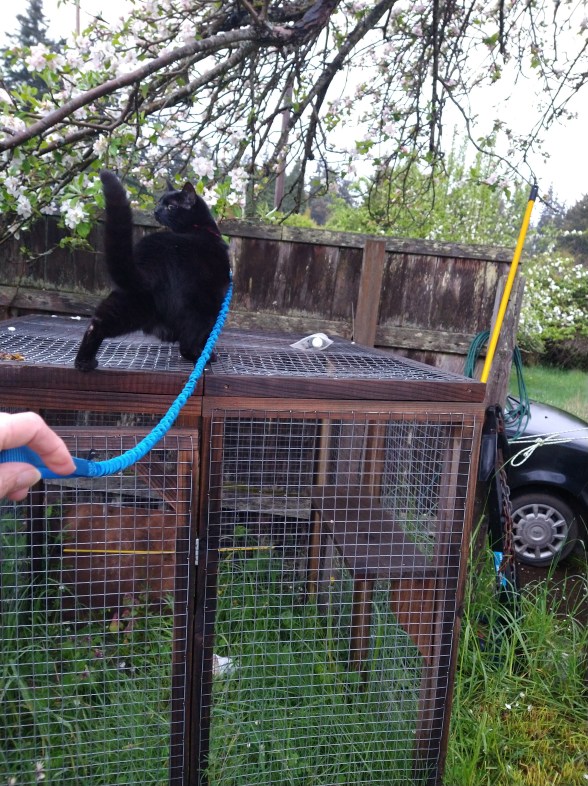
The online and news articles sound surprised that there is an increase in behavioral health problems. Why would anyone be surprised? We have evolved emotions along with logic and emotions help us to survive. If you are a child in a war zone or a family with abuse or domestic violence, your brain wires to survive the crisis as best you can. These are ACE scores, Adverse Childhood Experiences. Every child’s ACE score is going up during the pandemic. Adults can develop PTSD, depression, anxiety: of course. This is how our species survive. It isn’t FUN but it is not a disaster either. We can help each other. We can listen to each other. We may have to say “I can only listen to this for ten minutes,” and set a timer. There was a cartoon with a father with a stop watch. The daughter is complaining as fast as she can. He stops her: “There. You have had your one minute of whining today.” Limit the news if it is driving you bananas or you feel more depressed or frightened. Turn off the television: if you live in a safe place, go for a walk. I have goldfinches and pine siskins arguing with each other in my front yard. The cats are hugely entertained by this. The cats only go out with harness and leash. I may need to follow Sol Duc up trees. She leaped on top of the outdoor cat cage yesterday, four feet up. I was surprised. No wonder they can catch birds: from a stand to four feet up and she is about ten months old. And see? We are distracted by the cat and relax a little.

If you are not trying to escape a war zone or something else horrible, give yourself the gentle gifts: things that make you relax. Stupid cat videos, old music, reread a beloved book, a gentle walk outside. Yesterday I “walked” Elwha. He spent the whole walk sitting on the porch watching the birds. Two birds landed in the grass and he immediately morphed to hunter, but was still on a leash. I saw a pair of robins in the back yard. One was holding something in her beak. A gift for the other? Nest building? Nestlings already?

My other go to is the trees. I go lean on a tree when I feel overwhelmed. The trees do not seem to mind. Rocks don’t either and I am very grateful.

Blessings.

Our rhododendrons are blooming.

#ACE scores #behavioral health #emotion #fear #normal emotional response

Stages of Peace Playlist I

Dang, I’ve got a lot of stages. So it is a long playlist! I can’t complain (yes I can), after all, I wrote the stages. Hmm, to work, to work, to play, to PEACE.

Twisting words- The Grass is Blue – Dolly Parton

Confusion- Get it Worked On -Delbert McClinton

Denial- Old Number 7- The Devil Makes Three

Bargaining – Gallows Pole- Alvin Youngblood Hart

Anger- Joanne Little- Sweet Honey in the Rock

Bitterness -The Wound That Never Heals – Jim White

Revenge -Silver Dagger- Dolly Parton

Acting Out – Pills I Took- Hank Williams III

Oppositional Defiance- All Hail- The Devil Makes Three

Grief -Days Like These – Over the Rhine

Acceptance- In my time of dying – Alvin Youngblood Hart

Forgiveness -Jesus on the Mainline – Mississippi Fred McDowell

Healing- I be your water- Sweet Honey in the Rock

Hope – So Glad I’m Here- Sweet Honey in the Rock

Reconciliation – You are loved, Victoria Williams

Peace – Everybody Ought to Know (and) Redemption Song- Sweet Honey in the Rock

S is for Shame

I am reading Kim Addonizio’s Ordinary Genius for a Centrum poetry class.

She challenges white poets: why don’t you write about racisim?

I write that we are afraid. I think it is more than that: it is shame. Thinking about her words, I thought about one of my mother’s pieces of art and how it makes me uncomfortable. And that my discomfort with it is new. I wrote this poem.

Race forward

Kim Addonizio asks
Why don’t white poets write about race?

Chickenshits, I think.
Afraid. We are afraid.
My mother called one color Nigger Pink.
She says, “It’s the color that only looks good on black people.”
She looks wicked as she says it and I know that I never should.
She didn’t think she was racist nor a feminist.

One time she says, “Maybe I am a feminist.”
“Why do you say that?” I ask.
“We had a group of women who went to plant trees. None of them could dig a hole.”
“Oh,” I say.
“They didn’t know how to use a shovel!”

She might be horrified how many high school graduates today would call a spade a shovel.

A mentor art teacher says, “Stop being small,” to her. “Get bigger.”
She starts pastel portraits, larger than life.
One that I love is titled “One Fist of Iron.”
Now: don’t lie. What race do you think the person is? And what gender?

Did you guess correctly?
African American and male.

Another friend tells me he is trying to get his father to stop calling Brazil nuts nigger toes.
My mother told me that term too.
And that it was unacceptable.
At my friend’s father’s birthday, I focus my camera on the birthday man.
He holds a bowl of nuts. He says to himself, “I will now eat a politically incorrect nut.” and the camera clicks. I love this photograph because he is 90 and white and reluctantly changing his wicked words.

My mother says there might be hope when a small black child trick or treats her house in black face, in Alexandria, Virginia, in the 1990s.

I think there IS hope, even though the race seems slow and painful and there is so much anger
Look in the mirror, white poets.
And write the words.

One Fist of Iron, by Helen Burling Ottaway

The photograph at the beginning of this is not my mother. It is her mother’s mother, Mary Robbins White. I have pictures of five generations of women with that serious expression. She was the wife of George White, the Congregationalist Minister who was president of Anatolia College in Turkey. They and my grandmother and siblings were escorted to the Turkish border in 1916. George White and his wife were two of the main witnesses of the genocide of the Armenians in Turkey.

Let us not stand by and witness more genocides.

ATOZBLOGGINGCHALLENGE2022 #art #Women artists #Helen Burling Ottaway #ATOZCHALLENGE #APRILATOZ

For more information about the #AtoZChallenge, check out this link.

Playlist: Stages of Grief 3

Stages of Grief Playlist 3

All women all the time today. Grieving for their men or our culture. Fighting back.

Denial

Dolly Parton: The Grass is Blue

Bargaining

Ann Peebles: I can’t stand the rain

Anger

Lily Allen: Not Fair

Acting Out/Fighting Back

Sweet Honey in the Rock: Give Your Hands to Struggle

Revenge

Dolly Parton: Silver Dagger

Grief

Tricia Walker: The Heart of Dixie

Acceptance

Bessie Smith: You been a good old wagon

playing telephone

If they whisper from one end to the other, does it get garbled before it reaches the other end?

Isn’t gossip a sin?

For the Ragtag Daily Prompt: chaos.

first impressions

I am taking a writing class and our next book is on cultural appropriation.

This interests me. I tend to be a little gender blind and race blind when I meet people. I am using my super skill instead. My skill is developed from a really scary childhood: I read the stuffed emotions. The stuff people are hiding.

No way, you say. Oh, yes, I say.

My sister described coming home from high school and stopping when she walked into the house. She was trying to sense what was going on. Were our parents fighting? Was our father drunk? Yes, he was drunk, but which stage?

We talked about the stages and which we hated most.

Stage goofy/silly was annoying but not toxic. We said we had homework.

Stage asleep in a fetal ball in the upstairs hallway. My sister said she would step over him to get to her room.

Stage maudlin. We both agreed this was the worst. He would cry and say, “You can tell me anything.” Once he caught me in that stage and I was in tears by the time my mother got home. I left the room. The next morning mother said, “He said you two were discussing the cat’s disappearance.” I didn’t answer. We never said a word about the cat. I didn’t know if he was lying or was too drunk to remember it the next day, so made it up. Don’t care. Avoid.

He was never physically abusive. He and my mother would scream at each other at 1 or 2 am through most of high school. Reading her diaries, she writes that she drinks too much. I think they were both alcoholics, thought the family story is that he was the bad one. But I can’t imagine yelling with a drunk at 1 or 2 am for an hour. What is the point? They are drunk. So either she was drunk too or needed to fight.

Emotionally abusive, yes, both parents. My mother would take any show of fear or grief and tell it as a very very funny story to every person she ran into. Is it any surprise that I had to go into therapy after she died to learn to feel fear or grief? My sister would say, “She’s got her stone face on,” about me. Um, yeah, I am NOT going to let my family see my emotions…

Anyhow, that is what I read in people when I first meet them. It’s not the suit, the clothes, the make up, the race, the gender. I pretty much ignore those. I was fashion blind in junior high, a girl geek, could not read the code and did not care. I had given up on socializing with my fellow students. I was hopelessly bad at it. I did a lot better with the adults around my parents. I could have actual conversations with them.

I had one patient who was transgender where I couldn’t remember which direction. I didn’t care, either. That was a really angry person. Anger is always covering other emotions, so I avoided pronouns and tried to be as gentle as possible.

I complained to a counselor once that I can’t turn this “off”. And that it’s fine in clinic with patients, but it screws with my relationships with my peer doctors. They do not like it if I “read” them.

It took me years, but I finally realized that I have to use my clinic skills with everyone. I can’t turn off “reading” any more than you turn off your eyes when you meet a new person. But I can be as gentle with everyone as I am in clinic. I realized that as I started on a trip and the trip was amazing, everyone was so nice.

This reading is a product of a high ACE Score: Adverse Childhood Experiences. I score about a 5. One of my patients set off my ACE alarms on the first visit. I asked if he had had a rough childhood and gave a very short explanation of ACE scores. “Oh, I am a ten out of ten,” he said. He was, too. Ran away from home at age 6 or 8.

The ACE scores of all the children are rising from the last two years. The war will raise them even more, worse for the children there and the kids trying not to starve in Afganistan and Syria and world wide.

It will be interesting to read about cultural appropriation. But I don’t care much: I don’t “see” those things when I meet someone.

Hugs and blessings.

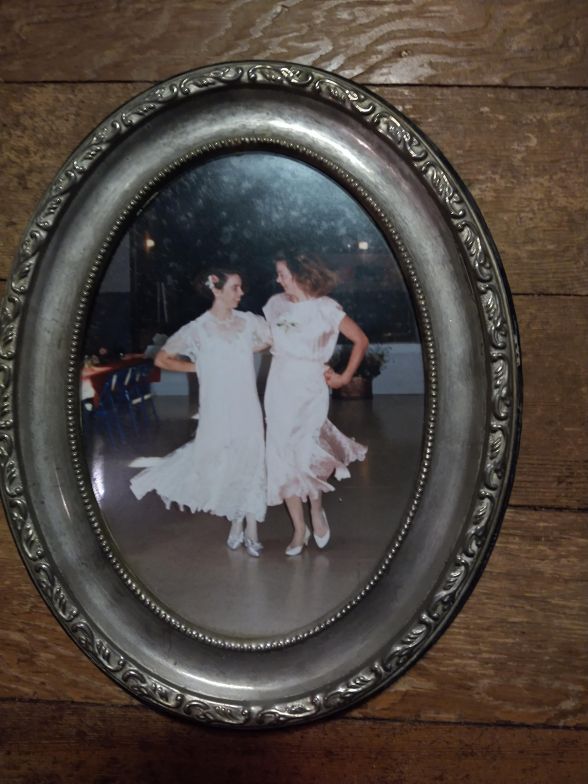
The photograph is me and my sister Chris in 1987, before my wedding. We were dancing before the wedding. She died in 2012 after 7 years of breast cancer.

Doctors and nurses and hospital staff are the last caregivers for the elderly alcoholics and addicts who are alone, whose families have finally cut them off. I think this song illustrates their pain. We try to take care of them.