Hormones and rabbit holes

Medicine is confusing right now. Ok, it is always confusing because we try to base it on science and science is always changing. There are always special areas that are currently a mess. Hormones!

I speak to a patient recently who is female, premenopausal, and is getting hormone replacement therapy for hot flushes and not sleeping well from an outside source. The person wants me to order hormone tests. I do order hormone tests but not the ones she has in mind. I test a TSH, thyroid stimulating hormone, to see if she is low or high in thyroid.

She is thinking of me testing estrogen and progesterone and other related hormone levels. The party line from gynecology MDs and DOs is that these are not useful tests because women’s hormone levels are so varible. However, there are lots of naturopaths out there and functional medicine MDs and DOs who will test levels. Why is the patient asking ME to test them? Most of those naturopaths and functional medicine providers do not take insurance and charge cash. Also, insurance may not pay for them anyhow because the party line is that they aren’t useful. Why would the cash providers check levels? One reason is CASH. Another is to prescribe “bioequivalent hormone replacement”. Sounds natural, right? Well, the natural thing was for the hormones to stop at menopause and all of the hormones are either made in a laboratory from plant pre-estrogens or from pregnant mare urine, so bioequivalent seems to imply natural but it really isn’t. Pills do not grow on trees, they are made by humans in laboratories.

However, I question party lines, and off I go down the hormone rabbit hole. The current guidelines are that female hormone replacement, after menopause, should be lowest dose possible and only for a maximum of three years because of the increased risk of breast cancer. This doesn’t address my question: does premenopausal hormone replacement count as part of those three years? I may need to ask gynecology. I don’t think it counts. A woman is postmenopausal when she has had no periods for a year. Or had her ovaries removed. Or if she’s had a hysterectomy and still has her ovaries, a yearly follicle stimulating hormone and lutienizing hormone test. Both tests rise when the ovaries stop making hormones and eggs.

Also, there is another caveat. We know that when men are on opioids, the opioids can suppress their hormones and lower testosterone. Here is a paper: https://pubmed.ncbi.nlm.nih.gov/31511863/. Half the men studied in multiple studies had low testosterone when on chronic opioid therapy. 18429 subjects (patients) in 52 studies. That is a lot. Women studied? NONE. What? Yeah, none. Why? Here is part of the answer: about a decade ago I worked with the UW Telepain group and asked the head of the UW Pain clinic a question. “If opioids lower hormones in men, do they in women too?”

His reply, “I don’t know.”

“Have you ever tested a woman?”

“No.”

“Isn’t that sort of sexist?”

“Yes.”

So here I am, rechecking a decade later, and we still don’t know if giving women chronic opioids messes up their hormone levels. It would be more complicated and difficult to check women. We might have to do individual hormone baselines or something in premenopausal ones, say, 2 weeks after menses. Remember that for most of the history of medicine, clinical drug trials were only done in men, because, well, sexism. They said women could get pregnant. Yes, but then we gave the drugs to women who could get pregnant. Also, postmenopausal women can’t get pregnant. The whole thing seems stupid to me.

There is an interesting new finding here: https://neurosciencenews.com/estrogen-t-cells-pain-28548/ . Apparently in women, estrogen and progesterone work on receptors at the base of the spine to reduce pain signals using T cells, part of the immune system. The article says this doesn’t happen in men, but they were studying mice. The male mice didn’t seem to have worse pain after estrogen and progesterone were blocked. The female mice were in more pain. But wait, estrogen and progesterone are produced in men as a by product of making testosterone. Less than women, until menopause. Then the 70 year old man has more estrogen and progesterone than his postmenopausal wife. The article says that they don’t know why the receptors are in women and female mice (um, my intuitive guess would be childbirth and micebirth, right? Men don’t do that and women giving birth to a child after the first one sometimes say, “WHY did I want to do THIS again?” I think those receptors are so that women and mice can get through more than one pregnancy.) Now I need to read the article again because maybe men and male mice don’t have the receptors, even though they do have some estrogen and progesterone. Maybe they just don’t have enough estrogen and progesterone.

Maybe we can’t figure out women’s hormone because men aren’t smart enough, heh, heh. Yes, that is sexist right back at all those historical figures who didn’t study women.

At any rate, that still doesn’t answer my two questions: does premenopausal hormone replacement count towards the three year total beyond which hormone replacement increases the risk of breast cancer? And does chronic opioid treatment lower women’s hormone levels?

_________________

For the Ragtag Daily Prompt: hormone.

I took the photograph of a Port Townsend rabbit in 2011.

Alcohol myths

I am back working in Colorado and a recurring theme this month is alcohol and alcohol myths.

Myth: If I only drink on my days off, I am not an alcoholic. Nope. People can binge one day a week and still be an alcoholic. A standard “dose” of alcohol is 12 ounces of 5% beer, 5 ounces of standard wine or 1.5 ounces of liquor. But what if someone drinks 8% beer, 12 ounces? Well, that’s 1.6 standard drinks. An 8% 16 ounce beer? That is 1.6 times 1.3, so 2.08 drinks. Perhaps we should have an app that calculates this. And locks the car ignition when we are over the limit.

How much alcohol means that we are an alcoholic? The guidelines right now in the US say 7 drinks per week maximum for women, 14 for men, no more than one in 24 hours for women, no more than 2 in 24 hours for men and no saving it up for the weekend. Here: https://www.niaaa.nih.gov/health-professionals-communities/core-resource-on-alcohol/basics-defining-how-much-alcohol-too-much#pub-toc3. However, alcohol is bad for the liver, bad for the heart, bad for the brain, and increases cancer risk. There is not a “safe” amount.

What is binging or heavy drinking? For women—4 or more drinks on any day or 8 or more per week, For men—5 or more drinks on any day or 15 or more per week. The rate at which people drink is also part of this.

MYTH: If I don’t throw up, I’m not an alcoholic. Now that’s an interesting one. When we drink, alcohol is absorbed into the blood and goes through the liver. The liver has enzymes which break alcohol down into aldehyde. Aldehyde is a carcinogen, causes cancer. Aldehyde is broken down by other enzymes into acetate and then to carbon dioxide and water. Some people break down the aldehyde quickly, fast metabolizers. They can drink a lot and not throw up because they break the aldehyde down fast. However, the process inflames and kills liver cells. If they keep drinking, the liver slowly dies, and this is cirrhosis. Eventually they will not be able to break down alcohol fast because the liver makes the enzymes. Then they will start throwing up.

Other people make enzymes that are slower or make less, and they get sick and have alcohol poisoning more quickly. The fast metabolizers are at higher risk for cirrhosis and the slow ones for liver cancer, but they can get either.

MYTH: “My blood pressure is fine.” I spoke to a person who stated that their blood pressure was ok during pregnancy so they did not have high blood pressure. The chart shows very high blood pressure for the last three years and I didn’t look back further. I ask, “Did you stop drinking alcohol while pregnant?” “Of course.” When NOT pregnant, this person admits to 4-5 drinks a day. Also, the history in the chart states that they had blood pressure complications in pregnancy. I did not have time to go through the chart and look at that, but this person is in denial. I think of denial as the addiction taking over and the addiction lies. It lies to me but it also lies to the person. They want to believe what they say. They want everyone else to believe what they say even if it is patently a lie and ridiculous. A woman who says a friend gave her something, she didn’t know what it was, for a headache. “How did you take it?” I asked, looking at the urine dip results. “I snorted it.” “So what things do you snort for a headache?” She was positive for cocaine and pleading ignorance was ludicrous. Another person has a positive urine drug screen for multiple things. “Can I try again?” Pause. “Sure.” I say. The first one is a false sample and I am very curious to see what the real sample will have. It has nothing. He is then surprised that I won’t fill his prescription and offer inpatient drug rehabilitation. Come now, sir, you got a urine sample from a dealer when you sold the medicine I gave you for something else. Your dealer must have been annoyed or gave you the wrong sample. When someone is really out of control, they do not have convincing lies and the only person they can convince is themselves. It is interesting to watch someone be all outraged that I do not buy the story, accusing me of discrimination or hating them or hating their race or whatever. They attempt to accuse and distract. It is harder for families because they desperately want to believe their loved one, even when the evidence shouts the opposite.

What does blood pressure have to do with alcohol? Alcohol drives blood pressure up and pulse, especially when it is wearing off. Severe alcohol withdrawal is delerium tremens and people can have such high blood pressure that they have a stroke or a heart attack or encephalopathy — a poisoned brain. They can hallucinate or have seizures and it is very dangerous. “Very dangerous” means they could die or have permanent disability. Tobacco, cocaine, methamphetamines, all raise blood pressure. The number one cause of death in the United States is the heart, but it’s not just from hypertension and weight and cholesterol and inactivity. Addictive drugs have a huge contribution.

There is nothing cheap about the cost of addiction in our country.

For the Ragtag Daily Prompt: cheap.

Climbing the walls

When my father died, he left me a will written more than 40 years earlier. He and my mother and my maternal grandparents were all pack rats. It was a house and two barns and ten years worth of some mail. A mess.

After working on it for a year, I felt like I was in knots and couldn’t relax. I was quite sick of counseling and wanted to do body work instead. I found a massage person and worked with him for over a year.

On the first visit he talked to me and then had me stand and walk around. “You are head forward and your toes are gripping the floor.” “I am not!” I said, lifting my toes. He was right, though. I had to relearn how to walk for two weeks, lifting my toes up.

I went to see him once last spring, knotted up again. I thought I was much better at unknotting during the work. I asked, “So am I pretty relaxed?”

He laughed. “You’re NEVER relaxed. Your baseline is 7/10 but you notice that you are tight when you get up to a 9 or 10.” He said that relaxed was 1-3.

I was hurt and annoyed. All that work and he’d never said that and never given me tools. I tried to contact him by email but he either didn’t remember what he said or just wouldn’t deal with it.

I was grumpy.

Meanwhile in clinic, I was teaching the breathing technique to try to relax, to go from sympathetic fight or flight, to parasympathetic. Breath in for a slow count of 4 seconds, then out for a slow count of 4 seconds. I thought, well, I should do it more too. I decide that when I wake up, I will do the breathing technique.

It promptly put me back to sleep. I have used slowing my breathing to go to sleep. I also had three years in college and after where I did daily zen meditation, facing the wall, on a zafu, for forty minutes. Add my flute playing and singing in chorus for the last 24 years and I can do the count way past four. My mind, however, is a very busy place, and meditation often felt like letting a cage full of crazy monkeys out. They all wanted attention. My understanding of zen is that I am supposed to let the monkeys show up but not hold on to them, converse with them, or let them hold the floor. Return to the breath.

When we wake up, we have a cortisol burst in the morning. It gets us going. I am pretty sure that I have some adrenaline too. The slowed breathing calms that right down. According to the pain clinics, twenty minutes of slowed breathing calms almost everyone down into the parasympathetic state. I don’t think that the high Adverse Childhood Experience people are used to parasympathetic. Honestly, looking at the movies and television and video games, I think our culture is not used to it either.

The breathing in the morning is working. My neck and shoulder muscles are more relaxed (in spite of computer use). Maybe I am down to a 5/10! That would be huge progress, right?

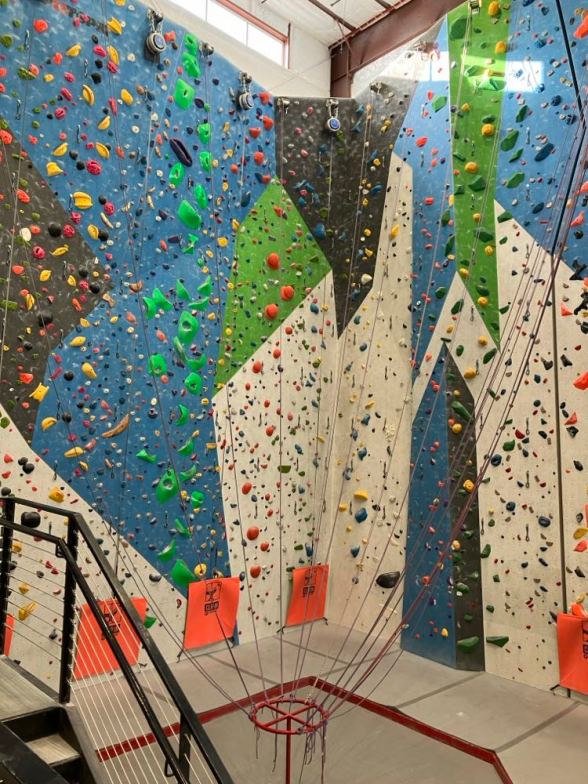
And my muscles love the climbing walls, too. Not that I am that good at it, but my muscles really like the intensity and focus. It is so different from clinic, where everything is focused on listening to the patient, typing as they talk, watching, sensing, trying to get a handle on what is happening with them. The wall is like clinic in focus, but my whole body is involved and there is lots of reaching and stretching out of that contained focus.

Sol Duc seems to be good at slow breathing. Cats go from 1/10 to 10/10 in just a heartbeat, or that’s my impression.

There is no alabaster in this house. Not a bit. Perhaps I will meditate on that.

For the Ragtag Daily Prompt: meditate and alabaster.

Covid Morph

So far I have gotten positive Covid tests on one patient a week, all with really different symptoms.

One older person who was short of breath walking, tired, coughing and loose at the other end.

One young one whose only symptom was profuse throwing up.

One with a sore throat, nasal congestion, cough and feeling fairly awful and about to go on a trip, darn it.

There isn’t a nice pattern to tell me what the local strain is doing. It can do any darn old thing. I have also seen someone with strep throat and another couple who had similar symptoms to the others but did not have Covid. It’s morphing like an AI, I swear. I am masking in clinic but so far so good.

The Ragtag Daily Prompt is essential. I think it’s pretty essential for me to wear a mask in clinic, in crowds and on airplanes, since I am quite tired of pneumonias.

I have been the only “provider”, that is, doctor, in the clinic for the last two days. The medical assistants and front desk and I are starting to work as a team. I ask the front desk person how to communicate with her from the clinic room most efficiently. Something was weird about the refill system and it kept refusing refills. On Tuesday I had over 100 “documents” in the computer “box”. Lab work, specialist reports, refill requests, x-ray reports, nursing home things, surgery reports, wound clinic, emergency room, and so forth. I am trying to skim them, but I can’t say that I will remember person A’s dermatology report after skimming 60 others. If you go to your primary care provider and have had some major medical thing recently, remind them. They may have gotten and read the note, but gosh, it’s hard to remember at 100+ per day. Right now I have not met most of the people, so it is even harder.

The photograph is just for fun, taken a few weeks ago on the trail that runs by the Colorado River. Lovely!

A yarn about paper

On Friday in the morning I took notes on paper. I was attending a conference on diabetes on Zoom. There are three new things added to the diabetes guidelines. It is now impossible to do a visit about diabetes and actually talk to the human being who has diabetes. We’ll be too busy doing the stupid checklists.

The personnel person stopped by. I said I was taking notes. “On PAPER? You are killing me!”

“Ok. I will use yarn this afternoon.” I drove home and got my knitting and worked on a sock in the afternoon. All the clinics were having a slow day. I guess the kids are getting out of school and everyone is feeling good. Or panicked.

I retain as much information knitting as I do taking notes. Tactile-auditory learner and the controlled fidgeting of knitting helps me stay awake, retain information, and produce socks and others items. I wear the socks more than I reread the notes.

I still like paper. I keep a paper journal. I wanted notes from the most complex lecture. The new medicines are jockeying for position but right now there are different indications for each one, so it’s rather confusing. They said that Type II Diabetes takes two hours daily to manage “correctly”. And that Type I and Type II on insulin take 3 or more. We are supposed to check for Diabetes Distress, which is not depression, exactly. I think I need to be checked for Guideline Distress and Contact Diabetes Distress, sigh. At least the Diabetes Distress speaker thought we should talk to the patient, though I think the talking should have been long before that. Medicine in the US is a mess.

I used the back of the clinic schedules for notes. I do print it out daily. It’s to try to run on time. What time am I supposed to see the patient, but they can be up to 7 minutes late and then the medical assistant still has to “room” them (yes, room has been verbed). Then I can go see them. So the theoretical starting time and the actual starting time can vary quite a bit. I don’t feel bad about being twenty minutes late if I didn’t get to go in the room with the last patient until twenty minutes late. Maybe a no show will let me catch up. Or not.

Anyhow, I still like paper.

For the Ragtag Daily Prompt: paper.

Is this a tree?

Is this a tree?

I would not call this a tree. I would call it a cone. It contains seeds. It is not a tree.

A pregnancy is called an embryo until 8 weeks after conception and then a fetus until birth. It is not a baby, any more than a seed is a tree. Here is a link to a picture of the embryo developing:

https://en.wikipedia.org/wiki/Human_embryonic_development#/media/File:HumanEmbryogenesis.svg

It’s a bit difficult to call the embryo a baby.

After 8 weeks (10 weeks from the last menstrual period) the developing pregnancy is called a fetus. It cannot survive outside the womb. A term pregnancy is 37 weeks, and the due date is at 40 weeks. The earliest survival, certainly not natural, is around 24 weeks. This takes heavy intervention and technology, a premature infant on a ventilator for months. There is risk of damage to the eyes from high oxygen and risk of spontaneous brain bleed and cerebral palsy, because the newborn can weigh half a pound. Once born, the fetus is termed a baby.

This is important from a medical standpoint and pounded into us as physicians. WHY? Because in a trauma situation, the life of the mother comes first. In Obstetrics and Family Medicine, the life of the mother comes first. In Oncology, the life of the mother comes first. My sister was diagnosed with stage IIIB ductal breast cancer at age 41. She was engaged and it turned out that she was pregnant. She wrote this essay on her blog, Butterfly Soup:

The hardest loss of breast cancer.

She had an abortion and chose chemotherapy, because it was her or the fetus. If she had chemotherapy pregnant, at that time she was told that it would probably kill the fetus or cause terrible birth defects. If she held off on chemotherapy for seven months, her oncologist thought she would die. She had a very very aggressive cancer and she already had a daughter who needed her.

She lived until age 49, with multiple rounds of chemotherapy, radiation, gamma knife radiation, whole brain radiation. And she lived until her daughter was 13. Without the abortion, her physicians thought she would have died when her daughter was 7.

My ethics in medicine are that patients have autonomy. I would NOT have wanted my sister to choose to refuse chemo and try to bring a baby to term while dying of breast cancer. However, it was HER CHOICE, not mine. It was private and no one else’s business and how dare people make moral judgements about another person’s medical choices. I give my patients CHOICES. They can choose not to treat cancer and go into hospice. They can choose surgery or refuse it. They can choose to treat opioid addiction or refuse. They may die of a heroin overdose and I grieve. I try to convince them to go to treatment and I give them nalaxone to try to reverse overdoses. I refuse a medication or treatment that I think will harm my patients, but my patients have autonomy and choices. That extends to women and pregnancy as well.

It is NOT a baby in the womb, however emotionally attached people are to this image. It is an embryo first and then a fetus. And in a car wreck, the woman comes first and the fetus second.

For the Ragtag Daily Prompt: explain.

TITANIC

I am doing the three day AAFP (American Academy of Family Physicians) physician wellness conference.

Here: https://www.aafp.org/membership/benefits/physician-health-first.html

I think it’s going to be TITANIC.

For the Ragtag Daily Prompt: TITANIC.

I voted

…after I spent about three hours going through paper and throwing it out… ok, like a total numbskull I mislaid my ballot. Have you mislaid your ballot? FIND IT! VOTE!

” …that government of the people, by the people, for the people, shall not perish from the earth.

When I went across the country as a Mad as Hell Doctor in 2009, we talked to people everywhere. I joined the group in Seattle. I had never met any of them and had only heard about them two weeks before. But we were on the road, talking about health care, talking about single payer healthcare, talking about Medicare for All.

Some people said, “I don’t want the government in healthcare.”

We would ask, “Are you against medicare?” “No!” “Medicaid?” “No!” “Active duty military health care?” “No! We must take care of our active duty!” “Veterans?”  “No! They have earned it!”

…but those are all administered by the government. More than half of health care in the US. So let’s go forward: let’s all join together and have Medicare for ALL! And if you don’t agree… so you don’t think you should vote? Hmmm, I am wrestling my conscience here….

We need one system, without 20 cents of every insurance paid dollar going to health insurance profit and advertising and refusing care and building 500++ websites that really, I do not have time to learn and that change all the time anyhow. How about ONE website? How about ONE set of rules? We are losing doctors. It’s not just me worrying: it’s in the latest issue of the American Academy of Family Practice.

Vote. For your health and for your neighbor’s health.

____________________________________________

Physicians for a National Healthcare Progam: http://pnhp.org/

Healthcare Now: https://www.healthcare-now.org/

I can’t credit the photograph, because I don’t remember who took it…. or if it was with my camera or phone or someone else’s! But thank you, whoever you are!

Wellness

What is wellness and what is illness?

Many of the people that I see in clinic want healing. But healing is complicated. Many people define healing as “I want to be the way I was six years ago when I felt good.”

I delve into the time when they felt good. Sometimes when I start asking about it, they were very busy. Often very stressed. Often not paying attention to their own care, caring for someone else, a parent, a child, a partner. Or overworking with great intensity. “But I could do it!” they say, “I didn’t feel bad!”

…Maybe not. But the self care was deferred. The body struggled on as best it could, absorbing trauma after trauma, being ignored until a tipping point was reached. Then the switch was thrown and the system crashed…

When my sister died of cancer at 49, the family fought. Lawsuits. I promptly crashed and was out sick for two months. I nearly died too, of sepsis. I thought, I’m not going to be that stupid again. Well, except I was. My father died fourteen months after my sister and I was executor, dealing with a 1979 will. I was sure that I would be sued. I did not cut back work and I didn’t rest. I worked on the estate and cried, evenings and weekends.

After a year, I crashed again. Sepsis, again. I did not die, but this time I was out for ten months and then had to work half time for ten months. And I thought, oh, am I stupid or what? I didn’t take time off when my father died. I just pulled my boots up and kept working, two jobs. Executor and physician.

I made the rounds of specialists. I coughed for six months. Pulmonary. My lungs were slowly improving, very slowly. My muscles were lagging: neurology said they would get better. “When?” I said. “We don’t know,” said the neurologist, grinning. “I hate doctors,” I said. He laughed. On to Ear, nose and throat, then Asthma/Allergy, then Infectious Disease. “We don’t know how to keep you from getting it again.” says the Infectious Disease specialist cheerfully. “No idea.”

Back to work. Half time for ten months. And now my new “full time”. My goal is not to work more than forty hours a week. I spend 4.5-5 hours seeing patients and 3 hours reading and making decisions about labs, specialist notes, ER notes, inpatient notes, pharmacy notes, garbage from insurance companies, medicare’s new and improved impossible rules, continuing medical education, pathology reports, notes from patients and phone calls. And then I go home.

I would have qualified for a diagnosis of chronic fatigue six months into the illness. I didn’t seek it because I didn’t care. I was quite certain that I would get better, though I didn’t know how long it would take. I was quite certain that I would have to behave differently or I would crash again. If I get it again, I don’t think I will be able to do medicine and I like doing medicine. Also, if I get it again, there is a 28-50% mortality rate. Not good odds. So I need to pay attention, rest when the stress reaches the level of stupid, and take care of myself.

It is now thirty months since I got sick. I do actually feel like my muscles are back to normal. My lungs aren’t quite. I can tell when I play the flute that there is some scarring, after three bad pneumonias. But I can play and sing and I am slowly getting back to shape.

But note: I am NOT going back to where I was. I am paying attention. I am changing my job and my life so that I stay healthier. I am not returning to unhealthy levels of work and stress. And if stress in my personal life flips to high, I take time off from work. I have to, to stay healthy.

When I meet a new patient, the ones that are hardest to help are the ones who want to turn back the clock. They want the exact same life back that crashed them. The life that they got sick in. Think of a veteran getting blown up: we don’t expect them to be the same. Think of my 90 year old patient who went through both brain and heart surgery. He was better. He was able to hunt again which was his goal. But he said, “You have not made me feel that I am 20 again.” I laughed and said “And I am not going to. Talk to your higher power.” He was teasing me, but he was also acknowledging that his body and his endurance and his health at 90 was different than at age 20.

We need a new paradigm of wellness. Wellness is not staying the same for one’s entire life. You will not be 20 for 70 years. Wellness is changing as your life changes and paying attention to what you and others need. Wellness is accepting illness and deciding how our life needs to be changed to be well.

I took the photograph of Mount St Helen’s five years ago. The mountain changed too, as we all do.

quit

I’ve quit

again
stop start

stop
quit

I don’t think I’ll go back
it wastes the days
makes me so sick
takes so little for me to overdo

I resent lost time
and suffering

my body doesn’t want it
and tells me so
ferociously

alcohol you say?

that too

but I was talking about men


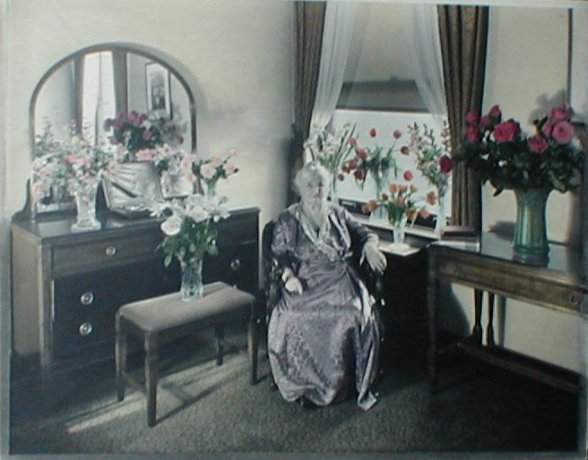
The photograph is my mother’s father’s mother. I have one of the originals. The back is stamped: Battle Creek, Michigan. So she was having a “rest cure” at Dr. Kellogg’s famous health retreat.