Print or cursive?

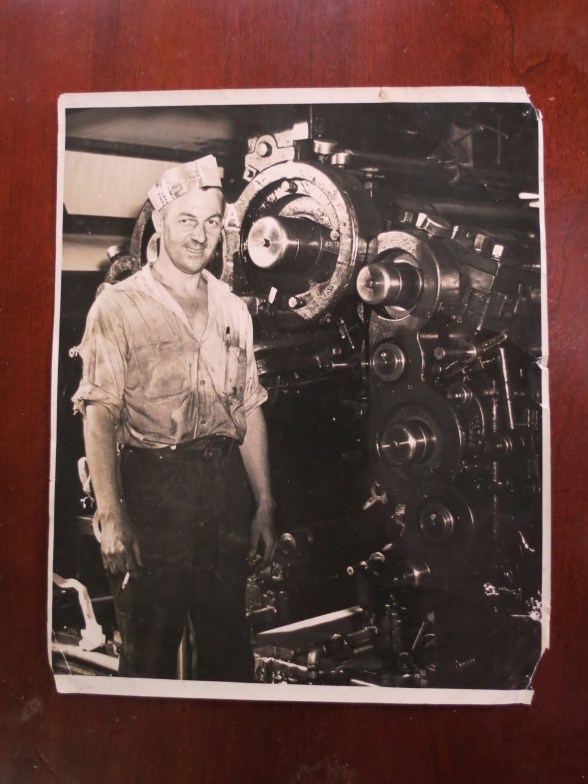
My father’s father was a pressman and the head pressman when he was in Knoxville, Tennessee. This is back in the lead type times, when the type had to be set before printing the newspapers. Before they moved to Knoxville, they lived in Connecticut. My father said that my grandfather helped develop the four color process for the comics. My father would get the new comic books, Superman, straight off of my grandfather’s press. Too bad those were thrown out!

I started cursive in school in about fourth grade and I did not like it. I learned, but I thought it was ugly. My father knew how to write in italics. I liked italics much more and asked him to teach me. I adapted the capital letters to make them easier and then I wrote my papers in italics when we were not allowed to print. The teachers objected but I pointed out that we weren’t allowed to print in the papers, but it did not say, “No italics.” I imagine that some teachers found me difficult.

My cursive is still stuck in about fifth grade and I almost never use it.

Meanwhile fast forward. A law is passed in Washington State that prescriptions cannot be written in cursive. However, it does not say that we have to print. The same loophole. I usually printed prescriptions anyhow, so that the pharmacist could read it. I got compliments occasionally for printing in a legible way. I didn’t spell certain medicines correctly, but the pharmacists never seemed to care about that. Now it is all by fax and since Covid started, even the controlled substances go by fax.

For the Ragtag Daily Prompt: print.

Return again

Return again to friends and home and stumble
My house wraps around me familiar then grief
There is so much grief here: death makes us humble
Mother, marriage, sister, father, time a thief
Has stolen them and more to come, a long lived life
Means loss on loss. Memory wells up, deeps swells
We thought we would be different, wise, no strife
Yet the world burns, children bombed in warring hells
Our children know our failure and our malice
We thought we’d be adults and show the way
Our intentions of a wired on-line palace
Yet anger and greed now rule the day
As a child adults are drunk confusing fools
Now my adult children wonder why we are such rigid tools

For the Ragtag Daily Prompt: rigid.

Ages

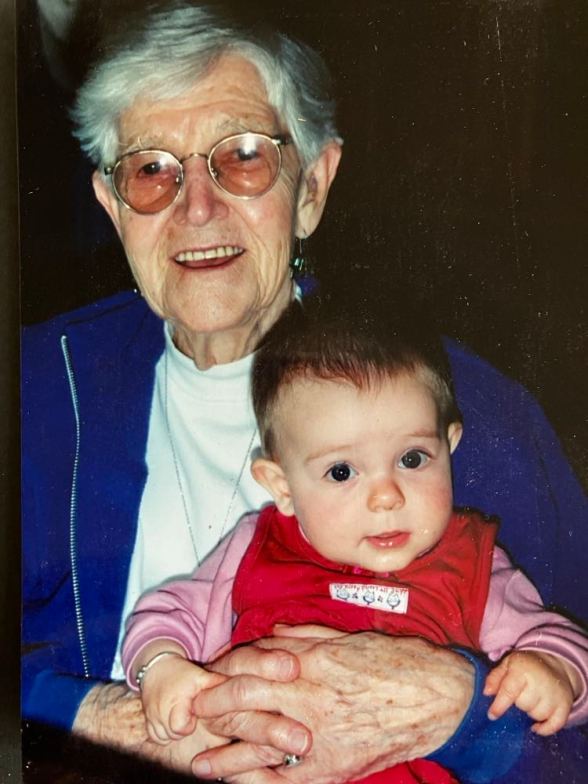
Here is my daughter on the lap of her great grandmother Evelyn Ottaway. I think my daughter was a little over one and my grandmother was 90 or very close. We flew from Colorado and visited friends and family. My grandmother was living with my aunt Pat right then. My daughter was very relieved when we got home, but she let many people that she didn’t know hold her. This was the only time she saw her great grandmother.

For the Ragtag Daily Prompt: age.

Doctors are leaving medicine

https://www.healthgrades.com/pro/7-reasons-doctors-are-leaving-medicine?CID=64embrdTINL120523

Ok, reason number five: “One study finds doctors spend two hours on EHR record-keeping for every single hour in clinical contact with patients. EHR dissatisfaction has been linked to higher burnout scores, and burnout can lead doctors to leave clinical practice or quit medicine altogether.”

Back in 2009 I argued with my employer about their policy. They had put us all to 20 minute visits, one 40 minute one a day, and continuous visits 8-noon and 1 to 5. Also, they had daily meetings from noon to 1. Full time was four eight hour days, except they are nine hours with the meetings. I said, “Look, one day of clinic generates at least two hours of work: reading lab results, reading radiology reports, calling patients, calling specialists, dealing with insurance, dealing with phone calls, refills, patient requests, calling pharmacies. So four 8 hour clinic days generates another 8 hours minimum of work, plus I have call nights, plus those four hours of meetings every weeks, so I am working 44 hours of week minimum and with call I can hit 60-80 hours in a week.” The administration did not care. I promptly cut to 3.5 patient days. They initially said, “You can only do 3 or 4 days, not 3.5.” I said, “Why?” They said it was not the most efficient use of clinic space. I said, “You don’t have anyone to put in for the full day, so using it for a half day generates more income than having it empty.” They reluctantly agreed.

I could finish a clinic EMR (electronic medical record) note in the room with the patient in 25 minutes but not 20, during the visit. The administration and computer loving doctors had said, this system is to let you finish the note in the room. It took me three years to be able to consistently do that in 25 minutes. Many providers were allowing their home computer to access the system. This meant they were working after hours at home after everyone else was asleep or on weekend morning. I refused to have it at home. I came into clinic at 5 am to do the work, since then I wouldn’t get interrupted, but I wanted home to be home. Also, I live four blocks from that employer.

I decided that I was sticking with finishing the notes in the room. I ran late. I apologized to patients, saying that the hospital was now requiring a quota of 18 patients a day and that I disagreed with it. I tried to convince the administration that I needed more time and help, but they dispensed with me.

Two years later another physician quit medicine and the hospital dropped the quota to 16 patients a day.

So it makes me laugh to see that it says in that article that eight hours of clinic generates sixteen hours of “EMR work”. The implication is often that it is busywork but much of it is NOT busywork. I have to read the xray report and decide what to do with it. Same for every lab. Same for the specialist letter. Same for physical therapy, respiratory therapy, home health, hospice, occupational therapy, notes from psychology or psychiatry, notes from the hospitalization here or elsewhere. Read, decide if I need to do anything, update the EMR? Sign the document off. Decide, decide, decide and get it right. Call the patient or a letter or call a specialist or ask my partner for a second set of brains, am I missing something? This is all WORK.

At one point a clinic shut down in three counties. My clinic (post hospital) took a new patient daily for months. We couldn’t get the notes so we had to look at med lists, get history from the patients and wing it. Or get hospital records labs xrays specialist notes. Yep. Nearly every patient had “deferred maintenance”: they were behind on colonoscopy, mammogram, labs, specialist visit, echocardiogram. We ordered and ordered. Then we had to deal with all the results! After about five months I say to my receptionist, “I’m TIRED.” She was too. We dropped to three new patients a week. Then two. Then one.

I also spent an hour with new patients and my visits were 30 minutes. I was the administrator of my clinic too, and pointed out to the physician (me) that we were not making much money. With 30 minutes I could look at things during the visit and explain results and get much of it, but not all, done.

So if a 20 minute clinic visit generates 40 more minutes of work, in labs, reviewing old records, reading specialist notes, reading about a new medical problem, keeping up on continuing medical education, reading xray reports, echocardiograms, writing letters for jury duty exclusion, sports physicals, disability paperwork, sleep apnea equipment, oxygen equipment, cardiac rehab reports and orders,etc, then how many patients would give us a forty hour week? At one hour per patient, that is 40 patients a week, right? 18 patients daily for 4 days is 72 per week and that is not including the on call or obstetrics done at night and on the weekend. 72 patients would generate another 144 hours of work according to that article which is untenable. 36 hours+144 hours+call = over 180 hours weekly. And so I am not surprised at the levels of burnout and people quitting.

We have to value the actual work of not only “seeing a patient” but “thinking about the patient, reading about a disorder, reading all of the notes and test results and specialist notes”. Isn’t that what we want, someone who will really spend the time and think?
Time ripples

I found this calcedony nodule on North Beach about a week ago. The lines in it are layers laid down over years and years, as the mineral crystals lined a space and precipitated. The different colors in the stripes mean different impurities. This is one of the biggest pieces that I’ve found on the beaches here.

For the Ragtag Daily Prompt: ripple marks.

Daily Evil: T is for Thief

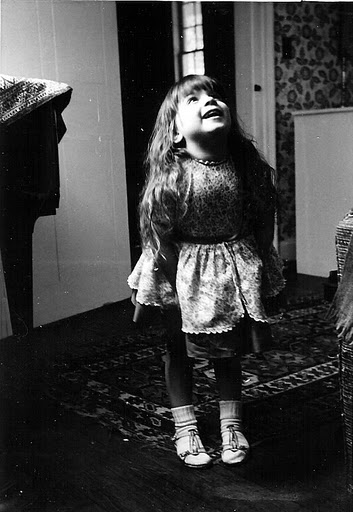
Time is the evil thief I am thinking of today. This is my sister, Christine Robbins Ottaway, painted by Helen Burling Ottaway in the early 1970s. Time has stolen both of them.

This is another watercolor, over a pencil drawing, 10.5 inches by 14 inches.

Imprecation

imprecation

damnation

what a nation

what a notion

needs some lotion

or a potion

to awake

not be baked

by booze or sun

just no fun

we’re on the run

after the clock

time in hock

where are our socks?

get up woke

or you’ll get a poke

job loss no joke

worry re banks

sink or sank?

money there give thanks

worry heaps

til back asleep

falling deep

imprecation

what a nation

__________________

For the Ragtag Daily Prompt: imprecation.

__________________

I was looking for a song with imprecation. I did not find one, but there is an infernal Texas horde (aka a band) named Imprecation. The band’s new album, Damnatio Ad Bestias will be the first since 2013’s Satanae Tenebris. Here:

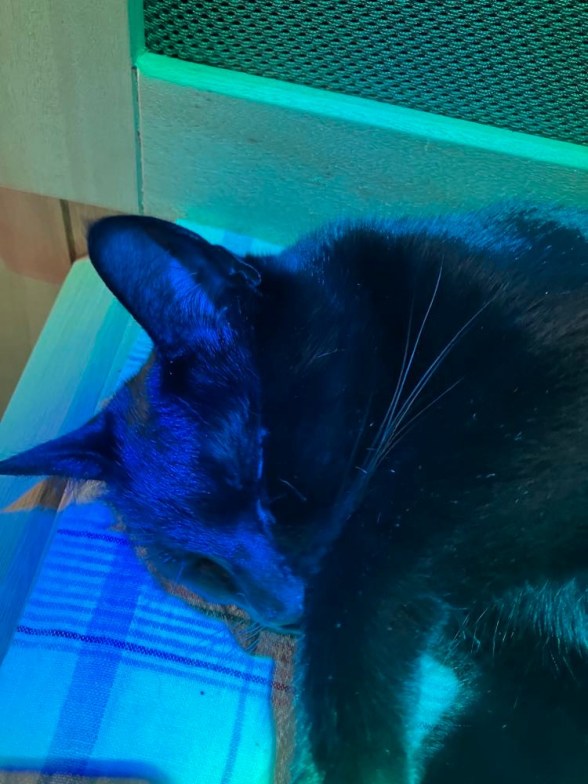
I did listen to a little. Maybe Elwha or Sol Duc is into infernal Texas death metal. Now, is Sol Duc begging me to keep it on or turn it off in the photograph?

Integrated behavioral health

The buzzwords now in Family Medicine. Integrated behavioral health in primary care. I am finding it a bit annoying.

Integrated does not mean race in this context. It just means the clinic should have a behavioral health person.

I suppose that is a good idea maybe, or might seem like one. But what do they think I have been doing for thirty years? Ignoring behavioral health?

Really, primary care is half or more behavioral health, if a primary care doctor gives people time and pays attention. People have an average of 8 colds a year. Why do they come in for cold number 4 if it is no worse than all the others? Because the cold in not really why they are coming in. The cold is the excuse. Notice that the person is there, that they are not that sick, that they do not care that you are not going to prescribe antibiotics.

I have my hand reaching for the door when an older patient says, “May I ask you something?” She came in for something that she didn’t seem to care about, so I am not surprised. I turn back. “Yes.”

“I have friends, in another state. They had a baby. The baby is very disabled.”

I sit down. This is more than 15 years ago, so I do not remember what the baby had. Hydrocephalus. Cerebral palsy. Something that requires multiple doctors and physical therapy and the parents are grieving.

“What bothers me most is that they have to struggle so much for services. There is very little support and very little money set aside. One of the parents has quit their job. It is a full time job taking care of this child and they are frightened about the future. Is this really what it’s like?”

And that is the real reason for the visit. “Yes,” I say. “It can be very difficult to access services, you have to track down the best people in your area, some physicians won’t pay much attention and others are wonderful. And the same with physical therapists and everyone else. Tell them to find some of the other parents of these children. Get them to recommend people. And the parents have to be sure to take care of themselves and each other.”

She frowns. “It’s a nightmare. Their life completely changed from what they thought. First baby. And it is overwhelming.”

“I am sorry. You are welcome to come back and ask me questions or just talk.”

“Thank you. I might.”

“Do you need a counselor?”

“No, I’m fine. I am just worried about them and feel helpless.”

“It sounds like staying in touch is the best thing you can do.”

“Ok.”

The true reason for the visit is often something entirely different from what the schedule says. Sometimes people are there without even knowing why they came in. “Can I ask a question?” That is key. Saying to see people for one thing is criminal and terrible medicine and makes behavioral health worse. There is so much we can do in primary care just by listening for these questions and making time for them.

I have nothing against adding a behavioral health person to the clinic. They talked about “embedding” a behavioral health person in each group of soldiers back in 2010, when I worked at Madigan Army Hospital for three months. I always pictured digging a hole in my clinic floor, capturing a counselor, and then cementing them in the hole. I would have to feed them, though. I always thought that was sort of a barrier. One more mouth to feed. I found it more useful to contact counselors, ask what they wanted to work with, learn who knew addiction medicine, learn who was good with children or families or trauma. And ask patients to tell me who they liked and why. I integrated behavioral health in my community, not just in my clinic, because there is no one counselor who is right for everyone.