Mundane Monday #166: parent and child

My theme for Munday Monday #165 is parent and child.

I have this small statue in my clinic. I have a small collection of parent/child and mother/child art that I have collected for years. I was separated from my mother at birth, from my father and his family at 4 months and back to my mother and father at 9 months. I was sure that adults loved me but I did not trust them: they kept abandoning me.

As an adult I understand that it was because my mother had active tuberculosis and that the first separation saved my life. But…. I can love people, but trust must be earned.

A patient said last week that I had a political statement in my waiting room. “I do?” I said. He was talking about this statue.

If this is a political statement, I stand by it.

Attach your parent child picture, political statement or not. And much love and hope for every parent and child and love.

One entry from last week, Mundane Monday #165: sand:

KL Allendorfer: Sand.


inherit

For the Daily Prompt: inheritance.

Such soft colors. I am trying to capture the ferry wake color in the sunrise.

The news this morning and I am thinking of girls who are not believed and predators who are after them. And boys too. I am thinking of medical school, this essay.

I am thinking of the comment from a fellow male medical student, about the statistics of one girl in five sexually abused:  “I never believed it. I didn’t think women could be okay after that.”

There is still the idea in our culture of a woman “ruined”. Women are still not believed. Boys are assaulted, too. One in twenty. Here: http://victimsofcrime.org/media/reporting-on-child-sexual-abuse/child-sexual-abuse-statistics.

And in the end, I wonder, what are the adults thinking? It’s the woman’s fault for being pretty? It’s the girl’s fault for being vulnerable? The devil made me do it? I was tempted by evil? It isn’t my fault. I have money and power and therefore I can do whatever I want. Women and children aren’t people, I can buy and sell and use them.

I am so relieved to hear the news from Alabama this morning.


teens high risk for addiction

What teens are at high risk for addiction?

Would you say inner city, poor, abused, homeless?

This study : Adolescents from upper middle class communities: Substance misuse and addiction across early adulthood. which I first saw in WebMd, says that the privileged upper middle and rich children are at higher risk  for addiction than many of their peers.

350+ teens in New England were studied.

Drug and alcohol use was higher than across country norms, including inner city.

Rates of addiction diagnosis by age 26 were
19%-24% for girls
23%-40% for boys
These rates are two to three times the norms across the country.

Rates for addiction diagnosis by age 22 were
11%-16% for girls
19%-27% for boys
These rates are close to the same in girls, but twice as high in boys as peers across the country.

The teens were often popular high achievers who are A students. Parents tended to drink more in those cohorts than the norms.

Also: “Findings also showed the protective power of parents’ containment (anticipated stringency of repercussions for substance use) at age 18; this was inversely associated with frequency of drunkenness and marijuana and stimulant use in adulthood.” That is, parents who sent a clear message that consequences for illegal and underage substance use including alcohol and marijuana would be serious, provided protection for their teens.

A second article: Children of the Affluent: Challenges to Well-Being says this:

“Results also revealed the surprising unique significance of children’s eating dinner with at least one parent on most nights. Even after the other six parenting dimensions (including emotional closeness both to mothers and to fathers) were taken into account, this simple family routine was linked not only to children’s self-reported adjustment, but also to their performance at school. Striking, too, were the similarities of links involving family dining among families ostensibly easily able to arrange for shared leisure time and those who had to cope with the sundry exigencies of everyday life in poverty.”

Other children’s perception of parenting examined included:

felt closeness to mothers
felt closeness to fathers
parental values emphasizing integrity
regularity of eating dinner with parents
parental criticism
lack of after-school supervision
parental expectations

This aligns with my observations both in my town and with patients. I see parents “check out” sometimes when their children are in their teens. “I can’t control him/her. They are going to use drugs and alcohol.” I told my children that if they partied I would NOT be the parent who says, “Oh, he needs to play football anyhow.” I would be the parent who would be yelling “Throw the book at him/her. Bench them.” And I saw parents of teens going out to the parking lot to smoke marijuana at a church fundraiser when it was still illegal. And saying “Oh, our kids don’t know.” I thought, “Your kids are not that dumb.” They invited me along. I said, “No.” And I really lost respect for that group of parents. What example and message are they sending to their teens? Yeah, cool, do illegal things in the parking lot, nod, nod, wink, wink.

Meanwhile, my children keep me honest. “You are speeding, mom.”

“Yeah,” I say. “You are right. Sometimes I do.” And I slow down.

Adverse Childhood Experiences 9: crisis wiring

I spoke to a patient recently about ACE scores. A veteran. Who has had trouble sleeping since childhood.

“What was your childhood like?” I say. “Was sleeping safe?”

“No, it wasn’t. We were in (one of the major cities) in a very bad part of town.”

“So not sleeping well may have been appropriate. To keep you safe. To survive.”

We both think this veteran has PTSD.

“I think I had PTSD as a child. And then the military made it worse.”

I show the veteran the CDC website and ACE pyramid: https://www.cdc.gov/violenceprevention/acestudy/about.html.

Adverse childhood experiences. Leading to disrupted neurodevelopment. Leading to a higher risk of mental health disorders, addiction, high risk behavior, medical disorders and early death.

Ugly, eh? Damaged children.

“But I don’t agree with it.” I say.

My veteran looks at me.

“Disrupted neurodevelopment.” I say. “I don’t agree with that. Different neurodevelopment. Crisis neurodevelopment. We have to have it as a species in order to survive. Think of the Syrian children escaping in boats, parents or sibling drowning. We have to have crisis wiring. It isn’t wrong, it’s different. The problem is really that our culture does not support this wiring.”

“You can say that again.”

“Our culture wants everyone to be raised by the Waltons. Or Leave it to Beaver. But the reality is that things can happen to any child. So we MUST have crisis wiring. Our culture needs to change to support and heal and not outcast those of us with high ACE Scores.”

My Veteran is quiet, thinking that over.

I say, “You may read more about ACE scores but you do not have to. And we can work more on the sleep. And we do believe more and more that the brain can heal and can rewire. But you were wired to survive your childhood and there is no shame in that.”


I took the picture in Wisconsin in August.


the bacon burning

She’s listening to the radio
while cooking

her mother would say with half an ear

rape victims
if they had done something different
not THAT dress
not that date
too many drinks
did she flirt?
THAT college has statistics
would not have happened
if if if

she is holding a spatula

riding the school bus
age 7, second grade
look at the other kids
the only girl
who is not a virgin
played with
the high school senior next door
she loved when he would push the swing
trade: lie down here
I won’t hurt you
she got scared “stop” ran
asked her mother what it meant
when boys
worries until the doctor
surely the doctor
would notice if she is pregnant
her sister is four
never ever go near
the boy next door
her sister cries
she keeps an eye on her
she’s different now from other girls
should have known
never speak to him again

the bacon burning on the stove
cry, throw the bacon out

radio: violence
is never acceptable
it is not the woman’s fault

nor the child’s


previously published on everthing2.com in 2010

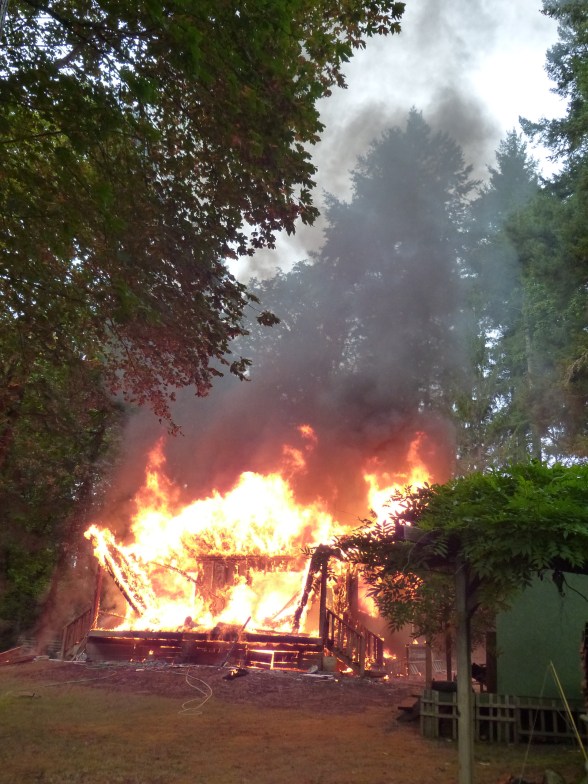
Yes, that is a house burning down. The owner and cats got out. Barely.


Update on PTSD 2017: hope!

I have just spent a week in San Antonio, Texas at the AAFP FMX: American Academy of Family Physicians Family Medicine Experience.

Whew. Long acronym.

However, I attended two programs on PTSD. One was a three hour offsite one put on by the U. of Texas Health Sciences Department of Family Medicine. The other was a one hour program about active duty military and PTSD.

The biggest message for me is HOPE. Hope for treatment, hope for diagnosis, hope for destigmatization, hope for remission. I am not sure if we should call it a “cure”. Once a diabetic, always a diabetic, even if you lose 100 pounds.

In medical school 1989-1993 I learned that PTSD existed but that was about it. There was no discussion of medicines, treatment, diagnosis or cure.

Ditto residency. I learned much more about psychiatry reading about addiction and alcoholism and Claudia Black’s books then I did in residency.

Fast forward to 2010, when I opened my own clinic. I worked as a temp doc at Madigan Army Hospital for three months.

The military was aggressively pursuing treatment and diagnosis of depression, anxiety, PTSD and traumatic brain injury. I worked in the walk in clinic from 6:30 to 8:00 four days a week. Every walk in had to fill out a screen for depression. They were trying to stem the suicides, the damage, the return to civilian life problems and addiction too. They were embedding a behavioral health specialist in every section of the military. I was amazed at how hard the military was working on behavioral health.

In 2010 I took the buprenorphine course, which is really a crash course in addiction medicine, at the University of Washington Med School. I took it because it was free (I had just opened a clinic) and I thought we were as a nation prescribing WAY too many damned opioids. Yes! I found my tribe!

This gave me a second DEA number, to prescribe buprenorphine for opiate overuse, but also hooked me up with the University of Washington Telemedicine. I presented about 30 opiate overuse problem patients (anonymously, there is a form) to the team via telemedicine over the next year. The team includes a pain specialist, addiction specialist, psychiatrist and physiatrist. They do a 30 minute teaching session and then discuss 1-2 cases. They often do not agree with each other. They reach consensus and fax recommendations to me. The Friday addiction one was shut down and now I present to the Wednesday chronic pain one.

But, you say, PTSD? Well, chronic pain patients and opiate overuse patients have a very high rate of comorbid psychiatric diagnoses. It’s often hard to sort out. Are they self medicating because they have been traumatized or were they addicted first and then are depressed/traumatized and anxious? And what do you treat first?

There was an ADHD program at this conference that said we should deal with the ADHD first. One of the PTSD courses said deal with the PTSD first. The thing is, you really have to address BOTH AT ONCE.

Tools? PHQ-9, GAD-7, PCLC and there is an ADHD one too. These are short screening tools. I don’t diagnose with them. I use them to help guide therapy along with the invaluable urine drug screen. Love your patients but verify. That is, the chronic pain patient and the addiction patient tell me the same thing: but one is lying. I don’t take it personally because they are lying to themselves. Also, studies have shown that many patients lie, about their hypertension medicine or whatever. If they have to choose between food and medicine…. I think food may come first.

The San Antonio program has a behavioral health person embedded in their clinic (like a diamond) and if a PTSD screen is positive, the doctor or provider can walk them over and introduce them and get them set up. This is more likely to get the person to follow up, because there is still stigma and confusion for ALL mental health diagnoses and people often won’t call the counselor or psychologist or god forbid, psychiatrist.

They have a protocol for a short term four week treatment. Four weeks? You can’t treat PTSD in four weeks! Well, sometimes you can. But if you are making no progress, the person is referred on if they will go. I have the handouts. I do not have an embedded behavioral health person. I wish I did. I am thinking of setting a trap for one or luring them in to my clinic somehow, or asking if the AAFP would have one as a door prize next year, but…. meanwhile, I may do a trial of DIY. No! you say, you are not a shrink! Well, half of family medicine is actually sneaky behavioral health and I have the advantage of being set up to have more time with patients. Time being key. Also I have seven years of work with the telemedicine and access to that psychiatrist. Invaluable.

So what is the most common cause of civilian PTSD? Motor vehicle accidents. I didn’t know that. I would have said assault/rape. But no, it’s MVAs. Assault and rape are up there though, with a much higher PTSD rate if it is someone the victim knows or thought loved them. Rates in the US general population is currently listed at 1%, but at 12% of patients in primary care clinics. What? One in ten? Yes, because they show up with all sorts of chronic physical symptoms.

Re the military, it’s about the same. BUT noncombatant is 5%. High intensity combat has a PTSD risk of 25%, which is huge. One in four. Not a happy thing. In 2004 less then half the military personnel who needed care received it. PTSD needs to be destigmatized, prevented, treated compassionately and cured.

The risk of suicidality: 20% of PTSD people per year attempt. One in five.

Men tend to have more aggressiveness, women more depression.

Back to that PCLC. A score of over 33 is positive, over 55 is severe. There is sub threshold PTSD and it does carry a suicide risk as well. In treatment, a score drop of 10 is great, 5-10 is good and under 5, augment the treatment. Remember, the PCLC is a screening tool, not a diagnosis. I often ask people to fill out the PCLC, the GAD7 and the PHQ9 to see which is highest, to help guide me with medicines or therapy. If I need a formal diagnostic label, off to psychiatry or one of my PhD psychologists or neuropsych testing. Meanwhile, I am happy to use an adjustment disorder label if I need a label. If the patient is a veteran and says he or she has PTSD, ok, will use that.

Untreated PTSD, the rate of remission is one third at a year, the average remission is 64 months.

Treated PTSD, the rate of remission is one half at a year, and the average duration is 36 months. So treatment is not perfect by any means.

Pharmacology: FDA approved medicines include paroxetine and fluoxetine, and both venlafaxine and one other SSRI help.

Benzodiazepines make it worse! Do not use them! They work at the same receptor as alcohol, remember? So alcohol makes it worse too. There is no evidence for marijuana, but marijuana increases anxiety disorders: so no, we think it’s a bad idea. Those evil sleep medicines, for “short term use” (2 weeks and 6 weeks), ambien and sonata, they are related to benzos so I would extrapolate to them, don’t use them, bad.

Prazosin helps with sleep for some people. It lowers blood pressure and helps with enlarged prostates, so the sleep thing is off label and don’t stop it suddenly or the person could get rebound hypertension (risk for stroke and heart attack). I have a Vietnam veteran who says he has not slept so well since before Vietnam.

Part of the treatment for the PTSD folks at the U. of Texas Medical Center is again, destigmatization, normalization, education, awareness and treatment tools.

Hooray for hope for PTSD and for more tools to work with to help people!
halo stealthie

In the early morning in Wisconsin, I saw a halo… I am sending the halo to all the people who stood and stand up against white supremicism. I am sending the halo to all people, all colors, all genders. And we couldn’t see the halo unless the shadow were present, could we? There is no light without contrasting dark and we must love both the shadow and the light. I am not ok with white supremicism. Please, send this halo to those who stand up for love and equality and against discrimination.

Dream log: June 20, 2017

I am with my father and my sister. My mother is not around. I am not sure if she’s gone or dead. Dead, I think.

My father has gone off. My sister is 3 or 4 and I am 6 or 7. I am taking care of her. We are at a park and I am trying to get food. It is Thanksgiving. It is not cold, it’s warm. There are large family groups at picnic tables.

My technique is to move in on a family group. We play near them and I listen for adult names. We play close enough that I can hear but not close enough to impinge on the group. When they start to clean up and take things to the cars, I am ready. I slip in and hold my hands out for a bowl. The adult looks at me. “Aunt Norma’s.” I say confidently, because I know which bowl belongs to each adult. And which bowl I want. The adult hands me the bowl. They can’t remember which kid I am, but I know Aunt Norma’s name….I head confidently with the bowl towards the cars and quickly slide it under my loose sweatshirt. I bypass the cars and head around to my sister.

Now the game changes a little. We have a couple bowls so she guards them. I work the next table alone and score a left over turkey.

The problem now is that we cannot carry it all to the car in one trip. I debate about safety. We are living in the car. I tell my sister to stay with the rest of the food and I leave her, carrying the turkey. It’s still light and there are still a lot of people around. She is sitting on the curb, bowls behind her, between two family groups. I will get the turkey to the car and then run back to her. The two of us can carry the rest of the food in one trip. Then we will have food for a while. She should be safe.

I wake up.

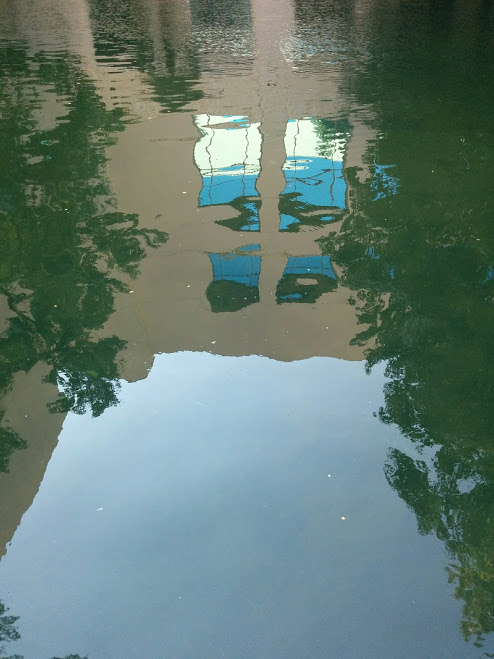
I took the photograph within the last month. What and where is it?


damage

This is not about one patient. It is about many. I have permission from the person I gave a copy to: one of many.

what do you say
to the person
with the terrible childhood
with addiction and chaos
and suicide attempts and hospitals
and that was the parents
that they ran away from

and then numbed themselves
in addiction for years
multidrug and chaos
and now stable
working their 12 steps

and grieving
their lost years
and their behavior
unforgiven, it takes time
to build trust after
thirty years of damage

and grieving
the next generation
following the same
path and feeling helpless
to stop them
and guilt for their
contribution

it is not a matter
of a pill
of a diagnosis

the simplicity of stopping
of getting clean
joy and pride
yes

and then the hard work
of grieving
begins


____________________________________________________________________________________________

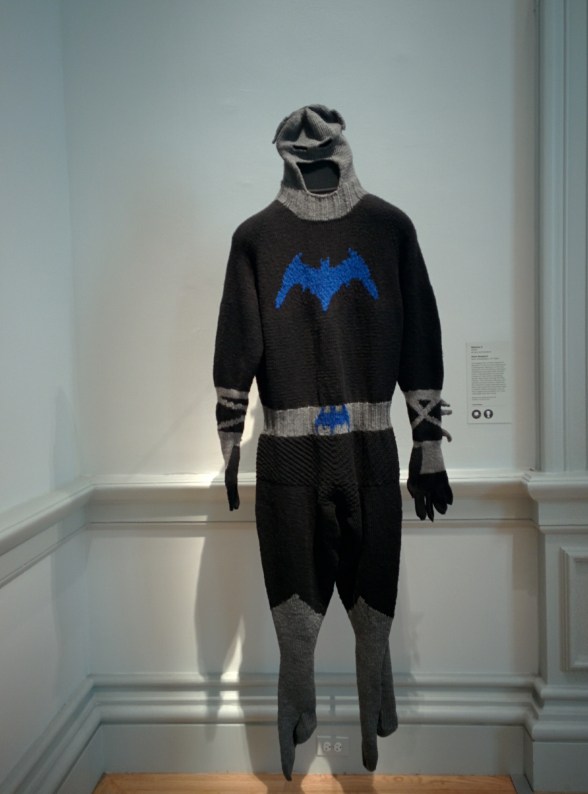
I took the photograph at the Renwick Gallery.

Who is driving the car?

I am at my parent’s house.

My mother and I and the baby, a toddler, go out to the car which is a huge newish SUV. I open the back door and see a drawing lying on the seat, beside the car seat. It is a drawing of my son, from a photograph. My mother has written on it, her ideas about how she wants to do the painting. I took the photograph and know it: my son has an exuberant joyous toddler expression. I climb in to the SUV. My mother gets in the front and turns the car on. She pulls forward and I start screaming, “STOP! STOP DON’T DRIVE! THE BABY IS NOT IN THE CAR!” My mother is pulling forward and backing, in confusion. She stops.

I leap out and search. Under the car by the back wheel, but not under it, is a kitten. A black kitten, lying on its side. I reach and very gently pick it up, supporting its spine. I am crying. The kitten cries as I pick it up, with pain. I say, “She’s hurt! I am going to die!”

I wake up.

I think about the dream. Even though there is a picture of my son in the car, I am a teen in the dream. The toddler is not my son. The toddler is not my daughter. The toddler is my sister. My parents had old cars, never a new SUV. The house in the dream was my parent’s house in Alexandria, Virginia. We moved there when I started ninth grade and my sister started sixth. My parents sold the house and moved in 1996.

Who is driving the SUV? Is there a responsible adult? Are they taking care of the children? Or are they driving recklessly and leaving the children to try to care for each other? Some adults are not responsible and should not be driving.


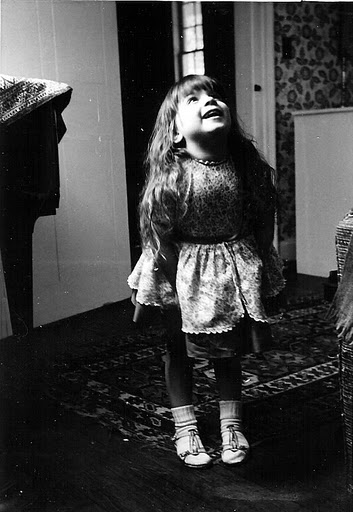
My son took the photograph of my daughter in 2011 for a school project, recreating a movie poster: True Grit.