
G6PD deficiency and diabetes

Today I follow an online trail to this article on diabetes from Nature Medicine here.

It is talking about a genetic variant that is found in people with African-American heritage called G6PDdef. This genetic pattern makes the HgbA1C test inaccurate. It will look low and “in control” even when blood sugars are high. Since the blood sugars are NOT in control, complications from diabetes can happen: damage to vision, to kidneys, to nerves in the hands and feet.

I have been reading articles about current and changing guidelines about diabetes. The current guidelines say that checking blood sugars at home doesn’t make a difference. I REALLY disagree with this and at the same time, I don’t think that physicians are approaching blood sugars in a practical manner.

I saw a man recently who is diagnosed with “insulin resistance”. His HgbA1C is in between 5.6 and 6.0. Normal is 4.5 to 5.6. Over 6.5 is diabetes. He has prediabetes. He has not checked blood sugars at all, but he is on metformin.

There is evidence that metformin is helpful, and still, I think it is putting the cart before the horse. I ask my people to go buy an over the counter glucometer. Ask for the one that has cheap strips, 6 for a dollar instead of a dollar apiece. Then we go over the normal and abnormal blood sugar ranges and I ask them to start checking blood sugars. If I give them a medicine right away, they don’t learn how to control their blood sugar with diet. ALL of my patients can figure out how to bring their blood sugars down with diet. If we can’t get to a good range, then we will add metformin. I do explain that the guidelines say use a medicine right away, but I ask, “Would you like to see if you can control your blood sugars with diet?” The answer is overwhelmingly “YES!” I have never had someone say no. If we do not give them the chance and explain the goals, why would they even try?

Also, I read the dietician handouts for diabetes yesterday and I am not satisfied. I do not think they explain carbohydrates well. Foods have fats, proteins, and carbohydrates, and anything that isn’t fat or protein has carbohydrates. I think of carbohydrates as a line, from ones with high fiber that do not send the blood sugar up fast, to ones that shoot it way high. At the low end is kale and lettuce and chard and celery. Then the green and yellow and red vegetables that are not sweet. Then beets and sweet peas. Next come the fruits, from blueberries up to much sweeter ones. Fruits overlap with grains: bread and pasta and potatoes and rice. The whole grains have more fiber and are slower to digest. Candy then sweet drinks (sodas are evil) and sugar.

Sugar has 15 grams of carbohydrate in a tablespoon. Kale has 7 grams of carbohydrate in a cup. That’s a pretty huge difference. A small apple has about 15 grams of carbohydrate and a large one 30 grams. Read labels for grains. There is a lot of carbohydrate in a small amount. The issue with fruit juice is that most of the fiber is gone, so the sugars are broken down and absorbed much faster. A 12 oz coke has 32 grams of carbohydrate and a Starbucks mocha has 62! I quit drinking the latter when I looked it up.

Most people with diabetes are supposed to stay at 30 grams of carbohydrate per meal, or 45 if it is a big person or if someone is doing heavy labor. Snacks are 15 grams.

Avocados are weird. They have about 17 grams of carbohydrate in a whole one, but they also have a lot of fat. They do have a lot of fiber, which surprises me.

Diet control takes a combination of paying attention to what is on the plate and serving amounts. Three servings of pasta is not going to work, unless you are out fighting forest fires or are on the swim team. Fire fighters are allotted 6000 calories a day, but most of us do not get that much exercise.

At the same time that articles are telling me that home blood sugars are not useful with a glucometer, everyone is pushing the continuous glucose monitors. I think we like technology. And other articles say that diabetes can be reversed with major lifestyle changes.

Articles: about not using home glucose checks, here. Starting metformin, here. Starting with one of the newer medicines, here.

I think people feel a lot more successful if they get a glucometer and can bring their blood sugar down by messing about with diet. I tell them to check after what they think is a “good” meal and after a “bad” one. How much difference is there? Contrast that with being handed a pill to control it, while someone talks about diet and says all the same stuff that we’ve heard for years. Nearly all of my people want to avoid more pills and are willing to try a glucometer to see if they can avoid a pill. People who have been on diabetes medicine for a while are less willing to try, but sometimes they do too. And sometimes they are surprised that some meals do not do good things for their blood sugar.

This is all type II diabetes. For type I, we have to have insulin. If type II has been out of control for a long time, sometimes those people have to have insulin too. Right now insurances will usually cover continuous glucose monitors for people with diabetes who are on insulin, both type I and II. I do hope that they really make a huge difference for those people!

The spectrum from the low carbohydrate vegetable, the green and yellow and orange ones, up to the really high simple sugar ones is also called the glycemic index. There are lists of low to high glycemic index foods. Perhaps some people with diabetes find that helpful, but I think it’s simpler to say, ok, the stuff that doesn’t taste sweet will send the blood sugar up less. Also, since we are all genetically different and then our gut bacteria and microbiome are all different, it is individualized care to say how does this person at this time respond to this food? We change over time!

There are other examples of the HgbA1C not working to track diabetes. A resident and I looked over a person with diabetes and spherocytosis. The HgbA1C was nearly normal but the blood sugars were in the 300 range. Spherocytosis is a genetic blood cell abnormality, and the red blood cells don’t live as long. People with a past bone marrow transplant also have red cells that live for a shorter time. The G6PD deficiency is thought to help people survive malaria, so persists in the population, like sickle cell anemia. Isn’t genetics fascinating?
Adverse Childhood Experiences 15: Guidelines

I wrote Adverse Childhood Experiences 14: Hope quite a while ago.

The American Academy of Pediatrics has a guideline that physicians should introduce and screen for Adverse Childhood Experiences. The American Academy of Family Practice is skeptical, here: https://www.aafp.org/pubs/afp/issues/2014/1215/p822.html. Here are two more writeups: https://www.aafp.org/pubs/afp/issues/2020/0701/p55.html and https://www.aafp.org/pubs/fpm/blogs/inpractice/entry/screen_for_aces.html.

It is difficult to screen for ACE scores for the same reason that it is difficult to screen for domestic violence and to talk about end of life plans. These are difficult topics and everyone may be uncomfortable. Besides, what can we DO about it? If growing up in trauma wires someone’s brain differently, what do we do?

I don’t frame it as the person being “damaged”. Instead, I bring up the ACE score study and say that first I congratulate people for surviving their childhood. Good job! Congratulations! You have reached adulthood! Now what?

With a high ACE score comes increased risk of addictions (all of them), mental health diagnoses (same) and chronic disease. Is this a death sentence? Should we give up? No, I think there is a lot we can do. I frame this as having “survival” brain wiring instead of “Leave it to Beaver” brain wiring. The need to survive difficulties and untrustworthy adults during childhood can set up behavior patterns that extend into adulthood. Are there patterns that we want to change and that are not serving us as adults?

This week a person said that they blow up too easily. Ah, that is one that I had to work on for years. Medical training helps but also learning that anger often covers other feelings: grief, fear, shame. I had to work to uncover those feelings and learn to feel them instead of anger. Anger can function as a boundary in childhood homes where there are not adult role models, or where the adults behave one way when sober and an entirely different way when impaired and under the influence. There may be lip service to behave a certain way but if the adult doesn’t behave, it is pretty confusing. And then the adult may not remember or be in denial or try to blame someone else, including the child, for “causing” them to be impaired.

What if someone had a “normal” childhood but the trauma all hit as a young adult? I think adults can have trauma that changes the brain too. PTSD in non-military is most often caused by motor vehicle accidents. At least, that is what I was told in the last PTSD talk I went to. Now that overdose deaths have overtaken motor vehicle accidents as the top death by accident yearly in the US, I wonder if having a fentenyl death in the family causes PTSD. Certainly it causes trauma and grief and anger and shame.

I agree with the American Academy of Pediatrics that we should screen for Adverse Childhood Experiences. We need training in how to talk about it and how to respond. I have had people tell me that their childhood was fine and then later tell me that one or both parents were alcoholics. The “fine” childhood might not have been quite as fine as reported initially. One of the hallmarks of addiction families is denial: not happening, we don’t talk about it, everything is fine. Maybe it is not fine after all. If we can learn to talk to adults about the effects on children and help people to change even in small ways, I have hope that we will help children. We can’t prevent all trauma to children, but we can mitigate it. All the ACE scores rose during the Covid pandemic and we are still working on how to help each other and ourselves.

Here is another article: https://www.aafp.org/pubs/fpm/issues/2019/0300/p5.html.

Blessings.

For the Ragtag Daily Prompt: open wound.

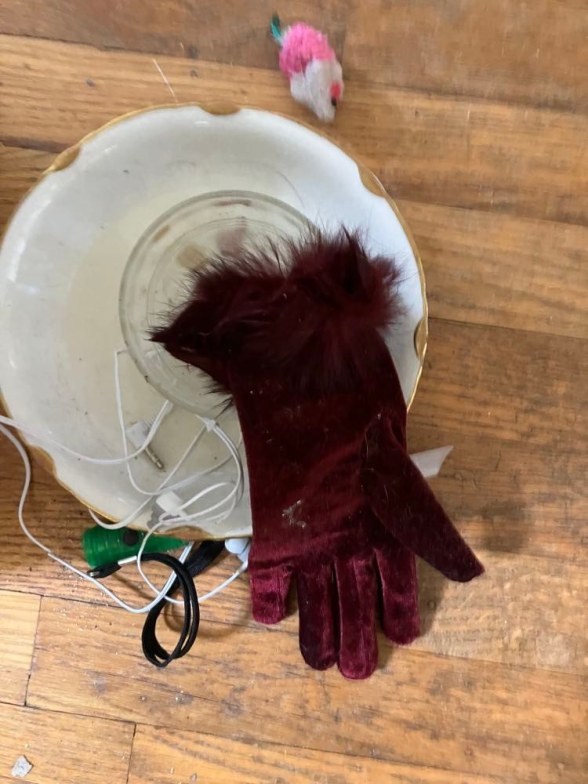
The photograph is one of Elwha’s cat art installations. He would pile toys on his bowl. Two bowels because I need to keep out the little ants. Sol Duc would do it too but not as often. I fed them in separate rooms. They would pile things on the bowl whether there was food left or not.

Elwha is still missing, sigh. That is a wound. The photographs are from March 2023.

Diabetes update

Friday I attended a Zoom diabetes update all day. Sigh. We are really doing diabetes wrong.

Diabetes affected every system in the body and so the guidelines want us to check everything. They made the point that controlled diabetes does NOT lead to blindness, kidney failure, and amputations. Only uncontrolled diabetes. There, do we feel better now?

There are three NEW things to check for. One is CHF, aka Congestive Heart Failure. Heart Failure is pump failure. It makes a lot more sense if you think of the heart as a pump. Diabetes doubles the risk of heart failure in men and increases it by five times in women. We are now to do a yearly BNP (Brain Natriuretic Peptide, got that?) except that it is useless if the person is in renal failure, because that raises it artificially.

The second NEW thing is liver problems. Liver failure is back in the top ten causes of death, having fallen off that list for a while. People drank more alcohol during COVID, there was more drug abuse adding to hepatitis B and C, but the biggest cause is NASH and NAFLD. More acronyms: NASH is Nonalchoholic Steatohepatitis and NAFLD is Nonalcoholic Fatty Liver Disease. This is related to overweight and obesity. Being overweight or obese messes up fat storage and over time this inflames the liver and then cells die, leading to cirrhosis. We are to watch liver tests, think about an ultrasound, and then there are two specific tests for cirrhosis.

Third NEW thing is Diabetes Distress. This is not depression. People score “depressed” on the PHQ-9 test, but don’t respond to anti-depressants. The lecturer said that we have to talk to the patient and find out why they are distressed, or what part of diabetes is getting them down. I thought that we should have been talking to the patient all along. There is a convenient 30 question tool we can use for this, if we have time. Will we?

Now, the old guidelines said that we are to check these things:

HgbA1C every 6 months if not on insulin, every 3 months on insulin and even more in pregnant patients.

Microalbumin/creatinine ratio: a urine test that tells us if the kidneys are starting to leak albumin. They shouldn’t.

Yearly eye test to check for diabetes damage.

Specific blood pressure ranges.

Keep everyone’s LDL cholesterol under 70. So nearly every person with diabetes gets a statin drug.

Do a foot check yearly for neuropathy.

So six things plus the new three. Can’t explain that in one visit and can’t do it in one visit either. I think we should revamp the Diabetes Distress tool and check if physicians and nurses have Guideline Distress. Diabetes is the most complicated set of guidelines other than pregnancy.

Diabetes also takes a lot of time for the person who has it. To check things “correctly”, it takes a minimum of two hours a day for Type II not on insulin and more like three or more for Type I and II on insulin. Think if you have to take two or three or more hours away from your current daily activities and devote it to diabetes. No wonder people are distressed.

The medicines are also confusing. Wegovy is in the same class as Ozempic, but is FDA approved only for weight loss in people who are overweight and have a complication, or people who are obese. Ozempic is for diabetes but people often lose weight so think about it if the person is overweight. Some of the medicines in that class also are approved to reduce the risk of heart disease, which goes up with diabetes. Another class has medicines some of which have approval for diabetes and others for diabetes and renal problems, BUT don’t use it if the eGFR is under 20, got that? The lecturer on medicines said that we’ll see less in each of those classes after they fight it out for dominance of the market. He’s been an endocrinologist for 30 years and remembers when the very first non-insulin medicine was approved. Cool! He is not discouraged, but another lecturer said that we have one endocrinologist for 5000 people with diabetes, which is not enough. We were encouraged to do more continuing medical education.

There is one guideline that I disagree with and would like to see changed. I will write about that next. After I memorize all of the different things the new medicines do, which is changing every month as new research comes out! Stay tuned!

I think I will put the clutch in and coast a bit. Or perhaps clutch handfuls of hair and pull at them, I don’t know.

For the Ragtag Daily Prompt: clutch.

I hiked again yesterday and had a very cooperative bunny stop for a snack in camera range.

Double standard: AI technology can take jobs but improving healthcare can’t

The United States could go to single payer healthcare, but one objection has been “People will lose their jobs with health insurance companies.” Yet no one seems to object to AI, Artificial Intelligence taking jobs. It’s technology so it’s fine! The wave of the future! Coming whether we like it or not!

One form of single payer healthcare is medicare for all. Expand medicare so that it covers everyone. At first, it only covered retired female teachers. Women were only considered for teaching jobs if they were single. A married woman was expected to work in the home. The teaching pay was low. Men were expected to be supporting a family, so they got more. Women were often supporting parents or children if spouses died or divorced or abandoned a family or were disabled. Early census information was a finagle: any male in the household was listed as “head” even if it was an elderly disabled father or a boarder or a teen. So the true numbers of women as head of households were obscured.

Single payer would improve healthcare. There would be ONE set of rules. Physicians would know if something was covered. Right now there are over 500 health insurance companies and they each have multiple different policies. Not only that, but the policies can change monthly in what they cover. Did you know that? I would get monthly postcards from multiple companies saying that I could go on line to one of the 500 different websites and see what they had changed and were no longer covering. I found little time to learn 500 websites. We spend enormous amounts of healthcare money on communication back and forth from insurance companies to hospitals and clinics. Trying to prior authorize CT scans, MRIs, surgeries, referrals, medications (even old cheap ones!) and then attempting to get the health insurance companies to pay for the care. Remember that the insurance companies are allowed a 20% profit: so for 1 million dollars of healthcare money, $200,000 can go to profit. The people and computer work is not in that profit, so what percentage of your healthcare dollar goes to attempting to prior authorize and get paid? How much of your healthcare dollar would you like to go to healthcare?

Medicare’s overhead is either 1.4% or 6%, instead of that 20% profit and the prior auth/collection effort. There are two different estimates (from here):

1. There are two different measures of Medicare’s administrative costs. One figure comes from the Medicare Board of Trustees’ annual report, while the other comes from CMS’ National Health Expenditure Accounts. According to the latest trustees’ report, Medicare’s overhead represented 1.4 percent of its total expenditures. According to the latest NHEA, Medicare’s overheard was 6 percent of expenditures.

2. The discrepancy between the two figures is due to Medicare Parts C and D. Mr. Sullivan wrote that the difference between the trustees’ measure of overhead and the NHEA measure β€œis due almost entirely to the fact” that the NHEA figure includes administrative expenses incurred by health insurers that participate in Medicare Advantage (Part C) and Medicare’s prescription drug program (Part D). In essence, the overhead associated with the private insurers involved with Medicare raise the program’s overhead by almost 5 percent, or $24 billion in 2010.

People worry about “socialized medicine” but really, the closest system to socialized medicine is the Veterans Administration. I don’t think anyone wants to take their healthcare away, and some of it is specialized depending on where they were deployed and what they were exposed to. I saw veterans in my clinic because we were more than 30 miles by car from a VA hospital.

What about medicare fraud? I saw way more fraud with the insurance companies. Companies will maximize revenue by sending equipment at the exact interval insurance allows (like sleep apnea equipment and diabetes glucometers). It doesn’t matter to them if it’s being used or not. After my father died, there were 16 full oxygen tanks full in his house. The company was happy to pick them up and no, they did not want to reimburse the payments. A biller told me that often the health insurance companies will pay less then the contracted amount. When challenged, they say, “Oh, that was a computer error! We will fix that!” She said, “I have never once seen the error in the physician’s favor.” When I had cobra insurance, they would not pay my bills and I had to call them every single time to force them to pay. It took enormous amounts of time and again they claimed, “Oh, computer error!” I finally called their counseling line and said, “I want to be counseled for your company refusing to call me back and screwing over this cobra policy, and by the way, I have a family member dying of cancer.” That finally made them fix it.

WHY is our culture ok with technology taking jobs, while improving healthcare can’t? Get rid of the health insurance companies! Medicare for all! If we all had secure health insurance, think of the work innovation in our country!

For the Ragtag Daily Prompt: finagle.

Elder care: stairs

Most of us do NOT live in homes practical for aging. My house has four steps in the front and five in the back to get in and out. The main floor has almost everything needed if I cannot climb a flight of stairs: only the laundry is in the basement.

I am helping a friend in her 80s. The issue, from my practical and pragmatic Family Medicine standpoint, is that she is falling. She told me that she was falling, five times in a day, in November. I got involved right away, because she had a surgery canceled because of it. She has three specialists and a primary. I called them all and took her to the emergency room first and then to her primary.

We asked her primary for disabled parking and for home health services. In Washington State, if you can’t leave your house except to the store or the doctor, you qualify for home health. I also fussed about her blood pressure, but her primary thought she was fine.

The thing is, we should not always have a blood pressure goal of 130 or less systolic once we hit 75 or 80. With weight loss, people can drop a blood pressure point for each 2 pounds lost. The blood pressure range that is safer at age 75 or 80 is to keep it around 140-150, unless the person has heart disease or congestive heart failure. Over 150 is getting too high. The brain must get good oxygen by blood flow and if it doesn’t, there are sensors in our neck that make us faint. That can be a full on loss of consciousness, or just a decrease and drop to the floor. There are some instances where the blood pressure still needs to be kept down at 125-130 systolic: bad coronary artery disease and congestive heart failure especially. But being able to stand up and walk is rather important to elder health.

The distraction for my friend’s physicians is that she has had cancer for three years. We are told that she needs an MRI of her head to rule out brain tumors, metastases from her cancer. Yes, brain tumors can cause falls, so that does need to be ruled out. My friend only falls when standing, sometimes at the counter, gets lightheaded and once has had a full on syncope. No chest pain or heart racing.

It took two months to get the brain MRI, which is negative. We saw her oncologist this week and I pushed for her cardiologist to see her sooner than June. He saw her yesterday. She is on medicine for a heart arrhythmia, but it doesn’t sound like her arrhythmia is acting up. He’s still checking: a monitor and heart ultrasound, but meanwhile he says, “I don’t tell many people this, but you need to drink more fluid and eat more salt.”

“They told me low salt. I stopped salt when I cook.”

“Start salt again and more fluid and return in 3 weeks.” She has been falling 1-5 times a day in her home. She lives alone. She is stubbornly resisting leaving her home and I am ok with that. But, it would be most helpful for her health if she was not falling. That is the priority here. She will not live forever, but she wants to stay in her home. Let’s help with that.

I am NOT saying that everyone over 75 should increase salt. If a person has bad hypertension, or heart disease, or congestive heart failure, they should not increase salt unless their doctor has a specific reason. And heart is the number one killer, so there are lots of people who should continue to eat a low salt diet. But falling and breaking a hip is also a killer.

My friend has three steps to get out of her house. The first day last week that I took her to get labs, she fell three times. “But Jim, I’m a doctor, not a nurse!” Ok, I am not a good nurse. However, we got her back inside after labs and getting the CT scan contrast for her to drink. She has not fallen when I have gotten her in or out since. I’ve had to enlist help twice, since she’s taller than me. Going down the steps is worse than going up. Home health is doing physical therapy and she has a raised seat on her commode. That is good, except those are the muscles that help us go up and down stairs. She has a walker too. She is still falling, because to cook, one has to let go of the walker, right?

So if someone wants to stay at home, think about the home. Are there steps? How strong is the person? Do they have the resources to pay for around the clock care if they become bedridden? I am practicing getting down on the floor and back up every single day, because I want to be strong. I have an upstairs and a basement, and I am going to continue with stairs for as long as possible. If I break my leg, those four front stairs are going to be an issue, but I am thinking about it. Perhaps I should design a decorative ramp, or a sloping earth entry.

Will the house accomodate a wheelchair? Is there a bathroom and a bedroom, as well as the kitchen, on the main floor? Is there clutter? I know I am supposed to keep the floors clear to reduce fall risk. I had one person who kept falling at night because he wouldn’t turn on a light. “It would wake my wife and disturb her,” he said. “It will disturb her more if you break your hip.” I said. “Turn on a light or a flashlight or something.”

Harvard Medicine agrees: https://www.health.harvard.edu/staying-healthy/master-the-stairs

Be careful out there. Or maybe in there.

For the Ragtag Daily Prompt: Elder care can’t be laissez-faire.

The photograph is not my friend. This is Tessie Temple, my maternal grandfather’s mother. I do not have a date nor who took the photograph. Another photograph is stamped on the back: Battle Creek. She must have gone to one of the famous sanatoriums, like Kellogg’s, for rest or the cures.

Walk with rabbits

Some days I can’t chuckle
when the news rolls in
my heart could buckle
shootings again

US gun habits
What’s up doc? Dagnabbit.

Shootings on the year of the rabbit
dancers dead as they celebrate
Why are guns such a habit?
I refuse to fill my heart with hate

Gun sales stab it
Year of the rabbit

Forgive but do not reconcile
let my resolve not buckle
mental health takes a while
let no demented chuckle

Fearful gun habits
online snared like rabbits

They argue they must defend their homes
daughter teacher on the line
fearful males online alone
think that guns will make them fine

Fear is a habit
Stop being rabbits

Leave your basement
Help another
Walk the pavement
Earth as mother

Make it a habit
To walk out with rabbits

_______________________

For the Ragtag Daily Prompt: chuckle.

Long Covid and fatigue

Sometimes medical articles are SO IRRITATING! Like this:

Symptomatic Long COVID May Be Tied To Decreased Exercise Capacity On Cardiopulmonary Exercise Testing Up To Three Months After Initial SARS-COV-2 Infection

Healio (10/18, Buzby) reports a 38-study systematic review and meta-analysis β€œsuggested with low confidence that symptomatic long COVID was associated with decreased exercise capacity on cardiopulmonary exercise testing up to 3 months after initial SARS-COV-2 infection.” According to the findings published in JAMA Network Open, β€œunderlying mechanisms may include but are not limited to deconditioning, peripheral mechanisms, hyperventilation, chronotropic incompetence, preload failure and autonomic and endothelial dysfunction.”

Wouldn’t it be nice if they believed the patients?

Let’s break this down. What does it all mean? Ok, the “low confidence” irritates me because it implies that the physicians can’t believe the patients who say “hey, I am short of breath and have a fast heart rate and get really fatigued if I try to do anything!”

I have had my fourth bout of pneumonia with shortness of breath and tachycardia. This time, since I am older, I had hypoxia bad enough to need oxygen. This is the FIRST TIME that some physicians have actually believed me. They believed the pulse oximeter dropping down to 87% and below, with a heart rate in the 140s, but they did not believe me and some accused me of malingering, for the last 19 years. Can you tell that I am a little tiny bit annoyed? If my eyes shot lasers, there would be some dead local physicians. And I AM a local physician, disbelieved by my supposed peers.

Let us simplify this gobbdygook: β€œunderlying mechanisms may include but are not limited to deconditioning, peripheral mechanisms, hyperventilation, chronotropic incompetence, preload failure and autonomic and endothelial dysfunction.” The way I think of it is that sometimes a pneumonia will cause lung tissue swelling. Ok, think of the air space in your lungs as a large balloon. Now the wall of the balloon swells inwards and suddenly there is half as much air space. Guess how your body takes up the slack? The heart goes faster and you have tachycardia. This is a very simple way to think about it. I have tested patients who complain of bad fatigue after an upper respiratory infection with a very simple walk test. 1. I test them at rest, heart rate and oxygen saturation. 2. I walk them up and down a short hallway three times. 3. I sit them back down, and watch the heart rate and oxygen saturation. I watch until they are back to their seated baseline.

A friend tested recently and his resting heart rate was 62. After walking, his heart rate is in the 90s. H does not have a pulse oximeter, but his oxygen level is probably fine. However, that is a big jump. He has had “a terrible cold” for 8 days. I would bet money that his heart rate normally doesn’t jump that much. He still needs recovery time and rest.

In clinic, I had people who were ok at rest but needed oxygen when they walked. We would get them oxygen. More often, they did not need oxygen, but they were tachycardic. When they walked, their heart rate would jump, over 100. Normal is 60-100 beats per minute. If they jumped 30 beats or jumped over 100, I would forbid them to return to work until their heart rate would stay under 100 when they walked. If they went back to work they would be exhausted, it would slow healing, and they might catch a second bacteria or virus and then they could die.

Patients did not need a pulse oximeter. I would teach them to take their own pulse. The heart rate is the number of beats in 60 seconds. I have trouble feeling my own wrist, so I take mine at my neck. It’s a bit trickier if someone has atrial fibrillation but the pulse oximeters aren’t very good with afib either.

When I have pneumonia, my resting heart rate went to 100 the first time and my walking heart rate was in the 140s. I had influenza and felt terrible. My physician and I were mystified. It was a full two months before my heart rate came down to normal. I was out of shape by then and had to build back up. If I tried to walk around with my heart at 140, I was exhausted very quickly and it also felt terrible. The body does NOT like a continuous fast heart rate and says “LIE DOWN” in a VERY FIRM LOUD VOICE. So, I lay down. Until I recovered. For a while I was not sure if I would recover, but I did. This time it was a year before I could go to part time oxygen.

The fatigue follows the heart rate. Tachycardia is not good for you long term. If the heart is making up for reduced air space in the lungs, it doesn’t make sense to slow the heart rate with drugs. You NEED the heart to make up for the lungs. You need to rest, too!

Blessings and peace you.

The photograph is Elwha, helping me knit socks. With the bad air from the fires and my still recovering lungs, I am staying indoors and knitting socks .

how to protect codgers

A friend calls me yesterday, complaining that the new Covid-19 vaccine doesn’t prevent infection nearly enough for him to want to get it. He is in his 70s and says darn it, he’d still have a 60% chance of getting infected.

I thought about it and wrote back this morning:

Re the new vaccine the POINT is NOT to prevent infection, though it lessens it in codgers like me and you.

The point is that the vaccinated younger people shed a s–tload less virus if they get it, because their immune system kills it fast. This reduces the amount of circulating virus so that the codgers stop dying like flies. Also the codgers get less sick if their immune system recognizes B4 and B5.

Got it? Get the vaccine.

I am waiting for the top ten causes of death for 2021 to come out. Over one million US people have died of Covid-19. In 2020, there were between 300-400,000 deaths from Covid. That means that we lost 600-700,000 in 2021. If we lost close to 700,000 people, then Covid-19 would beat out heart disease as the number one cause of death in the US. When did that last happen? During the 1918-1920 influenza, the “Spanish” flu that has been traced to a chicken farm in the US midwest.

Here is a provisional and not final list: https://www.cdc.gov/nchs/data/health_policy/provisional-leading-causes-of-death-for-2021.pdf. Hmmm. The numbers are not adding up unless a lot of US people died of Covid-19 in early 2022. And cancer is higher than it’s ever been and creeping up on heart disease. But these are not the final numbers, sigh.

Here is a fascinating chart: https://www.cdc.gov/nchs/data/dvs/lead1900_98.pdf. If you scroll to the end, the top two causes of death in 1900 were pneumonia first and tuberculosis. Heart was fourth. Heart rises to first in 1910 but then pneumonia is back at the top in 1918-1920. I think that the heart has been number one ever since, in the US. World top ten is not the same.

This is not the first pandemic and it won’t be the last. It is horrible. I think that everyone is doing the best they can, though some responses seem saner than others. Remember the old doctor joke about what to do in a code (when someone’s heart has stopped). First: check your own pulse. It’s a corollary that if the patient is dead, you can try to bring them back, but you can’t make them more dead. Also, my latest Advanced Cardiac Life Support class, on line, told me that sometimes I do not have to do cardiac life support. Their example was a decapitated patient. Really? Ouch, doctor humor. But truly, if you are freaking out or want to scream at someone or feel like the world is nuts and you have to do something, first check your own pulse. Slow it down. Breath in four and out four. I can drop my pulse from 101 to 71 in 20 seconds, just by slowing my breathing. You can learn to too.

My recommendation is that if you are due for the booster, get it. And thank you for protecting me and my friend and the other codgers.

No, it is not snowing here yet. But codger seems to be a word for an old GUY. Humph. Would a grumpy hummingbird be a grummer? What is a female codger? I am using codger for any gender, to heck with it.

Robust healthful manhood

The photograph of “a healthy man” to go with my Ragtag Daily Prompt conflate post.

I LOVE the caption. “Robust healthful manhood is the source of mental and physical power.” How differently the author portrays health womanhood, as shown in the conflate post. The book is Macfadden’s Encyclopedia of Physical Culture, in three volumes, 1911. Volume I is 500 pages. It is easy to read but it’s a different style from now. Here:

As a rule, if you will simply retain the idea that food should be swallowed at all times without effort, that is, that never, by any means, wash it down with water, milk, tea or any other liquid, that you should masticate it until it seems to disappear without swallowing, you can rest assured that you are masticating sufficiently. p. 97, volume I.

I plan to read the entire set. I think I will find lots of wonderful words for the Ragtag Daily Prompt (hey, I don’t think we’ve used masticate yet!) and material to write about.

Are there still interesting medical ideas out there? Oh, yes. LOTS. Only now they use the internet. I have subscribed to some of the series of videos, telling people how bad and wrong minded allopathic doctors are. Sigh. We do our best. The scam is that they let folks watch one a day for a week, or let them watch one, and then want you to buy the series. “Only $349.99!” Nice scam that is proliferating rapidly. I have now gotten emails saying “Health coaches should make as much or more than physicians and we can teach you how to market and target people and make that money.” Ugh and ick. Really?

I have patients in clinic who present by saying, “I don’t usually go to MD doctors, I go to a naturopath, but I am here because I need an antibiotic.”

I learn to respond gently. “Oh. If you need an antibiotic, maybe you have signs of infection? What are your symptoms?” I have to get past their dislike of allopathic medicine and find out what the symptoms are. Usually if I can diffuse them by getting the story, we can work together. Once in a while it doesn’t work: I have people come in and give me orders. “Do these labs.”

“Uh. Where did this list come from?”

The answer could be a video (by a naturopath, a biochemist, a biologist, whatever. I have watched some of these series. They start by saying that doctors are wrong/stupid/stubborn/misguided/etc.) or a “cash only” doctor or a magazine.

“Why are you coming to me?”

“I want medicare/my insurance to pay for it. I have done my research.”

“Well, medicare does not work that way. I have to list a symptom or diagnosis code for every lab ordered.”

“WHAT?”

I try to be patient. “Every lab has to have an attached appropriate diagnosis code or medicare will not cover it. There is a place in town where you can order your own, but it does not take medicare. You pay for it.”

“Just order it!”

“No. I am a medicare/insurance provider, which means I have a contract with them. It would be fraud and illegal to make up codes. Does your cash only provider use diagnosis codes? Can your bring their clinic note to me?”

One person replies, “My provider doesn’t take notes.” Oh, how nice. That provider does a very expensive panel of labs three times a year that the person is paying for out of pocket. “My provider checks EVERYTHING.” Um, and makes a boatload of money off you too, I think. That patient is very angry that I won’t take her orders and switches clinics. Oddly enough, this does not break my heart.

Some days I hate Dr. Google. There are lots of websites and people on line swearing that they can improve your health. There are scientific looking papers that swear something has been tested, but read the fine print: if the sample is 8 people, how does that stack up against the Women’s Health Initiative, where one arm of the study had 27,000 people? The evidence is weighted. We get multiple articles in medical school and subsequently about how to read a paper, how to weigh the evidence, how to recognize fraud or a poorly designed study.

I do not object to people looking on the internet and I have had people who came in and said, “Is it possible that I have THIS?” and who are correct. However, I see more fraud, always.


Lung swelling and long covid

I wrote this in 2017, about influenza. However, I think covid-19 can do the same thing. Part of long covid is letting the lungs really heal, which means infuriating amounts of rest and learning to watch your own pulse. Watching the pulse is easier then messing around with a pulse oximeter. The very basics of pulse is that normal beats per minute is 60 to 100. If your pulse is 70 in bed and 120 after you do the dishes, you need to go back to bed or the couch and REST.

From 2017: Influenza is different from a cold virus and different from bacterial pneumonia, because it can cause lung tissue swelling.

Think of the lungs as having a certain amount of air space. Now, think of the walls between the air spaces getting swollen and inflamed: the air space can be cut in half. What is the result?

When the air space is cut down, in half or more, the heart has to work harder. The person may be ok when they are sitting at rest, but when they get up to walk, they cannot take a deeper breath. Their heart rate will rise to make up the difference, to try to get enough oxygen from the decreased lung space to give to the active muscles.

For example, I saw a person last week who had been sick for 5 days. No fever. Her heart rate at rest was 111. Normal is 60 to 100. Her oxygen level was fine at rest. Her oxygen level would start dropping as soon as she stood up. She had also dropped 9 pounds since I had seen her last and she couldn’t afford that. I sent her to the emergency room and she was admitted, with influenza A.

I have seen more people since and taken two off work. Why? Their heart rate, the number of beats in one minute, was under 100 and their oxygen level was fine. But when I had them walk up and down a short hall three times, their heart rates jumped: to 110, 120. Tachycardia. I put them off from work, to return in a week. If they rest, the lung swelling will have a chance to go down. If they return to work and activity, it’s like running a marathon all day, heart rate of 120. The lungs won’t heal and they are liable to get a bacterial infection or another viral infection and be hospitalized or die.

I had influenza in the early 2000s. My resting heart rate went from the 60s to 100. When I returned to clinic after a week, I felt like I was dying. I put the pulse ox on my finger. My heart rate standing was 130! I had seen my physician in the hospital that morning and he’d gotten a prescription pad and wrote: GO TO BED! He said I was too sick to work and he was right. I went home. It took two months for the swelling to go down and I worried for a while that it never would. I dropped 10 pounds the first week I was sick and it stayed down for six months.

Since the problem in influenza is tissue swelling, albuterol doesn’t work. Albuterol relaxes bronchospasm, lung muscle tightness. Cough medicine doesn’t work very well either: there is not fluid to cough up. The lungs are like road rash, bruised, swollen, air spaces smaller. Steroids and prednisone don’t work. Antiviral flu medicine helps if you get it within the first 72 hours!

You can check your pulse at home. Count the number of beats in one minute. That is your heart rate. Then get up and walk until you are a little short of breath (or a lot) or your heart is going fast. Then count the rate again. If your heart rate is jumping 20-30 beats faster per minute or if it’s over 100, you need to rest until it is better. Hopefully it will only be a week, and not two months like me!


Feel free to take this to your doctor. I was not taught this: I learned it on the job.

I took the photograph, a stealthie, in June 2021, when I was still on oxygen continuously.