I took this last week from Marrowstone Island. The clouds were figured and changing fast. The sky over the water is so big. We look for the meaning in the cloud.
cloud figure
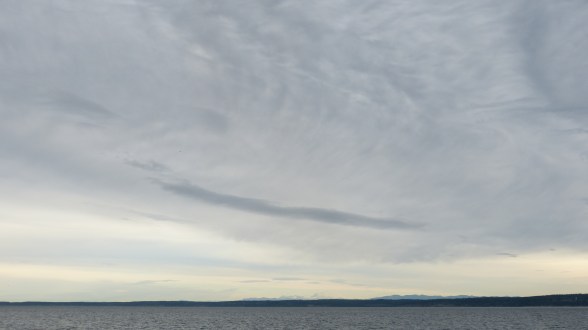
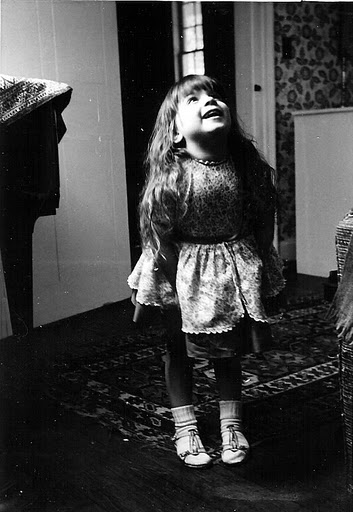
I took this last week from Marrowstone Island. The clouds were figured and changing fast. The sky over the water is so big. We look for the meaning in the cloud.

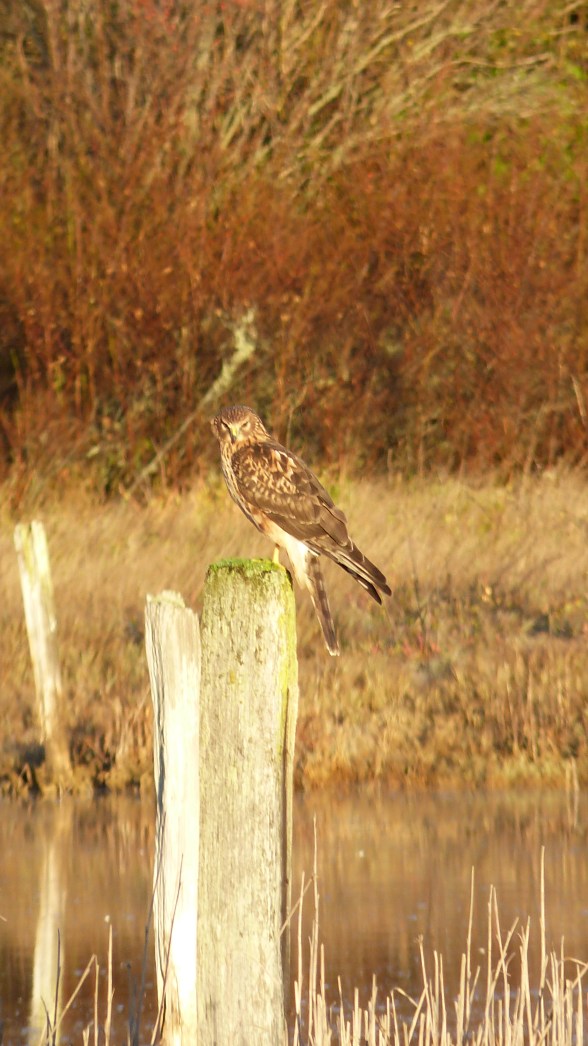
And does this bird have any scruples?
For the Ragtag Daily Prompt: scruple.
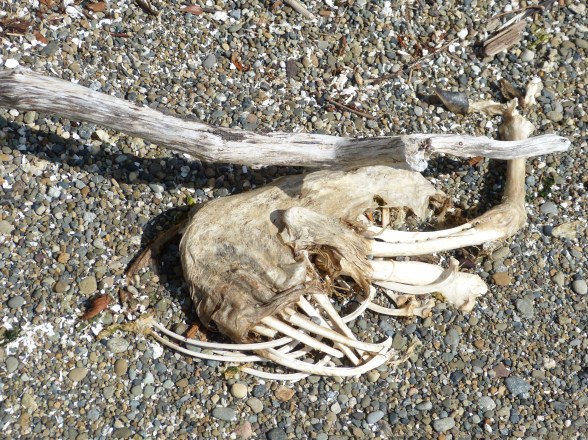
For the Ragtag Daily Prompt: afterlife.

I saw a flock of birds way out in the water last week. I zoomed in and took the photograph pretty blindly. The flock is getting bigger. I think they are getting ready for their yearly travels
For the Ragtag Daily Prompt: team.
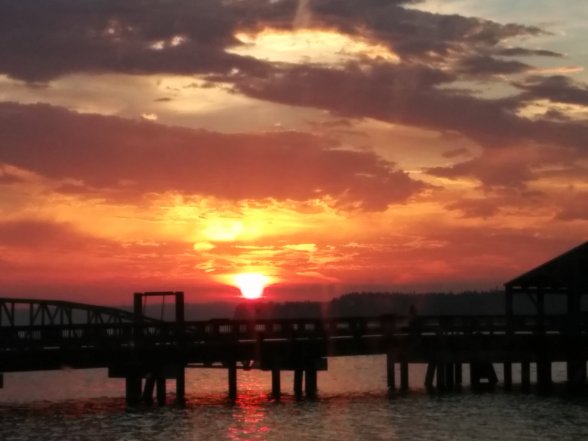

For the Ragtag Daily Prompt: glum.
I walked in the woods yesterday and it lifts me. I couldn’t be glum there. It was so beautiful.

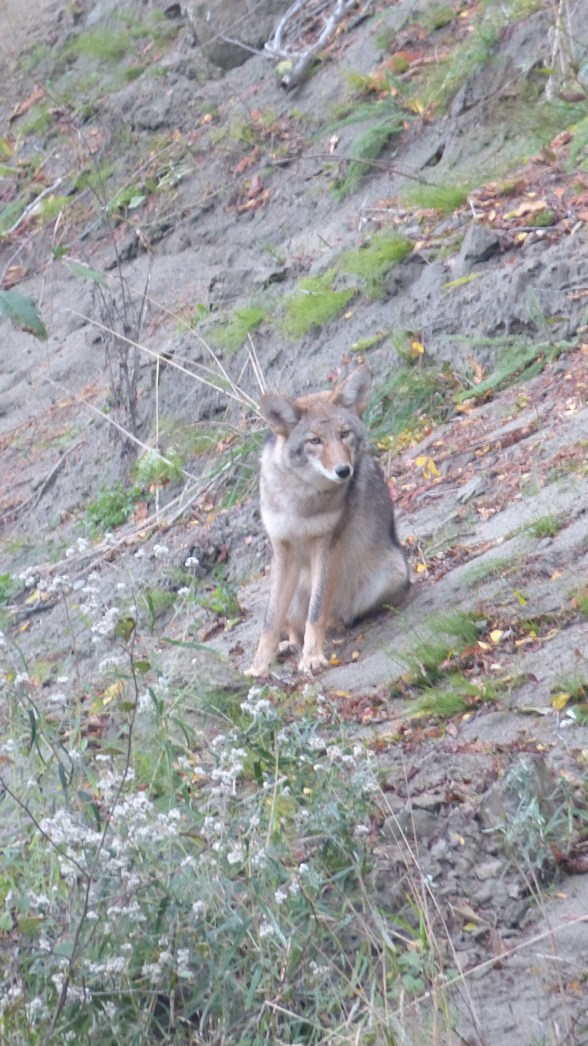
Yesterday B and I walk about a mile and a half of beach on Marrowstone Island. We see five other people total. There are long stretches with no one in sight anywhere.
Way down the beach there is a sand cliff. A coyote runs half way across the exposed face and stops. It looks precarious. We watch it. “That’s weird,” says B. “They don’t hang out in plain sight.”
It scrabbles and runs the rest of the way across. It stops and turns and sits. Watching us.
I laugh.
B. frowns. “They don’t DO that.”
“I think it’s listening to us. We’ve been singing and laughing.” We are goofballs on the beach. Wordplay. We’ve both been coming up with advertising songs. Horrors, ear worms.
“They don’t do that.” he says, “Can you take your camera out slowly?”
I have my Panasonic FZ150, 24x zoom. I get some shots. B is acting nonchalant, hunting for agates again. He finds more than me from both practice and I am busy taking pictures and being distracted by other pretty rocks, not just clear agates. He is disciplined. I am a generalist.
I get lovely shots. We zigzag back and forth on the beach, trying to look at ALL the rocks. “If you are hunting like this, other animals think you are foraging. Birds and animals will ignore you. I can get really close to them.”
The coyote is watching us. “He’s listening to us, really!”
“Maybe he wants to know what we are foraging for.”
“Rocks.”
“He’s hungry. Or he’s young.” We don’t really know it’s a he.
I start singing. I zigzag closer and take more pictures. She is flicking her ears at the song.
“She doesn’t seem rabid.”
“There isn’t much rabies out here.”
“Bats.” I say. I’ve researched it twice in the last 8 years.
“Yes, but not mammals.”
I start a video and sing to the coyote. I sing The Fox, though I leave out the verses about Old Mother Flipperflopper and the hunters. Coyote flips her ears and turns her head. She is checking where B is since he is moving further down the beach. I finish the song and turn off the video. “Thank you!” I say.
We walk again.
When we turn around, there is Coyote. She has shadowed us down the beach, and she slips into the brush at the foot of the cliff. She is quickly not visible.
“Humph.” says B.
I laugh.
Later, we look up and a larger animal is coming toward me. We both startle, but it is in a submissive posture. A dog, not a coyote, with a red collar. We both thought it was a coyote for a moment. It comes up to me and is very friendly. Then to B. Then back to it’s owner, who limps into sight.
“Wow, I thought it was another bigger coyote for a minute.”
“Me too. I thought it was coming right after you.”
“It’s owner looks frail and old.”
“Our age.”
“No way!” laugh.
“Yes.”
I don’t think so, but maybe. I was more focused on the dog.
I find two clear agates, but come back with two windbreaker pockets with other rocks. B only finds one that meets his specifications. My two really aren’t up to the quality he wants. Well, one is borderline and one doesn’t qualify.

It is November and in the Pacific Northwest it’s hard not to feel under the weather because the clouds are right over our heads. Or some mornings I open the door and my house is in the cloud. In the weather. Is that a saying too? In the hurricane, in the cyclone, in a storm. Some days I feel like I can reach up and touch the underside of the low hanging cloud. Some days it feels heavy, but others it feels safe. Hiding, hidden, invisible.
For today’s Ragtag Daily Prompt: under the weather.
Dr. Aaron Beck, father of cognitive behavioral therapy, died this week, November 2021, at age 100.
Oddly enough, the best explanations of cognitive behavioral therapy that I’ve read is on a writing website. It talks about writing down all of the horrible thoughts and then going back and writing counter thoughts. Psychologists have been talking at me at medical conferences for years about cognitive behavioral therapy, but they never explained it. They said we could do it in clinic. I thought cynically that maybe I could if I knew what the hell it was.
And the explanation by the author is oddly similar to what I think of as the angel and devil on my shoulders. It turns out that I do do it in clinic.
When I react to some event, I let the devil out first. It has a fit about whatever is happening, writes poems, is reactive, paranoid and full of anger and grief. It often imagines over the top terrible things happening to the person or people that did whatever it is. Then the angel wakes up and says, wait. What are you saying? What you are imagining and cursing that person with is WAY worse then what they did. The angel writes the poems of forgiveness.
So I have been doing a homemade form of cognitive behavioral therapy.
However, I would say that it can be overused. We need to listen to patients carefully. If they are in an abusive relationship, it should not be papered over with cognitive behavioral therapy. A friend and I have been comparing terrible childhoods. His involved being beaten without reason.
I said recently that what people hit with in my family is words. They make grief and fear into stories, funny stories, that make people laugh. Shame and humiliation and reliving the feelings. I said that I am reactive and pay close attention to words. But I have reason, back to age 2. I said that books are my refuge because the words are not about me, they don’t shame me, they do not humiliate me, and if I read a book twice, it has the same words. Home, love and safe.
In my maternal family, if I said that I was not comfortable with a comment, I was told that I took things too seriously, that I have no sense of humor, that I can’t take a joke. Gaslight and then dismiss any objection. That is how one side of my family loves. I do not like it. Unsurprisingly, they do not love me, or at least I do not feel loved.
And my friend said, your family, your childhood, was worse than mine.
One of my talents in clinic is that I can listen to insane family stories. I can listen because my family is insane. They are cruel. At least, it feels like cruelty and horror to me. I didn’t ever try to find out if a family story is true. I listen and then say, yes. I think it is appropriate for you to feel angry/sad/horrified/appalled/scared/hurt/whatever.
Somehow that listening and validation is huge. I have people come in and say, “I NEED AN ANTIDEPRESSANT.” They want to supress the feelings. So I had time in my clinic: why do you need an antidepressant? Tell me the story. Fill me in. What are you feeling and why?
And more than half the time after the story, after validation, I ask, “Do you need an antidepressant?”
The person thinks. “No. I don’t think so. Let me think about it. I feel better.”
“Ok. Do you want to schedule a follow up?”
Half do. Half say: “No, let me wait and see. I will if I need it.”
Mostly they don’t need it. They have emptied out the awful feelings in the exam room and they aren’t so awful after all. I say that it sounds like a pretty normal response and I would feel that way too. Because I would. Once the feelings, the monstrous feelings, are in the light of day, they relax and evaporate, dissipate like mist, fly home to the Beloved. Goodbye, dark feelings. You are appropriate and you are loved.
Blessings, Dr. Beck, and thank you.
BLIND WILDERNESS
in front of the garden gate - JezzieG
Discover and re-discover Mexico’s cuisine, culture and history through the recipes, backyard stories and other interesting findings of an expatriate in Canada
Or not, depending on my mood
All those moments will be lost in time, like tears in rain!
An onion has many layers. So have I!
Exploring the great outdoors one step at a time
Some of the creative paths that escaped from my brain!
Books, reading and more ... with an Australian focus ... written on Ngunnawal Country
Engaging in some lyrical athletics whilst painting pictures with words and pounding the pavement. I run; blog; write poetry; chase after my kids & drink coffee.
Coast-to-coast US bike tour
Generative AI
Climbing, Outdoors, Life!
imperfect pictures
Refugees welcome - Flüchtlinge willkommen I am teaching German to refugees. Ich unterrichte geflüchtete Menschen in der deutschen Sprache. I am writing this blog in English and German because my friends speak English and German. Ich schreibe auf Deutsch und Englisch, weil meine Freunde Deutsch und Englisch sprechen.
En fotoblogg
Books by author Diana Coombes
NEW FLOWERY JOURNEYS
in search of a better us
Personal Blog
Art from the Earth
𝖠𝗇𝗈𝗍𝗁𝖾𝗋 𝖶𝗈𝗋𝖽𝖯𝗋𝖾𝗌𝗌.𝖼𝗈𝗆 𝗌𝗂𝗍𝖾.
Taking the camera for a walk!!!
From the Existential to the Mundane - From Poetry to Prose
1 Man and His Bloody Dog
Homepage Engaging the World, Hearing the World and speaking for the World.
Anne M Bray's art blog, and then some.
My Personal Rants, Ravings, & Ruminations
 KO Rural Mad As Hell Blog
You must be logged in to post a comment.