Age-defying

I get lots of quasi and fringe medical emails. I subscribe to some so that I know what they are “pushing”. The current trend is online “classes” where you sign up and then they have hours of talk and interviews and stuff. The talks can be three hours or more for a week. I am offered a bargain daily to sign up to be able to access the talks over and over. Hmmm, not today, thanks. I have very low tolerance for videos and television.

Currently I’m getting notes from an “age-defying” one.

I am skeptical about “age-defying” as they are describing it. However, there is a study that I think is very convincing about how to stay healthy as you get older. It was done in England. They looked at five habits: excess alcohol (averaging more than two drinks a day), inactivity (couch potato), addictive drugs, obesity and tobacco.

They had people who had none of the five, people who had all of them and people who had one or two or more. The conclusion was that for each one added, the average lifespan dropped by about four years. That is, the people who did all five tended to die 20 years sooner on average than the ones with none of the bad habits.

Recently in the US, the news said “Gosh, it turns out that any alcohol is bad for us.” I thought, how silly, when various studies made that clear over a decade ago. There was a very nice study from Finland, with 79,000 people where they looked at alcohol and atrial fibrillation. Atrial fibrillation increases the risk of strokes. They concluded that lifetime dose of alcohol was directly related to atrial fibrillation. That is, the more you drink, the sooner your heart gets really grumpy and starts fibrillating. Alcohol is toxic to the heart, the liver, the brain. Tobacco is toxic to the lungs, the heart, the brain and everything else. The addictive drugs: well, you get the picture.

So the anti-aging prescription is pretty simple to recommend. It just is not always simple to do. That is why we still have doctors. For chronic bad habits I am part mom/cheerleader/bearleader/nag/kind helper. Here is the prescription. Feel free to send me money instead of buying that seven day set of twenty one hours of lectures:

  1. Minimal or no alcohol.
  2. No addictive drugs (that includes marijuana and THC and we have almost no studies indicating that CBD is not addictive.Remember that THC and CBD and the other 300+ cannabinoids produced by the marijuana plant were not studied because it is illegal at the federal level.)
  3. No tobacco.
  4. Exercise every day: a walk is fine.
  5. Maintain your weight, which means as you get older you either have to exercise more or eat less or both. Muscle mass decreases with age.

The last anti-aging piece is some luck. Born into a war zone? Caught in a disaster, flood, fire, tsunami? Born into a family with trauma and addiction and few resources? Huge stress in your life? Discrimination or abuse? If you have had none of these, help someone else, because you have the luck. Pass it on.

The header photograph is all family members: two are my aunts and one is a cousin of my father’s and they all play church organ! Music sustains that side of the family. I took that in 2017 in Baltimore, Maryland. We had the uncles along too!

This is my grandmother on my mother’s side. I took this in the early 1980s at Lake Matinenda.

I will try to dig up the links to the two studies.

Pulmonary Manifestations of Long Covid

Today’s Zoom lecture was about pulmonary manifestations of Long Covid, and this is from the Schmidt Initiative for Long Covid Global ECHO Webinar Series, out of the U of New Mexico.

First of all, the talk is brilliant. The speaker is Lekshmi Santhosh, MD, MAEd, Asso Prof Med, Pulm Critical Care Med, UCSF, Intensive Care.

Two things to start with: she stressed the six minute walk test for patients, to distinguish oxygen desaturation (dropping) from the people who have terrible tachycardia (fast heart rate) only. The oxygen drop indicates that the person needs lung studies and may need oxygen, while tachycardia alone means either a heart problem, chronic fatigue/ME pattern or dysautonomia, where the heart goes fast when the person sits or stands up. Her point was that it’s a simple test and that Long Covid presents in multiple different patterns.

The second point is that there are least five main mechanisms that Long Covid can mess us up and people can have one or many. There is a review article in Nature last month (I need a copy!) and it talks about these five: immune system problems, gut microbiome problems, autoimmune responses, blood clotting/microclotting/endothelial problems and dysfunctional neurological signalling. SO: this is a MESS. She says that patient care needs to be individualized depending on which mechanism(s) are predominant and it can be more than one. This Covid-19 is a hella bad virus.

So: “The underlying biological mechanism may not be the same in each patient.” That is the understatement of the year.

She reiterates that the current diagnostic criteria, subject to change, is symptoms that last longer than 12 weeks after Covid-19 and two months past that. She states that the symptoms can wax and wane and that we need to listen to and believe patients.

In JAMA this month, there is an article that uses big data to find which symptoms are more associated with Long Covid, and lists 13 symptoms. Smell/taste tops the list but fatigue is there too. However, this is not a list for diagnosis, it’s a study list.

She also is careful to say that the treatment for the pulmonary manifestations is not the same as the people with the pattern that resembles chronic fatigue syndrome/ME. The pulmonary people can build exercise tolerance, but the CFS/ME folks need a different regimen, with pacing and energy conservation. That sounds like a subtle difference. I had both though my CFS/ME is weird. It does not put me in bed, I just can get really tired and need to sleep. It’s a bit invisible. People see me dance and would not guess that I have CFS/ME. All relative to previous function and energy, right?

For lung manifestations, she lists a pyramid, with the more rare things at the bottom. As follows:

  1. persistent dyspnea (shortness of breath)
  2. post viral reactive airways disease (asthma that can resolve from irritated pissed off lung tissue)
  3. deconditioning. She says that the isolation and quarantine with some people in very small rooms, leads to terrible deconditioning in some folks. They can build up, especially with supervised exercise with pulmonary rehabilitation and/or physical therapy. It is scary to exercise when you are short of breath and the supervision really helps, with limits on how much you should push, or encouragement to push.
  4. organizing pneumonia. This is rare and responds to steroids. Otherwise steroids are not good for the muscles in Long Covid, with the exception of inhaled steroids for the asthmatics and post viral reactive airways.
  5. post ARDS fibrosis: fibrosis is fibrous scarring that can form in the lungs. Anyone who has any terrible pneumonia and is in the ICU and intubated and on a ventilator can get this. Not everyone gets it, thankfully. ARDS is Acute Respiratory Distress Syndrome. Luckily the fibrosis is rare and it turns out that in some people it improves with time, like years. She does not recommend the pulmonary fibrosis medicines right now. There are many causes of pulmonary fibrosis besides infection.
  6. PVD: peripheral vascular disease. Covid-19 increases clotting, so we have to look for both clots and for disease in arteries, which could be lungs, brain, heart, anywhere in the body.

She says DON’T assume that chest pain is from the lungs and don’t miss cardiovascular. That is, rule out a heart attack and pulmonary embolus first.

Other lung problems have to be kept in mind that are not caused by Covid-19. This list: Reflux associated cough, pleuritic pain, neuromuscular disease, vocal cord dysfunction, tracheal stenosis, tracheomalacia. Watch for those. She says that it is very very important to look at old chest x-rays and CT scans, because those can show previous signs of emphysema/COPD/asthma/fibrosis.

Testing: She puts the 6 minute walk test first. AFTER the thorough history and making sure there are no red flags for pulmonary embolism and heart attack. Those have to ruled out if there is any suspicion. Next: pulmonary function testing. If the DLCO is low, consider a chest CT. Consider TTE -TransThoracic Echocardiogram, to look at the heart. Labs: CBC (blood count), ESR, CRP, thyroid, +/-CPK.

She has diagnosed people who are sent to her with NOT Long Covid: they have metastatic lung cancer, metastatic prostate cancer, new pregnancy, hypersensitivity pneumonitis and many other things. She says, “Don’t assume it is Long Covid. Sometimes it isn’t.”

Now, this is all a formidable list of problems and this is JUST the lungs. Long Covid can affect every system in the body and every patient is different.

She also says that she has done more disability and accommodation paperwork in the last three years than in her entire career before that. That the US disability system is a horrid mess and that she has to talk to employers and insurers OFTEN to say that the person will get better faster and have less long term problems if she treats now and they have rest and return to work may need to be very gradual.

She approaches new patients by asking which symptoms are worst. She thinks about severity of the infection, vaccination status, previous/present other medical problems and habits that can contribute or worsen things (smoking, vaping, exposures). Her clinic is for Long Covid pulmonary, but now they have opened up a neurological branch. They use multiple other specialists as well.

Last quotation: “Until we elucidate the biology and have clinical trials, treatments are largely symptomatic.” So the basic science studies working on immune system, the gut microbiome, the clotting problems, are huge in figuring out what to do in clinical trials. This is a tremendously complex illness and three years into Covid-19, we are still trying to figure out the multiple mechanisms that cause Long Covid.

This was a very hopeful lecture from my standpoint, admitting that this is complex but that we are also working to sort out the mechanisms and work on treatments. She works hard at getting patient input and feedback as well.

Two links: A free PDF from Johns Hopkins on Bouncing Back from Covid. https://www.hopkinsmedicine.org/physical_medicine_rehabilitation/coronavirus-rehabilitation/_files/impact-of-covid-patient-recovery.pdf

The American Physical Therapy Association has articles as well: https://www.apta.org/patient-care/public-health-population-care/long-covid

Also here are webinar links:

SILC Global ECHO Webinar Series Resource Links June 28, 2023

Now, how will I use the Ragtag Daily Prompt riposte for this? I think I will just say again how important it is to listen to and believe our patients!

The photograph is from Marrowstone Island, East Beach. The shape in the driftwood is sort of lung shaped.
Not immune

I am attending multiple Zoom conferences on Long Covid and Chronic Fatigue and PANS/PANDAS and fibromyalgia. The speakers are talking hard science, digging in to the immune system to figure out what is wrong. Then they can find a drug to fix it.

Maybe it doesn’t need to be fixed. I think the immune system is smarter than we are and it knows that Covid-19 is a really really bad virus. What the immune system wants is to keep from getting any other infections so it shuts us down. It hits the chronic fatigue button, so we stay home or in bed. It hits the fibromyalgia button so that it hurts to move: we stay home or in bed. It hits the PANS button so that antibodies seriously change our behavior and we stay home or in bed. Anyone see a theme here? I think that the immune “over-response” is not an over-response. It’s not broken. It is trying to reduce exposure and just maybe we should pay attention. I thought that in residency, in the early 1990s, when chronic fatigue patients would interview me to see if I “believed” in chronic fatigue. Heck yeah, I said, but I don’t know what it is or how to fix it. My chronic fatigue patients had something in common: they were all either working 12-14 hour days continuously when they crashed, or they overworked and had insane stress, deaths of loved ones, car wrecks, accused of a crime, something horrible. The workers all wanted “to get back to where I was.” I would ask, “You want to work 12-14 hours a day again?” “Yes!” they’d say, “I want to be just like I was in the past!” “Um, but that’s what crashed you. Do you think maybe your body is not up to that?” “FIX ME.” I would try to improve things, but fix them back to what crashed them? No way and anyhow, that is not really sane.

There are some levels of illness where we have to intervene. In really bad PANDAS, antibodies to the brain are followed by macrophages that destroy brain cells. I was horrified and wanted to run around screaming “NOT MY BRAIN!” when I heard that. Then I thought, don’t be silly, I am in my 60s and if I had brain eating cells it would have happened by now. I consider myself really really lucky to have the mildest version. At least, that’s what it seems to be. (Officially we don’t believe in PANS or PANDAS in adults in the US but we do in Europe and Canada. Ironic.) With that version, especially in children, I am all for intervention, as soon as possible. And it’s not that I do not think we should intervene in these illnesses. I just think we need to step back and think a little and just maybe listen to our bodies and listen to the immune system. Slow down. Breathe. Watch some stupid cat videos. Whatever makes you relax and laugh. Reduce stress. Limit stupid hyper news to 15 minutes a day and not before bed, ok? Reduce the drama.

I am liking movies less and less. The drama bugs and bores me. I might last an hour. I have nearly quit going to our downtown movie house because it’s always “moving” and art films. Bleagh, drama. Also when it’s about illness or addiction, I want to argue with it. Easy lying endings which are nothing like reality. I like cartoons and sometimes superheroines, but it’s all drama too. I am tired of people behaving badly and don’t want to watch it on tv or a movie. There’s enough for me in the real world. I think it’s time to bring back musicals. I would watch them. Maybe. My father’s last movie was Blazing Saddles. He refused to ever go to another movie. I think I understand that now.

None of us are immune to stress or immune to infection. A person might be immune to Covid-19, or they might be immune until the tenth or hundredth strain shows up. I chose Family Practice for my specialty because I wanted to have children and be able to see them. I thought about Obstetrics-Gynecology or General Surgery, because I loved babies and loved surgery, but the Ob-Gyn residency was 4 years and General Surgery was 7 years and I was starting medical school five years out of college. Choose the more flexible and portable specialty and go rural.

Doctors and nurses are burning out because hospitals and administrators “maximize production”. Hospitals and administrators are stupid and destroying medicine. It’s not about money, it’s about helping people and science and healing. Having it be about money is soul-destroying and causes moral injury to any ethical provider. If we’d prefer unethical ones, keep on the present path. Otherwise we need single payer health care so that any physician or nurse can take care of whoever shows up. The system is breaking down more and more and it is hard to watch. Another nail of stress in the coffin of ethical medicine. I suppose when enough people die, change will come.

My working theory is that anyone can get one of these immune system illnesses: chronic fatigue, fibromyalgia, PANS/PANDAS and so forth. Medicine says that Hashimoto’s Thyroiditis, antibodies to the thyroid is the most common autoimmune disorder, but that may change. The evidence is mounting that Long Covid and these other “vague” illnesses are immune system shifts. Immune systems in “Code Red”, let’s not catch anything else. Are they an illness or are they our immune system trying to keep us quiet to protect us? I think the latter. Time may tell. I am listening to the science and listening to my body, both.

The photographs are from 2016, when a flock appeared in my yard. They demanded money to be moved to the next house.

For the Ragtag Daily Prompt: fiddlesticks. Oh, fiddlesticks, we have to figure out the very very complicated immune system. Or listen to it.

Long Covid and framing

Long Covid is being framed as the immune system going nuts and there are all sorts of ideas about what it is doing and why. And it may be that more than one of them is correct. But the assumptions that I am hearing are that we have to “fix” it. A disease model.

Since I have been through four rounds of pneumonia, and two other rounds that were probably also flares, I have a different feeling. I think that Covid-19 is a really nasty virus and that the immune system is CORRECT to be on high alert and upset.

But wait, you say, we are just supposed to put up with it?

No, that is not what I am saying. Treat infection. I wouldn’t be here if it weren’t for penicillin and clindamycin, not to mention that we know that tuberculosis is airborne and infectious. I would most probably have died as an infant if we did not know what we did about tuberculosis. However, rather than thinking of my immune system as broken now, I am thinking of it as being hyperalert. Perhaps having PTSD. What it is really saying is, “Do not get another infection.”

How does it say this? In my case, relatively mild chronic fatigue. Also, slower healing each round, this time taking two full years to get back to a chronic fatigue baseline. I am still feeling very lucky to not have a hypoxia and permanent oxygen baseline. I am also feeling lucky that my fast twitch muscles work again. But I have about half of what I would consider my “normal” energy. But don’t we all judge that “normal” from our peak energies in our teens and twenties? One friend says, “Welcome to your sixties!” when I complain that each time it takes more work and is slower rebuilding muscle.

Am I an outlier? I don’t think so. I think I am the canary in the coal mine, warning of what can come. I think that ANYONE can get a version of this, resulting from too much stress, infection or a combination of the two.

I don’t think we have to develop medicines to tweak the immune system. I think we have to change our CULTURE in the United States. We have to learn to value the parasympathetic state, not just the sympathetic fight or flight, aggressive, go go go, peak performance state. I think we are driving ourselves nuts and setting ourselves and our children up for illness and damage and a highly unhappy immune system.

So my approach to my version of PANS or Long Covid is to work on the parasympathetic state. Listen to my body. Rest. Think about what I want to do and then plan half of it. Be realistic about my energy level. Because if I can convince my immune system that I will take care of myself as best I can, and rest daily, and not be crazy, it will stand down. It will calm down. It doesn’t need drugs as much as rest, good food, good friends, and some work but not too much.

In a high sympathetic nervous system state, the immune system works less well. It is hyperalert too. People are more likely to develop auto-immune diseases, with Hashimoto’s thyroiditis being the most common. People are more likely to get infections too. We have to learn to value and support the parasympathetic nervous system.

The start is rest. If that sounds awful, the next step is breathing. Five seconds in, five seconds out, count and use a timer. Start with a couple minutes and work up to twenty. Pay attention to how your body feels at twenty minutes. It may feel unfamiliar. It’s also hard to keep paying attention to that five seconds in, five seconds out, even if you count. I start thinking about my grocery list or food or a friend I want to call and I have been doing this for YEARS. When you realize that you are not counting, return again.

I am a minimalist on pills, any pills. Supplements, vitamins, prescription. None of the pills grow on trees so I don’t distinguish between “natural” and um, what, “unnatural”? I think of it as “less tested” and “more tested”. As an allopathic physician, I prescribe when necessary and I get rid of pills whenever I can. It is better to take a daily walk and eat healthy food. And maybe take a nap too.

So this is where I start. I attended a whole program on LDN this week, low dose naltrexone. It is being used for fibromyalgia pain and for Long Covid and ME/CFS fatigue and brain fog. It has a very reassuring safety profile, pharmaceutical companies don’t want to fund research because it is old and relatively cheap, and we don’t know how long to put people on it, or what it does long term. More detail soon.

_______________________

One thing I am doing for health and joy is dancing. I try to dance at the Bishop Hotel every Tuesday, because it makes me so happy. The music makes me happy too and my friends.

Establishing a diagnosis

All of the Long Covid information is pretty confusing, isn’t it? I’ve read that most of it resolves at nine months. Another article says a year. The conference last week says that 96% are clear at two years if they are treated. What percentage are being treated? The US defined Long Covid as symptoms lasting over a month at first, while Europe said three months. I think they have now agreed on three months. This will continue to change and evolve.

When viagra first came on the market, women complained that there was not a drug for them. Pharmaceutical companies were working on it, but you cannot treat anything unless you establish a diagnosis first and women’s sexuality is more subtle then men’s. Anyhow, I wrote this silly poem making fun of the whole thing.

Little Blue Pill

Little blue pill
Little blue pill
Help me help me
I’m over the hill

Don’t wanna have sex
Nope nope nope
Little blue pill
Gives my husband hope

Can’t make a pill
Til we define the disease
Doctors would you
Hurry up please

Little blue pill
Little blue pill
Help me help me
I’m over the hill

Thought them hormones
Would make me hot
Doc was right
They did not

Hot flashes make me
Sweat and moan
No help from that
Testosterone

Little blue pill
Little blue pill
Help me help me
I’m over the hill

Doctor this
Is really no joke
My husband says
He’ll slit his throat

Can’t make a pill
Til we define a disease
They’re trying hard
Those drug companies

I think we’ll know
If they define a disease
Drug companies will plaster it
On tv

Doctor I found
Just the thing
A brand new stimulating
Clitoral ring

Don’t wanna have sex
Nope nope nope
Little blue pill
Gives my husband hope

____________________________

For the Ragtag Daily Prompt: establish.

I took the photograph of the old drug bottles today. I like that the potassium oxalate just says POISON on it and gives antidote instructions. Also, no guarantee on the clitoral ring, ok?

Medical conditions

I am reading the list of medical conditions that put people at high risk from Covid-19.

I can nearly say that being a live human “bean”, as Walk Kelly would say, puts one at high risk from Covid-19.

My intuition studies medical conditions
alcohol, overweight, diabetes, drugs
it doesn’t say much about auto emissions
or the healthy power of genuine hugs
hypertension, asthma, bad livers or hearts
Covid could get you if you don’t watch out
I wonder if risks include noxious farts
I’m in denial and not a bit stout
dementia, disability, HIV or depression
check off the ones you don’t have, think positive!
I eat an ice cream bar while secretly confessing
that eating and drinking might be causative
Happy or sad or pie in the sky
There is a daily risk that I could die

__________________________________

https://www.cdc.gov/coronavirus/2019-ncov/need-extra-precautions/people-with-medical-conditions.html

Really, that list contains nearly everyone.

Who would I be?

If I have had PANS since birth, who would I be if I had not contracted it?

No one knows. We are still arguing about whether PANDAS and PANS exist. But, my daughter says, we make up all the words. The definitions of illnesses CHANGE over time, and what an illness MEANS. Tuberculosis was an illness of poets and people too noble for this world, until microscopes became advanced enough to see the tiny bacterium, and then it became an illness of the crowded unclean poor. Medicine and science continued to study it. Once we recognized that it is an airborne illness, tuberculosis sanatoriums were set up, to quarantine people. My mother was diagnosed with tuberculosis when she coughed blood 8 months pregnant, so I was born in a sanatorium and avoided contracting tuberculosis as a newborn.

Antibodies cross the placenta, even though the tuberculosis bacterium does not. Usually infants contract tuberculosis and die, at least when I was born. The antibodies can trigger PANS or PANDAS.

The antibodies prime the fetus’s immune system. This makes sense, right? The fetus has a sick mother and best if its’ immune system is ready to fight.

Did my younger sister have it? I do not know. Not as badly, would be my guess. My mother said that as kids, we’d both get sick, but I got sicker. We both had strep A many times. My sister got mumps, off from school for three weeks, and I did not get it. But I got everything else.

Now the estimate for children with PANS or PANDAS is 1 in 200. This is enormous. A high prevalence. Antibodies, that I suspect are adaptive and lie in readiness for a pandemic or a crisis. And now we have had another pandemic, with the last really world wide bad respiratory one 100 years ago. Is the prevalence rising because of the pandemic or are we figuring out some of the cause of behavioral health illness or is the definition of illness changing or all three? I think all of them.

My cousin’s mother had polio either during her pregnancy or very soon after. My anthropologist uncle took his family to Bangladesh, where he was doing linguistics. So does my cousin have PANS or PANDAS? I do not know.

And what of my children? My pregnancy with my older child was fourth year medical school and went well. My pregnancy with my second was very complicated. I was in my first year of work as a rural Family Practice doctor and working too hard. I ended up on bed rest for three months and on a medicine. Is labor at 23 weeks an illness? Does it affect the fetus? I was on medicine from 23 weeks to 37 weeks. What effect does it have?

Medicine is still changing and changing quickly. We don’t know. There is so much we do not know.

_______________

PANS/PANDAS: https://www.pandasppn.org/guidelines/

_______________

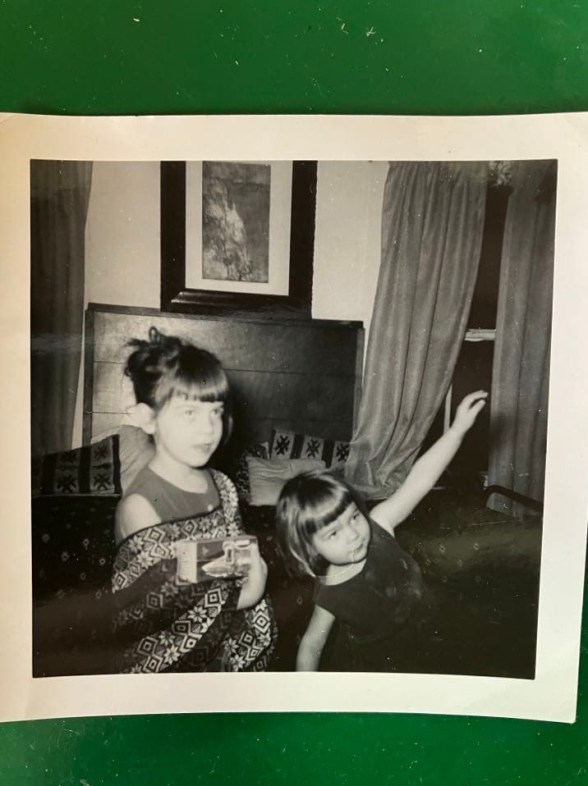
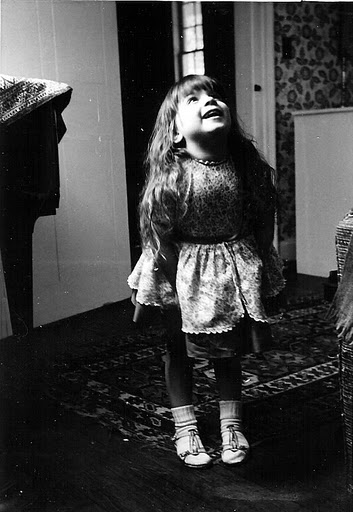
The photograph is me and my sister, in about 1967ish. I do not know who took it.

As I was going to Washington, DC

As I was going to Washington, DC

I met insurance CEOs who said “Whee”!

500 Insurance CEOs said Weeee!

Have ten insurance plans EEEEEach!

Every plan has it’s own website!

Every plan is different, password for each site!

Every plan refuses coverage for different treatments, right?

Every plan demands prior authorization, doctor’s office up all night

If they refuse chemotherapy the doctor has to fight?

Prior auths, treatments, passwords, plans

Insurance companies, all those demands

As I was going to DC

How many passwords will I need?

______________________

For the Ragtag Daily Prompt: snail.

I was pricing health insurance in case I get well enough to work more. I can get an $800 a month with a $8000 deductible or a $1435 a month with a $2000 deductible. I would very much like to work part time treating Long Covid. But, ironically enough, looks like I can’t afford health insurance. It costs more than the malpractice would. Ironic, huh? It’s not like we need doctors. (I do not have a medical release yet anyhow, but time to do research. It’s making me gloomy.)

You know, if we do get Artificial Intelligence, it will take one look at the United States Medical non-system, decide we are insane, and wipe us out.

And honestly, when I was working for the hospital clinics, I thought the most brilliant person in our office was the woman who could extract a prior authorization from so many insurance companies. I would send the referral to print and half the time she would have it authorized by the time the patient got to the front desk. And why do we waste all that brilliance on giving health insurance companies a profit of 20 cents out of every dollar? That is $20,000,000 out of $100,000,000. Looks worse with bigger numbers, doesn’t it?

Physicians for a National Healthcare Program: https://pnhp.org/.

Keep it simple

Sometimes I just despair as I read new guidelines. Don’t you? Maybe you are not a physician and don’t try to keep all of this impossible stuff in your head. Mine is full. Tilt.

Diabetes alone: if someone has type II diabetes, there are specific blood pressure guidelines, cholesterol guidelines, we are to do a hgbA1C lab test every six months minimum and more often if they are out of control, and a urine microalbumin/creatinine ratio yearly. If that starts being abnormal we are to start one of two classes of blood pressure medicines even if they have normal blood pressure.

Oh, and don’t forget: a yearly eye test and we are supposed to check their feet at EVERY visit to make sure they are not getting diabetic ulcers.

Got that? And that is just type II diabetes. And there are a whole raft of medicines, about forty right now. Some are weekly shots, some are daily tablets, some are twice a day or with every meal and they all have their own side effects, how fun. Check drug interactions, are their kidneys ok? Is their liver ok? Diabetes increases the risk of heart attack and stroke and don’t forget those feet.

Diabetes is one of the most complicated sets of guidelines, but there are a rather appalling number of guidelines. Maybe we should sic an AI on that job: Mr. Smith has type II diabetes poorly controlled, hypertension, erectile dysfunction, feels a little short of breath and has a bruise on his left shin after tripping yesterday. Please, AI, organize a twenty minute visit to cover as many things as possible efficiently and have the note finished and followup arranged by the end of it. Then it turns out that what Mr. Smith really wants to talk about is his niece who has just overdosed and nearly died from heroin, so everything else goes out the window. Maybe I should see him weekly for the next month.

Do you want to keep it simple and stay out of the doctor’s office and more importantly out of the hospital? If you are 25 and healthy, you don’t much care because old is unimaginable.

But there is a very nice study that looked at just five things regarding health, over 28 years for men and 34 for women: “The researchers looked at NHS and HPFS data on diet, physical activity, body weight, smoking, and alcohol consumption that had been collected from regularly administered, validated questionnaires.”

Here is an article about the study: https://www.health.harvard.edu/blog/healthy-lifestyle-5-keys-to-a-longer-life-2018070514186

Here is the study: https://www.ahajournals.org/doi/10.1161/CIRCULATIONAHA.117.032047

So let’s break the five things down. Here are the more formal definitions: “Using data from the Nurses’ Health Study (1980–2014; n=78 865) and the Health Professionals Follow-up Study (1986–2014, n=44 354), we defined 5 low-risk lifestyle factors as never smoking, body mass index of 18.5 to 24.9 kg/m2, β‰₯30 min/d of moderate to vigorous physical activity, moderate alcohol intake, and a high diet quality score (upper 40%), and estimated hazard ratios for the association of total lifestyle score (0–5 scale) with mortality.”

First: never smoking. I would add never vaping and not living in a cave and burning wood and hopefully not living right next to a 12 lane superhighway, all of which are bad for the lungs. Ok, while we are at it, don’t use methamphetamines or heroin or cocaine or krocodil, right? They didn’t even include those in the study.

Second: Body mass index 18.5-25. If you aren’t there, it is diet and exercise that need to change.

Third: Thirty minutes or more per day of moderate to vigorous physical activity. That can be ten minute intervals. Three can have an enormous effect on number two.

Fourth: moderate alcohol intake. Ok, alcohol is bad for the heart, period. So is tobacco. They defined moderate as less than or equal to “5 to 15 g/d for women and 5 to 30 g/d for men”. Let’s do the math: a 12 ounce beer that is 5% has 14gm of alcohol. Here: https://www.niaaa.nih.gov/alcohols-effects-health/overview-alcohol-consumption/what-standard-drink. The 8.9% 16 ounce beer at our local pub has quite a bit more. Here is a website where you can calculate how much alcohol is in a drink: https://www.rethinkingdrinking.niaaa.nih.gov/Tools/Calculators/Cocktail-Calculator.aspx.

Fifth: Diet. There is an overwhelming amount of confusing information on the internet and some of it is not only confusing but wrong. “Diet quality in the NHS, HPFS, and NHANES was assessed with the Alternate Healthy Eating Index score (Methods in the online-only Data Supplement), which is strongly associated with the onset of cardiometabolic disease in the general population.” I have not assessed my own Alternate Healthy Eating Index score. However, there are a couple very straightforward things that help with diet. First: No sweetened drinks. That means that sugary coffee with the syrup should go. I quit drinking mochas when I read that a 12 ounce one has 62 grams of carbohydrate. I would rather have a small dark chocolate. And sodas are just evil and juice not much better. Eat the fruit instead. Second: eat vegetables, every meal. A fruit is not a vegetable and no, potato chips don’t count. I mean a green or yellow or red vegetable. You can saute any vegetable, or any that I can think of. I am not counting grains as a vegetable, so pasta, pizza, potato chips and so forth do not count. Beans do count. Third: the DASH diet recommends only a tablespoon of sweetener per day. That is not very much. You can make that cheesecake slice last a week! A small piece of dark chocolate daily or tablespoon size chunk of that cheesecake.

I had a diabetic patient who would be fine, fine, fine, then out of control. “WHAT are you eating? And drinking?” The first time it was two 16 ounce Mochas a day. Then he was fine for a year and a half. Then labs went haywire again. “What are you drinking?” “Well,” he said, not wanting to admit it, “Ok, I decided to try Caramel Machiattos.” “No, no, no! You can’t do that! You’ll end up on insulin!” “Ok, ok, got it, got it.”

And what is the difference if I try to do those five things, you ask, skeptical. “We estimated that the life expectancy at age 50 years was 29.0 years (95% CI, 28.3–29.8) for women and 25.5 years (95% CI, 24.7–26.2) for men who adopted zero low-risk lifestyle factors. In contrast, for those who adopted all 5 low-risk factors, we projected a life expectancy at age 50 years of 43.1 years (95% CI, 41.3–44.9) for women and 37.6 years (95% CI, 35.8–39.4) for men.The projected life expectancy at age 50 years was on average 14.0 years (95% CI, 11.8–16.2) longer among female Americans with 5 low-risk factors compared with those with zero low-risk factors; for men, the difference was 12.2 years (95% CI, 10.1–14.2).”

____________________

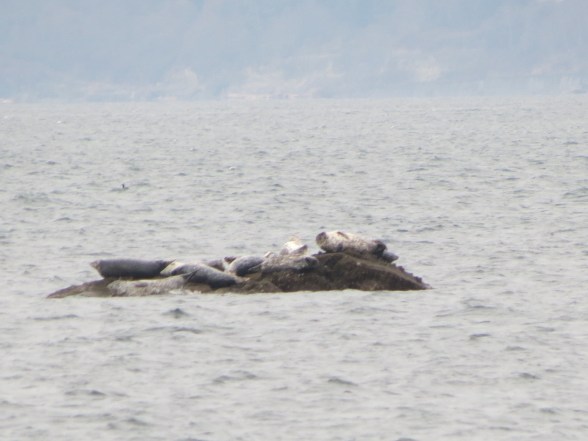
I took the photograph from Marrowstone Island. What does a healthy seal diet look like? I am so lucky to have miles of beach to hike, as long as I watch the tides and don’t mind rain.

Shame and anger in overuse illnesses

“amongst those who treat addicts of any kind generally agree that anger and shame help no one and is actively counter-productive.”*

Wait.

I have to think about that statement.

I do not agree at all.

Ok, for the physician/ARNP/PAC, anger at the patient and shaming the patient are not good practice, don’t work, and could make them worse. BUT anger and shame come up.

In many patients.

Sometimes it goes like this with opioid overuse: the person shows up, gets on buprenorphine, and is clean.

It may be a long time since they have been “clean”.

One young man wants to know WHY I am treating him as an opioid overuse patient. “Why are you treating me like an addict?”

I try to be patient. I recommended that he go inpatient, because I don’t think we will cut through the denial outpatient. Very high risk of relapse. “You have been buying oxycodone on the street for more than ten years.”

“I’ve been buying it for back pain, not to party.”

“Did you ever see a doctor about the back pain?”

“Well, no.”

“Buying it illegally is one of the criteria of opiate overuse.”

“But I’m not an addict! I’ve never tried heroin! I have never used needles!”

“We can go through the criteria again.”

He shakes his head.

He is in denial. He is fine. He doesn’t need inpatient. He is super confident, gets work again, is super proud.

And then angry. “My family still won’t talk to me!”

“Um, yes.”

“I’m clean. I’m going to the stupid AA/NA groups! Though I don’t need to. I’m fine!”

“What have you noticed at the groups?”

“What a bunch of liars!” he says, angry. “There are people court ordered there and they are still using! I can tell. They are lying through their teeth!”

“Obvious, huh?”

“Yeah!”

“Did you ever lie while you were taking the oxycodone?”

Now he ducks his head and looks down. “Well, maybe. A little.”

“Do you think your family and friends could tell?”

He glances up at me and away. “Maybe.”

“Your family may be angry and may have trouble trusting you for a while.”

“But I’ve been clean for four months!”

“How many years did you tell untruths?”

“Well.”

Shame and anger. Anger from the family and old friends, who have heard the story before, who are not inclined to trust, who are hurt and sad. The first hurdle is getting clean, but that is only the first one. Repairing relationships takes time and some people may refuse and they have that right! Sometimes patients are shocked that now that they are clean, a relationship can’t be repaired. Or that it may take years to repair. My overuse folks are not exactly used to being patient. And sometimes as they realize how upset the family and friends are, they are very ashamed. And some are very sad, at years lost, and friendships, and loved ones. I have had at least one person disappear, to relapse, after describing introducing someone else to heroin. He died about two years later, in his forties.

Shame and anger definitely come up in overuse illness.

The above is not a single patient, but cobbled together from more than one.

______________________

*from an essay titled “F—ing yes, I’m a fatphobe” on everything2.com. Today there are two with that title. The quotation is from the second essay.