The Extroverted Feeler and the Terminator

For the Ragtag Daily Prompt: grateful. I have a series of stories about my son and daughter. My son is the extroverted feeler….


The Extroverted Feeler and the Terminator

From the time the extroverted feeler is 3.5 until he turns 7, we live in Colorado, in Alamosa.

Alamosa is isolated high desert, in the San Luis Valley, at 7500 feet. We are surrounded by mountain passes, the lowest over 9000 feet, to the south. The San Luis Valley is named “Land of Cool Sunshine”. We have over 300 days of sun a year, but the temperature drops in this high desert valley every night, about 30 degrees. One day a fellow doctor announces that we’ve had a record high at night in the summer: 56 degrees. The locals complain about a heat wave when the day time temperature gets to 80.

My husband will talk to anyone, anyone and is interested in everyone. We get to know a German man, younger than us, I think through the gym.

He flies back to Germany to see family. Alamosa has a one gate airport and is really expensive to fly out of. He drives 250 miles, to Denver, to save money. Over a pass that is 10,000 feet plus.

He returns and is driving home.

He wakes up in a hospital. When the ventilator tube is removed.

We are visiting and he tells us about it. “When I woke up, they asked me what my insurance was.”

I said, “It’s in my wallet.”

“Where is your wallet?”

“In the glovebox. My truck.”

And then they show him a photograph of his truck.

He fell asleep and rolled his truck. Multiple times. There was no glovebox. Really there was not much left except bits of frame and wheels. And he’d rolled it about 17 miles from home. He almost made it the 250 miles. It was awful. Horrifying.

We are talking to him at his house a couple of months after the accident, when he is finally home. He was lifeflighted back to Denver after the accident. He’d broken an arm and his leg in multiple places and rib fractures and at home still has metal rods going into his arm. External fixation, holding bits of bone together.

My son is six. He keeps looking at our German friend and looking up above him.

Our friend notices. He is sitting in an armchair. Right behind him on the wall is a poster of the Terminator. Our friend is big and blond and has a Terminator build.

Our friend grins at my son when he realizes what the extroverted feeler is looking at. “Yes, that’s me. I am the Terminator. Part metal and part human.”

We laugh with him, glad that his sense of humor has survived….

…and had my son seen the Terminator? I suspect that he had, when I was off at work. His main sitter was a family across the street from us, a couple with teenagers. He loved hanging out with the teens. I think he got to watch a lot of movies that I didn’t know about….Our friend still had a bit of a German accent which would make it all the more compelling….

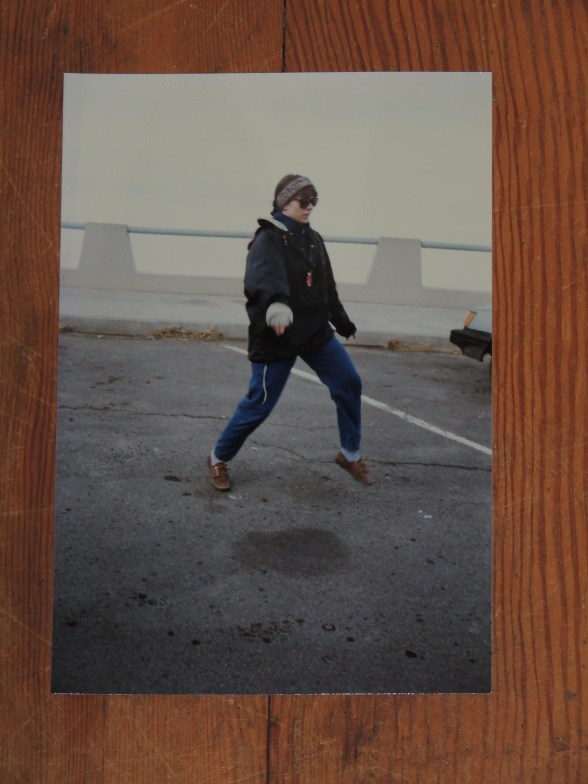
The photograph is my sister dancing with the invisible spirits… no, really we are on a road trip in the 1980s and stop for a hackysak break. She is gone from cancer.

outdoors

For mindlovesmisery’s Sunday writing prompt: gift.

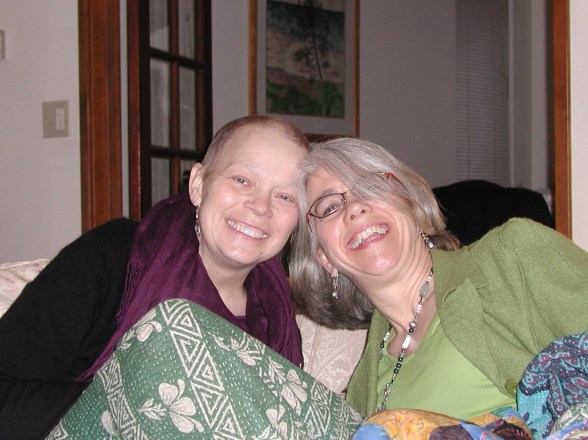
My sister and I were blessed by the gift of connection to outdoors. To forest, lake, field, desert, prairie. I sleep better in a tent on the warm earth than any house, ever. When the world is too much with me, or the news is too awful, or a patient dies of ovarian cancer and is younger than me….

…..I walk on the beach, in the forest, in my neighborhood. I sing back to the birds. I speak chickadee well enough that they perch on a branch close by and sing back. Or argue, perhaps. Swinging on a branch.

Outdoors is my church, my solace, my love, my connection with the earth, with nature, with the Beloved. Air, water, fire, earth, wood…. home is outdoors.


bask 2

For the Ragtag Daily Prompt: bask.

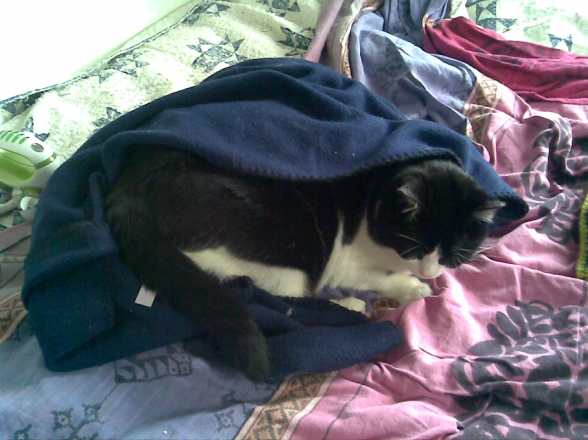
We got Princess Mittens and Boa Black at the same time, very different pound kittens. I was out with a complication of influenza (2003) and out for two months. My lungs were swollen and I just had to wait and rest until the swelling went down. Princess was killed by a car at age 10, but we still have Boa.

Princess was an expert at basking.

sing

For the Ragtag Daily Prompt: dead.

I took this in church two weeks ago. What does this have to do with death? I am thinking of one of the rounds we learned to sing when I was small:

all things shall perish from under the sky
music alone shall live
never to die

We sing for birth and death and loss and joy and work and to comfort each other and for harmony. May all the world dissolve in music.


the dark things in the world

When my son was about 12, a friend called and asked if he could babysit.

I froze up, silent.

He got it very quickly. “Um, we often come home really late, staying out until 3 am, so would it be ok if he stayed the night and we brought him home in the morning?”

“Yes,” I said, with relief.

What was I worrying about? Alcohol. I knew he and his wife drank far more than I approved of and the thought of them driving my son home drunk was NOT ok. I think that sometimes they took a taxi home. I hope so. I suppose they could send my son home in a taxi, but by having him stay the night, he would sleep too. Their children were five and six years younger than my son.

So I would take my son there, or they would pick him up, and he’d go to sleep when the kids did. I don’t know how late my son and the kids stayed up in that house. I do know the household reminded me of my childhood home, where the adults stayed up and partied. I did not party in high school at all. I didn’t want to. I was not interested in drinking alcohol illicitly. I could perfectly easily have drunk it at home: my parents were too tuned out by then to notice. I knew what people were like when drunk: why would I explore that with my peers? My father would break things in the house when he fell, there were burn marks in the floor from cigarettes, my parents would scream at each other at 1 am. I kept my head down and did very very well at school: I wanted out, even though it was not conscious. I loved my parents. Home was chaos and I escaped into books and schoolwork.

Parents need to think carefully about babysitting. Do they know the family? Do they need to drive their child to the house and pick them up? Once I went to babysit and the family had two enormous St. Bernards. The male growled at me. The owner said, “Don’t worry, he will attack anyone who tries to get in the house.” I was quite terrified of the dogs, and the male trailed enormous strings of drool into my lap. That night at 1 am I found Monty Python on cable and wondered if I’d wandered into another universe. We didn’t have cable, so it was surreal. I didn’t tell my parents about any of it. These were not people we knew: friends of friends.

Parents need to be careful as well to tell teens that adults can behave inappropriately and that a normally nice adult might behave badly when drunk. Many babysitting friends told me about the father of the kids they were sitting making sexual comments or putting a hand on their knee driving them home. This is not ok and teens need to be warned. They also should be warned about signs of drinking and inebriation and have taxi money or be able to call for a ride if they are not comfortable with the adult driving them home. And if the adult makes any sort of inappropriate remark or touch, they should NOT babysit there again ever. I would tell the offending adult why, though I think that would often get an angry or denial reaction.

I have various friends with 9 year olds. One parent made a comment that they don’t want their children to know anything bad about the world until they are ten. Another didn’t want their child to know what the term domestic violence meant.

I disagree. I would respond saying, “If your mother doesn’t want me to discuss that, then we will leave for her to talk to you about it later.”

How can we shelter our children with the magical childhood until ten and then send them to babysit at twelve? How can they recognize an adult is impaired or inappropriate behavior unless we talk about it? I have been asking adult smokers what age they started smoking for years: most of my older men started at age 9. The other day a woman said she’d tried cigarettes by age 7. Our children are not stupid, they hear things, they try to puzzle it out with each other: they deserve honesty from the start.

For a small child, that may mean a very simple explanation. My mother died of cancer when my daughter was two years and six months. By age four she had processed it to where she asked me “How old was grandmother Helen when she died?” I said that MY grandmother was 92 when she died, but grandmother Helen was 62. She asked, “How old are YOU?” I said, “I am forty. I hope to live as long as my grandmother, but none of us know how long we will live.” She studied me for a while and then went off.

They say that small children can’t process death. Clearly my daughter could! Maybe children can’t because we do not talk to them about it. We aren’t respectful. We try to hide all the dark things in the world, we try to keep them in a fairy tale. I feel angry on behalf of our children. To me it feels like parents lie: they will not tell their children what is going on. It’s not okay. And how can they handle the dark if no one will discuss it until they are ten?


Adults can be pretty weird sometimes, right? The photograph is from this year’s Kinetic Sculpture Race.

Why is she really here?

For the Ragtag Daily Prompt: object. I strenuously and loudly object to medicine meaning pills.

During my three months temp job at a nearby Army Hospital in 2010, I wanted to work with residents, Family Practice doctors in training. I finished residency in 1996 and have worked in rural clinics and hospitals for 14 years. I want more rural family practice doctors and I agitated to work with the residents in training.

The Family Practice Department had actually hired me to do clinic. They are swamped and trying to hire temporary and permanent providers as quickly as they can. Six different temp companies called me about the same job, so the word is definitely out.

Initially the department head explained that I was there to do clinic, but she changed her mind. I was cheerful about the electronic medical records. Learning a new electronic medical record is awful, but I was happy to be there, excited about working with residents and in a hospital more than 16 times as big as my usual small town hospital. Most importantly, I was patient with the computer. I have finally realized that computers don’t actually speak English. They speak computer and they are dumb as rocks and they make no effort to understand what I am saying. They don’t care. So it is no use getting mad at the dumb thing when it crashes or when it doesn’t do what I want: I have to go find someone who knows the exact language that the stupid machine will understand.

Since I was cheerful, my department head let me do what I want. I was on the clinic schedule every day, but it was empty. I would arrive and see walk-in active duty people from 6:30 to 8:00. At the same time, I would email the department head and ask what I was doing that day. Half the time, a physician was sick or had a family crisis, so she would move people around and put me with the residents. If not, I would open clinic.

I enjoyed the “Attending Room” duty. Family Practice Residents have their MD but then go through three years of training. The first year residents must precept every clinic patient. That is, they see the person and then come discuss the case with the faculty. Second year residents were required to precept two patients per half day and third year residents had to do one; and all obstetric cases were precepted.

Back when I was in residency and the dinosaurs roamed the earth, no one ever read any of my notes. This has changed. Every note that is precepted must be read by the attending and co-signed. After three years hating the electronic medical record that my small hospital bought, it was very interesting to see a different system. In some ways it was better and in some worse.

We had one or two “Attendings” in the faculty room, no more than three residents per attending. One case stands out, more because of the resident than the patient. He was a first year.

He described an elderly woman in her 80s, there for headaches. Two weeks of headaches, getting a bit worse. History of present illness, past medical history, medicines, allergies, family history, social history and the physical exam. He said, “She’s tried tylonol and ibuprofen, but they aren’t helping that much.” He frowned. “She doesn’t seem to want another medicine.”

“No?” I said.

“No.” he said. “I started to talk about medicines. It doesn’t sound like migraines and she doesn’t have anything that’s really worrisome for a tumor……but she doesn’t seem to want a headache medicine.”

“Why is she really here?”

He looked more confused. “What do you mean?”

“Why is she really here?”

“I don’t know.”

“You already said why. Think about the history.” He frowned. I said, “Ok, you said that she was worried that she was going to have a stroke. Are these headaches likely to be a precursor of a stroke?”

“No.”

“Right. But that is why she’s here, because that is what she’s worried about. Look at her blood pressure, see what her last cholesterol was, talk to her about what symptoms ARE worrisome for strokes. Find out if a family member or friend has had a recent stroke. She doesn’t need a medicine. She is here for reassurance.”

“Oh.” he said. He left and came back.

“How did it go?”

“She was happy. She didn’t want a medicine. Her blood pressure is great, her cholesterol is great, we talked about strokes and she left.”

“That’s real medicine. Forget the diagnosis if the visit seems confusing. Ask yourself what is your patient worried about? What are they afraid of? Don’t focus on giving people medicine all the time. Ask yourself, why are they really here?”

And that is why I wanted to work with residents. It’s not all diagnosis and treatment. It is people and thinking about what they want and what they are worried about.

Why is she really here?

__________________________________

previously published on everything2.com
According to dictionary.com, precept is a noun. Medical school and residency have verbed it. Hey, get updated, dictionary.com!

early

Driving to work yesterday, I pulled over and took this photograph. It was so beautiful in the early morning.

Yesterday evening I walked downtown after work. Our local Kiwanis is working on a memorial for all those lost at sea. I started thinking and wondering if we have a memorial for those lost to drug addiction, lost to domestic violence, for lost innocence.

This photograph is for all those losses.