Adverse Childhood Experiences 15: Guidelines

I wrote Adverse Childhood Experiences 14: Hope quite a while ago.

The American Academy of Pediatrics has a guideline that physicians should introduce and screen for Adverse Childhood Experiences. The American Academy of Family Practice is skeptical, here: https://www.aafp.org/pubs/afp/issues/2014/1215/p822.html. Here are two more writeups: https://www.aafp.org/pubs/afp/issues/2020/0701/p55.html and https://www.aafp.org/pubs/fpm/blogs/inpractice/entry/screen_for_aces.html.

It is difficult to screen for ACE scores for the same reason that it is difficult to screen for domestic violence and to talk about end of life plans. These are difficult topics and everyone may be uncomfortable. Besides, what can we DO about it? If growing up in trauma wires someone’s brain differently, what do we do?

I don’t frame it as the person being “damaged”. Instead, I bring up the ACE score study and say that first I congratulate people for surviving their childhood. Good job! Congratulations! You have reached adulthood! Now what?

With a high ACE score comes increased risk of addictions (all of them), mental health diagnoses (same) and chronic disease. Is this a death sentence? Should we give up? No, I think there is a lot we can do. I frame this as having “survival” brain wiring instead of “Leave it to Beaver” brain wiring. The need to survive difficulties and untrustworthy adults during childhood can set up behavior patterns that extend into adulthood. Are there patterns that we want to change and that are not serving us as adults?

This week a person said that they blow up too easily. Ah, that is one that I had to work on for years. Medical training helps but also learning that anger often covers other feelings: grief, fear, shame. I had to work to uncover those feelings and learn to feel them instead of anger. Anger can function as a boundary in childhood homes where there are not adult role models, or where the adults behave one way when sober and an entirely different way when impaired and under the influence. There may be lip service to behave a certain way but if the adult doesn’t behave, it is pretty confusing. And then the adult may not remember or be in denial or try to blame someone else, including the child, for “causing” them to be impaired.

What if someone had a “normal” childhood but the trauma all hit as a young adult? I think adults can have trauma that changes the brain too. PTSD in non-military is most often caused by motor vehicle accidents. At least, that is what I was told in the last PTSD talk I went to. Now that overdose deaths have overtaken motor vehicle accidents as the top death by accident yearly in the US, I wonder if having a fentenyl death in the family causes PTSD. Certainly it causes trauma and grief and anger and shame.

I agree with the American Academy of Pediatrics that we should screen for Adverse Childhood Experiences. We need training in how to talk about it and how to respond. I have had people tell me that their childhood was fine and then later tell me that one or both parents were alcoholics. The “fine” childhood might not have been quite as fine as reported initially. One of the hallmarks of addiction families is denial: not happening, we don’t talk about it, everything is fine. Maybe it is not fine after all. If we can learn to talk to adults about the effects on children and help people to change even in small ways, I have hope that we will help children. We can’t prevent all trauma to children, but we can mitigate it. All the ACE scores rose during the Covid pandemic and we are still working on how to help each other and ourselves.

Here is another article: https://www.aafp.org/pubs/fpm/issues/2019/0300/p5.html.

Blessings.

For the Ragtag Daily Prompt: open wound.

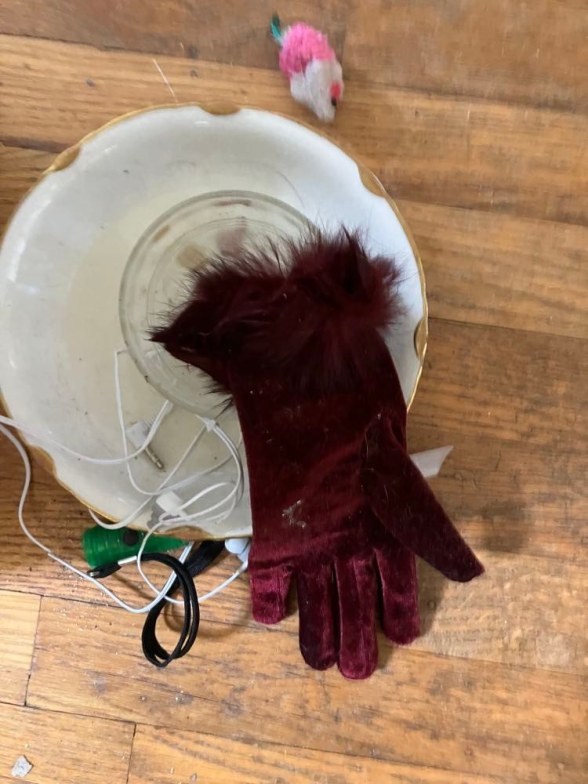
The photograph is one of Elwha’s cat art installations. He would pile toys on his bowl. Two bowels because I need to keep out the little ants. Sol Duc would do it too but not as often. I fed them in separate rooms. They would pile things on the bowl whether there was food left or not.
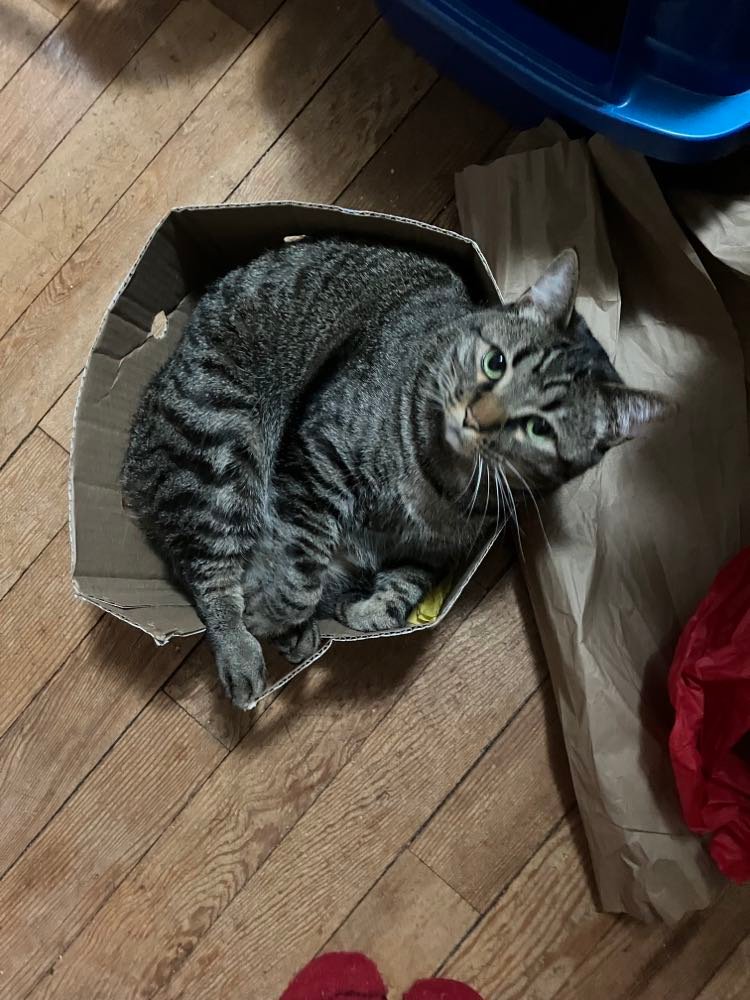
Elwha is still missing, sigh. That is a wound. The photographs are from March 2023.

Soldier on

Older
bolder
golder
told yer
moulder
soldier on

What is older? Anything and anyone older than me? At one point I have 5 women who are over 100 years old as patients. Two are 104. One is local indigenous tribe and tells me about white women moving to another pew if she sat down near them in church, back when she is in her twenties. I am apologetic at that visit because it is hospital week. Our pacific northwest hospital has chosen cowboys as the theme so being a bit oppositional defiant, I have braids with one feather hanging down. I swear that EVERY ONE of my indigenous patients comes in, including the 104 year old. I apologize, but they mostly seem amused by my rebellion.

They also influence me. Now when a 72 year old complains about being OLD, I say, “You are not old in my practice.” They look confused. I say, “I’ve had five people over 100 all at once, so you don’t get to complain about being old until you are 90.” People laugh, but they also usually look pleased. Over 100 is a LOT older than 72. When someone is over 100, I don’t really doctor them much. I might say, “This is what the book says we should do.” “I’m not doing that,” says my 101 year old. “Ok, cool.” I say. It’s hard to argue with.

And the joke about the centurian? What do you like best about turning 100? “No peer pressure.” Um, yes. I want them to tell ME what they’ve done to reach 100. The one thing that they all have in common is that they are all stubborn. I don’t know if stubbornness is what gets them there or if we just get more stubborn as we get older. Both, perhaps.

By stubborn, I don’t mean that they don’t learn and do new things. I had a woman in her upper 70s who I diagnosed with diabetes. At the next visit she said cheerfully, “I found these five apps for my phone. This one tells me the carbohydrates, this keeps track of the distance I walk, this one tracks my blood sugar.” I don’t remember what the other two did. This was a decade ago. She was retired from Microsoft. I wanted her to teach a class for me and all of my other diabetic patients.

My grandmother took classes in her 80s in lip-reading. She was going quite deaf and her hearing aides were not terribly helpful. She had videotapes and a rather shy teacher who would come to the house. She would glare at him and the videotapes. She attacked learning it like a piranha and was furious that she couldn’t learn it faster. I am like that too and my son learned some patience from the violin. He couldn’t play well immediately and found that practice works.

At what age is someone old? I think that’s moving target and the older we get, the older we think it is. I do think 104 is a lot older than 72. When does your culture think that people are old? My fierce grandmother said that she would look out her window. “I see little old ladies across the street and think, oh, poor things, they are so old. But then I think, OH, I am older then they are!” She died at age 93, fierce until the end and curious about death too. Her last words to my father were, “Look, Mac, I’m dying.” He said, “I’m looking,” and she stopped breathing. She was always curious and funny and could tease quite terribly and she and my mother butted heads and loved each other. She loved my father too, and me.

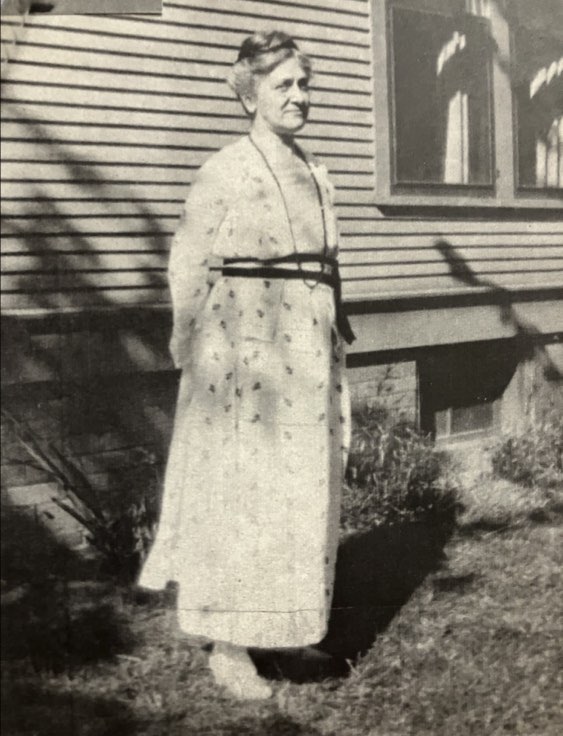
The photograph is my maternal grandmother, Katherine White Burling and it’s one I took.

For the Ragtag Daily Prompt: older.

Cool

I am still wearing sweaters to work.

It is high desert here. One morning it was really pretty cold when I walked Sol Duc in her harness. Really she walks me. Cats are like that. But I wished for mittens. The temperature was 38. The last few days the low is in the high 40s or low 50s. Two days ago it was 90 driving home from work.

The consequence is air conditioning. I do not have air conditioning on the Olympic Peninsula. My house is from 1930 and well designed to stay cool in the summer and we rarely hit 90 anyhow. Two summers ago my heat pump switched to cooling when we had one hot week, startling me. We did hit 100 one day in Port Townsend, but it still dropped thirty degrees at night because of the cool Salish Sea surrounding us. My patients would complain of the awful heat when we got to 80 degrees. It’s all relative, right?

Here in Grand Junction, we are just starting to heat up. The hottest time appears to be around 4 or 5 pm.

I was cold at work all day two days ago. I wore a linen shirt over another shirt and it was not enough. I went outside at lunch and heated up nicely in the sun. Yesterday I took a wool jacket with me. Air conditioning is very strange.

This morning it is 51 now and projected to reach 85. The high desert temperature change of 30 to 40 degrees is not that different from home, but the air conditioning is different.

For the Ragtag Daily Prompt: ambivalent.

Travel light

Pormanteau
Passepartout
What do you know?
Where will you go?

Around the world in eighty days
1873 writer braves
a story to stun and amaze
journeying difficult yet craved

And do we now want it all?
Explore and travel still don’t pall
Yet changing weather makes cities fall
What change will make us heed earth’s call?

No Passepartout to pack my bags
Ethics queries about plane rides
A portmanteau inside my mind
Books are trips, to earth be kind

For the Ragtag Daily Prompt: portmanteau.

I am Elwha

Mother is cutting our food again. Sol Duc and I would rather eat through the day whenever we feel like it AND out of each other’s bowls. She picks up my bowl sometimes! Then the other bowl is empty and there is NOTHING!

As you can see, I continue to offer my favorite things in exchange for food. Mother took platy, but she just rinsed her in the sink. I got her back when she dried. Sometimes if I drop toys in the puddle, the little ants come. They do not taste good. They are not good food. Sol Duc and I persist, though.

I may put the finger box back on the small noisy sky thing setting. Since Mother won’t give us more food. She did get a new water thing. I am not sure about it. I would rather have food.

Ragtag Daily Prompt: puddle.

Change is confusing!

I am Elwha, cat.

This two weeks has been stressful, with confusing changes. Mother comes home daily with smells of another cat. About a month ago she began rushing around and moving many things. Sol Duc and I were locked out of a room on the main floor and then out of a room on the lower floor. Then Mother continued to hurry and she even washed some of the rocks. Why would she wash rocks? We were concerned.

Then people came. Three people. One was large and he chased me! His name is Trey, he is loud, he knows my name! I ran!. Mother would pick me up and she even handed me to him. Then he was very nice and less loud and patted my belly appropriately, but after he put me down, I still did not like when he would chase me with loud noises!

There is a small female person and a less small female person, Joanne and Camille. They both held me but they are quieter and did not chase me. Trey and Joanne stayed in one of the shut rooms and Camille in the other! We asked to investigate, but were refused. This is confusing. They left after two nights, gone! Mother seemed to enjoy them very much. Trey called me “cat brother” but I am not so sure.

Mother still smells of the other cat. Daily! She left for three nights and Dennis came in. He does not stay for the night, but he is good. We miss Mother.

Mother came back, but today was more frightening. She put on our harnesses for outdoors and we went in the carriers. But instead of letting us out when we got outside, we went in the car! Then we slid forward once. Mother said, “I was trying not to hit a deer, sorry.” We cried, Sol Duc and me. Mother brought the carriers into a place with many frightened animal smells. Another woman took the top off my carrier. She and Mother talked, a lot. She gave me two shots. I let her. She let me get off the metal table. I got in the carrier with my sister. It is very small but if we squeeze together, we both fit. The other woman laughed and said, “I can’t believe they both fit in there.”

Mother put us both in the bigger carrier and brought us home. We are very very happy to be home.

Driving Lily

I was driven yesterday. I have an ill friend. She is currently in a “rehab”, aka “nursing home”, in Sequim. I drive 40 minutes to be with her at an hour appointment. Afterwards we check in at the nursing home and then I drive her back to her house, 40 minutes again. That is where Lily is. Lily is her cat. My friend was in the hospital for six days and now the “rehab” for two weeks. My friend wants to go home. Lily is miserable. She misses her person and hisses and swipes at me. I was driven to take my friend to see her cat.

Lily let me pet her yesterday because I brought her person home. However, the whole thing was a near disaster. My friend has been trying to get stronger, but she is not stronger. She is weaker. She has three steps into her house. We were there for about three hours. She sat to wash the cat’s bowl in the kitchen sink and Lily was very very happy to be near her. My friend was then tired enough that we had real difficulty getting her out of the house and back in the car. I used a bath stool to let her stop and sit about every four feet. She was using a walker, but could barely walk. She sat in the doorway of the house and talked about crawling. However, those muscles in your upper legs? Those are some of the biggest muscles in the body, and if you can barely walk, scooting or crawling is not feasible either.

We made it to the car without having to call an ambulance. I’m pretty strong for my age and size, but I’m not strong enough to carry her alone.

Poor Lily. I don’t think I dare try to get her in a cat carrier and she’d probably cry all the way driving and anyhow, the nursing home would need a shot record.

Lily will have to put up with my care for now.

For the Ragtag Daily Prompt: driven.

I am not my friend’s doctor, I am just a friend.

Elder Care: Goals

I really enjoy elder care in Family Medicine. Mostly. Even some of the very difficult or very complicated people.

One thing I would try to figure out is what is the person’s goal? This can be quite funny at times.

“Can we talk about what you would want if you got really sick? If you were too sick to talk to us?”

“I don’t want to talk about death.” Ok, this person is in their 90s.

“That is fine, but if we don’t talk about it, your daughter and I have to guess what you want. And we tend to do more when we don’t know.”

That person glares at me. “Oh, all right.”

Sometimes a person says, “I don’t want to die of cancer.”

It turns out that this is an opening. “Ok, what DO you want to die of?”

“I don’t want to die!”

“Well, me either, but I can’t fix that. There are at least three “ideal” deaths that the Veterans Administration talks to people about. Maybe we could go over them. You could put your request in with your higher power.” I have written about the three here: https://drkottaway.com/2023/10/06/an-ideal-death/. The “Hallmark” or hospice death, sudden death and fight it all the way.

But, other than not dying, what is the goal? To stay in one’s home? To move to a retirement organization that has a nursing home and care until death? Home care insurance to stay home? I do have people imply that they will go into the woods or crash their car or something if they get very sick, but not very often. They are usually aware that I have to respond to any suicide threat. How much care do they want? People often say, “I wouldn’t want to be disabled,” but it turns out that life is often worth living even when very challenging. Most people want to be treated for cancer, for heart disease, for congestive heart failure, to go on.

Sometimes death comes from a cumulative load of chronic problems. We had a gentleman in his 80s in the hospital ICU many years ago. He had pneumonia, congestive heart failure and bad kidneys as well as a host of other problems. I sat down with him. “We are treating you, but when we give you enough medicine to help you breathe, your kidneys are getting worse. This is a small rural hospital. I could transfer you to the Seattle hospital, 2 hours away. You would have a cardiologist, a kidney doctor, a lung doctor. Here you just have me and the nurses. Either way, I do not know if you will live through this. What do you want to do?”

He chose to stay. “My family can visit me here.” His family was visiting daily. “I do not want a breathing tube. I do not want dialysis. If my kidneys go, let me go.” We discussed this with the family.

Four days later it was clear that without dialysis, he was dying. Dialysis might have slowed it, but he may still have died. He was no longer waking up. We withdrew the antibiotics and removed most of the monitoring and switched him to hospice. His family continued to visit and he died a few days later.

He did die in the hospital, and yes, we used some machines up until care was withdrawn, but this still seems like he got to make choices and his family understood. It can be much harder with memory loss when the person really can’t make choices any more.

He was complicated. To keep him breathing well without a machine, we had to give him diuretics, that were eventually too much for his kidneys. A bad heart, lungs with emphysema and pneumonia, and bad kidneys. Sometimes the liver is not working either, and then what is there left to work with? Nearly all drugs are broken down by either the liver or kidneys. Simethicone is not absorbed, so that’s the exception.

Sometimes people get along until too many things accumulate and then they end up in the hospital and on multiple new medicines. It can be very confusing. Regular maintenance is a good idea.

Sometimes the family wants something different from the patient. Or there is an elder parent and three adult children, who all disagree. My job is advocate for the patient. But this is Family Medicine, so I have a responsibility to the patient but also to the family. The person, the family, the community, how is it all fitting together? Sometimes functional, sometimes not.

I had one person who called me when he had been flown to a Seattle hospital. “I have to get home.” he says, “Can you release me? I have to take care of my wife!” I panicked for a moment. “Is your wife bedridden? Where is she? Why are you in the hospital?” She was not bedridden and she was fine. He was being more and more behaviorally squirrelly. He could no longer drive, but drove anyhow. His wife disabled the car, because he would disappear. I sent him to a neurologist for memory testing. The neurologist said, “Hmmm.” and sent him for neuropsych testing. The neuropsych report said dryly that his memory was fine, but he had certain long standing behaviors related to past heavy alcohol use. Oh. He was quite proud of not drinking and going to AA, but he also triangulated with his family and me. I sat him down and said, “Ok, I am not going to talk to a different one of your five children every time you see me in the clinic, because you’ve said, “Don’t tell mom I called you.” Pick ONE person for me to talk to and now you have to have a family member with you when you come to clinic.” He grinned and chose his wife. He had certainly fooled me about his memory, because he blamed his behavior on his memory. The neurologist was not quite fooled. The family calmed down and he did not drive any more, thank goodness. He was not an easy patient, but he was entertaining and educational too. And I felt that I had helped both him and the family.

Sometimes families fight. Sometimes a dysfunctional family will get way worse when someone is sick or dies. Sometimes families go on fighting. Other families are so kind and so good to each other and their elders. Every family is different.

For the Ragtag Daily Prompt: concentration.

Elder care: stairs

Most of us do NOT live in homes practical for aging. My house has four steps in the front and five in the back to get in and out. The main floor has almost everything needed if I cannot climb a flight of stairs: only the laundry is in the basement.

I am helping a friend in her 80s. The issue, from my practical and pragmatic Family Medicine standpoint, is that she is falling. She told me that she was falling, five times in a day, in November. I got involved right away, because she had a surgery canceled because of it. She has three specialists and a primary. I called them all and took her to the emergency room first and then to her primary.

We asked her primary for disabled parking and for home health services. In Washington State, if you can’t leave your house except to the store or the doctor, you qualify for home health. I also fussed about her blood pressure, but her primary thought she was fine.

The thing is, we should not always have a blood pressure goal of 130 or less systolic once we hit 75 or 80. With weight loss, people can drop a blood pressure point for each 2 pounds lost. The blood pressure range that is safer at age 75 or 80 is to keep it around 140-150, unless the person has heart disease or congestive heart failure. Over 150 is getting too high. The brain must get good oxygen by blood flow and if it doesn’t, there are sensors in our neck that make us faint. That can be a full on loss of consciousness, or just a decrease and drop to the floor. There are some instances where the blood pressure still needs to be kept down at 125-130 systolic: bad coronary artery disease and congestive heart failure especially. But being able to stand up and walk is rather important to elder health.

The distraction for my friend’s physicians is that she has had cancer for three years. We are told that she needs an MRI of her head to rule out brain tumors, metastases from her cancer. Yes, brain tumors can cause falls, so that does need to be ruled out. My friend only falls when standing, sometimes at the counter, gets lightheaded and once has had a full on syncope. No chest pain or heart racing.

It took two months to get the brain MRI, which is negative. We saw her oncologist this week and I pushed for her cardiologist to see her sooner than June. He saw her yesterday. She is on medicine for a heart arrhythmia, but it doesn’t sound like her arrhythmia is acting up. He’s still checking: a monitor and heart ultrasound, but meanwhile he says, “I don’t tell many people this, but you need to drink more fluid and eat more salt.”

“They told me low salt. I stopped salt when I cook.”

“Start salt again and more fluid and return in 3 weeks.” She has been falling 1-5 times a day in her home. She lives alone. She is stubbornly resisting leaving her home and I am ok with that. But, it would be most helpful for her health if she was not falling. That is the priority here. She will not live forever, but she wants to stay in her home. Let’s help with that.

I am NOT saying that everyone over 75 should increase salt. If a person has bad hypertension, or heart disease, or congestive heart failure, they should not increase salt unless their doctor has a specific reason. And heart is the number one killer, so there are lots of people who should continue to eat a low salt diet. But falling and breaking a hip is also a killer.

My friend has three steps to get out of her house. The first day last week that I took her to get labs, she fell three times. “But Jim, I’m a doctor, not a nurse!” Ok, I am not a good nurse. However, we got her back inside after labs and getting the CT scan contrast for her to drink. She has not fallen when I have gotten her in or out since. I’ve had to enlist help twice, since she’s taller than me. Going down the steps is worse than going up. Home health is doing physical therapy and she has a raised seat on her commode. That is good, except those are the muscles that help us go up and down stairs. She has a walker too. She is still falling, because to cook, one has to let go of the walker, right?

So if someone wants to stay at home, think about the home. Are there steps? How strong is the person? Do they have the resources to pay for around the clock care if they become bedridden? I am practicing getting down on the floor and back up every single day, because I want to be strong. I have an upstairs and a basement, and I am going to continue with stairs for as long as possible. If I break my leg, those four front stairs are going to be an issue, but I am thinking about it. Perhaps I should design a decorative ramp, or a sloping earth entry.

Will the house accomodate a wheelchair? Is there a bathroom and a bedroom, as well as the kitchen, on the main floor? Is there clutter? I know I am supposed to keep the floors clear to reduce fall risk. I had one person who kept falling at night because he wouldn’t turn on a light. “It would wake my wife and disturb her,” he said. “It will disturb her more if you break your hip.” I said. “Turn on a light or a flashlight or something.”

Harvard Medicine agrees: https://www.health.harvard.edu/staying-healthy/master-the-stairs

Be careful out there. Or maybe in there.

For the Ragtag Daily Prompt: Elder care can’t be laissez-faire.

The photograph is not my friend. This is Tessie Temple, my maternal grandfather’s mother. I do not have a date nor who took the photograph. Another photograph is stamped on the back: Battle Creek. She must have gone to one of the famous sanatoriums, like Kellogg’s, for rest or the cures.