In deep

Time to return
again

Human, pfaugh
I give up
I don’t want to be one
I can be anything I want to be
I want to be a mermaid
again

I sink into the sea
and down to the depths
scales and tail and breathe the sea
the water cools the burns
my charred burnt skin
and lungs

Such a fail again
every time I try
to be human
yes, legs, I can do that
it always makes my voice hurt
but those damn wings
come with the legs

It’s hard to hide the wings.

I don’t know how
but they sense them
even when I hide them

It really pisses me off.
It’s the broken ones that show up
though now I think maybe
they are all broken
they all wander around
pretending they are ok
using lies to try to appear nice
hating parts of themselves
calling those parts unclean spirits
and casting them out
DEMON! DEVIL!
over and over

I try to pretend they aren’t there
the cast out
and I am human too
but the demons kneel and lay their monstrous heads
in my lap
crying
cluster round me
begging for my help

I always fail.

I try to stay present
with the person and the cast out
but eventually I can’t stand it
and I say something wrong
and the stupid human thinks I am the demon
and casts me out too.

I wait and hope.

I wait and hope with the monsters
with the rough beasts.
“You have wings,” say the demons, “Help us!”
“I can’t.” I say, “The humans must help themselves.”
The monsters weep and wail.
Finally I am sick of it again.
I send them home
and I go home too.
I have failed again
and must endure falling through the atmosphere
my feathers and skin a burning star

I am sick of it.
I give up, Beloved.
I am a failure.
I can’t do this.
I must go to the sea again.

Here is the trench, the deepest part of the ocean
I stop swimming and let myself sink
Slowly the light disappears
I am in the ink black

Slowly the others appear
glowing
in the deep

_________________________

For the Ragtag Daily Prompt: liquid.

Age-defying

I get lots of quasi and fringe medical emails. I subscribe to some so that I know what they are “pushing”. The current trend is online “classes” where you sign up and then they have hours of talk and interviews and stuff. The talks can be three hours or more for a week. I am offered a bargain daily to sign up to be able to access the talks over and over. Hmmm, not today, thanks. I have very low tolerance for videos and television.

Currently I’m getting notes from an “age-defying” one.

I am skeptical about “age-defying” as they are describing it. However, there is a study that I think is very convincing about how to stay healthy as you get older. It was done in England. They looked at five habits: excess alcohol (averaging more than two drinks a day), inactivity (couch potato), addictive drugs, obesity and tobacco.

They had people who had none of the five, people who had all of them and people who had one or two or more. The conclusion was that for each one added, the average lifespan dropped by about four years. That is, the people who did all five tended to die 20 years sooner on average than the ones with none of the bad habits.

Recently in the US, the news said “Gosh, it turns out that any alcohol is bad for us.” I thought, how silly, when various studies made that clear over a decade ago. There was a very nice study from Finland, with 79,000 people where they looked at alcohol and atrial fibrillation. Atrial fibrillation increases the risk of strokes. They concluded that lifetime dose of alcohol was directly related to atrial fibrillation. That is, the more you drink, the sooner your heart gets really grumpy and starts fibrillating. Alcohol is toxic to the heart, the liver, the brain. Tobacco is toxic to the lungs, the heart, the brain and everything else. The addictive drugs: well, you get the picture.

So the anti-aging prescription is pretty simple to recommend. It just is not always simple to do. That is why we still have doctors. For chronic bad habits I am part mom/cheerleader/bearleader/nag/kind helper. Here is the prescription. Feel free to send me money instead of buying that seven day set of twenty one hours of lectures:

  1. Minimal or no alcohol.
  2. No addictive drugs (that includes marijuana and THC and we have almost no studies indicating that CBD is not addictive.Remember that THC and CBD and the other 300+ cannabinoids produced by the marijuana plant were not studied because it is illegal at the federal level.)
  3. No tobacco.
  4. Exercise every day: a walk is fine.
  5. Maintain your weight, which means as you get older you either have to exercise more or eat less or both. Muscle mass decreases with age.

The last anti-aging piece is some luck. Born into a war zone? Caught in a disaster, flood, fire, tsunami? Born into a family with trauma and addiction and few resources? Huge stress in your life? Discrimination or abuse? If you have had none of these, help someone else, because you have the luck. Pass it on.

The header photograph is all family members: two are my aunts and one is a cousin of my father’s and they all play church organ! Music sustains that side of the family. I took that in 2017 in Baltimore, Maryland. We had the uncles along too!

This is my grandmother on my mother’s side. I took this in the early 1980s at Lake Matinenda.

I will try to dig up the links to the two studies.

What the body wants

My lungs are much much better than a year ago, shown by no problem at altitude at rest. Of course, I did not exercise heavily above 5000 feet, but walked a lot.

The last three days I have been waking up very very stiff, knees hurting when I walk downstairs, and throat closed again.

I think it’s about work. I am contemplating going back to work. I am getting a clear “not yet” message from my body. I was sick for two years and it’s only been a month that my muscles have been working normally. Same with lungs. So I think the stiffness is the body resisting.

In clinic sometimes I would have people draw two charts. A pie chart of a day. The first chart is how they are spending their days now. The second chart is what they want. In order to do more of what you want, you have to do less of something you are presently doing. What are you going to cut out? Not food or sleep or baths or maintaining the home. How about television?

Anyhow, I added a third chart, to do a few days after the first two. Draw a pie chart of what your body wants. I had one person say, “But my body just wants to sit and do nothing!” I said, “So when are you going to do that?” At first she said, I can’t, I can’t, I can’t. After a while she said maybe. Then she rearranged work and took a two week vacation. She said, “After a week, one day I had a book, a cup of tea, the cat on my lap, the dog on my feet, and suddenly my body just entirely relaxed. And then it stayed relaxed.”

She went back to work. “Are you still relaxed?” I asked. “Not all the time, but when I start tightening up, it’s often because I am taking on someone else’s problem. I am learning to let it be their problem, not mine.”

I am listening to my body too. What does it want? Not yet, for work. I have some work at home, or some jobs to do there first.

Wise body, I am listening.

Sinecure

Sinecure

Sometimes patients are a mystery.

A relatively young man comes to see me.
Problems, a bit intricate, I type a thorough
history as we talk. I make suggestions
and he is to return in a few weeks.
He receives a copy of the note and plan
spit out by the printer.

He returns. There is a pain component.
He does not bring the journal I suggested.
He seems no better. I add a little to the plan
and suggest that he return again.

And again and again. Fourth visit. No journal.
“What have you tried that I have suggested?”
He replies, “I haven’t read your notes yet.”
“You haven’t read my notes yet? In three months?
I’ll tell you what: how about you return after
you read my notes and try some
of my suggestions. Why come in if you aren’t interested
in trying anything?” I do not go to rage.
It is not my problem. It is his problem.
If he doesn’t like the plan or doesn’t want to read
(yes he can read) or doesn’t want change,
that is his choice. Don’t waste my time.

He does not return.

It is a mystery. What did he want?
Why didn’t he tell me if he wanted something else?
If it was opiates perhaps he asked around
and decided I am the wrong “provider”
since I am very careful about those provisions.

A mystery. I wonder if it could have played out
differently. Then I let it go and move on.

_________________

For the Ragtag Daily Prompt: sinecure.

Make space for the difficult feelings

I am watching a four part video from the UK about illness and trauma.

The first part is about how trauma memories are stored differently from regular memories. Regular memories are stored in files, like stories in a book or a library.

Trauma memories are stored in the amygdala and often are disjointed and broken up and have all of the sensory input from the worst parts, including the emotions.

The therapist is talking about healing: that our tendency is to turn away from the trauma, smooth it over and try to ignore it.

However, the amygdala will not allow this. It will keep bringing the trauma up. And that is actually its’ job, to try to warn and protect us from danger!

The therapist counsels finding a safe time and place and safe person (if you have one) and then making space for the trauma to come back up. One approach is to write out the story, going through that most traumatic part, but not stopping there. What happened next? Writing the story and then putting it aside. Writing it again the next day and doing this for four days. As the story is rewritten and has an ending, even if it is not a happy ending, the story is eventually moved from the amygdala to the regular files. People can and do heal. They may need a lot of time and help, but they can heal.

I am not saying that four days of writing stories is enough. That is one approach, but nothing works for everyone and people need different sorts of help. There are all sorts of paths to healing.

In my Family Practice clinic I would see people in distress. With some gentle prompting and offering space, they would tell me about trauma and things happening in their personal life or work life. Things that were feeling so overwhelming that they could not tell their families or friends and they just could not seem to process the feelings about it. I would keep asking what was happening and give them the space to tell the story. Many times when they reached the present they would stop. There would be a silence. Then I would say, “It seems perfectly reasonable that you feel terrible, frightened, horrified, grieved, whatever they were feeling, with that going on.” And there was often a moment where the person looked inwards, at the arc of the story, and they too felt that their feelings were reasonable.

I would offer a referral to a counselor. “Or you can come back. Do you want to come back and talk about it if you need to?”

Sometimes they would take the referral. Sometimes they would schedule to come back. But nearly half the time they would say, “Let me wait and see. I think I am ok. I will call if I need to. Let me see what happens.”

When a person goes through trauma, many people cut them off. They don’t want to hear about it. They say let it go. They may avoid you. You will find out who your true friends are, who can stand by you when you are suffering. I have trouble when someone tries to show up in my life and wants to just pretend that nothing happened. “Let’s just start from now and go forward.” A family member said that to me recently. Um, no. You do not get to pretend nothing happened or say, “I wanted to stay out of it.” and now show back up. No. No. You are not my friend and will not be. And I am completely unwilling to trade silence about my trauma for your false friendship.

Yet rather than anger, I feel grief and pity. Because this family member can’t process his own trauma and therefore can’t be present for mine. Stunted growth.

People can heal but they need help and they need to choose to do the work of healing.

The four videos are here: https://www.panspandasuk.org/trauma.

This song is a darkly funny illustration: she may be trying to process past trauma, but the narrator doesn’t want anything to do with it. And he may not have the capacity to handle it. He may have his own issues that he has not dealt with. And maybe they both need professionals.

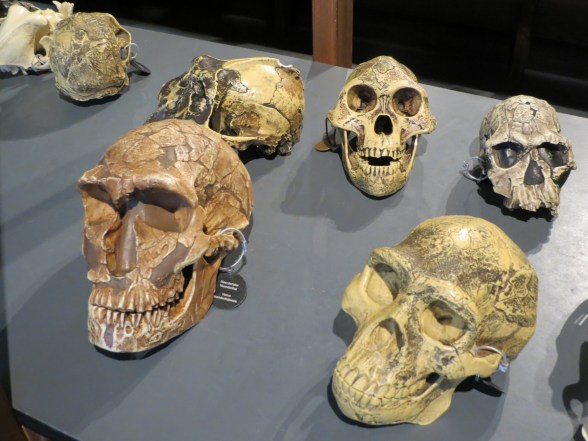
skulls

I took this on my trip in March 2022. So far no one has guessed where I was correctly. There is a wonderful Zoology and Science Museum. A mystery for you to consider, where was I?

For the Ragtag Daily Prompt: ancient.

Covid-19: Long Haul III

The CDC has guidelines for Long Covid and it can qualify for disability in the United States.

Here: https://www.cdc.gov/coronavirus/2019-ncov/long-term-effects/index.html

And here: “As of July 2021, β€œlong COVID,” also known as post-COVID conditions, can be considered a disability under the Americans with Disabilities Act (ADA). Learn more: Guidance on β€œLong COVID” as a Disability Under the ADA, Section

Here is the list of “most common” symptoms from the CDC:

General symptoms

  • Tiredness or fatigue that interferes with daily life
  • Symptoms that get worse after physical or mental effort (also known as β€œpost-exertional malaise”)
  • Fever

Respiratory and heart symptoms

  • Difficulty breathing or shortness of breath
  • Cough
  • Chest pain
  • Fast-beating or pounding heart (also known as heart palpitations)

Neurological symptoms

  • Difficulty thinking or concentrating (sometimes referred to as β€œbrain fog”)
  • Headache
  • Sleep problems
  • Dizziness when you stand up (lightheadedness)
  • Pins-and-needles feelings
  • Change in smell or taste
  • Depression or anxiety

Digestive symptoms

  • Diarrhea
  • Stomach pain

Other symptoms

  • Joint or muscle pain
  • Rash
  • Changes in menstrual cycles

There are recommendations for a work up by physicians. Depending on symptoms, this may include labs, ECG, echocardiogram (heart ultrasound), CT scan and other tests.

A friend has just gone through those four tests . They are “normal” except for her heart rate. At rest her heart rate is 70 with a normal oxygen level. Walking, her heart rate jumps to 135. Over 100 is abnormal in this athlete who is NOT exerting heavily.

So WHAT is going on with NORMAL testing? I think this is “Covid-19 Viral Pneumonia”, a complication of Covid-19, just as “Influenza Viral Pneumonia” is a complication of influenza. Ralph Netter MD has an illustration of lungs from a person who died of influenza viral pneumonia: the lungs are swollen and inflamed and bruised. WHY is the testing “normal” then? The swelling is throughout the lungs, so a chest x-ray sees it as all the same density and a CT scan also sees it as all the same density. The lungs may have mildly decreased breath sounds, but the sounds are even throughout the lungs. The useful TEST is a walk test. I have tested patients with “walking pneumonia” in clinic for years: get a resting heart rate and oxygen level. Then have my patient walk up and down the hall three times and sit back down. Watch the heart rate and oxygen level. If the heart rate jumps 30 beats up or is over 100, the person needs to continue rest until the heart rate stays under 100 or jumps less than 30 beats. It is important to observe the heart rate until they recover. Sometimes the oxygen saturation will drop as the heart rate comes down, and some people qualify for oxygen. Steroids do not seem to work for this. The length of time to healing is not totally surprising, because a lobar pneumonia that is visible on chest xray takes 6-8 weeks to fully clear. It is not too amazing that a bad walking pneumonia could also take 6 weeks or more to clear. If the person returns to work too soon, they prolong the lung inflammation and they are at risk for exhaustion and for a secondary pneumonia. The treatment is REST REST REST and support.

Do they need oxygen? Currently oxygen is covered only if the person’s oxygen saturation drops down to 88%. However, I think that oxygen would help recovery and make them less exhausted. With my first walking pneumonia, which was influenza, my walking heart rate was 135 and my resting heart rate was 100. Both were abnormal for me. Neither I nor my physician could figure it out. This was in 2003. I did look in my Netter book: I took one look at the painting of the influenza lungs and shut the book. “Oh.” I thought. “That’s why I can’t breathe.” The image is here, though I wish it were bigger.

It took two months for my heart rate to come down, the lung swelling to improve, and me to return to work. I read the text of Dr. Netter’s image a year later and then I read an entire book about the 1918-1919 influenza. Since then I have walked people who come in complaining of exhaustion after a “cold” or “bad cough”. Viruses can cause this and so can bacteria: mycoplasma pneumonia, chlamydia pneumonia, pneumococcal pneumonia, legionella and strep A. If the fever is gone, the infection has probably resolved, but it still can take days or weeks for the lung tissue to recover.

For Covid-19, I would add a third test: walking with weights. We test cardiac patients by asking if they can carry two bags of groceries up a flight of stairs. That is 3 Mets, a measure of the heart load. We need to measure the lung load as well. If the lung tissue is swollen, the amount of airspace is cut down and can be half normal. The heart attempts to take up the slack. The person may tolerate a heart rate of 135 for a while, but it is like running a marathon. If they are older or have heart disease, this can trigger a heart attack. I would walk the person carrying hand weights, and see the recovery.

Also, brain fog is unsurprising. If your oxygen level is borderline, it is darn hard to think. I write really strange songs when I am hypoxic. I get goofy and feel weird. The fast heart rate also feels like anxiety: I think that the body is trying to tell me to rest.

The definition of Long Covid is symptoms after 30 days. Please see your physician if you are still ill and continue to have symptoms.

Blessings.

Here is a recent article about T-cells and inflammation in the lungs of Covid-19 patients: https://www.ncbi.nlm.nih.gov/pmc/articles/PMC8460308/

and this: https://www.frontiersin.org/articles/10.3389/fimmu.2020.589380/full

behavioral health, cancer, and the immune system

There are more and more articles about immune causes of “behavioral health” diagnoses.

The latest I’ve read is about schizophrenia:

https://www.nature.com/articles/s41598-020-63776-0

Auto-antibodies are antibodies that we make against something else that then attack a part of ourselves. The most well know version of an auto-antibody is Rheumatic Fever, where an antibody to streptococcus A attacks the joints or skin or heart. I had a patient in Colorado who needed a new heart valve at age 10 or 11 because of Rheumatic Fever.

I have written a lot about PANDAS and PANS (respectively Pediatric Autoimmune Neuropsychiatric Disorders Associated with Strep A and Pediatric Acute Neuropsychiatric Syndrome) because an older psychiatrist was suspicious that I have PANS. I have had pneumonia four times and it is accompanied by anxiety and fear, part of which turns out to be hypoxia and tachycardia. I think a heart rate of 135 makes just about ANYONE feel anxious. It feels awful.

But what about other Behavioral Health Diagnoses? Remember, we are on the DSM V, the fifth manual of psychiatric diagnoses. We have not had markers or a clear cause. That is, we are aware that serotonin is low in the intracellular spaces in the brain with depression but we don’t know what the mechanism is, what the cause is and what exactly is happening in the neuron or brain cells. A paper on a particular rat neuron said that there were 300 different types of serotonin receptors on that neuron. Blocking one type caused rats to act in an obsessive compulsive manner. But there are 299 others and then combinations. Whew, there is a lot to be learned about the brain.

Fibromyalgia can be caused by autoantibodies, at least some of the cases: https://www.sciencedaily.com/releases/2021/07/210701120703.htm

Chronic fatigue: https://pubmed.ncbi.nlm.nih.gov/34441971/

Lupus and fibromyalgia overlap: https://pubmed.ncbi.nlm.nih.gov/9207710/

Autoimmune disorders are more common in women. We think this is because of pregnancy. The woman’s immune system has to tolerate a pregnancy where half the genetic material is from the father. Yet the immune system also has to recognize “not me, infection” and be able to distinguish that from the pregnancy. This is tricky. The most common autoimmune disorder currently is believed to be Hashimoto’s Thyroiditis, where there are self antibodies to the thyroid. Post covid could potentially beat this out.

Chronic fatigue and fibromyalgia have been orphan diseases in that we do not have an inflammation marker that defines them. The ESR (erythrocyte sedimentation rate) and CRP (um) are usually normal. These are often elevated in rheumatological disorders. Not having a marker doesn’t mean that the muscles are not painful and doesn’t mean that the fatigue is not real.

I am hopeful that we are on the cusp of a true revolution in medicine, with more understanding of the immune system and behavioral health disorders, as well as post covid, fibromyalgia and chronic fatigue. I worked at the National Cancer Institute in the 1980s before medical school, with Steve Rosenberg, MD. He was trying to get the immune system to fight cancer.

Now there has been a cancer treatment with 100% success: an immune treatment for people with rectal cancer with a particular immune profile. This is AMAZING! https://www.zmescience.com/science/experimental-trial-cancer-complete-remission-02725735/

Only 18 patients, but 100% success! No surgery.

The patch for the National Cancer Institute shows a man fighting a crab: Cancer, the crab. Dr. Rosenberg talked about Sysiphus, who was rolling a stone up a mountain eternally while it rolled back on him. From here: Later legend related that when Death came to fetch him, Sisyphus chained Death up so that no one died. Finally, Ares came to aid Death, and Sisyphus had to submit. In the meantime, Sisyphus had told his wife, Merope, not to perform the usual sacrifices and to leave his body unburied. Thus, when he reached the underworld, he was permitted to return to punish her for the omission. Once back at home, Sisyphus continued to live to a ripe old age before dying a second time.

Maybe the stone has reached a resting place. Blessings and peace you. Please peace me.

Covid-19 and walking pneumonia

I wrote this essay in July 2017. Before Covid-19. It is clear that Covid-19 is also causing a walking pneumonia. People are exhausted when they get out of bed. No fever, they may not cough much, but if they get up, they can feel exhausted. The key to this is the heart rate, the pulse. If the pulse jumps 30 points faster or more, this implies lung swelling and reduced lung capacity. Right now, the only treatment we have is rest and time to heal. I should know, I’ve had really bad walking pneumonia four times: the first two times I was out for two months. The third time 6 months with 6 more months half days and chronic fatigue. The fourth time put me on oxygen.

I want to offer hope to the people with Long Covid-19. Having been through four bad pneumonias, with increasingly long recovery times, and now disabled for doing Family Medicine, I have experience to share. I will write more about that in the next essay.

From 2017: Walking pneumonia is changing.

The classic bugs are four “atypical bacteria”:

mycoplasma pneumonia
chlamydia pneumonia (this is not the STD chlamydia. Different one.)
legionella
pertussis (whooping cough)

However, streptococcus pneumonia can also be a walking pneumonia OR a lobar pneumonia. In a lobar pneumonia the person usually is short of breath, running a fever of 102-104, and they point to where it is: hurts in the right upper chest. On chest x-ray there will be consolidation: whited out from fluid or swelling instead of nice ribs and dark air. They are often tachycardic and hypoxic.

In walking pneumonia the person often has no or minimal fever, they just feel tired or short of breath when they do things, and the chest xray can be “clear”. It isn’t really “normal”, it’s just that the bacteria or virus affects the entire lungs and causes some swelling throughout and doesn’t white it out.

“Double” pneumonia is when the chest film is whiting out on both sides. We also see the lungs whiting out with ARDS — acute respiratory distress syndrome. So after trauma in a car wreck and lots of broken ribs, the lungs can be bruised too and white out. Ow. Influenza virus can cause lung swelling and in the 1917-1918 flu infected military recruits lungs were swelling shut. They would turn blue and die.

“My” strep that I’ve had pneumonia with twice is streptococcus A, not strep pneumonia. It causes strep throat mostly though it can invade and cause sepsis or pneumonia or cellulitis. There are currently 4000+ known strains of strep A, and some are resistant to antibiotics or can cause kidney damage or do all sorts of nasty things. I think that “my” strep is resistant to azithromycin.

The current guidelines say to treat walking pneumonia with azithromycin. However, a paper came out this year saying that resistance to azithromycin is rising among streptococcus pneumonia and that nearly 50% of strains tested were resistant. Uh-oh. That means that azithomycin doesn’t work and the person can get sicker and may die. I talked to a pulmonologist in Seattle when I needed help with someone. He said that he would have said there weren’t any resistant strep pneumo strains here in Washington except that he had one intubated and in the ICU right then. “I’m convinced now, ” he said.

A lobar pneumonia is easier to diagnose. Abnormal chest x-ray, reasonably healthy people run a high white blood cell count (so my frail folks, immunosupressed folks and 90 year olds don’t raise their white blood cell count), and a fever (ditto) and look sick. The walking pneumonia people come in saying they have been coughing for 3 weeks or 4 weeks or two months. I am doing more lab testing because of the resistance.

This winter I have seen 6 different causes of walking pneumonia here: influenza A, respiratory syncytial virus (In more than one person over 60. That is NOT who the books say it should affect. It’s supposed to mostly cause bronchiolitis in babies and preemies), pertussis, strep pneumococcus, strep A and none of the above. All looking pretty much the same, but with different treatment.

https://wwwnc.cdc.gov/eid/article/15/8/08-1187_article
https://www.cdc.gov/pneumonia/atypical/mycoplasma/index.html
http://www.medscape.com/viewarticle/820736
https://www.cdc.gov/drugresistance/threat-report-2013/pdf/ar-threats-2013-508.pdf#page=79
RSV: http://kidshealth.org/en/parents/rsv.html
Mycoplasma resistance to azithromycin has been reported too: http://erj.ersjournals.com/content/36/4/969

kooky klothes

I took this May 31, 2022. I was still pretty sick with pneumonia and needed oxygen to do practically anything. I had dropped ten pounds the first week of being sick, March 20th. In 2014 it was six months before I could return to work and then only part time and exhausted. So I knew I was likely to be in for a six month haul. I hadn’t figured on needing oxygen, but it made me feel so much better and be able to think again!

Anyhow, I was entertaining myself by going through my closet and putting on things that I did not wear to work. I like the sun lighting up my legs in this photograph. The dress is shorter than it looks and the jacket has tags in Japanese and is a soft woven silk. I thrift shop by feel, because silk and mohair and cashmere and wool and cotton feel so wonderful.

Later the same day, I took this photograph:

I would wear out very quickly during the day. Today it is pouring here and last summer by now it was much much warmer! The sun made my lungs hurt less.

For the Ragtag Daily Prompt: kooky.