Parasympathy

In 2013, Catherine Hodes, director of the Safe Homes Project (a domestic-violence program), started a workshop called “Is it Conflict or Abuse?” An abusive dynamic, she argues, requires one person to have power over the other, whereas conflict involves two people struggling for power. The distinction can be confusing, and in some cases “both people feel like they’re being abused, because they’re not getting their needs met or they’re not getting their way.”

From the Atlantic Monthly article: That’s it, you’re dead to me. September 2022 p. 14.

I think this is a fascinating idea, in the article that questions the internet wisdom of getting rid of “toxic people” in one’s life. When we cut off someone we consider “toxic”, we aren’t peaceing them, are we? Peace me, peace you, how do we actively peace people instead of being afraid, on guard, at war. I think everyone is more afraid after the two years of Covid 19 pandemic and all of the deaths and the Long Haul Covid and war. Everyone has a shorter fuse, everyone is stressed.

Remember that stress activates the sympathetic nervous system, the fight or flight system. The body makes less thyroid and less sex hormones and makes more adrenaline and cortisol. Cortisol is a steroid and great for short term, but bad for long term. If we are continually stressed, cortisol messes up the immune system and we get auto-immune disorders, the body attacking its’ own cells. The adrenaline raises our heart rate and blood pressure, neither of which are good for the heart long term. When the thyroid hormone is on the low side, we feel tired. The adrenaline makes us feel wired and we have trouble sleeping. The cortisol makes us more likely to get sick and raises blood sugar too. The low sex hormones, well, women can stop menses and men start asking for viagra.

So we as a world, need to learn to downregulate the sympathetic nervous system and go back to parasympathetic. The relaxed one. The one where we have less adrenaline and less high cortisol and more thyroid and our gut works and sex works again. How do we get there?

Breathing is one way. Slow breathing: 5 seconds in and 5 seconds out. Work up to 20 minutes. One of my veterans said he was not used to feeling relaxed, it felt weird. Ok, it may feel weird, but maybe we need to practice it. He did. There is circular breathing too, 5 seconds in, 5 hold, 5 out, 5 hold. Zen meditation, facing a wall for 40 minutes, works too. We try not to follow the thoughts. The thoughts pop up anyhow, but not following them down the rabbit hole is interesting and challenging. Mindful mediation and Jon Kabat Zinn’s books and tapes work as well. It takes practice. Practice peace, practice relaxing. Doesn’t that sound like a lovely practice?

Stupid cat videos work for me too. Laughter works. What makes you laugh? I like the silly animal videos, the moose playing with the wind chimes, three baby bears rescued (with care) from a dumpster, with the truck driving off to avoid momma bear. Rocking, knitting, sewing, fishing, walking the beach, cuddling a baby, dancing, listening to music, playing music. Which works for you? Silly movies. I don’t like horror movies, and I love cartoons and animation. Engage the child at heart for the parasympathetic nervous system.

In high school my daughter said that most fights were stupid. “One person says something without thinking. The other person goes off and gets upset. She stops talking to person one, who has no idea what is going on, and they often talk to their friends. So there is this big fight over some dumb comment.”

I don’t think it ends with high school, sadly enough. And before we label someone “toxic”, maybe we need to wander off and breathe, or watch a silly cat video. Whatever works for you that doesn’t hurt others.

We need more parasympathy in the world. Yep, I just made that word up. Relax and if you can’t or won’t, consider practicing.

Peace you and please peace me.

https://my.clevelandclinic.org/health/body/23266-parasympathetic-nervous-system-psns

https://healthnews.com/family-health/healthy-living/how-to-activate-the-parasympathetic-nervous-system/

August 19, 2022

Defiance

Ok, this is a beautiful and romantic song, and yeah, George Strait is pretty.

And then there’s the Offspring. Singing Self Esteem. Guess which I like better.

The Offspring: defiance and singing about all sorts of things that we don’t talk about: “The more we suffer the more we really care!” Some of my patients needed to listen to this song. Often the mom, with a spouse and three children, who was taking care of all of them but not herself. “Who takes care of YOU?” I would ask. “No one,” some moms would say. “Look. There are FIVE people in your family. You are one of them. You deserve the same level of care that the rest of them are getting. I want you to include yourself in the people you take care of.” “BUT” “NO BUTS. If you don’t, then you are setting expectations for your children: the boys that a wife will take care of them and the girls to be walked on. Is that what you want?” “NO.” “Change it.” They often would, slowly but surely.

And The Offspring are further my heroes because of this song: Opioid Diaries. Ok, a punk band telling opioid overuse people to get help. MY HEROES! Thank you Offspring!!! It’s not easy to watch but wait until the ending and what if offers. I treated opioid overuse for the last 12 years in my small family practice clinic along with everything else: diabetes, hypertension, whatever. I never felt threatened or frightened, but some of that is because I grew up in an alcohol family. I recognize addiction. Reminding my of my parents is not a good sign. And I had to learn boundaries at home first. This is an uncomfortable video to watch but to me it is beautiful, because it offers hope.

Why I hate insurance companies: 1

I had cobra from my job in 2009 and the insurance company refused my bills. Not one bill. Not once. EVERY BILL EVERY TIME: 1. my healthcare 2. my son’s healthcare 3. my daughter’s healthcare 4. my daughter’s orthodontia 5. my dentist 6. my son’s dentist. I had to call EVERY TIME to get them to pay. Calling an insurance company takes 25 or 30 minutes, right? Eventually I asked for customer service who first said it was my fault because “you probably paid the bill late”. I said, “No, I was on time every month.” Then customer service wouldn’t call me back. I finally called their COUNSELING HOTLINE, since it said I would be “paid” $30 to get counseled, and said, “MY LITTLE SISTER IS DYING OF BREAST CANCER AND THE THING THAT IS MOST STRESSING ME OUT IS YOUR INSURANCE COMPANY WON’T PAY THE COBRA BILLS AND I HAVE CALLED CUSTOMER SERVICE OVER AND OVER AND THEY WON’T CALL ME BACK. HOW ABOUT YOU COUNSEL ME HOW TO DEAL WITH THAT!” And I cried. I got a call back from the head of customer service saying “Oh, it’s a computer glitch and we had you misfiled. We have fixed it.” They “misfile” people all the time, or drop patients if they get sick, or say the person didn’t pay on time. I HATE INSURANCE COMPANIES. Anyhow, be warned that insurance companies are there to earn money and will try to avoid paying you in all sorts of ways, including ways that are illegal.

We need single payer healthcare, medicare for all. If we all have healthcare, think of how many small businesses would start up. And why don’t we have single payer healthcare? I think the big corporations don’t want it.

Physicians for a National Healthcare Program: https://pnhp.org/

Medicare for all: https://medicare4all.org/

And my dear friends not on the road any more: http://madashelldoctors.com/

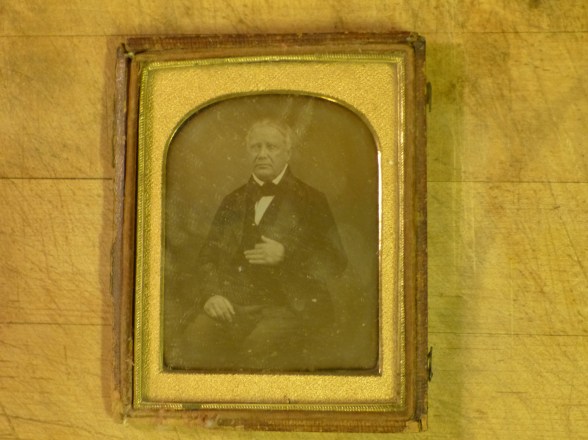
Who is the man in the photograph? I don’t know. This is an old tintype. They came from my Great Aunt, Esther White Parr, married to Russel Parr. Perhaps they are Parrs, because my Uncle Rob did not know any of the people in the four tintypes I have. My sister and I used them for portraits in our china doll houses. I hope he is not the CEO of an insurance corporation, but then, all the white collar white men tried to dress that way then.

medicine

I was thinking of old medicine bottles for today’s prompt, but I think hiking is one of the most medicinal things I do. Healing. Freeing. Feeling the changes in the air, seeing the forests and the water here, being very present. Peaceful.

For the Ragtag Daily Prompt: medicinal.

Adverse Childhood Experiences 14: Hope

I keep reading bits about despair and about how a generation of children is being “ruined” by the pandemic.

Not so, I say. There is hope. We need to support each other to survive and then to thrive.

This generation WILL have a higher than average ACE score. If the Adverse Childhood Experience scale is from zero to eight, children in this time period will have at least one higher point than average and many will have three or four or more. Loss of a parent, a sibling, beloved grandparents during covid. Increases in domestic violence, child abuse and addiction. These are all part of the ACE score.

What does this do to children? They have survival brain wiring. They will do their best to survive what is happening. A friend and I both have high ACE scores, 5 or more, and we are both oppositional defiant. We showed this in different ways. He grew up in the same community. He escaped from home and knew all the neighbors. He walked to the local church and attended at age 3 or 4. He has lived in this community all his life.

His oppositional defiance showed up at home, where he consistently refused to obey. And in school, where he confounded and disobeyed teachers and passed anyhow.

My family moved every 1-5 years. I hated moving. I wouldn’t talk to kids in a new school for a year. It was very difficult. So my oppositional defiance was very very internal. I hid in books and in my head. In 6th grade I got in trouble for hiding novels inside the school book I’d already read. I also would just not listen and my respect for the teacher got even lower when she would be angry that I knew the answer to the question once she’d repeated it. I wasn’t listening because I was bored. She was the first teacher that I thought, well, she is not very bright. The next year they stuck me in the honors class and I stopped being bored, though I still questioned practically every opinion every teacher had. I wanted evidence and I did not believe it just because the teacher said it.

I am not saying that oppositional defiance is in every high ACE score. I don’t know that. Why oppositional defiance? Imagine you are a small child and you are beaten. There isn’t rhyme or reason. You can’t predict when the adult will be out of control. Why would you behave “well” if it makes no difference? You might as well do what you want, because nothing you do will change the adult. Or imagine you are a small child who is with one person, passed to another, then to another. You may not exactly trust adults after two or three repetitions. And you want to survive.

There is an increase in addictions, behavioral health diagnoses, and chronic illness in adults with a high ACE score. A researcher when I first heard a lecture about it said, “We think perhaps that addiction is a form of self medication.” I thought, oh, my gosh, how are we ever going to treat THIS? Well, we have to figure that out now, and we’ve had 30 years to work on it.

I was very comfortable with the oppositional defiant patients in clinic. I got very good at not arguing with them and not taking their behavior personally. They might show up all spiky and hostile and I might be a little spiky and gruff back: sometimes that was enough. I think the high ACE score people often recognize each other at some level, though not always a conscious one. With some people I might bring up ACE scores and ask about their childhood. Sometimes they wanted to discuss it. Sometimes they didn’t. Either was ok.

One thing we should NOT do is insist that everyone be “nice”. We had a temporary doctor who told us her story. Her family escaped Southeast Asia in a boat. They had run out of water and were going to die when they were found by pirates. The pirates gave them water. They made it to land and were in a refugee camp for eight years or so. She eventually made it to the US. She was deemed too “undiplomatic” for our rural hospital. I wondered if people would have said that if they knew her history and what she had been through. It’s not exactly a Leave it to Beaver childhood, is it? When she was telling us about nearly dying of thirst in the boat, my daughter left her chair and climbed on my lap. She was under ten and understood that this was a true and very frightening story.

We can support this generation of children. This has been and is still being Adverse Experiences for adults as well. Family deaths, job loss, failure of jobs to support people, inflation. Remember the 1920s, after World War I and the last pandemic, of influenza. “On October 28, 1919, Congress passed the National Prohibition Act, also known as the Volstead Act, which provided enabling legislation to implement the 18th Amendment.” (wikipedia). There were forces trying to legislate behavior, as there are now. The result in 1920s of making alcohol illegal was speakeasies, illegal alcohol, and violence. Some people acted wild after WWI and the influenza pandemic and some people tried to lock down control, by controlling other peoples’ behavior. It did not work then and it will not work now. The wildness is out of control grief, I think, grief dysfunctional and drinking and shooting and doing anything and everything, legal or not. We remember how the 1920s ended too. Let us not repeat that. Let us mourn and grieve and support each other and support each other’s decisions and autonomy.

Blessings.

Adverse Childhood Experiences 13: on gratitude

I saw a meme today about gratitude. It is saying that some people look at a garden and see thorns and weeds, but others see the roses. That we need to have gratitude. I think this is simplistic and papers over the trauma and grief that some people have. If they have endured a highly traumatic childhood, who am I to say they should focus on the roses? They may have a very good reason to see if there is something like a thorn that can hurt them before enjoying the roses.

I work with many patients with high Adverse Childhood Experience scores and mine is high too. I don’t tell my patients that they should have gratitude. I tell them “You survived your childhood. You have crisis wiring. Good for you. Some of your learned crisis survival wiring may not serve you as well now as it did when you were a child.” Then we discuss whether they want to work on any aspects and the many many different approaches. One example: a man who sleeps very lightly. He said that it was lifelong. When asked about his childhood he says, “We would have to leave in the night when there was shooting in my neighborhood. It was a very dangerous area.” I said, “I am not surprised you sleep lightly. You HAD to in childhood to survive. Is this something you want to try and change?” He thought about it and decided, no. Once it was framed as learned in childhood to survive, he stopped worrying about “normal”. He was satisfied that the way he slept was “normal” for him and he wanted to wake up if he heard shooting.

I think we have to ask why a person sees thorns and weeds in a garden before we judge them. My first thought with a new and angry or hostile patient is always, oh, they have been badly hurt in the past. What happened? I don’t worry that the anger is at me. I know it’s not at me, it’s at the system or a past physician or a past event. Under the anger there are other emotions, usually fear or humiliation or grief. I have brought up Adverse Childhood Experience scores on the first visit sometimes. One person replies, “I am a 10 out of 10.” The score only goes up to 8 but I agree. He was a 10. He stated once, “The military loved me because I could go from zero to 60 in one minute.” Very very defensive and very quick to respond. The response may seem extreme and inappropriate to other people: but it may feel like the only safe way to be to my patient.

I grew up hiding any grief or fear in my family, under anger, because grief or fear would be made into a story told for laughs. In college, a boyfriend told me I was an ogre when I was angry. I started working on it then and it was difficult to tame that. The person who took the longest was my sister: she could make me explode until I was in my residency. Medical training was excellent for learning emotional control, at least, on the surface. After my mother died, I had to do the next piece of emotional work: open the Pandora’s Box of stuffed emotions, mostly fear and grief, and let them out. It was such hard work that my day where I saw the counselor for an hour was harder than my ten hour clinic day. I did the work, for two long years. Blessings on the counselors who stood by me while I worked through it.

I do not think we are ever done with that sort of work. I think, what do I need to learn next? What is this friend teaching me? Why is this behavior frustrating me and I have to look in my inner mirror. Why, why, why?

Blessing on your healing path and may you not be judged.

Link about ACE scores: https://www.cdc.gov/violenceprevention/aces/about.html

Sometimes I do feel like a fossil, now that I am middle aged. For the Ragtag Daily Prompt: fossil.

Is this a tree?

Is this a tree?

I would not call this a tree. I would call it a cone. It contains seeds. It is not a tree.

A pregnancy is called an embryo until 8 weeks after conception and then a fetus until birth. It is not a baby, any more than a seed is a tree. Here is a link to a picture of the embryo developing:

https://en.wikipedia.org/wiki/Human_embryonic_development#/media/File:HumanEmbryogenesis.svg

It’s a bit difficult to call the embryo a baby.

After 8 weeks (10 weeks from the last menstrual period) the developing pregnancy is called a fetus. It cannot survive outside the womb. A term pregnancy is 37 weeks, and the due date is at 40 weeks. The earliest survival, certainly not natural, is around 24 weeks. This takes heavy intervention and technology, a premature infant on a ventilator for months. There is risk of damage to the eyes from high oxygen and risk of spontaneous brain bleed and cerebral palsy, because the newborn can weigh half a pound. Once born, the fetus is termed a baby.

This is important from a medical standpoint and pounded into us as physicians. WHY? Because in a trauma situation, the life of the mother comes first. In Obstetrics and Family Medicine, the life of the mother comes first. In Oncology, the life of the mother comes first. My sister was diagnosed with stage IIIB ductal breast cancer at age 41. She was engaged and it turned out that she was pregnant. She wrote this essay on her blog, Butterfly Soup:

The hardest loss of breast cancer.

She had an abortion and chose chemotherapy, because it was her or the fetus. If she had chemotherapy pregnant, at that time she was told that it would probably kill the fetus or cause terrible birth defects. If she held off on chemotherapy for seven months, her oncologist thought she would die. She had a very very aggressive cancer and she already had a daughter who needed her.

She lived until age 49, with multiple rounds of chemotherapy, radiation, gamma knife radiation, whole brain radiation. And she lived until her daughter was 13. Without the abortion, her physicians thought she would have died when her daughter was 7.

My ethics in medicine are that patients have autonomy. I would NOT have wanted my sister to choose to refuse chemo and try to bring a baby to term while dying of breast cancer. However, it was HER CHOICE, not mine. It was private and no one else’s business and how dare people make moral judgements about another person’s medical choices. I give my patients CHOICES. They can choose not to treat cancer and go into hospice. They can choose surgery or refuse it. They can choose to treat opioid addiction or refuse. They may die of a heroin overdose and I grieve. I try to convince them to go to treatment and I give them nalaxone to try to reverse overdoses. I refuse a medication or treatment that I think will harm my patients, but my patients have autonomy and choices. That extends to women and pregnancy as well.

It is NOT a baby in the womb, however emotionally attached people are to this image. It is an embryo first and then a fetus. And in a car wreck, the woman comes first and the fetus second.

For the Ragtag Daily Prompt: explain.

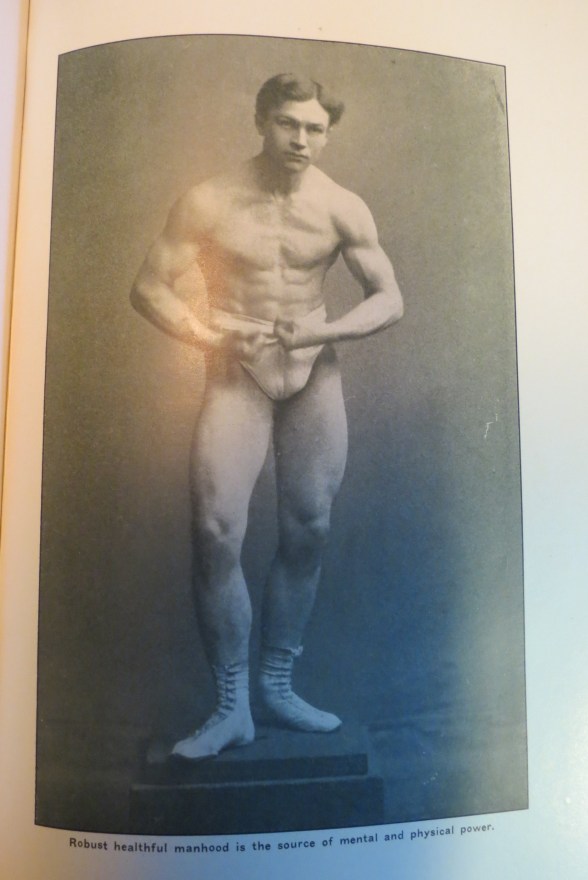
Robust healthful manhood

The photograph of “a healthy man” to go with my Ragtag Daily Prompt conflate post.

I LOVE the caption. “Robust healthful manhood is the source of mental and physical power.” How differently the author portrays health womanhood, as shown in the conflate post. The book is Macfadden’s Encyclopedia of Physical Culture, in three volumes, 1911. Volume I is 500 pages. It is easy to read but it’s a different style from now. Here:

As a rule, if you will simply retain the idea that food should be swallowed at all times without effort, that is, that never, by any means, wash it down with water, milk, tea or any other liquid, that you should masticate it until it seems to disappear without swallowing, you can rest assured that you are masticating sufficiently. p. 97, volume I.

I plan to read the entire set. I think I will find lots of wonderful words for the Ragtag Daily Prompt (hey, I don’t think we’ve used masticate yet!) and material to write about.

Are there still interesting medical ideas out there? Oh, yes. LOTS. Only now they use the internet. I have subscribed to some of the series of videos, telling people how bad and wrong minded allopathic doctors are. Sigh. We do our best. The scam is that they let folks watch one a day for a week, or let them watch one, and then want you to buy the series. “Only $349.99!” Nice scam that is proliferating rapidly. I have now gotten emails saying “Health coaches should make as much or more than physicians and we can teach you how to market and target people and make that money.” Ugh and ick. Really?

I have patients in clinic who present by saying, “I don’t usually go to MD doctors, I go to a naturopath, but I am here because I need an antibiotic.”

I learn to respond gently. “Oh. If you need an antibiotic, maybe you have signs of infection? What are your symptoms?” I have to get past their dislike of allopathic medicine and find out what the symptoms are. Usually if I can diffuse them by getting the story, we can work together. Once in a while it doesn’t work: I have people come in and give me orders. “Do these labs.”

“Uh. Where did this list come from?”

The answer could be a video (by a naturopath, a biochemist, a biologist, whatever. I have watched some of these series. They start by saying that doctors are wrong/stupid/stubborn/misguided/etc.) or a “cash only” doctor or a magazine.

“Why are you coming to me?”

“I want medicare/my insurance to pay for it. I have done my research.”

“Well, medicare does not work that way. I have to list a symptom or diagnosis code for every lab ordered.”

“WHAT?”

I try to be patient. “Every lab has to have an attached appropriate diagnosis code or medicare will not cover it. There is a place in town where you can order your own, but it does not take medicare. You pay for it.”

“Just order it!”

“No. I am a medicare/insurance provider, which means I have a contract with them. It would be fraud and illegal to make up codes. Does your cash only provider use diagnosis codes? Can your bring their clinic note to me?”

One person replies, “My provider doesn’t take notes.” Oh, how nice. That provider does a very expensive panel of labs three times a year that the person is paying for out of pocket. “My provider checks EVERYTHING.” Um, and makes a boatload of money off you too, I think. That patient is very angry that I won’t take her orders and switches clinics. Oddly enough, this does not break my heart.

Some days I hate Dr. Google. There are lots of websites and people on line swearing that they can improve your health. There are scientific looking papers that swear something has been tested, but read the fine print: if the sample is 8 people, how does that stack up against the Women’s Health Initiative, where one arm of the study had 27,000 people? The evidence is weighted. We get multiple articles in medical school and subsequently about how to read a paper, how to weigh the evidence, how to recognize fraud or a poorly designed study.

I do not object to people looking on the internet and I have had people who came in and said, “Is it possible that I have THIS?” and who are correct. However, I see more fraud, always.


behavioral health, cancer, and the immune system

There are more and more articles about immune causes of “behavioral health” diagnoses.

The latest I’ve read is about schizophrenia:

https://www.nature.com/articles/s41598-020-63776-0

Auto-antibodies are antibodies that we make against something else that then attack a part of ourselves. The most well know version of an auto-antibody is Rheumatic Fever, where an antibody to streptococcus A attacks the joints or skin or heart. I had a patient in Colorado who needed a new heart valve at age 10 or 11 because of Rheumatic Fever.

I have written a lot about PANDAS and PANS (respectively Pediatric Autoimmune Neuropsychiatric Disorders Associated with Strep A and Pediatric Acute Neuropsychiatric Syndrome) because an older psychiatrist was suspicious that I have PANS. I have had pneumonia four times and it is accompanied by anxiety and fear, part of which turns out to be hypoxia and tachycardia. I think a heart rate of 135 makes just about ANYONE feel anxious. It feels awful.

But what about other Behavioral Health Diagnoses? Remember, we are on the DSM V, the fifth manual of psychiatric diagnoses. We have not had markers or a clear cause. That is, we are aware that serotonin is low in the intracellular spaces in the brain with depression but we don’t know what the mechanism is, what the cause is and what exactly is happening in the neuron or brain cells. A paper on a particular rat neuron said that there were 300 different types of serotonin receptors on that neuron. Blocking one type caused rats to act in an obsessive compulsive manner. But there are 299 others and then combinations. Whew, there is a lot to be learned about the brain.

Fibromyalgia can be caused by autoantibodies, at least some of the cases: https://www.sciencedaily.com/releases/2021/07/210701120703.htm

Chronic fatigue: https://pubmed.ncbi.nlm.nih.gov/34441971/

Lupus and fibromyalgia overlap: https://pubmed.ncbi.nlm.nih.gov/9207710/

Autoimmune disorders are more common in women. We think this is because of pregnancy. The woman’s immune system has to tolerate a pregnancy where half the genetic material is from the father. Yet the immune system also has to recognize “not me, infection” and be able to distinguish that from the pregnancy. This is tricky. The most common autoimmune disorder currently is believed to be Hashimoto’s Thyroiditis, where there are self antibodies to the thyroid. Post covid could potentially beat this out.

Chronic fatigue and fibromyalgia have been orphan diseases in that we do not have an inflammation marker that defines them. The ESR (erythrocyte sedimentation rate) and CRP (um) are usually normal. These are often elevated in rheumatological disorders. Not having a marker doesn’t mean that the muscles are not painful and doesn’t mean that the fatigue is not real.

I am hopeful that we are on the cusp of a true revolution in medicine, with more understanding of the immune system and behavioral health disorders, as well as post covid, fibromyalgia and chronic fatigue. I worked at the National Cancer Institute in the 1980s before medical school, with Steve Rosenberg, MD. He was trying to get the immune system to fight cancer.

Now there has been a cancer treatment with 100% success: an immune treatment for people with rectal cancer with a particular immune profile. This is AMAZING! https://www.zmescience.com/science/experimental-trial-cancer-complete-remission-02725735/

Only 18 patients, but 100% success! No surgery.

The patch for the National Cancer Institute shows a man fighting a crab: Cancer, the crab. Dr. Rosenberg talked about Sysiphus, who was rolling a stone up a mountain eternally while it rolled back on him. From here: Later legend related that when Death came to fetch him, Sisyphus chained Death up so that no one died. Finally, Ares came to aid Death, and Sisyphus had to submit. In the meantime, Sisyphus had told his wife, Merope, not to perform the usual sacrifices and to leave his body unburied. Thus, when he reached the underworld, he was permitted to return to punish her for the omission. Once back at home, Sisyphus continued to live to a ripe old age before dying a second time.

Maybe the stone has reached a resting place. Blessings and peace you. Please peace me.

Covid-19 and walking pneumonia

I wrote this essay in July 2017. Before Covid-19. It is clear that Covid-19 is also causing a walking pneumonia. People are exhausted when they get out of bed. No fever, they may not cough much, but if they get up, they can feel exhausted. The key to this is the heart rate, the pulse. If the pulse jumps 30 points faster or more, this implies lung swelling and reduced lung capacity. Right now, the only treatment we have is rest and time to heal. I should know, I’ve had really bad walking pneumonia four times: the first two times I was out for two months. The third time 6 months with 6 more months half days and chronic fatigue. The fourth time put me on oxygen.

I want to offer hope to the people with Long Covid-19. Having been through four bad pneumonias, with increasingly long recovery times, and now disabled for doing Family Medicine, I have experience to share. I will write more about that in the next essay.

From 2017: Walking pneumonia is changing.

The classic bugs are four “atypical bacteria”:

mycoplasma pneumonia
chlamydia pneumonia (this is not the STD chlamydia. Different one.)
legionella
pertussis (whooping cough)

However, streptococcus pneumonia can also be a walking pneumonia OR a lobar pneumonia. In a lobar pneumonia the person usually is short of breath, running a fever of 102-104, and they point to where it is: hurts in the right upper chest. On chest x-ray there will be consolidation: whited out from fluid or swelling instead of nice ribs and dark air. They are often tachycardic and hypoxic.

In walking pneumonia the person often has no or minimal fever, they just feel tired or short of breath when they do things, and the chest xray can be “clear”. It isn’t really “normal”, it’s just that the bacteria or virus affects the entire lungs and causes some swelling throughout and doesn’t white it out.

“Double” pneumonia is when the chest film is whiting out on both sides. We also see the lungs whiting out with ARDS — acute respiratory distress syndrome. So after trauma in a car wreck and lots of broken ribs, the lungs can be bruised too and white out. Ow. Influenza virus can cause lung swelling and in the 1917-1918 flu infected military recruits lungs were swelling shut. They would turn blue and die.

“My” strep that I’ve had pneumonia with twice is streptococcus A, not strep pneumonia. It causes strep throat mostly though it can invade and cause sepsis or pneumonia or cellulitis. There are currently 4000+ known strains of strep A, and some are resistant to antibiotics or can cause kidney damage or do all sorts of nasty things. I think that “my” strep is resistant to azithromycin.

The current guidelines say to treat walking pneumonia with azithromycin. However, a paper came out this year saying that resistance to azithromycin is rising among streptococcus pneumonia and that nearly 50% of strains tested were resistant. Uh-oh. That means that azithomycin doesn’t work and the person can get sicker and may die. I talked to a pulmonologist in Seattle when I needed help with someone. He said that he would have said there weren’t any resistant strep pneumo strains here in Washington except that he had one intubated and in the ICU right then. “I’m convinced now, ” he said.

A lobar pneumonia is easier to diagnose. Abnormal chest x-ray, reasonably healthy people run a high white blood cell count (so my frail folks, immunosupressed folks and 90 year olds don’t raise their white blood cell count), and a fever (ditto) and look sick. The walking pneumonia people come in saying they have been coughing for 3 weeks or 4 weeks or two months. I am doing more lab testing because of the resistance.

This winter I have seen 6 different causes of walking pneumonia here: influenza A, respiratory syncytial virus (In more than one person over 60. That is NOT who the books say it should affect. It’s supposed to mostly cause bronchiolitis in babies and preemies), pertussis, strep pneumococcus, strep A and none of the above. All looking pretty much the same, but with different treatment.

https://wwwnc.cdc.gov/eid/article/15/8/08-1187_article
https://www.cdc.gov/pneumonia/atypical/mycoplasma/index.html
http://www.medscape.com/viewarticle/820736
https://www.cdc.gov/drugresistance/threat-report-2013/pdf/ar-threats-2013-508.pdf#page=79
RSV: http://kidshealth.org/en/parents/rsv.html
Mycoplasma resistance to azithromycin has been reported too: http://erj.ersjournals.com/content/36/4/969