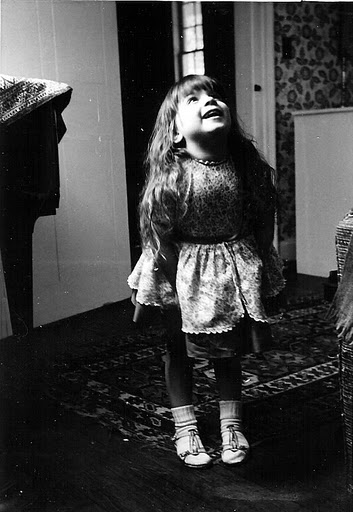
Adverse Childhood Experiences 13: on gratitude

I saw a meme today about gratitude. It is saying that some people look at a garden and see thorns and weeds, but others see the roses. That we need to have gratitude. I think this is simplistic and papers over the trauma and grief that some people have. If they have endured a highly traumatic childhood, who am I to say they should focus on the roses? They may have a very good reason to see if there is something like a thorn that can hurt them before enjoying the roses.

I work with many patients with high Adverse Childhood Experience scores and mine is high too. I don’t tell my patients that they should have gratitude. I tell them “You survived your childhood. You have crisis wiring. Good for you. Some of your learned crisis survival wiring may not serve you as well now as it did when you were a child.” Then we discuss whether they want to work on any aspects and the many many different approaches. One example: a man who sleeps very lightly. He said that it was lifelong. When asked about his childhood he says, “We would have to leave in the night when there was shooting in my neighborhood. It was a very dangerous area.” I said, “I am not surprised you sleep lightly. You HAD to in childhood to survive. Is this something you want to try and change?” He thought about it and decided, no. Once it was framed as learned in childhood to survive, he stopped worrying about “normal”. He was satisfied that the way he slept was “normal” for him and he wanted to wake up if he heard shooting.

I think we have to ask why a person sees thorns and weeds in a garden before we judge them. My first thought with a new and angry or hostile patient is always, oh, they have been badly hurt in the past. What happened? I don’t worry that the anger is at me. I know it’s not at me, it’s at the system or a past physician or a past event. Under the anger there are other emotions, usually fear or humiliation or grief. I have brought up Adverse Childhood Experience scores on the first visit sometimes. One person replies, “I am a 10 out of 10.” The score only goes up to 8 but I agree. He was a 10. He stated once, “The military loved me because I could go from zero to 60 in one minute.” Very very defensive and very quick to respond. The response may seem extreme and inappropriate to other people: but it may feel like the only safe way to be to my patient.

I grew up hiding any grief or fear in my family, under anger, because grief or fear would be made into a story told for laughs. In college, a boyfriend told me I was an ogre when I was angry. I started working on it then and it was difficult to tame that. The person who took the longest was my sister: she could make me explode until I was in my residency. Medical training was excellent for learning emotional control, at least, on the surface. After my mother died, I had to do the next piece of emotional work: open the Pandora’s Box of stuffed emotions, mostly fear and grief, and let them out. It was such hard work that my day where I saw the counselor for an hour was harder than my ten hour clinic day. I did the work, for two long years. Blessings on the counselors who stood by me while I worked through it.

I do not think we are ever done with that sort of work. I think, what do I need to learn next? What is this friend teaching me? Why is this behavior frustrating me and I have to look in my inner mirror. Why, why, why?

Blessing on your healing path and may you not be judged.

Link about ACE scores: https://www.cdc.gov/violenceprevention/aces/about.html

Sometimes I do feel like a fossil, now that I am middle aged. For the Ragtag Daily Prompt: fossil.

Is this a tree?

Is this a tree?

I would not call this a tree. I would call it a cone. It contains seeds. It is not a tree.

A pregnancy is called an embryo until 8 weeks after conception and then a fetus until birth. It is not a baby, any more than a seed is a tree. Here is a link to a picture of the embryo developing:

https://en.wikipedia.org/wiki/Human_embryonic_development#/media/File:HumanEmbryogenesis.svg

It’s a bit difficult to call the embryo a baby.

After 8 weeks (10 weeks from the last menstrual period) the developing pregnancy is called a fetus. It cannot survive outside the womb. A term pregnancy is 37 weeks, and the due date is at 40 weeks. The earliest survival, certainly not natural, is around 24 weeks. This takes heavy intervention and technology, a premature infant on a ventilator for months. There is risk of damage to the eyes from high oxygen and risk of spontaneous brain bleed and cerebral palsy, because the newborn can weigh half a pound. Once born, the fetus is termed a baby.

This is important from a medical standpoint and pounded into us as physicians. WHY? Because in a trauma situation, the life of the mother comes first. In Obstetrics and Family Medicine, the life of the mother comes first. In Oncology, the life of the mother comes first. My sister was diagnosed with stage IIIB ductal breast cancer at age 41. She was engaged and it turned out that she was pregnant. She wrote this essay on her blog, Butterfly Soup:

The hardest loss of breast cancer.

She had an abortion and chose chemotherapy, because it was her or the fetus. If she had chemotherapy pregnant, at that time she was told that it would probably kill the fetus or cause terrible birth defects. If she held off on chemotherapy for seven months, her oncologist thought she would die. She had a very very aggressive cancer and she already had a daughter who needed her.

She lived until age 49, with multiple rounds of chemotherapy, radiation, gamma knife radiation, whole brain radiation. And she lived until her daughter was 13. Without the abortion, her physicians thought she would have died when her daughter was 7.

My ethics in medicine are that patients have autonomy. I would NOT have wanted my sister to choose to refuse chemo and try to bring a baby to term while dying of breast cancer. However, it was HER CHOICE, not mine. It was private and no one else’s business and how dare people make moral judgements about another person’s medical choices. I give my patients CHOICES. They can choose not to treat cancer and go into hospice. They can choose surgery or refuse it. They can choose to treat opioid addiction or refuse. They may die of a heroin overdose and I grieve. I try to convince them to go to treatment and I give them nalaxone to try to reverse overdoses. I refuse a medication or treatment that I think will harm my patients, but my patients have autonomy and choices. That extends to women and pregnancy as well.

It is NOT a baby in the womb, however emotionally attached people are to this image. It is an embryo first and then a fetus. And in a car wreck, the woman comes first and the fetus second.

For the Ragtag Daily Prompt: explain.

colossal

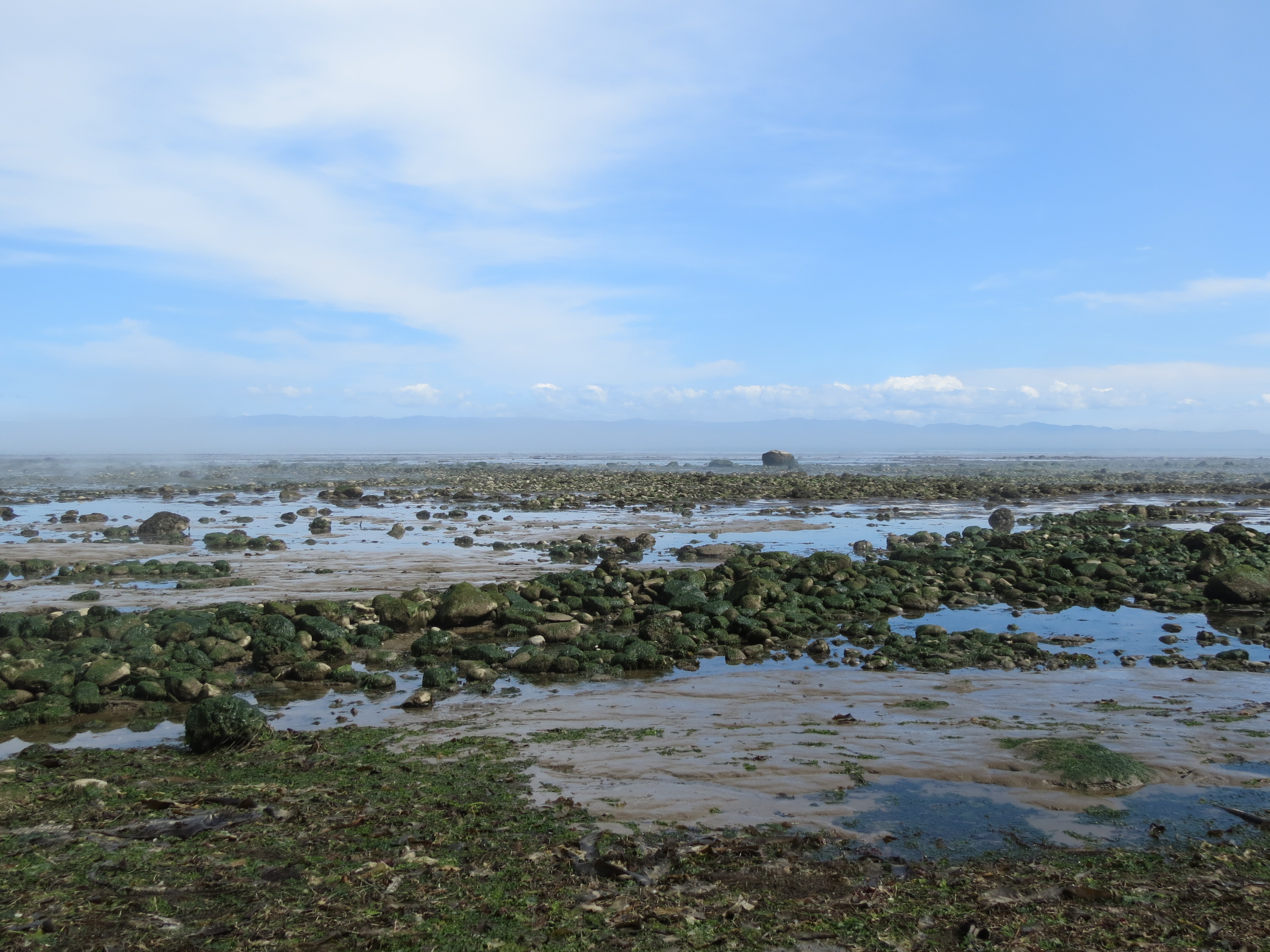
The hills don’t look that colossal, do they? But this is taken zoomed in from the Olympic Peninsula and the hills are on Vancouver Island. Here is one not zoomed:

It was a colossally low tide and we were hunting fossils. Fossil clams, fossil snails and stories of fossil dinosaur bones.

For the Ragtag Daily Prompt: colossal.

sending flowers

I was “separated” from a website for “not explicitly breaking the rules”. Hey, it’s a “woke” website and wow, I guess I was annoying, or the editors are insane, or something. The eds who had become friends over the years didn’t know a thing about it. The owner removed me.

Now I am removing every reference to that site from my blog, over time.

So here is a poem from a week ago, to “honor” the insane editors. I do think they need to vet them a little better, heh. But if the owner doesn’t mind the site imploding and dying, hey, he has chosen the best editors for the job.

______________________

Eeeeeeeeeew eww

eeeeeeeew eww
I’m annoyed at you
don’t you see you’re inconveniencing me?
don’t you see you shoot yourself in the knee?
don’t you see choices so dumb I could scream?
don’t you see
you’re destroying the dream

eeeeeeeew too
I’m so annoyed at you
but I’ll forgive you your sins
after I stick you with pins
and laugh many many grins
you’re sent to bed without dins

eeeeeeeeew too
I’m so annoyed at you
but I don’t really care
I think it’s totally fair
that you’re dissolving out there
in the cloud unaware
and no one else cares

eeeeeeeeew too
don’t cry a boohooo
you reap what you sow
I won’t cry when you go
sad to see you sunk so low
advertisment ho
drunk funked skunked bro
yeah, ed, he don’t know
sentimental slop woe
stinking slow to grow

eeeeeeeeew too
is yo owner a ghoul?
I think you raised up some fools
I mourn the loss of some jewels
when sad stupidity rules
some eds is fool mules
I carve yo gravestone with tools

homage

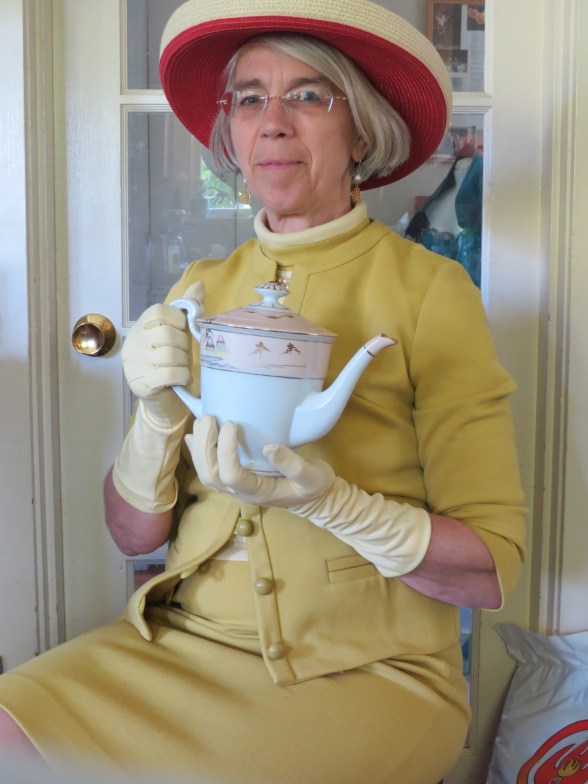
Homage to the Jubilee and a woman who has seen so many changes. I had two friends over for tea yesterday and had fun dressing up. The suit is made of wool, probably from the 1940s. The gloves were my mother’s. She loved gloves and I have a box. The hat should be pale yellow green too, but this is what I could find.

I am glad that I don’t have to dress this way every day, but it was very fun yesterday. I did not feel encumbered. How DID they keep the gloves clean?

For the Ragtag Daily Prompt: emcumbered.

The first song has tea! And a place in heaven for those who teach in Public School. Sigh.

Covid-19: Hope for Long Haul

I want to offer hope to the people with Long Covid-19. Having been through four bad pneumonias, with increasingly long recovery times, and now disabled for doing Family Medicine, I have experience to share. First I want to talk about chronic fatigue and fibromyalgia.

I am a piler, not a filer. Including in my brain. I have been adding to the chronic fatigue and fibromyalgia pile since I was in medical school.

In residency a new patient questions me. “Do you believe in chronic fatigue?” he says, nearly hostile.

“Yes,” I reply, “but I don’t know what it is or what causes it or how to fix it.”

For years different causes were suggested. Often infections: EBV, mononucleosis, lyme disease. Some people didn’t have any infection. I did note even in residency that my chronic fatigue patients all had one thing in common: they were exhausting.

Does that sound terrible? They were all type A, high achievers, often super high energy. Often they got sick or crashed when they were working three jobs, or working 20 hours a day on their own business, or doing something that sounded insanely exhausting and unsustainable. And most of them wanted that back. “Ok, wait. You were working 20 hours a day, seven days a week, got sick and THAT is what you want to get back to?”

None of the chronic fatigue people seemed to be type B.

Eventually I read that one in ten people with ANY severe infection can get chronic fatigue.

Then I work with the U of Washington Telepain Clinic, on zoom. They start studying functional MRIs of the brains of people with fibromyalgia.

They use a thumbscrew. They put a measurable amount of pressure on a person with no fibromyalgia. The person reports 3-4 out of 10 pain. The brain lights up a certain amount in the pain centers on the MRI. The doctors can SEE it. Then they test the fibromyalgia people with the same amount of thumbscrew pressure. The fibromyalgia people report 8-9/10 pressure and they are not lying. The pain centers in the brain light up correspondingly more. So they ARE feeling 8-9/10 pain.

Is this a muscle problem? A brain problem? Or both?

It appears to be both. Chronic fatigue and fibromyalgia and other disorders with pain out of proportion to the physical findings were being called “central pain processing disorders”.

I thought of chronic fatigue as a sort of switch. As if at a certain level of stress or exhaustion or infection the body would throw a switch. And force the person to rest.

I wondered if the type B people just rested and got over it, while the type A people fought it like tigers. Which seemed to make it worse.

And now we have Covid-19. The study getting my attention is saying that 20%, or 1 in five people age 18-64, have Long Haul symptoms. Over 65 it is 25%, one in four. And it can happen in people with no preexisting conditions. Preexisting conditions or not, this sucks. The two biggest complaints are lung related and muscle related.

I have chronic fatigue following my third pneumonia in 2014. I might be just a little type A. I went back to work too soon (6 months after the pneumonia) and after a half day would crash asleep at 3 pm. For another 6 months. Now that I have had the fourth pneumonia and have been off for a year and been on oxygen, I feel better than I have since before 2014, even though I still need oxygen part time. Guess I was in denial about the chronic fatigue. NOT ME!

So, dear reader, learn from me and don’t be like me. The biggest thing that I have had to get through my thick type A skull is that when my body wants rest, I need to rest. This can be hella annoying, as my son would say. I have to pay attention to my energy level and decide what to do. And some of my precious energy has to go to things like laundry and paying bills! How very frustrating. My markers are energy level and also pulse. My pulse tells me when I need oxygen and when I am really sick. With the first pneumonia back in 2003, influenza, my resting pulse stayed at 100. My normal then was about 65. When I stood up, my pulse went to 135. It was EXHAUSTING to stand up. I had to rest half way up one flight of stairs. It was hard to walk two blocks to pick my daughter up from primary school. And I looked fine. Neither my doctor nor I could figure it out. I finally guessed that it was lung tissue swelling and hoped it would go down eventually. It did, but it was a full two months and my doctor partners thought I was malingering. I tried not to wish it on them. It sucked and I felt awful back at work, but my pulse had finally come down. We even did a heart ultrasound, but all it showed was a fast heart rate. My chest film looked “normal”, because the tissue swelling is throughout the lungs, so it cannot be seen on a chest xray. It was very weird, but I recovered. And all the descriptions of Long Covid sound like my lung swelling. Fast heart rate, difficulty breathing, muscle pain and terrible fatigue. Go back to the couch.

Go back to the couch and wait. Do what you have to but if your heart rate is over 100 when you get up, you have to rest. Otherwise you will prolong it. Seriously.

More later. Peace me and sending love and peace.

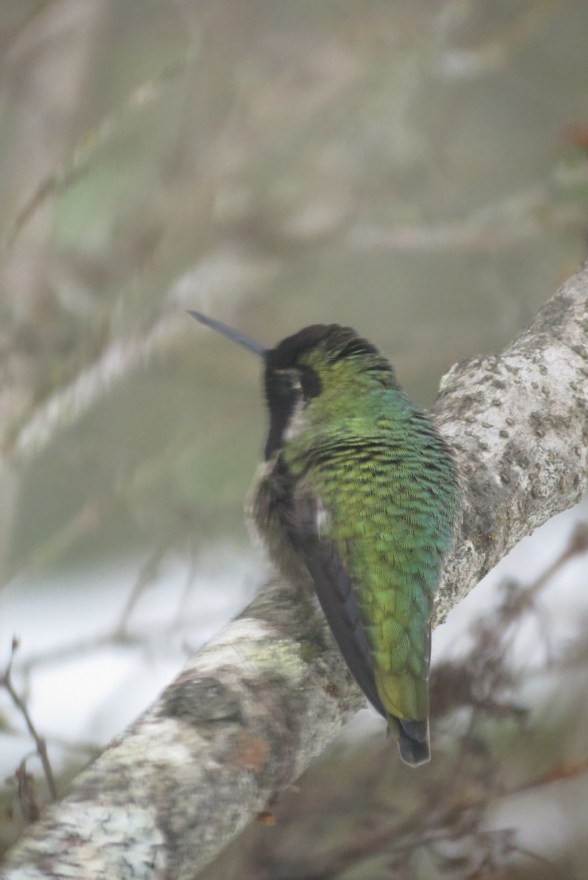
Anna’s hummingbirds can survive below freezing temperatures by slowing their metabolism at night, until it warms up in the morning. Talk about resting!

Love whole

I loved my liar sister
I love her still

That’s what makes them angry
that I love my liar sister
even though she lied
even though she hurt me
even though she lied to them

That’s what makes them angry
that I love my liar sister
they want to love her lies
they don’t want to know the truth
they want to hide from lies

That’s what makes them angry
they are hella jealous
they want to be loved like that
they want to be loved whole
they want to be loved entire
they want to be loved even when they lie

That’s what makes them angry
they are so afraid to be themselves
they are so afraid to tell the truth
they are so afraid to be honest with each other
they are so tired of hiding

That’s what makes them angry
one says she will be friends
if we only talk about the positive
about my mother, father, sister
I counter: let’s not mention them at all
nor your husband. Not a word.
She doesn’t answer. Silence.

That’s what makes them sad
they don’t want to feel the anger
they deny the heartache
they avoid the longing
they bargain with their souls
they refuse to feel the grief

let us feel the anger
let us feel the heartache
let us feel the longing
let us feel our grief
let us feel our souls

Beloved, we long for you so

Please, Beloved, love us whole

_____________________

My sister sent me a t-shirt from Wicked. She died of cancer in 2012. The deaths from Covid-19 and every death brings her back to me. And this song sums up our relationship.