For the Daily Prompt: captivating.
I miss my father today. It is his birthday and he died in 2013. But I have his camera: and the zoom lens captures light and delight, so I can think of him. In memoriam, papa.


For the Daily Prompt: captivating.
I miss my father today. It is his birthday and he died in 2013. But I have his camera: and the zoom lens captures light and delight, so I can think of him. In memoriam, papa.

Hmmm, I did a daily prompt but the wrong one. That is, I just did February 28th.
For today’s Daily Prompt: fabric.
I made this installation in 2012 after my sister died, thinking about all the community surrounding her and supporting her and missing her.

The last two days have been at the 20th Annual Fundamentals of Addiction Medicine Conference in Washington State, 15 lectures. Everything from science trying to understand addiction via studying dopamine in ratbrains to the last presentation: Snohomish County started a program two years ago that pairs a social worker with a county sheriff or deputy to work with the homeless.
The county is trying to stop the revolving door of homeless to arrested to jail to homeless. 95% of the county homeless are addicted to heroin and some to methamphetamines. They don’t access services when they are “dope sick”. They describe heroin as being 10x worse than the worst influenza. I think of withdrawal from opioids as having all the pain receptors turned as high as they can go and screaming at once.
The sheriff and social worker go to the camps. They get to know people and offer services. They have helped over 100 people get their identification replaced. When someone is arrested, their homeless encampment is often stolen. No honor among thieves, you say? The rat studies address that: in addiction the brain puts the drug first, in front of food, water, sex. Some rats will access the drug until they die, just like people. I think of it as the person losing their boundaries to the drug. The conference used the phrase “incentive salience” — dopamine is released when the person or rat is cued that the drug is now available and again when the drug arrives. More on that in another write up.
At any rate, the clients do not get to appointments. So the deputy and social work start at the beginning: they make the appointment, go knock on the tent that morning, remind the person to get dressed, take them to get food and coffee and then take them to the appointment. Then they return them to their camp.
After two months, the first sheriff and social worker were so successful that the program was expanded.
They have 206 chemical dependency evaluations.
232 have gone to detox. The detox is 3-5 days. They are taken straight from there to inpatient treatment, 30 day minimum, but ranging from 30-90 days. After treatment, clients are taken straight to sober housing, with a 6 month supported stay and intensive outpatient treatment.
85% get through the detox.
59% graduate from the treatment
50% go on to sober housing and intensive outpatient.
Their first clean and sober client is two years out.
50% of the homeless who agree to the program getting to sober housing is huge. Recidivism and incarceration drop, so it is making a true difference.
The program is expanding. They have a Community Court set up, much like Juvenile Drug Court, modeled after a program in Spokane. If the person agrees to drug treatment, they can do that instead of jail. This is for minor offenders. The sheriff says that once the homeless person is incarcerated, everything is stolen. They then steal food and supplies for a new camp when released and it happens again. If the client completes the program, low level charges may be dropped. They are setting up a service center right by the court where the clients are sent immediately to talk to a chemical dependency person, to get medical treatment, dental emergencies, centralized services because these people do not have transportation.
The social worker is in kevlar and heavy clothes as well and is never to go in the encampments without the law enforcement officers: it’s usually private land so it would be trespassing anyway.
This was an absolutely inspiring presentation. It starts with outreach and intervention, and gives people choices. They will soon be opening a temporary site, up to 15 days with medical support and beds, for when a client is ready but the social worker needs to arrange the detox, the treatment, the housing. Sometimes when a client is finally ready, there are no beds. And they don’t want to send them to detox and then back to the streets. The sheriff says that he was “volutold” for the program, but he, the deputy and the social worker are all clearly inspired by the program and enjoy their work and that it is making a difference.
Any write up on addiction fits today’s Daily Prompt: messy.

The US is not the only opioid crisis.
Reblogging:
https://www.groundup.org.za/article/woman-battles-escape-whoonga-park/
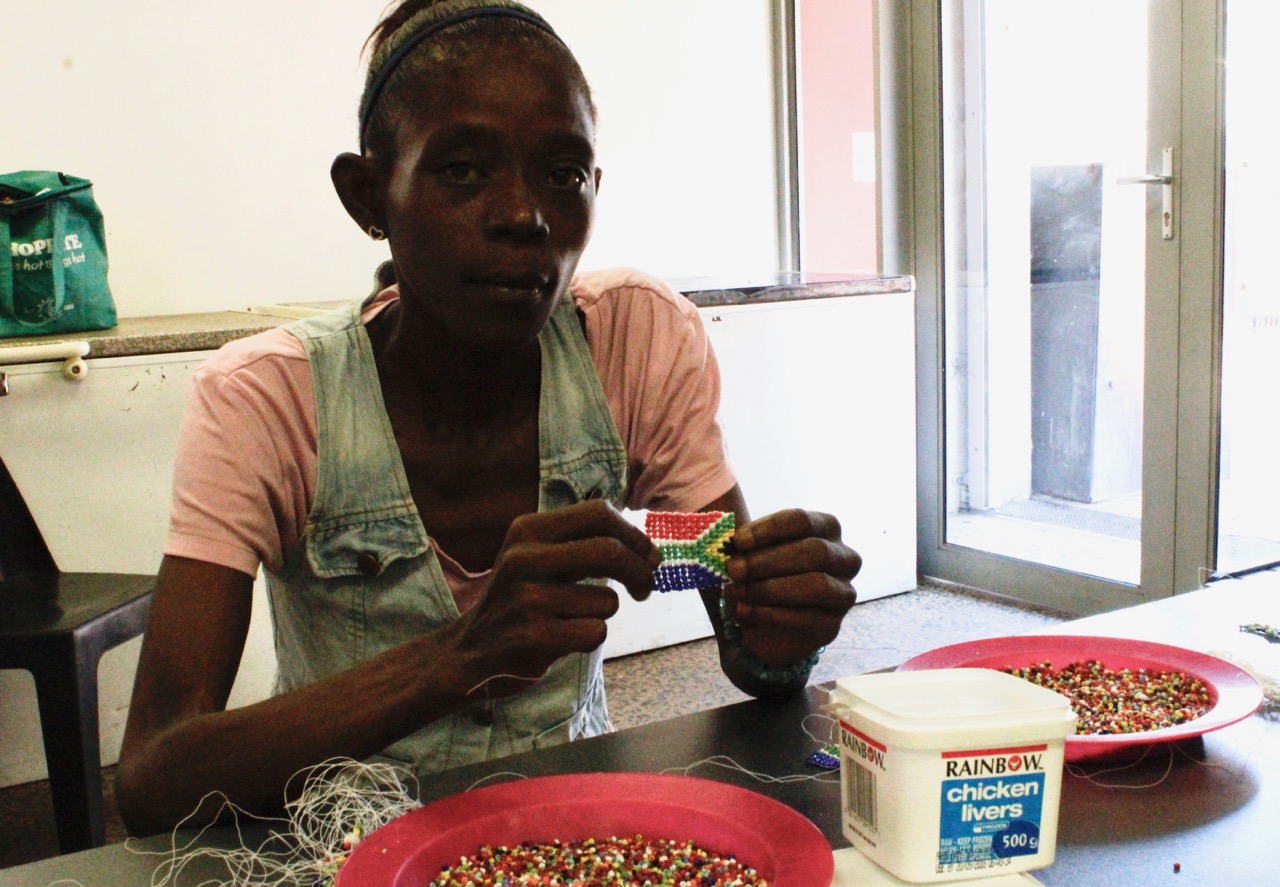
“Siqalo used to be the most promising child in our house … the last born. He got the best of everything. We took him to better schools than we did his younger sister and brother. He did well for the better half of high school.Then he met up with the wrong friends, and never even got to matric,” Fanele Ngcobo tells GroundUp about his son.
Siqalo is 22. He has been a whoonga user since 2015. By 10am, he has already smoked his second fix. Without the drug he struggles to function. Withdrawal effects – which people refer to as “arosta” – include stomach cramps, vomiting, and extreme anxiety.
Whoonga is a mixture of marijuana and heroin and rumoured to contain anti-retrovirals, detergents and even rat poison. Active addiction has spread in KwaZulu-Natal townships such as KwaMashu and iNanda. Hundreds of people now live in Durban’s ‘Whoonga Park’,
Siqalo was a keen soccer player, says his mother, Sizakele. Now his worn, black soccer shoes peek out from under the bed in his old room at home in iNanda, Durban.
“He always went for practice with his friends at the local playground. But after a while, soccer wasn’t the only thing he and his friends were playing with; he was also experimenting with dangerous drugs,” she says.
Siqalo lives in so-called Whoonga Park, under a bridge next to the Berea railway lines in Durban. The park has become a den for whoonga users. They have bright beach umbrellas to protect them from the heat and black plastic bags for shelter. The activities under the bridge are in plain view. People trade and smoke. In the afternoons and at night, many take to the city streets to hustle for food and the money they need to buy their fix.
“There are no beds here. Even if you can get a blanket or sheet to sleep in, it doesn’t last a week. The police will burn it,” says Siqalo. “So it’s easier just to use cardboard and plastic as it is easy to find in the streets. Although I miss home, I cannot go back home like this. I need to be clean. My family doesn’t trust me around the house and for good reason because I’ve stolen their money and appliances too many times. I tried to be clean when they first fetched me, but arosta is too painful – nobody can understand. But I still want to go home.”
Nobuhle Khuzwayo from eMpangeni, KwaZulu-Natal, is one of those trying to get off whoonga. She attends the iSiphephelo Centre housed at the Denis Hurley Centre in Durban, where she gets cooked meals and clean clothes three times a week. For a few hours she is free of whoonga.
Co-founder of the centre Sihle Ndima says it is a place of safety for young girls and women living on the streets of Durban. It offers meals, counselling, clean clothes and showers.
“Many of them return back to the streets soon after classes, and the work we do seems like failure, because in the end they go back to using whoonga,” says Ndima. “We work with a rehabilitation centre in Newlands East, Durban, and they offer free help.”
Khuzwayo, who is 30, came to Durban seeking a job in 2014, but after numerous failed attempts, she was left homeless and desperate.
“The shoe factory I was working for closed down after a month. Thereafter it was difficult to get employment. I had been staying at the Dalton hostel with some friends, who later introduced me to smoking. They would tell me it was marijuana, but after becoming a frequent smoker … I would get headaches, pains and stomach cramps when I hadn’t smoked. I just could not cope without it. When I confronted them, they told me it was in fact whoonga. I was already deeply hooked,” says Khuzwayo.
She could no longer live at the hostel. She moved to Whoonga Park. To get money she would have to resort to sex work, crime or selling cigarettes. She found a boyfriend who sold cigarettes at taxi ranks to help get them food and the R30 a day they needed to buy whoonga.
“To survive on the streets, I got myself a boyfriend because you can’t survive a day alone under the bridge as a woman. There are men known as amaBhariya, who claim to own the spots in Whoonga Park. They do not smoke or deal the drug; they do not speak local languages or even English. They are ruthless. They rape and kill women under the bridge and make sure the park functions the way it does. They wear blue workmen’s clothes and hats and use the underground drains to move around. So if you don’t have a man to protect you, they will always take advantage of you,” says Khuzwayo.
Merchants outside the park sell whoonga for R30. “They are usually in the streets or in nearby flats but not many sell whoonga under the bridge,” she says.
 Hundreds now live in Whoonga Park beside the railway lines in Berea, Durban. Photo: Nomfundo Xolo
Khuzwayo has now moved to a local shelter, paying R20 a night. Her closest friend had TB and when she died it was a turning point.
“I am tired of this life. I am determined to change. I don’t want to die a senseless death without dignity,” she says.
She is now a part-time cleaner at iSiphephelo. After attending all counselling and life skills classes she will qualify for rehab. “After rehab, I am going to go back home and stay with my sister in eMpangeni. You cannot stay away from whoonga in the city,” says Khuzwayo.
Siqalo and Khuzwayo say whoonga users are known as amaPhara. “Because we look like zombies. We’re dead people walking. We sleep standing. We stab you for your phone and sell it for a fix. Plastic and rubble is our shelter, faeces and rubbish are everywhere, and we run from police who destroy our things and chase us away every week. But we always come back. We can’t survive anywhere else,” says Siqalo.
Khuzwayo says she has seen people high on whoonga killed by trains.
“You can’t save them, because it’s like the railway shocks you, and you’re unable to move … seeing the train come at you but unable to run. I’ve seen some getting crushed in half and some losing their limbs. Even a security guard, who was chasing us one time, got stuck and the train crushed his foot.”
“One way or the other, you’re lucky to survive under the bridge.”
reblogged from: https://www.groundup.org.za/article/woman-battles-escape-whoonga-park/

I have been working with orthopedic massage for three years. My sister died in 2012 and my father 14 months later, in 2013. My father’s will was from 1979. My maternal family grieved via five years of lawsuits. I lost my sister, my father, and my maternal family. For good, as the song says.
I showed up for a massage in 2014. The ortho massage person said, “You are locked in an armor suit. Toes holding on to the floor, knees locked, head and shoulders forward, a fight or flight defensive posture.” I lift my toes up and say, “My toes aren’t clenched.” But they were.
For the next week I was to walk around, or attempt to walk around, with my toes off the floor. I practice: toes up, knees bent, lift foot, gently touch heel ahead, then shift weight forward, weight even on great and little metatarsal, toes are not to grab the floor, lift the trailing foot and repeat. I am furious that I have to relearn how to walk. HOW TO LET GO OF THE ARMOR SUIT?
I go once a month, now. I went weekly for a long time, then biweekly. Pieces of armor would drop off in the massage, but I would armor back up at work. Posture, posture, posture, breathe, don’t tighten those muscles up, check in with toes and with abdominal muscles…
Yesterday I go. We talk. It’s been a really weird month and I don’t know why. Letting go of all sorts of things and people and stuff. My pile of stuff to get rid of, clothes, books, mugs, art, is getting larger. And I was very grumpy the day before the massage. I thought, well, it’s been a dark February, I hate taking pills, maybe I need some sun, I mean, vitamin D.
But at the massage: a huge piece of armor, locked muscles in my lower back and hips, is gone. It feels weird. I didn’t know it was gone. Certain movements feel entirely unfamiliar, because I am used to moving the muscles as a locked group. My brain attempts to tell individual muscles to move and then there is a pause… as the brain and muscle negotiate unfamiliar territory. Medial gluteus medius… moving that feels so odd and unfamiliar.
Ortho massage says, “Usually when I ask you to move muscles, you are ON or OFF. FULL STRENGTH or no response. This is all new: modulation. Gentle.”
It feels so strange..
He knows how I feel. He says, “I felt so unbalanced as my armor dropped off. As if it dropped off bits at a time, a piece on the right side and suddenly I don’t know how to move because it’s all different. ”
Yes, that is what I am feeling. Unmoored. Light. There is less gravity. Gentle. Surprised. Less grumpy afterwards: I am so surprised, I had rather given up that I would EVER drop ANY of the armor suit. Pleased and a bit shyly proud. And deeply deeply grateful…. to my ortho massage person and to many others: friends, books, kind strangers, my patients, my colleagues (that is, the ones who have been kind. There are quite a few who were not. Let them go.) and the parts of my family that I keep… the ones whose actions DO mean they love me.
And my significant other says that I’ve seemed more peaceful this month. I check. I do feel more peaceful, which is so odd when I started the week feeling peculiar and unmoored and as if something was wrong. Something wasn’t wrong, I just had not even realized that I dropped a huge piece of invisible armor. The night before the massage I went to a dinner. Because of the deaths and lawsuits, I had very little social life for many years. A decade, really. After the dinner I thought, that was odd. I am not who I was ten years ago. I am not sure who I am in a social setting. I am surprised to be invited to a dinner. And I let the old me go: it’s ok. I will find out who I am after a decade as a hermit, a hermit due to circumstances, not by choice nor under my control. I let it all go: and I think that is the moment that piece of armor finally let go.
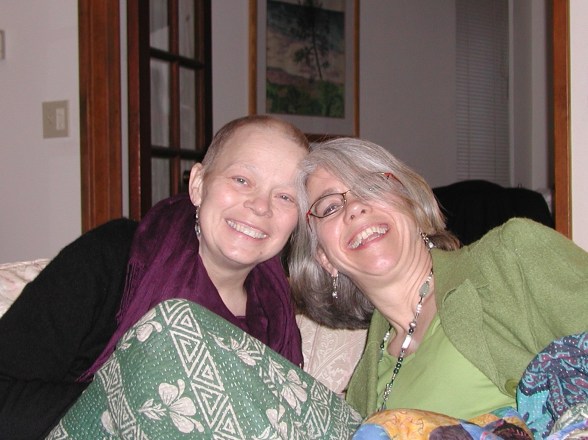
A picture of me and my sister in early 2012, about 6 weeks before she died.
Some days are about longing.
There is a door, so I submit this to Norm2.0 Thursday Doors.
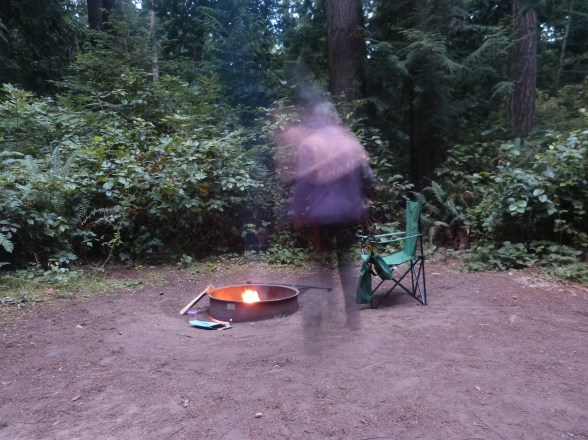
We are writing a quest where we ask different people to write more about a topic. The requests are anonymous and some are for existing titles that have no write ups. This topic was given to another person and then I was asked to write about it as well. My sister was an editor on the everything2 website. She was born in the year of the dragon. She died of cancer in 2012.
_____________________
the mystic E2 dragon
“Hey.”
“Hey.”
“They want me to write about the mystic E2 dragon.”
Laughs.
“So I think of you.”
Silence… a weight. “So it’s me?”
“No, but you are a dragon, born in the Year of the Dragon.”
“Like we’re Chinese.”
“Yeah, well.”
“And you are an ox.”
“Thanks.” I wait. “Come on, show up.”
The dragon is made of a coat hanger, a rough gold cloth and black felt hand sewn to the body, thin gold cloth on the wings, gold earrings with rubies for eyes. Probably fake rubies, I’m not sure. I made it in college, tail to curl around the neck so that it can sit upright on my shoulder when I walk around. A gold fire lizard. I gave it to my sister, who said I could take it back when she lay dying.
The dragon morphs and now fills the living room, pushing on the walls and squashing me. The scales are hard and hot!
“Stop it!” I say, “Don’t destroy the house!”
The dragon is now couch size. My couch groans under it. The dragon is very alive and smoke rises from her nostrils. It manages to look like my sister, like a dragon and like the borg all at once. Metal and wires on the left side of the dragon’s face, eye socket with a metal camera that whirrs.
“Mind the couch.” I say.
She shifts a little, not shrinking. I peel myself off the fireplace, with the ache of the metal insert and the mantel on my back.
“So.” I say, “what should I tell them?”
She narrows her eyes at me and shrugs.
“What do they want to hear?”
“You tell me.”
“Keep the site alive.”
“Yeah, ok.” I wait.
She looks around. “Your dust bunnies are dying of old age.”
“That’s ok.” I say. “They are better than a guard dog.”
She snorts smoke.
“Tea?” I say. I have it made already, on a tray. The tray was painted by one cousin, the tea cloth woven by another, the teapot made by our mother, with my poem on it.
She takes the cup and saucer delicately. Five claws on each forefoot.
“What’s it like?” I say.
Shrug again, as she sips the tea.
I wait.
“I’m not telling you. And this is your active imagination, so what a stupid question.”
“But I am talking to the unconscious.”
“Yeah, whatever. And anyhow, you’ve already decided, puny human.”
“Ox.”
“Ok.”
And here a curtains drops, while I thank her and we say goodbye.
Submitted to the Daily Prompt: candid.


I am failing to forgive
I am succeeding in forgiving
The people that I have let go
I have forgiven
I do not plan to see them again
They have hurt me grievously
They have had time and time, years
to contact me and to listen
They choose not to
I let them go
I am tired of being hurt
They have no remorse nor kindness
It is the people that I hold on to
Some hope that they are loving
Some hope that they will listen
Some hope that they won’t believe the stories
They still hurt me grievously
They do not answer and make no move
Listening loving healing
I have to let them all go
And then I can forgive
Beloved, I want to forgive
And there is no reconciliation
When no one will listen
For the Daily Prompt: finally.

This is for mindlovemisery’s photochallenge #194. It stuck in my head. So here is the photographic reply.
And I still won’t confess.
BLIND WILDERNESS
in front of the garden gate - JezzieG
Discover and re-discover Mexico’s cuisine, culture and history through the recipes, backyard stories and other interesting findings of an expatriate in Canada
Or not, depending on my mood
All those moments will be lost in time, like tears in rain!
An onion has many layers. So have I!
Exploring the great outdoors one step at a time
Some of the creative paths that escaped from my brain!
Books, reading and more ... with an Australian focus ... written on Ngunnawal Country
Engaging in some lyrical athletics whilst painting pictures with words and pounding the pavement. I run; blog; write poetry; chase after my kids & drink coffee.
Coast-to-coast US bike tour
Generative AI
Climbing, Outdoors, Life!
imperfect pictures
Refugees welcome - Flüchtlinge willkommen I am teaching German to refugees. Ich unterrichte geflüchtete Menschen in der deutschen Sprache. I am writing this blog in English and German because my friends speak English and German. Ich schreibe auf Deutsch und Englisch, weil meine Freunde Deutsch und Englisch sprechen.
En fotoblogg
Books by author Diana Coombes
NEW FLOWERY JOURNEYS
in search of a better us
Personal Blog
Art from the Earth
𝖠𝗇𝗈𝗍𝗁𝖾𝗋 𝖶𝗈𝗋𝖽𝖯𝗋𝖾𝗌𝗌.𝖼𝗈𝗆 𝗌𝗂𝗍𝖾.
Taking the camera for a walk!!!
From the Existential to the Mundane - From Poetry to Prose
1 Man and His Bloody Dog
Homepage Engaging the World, Hearing the World and speaking for the World.
Anne M Bray's art blog, and then some.
My Personal Rants, Ravings, & Ruminations
 KO Rural Mad As Hell Blog
You must be logged in to post a comment.