kooky klothes

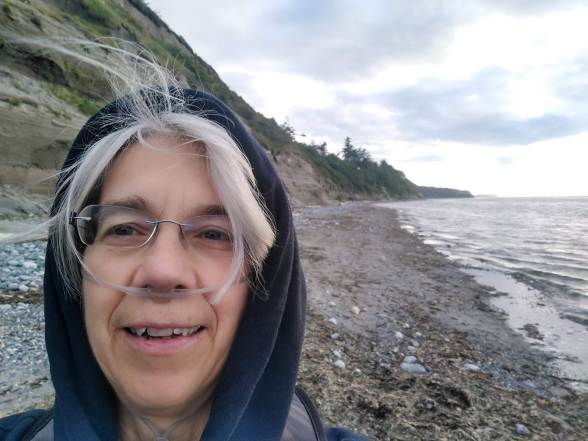
I took this May 31, 2022. I was still pretty sick with pneumonia and needed oxygen to do practically anything. I had dropped ten pounds the first week of being sick, March 20th. In 2014 it was six months before I could return to work and then only part time and exhausted. So I knew I was likely to be in for a six month haul. I hadn’t figured on needing oxygen, but it made me feel so much better and be able to think again!

Anyhow, I was entertaining myself by going through my closet and putting on things that I did not wear to work. I like the sun lighting up my legs in this photograph. The dress is shorter than it looks and the jacket has tags in Japanese and is a soft woven silk. I thrift shop by feel, because silk and mohair and cashmere and wool and cotton feel so wonderful.

Later the same day, I took this photograph:

I would wear out very quickly during the day. Today it is pouring here and last summer by now it was much much warmer! The sun made my lungs hurt less.

For the Ragtag Daily Prompt: kooky.

Lung swelling and long covid

I wrote this in 2017, about influenza. However, I think covid-19 can do the same thing. Part of long covid is letting the lungs really heal, which means infuriating amounts of rest and learning to watch your own pulse. Watching the pulse is easier then messing around with a pulse oximeter. The very basics of pulse is that normal beats per minute is 60 to 100. If your pulse is 70 in bed and 120 after you do the dishes, you need to go back to bed or the couch and REST.

From 2017: Influenza is different from a cold virus and different from bacterial pneumonia, because it can cause lung tissue swelling.

Think of the lungs as having a certain amount of air space. Now, think of the walls between the air spaces getting swollen and inflamed: the air space can be cut in half. What is the result?

When the air space is cut down, in half or more, the heart has to work harder. The person may be ok when they are sitting at rest, but when they get up to walk, they cannot take a deeper breath. Their heart rate will rise to make up the difference, to try to get enough oxygen from the decreased lung space to give to the active muscles.

For example, I saw a person last week who had been sick for 5 days. No fever. Her heart rate at rest was 111. Normal is 60 to 100. Her oxygen level was fine at rest. Her oxygen level would start dropping as soon as she stood up. She had also dropped 9 pounds since I had seen her last and she couldn’t afford that. I sent her to the emergency room and she was admitted, with influenza A.

I have seen more people since and taken two off work. Why? Their heart rate, the number of beats in one minute, was under 100 and their oxygen level was fine. But when I had them walk up and down a short hall three times, their heart rates jumped: to 110, 120. Tachycardia. I put them off from work, to return in a week. If they rest, the lung swelling will have a chance to go down. If they return to work and activity, it’s like running a marathon all day, heart rate of 120. The lungs won’t heal and they are liable to get a bacterial infection or another viral infection and be hospitalized or die.

I had influenza in the early 2000s. My resting heart rate went from the 60s to 100. When I returned to clinic after a week, I felt like I was dying. I put the pulse ox on my finger. My heart rate standing was 130! I had seen my physician in the hospital that morning and he’d gotten a prescription pad and wrote: GO TO BED! He said I was too sick to work and he was right. I went home. It took two months for the swelling to go down and I worried for a while that it never would. I dropped 10 pounds the first week I was sick and it stayed down for six months.

Since the problem in influenza is tissue swelling, albuterol doesn’t work. Albuterol relaxes bronchospasm, lung muscle tightness. Cough medicine doesn’t work very well either: there is not fluid to cough up. The lungs are like road rash, bruised, swollen, air spaces smaller. Steroids and prednisone don’t work. Antiviral flu medicine helps if you get it within the first 72 hours!

You can check your pulse at home. Count the number of beats in one minute. That is your heart rate. Then get up and walk until you are a little short of breath (or a lot) or your heart is going fast. Then count the rate again. If your heart rate is jumping 20-30 beats faster per minute or if it’s over 100, you need to rest until it is better. Hopefully it will only be a week, and not two months like me!


Feel free to take this to your doctor. I was not taught this: I learned it on the job.

I took the photograph, a stealthie, in June 2021, when I was still on oxygen continuously.

how to use a specialist

I am a rural Family Medicine doctor, board certified and board eligible. I have used the Telemedicine groups in the nearest big University Hospital since 2010.

Initially I started with the Addiction Telemedicine. I accidentally became the only physician in my county prescribing buprenorphine for opioid overuse in 2010. I panicked when I started getting calls. Dr. Merrill from UW had taught the course and gave me his pager number. I acquired 30 patients in three weeks, because the only other provider was suddenly unavailable. Dr. Merrill talked me through that 21 day trial by fire.

I think that I presented at least 20 patients to telemedicine the first year. The telemedicine took an hour and a half. First was a continuing medical education talk on some aspect of “overuse”, aka addiction, and then different doctors would present cases. We had to fill out a form and send it in. It had the gender and year of birth, but was not otherwise supposed to identify the person. TeleAddiction had a panel, consisting of Dr. Merrill (addiction), a psychiatrist, the moderator/pain doctor, and a physiatrist. Physiatrists are the doctor version of a physical therapist. They are the experts in trying to get people the best equipment and function after being blown up in the military or after a terrible car wreck or with multiple sclerosis. There would usually be a fifth guest specialist, often the presenter.

After a while, TeleAddiction got rolled into Telepain and changed days. They added other groups: one for psychiatry, one for HIV and one for hepatitis C. These can all overlap. I mostly attend TelePain and TelePsychiatry.

After a while, I pretty much know what the Telepain specialists are going to advise. So why would I present a patient at that point? Ah, good question. I use Telepain for the weight of authority. I would present a patient when the patient was refusing to follow my recommendations. I would present to Telepain, usually with a very good idea of what the recommendations would be. The team would each speak and fax me a hard copy. I would present this to the patient. Not one physician, and a rural primary care doctor, but five: I was backed up by four specialists. My patients still have a choice. They can negotiate and they always have the right to switch to another doctor. Some do, some don’t.

I am a specialist too. Family Practice is a specialty requiring a three year residency. The general practitioners used to go into practice after one year of internship. My residency was at OHSU in Portland, with rotations through multiple other specialties. We rotated through the high risk obstetrics group, alternating call with the obstetrics residents, which gave me excellent training for doing rural obstetrics and knowing when to call the high risk perinatologist. In my first job I was four hours by fixed wing from the nearest more comprehensive obstetrics, so we really had to think ahead. No helicopter, the distance was too far and over a 9000 foot pass, in all four directions. That was rather exciting as well.

Are our immune systems failing because of isolation? No, and here is why.

A friend quotes her son, who says that our immune systems are failing because we have been in isolation. I respond that it’s not isolation: it is stress. Anyone who is not stressed by the addition of war to a pandemic needs to have their head examined. Why does stress mess up our immune systems?

We have two main systemic states: sympathetic and parasympathetic. Sympathetic is the high stress, fight or flight, muscles fired up, gut on hold, and unfortunately we have a pretty sympathetic state culture. Add a pandemic on top of that and then a war and no wonder everyone is flipping out. Parasympathetic is the one we don’t hear about: the happy, relaxed one that likes stupid cat videos and laughter.

Without the sympathetic nervous system, we can survive. Without the parasympathetic, we die.

I have written about how we metabolize cholesterol, depending on whether we are in a sympathetic or parasympathetic state. When we are relaxed, or less stressed, we make more sex hormones and thyroid hormone. That is parasympathetic.

When we are in a crisis, or more stressed, we make more adrenaline and cortisol. That is in the sympathetic nervous system arousal state.

A pain conference I went to at Swedish Hospital took this a step further. They said that chronic pain and PTSD patients are in a high sympathetic nervous system state. The sympathetic nervous system is the fight or flight state. It’s great for emergencies: increases heart rate, dilates air passages in the lungs, dilates pupils, reduces gut mobility, increases blood glucose, and tightens the fascia in the muscles so that you can fight or run. But…. what if you are in a sympathetic nervous system state all the time? Fatigue, decreased sex drive, insomnia and agitated or anxious. And remember the tightened fascia? Muscle pain. The high cortisol level also is not good for the immune system, so we are more likely to get sick. High cortisol also raises blood sugar and the immune system is hyperalert. We are more likely to develop autoimmune disorders.

When we are relaxed, the parasympathetic system is in charge. Digesting food, resting, sexual arousal, salivation, lacrimation, urination, and defecation. So saliva, tears, urine, and bowel movements, not to mention digesting food and interest in sex. And muscles relax.

If the sympathetic nervous system is in overdrive, how do we shut it off? I had an interesting conversation with a person with PTSD , where he said that he finds that all his muscles are tight when he is watching television. He can consciously relax them.

“Do they stay relaxed?” I asked.

“I don’t know.” he replies, “but my normal is the hyperalert state.”

“Maybe the hyperalert state, the sympathetic state, is what you are used to, rather than being your normal.”

He sat and stared at me. A different idea….

So HOW do we switch over from the sympathetic to the parasympathetic state?

Swedish taught a breathing technique.

Twenty minutes. Six breaths per minute, either 5 seconds in and 5 seconds out, or 6 in and 4 out. Your preference. And they said that after 15 minutes, people switch from the sympathetic to the parasympathetic state.

Does this work for everyone? Is it always at 15 minutes? I don’t know yet. But now I am thinking hard about different ways to switch the sympathetic to parasympathetic.

Meditation.
Slow walking outside. No headphones! We need to listen to the birds and wind, watch the trees, really look at nature. All of the new sensory input relaxes us.
Rocking: a rocking chair or glider.
Breathing exercises: 5 seconds in and 5 seconds out. Work up to 20 minutes.
Massage: but not for people who fear being touched. One study of a one hour massage showed cortisol dropping by 50% on average in blood levels. That is huge.
Playing: (one site says especially with children and animals. But it also says we are intelligently designed).
Yoga, tai chi, and chi kung.
Whatever relaxes YOU: knitting, singing, working on cars, carving, puttering, soduku, jigsaw puzzles, word searches, making bean pictures or macaroni pictures, coloring, a purring cat, throwing a ball for a dog…..and I’ll bet the stupid pet photos and videos help too….

My patient took my diagrams and notes written on the exam table paper home. He is thinking about the parasympathetic state: about getting to know it and deliberately exploring it.

More ideas: http://www.wisebrain.org/ParasympatheticNS.pdf

Update on whatever it is I have

I had the heart echocardiogram bubble study. Normal. I really really did not like having the mix of blood, saline and AIR injected and I COULD FEEL IT. My logical brain knew it was going into a vein, but my emotional brain kept yelling “Air embolisms kill people!” Yes, but that is arterial. My emotional brain did not care. Anyhow, it was fine.

Saw the cardiologist who said he can understand why I feel PTSD going into my local hospital. He says I should not need oxygen at age 60 with no smoking. He says “Not your heart.” Yeah, duuuude, I know. He suggests I go to the Mayo Clinic. I agree.

Meanwhile, my primary sent a referral to rheumatology to have me seen at Swedish to confirm chronic fatigue. This is to keep the stupid disability off my back. Swedish rheum doesn’t call me. I ask my primary’s office. Swedish STILL doesn’t call me. I call them, as follows.

“Hi, I was referred to Swedish rheum and I have not been called.”

“Name, serial number, date of birth, length of little toe. Ah, we just received the referral yesterday.”

“Um, I don’t think so. I was referred over a month ago.”

“Uh, oh,” scrabble noises, “Oh, uh, we got a referral in December. We were not taking new patients in December.”

“When did you start taking new patients?”

“Oh, um.”

“When did you start taking new patients?”

“Oh, uh, January. But we only took the ones that called us, because after they call, we then review the notes.”

“So you ignored the referral until I call? How am I supposed to know that?”

“Oh, uh, we will expedite your referral. Maybe even today.”

So THEN I get a message from my primary that they have REFUSED the referral. Great.

Meanwhile I read the cardiologist’s note, which pisses me off. “We will refer you to Mayo Clinic since you have unexplained hypoxia and you think you have PANS.”

I send my primary a very pissed off note saying, could we please phrase this as “a psychiatrist suggested PANS in 2012 and while no one likes this diagnosis, no one else has suggested an overarching diagnosis since that time in spite of her seeing four pulmonologists, neurology, cardiology, infectious disease, four psychiatrists, allergy/asthma, and immunology”. Saying “the patient thinks she has PANS” automatically labels me as crazy and obsessed.

So, it seems I should write a book, about how the medical communities treat patients, including a fellow physician, horribly. Of those doctors, three have treated me with respect and were grown up enough to say, “We don’t know.” The neurologist, the infectious disease doc and the present pulmonologist. All the rest are dismissive and disrespectful. Oh, and the one psychiatrist, but the next one says, “I don’t believe in PANDAS.” I stare at him in disbelief, thinking “they are animals related to raccoons that live in China, you moron”. I did not even know it was controversial until that moment. Holy PANDAS, Batman.

My primary has suggested I write to the Mayo Clinic myself, and I am going to. Because the present people aren’t listening, except my pulmonologist and she is short staffed and looks like death warmed over post call every time I see her.

So it’s all annoying as hell. The cardiologist seemed pretty nice, but damn, he put the same damn rumor down about me self diagnosing. Most of the doctors apparently think I might be a tolerable person if they could just drug me with psych drugs. And from what I have seen, there are many patients who are in this situation.

For the Ragtag Daily Prompt: WAR.

https://pubmed.ncbi.nlm.nih.gov/30724577/

Covid-19: Approach to Long Haul

Covid-19: Approach to Long Haul

This is written primarily for physicians, but is for anyone to read. This is a working theory.

I am very interested in Long Haul because I was diagnosed with PANS by an older psychiatrist who worked exclusively with physicians in 2012. That was during my third flare. The evidence is mounting that Long Haul is an autoimmune disorder like PANS. I am sharing my approach to Long Haul based on both my clinic and personal experience.

Step 1. Validate the patient. Patients are terrified, understandably, to have something “like” chronic fatigue, fibromyalgia, or are worrying that they are “crazy”. Evidence is appearing that Long Haul, chronic fatigue and fibromyalgia are all complex autoimmune disorders with multiple antibodies. We do not yet have vast antibody tests. So the first step is to say that we believe patients and also that we can help. This is a very new and evolving field. I tell patients that it will change fast over the next few years. What I tell them today may change within a year as we get new information. If this makes them anxious, remind them of the Women’s Health Initiative and how that changed hormone therapy, and that cancer treatments keep improving.

Step 2. Lower stress and antibody levels. When we are high stress, cortisol and adrenaline go up and impair the immune system. The immune system is fired up and looking for something to do. Bacteria like strep A have evolved with us and have surface proteins that “look like us”. Our bodies make antibodies to the Strep A or Covid-19 and sometimes those antibodies attack us too, because our own proteins look the same. One way of lowering the antibody level is sweating. Hot bath or shower, sauna, hot tub, exercise. Support these and explain. A second way to lower the antibody level is to quiet the sympathetic nervous system and activate the parasympathetic nervous system. The parasympathetic is the quiet, relaxed and laughing one. Where does the patient feel safe, relaxed, quiet? After my father died, leaving a complicated and messy estate with an out of date will, I did a Sudoku daily for a year. I realized that the Sudoku relaxed me because I could not solve the estate quickly, but I could nearly always solve the Sudoku. Stupid cat videos, rocking chairs, knitting, gentle walk in the neighborhood if it feels safe, a walk in a mall (without one’s purse if overspending is an issue) — how does this particular person relax? Teach the slow breathing: in for a slow count of five and out for a slow count of five. Or square breathing: in for five, hold five, out five, in five. Twenty minutes of slow breathing supposedly moves almost everyone from sympathetic to parasympathetic. It may take practice and feel unfamiliar: I have had a veteran say that it felt very very weird to relax and he was not used to it. He kept at it.

Step 3. Symptom picture. At present I am basing this on my own experience with PANS. This is my working theory. Antibodies can block receptors or “turn the key” and activate receptors. Buprenorphine does BOTH (though it is not an antibody): at lower levels it turns the key and at higher levels it blocks. I would ask specifically about five fields. You many well be able to come up with more.

a. Brain function. In my PANS, I have antibodies to dopamine that turn dopamine on very high. Other physicians assume that I am manic. I am not quite manic, but it certainly feels awful. I feel like I have been shot out of a cannon when I wake up, with the morning cortisol rise. For me, the caffeine in coffee calms me, and my assumption is that it displaces the anti-dopamine antibodies. Tea does not work. I quit coffee for seven years until the latest flare. Albuterol doesn’t work. Terbutaline does work. I don’t know about theophylline or adderall, I have not tried them. If someone has “brain fog”, I assume that they have blocker antibodies OR be sure to ask if they were different in the first 4-6 months of the illness. For me, the antibodies rise for about 2-3 months and then take 2-3 months to drop. I have a lot of fatigue when they finally leave and this time I could tell the day that the last antibodies “fell off” or dropped to my “normal” level.
For blocked people, does caffeine help? How about albuterol? Adderall, theophylline, SSRIs. Every person will have different antibodies. Treatment needs to be tailored.

b. Muscle function. My anti-tubulin antibody (I have PANS, remember?) shuts down my “fast twitch” but not my “slow twitch” muscles. Tubulin is what makes the lung cilia function, so presumably mine are paralyzed during a flare and that is why I get pneumonia. I am tachycardic, resting heart rate 100 and walking slowly or talking heart rate 135, so I get very short of breath. Both the lung dysfunction and antibodies that upregulate my dopamine receptors make me tachycardic. I think that the people who can barely get out of bed with chronic fatigue have both fast and slow twitch muscles blocked. They need validation and lower stress. With support, perhaps the antibody level can be lowered enough that they can function again. I also found that my muscles hurt when my blood sugar was up and that if I keep it low, I have minimal muscle pain. I do not know if this is true for other people.

c. Gut function. In PANS, there appears to be an antibody to lysoganglioside. I don’t understand it but when I am sick, I cut carbohydrates way back or I am horribly ill. I tolerate lactose but not fructose, sucrose or gluten. One year after getting my last flare, I can eat everything except gluten. With this round I figured out that rising blood sugar when I am sick makes me acidic. This in turn worsens lung function more, as my body automatically slows my breathing to balance the acidity. I found that taking bicarb before a meal helped tremendously. In the worst/highest antibody part of the flare, I eat fats, because anything else makes me ill. SO: what can the patient eat or not eat and support them. Food intolerances are on the rise. Ask if there are foods that they cannot eat and support them not eating them. They can go to a very restricted diet that works for them and wait three weeks. After three weeks, food antibody levels are supposed to drop. They can start adding foods back in, one every three days. I do not know if this will work in a bad flare, the antibodies may be too high.

d. Lungs: do a resting heart rate and oxygen saturation. Do a walking heart rate and sat. Then do a LOADED heart rate and sat, with the person carrying the equivalent of two bags of groceries or their toddler. If they are young, they may hold their sats, but if their heart rate jumps to 135, that is like running a continuous marathon. Try oxygen and see if the heart rate comes down. Sleep apnea testing is also highly recommended. If they are tachycardic with daily activities, of course they have fatigue! Rest. Patients can learn to check a pulse or have a pulse ox, but fingers and second hand are cheap.

d. Other. I am reading that the main complaints in Long Haul are fatigue, brain issues, tachycardia and shortness of breath. What else really bothers the person? Sound sensitivity, loss of the sense of smell. The first step in helping with this is to listen and validate.

Covid-19: long haul II

A few days ago my primary care doctor texts that she wonders if I have the autoimmune form of fibromyalgia.

Red alert. I have not heard about this.

I did a search last night and find this: https://www.sciencedaily.com/releases/2021/07/210701120703.htm.

Now, if you have been paying attention, you know that I was diagnosed with PANDAS in 2012, though Isuspect that it is really PANS. Both are autoimmune disorders. I also think that long haul covid is the same thing or something similar.

Meanwhile, they are now saying Covid-19 Long Haul may ALSO be an autoimmune disorder. Multiple sites below.

There is a paper in Nature that I don’t have access to, annoyingly enough. The fibromyalgia story in the above story is that they have spun antibodies down from human serum of affected and unaffected people and then injected them into mice. The mice get fibromyalgia symptoms from the affected antibodies but not from the unaffected ones. The symptoms in the mice go away when the antibodies fade out, in a few weeks. Aha.

The long haul story says that death from Covid-19 may be an autoimmune response, the antibodies going really nuts and making people bleed or their lungs close down. That is, swell shut. They have been drawing blood to study at different stages of Covid-19 and also checking autopsy patients. Usually autoimmune diseases are more prevalent in women then men but Covid-19 seems to be worse in men. This: “The mechanisms behind the production of such autoantibodies aren’t yet clear. Widespread and long-term inflammation during severe COVID-19 may cause the immune system to produce antibodies to pieces of the virus it wouldn’t normally recognize. Some of those pieces might resemble human proteins enough to trigger the production of autoantibodies.

Excessive inflammation could also boost production of autoantibodies that had previously only existed in the body at very low levels. Vaccination against COVID-19 is much less inflammatory than infection with the virus. In a separate study that looked at COVID vaccination, none of the healthy volunteers developed autoantibodies.” (2)(*)

Here is another fibromyalgia paper: https://www.verywellhealth.com/autoimmunity-neuroinflammation-in-fibromyalgia-5197944. That paper lists the autoantibodies that they are finding in fibromyalgia including gangliosides. The fourth antibody in PANDAS/PANS is anti-lysoganglioside. Aha! So this is sparking a serious revolution in medicine: it is looking like many of the mysterious and difficult to describe and quantify diseases may be autoantibody disorders. The anti-ganglioside antibodies were found in 71% of fibromyalgia patients. There are seven antibodies listed, including one to serotonin. In PANS, they are blaming two anti-dopamine antibodies. None of the fibromyalgia patients had ALL seven, but all of them had some of them. A different pattern in every patient, because we all make different antibodies. Fascinating.

One more: https://pubmed.ncbi.nlm.nih.gov/28339361/. People with lupus are more likely to have fibromyalgia and visa versa. “Increasing evidence indicates that N-methyl-D-aspartate receptors (NMDARs) play a major role in the induction and maintenance of central sensitisation with chronic pain. In this study, we evaluated the role of anti-NMDAR antibodies in the development of FM in patients with SLE.” Lupus and fibromyalgia share an autoantibody. Holy cats. NMDA is ALSO a neurotransmitter. Makes me wonder quite a bit about “psychiatric” disorders.

Remember that we make up all the words. So the autoimmune diseases are usually found by testing for a few antibodies. In the most common autoimmune disorder, hypothyroidism, we usually check the TSH and T4 level, so patient hormone levels rather than antibody levels. Over the last 30 years, we are able to test for more antibodies. Systemic lupus erythematosis, celiac, rheumatoid arthritis, juvenile rheumatoid arthritis. When I was in medical school in 1989, the rheumatology book was an inch and a half thick and there were loads of different patterns of disease. I am sure it is twice as thick now. Our initial test for autoimmune disease is for inflammation: an antinuclear antibody and an erythrocyte sedimentation rate. Some people have rheumatoid arthritis but their RF is negative: they have “sero-negative” rheumatiod arthritis, which is more likely “a different autoantibody that we have not tracked down” rheumatoid arthritis. In chronic fatigue and fibromyalgia, the antinuclear antibody and erythrocyte sedimentation rate are usually normal. I suspect both disorders of being “post” inflammation.

My prediction is a serious medical revolution, where we start regularly testing for autoantibodies. Whether that will be something like a pregnancy test but with hundreds of autoantibodies tested for, or whether there are some key indicator ones that we can find, is not clear. At any rate, trauma, stress and infection all increase the likelihood of getting one of these disorders and we have to figure out how to lower the load of all three.

Do you think people are instinctively quitting their jobs?

I had a phone visit with my pulmonologist yesterday. She was running about 35 minutes late, I sat on Zoom until she showed up. She looks exhausted. “We have less doctors and more patients.” she says. “I was on call for the critical care unit last week and I am on call Monday and Tuesday.” “Please take care of yourself,” I say, “We really need you.” She is smiling the whole time. She is worried about me dropping weight and I am worried about her.

Prayers and blessings all around.


1. https://www.cedars-sinai.org/newsroom/covid-19-can-trigger-self-attacking-antibodies/
2. https://www.nih.gov/news-events/nih-research-matters/autoimmune-response-found-many-covid-19
1. https://www.cedars-sinai.org/newsroom/covid-19-can-trigger-self-attacking-antibodies/
2. https://www.nih.gov/news-events/nih-research-matters/autoimmune-response-found-many-covid-19
3. https://thehill.com/policy/healthcare/591528-long-covid-study-author-explains-four-factors-that-can-predict-how-you-get
4. https://www.the-scientist.com/news-opinion/studies-identify-risk-factors-for-long-covid-69648
5. https://www.dailymail.co.uk/health/article-10436473/Is-people-sicker-Covid-19.html
*If that paragraph does not make people get the vaccine, they are living completely in a mad dream world, IMHO.
6. https://www.nih.gov/news-events/nih-research-matters/misdirected-antibodies-linked-severe-covid-19

For the Ragtag Daily Prompt: flickering. As in flickering hope.

Adverse Childhood Experiences 13: unsense

As a child in an alcoholic/addict household where you can not trust adults, who do you trust?

You either trust yourself or you buy in the alcohol story.

If you buy in, you have a high probability of either becoming an addict or marrying one, depending if you prefer the enabler or the enablee role.

If you trust yourself, you develop certain senses. You pay attention to people’s emotions. You pay attention to what people FEEL, what people DO and not what people SAY. You do not care what they say: what matters is what they do. My sister said she used to walk my parent’s house during high school and try to feel the mood. Did she need to hide?

The enabler role is trying to control the other person. There are amazing variations on this. I cared for a person whose sister would not take care of herself. Every time the sister is hospitalized, the person goes and cleans tons of garbage and rotted food from the apartment.

“Stop doing that,” I say, “You are enabling her. Call Adult Protective Services to go look at it instead.”

It can be very difficult to stop and can take years. People can change.

I have noticed that the enabler role is lethal. The enablers seem to die before the enablee. Certainly in my immediate family and with many patients too.

Enablee is the person controlled. Alcohol, drugs, gambling, anger, emotions. It is very very interesting to watch. I have read parts of my mother’s diaries. She was the enabler, with my father as the enablee. However, the diaries document them fighting in the middle of the night when he is drunk. And I remember high school, putting the pillow over my ears, because they were screaming at each other.

But wait. Why would she argue with her drunk husband? Why would anyone argue with a drunk person? You have to wait until they are sober.

And slowly I realize that my mother too was an alcoholic. I remember her drinking. Best cover for an alcoholic is a worse alcoholic, right? It’s fairly horrid. But it explains some stories and my food insecurity. They would not get up in the morning to feed me. My mother told stories of me trying to feed myself: cheerios and laundry soap. If my father was hung over, ok, but, why wouldn’t my mother get up? I think they were both hung over. That or else she really did not want a child. Especially a nine month old with opinions while she was trying to get over tuberculosis. She never got to hold me after birth until 9 months. And then I did not want her. I wanted her mother.

Trusting yourself, life can be a bit complicated. You sense the emotions others are hiding. Being a physician allows me to ask about the hidden things, very gently. Sometimes they come out right away. Sometimes it takes months. Sometimes years and sometimes never. My sister and I discussed going to parties and thinking, oh, that person is the child of an addict/alcoholic. This person is in pain. This person is quite happy but hiding stuff.

I told a counselor I do not know how to turn it off. She replies, “Why do you think I am a counselor?”

I don’t see auras. I feel things: like a cloud. Like a tiger, like a bear, like a whale, singing.

I think I will go with the whale.

Covid-19: Long Haul

https://www.bbc.com/news/av/world-us-canada-58918869 Some people with Long Haul Covid-19 are having to relearn how to walk and talk.

https://www.bbc.com/news/uk-england-leicestershire-59674203. Patients who were hospitalized are still affected at 5 months and one year after they are released from the hospital. Being female and obese are big risk factors. The article says “Long Covid has the potential to become highly prevalent as a new long-term condition.”

One more:

https://www.ncbi.nlm.nih.gov/pmc/articles/PMC8146298/ ” While the precise definition of long COVID may be lacking, the most common symptoms reported in many studies are fatigue and dyspnoea that last for months after acute COVID-19. Other persistent symptoms may include cognitive and mental impairments, chest and joint pains, palpitations, myalgia, smell and taste dysfunctions, cough, headache, and gastrointestinal and cardiac issues.”
“One puzzling feature of long COVID is that it affects survivors of COVID-19 at all disease severity. Studies have discovered that long COVID affects even mild-to-moderate cases and younger adults who did not require respiratory support or hospital or intensive care. Patients who were no longer positive for SARS-CoV-2 and discharged from the hospital, as well as outpatients, can also develop long COVID [24,30,31,41,50]. More concerningly, long COVID also targets children, including those who had asymptomatic COVID-19, resulting in symptoms such as dyspnoea, fatigue, myalgia, cognitive impairments, headache, palpitations, and chest pain that last for at least 6 months [51–53].”

And the symptoms? “The most common ongoing symptoms were fatigue, muscle pain, physically slowing down, poor sleep and breathlessness.”

Yes, the same as mine.

My initial evaluation of Long Haul Covid-19 patients will cover three areas:

1. Behavioral Health. Are they having brain fog, feeling slowed, feeling like they can’t think? Is that what happened during the Covid-19 or did the opposite happen? Were they manic/ADHD/OCD etc? What happened in the weeks leading up to getting sick? Any major worries or life trauma? Lose a job, a relationship, someone in the family die? I am looking for a dopamine antibody pattern.

2. Musculoskeletal Chronic Fatigue. What muscles work and which muscles don’t work? If they need to lie in bed for 20 hours a day, both slow and fast twitch muscles are affected. If they are short of breath, they should have pulmonary function tests, including a loaded and unloaded walk test. Are their oxygen saturations dropping? They also need a sleep study. Check for sleep apnea. Any signs of ongoing infection with anything? Teeth, sinuses, ears, throat, lungs, stomach, lower gut, urinary, skin.

3. Musculoskeletal Fibromyalgia. WHEN do their muscles hurt? Is it after eating? Do they fall asleep after they eat or does their blood pressure drop after eating? What diet changes have they made? Are there things they have identified that they can’t eat? Gluten, lactose, meat, sucrose, fructose, nightshades, whatever. I am looking for antibodies to lysogangliosides.

Treatment:

High antibody levels can be lowered somewhat just with “lifestyle changes” aka no drugs.

A. Treat infection if present. Look for strep A with an ASO, since we have an occult one that is in the lungs, not the throat. For fungal infection, even just on the skin, lower blood sugar as much as tolerated. This may mean a ketotic diet.

B. Treat behavioral health with drugs if emergent. If suicidal or really losing it (meaning job/relationships/whatever), then drugs may be needed. But not forever. Avoid benzodiazepines. Check for addictions.

C. Lower antibody levels:
a. Lower stress. Many people will resist this. Counseling highly recommended, ‘cept they are all swamped. Have the person draw the three circles: a day in the present life, their ideal life and then what their body wants. Listen to the body.

b. You can sweat antibodies out: hot baths, hot shower, steam room, sauna, exercise. Daily in the morning, because cortisol rises when we get up, and so levels should be lowered.

c. Is there a stimulant that works for this person to calm them down? Or an antidepressant if they are slowed instead of sped up. The relatives of dopamine that work for ME are coffee caffeine and terbutaline. Ones that do NOT work for me include albuterol and tea caffeine. Ones that I have not tried include theophylline, that new relative of albuterol and ADHD meds like adderall. This will be individual to the person because we all make different antibodies. We are looking for a drug that displaces the dopamine antibodies. For people who are slowed or have brain fog, the stimulants may not work. I would try the SSRI antidepressants first, like sertraline and citalopram, unless the patient tells me they don’t work or make them anxious. I would screen for PTSD. For high PTSD scores and high ACE scores, I would use the old tricyclics, mirtazapine (which is NOT a benzodiazepine), wellbutrin or trazodone. Again, avoid benzodiazepines. Also check how much alcohol and marijuana are on board, because those are definitely going to make brain fog worse. The functional medicine people are treating mystery patients with hyperbaric oxygen chambers and I suspect that this works for the people with blocker tubulin antibodies.

d. Muscle pain/fibromyalgia symptoms. Avoid opioids, they will only work temporarily and may addict. Avoid muscle relaxants, they will only work temporarily. Again, the tricyclics may help. The newer antiseizure drugs that are indicated for fibromyalgia are possibilities, though as an “old” doctor I am conservative about “new” drugs. Gabapentin, pregabalin, and if the person is sped up, antiseizure medicines that are used for mania. GENTLE exercise. The line between me having a good day today and overdoing is knife thin. On the overdoing days I go to bed at 5 pm. I went to sleep at 5 pm yesterday and 6:30 last night. I sang for church last night and even though I’d driven myself there, one of the quartet offered to drive me home. “Do I look that grey?” I asked. “Yes.” he said. I turn grey from fatigue and it can be sudden. Right now it’s after my second meal. If I am active, I will fall asleep after lunch if I can. If I go really light on lunch, I crash right after dinner. And remember, I am one of the lucky people who only have fast twitch muscles affected, not fast and slow twitch.

I am adding this to yesterday’s Ragtag Daily Prompt: hopeful.