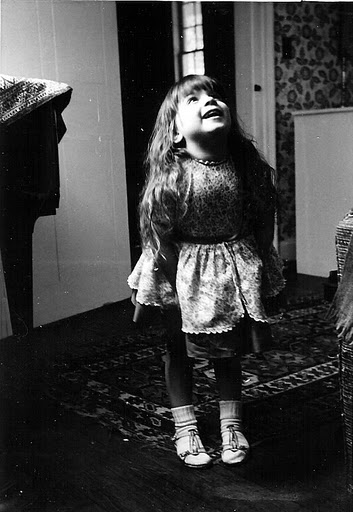
abuse, enabler style

I am raised by a family of triangulating enablers and enablees.

The enablers are my mother and two uncles. They are very very smart. Let me qualify that: they are very very smart intellectually. Emotionally, not so much.

The two uncles have PhDs and are professors. They marry wives that are lessor in their view. One tells my mother that he wants a woman who is not as bright as he is. I don’t know if she is less bright, but she is a hella better athlete. I also have the impression that she had a time where she drank too much.

The other uncle marries a woman who tends to be a hypochondriac. He takes her to India, where she gets polio while pregnant. She is then a sick hypochondriac, which is very difficult. The ill can control their families by planning things and then getting sick at the last moment. On the other hand, chronic fatigue and fibromyalgia are very real and we are on the edge of figuring them out. That uncle divorces his wife and I instantly like both of them better. They stop being a weird unit and are suddenly individuals.

My mother tells me, when I am in college, “I wondered if your father was an alcoholic when I married him.” I want to hit her. She won’t leave him, she won’t stop enabling him, they scream at each other at 2 am often. Now I wonder about that and conclude that either screaming at someone was something she needed or she was an alchoholic too.

After my mother dies, I ask my uncle, what about his parents? After all, the three of them learned enabling somewhere and it pretty much has to be at home.

My uncle tells me his parents had a PERFECT marriage and that my grandmother LOVED being the wife of a physician and professor.

Um, so, then, why did she pay my tuition to medical school, uncle?

And I think about my mother’s stories. Once, she says, your Uncle Jim bet his friend Dick that Dick was too chicken to shoot a cigarette out of Jim’s mother’s mouth. Ooooo. With a rubber band shooter. Yes, my grandmother. Bob took the bet and succeeded. My grandmother roared with anger and the two boys ran like hell and hid.

And someone in the family tells me: your grandfather helped your grandmother control her temper.

There it is. The enabler/enablee.

The enablers die first. My grandfather of cancer at 79, my mother of cancer at 62. The cousins are all angry at me because I won’t follow the family rules and triangulate in a satisfactory manner, and I don’t care any more. I am ignoring them. I got my father’s banjo back and I am done. The two cousins I own land with jointly are not the worst triangulators.

I have to remind myself: for them, this is love. For some people, controlling or being controlled is what functions as love and intimacy. Fighting and tears when person A talks to person C about person B and person C then lets person B know, that is how they feel close. It is not only families, but communities. Clay Shirky’s description of a group being it’s own worst enemy describes the same patterns: identify an enemy inside or outside the group and then everyone comes together against the enemy. The enemy says the wrong thing, doesn’t worship the right god/desses, wears different clothes, looks different. And the group feels safer once the scapegoat has been killed, the guy has been burned. It would be nice if we could burn a ritual guy instead of torching each other.

The real anger is in the enabler. They control it by having the enablee express it. Then it is not “theirs”. They can feel superior to the enablee who is out of control. Sadly, the problem is only fixed temporarily and they will need their anger expressed again and again and again.

The cycle can be broken. It is a lot of work.

Blessings.

______________________________________________

Covid-19: Approach to Long Haul

Covid-19: Approach to Long Haul

This is written primarily for physicians, but is for anyone to read. This is a working theory.

I am very interested in Long Haul because I was diagnosed with PANS by an older psychiatrist who worked exclusively with physicians in 2012. That was during my third flare. The evidence is mounting that Long Haul is an autoimmune disorder like PANS. I am sharing my approach to Long Haul based on both my clinic and personal experience.

Step 1. Validate the patient. Patients are terrified, understandably, to have something “like” chronic fatigue, fibromyalgia, or are worrying that they are “crazy”. Evidence is appearing that Long Haul, chronic fatigue and fibromyalgia are all complex autoimmune disorders with multiple antibodies. We do not yet have vast antibody tests. So the first step is to say that we believe patients and also that we can help. This is a very new and evolving field. I tell patients that it will change fast over the next few years. What I tell them today may change within a year as we get new information. If this makes them anxious, remind them of the Women’s Health Initiative and how that changed hormone therapy, and that cancer treatments keep improving.

Step 2. Lower stress and antibody levels. When we are high stress, cortisol and adrenaline go up and impair the immune system. The immune system is fired up and looking for something to do. Bacteria like strep A have evolved with us and have surface proteins that “look like us”. Our bodies make antibodies to the Strep A or Covid-19 and sometimes those antibodies attack us too, because our own proteins look the same. One way of lowering the antibody level is sweating. Hot bath or shower, sauna, hot tub, exercise. Support these and explain. A second way to lower the antibody level is to quiet the sympathetic nervous system and activate the parasympathetic nervous system. The parasympathetic is the quiet, relaxed and laughing one. Where does the patient feel safe, relaxed, quiet? After my father died, leaving a complicated and messy estate with an out of date will, I did a Sudoku daily for a year. I realized that the Sudoku relaxed me because I could not solve the estate quickly, but I could nearly always solve the Sudoku. Stupid cat videos, rocking chairs, knitting, gentle walk in the neighborhood if it feels safe, a walk in a mall (without one’s purse if overspending is an issue) — how does this particular person relax? Teach the slow breathing: in for a slow count of five and out for a slow count of five. Or square breathing: in for five, hold five, out five, in five. Twenty minutes of slow breathing supposedly moves almost everyone from sympathetic to parasympathetic. It may take practice and feel unfamiliar: I have had a veteran say that it felt very very weird to relax and he was not used to it. He kept at it.

Step 3. Symptom picture. At present I am basing this on my own experience with PANS. This is my working theory. Antibodies can block receptors or “turn the key” and activate receptors. Buprenorphine does BOTH (though it is not an antibody): at lower levels it turns the key and at higher levels it blocks. I would ask specifically about five fields. You many well be able to come up with more.

a. Brain function. In my PANS, I have antibodies to dopamine that turn dopamine on very high. Other physicians assume that I am manic. I am not quite manic, but it certainly feels awful. I feel like I have been shot out of a cannon when I wake up, with the morning cortisol rise. For me, the caffeine in coffee calms me, and my assumption is that it displaces the anti-dopamine antibodies. Tea does not work. I quit coffee for seven years until the latest flare. Albuterol doesn’t work. Terbutaline does work. I don’t know about theophylline or adderall, I have not tried them. If someone has “brain fog”, I assume that they have blocker antibodies OR be sure to ask if they were different in the first 4-6 months of the illness. For me, the antibodies rise for about 2-3 months and then take 2-3 months to drop. I have a lot of fatigue when they finally leave and this time I could tell the day that the last antibodies “fell off” or dropped to my “normal” level.
For blocked people, does caffeine help? How about albuterol? Adderall, theophylline, SSRIs. Every person will have different antibodies. Treatment needs to be tailored.

b. Muscle function. My anti-tubulin antibody (I have PANS, remember?) shuts down my “fast twitch” but not my “slow twitch” muscles. Tubulin is what makes the lung cilia function, so presumably mine are paralyzed during a flare and that is why I get pneumonia. I am tachycardic, resting heart rate 100 and walking slowly or talking heart rate 135, so I get very short of breath. Both the lung dysfunction and antibodies that upregulate my dopamine receptors make me tachycardic. I think that the people who can barely get out of bed with chronic fatigue have both fast and slow twitch muscles blocked. They need validation and lower stress. With support, perhaps the antibody level can be lowered enough that they can function again. I also found that my muscles hurt when my blood sugar was up and that if I keep it low, I have minimal muscle pain. I do not know if this is true for other people.

c. Gut function. In PANS, there appears to be an antibody to lysoganglioside. I don’t understand it but when I am sick, I cut carbohydrates way back or I am horribly ill. I tolerate lactose but not fructose, sucrose or gluten. One year after getting my last flare, I can eat everything except gluten. With this round I figured out that rising blood sugar when I am sick makes me acidic. This in turn worsens lung function more, as my body automatically slows my breathing to balance the acidity. I found that taking bicarb before a meal helped tremendously. In the worst/highest antibody part of the flare, I eat fats, because anything else makes me ill. SO: what can the patient eat or not eat and support them. Food intolerances are on the rise. Ask if there are foods that they cannot eat and support them not eating them. They can go to a very restricted diet that works for them and wait three weeks. After three weeks, food antibody levels are supposed to drop. They can start adding foods back in, one every three days. I do not know if this will work in a bad flare, the antibodies may be too high.

d. Lungs: do a resting heart rate and oxygen saturation. Do a walking heart rate and sat. Then do a LOADED heart rate and sat, with the person carrying the equivalent of two bags of groceries or their toddler. If they are young, they may hold their sats, but if their heart rate jumps to 135, that is like running a continuous marathon. Try oxygen and see if the heart rate comes down. Sleep apnea testing is also highly recommended. If they are tachycardic with daily activities, of course they have fatigue! Rest. Patients can learn to check a pulse or have a pulse ox, but fingers and second hand are cheap.

d. Other. I am reading that the main complaints in Long Haul are fatigue, brain issues, tachycardia and shortness of breath. What else really bothers the person? Sound sensitivity, loss of the sense of smell. The first step in helping with this is to listen and validate.

Covid-19: long haul II

A few days ago my primary care doctor texts that she wonders if I have the autoimmune form of fibromyalgia.

Red alert. I have not heard about this.

I did a search last night and find this: https://www.sciencedaily.com/releases/2021/07/210701120703.htm.

Now, if you have been paying attention, you know that I was diagnosed with PANDAS in 2012, though Isuspect that it is really PANS. Both are autoimmune disorders. I also think that long haul covid is the same thing or something similar.

Meanwhile, they are now saying Covid-19 Long Haul may ALSO be an autoimmune disorder. Multiple sites below.

There is a paper in Nature that I don’t have access to, annoyingly enough. The fibromyalgia story in the above story is that they have spun antibodies down from human serum of affected and unaffected people and then injected them into mice. The mice get fibromyalgia symptoms from the affected antibodies but not from the unaffected ones. The symptoms in the mice go away when the antibodies fade out, in a few weeks. Aha.

The long haul story says that death from Covid-19 may be an autoimmune response, the antibodies going really nuts and making people bleed or their lungs close down. That is, swell shut. They have been drawing blood to study at different stages of Covid-19 and also checking autopsy patients. Usually autoimmune diseases are more prevalent in women then men but Covid-19 seems to be worse in men. This: “The mechanisms behind the production of such autoantibodies aren’t yet clear. Widespread and long-term inflammation during severe COVID-19 may cause the immune system to produce antibodies to pieces of the virus it wouldn’t normally recognize. Some of those pieces might resemble human proteins enough to trigger the production of autoantibodies.

Excessive inflammation could also boost production of autoantibodies that had previously only existed in the body at very low levels. Vaccination against COVID-19 is much less inflammatory than infection with the virus. In a separate study that looked at COVID vaccination, none of the healthy volunteers developed autoantibodies.” (2)(*)

Here is another fibromyalgia paper: https://www.verywellhealth.com/autoimmunity-neuroinflammation-in-fibromyalgia-5197944. That paper lists the autoantibodies that they are finding in fibromyalgia including gangliosides. The fourth antibody in PANDAS/PANS is anti-lysoganglioside. Aha! So this is sparking a serious revolution in medicine: it is looking like many of the mysterious and difficult to describe and quantify diseases may be autoantibody disorders. The anti-ganglioside antibodies were found in 71% of fibromyalgia patients. There are seven antibodies listed, including one to serotonin. In PANS, they are blaming two anti-dopamine antibodies. None of the fibromyalgia patients had ALL seven, but all of them had some of them. A different pattern in every patient, because we all make different antibodies. Fascinating.

One more: https://pubmed.ncbi.nlm.nih.gov/28339361/. People with lupus are more likely to have fibromyalgia and visa versa. “Increasing evidence indicates that N-methyl-D-aspartate receptors (NMDARs) play a major role in the induction and maintenance of central sensitisation with chronic pain. In this study, we evaluated the role of anti-NMDAR antibodies in the development of FM in patients with SLE.” Lupus and fibromyalgia share an autoantibody. Holy cats. NMDA is ALSO a neurotransmitter. Makes me wonder quite a bit about “psychiatric” disorders.

Remember that we make up all the words. So the autoimmune diseases are usually found by testing for a few antibodies. In the most common autoimmune disorder, hypothyroidism, we usually check the TSH and T4 level, so patient hormone levels rather than antibody levels. Over the last 30 years, we are able to test for more antibodies. Systemic lupus erythematosis, celiac, rheumatoid arthritis, juvenile rheumatoid arthritis. When I was in medical school in 1989, the rheumatology book was an inch and a half thick and there were loads of different patterns of disease. I am sure it is twice as thick now. Our initial test for autoimmune disease is for inflammation: an antinuclear antibody and an erythrocyte sedimentation rate. Some people have rheumatoid arthritis but their RF is negative: they have “sero-negative” rheumatiod arthritis, which is more likely “a different autoantibody that we have not tracked down” rheumatoid arthritis. In chronic fatigue and fibromyalgia, the antinuclear antibody and erythrocyte sedimentation rate are usually normal. I suspect both disorders of being “post” inflammation.

My prediction is a serious medical revolution, where we start regularly testing for autoantibodies. Whether that will be something like a pregnancy test but with hundreds of autoantibodies tested for, or whether there are some key indicator ones that we can find, is not clear. At any rate, trauma, stress and infection all increase the likelihood of getting one of these disorders and we have to figure out how to lower the load of all three.

Do you think people are instinctively quitting their jobs?

I had a phone visit with my pulmonologist yesterday. She was running about 35 minutes late, I sat on Zoom until she showed up. She looks exhausted. “We have less doctors and more patients.” she says. “I was on call for the critical care unit last week and I am on call Monday and Tuesday.” “Please take care of yourself,” I say, “We really need you.” She is smiling the whole time. She is worried about me dropping weight and I am worried about her.

Prayers and blessings all around.


1. https://www.cedars-sinai.org/newsroom/covid-19-can-trigger-self-attacking-antibodies/
2. https://www.nih.gov/news-events/nih-research-matters/autoimmune-response-found-many-covid-19
1. https://www.cedars-sinai.org/newsroom/covid-19-can-trigger-self-attacking-antibodies/
2. https://www.nih.gov/news-events/nih-research-matters/autoimmune-response-found-many-covid-19
3. https://thehill.com/policy/healthcare/591528-long-covid-study-author-explains-four-factors-that-can-predict-how-you-get
4. https://www.the-scientist.com/news-opinion/studies-identify-risk-factors-for-long-covid-69648
5. https://www.dailymail.co.uk/health/article-10436473/Is-people-sicker-Covid-19.html
*If that paragraph does not make people get the vaccine, they are living completely in a mad dream world, IMHO.
6. https://www.nih.gov/news-events/nih-research-matters/misdirected-antibodies-linked-severe-covid-19

For the Ragtag Daily Prompt: flickering. As in flickering hope.

Adverse Childhood Experiences 13: unsense

As a child in an alcoholic/addict household where you can not trust adults, who do you trust?

You either trust yourself or you buy in the alcohol story.

If you buy in, you have a high probability of either becoming an addict or marrying one, depending if you prefer the enabler or the enablee role.

If you trust yourself, you develop certain senses. You pay attention to people’s emotions. You pay attention to what people FEEL, what people DO and not what people SAY. You do not care what they say: what matters is what they do. My sister said she used to walk my parent’s house during high school and try to feel the mood. Did she need to hide?

The enabler role is trying to control the other person. There are amazing variations on this. I cared for a person whose sister would not take care of herself. Every time the sister is hospitalized, the person goes and cleans tons of garbage and rotted food from the apartment.

“Stop doing that,” I say, “You are enabling her. Call Adult Protective Services to go look at it instead.”

It can be very difficult to stop and can take years. People can change.

I have noticed that the enabler role is lethal. The enablers seem to die before the enablee. Certainly in my immediate family and with many patients too.

Enablee is the person controlled. Alcohol, drugs, gambling, anger, emotions. It is very very interesting to watch. I have read parts of my mother’s diaries. She was the enabler, with my father as the enablee. However, the diaries document them fighting in the middle of the night when he is drunk. And I remember high school, putting the pillow over my ears, because they were screaming at each other.

But wait. Why would she argue with her drunk husband? Why would anyone argue with a drunk person? You have to wait until they are sober.

And slowly I realize that my mother too was an alcoholic. I remember her drinking. Best cover for an alcoholic is a worse alcoholic, right? It’s fairly horrid. But it explains some stories and my food insecurity. They would not get up in the morning to feed me. My mother told stories of me trying to feed myself: cheerios and laundry soap. If my father was hung over, ok, but, why wouldn’t my mother get up? I think they were both hung over. That or else she really did not want a child. Especially a nine month old with opinions while she was trying to get over tuberculosis. She never got to hold me after birth until 9 months. And then I did not want her. I wanted her mother.

Trusting yourself, life can be a bit complicated. You sense the emotions others are hiding. Being a physician allows me to ask about the hidden things, very gently. Sometimes they come out right away. Sometimes it takes months. Sometimes years and sometimes never. My sister and I discussed going to parties and thinking, oh, that person is the child of an addict/alcoholic. This person is in pain. This person is quite happy but hiding stuff.

I told a counselor I do not know how to turn it off. She replies, “Why do you think I am a counselor?”

I don’t see auras. I feel things: like a cloud. Like a tiger, like a bear, like a whale, singing.

I think I will go with the whale.

Skookum Smithsonian

I forget how BIG the Washington, DC Mall is. On my last day visiting out east over the winter holidays, my friend B and I went to the Mall. Above is the Smithsonian National Museum of Natural History (DINOSAURS!), then the National Gallery of Art and then the Capitol Building. We went to the National Gallery first because they opened late at 11 am, while the Smithsonian was opening some buildings at 1 pm.

Looking the other way, the Washington Monument, the National Museum of African American History and Culture, and the National Museum of American History.

The museum buildings are each two city blocks long and a city block wide. They are enormous. We only went through part of the National Gallery and then ducked in to Natural History. There are now 23 buildings, including the National Zoo, in the Smithsonian. It is amazing and wonderful. And there are other museums as well, including the National Gallery of Art.

The Smithsonian: https://www.si.edu/museums.

The National Gallery of Art: https://www.nga.gov/.

cast of a triceratops skull

They are SKOOKUM museums.

Ode to defiance

Is oppositional defiance running YOUR life?

I am oppositional defiant. I have been for as long as I can remember. I ALWAYS want to argue when someone tells me to do something or gives me advice. BUT, I have learned to work with it.

I work with it by arguing with myself.

Give me a topic. Or advice. I will promptly argue the opposite, internally or externally. Then I will argue the original side. Then my demon fights my angel until they are both tired and decide to go have a beer. Somewhere along the way I will make a decision and also I will laugh, because it’s funny.

B has figured this out. “You argue with EVERYTHING.” he says.

“Yes, and if there is no one around, I argue with myself. All the time.”

However, he is also oppositional defiant. He is smart too, and doing some self examination.

“I am thinking about my life. I think ALL of my important decisions were oppositional defiant ones.”

“Someone told you you couldn’t do that?

“Yes.”

He’s chewing on that. Heh. He accuses ME of overthinking. I replied that I am making up for his underthinking, heh. He suggests that I STOP overthinking and I say, “You want to DESTROY the SOURCE of my poetry?” Double heh.

The point is, some of us are oppositional defiant, but really, we don’t want that to run our lives EITHER. We don’t want ANYTHING or ANYONE to tell us what to do.

B says, “I think that everyone refusing the vaccine is oppositional defiant.” He has a lot of friends, both liberal and conservative.

“That is interesting.” I say. And I wonder if it is worth dying for, to be oppositional defiant. Not if it’s running your life, right? I don’t want ANYTHING to run my life except ME.

So then I spend a bunch of time arguing with myself about the causes of refusing the vaccine. And I have not reached a conclusion. Yet.

I took the photograph at the Bellevue Mall on Monday. A three story waterfall. Really? Isn’t there enough rain in Seattle? We should have a three story sun instead.

Covid-19: masks work, we figured that out YEARS ago

I was thinking about masks and the whole “masks don’t work” or “masks are unproven*” thing. That is complete and utter crap. We proved masks work YEARS ago.

If they don’t work, do you mind if your surgeon don’t wear one? What about your nurse with a cough when you are in the ICU? I think we have proved quite definitively in the operating room that masks work.

Also, your family doc and OBgyn ain’t gonna NOT wear a mask when delivering baby because it can be REALLY SPLASHY. And some patients who are delivering a baby have hepatitis B or HIV or hepatitis C or whatever. WE DO NOT WANT TO CATCH IT SO WE WEAR MASKS. MASKS WORK.

And take tuberculosis. Tuberculosis bacillus is tiny and can be air borne, if you have active tuberculosis and cough. We use reverse flow rooms in the hospital with an airlock: a door to a small entry room, that has to close before you enter the inner patient room. And the air is slightly lower pressure so that air comes in from the airlock but doesn’t flow out. All the air out of the room is filtered to catch and kill the tuberculosis bacillus. We go in the airlock and put on nearly full gear: gown, gloves, mask, hair covers, shoe covers. When we come out, we take it all off in the airlock. We also keep a stethoscope in the room so that we don’t carry infection from patient to patient.

So the whole anti mask thing seems categorically insane to me.

Like, didn’t we figure out masks work back before the civil war? Or thereabouts. No, maybe later than that. Without masks and gloves we had all the women with post baby fever, who died like flies and most people died of infection after surgery. Until that coke addict at Johns Hopkins made people wear clean clothes and wash their damn hands before each surgery and wear gloves. Suddenly people survived post surgery at a much higher rate. Everyone came to train with him to imitate him. By 1897 everyone was wearing gloves to prevent infection. And so a brilliant coke addict invented medical residency, which is why residents are not allowed to sleep. We’ve gotten over that a bit.

Anyhow: masks work. Think, people, think.

*Usually the unnews qualifies this as “masks are not PROVEN to work with Covid-19”. What, you want a ten year clinical trial first? Are you crazy? And the resounding answer is “YES! We are crazy!”

For the Ragtag Daily Prompt: December. Because everyone should have figured out masks by now.

Why care for addicts?

I posted this in November, 2015. I am reposting it.

_________________

Why care for addicts?

Children. If we do addiction medicine and help and treat addicts, we are helping children and their parents and our elderly patients’ children. We are helping families, and that is why I chose Family Practice as my specialty.

Stop thinking of addiction as the evil person who chooses to buy drugs instead of paying their bills. Instead, think of it as a disease where the drug takes over. Essentially, we have trouble with addicts because they lie about using drugs. But I think of it as the drug takes over: when the addict is out of control, the drug has control. The drug is not just lying to the doctor, the spouse, the parents, the family, the police: the drug is lying to the patient too.

The drug says: just a little. You feel so sick. You will feel so much better. Just a tiny bit and you can stop then. No one will know. You are smart. You can do it. You have control. You can just use a tiny bit, just today and then you can stop. They say they are helping you, but they aren’t. Look how horrible you feel! And you need to get the shopping done and you can’t because you are so sick…. just a little. I won’t hurt you. I am your best friend.

I think of drug and alcohol addiction as a loss of boundaries and a loss of control. I treat opiate overuse patients and I explain: you are here to be treated because you have lost your boundaries with this drug. Therefore it is my job to help you rebuild those boundaries. We both know that if the drug takes control, it will lie. So I have to do urine drug tests and hold you to your appointments and refuse to alter MY boundaries to help keep you safe. If the drug is taking over, I will have you come for more frequent visits. You have to keep your part of the contract: going to AA, to NA, to your treatment group, giving urine specimens. These things rebuild your internal boundaries. Meanwhile you and I and drug treatment are the external boundaries. If that fails, I will offer to help you go to inpatient treatment. Some people refuse and go back to the drug. I feel sad but I hope that they will have another chance. Some people die from the drug and are lost.

Addiction is a family illness. The loved one is controlled by the drug and lies. The family WANTS to believe their loved one and often the family β€œenables” by helping the loved one cover up the illness. Telling the boss that the loved one is sick, procuring them alcohol or giving them their pills, telling the children and the grandparents that everything is ok. Everything is NOT ok and the children are frightened. One parent behaves horribly when they are high or drunk and the other parent is anxious, distracted, stressed and denies the problem. Or BOTH are using and imagine if you are a child in that. Terror and confusion.

Children from addiction homes are more likely to be addicts themselves or marry addicts. They have grown up in confusing lonely dysfunction and exactly how are they supposed to learn to act β€œnormally” or to heal themselves? The parents may have covered well enough that the community tells them how wonderful their father was or how charming their mother was at the funeral. What does the adult child say to that, if they have memories of terror and horror? The children learn to numb the feelings in order to survive the household and they learn to keep their mouths shut: it’s safer. It is very hard to unlearn as an adult.

I have people with opiate overuse syndrome who come to see me with their children. I have drawings by children that have a doctor and a nurse and the words β€œheroes” underneath and β€œthank you”. I  have had a young pregnant patient thank me for doing a urine drug screen as routine early in pregnancy. β€œMy friend used meth the whole pregnancy and they never checked,” she said, β€œNow her baby is messed up.”

Addiction medicine is complicated because we think people should tell the truth. But it is a disease precisely because it’s the loss of control and loss of boundaries that cause the lying. We should be angry at the drug, not the person: love the person and help them change their behavior. We need to stop stigmatizing and demeaning addiction and help people. For them, for their families, for their children and for ourselves.