From my friend Maline’s garden, in Wisconsin, July 2017.
For Cee’s Flower of the Day.

From my friend Maline’s garden, in Wisconsin, July 2017.
For Cee’s Flower of the Day.

I must give this local credit. She knows that I’m a stranger and she is very alert.
Taken very early in the morning in Wisconsin, July, 2017.
For the Ragtag Daily Prompt: alert.


I had cobra from my job in 2009 and the insurance company refused my bills. Not one bill. Not once. EVERY BILL EVERY TIME: 1. my healthcare 2. my son’s healthcare 3. my daughter’s healthcare 4. my daughter’s orthodontia 5. my dentist 6. my son’s dentist. I had to call EVERY TIME to get them to pay. Calling an insurance company takes 25 or 30 minutes, right? Eventually I asked for customer service who first said it was my fault because “you probably paid the bill late”. I said, “No, I was on time every month.” Then customer service wouldn’t call me back. I finally called their COUNSELING HOTLINE, since it said I would be “paid” $30 to get counseled, and said, “MY LITTLE SISTER IS DYING OF BREAST CANCER AND THE THING THAT IS MOST STRESSING ME OUT IS YOUR INSURANCE COMPANY WON’T PAY THE COBRA BILLS AND I HAVE CALLED CUSTOMER SERVICE OVER AND OVER AND THEY WON’T CALL ME BACK. HOW ABOUT YOU COUNSEL ME HOW TO DEAL WITH THAT!” And I cried. I got a call back from the head of customer service saying “Oh, it’s a computer glitch and we had you misfiled. We have fixed it.” They “misfile” people all the time, or drop patients if they get sick, or say the person didn’t pay on time. I HATE INSURANCE COMPANIES. Anyhow, be warned that insurance companies are there to earn money and will try to avoid paying you in all sorts of ways, including ways that are illegal.
We need single payer healthcare, medicare for all. If we all have healthcare, think of how many small businesses would start up. And why don’t we have single payer healthcare? I think the big corporations don’t want it.
Physicians for a National Healthcare Program: https://pnhp.org/
Medicare for all: https://medicare4all.org/
And my dear friends not on the road any more: http://madashelldoctors.com/
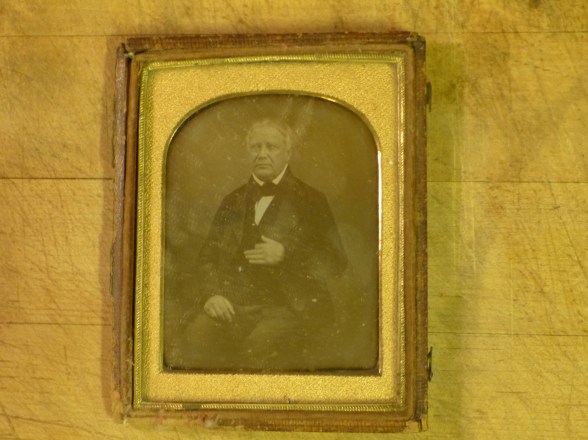
Who is the man in the photograph? I don’t know. This is an old tintype. They came from my Great Aunt, Esther White Parr, married to Russel Parr. Perhaps they are Parrs, because my Uncle Rob did not know any of the people in the four tintypes I have. My sister and I used them for portraits in our china doll houses. I hope he is not the CEO of an insurance corporation, but then, all the white collar white men tried to dress that way then.

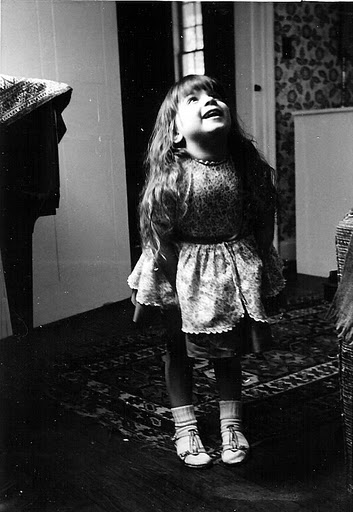
The photograph is from left to right, my sister Christine Robbins Ottaway, my (sort of but not blood) cousin Katy, and me. This is a fourth of July. We wanted to DO something. We were at my maternal grandparents’ in Trumansburg, New York. My mother suggested that we dress up and do a presentation. We wore her 1950s prom dresses, held a small parade involving three dogs and a cat who were also in costume, and read the Declaration of Independance and the Preamble to the Constitution to a group of adults in lawn chairs. This was in lieu of fireworks. We had fun but we still missed fireworks.
I am thinking about asking. I could not ask my mother for specific things I wanted as a child. She would get me a different and cheaper alternative. If I was disappointed, I would be guilt tripped or humiliated. I did not ask my father for things either. He would make and break promises, too sick from alcohol or he would have forgotten. I stopped asking because I did not like being disappointed and I did not like being shamed. Once I really really wanted something for Christmas. My sister and I made a quiet deal, showing each other exactly which toy we longed for. Then we each shopped with our mother and insisted on the toy the other wanted. Our mother did try to talk each of us out of the toy. We had arranged it so that we were spending the same amount of money: $20. She thought that was outrageous and that something cheaper would do just as well. We both stood our ground on the other’s behalf and then open the presents on Christmas day with faked surprise and real joy. We did NOT tell our mother.
On an earlier Christmas I sewed my sister a toy stuffed snake. My mother was discouraging, but she let me have cloth and needle and thread. “Why do you want to make her a snake? A snake?” I couldn’t really explain well. We had gone to a county fair and my sister and I both longed for the velvet snakes, six feet long and deep red. The snake I made for my sister was only a foot and a half long and I had flowered fabric, not velvet. I coiled it in a circle and wrapped it. My sister was delighted with it and held it all Christmas morning. My mother just shook her head. “A snake.” she muttered.
The things that I could ask for were books and music. I was the kid that the teacher would hand the scholastic book box to after she handed out one or two books to the other kids. I would order 20 books. My father said I could have as many as I wanted as long as I read them all. The only books I avoided were about television or movies. I loved a non fiction book about WWI Flying Aces. The technology of the airplanes and the problem of bullets ricocheting off the propeller were amazing. I also liked that it talked about the ACEs on both sides: German, English, French, American.
For the Ragtag Daily Prompt: ask.
I don’t know who took the photograph. I think it was one of my grandparents. Oh, I think “cousin” Adam is in the picture too, though he is nearly hidden behind the flag.

I saw a meme today about gratitude. It is saying that some people look at a garden and see thorns and weeds, but others see the roses. That we need to have gratitude. I think this is simplistic and papers over the trauma and grief that some people have. If they have endured a highly traumatic childhood, who am I to say they should focus on the roses? They may have a very good reason to see if there is something like a thorn that can hurt them before enjoying the roses.
I work with many patients with high Adverse Childhood Experience scores and mine is high too. I don’t tell my patients that they should have gratitude. I tell them “You survived your childhood. You have crisis wiring. Good for you. Some of your learned crisis survival wiring may not serve you as well now as it did when you were a child.” Then we discuss whether they want to work on any aspects and the many many different approaches. One example: a man who sleeps very lightly. He said that it was lifelong. When asked about his childhood he says, “We would have to leave in the night when there was shooting in my neighborhood. It was a very dangerous area.” I said, “I am not surprised you sleep lightly. You HAD to in childhood to survive. Is this something you want to try and change?” He thought about it and decided, no. Once it was framed as learned in childhood to survive, he stopped worrying about “normal”. He was satisfied that the way he slept was “normal” for him and he wanted to wake up if he heard shooting.
I think we have to ask why a person sees thorns and weeds in a garden before we judge them. My first thought with a new and angry or hostile patient is always, oh, they have been badly hurt in the past. What happened? I don’t worry that the anger is at me. I know it’s not at me, it’s at the system or a past physician or a past event. Under the anger there are other emotions, usually fear or humiliation or grief. I have brought up Adverse Childhood Experience scores on the first visit sometimes. One person replies, “I am a 10 out of 10.” The score only goes up to 8 but I agree. He was a 10. He stated once, “The military loved me because I could go from zero to 60 in one minute.” Very very defensive and very quick to respond. The response may seem extreme and inappropriate to other people: but it may feel like the only safe way to be to my patient.
I grew up hiding any grief or fear in my family, under anger, because grief or fear would be made into a story told for laughs. In college, a boyfriend told me I was an ogre when I was angry. I started working on it then and it was difficult to tame that. The person who took the longest was my sister: she could make me explode until I was in my residency. Medical training was excellent for learning emotional control, at least, on the surface. After my mother died, I had to do the next piece of emotional work: open the Pandora’s Box of stuffed emotions, mostly fear and grief, and let them out. It was such hard work that my day where I saw the counselor for an hour was harder than my ten hour clinic day. I did the work, for two long years. Blessings on the counselors who stood by me while I worked through it.
I do not think we are ever done with that sort of work. I think, what do I need to learn next? What is this friend teaching me? Why is this behavior frustrating me and I have to look in my inner mirror. Why, why, why?
Blessing on your healing path and may you not be judged.
Link about ACE scores: https://www.cdc.gov/violenceprevention/aces/about.html
Sometimes I do feel like a fossil, now that I am middle aged. For the Ragtag Daily Prompt: fossil.

I took this two days ago on an early beach walk starting at North Beach. The sky was amazing and beautiful. We had intermittent sun through the clouds and very little rain on that walk. It’s easier to see the clear agates when the sun lights them up.
I did not find any clear agates. B found one that met his criteria. There were many other beautiful rocks. This one was way too big to bring home. The rock itself is almost a rainbow.

For the Ragtag Daily Prompt: rainbow.
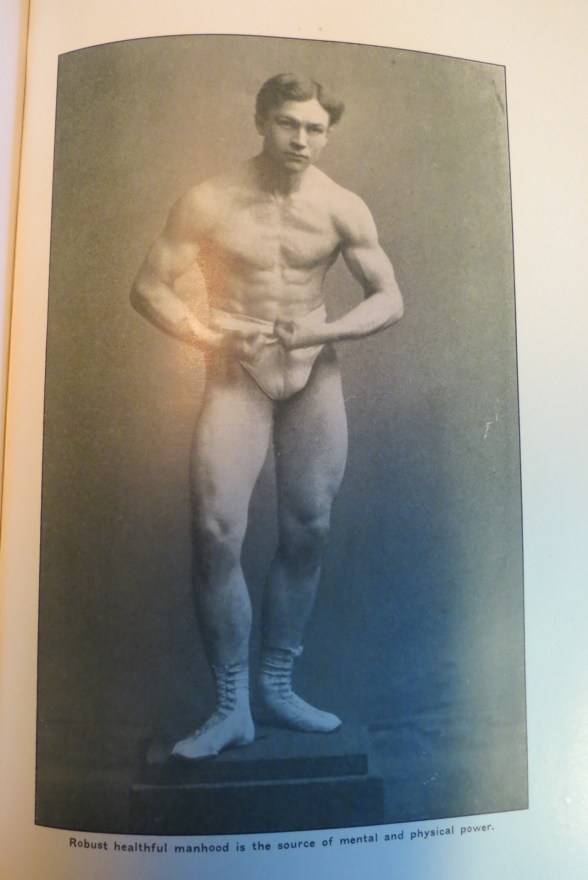
The photograph of “a healthy man” to go with my Ragtag Daily Prompt conflate post.
I LOVE the caption. “Robust healthful manhood is the source of mental and physical power.” How differently the author portrays health womanhood, as shown in the conflate post. The book is Macfadden’s Encyclopedia of Physical Culture, in three volumes, 1911. Volume I is 500 pages. It is easy to read but it’s a different style from now. Here:
As a rule, if you will simply retain the idea that food should be swallowed at all times without effort, that is, that never, by any means, wash it down with water, milk, tea or any other liquid, that you should masticate it until it seems to disappear without swallowing, you can rest assured that you are masticating sufficiently. p. 97, volume I.
I plan to read the entire set. I think I will find lots of wonderful words for the Ragtag Daily Prompt (hey, I don’t think we’ve used masticate yet!) and material to write about.
Are there still interesting medical ideas out there? Oh, yes. LOTS. Only now they use the internet. I have subscribed to some of the series of videos, telling people how bad and wrong minded allopathic doctors are. Sigh. We do our best. The scam is that they let folks watch one a day for a week, or let them watch one, and then want you to buy the series. “Only $349.99!” Nice scam that is proliferating rapidly. I have now gotten emails saying “Health coaches should make as much or more than physicians and we can teach you how to market and target people and make that money.” Ugh and ick. Really?
I have patients in clinic who present by saying, “I don’t usually go to MD doctors, I go to a naturopath, but I am here because I need an antibiotic.”
I learn to respond gently. “Oh. If you need an antibiotic, maybe you have signs of infection? What are your symptoms?” I have to get past their dislike of allopathic medicine and find out what the symptoms are. Usually if I can diffuse them by getting the story, we can work together. Once in a while it doesn’t work: I have people come in and give me orders. “Do these labs.”
“Uh. Where did this list come from?”
The answer could be a video (by a naturopath, a biochemist, a biologist, whatever. I have watched some of these series. They start by saying that doctors are wrong/stupid/stubborn/misguided/etc.) or a “cash only” doctor or a magazine.
“Why are you coming to me?”
“I want medicare/my insurance to pay for it. I have done my research.”
“Well, medicare does not work that way. I have to list a symptom or diagnosis code for every lab ordered.”
“WHAT?”
I try to be patient. “Every lab has to have an attached appropriate diagnosis code or medicare will not cover it. There is a place in town where you can order your own, but it does not take medicare. You pay for it.”
“Just order it!”
“No. I am a medicare/insurance provider, which means I have a contract with them. It would be fraud and illegal to make up codes. Does your cash only provider use diagnosis codes? Can your bring their clinic note to me?”
One person replies, “My provider doesn’t take notes.” Oh, how nice. That provider does a very expensive panel of labs three times a year that the person is paying for out of pocket. “My provider checks EVERYTHING.” Um, and makes a boatload of money off you too, I think. That patient is very angry that I won’t take her orders and switches clinics. Oddly enough, this does not break my heart.
Some days I hate Dr. Google. There are lots of websites and people on line swearing that they can improve your health. There are scientific looking papers that swear something has been tested, but read the fine print: if the sample is 8 people, how does that stack up against the Women’s Health Initiative, where one arm of the study had 27,000 people? The evidence is weighted. We get multiple articles in medical school and subsequently about how to read a paper, how to weigh the evidence, how to recognize fraud or a poorly designed study.
I do not object to people looking on the internet and I have had people who came in and said, “Is it possible that I have THIS?” and who are correct. However, I see more fraud, always.

I read Grampa’s Solo Visits this am and it makes me laugh.
Since I have been a family doctor in my town of 9000 for 22 years, the grocery store and coffee shops can be interesting. When I moved here, my daughter was two and my son was seven. We have three grocery stores. I usually go to the one 7 blocks from my house. I would see patients. My diabetics would sometimes look guilty and scurry away when they saw me. Another patient comes to peer in my cart.
“I want to know if YOU are eating healthy food.” he says.
I laugh.
“I don’t see any vegetables.” he says.
“I am in a CSA,” I say. “I get a box from the farm once a week.”
He frowns. “Do you get to choose?”
“No,” I say. “But since I hate throwing vegetables out, we eat more vegetables. Also, we eat ones that are unfamiliar. The first time I got celery root, I had to look it up. I didn’t know what it was.”
He nods. “Hmmm. Ok. We want to be sure you practice what you preach.”
I laugh again. “I sneak in to get the ice cream at midnight, ok? And where is YOUR cart?”
“My wife has it,” he says. “You don’t get to see it.”
“Ok, then. Have a great day.”
When we were first in town, occasionally someone would come start talking about their health in a store.
“I can’t discuss your health in front of my children. HIPAA.”
“Oh,” they’d say, “Uh, yeah. I should call the clinic Monday?”
“Yes, please.”
We had a coffee shop that made the best pastries that I’ve had since I was an exchange student in Denmark. I wished they’d make tiny pastries, bite size, for the diabetic folks. Those folks would slide a newspaper over their plate when I walked in with my family. They looked terribly guilty. I might nod, but I wouldn’t say anything. Sometimes they would confess at the next visit.
There are lots of jobs in small towns where people are very much public figures. Not just doctors, but the people who work for the city and the county, the ones who redo the taxes for homes, the realtors, all sorts.
After I was divorced, another doc at the hospital asks, “Dating someone new?”
I frown, “How do you know?”
She grins, “He lives on my street. I saw you.”
Dang it. The rumor mill is very very efficient and can often be fabulously wrong. That time it was correct, though I don’t think she passed it around. Other people live on the street.
A few days ago someone that looked familiar walks by me. “What are you doing with so-and-so?”
I laugh. “Rumors abound.” I say. “You would not believe the rumors!”
I took the photograph of the coyote yesterday, driving home. Stopped dead in my lane, no one else on the road. People will be stopped in the road here, talking to each other in two cars going opposite directions, or talking to a friend on foot.

Taken in 2017.
For Cee’s Flower of the Day.
Home to the Longette & Longette Lite
Intelligence that is not artificial: we are real.
BLIND WILDERNESS
in front of the garden gate - JezzieG
Discover and re-discover Mexico’s cuisine, culture and history through the recipes, backyard stories and other interesting findings of an expatriate in Canada
Or not, depending on my mood
All those moments will be lost in time, like tears in rain!
An onion has many layers. So have I!
Exploring the great outdoors one step at a time
Some of the creative paths that escaped from my brain!
Books, reading and more ... with an Australian focus ... written on Ngunnawal Country
Engaging in some lyrical athletics whilst painting pictures with words and pounding the pavement. I run; blog; write poetry; chase after my kids & drink coffee.
Coast-to-coast US bike tour
Generative AI
Climbing, Outdoors, Life!
imperfect pictures
Refugees welcome - Flüchtlinge willkommen I am teaching German to refugees. Ich unterrichte geflüchtete Menschen in der deutschen Sprache. I am writing this blog in English and German because my friends speak English and German. Ich schreibe auf Deutsch und Englisch, weil meine Freunde Deutsch und Englisch sprechen.
En fotoblogg
Books by author Diana Coombes
NEW FLOWERY JOURNEYS
in search of a better us
Less Noise. More Meaning
Art from the Earth
𝖠𝗇𝗈𝗍𝗁𝖾𝗋 𝖶𝗈𝗋𝖽𝖯𝗋𝖾𝗌𝗌.𝖼𝗈𝗆 𝗌𝗂𝗍𝖾.
Taking the camera for a walk!!!
From the Existential to the Mundane - From Poetry to Prose
1 Man and His Bloody Dog


You must be logged in to post a comment.