I took this on Marrowstone Island. There are often remains of buildings or cars or engines or boats or docks. And which is this, do you think?
For the Ragtag Daily Prompt: concrete.

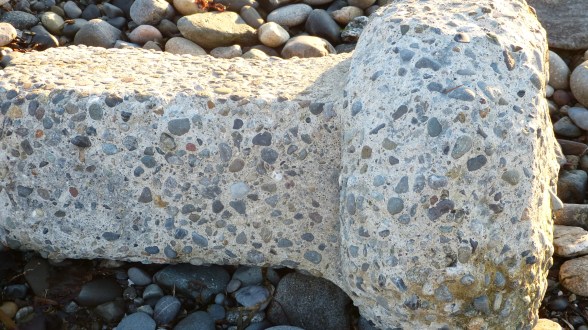
I took this on Marrowstone Island. There are often remains of buildings or cars or engines or boats or docks. And which is this, do you think?
For the Ragtag Daily Prompt: concrete.
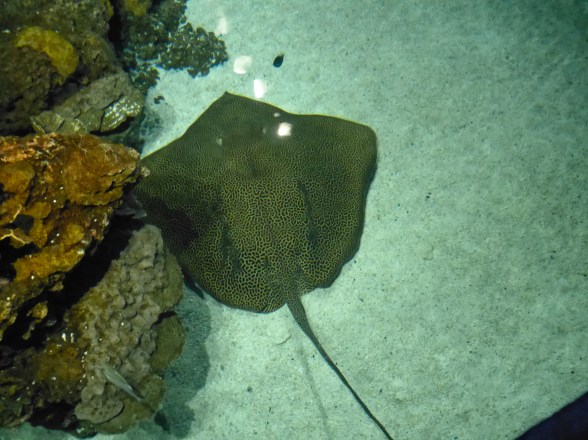
Taken at the Baltimore Aquarium before covid.
For the Ragtag Daily Prompt: narrow.

denise levertov writes making peace
that it is an active process
it is not the absence of war
but a process in itself: how do we make it?
Make Peace
how do we wage peace?
wage is not the word
we do not do it for money
we must be more active than hoping
engender peace?
spread peace: like a pandemic
a pandemic of peace
the comfort of peace
the joy of peace
the love of peace
the peace of the grave
the peace of sleep
the peace of heaven
peace here now
peace not distant nor below the earth
peace conscious, aware and present
peace alive, breathing, welling up in everyone
peace here now
a pandemic of peace
a river of peace
peace flowing through and around, above and below us
peace full, peace out, peaced
let us verb it
I am peaced today
I peace you
I peace Russia
I peace the soldiers
I peace the Ukraine
I peace the entire world
I peace you
please, will you peace me?
peace me now, then there will be two
and everyone else
peace the world now
a pandemic of peace
make peace
___________________
I taped a conversation with a wren one morning in Wisconsin. I never saw my wren and clearly I have not got the language down, but she kept talking to me anyhow.

A friend quotes her son, who says that our immune systems are failing because we have been in isolation. I respond that it’s not isolation: it is stress. Anyone who is not stressed by the addition of war to a pandemic needs to have their head examined. Why does stress mess up our immune systems?
We have two main systemic states: sympathetic and parasympathetic. Sympathetic is the high stress, fight or flight, muscles fired up, gut on hold, and unfortunately we have a pretty sympathetic state culture. Add a pandemic on top of that and then a war and no wonder everyone is flipping out. Parasympathetic is the one we don’t hear about: the happy, relaxed one that likes stupid cat videos and laughter.
Without the sympathetic nervous system, we can survive. Without the parasympathetic, we die.
I have written about how we metabolize cholesterol, depending on whether we are in a sympathetic or parasympathetic state. When we are relaxed, or less stressed, we make more sex hormones and thyroid hormone. That is parasympathetic.
When we are in a crisis, or more stressed, we make more adrenaline and cortisol. That is in the sympathetic nervous system arousal state.
A pain conference I went to at Swedish Hospital took this a step further. They said that chronic pain and PTSD patients are in a high sympathetic nervous system state. The sympathetic nervous system is the fight or flight state. It’s great for emergencies: increases heart rate, dilates air passages in the lungs, dilates pupils, reduces gut mobility, increases blood glucose, and tightens the fascia in the muscles so that you can fight or run. But…. what if you are in a sympathetic nervous system state all the time? Fatigue, decreased sex drive, insomnia and agitated or anxious. And remember the tightened fascia? Muscle pain. The high cortisol level also is not good for the immune system, so we are more likely to get sick. High cortisol also raises blood sugar and the immune system is hyperalert. We are more likely to develop autoimmune disorders.
When we are relaxed, the parasympathetic system is in charge. Digesting food, resting, sexual arousal, salivation, lacrimation, urination, and defecation. So saliva, tears, urine, and bowel movements, not to mention digesting food and interest in sex. And muscles relax.
If the sympathetic nervous system is in overdrive, how do we shut it off? I had an interesting conversation with a person with PTSD , where he said that he finds that all his muscles are tight when he is watching television. He can consciously relax them.
“Do they stay relaxed?” I asked.
“I don’t know.” he replies, “but my normal is the hyperalert state.”
“Maybe the hyperalert state, the sympathetic state, is what you are used to, rather than being your normal.”
He sat and stared at me. A different idea….
So HOW do we switch over from the sympathetic to the parasympathetic state?
Swedish taught a breathing technique.
Twenty minutes. Six breaths per minute, either 5 seconds in and 5 seconds out, or 6 in and 4 out. Your preference. And they said that after 15 minutes, people switch from the sympathetic to the parasympathetic state.
Does this work for everyone? Is it always at 15 minutes? I don’t know yet. But now I am thinking hard about different ways to switch the sympathetic to parasympathetic.
Meditation.
Slow walking outside. No headphones! We need to listen to the birds and wind, watch the trees, really look at nature. All of the new sensory input relaxes us.
Rocking: a rocking chair or glider.
Breathing exercises: 5 seconds in and 5 seconds out. Work up to 20 minutes.
Massage: but not for people who fear being touched. One study of a one hour massage showed cortisol dropping by 50% on average in blood levels. That is huge.
Playing: (one site says especially with children and animals. But it also says we are intelligently designed).
Yoga, tai chi, and chi kung.
Whatever relaxes YOU: knitting, singing, working on cars, carving, puttering, soduku, jigsaw puzzles, word searches, making bean pictures or macaroni pictures, coloring, a purring cat, throwing a ball for a dog…..and I’ll bet the stupid pet photos and videos help too….
My patient took my diagrams and notes written on the exam table paper home. He is thinking about the parasympathetic state: about getting to know it and deliberately exploring it.
More ideas: http://www.wisebrain.org/ParasympatheticNS.pdf

your heart is an agate
clear stone
you have won
sort of
you think
but I am water
I am waves
I will smash you against the other rocks
and wear you down
I am water
I carve you like a laser
you wear my name
carved in your stone shaped heart
it is already written there
on your stone shaped heart
faint, because water wears slowly
water wearing stone
over time
_________________
April 21, 2022

The Ragtag Daily Prompt today is referee. I might need one. A referee. Or a keeper.
Yesterday I went for a walk. No big deal, right? Except that I am still jet lagged from a trip and I had to stay an extra eight days because of I got (thankfully mild) covid and my muscles are still a bit weird.

I go with my friend J, who usually walks 16-20 miles on what he calls day hikes. We walk from my house to North Beach and then out North Beach nearly to Glass Beach. I bring water. He brings water and cliff bars. I eat one. We turn back. It is glorious and gorgeous and sunny and he is up visiting from Portland. We talk and talk.

I am pretty tired by the time we get to the parking lot and think, oh good. Then I remember: no, we walked from my house. Two more miles. I am trying not to limp by the time I home. He goes off to work some more and I crash on the couch.
After a bit I realize that I am not hungry and I feel peculiar and my legs hurt a lot. Uh-oh. I get up. I can’t remember the name of the muscle disorder, but I remember what it does. Seriously overdoing can cause muscle breakdown. This in turn can be very bad for the kidneys. I need fluids, right away. I mix 12 ounces of water with a little sugar and salt. Later I add bicarb, baking soda. It doesn’t taste either bad or good. I eat three dried apricots: potassium.
After 48 ounces of this and two hours, I start feeling a little better, and my kidneys start working again. My legs hurt less. I feed the cats and I still don’t want food. Ok, well, I won’t starve over night. More fluids and to sleep.
I finally have a little bit of an appetite this morning. Not much. I am tired and a bit sore but not like yesterday. Whew. I need a keeper.
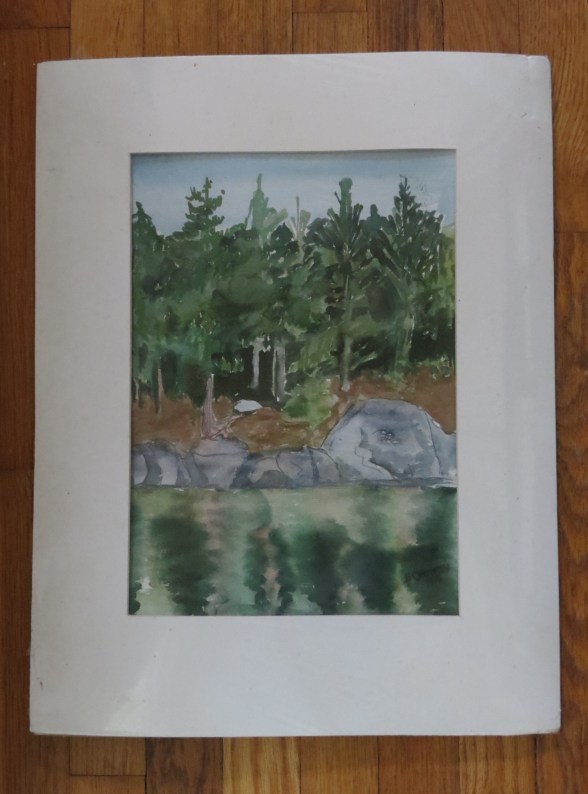
I am blogging A to Z about artists, particularly women artists and mostly about my mother, Helen Burling Ottaway.
Landscapes can be so quiet. This watercolor is of Lake Matinenda, in Ontario, Canada, where my family has summer cabins. They are one room cabins and old and very beloved. I love the rocks at the lake and the reflections in the water. I spend every minute that I can outdoors there. If it is pouring rain or I am cooking, I am in the cabin. I sleep in a tent, because we slept in tents when I was growing up there. I like to feel the earth under the tent and the sound of the water on the rocks and the wind in the trees.

ATOZBLOGGINGCHALLENGE2022 #art #Women artists #Helen Burling Ottaway #ATOZCHALLENGE #Christine Robbins Ottaway #APRILATOZ
For more information about the #AtoZChallenge, check out this link.

you are angry you say
I don’t think those are the right words, I say
not angry? you say
bored, I say
BORED you say
Yeah, I say
Well, you say you don’t love me
You say you won’t change
You say you changed once, in the past
You say you won’t go in a church
You say you did that
You say you won’t go in a casino
You did that
I’m BORED
My first thought about the church
My first thought about the casino
Is that is clearly where I can go
If I want to avoid you
My second thought about the church
My second thought about the casino
is ICK. Why am I hanging around
someone who doesn’t love me
someone who doesn’t plan to change?
My sister and I talk
about the people who don’t change
about the people who remain the same
about the stubborn who bury their heads
We notice them shrinking
as the world changes around them
the things they are willing to do
the people they are willing to talk to
the places they are willing to go
get smaller and smaller and smaller
You dream of a small cabin in the wilderness
your brother shows up and an attacking bear
in another dream I am well and busy and happy
May all your dreams come true
my love
if you really want them to
I am well and busy and happy
are you?
__________
April 18, 2022

I took this at the Baltimore Aquarium, which is wonderful.
For the Ragtag Daily Prompt: zoomorphic.

BLIND WILDERNESS
in front of the garden gate - JezzieG
Discover and re-discover Mexico’s cuisine, culture and history through the recipes, backyard stories and other interesting findings of an expatriate in Canada
Or not, depending on my mood
All those moments will be lost in time, like tears in rain!
An onion has many layers. So have I!
Exploring the great outdoors one step at a time
Some of the creative paths that escaped from my brain!
Books, reading and more ... with an Australian focus ... written on Ngunnawal Country
Engaging in some lyrical athletics whilst painting pictures with words and pounding the pavement. I run; blog; write poetry; chase after my kids & drink coffee.
spirituality / art / ethics
Coast-to-coast US bike tour
Generative AI
Climbing, Outdoors, Life!
imperfect pictures
Refugees welcome - Flüchtlinge willkommen I am teaching German to refugees. Ich unterrichte geflüchtete Menschen in der deutschen Sprache. I am writing this blog in English and German because my friends speak English and German. Ich schreibe auf Deutsch und Englisch, weil meine Freunde Deutsch und Englisch sprechen.
En fotoblogg
Books by author Diana Coombes
NEW FLOWERY JOURNEYS
in search of a better us
Personal Blog
Raku pottery, vases, and gifts
𝖠𝗇𝗈𝗍𝗁𝖾𝗋 𝖶𝗈𝗋𝖽𝖯𝗋𝖾𝗌𝗌.𝖼𝗈𝗆 𝗌𝗂𝗍𝖾.
Taking the camera for a walk!!!
From the Existential to the Mundane - From Poetry to Prose
1 Man and His Bloody Dog
Homepage Engaging the World, Hearing the World and speaking for the World.
Anne M Bray's art blog, and then some.
 KO Rural Mad As Hell Blog
You must be logged in to post a comment.