Jez’s Water Water Everywhere #215
This is the busy water of Deception Pass. As in Passage, not a mountain pass. It confused me when I first moved here.
Here’s the explanation of the name:

We were at the yellow star site.


Jez’s Water Water Everywhere #215
This is the busy water of Deception Pass. As in Passage, not a mountain pass. It confused me when I first moved here.
Here’s the explanation of the name:
We were at the yellow star site.

I am planning to paddle on this small lake, soon, I hope. Though I may wait until the trees stop falling over and rivers stop flooding.
For the Ragtag Daily Prompt: paddle.

At Fort Worden, Washington.
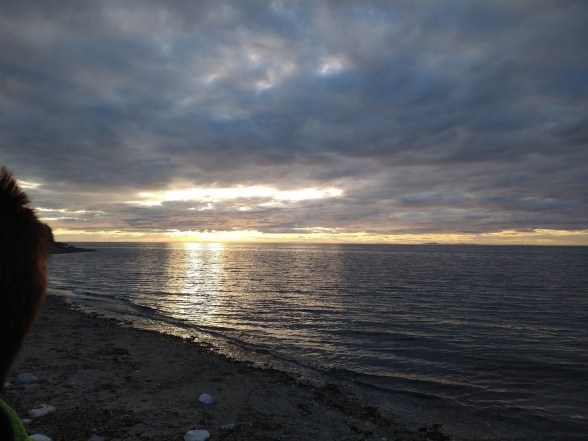
Last night on North Beach.

This is a list of resources on opioid addiction that I am putting together for a talk to a community advocate group this Thursday.
The big picture:
CDC Grand Rounds: Prescription Drug Overdoses — a U.S. Epidemic, January 2012: https://www.cdc.gov/mmwr/preview/mmwrhtml/mm6101a3.htm
CDC 2018 (It’s not getting better yet.) https://www.cdc.gov/media/releases/2018/p0329-drug-overdose-deaths.html
Snohomish County:
Snohomish County:
http://mynorthwest.com/878895/snohomish-co-opioid-crisis/
http://www.heraldnet.com/news/state-house-backs-snohomish-county-opioid-help-center/
http://knkx.org/post/snohomish-county-jail-now-offering-medically-assisted-detox-inmates
Washington State Pain Law
https://www.doh.wa.gov/YouandYourFamily/PoisoningandDrugOverdose/OpioidMisuseandOverdosePrevention
Is it genes that make people addicts? (The short answer is genes are a minimal contribution. It is society and patterns learned in childhood and adulthood.)
Adverse Childhood Experiences (put people at way higher risk for addiction):
https://www.cdc.gov/violenceprevention/acestudy/index.html
Books that helped me understand addiction (in my teens):
It will never happen to me by Claudia Black (about the patterns children take in addiction households to survive and cope with childhood)
Manchild in the Promised Land by Claude Brown (a black male writes about his childhood in Harlem when heroin hit the community. He was in a gang at age 6.)
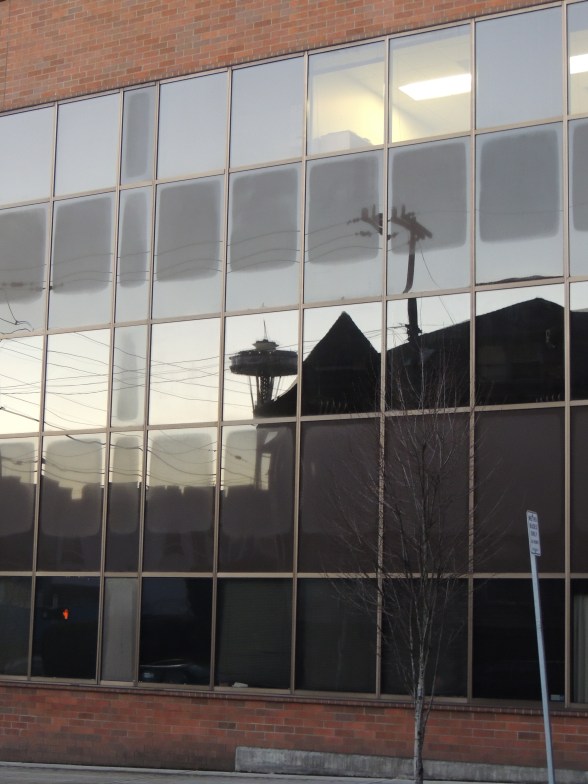
A building stealthie, of the Seattle Space Needle.

I attended the Swedish Hospital Update on Chronic Pain in Seattle two weeks ago on the stormy Friday. The power went out and we were without slides from about noon on.
The first two hours and three lectures were about marijuana. Including medical marijuana and one speaker for and one against. So here are some of my notes.
In 1960 and 1970, the marijuana had about 4% THC. Now some strains have 30% THC, so long term there is no data about what 30% THC will do to a person rather than 4%. THC in strains ranges from 0% to 30% and CBD from 0 to 3.5%. However, those two are not the only active ingredients, so to speak. 537 constituents have been identified that work at the cannabinoid receptor…. that is impressive. I think it might take a while to sort out what they do.
At any rate, we don’t know what smoking 30% THC will do, because it’s new. 4% had pretty minimal psychotropic effects. 30% has a lot more. The average now is 12%. Hashish is closer to 66% and hash oil 81% THC. A patient recently told me that she fainted within the last year. She got butter from the fridge at a friend’s and buttered her toast. Turned out it was THC infused butter and she was taken by surprise on a walk 30-60 minutes later. Luckily someone was with her and she was not hurt.
Recent data is showing that there is not much tolerance smoking 12% THC regularly. However, higher doses show tolerance in about 2 weeks in a study of HIV patients with dronabinol, which is 40% THC. Another study of multiple sclerosis patients with 15/15% CBD:THC reduced pain, reduced spasticity and did not show tolerance.
There is anecdotal evidence about seizures, but no study yet. There is some evidence that CBD reduces THC induced paranoia and/or hallucinations. THC side effects from dronabinol include drowsiness, unsteady gait, delusions, hallucinations, mood change and confusion.
The growers are being very creative in names and marketing. This is re recreational pot.
There are hundreds of names and hundreds of varieties and they make interesting claims as to effects. For example:
AK47 with 36.6% THC and 0.3% CBD ….. creative, euphoric and hungry
sage with 27.5% THC and 0.7% CBD ….. attentive
flow with 23.2 % THC and 0.6% CBD ….. happy, relaxed, alert
Super Sour Diesel 22.7 % THC and 0.8% CBD ….. attentive, giggly, hungry
707 Headband with 22.1% THC and 0.7% CBD ….. euphoric, lazy, inspired
How amazing the difference less than a percent of THC makes… oh, wait. There aren’t clinical trials on this, hon, this is MARKETING.
Onset for oral is 30-90 minutes
peak in 2-4 hours
half life 8-12 hours but sometimes 20 hours
sublingual tincture
onset 30-45 minutes
peak 60 minutes
half life 3-5 hours
Smoked onset quicker and I did not get those numbers.
The emergency rooms in Colorado saw lots of people who were “trying it” but if they had only tried smoking marijuana in the 1970s, a strain with a much higher percentage made many people sick or hallucinate or frightened. The gummi bears look just like the ones for kids, so kids got sick. More sick people with edibles, as some eat too much.
People using THC before age 25 who have risk factors for schizophrenia are more likely to develop it. Family history, other hallucinatory drugs, mental health problems. The age 21 limit should be taken very seriously.
In Arizona re medical marijuana, 90% of the prescriptions were from only 24 physicians. In Colorado, 94% of the patients applying for medical marijuana did so for “severe pain”. Two of my friends in their early 20s got medical marijuana permits in California for “back pain”, um, ok, hooey. Some people DO have severe chronic pain….
The history of medical marijuana is that Eli Lilly produced a medical version from 1850-1940 for pain. It was removed in 1942. In 1970 it became a schedule one, that is, illegal, drug. There are a few randomized clinical trials for pain, the best ones with high CBD/low THC treatments. Marijuana smoke alone has not been proven to cause lung cancer, but combined with tobacco or other smoke, the evidence is that it is synergistic and makes things worse faster. Dependence can occur, an increase in antisocial personality disorders and there is a withdrawal syndrome for dependent folks. For the small number of people I have had working hard to stop, sleep is the most difficult issue. Anxiety as well.
If people state that they use pot a small amount a couple of times a week, their urine sample should clear after a week. If it’s not clear they 1. couldn’t stop and/or 2. were using quite a bit more.
As far as Washington state law, it was described as a mess. Physicians can’t prescribe, they can only “attest” that the person has a problem treatable by medical marijuana. To attest, the physician has to sign a document saying that they are sure that not only has the patient READ the law chapter 69.51A RCW but also “understands the requirements of being a patient”. There are 24 sections. The physician doing this part of the talk said that he would only prescribe to non-driving MS patients in wheelchairs. Because he finds it hard to read the law himself, so the signing that the patient has read and understood it…. well, the driving legality issue is huge. And the provider, including NDs (naturopaths) and ODs (Doctor of Optometry) in Washington can attest. They are then immune in Washington but not at the federal level.
Every marijuana store is legally obliged to have a medical marijuana consultant present at all times that they are open. The medical marijuana consultant has 20 hours of training to get certified. Patients that are certified with an attestation can grow 6 to 15 plants but ONLY after they have been entered into a database which includes the person who signed the attestation and a photo of the patient. If they grow without being entered, they are breaking the law.
Use of THC long term, the risk of addiction is 25-50%. 17% of the addicted folks started during adolescence. Addiction is currently estimated at 9% of people who have tried it overall. About 30% of users have “problem use” and starting before age 18 increases the problem use 4-7 times. The DSM-V has diagnostic criteria for “marijuana overuse syndrome”, including not being able to stop even though the person wants to. Risk factors for addiction and problem use include early use, family history, PTSD (especially sexual abuse), bipolar diagnosis, ADHD, conduct disorder, oppositional defiant disorder. Mediating factors include parental disapproval, parental supervision, academic competence, higher perceived risk and availability.
And am I attesting? No. My MS patients get the attestation from the neurologist if they want it….
Medical marijuana consultant training: http://www.doh.wa.gov/YouandYourFamily/Marijuana/MedicalMarijuana/RulesinProgress/MedicalMarijuanaConsultantCertification
Washington State Medical Marijuana attestation form: http://www.doh.wa.gov/Portals/1/Documents/Pubs/630123.pdf
WA law: http://app.leg.wa.gov/RCW/default.aspx?cite=69.51A
And pain clinics getting closed down: http://www.seattletimes.com/seattle-news/health/pain-patients-scramble-for-care-after-clinic-crackdown/
The tree trunk is a bonsai from the Lan Su Chinese Garden in Portland. I like the thorns…..

Sunset at Larrabee State Park last week.

Weaning high dose methadone down to a lower, safer, less likely to stop breathing and die dose is difficult, but it can be done. It needs both a determined patient and a determined physician who are willing to work together.
In 2010 I took a class in buprenorphine treatment for opiate overuse syndrome from the University of WA Medical Center and got started with their telemedicine, once a week, on line with the Pain and Addiction Clinic. Each week there was a teaching half hour and then an hour where we could present patients anonymously on the telemedecine to a panel: a pain specialist, an addiction specialist, a psychiatrist, a physiatrist, and a guest physician. Five consults at once! And they would discuss the case and fax recommendations to me.
Three weeks after the course, police and Medicaid and the DEA shut down the pain clinic 5 blocks from me, taking the computers. I acquired 30 patients in 3 weeks. Trial by fire.
By 2012 Washington State passed a pain medicine law. This says that a primary care physician can only prescribe up to 120 morphine dose equivalents for chronic pain. Anything higher and the patient should be checked by a pain specialist and there were not that many in the state.
120 morphine dose equivalents is up to 20 mg of methadone or possibly 30mg. Methadone has a very long half life so it’s a bit weird. Hydrocodone is one to one with morphine and oxycodone is 1.5 to one, so 90 mg of oxycodone is 120 morphine dose equivalents.
The law requires urine drug screens, careful record keeping, screening for adverse childhood experiences and regular visits. If the pain medicine is not effective, it is to be weaned. I had a couple of patients with over 100mg of methadone daily. That is way over the 120 morphine does equivalents and UW helped me help the patients start weaning.
First, they recommended dropping the dose by about 1/3. Some patients left immediately. I would give patients links to the law on line and explain that the concern is that opioids in combination with other sedating drugs and alcohol are killing more people than either guns or car wrecks or illegal drugs in the United States and the CDC has declared it an epidemic. Honestly, doctors really take the “first, do no harm” seriously and we do not want to kill people. One angry patient said “Your first job is to keep me pain free.” I said, “No, my first job is to not kill you.”
For those who stayed, dropping the dose by 1/4 or 1/3 worked. They had about two weeks of mild withdrawal symptoms and then gradually felt better. These were at doses of 120-150mg methadone daily. We started weaning then by 10mg or about 10% every couple of months. The UW Pain Clinic was doing this simultaneously.
In 2012 the WA PMP started as well. This is a central pharmacy reporting for all controlled substances. Controlled substances means addictive and monitored by the DEA. Even the head of the WA Pain Clinic found that he had 5-6 patients who were getting opioids from 4-5 different doctors. He said, “We do have to check because I thought I knew my patients and I would have none. I was wrong and I was surprised.” Those patients could be taking way more than any of their doctors knew or could be selling pills. Not a happy thing.
Once the methadone folks got down to about 1/3 of the high dose, we had to slow down. For my patients that meant at 40-50mg. The head of the pain clinic said wean by 5 mg or 2.5mg and do it every 6-8 weeks.
As people were weaned, their pain level stayed about the same. They would have an initial increase for the first two weeks. I describe it as follows: Think of it as if you are in a room listening to a stereo. The pain medicine is like noise protecting headphones. Once you are wearing the headphones, your brain says, uh, I can’t hear (feel pain). Hearing (feeling pain) is important information, so the brain turns up the volume. Way up if the dose is really high. Then you take the headphones off: OW!! IT’S TOO LOUD! THE SOUND (PAIN) IS BLOWING OUT YOUR EARDRUMS (HURTING LIKE HELL)!!!
Weaning slowly gives the brain a chance to turn the volume down on the receptors. UW said that at best chronic opiates lower pain an average of 30%. After a while, I said I had trouble telling the difference between withdrawal pain and increased chronic pain: they look the same. UW said, “Looks the same to us too.” But we had frequent visits and an ongoing discussion about pain. Pain is necessary for survival: you have to know if you are injured. Diabetics who can’t feel their feet are instructed to look all over their feet every day to check for injury and infection. I had one gentleman who couldn’t feel his feet and put them on a wood stove because they felt cold. He was needing skin grafts from the burns. So we need to feel pain and not numb it all the time. Also pain has three or more componants: the sharp cut/broken/bruised immediate pain. Second is nerve pain. Third is emotional pain, and we don’t yet have a meter that gives us what percentage each is contributing to the total sum. When I have a new chronic pain patient, I say that ALL THREE must be treated. We can argue about the details, but they can’t leave the emotional piece out…. or they have to find another doctor.
Also, at the higher doses, hyperalgesia is common, pain from the opioid itself. People felt better at lower doses. I gave people the links so they could read the law and the CDC information themselves. They were shocked and angry and threatened at first, but the “I don’t want you to die from too high a dose and it’s not safe and I am sorry.” message would get through eventually.
“Why do you have to do urine drug screens?” say some people. “You are treating me like an addict.”
My reply, “What do you think the addicts tell me?”
The person thinks about it. “The same thing?”
“Absolutely. So I can’t tell unless I check. Also, the boundary between chronic opiate use and opiate overuse is a lot thinner than we thought, so I have to check because all chronic opiate people are at risk for overuse.” The DSM-V combines opioid dependence and opiate addiction into opiate overuse syndrome, a spectrum from mild to moderate to severe.
We also talked about other ways of dealing with chronic pain. John Kabat Zinn’s mindfulness meditation classes drop pain levels by an average of 50%, so better than opioids. And way safer.
Meanwhile, since people could no longer get opioid pills from 4-5 doctors at once, the supply in Washington started drying up. Some people realized they had opiate overuse syndrome as well as chronic pain and turned to methadone clinics or buprenorphine clinics. Others went to heroin. The heroin overdose death rate has risen. I hope that as the stigma surrounding “addiction” changes into a better understanding of chronic pain and opiate overuse syndrome, more people will be able to get treatment and the death rate and heroin use will go back down.
https://depts.washington.edu/anesth/care/pain/pain-roosevelt.shtml
http://www.cdc.gov/cdcgrandrounds/archives/2011/01-february.htm
http://www.uwmedicine.org/referrals/telehealth-services
https://www.drugabuse.gov/publications/research-reports/prescription-drugs/opioids/what-are-opioids
http://www.umassmed.edu/cfm/about-us/people/2-meet-our-faculty/kabat-zinn-profile/

For Wordless Wednesday.
Taken summer 2015 camping.
BLIND WILDERNESS
in front of the garden gate - JezzieG
Discover and re-discover Mexico’s cuisine, culture and history through the recipes, backyard stories and other interesting findings of an expatriate in Canada
Or not, depending on my mood
All those moments will be lost in time, like tears in rain!
An onion has many layers. So have I!
Exploring the great outdoors one step at a time
Some of the creative paths that escaped from my brain!
Books, reading and more ... with an Australian focus ... written on Ngunnawal Country
Engaging in some lyrical athletics whilst painting pictures with words and pounding the pavement. I run; blog; write poetry; chase after my kids & drink coffee.
Coast-to-coast US bike tour
Generative AI
Climbing, Outdoors, Life!
imperfect pictures
Refugees welcome - Flüchtlinge willkommen I am teaching German to refugees. Ich unterrichte geflüchtete Menschen in der deutschen Sprache. I am writing this blog in English and German because my friends speak English and German. Ich schreibe auf Deutsch und Englisch, weil meine Freunde Deutsch und Englisch sprechen.
En fotoblogg
Books by author Diana Coombes
NEW FLOWERY JOURNEYS
in search of a better us
Personal Blog
Art from the Earth
𝖠𝗇𝗈𝗍𝗁𝖾𝗋 𝖶𝗈𝗋𝖽𝖯𝗋𝖾𝗌𝗌.𝖼𝗈𝗆 𝗌𝗂𝗍𝖾.
Taking the camera for a walk!!!
From the Existential to the Mundane - From Poetry to Prose
1 Man and His Bloody Dog
Homepage Engaging the World, Hearing the World and speaking for the World.
Anne M Bray's art blog, and then some.
My Personal Rants, Ravings, & Ruminations
 KO Rural Mad As Hell Blog
You must be logged in to post a comment.