Found

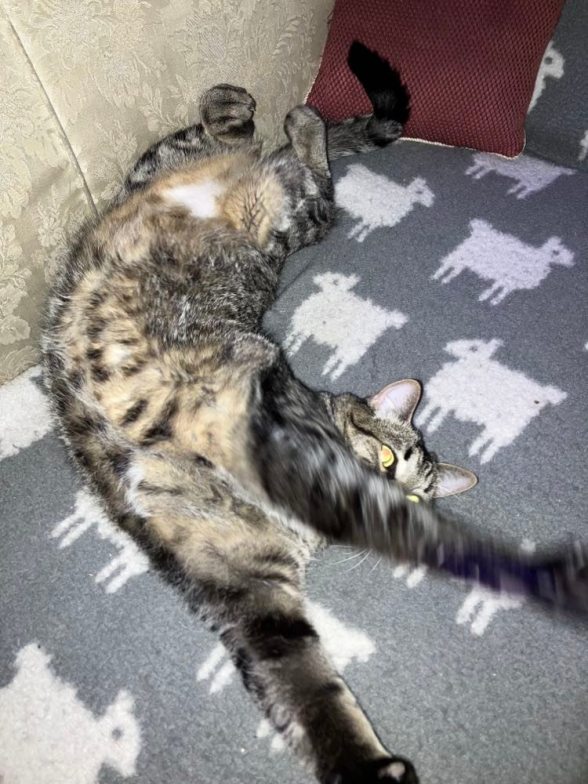
Barbie doctor is trying to interview the Get Real Girl about the origin of the missing part in front of her, but Elwha intervenes.

“Who, me?” says Elwha. “I am trying to help! I don’t eat Barbies or Get Real Girls!”

For the Ragtag Daily Prompt: missing part.

The funny bit is that I knew right where this missing part was: on a dresser upstairs. It’s the rest of the doll that has gone missing.

In deep

Time to return
again

Human, pfaugh
I give up
I don’t want to be one
I can be anything I want to be
I want to be a mermaid
again

I sink into the sea
and down to the depths
scales and tail and breathe the sea
the water cools the burns
my charred burnt skin
and lungs

Such a fail again
every time I try
to be human
yes, legs, I can do that
it always makes my voice hurt
but those damn wings
come with the legs

It’s hard to hide the wings.

I don’t know how
but they sense them
even when I hide them

It really pisses me off.
It’s the broken ones that show up
though now I think maybe
they are all broken
they all wander around
pretending they are ok
using lies to try to appear nice
hating parts of themselves
calling those parts unclean spirits
and casting them out
DEMON! DEVIL!
over and over

I try to pretend they aren’t there
the cast out
and I am human too
but the demons kneel and lay their monstrous heads
in my lap
crying
cluster round me
begging for my help

I always fail.

I try to stay present
with the person and the cast out
but eventually I can’t stand it
and I say something wrong
and the stupid human thinks I am the demon
and casts me out too.

I wait and hope.

I wait and hope with the monsters
with the rough beasts.
“You have wings,” say the demons, “Help us!”
“I can’t.” I say, “The humans must help themselves.”
The monsters weep and wail.
Finally I am sick of it again.
I send them home
and I go home too.
I have failed again
and must endure falling through the atmosphere
my feathers and skin a burning star

I am sick of it.
I give up, Beloved.
I am a failure.
I can’t do this.
I must go to the sea again.

Here is the trench, the deepest part of the ocean
I stop swimming and let myself sink
Slowly the light disappears
I am in the ink black

Slowly the others appear
glowing
in the deep

_________________________

For the Ragtag Daily Prompt: liquid.

Long Covid imaging

In the last Long Covid talk that I attended and wrote about (here: Pulmonary Manifestations of Long Covid), the pulmonologist and intensivist says that one problem with Long Covid is that we do not have imaging that can “see” it.

That is, the chest x-ray looks normal, the echocardiogram may look normal (heart ultrasound), the chest CT scan may look normal, a brain CT or MRI may look normal, but the patient may still be tachycardic, feel exhausted, feel brain fog and have multiple other symptoms.

That pulmonologist listed five of the top mechanisms that are prolonged in the immune system. Most of the scientists and physicians are framing this as “immune system dysfunction”. I am not. I am framing it as “you were really really sick and your immune system is still on high alert and trying to protect you so you can recover”. Now wait, you say, how could chronic fatigue like symptoms protect me? Well, if you are exhausted, you can’t go to work and you’ll stay quiet at home most of the time and less exposure chance. But what about brain fog? Again, this will slow your interaction with other people and force you to rest and heal. But, you say, I don’t like it. Well, yeah. Patience. We call grumpy patients that are recovering “convalescents”. It is a good sign when they are grumpy and over it and just want to be better. That doesn’t mean I can make myself or anyone else heal faster.

The pulmonologist says that the best test is the six minute walk test. This is usually done by a respiratory therapist. The person walks in a circle for six minutes wearing a pulse ox, with the respiratory therapist doing regular checks. This distinguishes between the people who have primarily a lung issue from all the other issues. If the person is tachycardic (fast heart rate) but not hypoxic (oxygen level dropping), then it’s not primarily lungs though blood clots to the lungs sometimes have to be ruled out. One of the mechanisms in the immune system is microclots and an increased risk of blood clots. That can mean heart attack, stroke, or pulmonary embolus, a clot in the lungs. The microclots are suspected of causing some of the muscle fatigue and exercise intolerance, by clogging capillaries and reducing oxygen flow to muscle cells. Muscle cells do not like this at all.

I have done my own quick walk test with patients since 2003, when I had terrible influenza. About a week after my influenza started, with the temperature of 104 and heart rate at 100 at rest and 135 walking, my temperature came down. However, the fast heart rate continued. Normal heart rate is 70-100 and 135 walking will make you feel exhausted. I lay on the couch and could barely make my kids dinner for two months. It resolved then. I read a book about influenza and thought that I had “influenza viral pneumonia” where there is lung tissue swelling, reducing the air spaces, after influenza.

My quick walk test in clinic is to check a sitting oxygen level and heart rate and then have the person walk. I would have them walk up and down a short hall three times then sit down. When they sat, I watched the pulse oximeter recovery. Some people would jump from a resting heart rate of 62 to a walking heart rate of over 100, say 120. Their oxygen level could stay normal or it could drop. If they dropped below 88, I would get home oxygen and forbid them to return to work. If their oxygen level held, then they needed to rest until their walking heart rate stayed under 100 and they were no longer exhausted by gentle or normal activity. If they return to work with a walking heart rate of 120, they will be exhausted and are more likely to get a secondary pneumonia or have other problems. The heart does not like to run at 120 all the time. You can see why a person who already has some coronary artery blockage would be more likely to have a heart attack if they get pneumonia from influenza or Covid-19.

The conferences I am attending are talking about “targets” in the immune system. That is, new drugs. I think the science is wonderful and amazing, but I also think we need to step back and say, this is a really really bad infection and some people need a lot of support and reassurance and time to heal. Reassure them that even though they have not yet returned to normal, the immune system is working hard to protect them from other infections and it is saying very very loudly that they need to rest. Rest, recuperate and trust the immune system. Some things need immediate treatment, especially blood clots, heart attacks and strokes, but once those are ruled out, we need to support people through their convalescence and healing.

______________

The photograph is from April 2021, a few days after I was put on oxygen. A selfie.

Forever or not?

Once someone has cancer, do they have it forever?

I think that is a complex question. But one example comes to mind.

An older woman, in her early eighties, is seeing me. She wants to go back on hormone replacement.

“But you have a history of breast cancer.” I say.

“That was six years ago. And I took that horrible tamoxifen for 5 years and I still am having hot flushes after a year off it and I am sick of it. Give me hormones.”

“Hmmm.” I say. “Let me do some research.”

I call the oncology group south of us. This is over ten years ago when we had no oncologists in our county.

“How old is she?” Her oncologist is digging up her records. “Ok, got her. Hmmm. Well, she had a stage one cancer and a lumpectomy and five years of tamoxifen. THAT cancer is gone, for sure. If she wants hormone replacement, it puts her at a bit more risk for a new breast cancer, but the old one is gone. As long as she understands the risk.”

My patient is back and we negotiate. “Ok, the oncologist says your previous cancer is truly gone, but hormones put you at risk for a new breast cancer. At least, raise your risk a little.” Age is the biggest risk in women, if they do not have the abnormal BRCA I or II genes. “Also, if we have you on hormones, you have to do your mammogram, because I’d want to catch any cancer early. That’s the deal.”

“Fine, I want the hormones.” She signs a consent that I’ve prepared and we put her back on her hormone replacement.

“I want to hear from you, ok? Whether it works?”

She calls in a week, delighted. “No more hot flushes! I feel great!”

__________

I took the photograph at Mats Mats Bay last week. There is a sign about osprey nests. I look up and think, oh, yes! Pretty obvious if you look up!

__________

I don’t remember her exact age and I don’t remember if the five years was tamoxifen or one of the other hormone blockers. She could have been in her seventies. At first I thought, no way back on hormones! Then I thought, quality of life is important. Maybe I choose this photograph because the nest is out on a limb.

Some cancers ARE currently forever, especially those that are stage III or IV and metastatic. Maybe they won’t always be forever.

Neurogognitive effects of Long Covid I

Here is the first part of my notes from this lecture: May 24, 2023 Neurocognitive effects of Long Covid (International) part 2, by Dr. Struminger PhD, neuropsychologist.

I am trying to make this fairly clear to almost anyone. Some words may be unfamiliar to start with, but I will bet that you can sort it out. I would be happy to try to clarify any part if needed. These are my notes from the first half of this lecture, fleshed out to be clearer.

This is the Schmidt Initiative for Long Covid Global in English with real time translation into Arabic, French, Spanish, Portuguese and closed captions. Session recordings: https://app.box.com/s/onh1ma57ttjpi2c19qqxvmdao0kd2nsr

Dr. Struminger said that 1/4 to 1/3 of Long Covid patients have cognitive symptoms. A study comparing Long Covid patients with people who never got Covid-19 shows the Long Covid people to be three times more likely to have attention deficits or confusion. Part of the barrier to treatments is to define the problem, figure out the mechanisms and then start studying treatments. She said that she would share a few proposed mechanisms for cognitive impairment in Long Covid, but that it is probably multifactorial and it’s a rat’s nest. (Ok, I said rat’s nest. Dr. Struminger did not use that term.)

There are two main phenotypes of Long Covid brain problems: Hypoxic/anoxic and Frontal/subcortical. In hypoxic/anoxic certain brain functions are intact: Attention, visuospatial, cognitive fluency and memory encoding. There is impairment in problem solving and memory retention. This pattern is associated with the people who were hospitalized, deathly ill, on ventilators, or heart/lung bypass machines.

Frontal/subcortical is more common in the people who were never hospitalized and were not on a ventilator or ECMO machine. It can show up even in people who seemed to have mild Covid-19. The impairment is in attention, cognitive fluency and memory encoding, while the intact functions are visuospatial, memory retention and problem-solving.

Here are those lists in a table, HA for hypoxic/anoxic and FS for Frontal/subcortical.

Attention: HA intact, FS impaired
Visuospatial skills: HA intact, FS intact
Cognitive fluency: HA Intact, FS impaired
Memory Encoding: HA intact, FS impaired
Memory retention: HA impaired, FS intact
Problem-Solving: HA impaired, FS intact

The two types probably have different mechanisms and the super sick are more often the hypoxic anoxic. And there can be a mixed or both presentation.

Neuropsychologists test people to see what parts of the brain are working. Testing locally usually takes about four hours or more. Some brain functions have been mapped to parts of the brain but others are still mysterious. Efforts continue to match function to neuroanatomy. Going through each of the brain functions, some are mapped and others are not.

Attention is mapped and mediated by the frontal lobes. Attention is impacted by physical fatigue, dysautonomia, pain, shortness of breath, further impacted by emotional symptoms. It is REALLY easy to get stuck in a vicious cycle where physical symptoms or pain or hypoxia decrease attention function, which in turn makes physical symptoms worse. For example, hypoxia can decrease attention, which makes the person anxious and tachycardic, which in turn affects attention more.

The frontal lobes are very sensitive to hypoxic damage and to inflammation. Any inflammation in the body messes with them. The frontal lobes need oxygen and glucose. If a person can’t breathe, this messes up attention; if they are dizzy, it messes up attention.

Cognitive fluency. The anatomical correlates are less clear. Probably frontal and temporal, vulnerable to hypoxia and broad networks in the brain, vulnerable to physiological and mood disturbance. So vulnerable to the same things as the frontal lobes.

Learning and memory: Map to the hippocampi – sensitive to hypoxia and can be injured while the rest of the brain is comparatively unscathed. People have difficulty with retention of new information and not just attention/encoding problems. Neuropsychology distinguishes between attention/encoding and retention/recall problems. Those are different. In alzheimer’s, there is trouble retaining new information, even though people can encode it. In the frontal/subcortical long covid brain fog, there is more difficulty with attention/encoding. That is, if the person is tachycardic or in pain or dizzy or short of breath, it is more difficult to pay attention and encode information into memory.

Executive functioning. Frontal lobe: sensitive to hypoxia and metabolic dysregulation, significantly impacted by physical symptoms and mood disturbance.

The hypoxic/anoxic pattern has effects more like Alzheimer’s or a dementia. The frontal/subcortical is more like a concussion or traumatic brain injury. Neither sounds great, but there is more healing from the second than the first. Treatments for now are coming from the Alzheimer’s/dementia established treatments or from the concussion/traumatic brain injury established treatments. The first part of treatment is rest, rest, rest, and try to keep the brain from getting overwhelmed. I will write more about the ongoing changing recommendations.

More at: https://hsc.unm.edu/echo/partner-portal/echos-initiatives/long-covid-global-echo.html

The photograph is a screen shot of the brain from below from one of the conferences. There were over 300 people attending this zoom lecture, which is encouraging and hopeful.

For the Ragtag Daily Prompt: covert. The covert damage from Covid-19 is being sorted out.

Long Covid and post pneumonia update

I was up above 5000 feet last week and did not need oxygen.

This is wonderful! I was on oxygen continuously from March of 2021 for a year and a half. I was really getting better and then had my Covid booster in early October. I crashed again. Do I regret the shot? No, because the crash is because antibodies went back up. Only some of them, though. My muscles and lungs were not working well again, but brain was fine (ok, some people do not like my brain, but they are idiots) and aside from having to avoid gluten, no digestive stuff.

About a month ago I really started feeling my fast twitch muscles work again. It was two years in March since this fourth pneumonia and I’ve had something Long Covid like after each one. Recovery took 2 months in 2003, 2 months in 2012 and 6 months off in 2014 and then an ongoing mild chronic fatigue, so I worked about half of a regular family medicine schedule. I saw 7-10 people per day instead of 16-22. I was also a single parent running a business with two children, so that has a lot of energy draw as well.

On the second morning there, my pulse was 61 and oxygen level 98% on room air. HOORAY! I am back to baseline from 2014. Since it took 2 years to recover, I really do not want to do this again. No more pneumonia. I have had two more rounds of Covid, but apparently the super high antibody level made it really really mild. An immunologist tested the antibodies since I keep getting pneumonia. He said I have the highest Covid antibody level he’s ever seen. Protective was over 50 and mine was 25,000. I seem to be darn good at making antibodies.

Now what? I have felt better for the last month. I still get tired and have about a half day of the energy level from my 20s or 30s, which was high. I am hiking, up to 6 miles in a day twice two weeks ago. Now to start biking and maybe running. I don’t like to run but it’s good training. I want to ski next winter at least one day. Maybe I will swim too. I used to swim a mile twice a week, but it’s been a long time. Also my swim team daughter expressed scorn for my freestyle stroke. Sigh, children are born to humble us, which sucks.

I am still trying to see if I can work with Long Covid patients. I have rather too much experience with something very like it. But I think I would like to enjoy feeling well for a month or two, first!

Hooray! I hope other Long Covid folks are working their way out of the woods too.

Keep it simple

Sometimes I just despair as I read new guidelines. Don’t you? Maybe you are not a physician and don’t try to keep all of this impossible stuff in your head. Mine is full. Tilt.

Diabetes alone: if someone has type II diabetes, there are specific blood pressure guidelines, cholesterol guidelines, we are to do a hgbA1C lab test every six months minimum and more often if they are out of control, and a urine microalbumin/creatinine ratio yearly. If that starts being abnormal we are to start one of two classes of blood pressure medicines even if they have normal blood pressure.

Oh, and don’t forget: a yearly eye test and we are supposed to check their feet at EVERY visit to make sure they are not getting diabetic ulcers.

Got that? And that is just type II diabetes. And there are a whole raft of medicines, about forty right now. Some are weekly shots, some are daily tablets, some are twice a day or with every meal and they all have their own side effects, how fun. Check drug interactions, are their kidneys ok? Is their liver ok? Diabetes increases the risk of heart attack and stroke and don’t forget those feet.

Diabetes is one of the most complicated sets of guidelines, but there are a rather appalling number of guidelines. Maybe we should sic an AI on that job: Mr. Smith has type II diabetes poorly controlled, hypertension, erectile dysfunction, feels a little short of breath and has a bruise on his left shin after tripping yesterday. Please, AI, organize a twenty minute visit to cover as many things as possible efficiently and have the note finished and followup arranged by the end of it. Then it turns out that what Mr. Smith really wants to talk about is his niece who has just overdosed and nearly died from heroin, so everything else goes out the window. Maybe I should see him weekly for the next month.

Do you want to keep it simple and stay out of the doctor’s office and more importantly out of the hospital? If you are 25 and healthy, you don’t much care because old is unimaginable.

But there is a very nice study that looked at just five things regarding health, over 28 years for men and 34 for women: “The researchers looked at NHS and HPFS data on diet, physical activity, body weight, smoking, and alcohol consumption that had been collected from regularly administered, validated questionnaires.”

Here is an article about the study: https://www.health.harvard.edu/blog/healthy-lifestyle-5-keys-to-a-longer-life-2018070514186

Here is the study: https://www.ahajournals.org/doi/10.1161/CIRCULATIONAHA.117.032047

So let’s break the five things down. Here are the more formal definitions: “Using data from the Nurses’ Health Study (1980–2014; n=78 865) and the Health Professionals Follow-up Study (1986–2014, n=44 354), we defined 5 low-risk lifestyle factors as never smoking, body mass index of 18.5 to 24.9 kg/m2, β‰₯30 min/d of moderate to vigorous physical activity, moderate alcohol intake, and a high diet quality score (upper 40%), and estimated hazard ratios for the association of total lifestyle score (0–5 scale) with mortality.”

First: never smoking. I would add never vaping and not living in a cave and burning wood and hopefully not living right next to a 12 lane superhighway, all of which are bad for the lungs. Ok, while we are at it, don’t use methamphetamines or heroin or cocaine or krocodil, right? They didn’t even include those in the study.

Second: Body mass index 18.5-25. If you aren’t there, it is diet and exercise that need to change.

Third: Thirty minutes or more per day of moderate to vigorous physical activity. That can be ten minute intervals. Three can have an enormous effect on number two.

Fourth: moderate alcohol intake. Ok, alcohol is bad for the heart, period. So is tobacco. They defined moderate as less than or equal to “5 to 15 g/d for women and 5 to 30 g/d for men”. Let’s do the math: a 12 ounce beer that is 5% has 14gm of alcohol. Here: https://www.niaaa.nih.gov/alcohols-effects-health/overview-alcohol-consumption/what-standard-drink. The 8.9% 16 ounce beer at our local pub has quite a bit more. Here is a website where you can calculate how much alcohol is in a drink: https://www.rethinkingdrinking.niaaa.nih.gov/Tools/Calculators/Cocktail-Calculator.aspx.

Fifth: Diet. There is an overwhelming amount of confusing information on the internet and some of it is not only confusing but wrong. “Diet quality in the NHS, HPFS, and NHANES was assessed with the Alternate Healthy Eating Index score (Methods in the online-only Data Supplement), which is strongly associated with the onset of cardiometabolic disease in the general population.” I have not assessed my own Alternate Healthy Eating Index score. However, there are a couple very straightforward things that help with diet. First: No sweetened drinks. That means that sugary coffee with the syrup should go. I quit drinking mochas when I read that a 12 ounce one has 62 grams of carbohydrate. I would rather have a small dark chocolate. And sodas are just evil and juice not much better. Eat the fruit instead. Second: eat vegetables, every meal. A fruit is not a vegetable and no, potato chips don’t count. I mean a green or yellow or red vegetable. You can saute any vegetable, or any that I can think of. I am not counting grains as a vegetable, so pasta, pizza, potato chips and so forth do not count. Beans do count. Third: the DASH diet recommends only a tablespoon of sweetener per day. That is not very much. You can make that cheesecake slice last a week! A small piece of dark chocolate daily or tablespoon size chunk of that cheesecake.

I had a diabetic patient who would be fine, fine, fine, then out of control. “WHAT are you eating? And drinking?” The first time it was two 16 ounce Mochas a day. Then he was fine for a year and a half. Then labs went haywire again. “What are you drinking?” “Well,” he said, not wanting to admit it, “Ok, I decided to try Caramel Machiattos.” “No, no, no! You can’t do that! You’ll end up on insulin!” “Ok, ok, got it, got it.”

And what is the difference if I try to do those five things, you ask, skeptical. “We estimated that the life expectancy at age 50 years was 29.0 years (95% CI, 28.3–29.8) for women and 25.5 years (95% CI, 24.7–26.2) for men who adopted zero low-risk lifestyle factors. In contrast, for those who adopted all 5 low-risk factors, we projected a life expectancy at age 50 years of 43.1 years (95% CI, 41.3–44.9) for women and 37.6 years (95% CI, 35.8–39.4) for men.The projected life expectancy at age 50 years was on average 14.0 years (95% CI, 11.8–16.2) longer among female Americans with 5 low-risk factors compared with those with zero low-risk factors; for men, the difference was 12.2 years (95% CI, 10.1–14.2).”

____________________

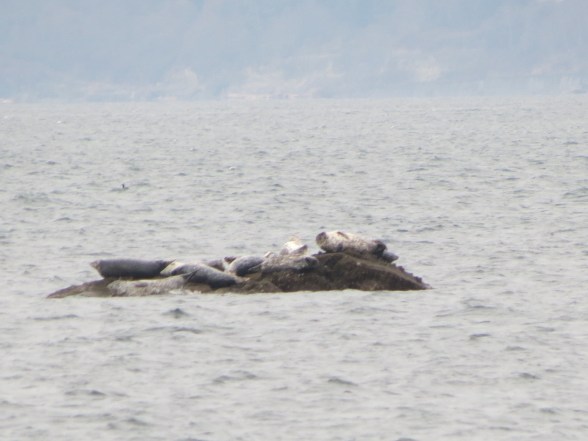
I took the photograph from Marrowstone Island. What does a healthy seal diet look like? I am so lucky to have miles of beach to hike, as long as I watch the tides and don’t mind rain.

Doing the best with what you have

Medicare doesn’t cover everything.

It can’t. There are new things being thought up all the time. Some are legitimate and some are scams. There are tons of quack medicine videos and supplements and stuff on line.

But there is also a matter of personnel and resources. Sometimes we do not have enough. Then we have to do the best we can with what we have.

There is a particularly difficult case from my second year of rural Family Medicine with Obstetrics. Things went right but just barely. This is from memory and over 25 years ago, in the 1990s, so I can’t violate hipaa because I can’t remember names from then. Mostly.

I had a pregnant woman whose pregnancy had gotten complicated. Her ultrasound showed an abnormal placenta. Very rarely, the placenta can grow into the uterus too far, and form a placenta increta. Even more rarely it can grow THROUGH the wall of the uterus and into another body part. That is called a placenta percreta.

In this case we thought that the placenta had grown into the bladder. We were not certain. The obstetricians were aware. Our patient was aware. A cesarean section was planned for when the fetus was mature.

Then she developed a second pregnancy complication. Preeclampsia. This is a complication where blood pressure rises, there is protein in the urine and many things can go wrong. It can progress to eclampsia, which means seizures. This is Very Bad, which means the mother and fetus can die.

She developed HELLP syndrome. This is an acronym. The P is what I worried about, platelets. Platelets help your blood clot. Her platelet count was dropping out of sight. We were rural, 180 miles from the nearest high risk obstetrician. We did have blood for transfusion but NO PLATELETS.

The treatment for preeclampsia with HELLP syndrome is to deliver the baby. I called our obstetrician the minute I got the lab result. “No platelets — can I fly her out?”

“YES! FLY HER OUT!”

Transfer to a bigger hospital with facilities for a premature infant and with platelets, because she needs a cesearean section and she could need a hysterectomy if that darn placenta has grown through. Messy.

Problem number three: weather. We are in Alamosa, Colorado, at 7500 feet, which is the valley floor. We are surrounded by 14,000 foot peaks with passes in four directions. That nearest hospital with platelets is 180 miles and over a 10,000 foot pass and it is snowing.

I call Denver first. 250 miles. Fixed wing life flight. Nope, the weather is too bad to the east and north.

I call Albuquerque. 250 miles. Nope, the pass is socked in, the plane can’t get through.

I call Grand Junction. About the same distance. They say “WHERE are you?” I’ve never tried to send anyone there before. They demur and I cajole and beg. “Okay, okay!” The high risk obstetrics doctor can’t be looking forward to meeting this patient, but they accept.

From the start of calling to the arrival of a plane and crew usually takes about four hours. I want to chew my nails.At last I hug my patient goodbye and they go.

I get the call about 6 hours later. Delivered and they did have to do a hysterectomy, but mother and baby are fine. Her bladder was untouched. They had platelets.

Whew! I was so happy, and mom and baby too. Let’s give credit to my patient too: she got prenatal care. She paid attention. She knew she was high risk. I had told her to come in if anything changed and she did, so we caught the preeclampsia on time.

But it could have gone wrong in all sorts of ways. We were both careful and we were lucky. If the storm had been over Alamosa we would have done the best we could then, too, but it could have turned out quite differently. And thanks to the high risk obstetrics doctors who accept complex patients that they have never seen from rural doctors like me!

Blessings. Blessings on all the nurses and doctors and midlevels and hospital housecleaners and security and lab workers and the Life Flight personnel and First Responders and everyone who has worked and worked and worked through the pandemic.

________________________________________

I took the photograph in Maryland in December: abstract and complicated water, ice and reflections.

Blessed

You needn’t worry that I will importune you.
Words explode and swirl upon the page.
It’s more likely that I’ll say blankly “Who?”
Since I enlarge upon a fascinating stage.
Approaching two years since I was taken sick,
on oxygen I wrote a poem of farewell.
Career ending injury: nature can be such a dick.
Breathing is important. Absent it is hell.
I am still healing. I hope that I can ski.
I am lucky that my fatigue is relatively mild.
My oxygen can go 9000 feet up where I’ll see
muscle dysfunction truly makes me wild.
Friends and family gather close and gather far
I feel blessed beneath a lucky star.

________________

Sonnet #2 for the Ragtag Daily Prompt: sonnet.