you said maybe
they are muscles
my muscles
trauma stored
that I can let go
four gate needles
and another
gates open
maybe
the angels
are tears
I need to
let fall
tears stars
fall
each one
salt water
not afraid
at peace
they fall for us

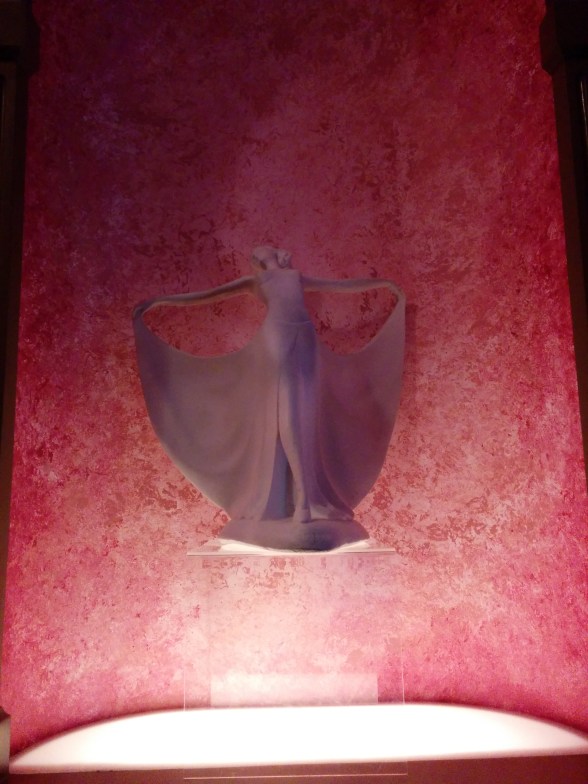
you said maybe
they are muscles
my muscles
trauma stored
that I can let go
four gate needles
and another
gates open
maybe
the angels
are tears
I need to
let fall
tears stars
fall
each one
salt water
not afraid
at peace
they fall for us

You said it’s hard to let me in
I came to the door
you locked it
I came to the window
you shut it
I came to the chimney
you lit a fire
don’t be surprised
I won’t leave
I will stand outside
and burn

I am growing
My shell hurts
It hurts it hurts!
I cannot shed it
I try and try and try
I fight
I seek allies and help
I fight
One year, two years, nearly three
I’m free
My shell suddenly releases and slides off
I can feel my soft body expand
To my real size
Bigger
Joy!
Oh!
They’re attacking!
Why why!
My brothers! My sisters!
No!
Your claws hurt!
They are cutting me
Ow ow stop why!
I run
Scuttle sideways
Soft and clumsy
Hide
In the mud
Why why?
Oh, my wounds ache
Stabbed
By multiple claws
Deepest pain
In my heart
At this betrayal.
I hide
I sit
I think
It was so hard
To shed my shell
Why would they attack?
Oh!
Their shells hurt too!
Their words
They were grabbing me
To try to see how I’d shed my shell
They were desperate
Oh they must be in such pain!
Can I forgive them?
Do they know not what they do?
I hide
I sit
I think
I heal
My shell is strong now
I am bigger
I will go forth
And see who is trying to shed their shell
I will try to protect the newly molted.

Yesterday I had my “Armour suit” massage at 4:00.
Sometimes during the massage I space out and go elsewhere. I don’t know if it is falling asleep. My practitioner knows when I am gone, because he is telling me to roll my leg to the left against resistance and I will just stop in the middle. I usually see pictures and tell him what I saw.
Yesterday I saw a dream that I had years ago.
I dreamed that I was looking through a window and the sky was black, with stars. The stars started to fall. The stars were all angels, all falling, slowly, down. I wanted to ask the angels, “Why do you have to fall?” but I was frightened. I was terrified. Because all of the angels were falling: every one. Slipping slowly down the sky.
Then I saw their faces. They were not afraid or angry or resisting. They all had expressions of acceptance and peace.
In the dream then there was no window between me and the angels. I was in the dark too and falling slowly. I did not resist. I knew I needed to let myself fall, like the angels. We all must let go and fall. I was crying even as I accepted it.
I wonder why the angels were made to fall. I think they fall for us, to show us acceptance and love.
And you thought the hard work was over
Finding your demons
Facing them
Adopting them
Comforting them
Learning to love the parts that no one loved
That you hid as a child
Mothering your own unloved self
Fathering the parts he couldn’t love
And to surface knowing that you are a child of God
And lovable
Only to be attacked
With a concerted effort
To return you to what you were before
Don’t be frightened enough to give up
You are right
You are still a child of God
Lovable
In your wholeness
Talents and faults
Those who attack
Feel their demons
Clamoring at them
Clawing
When you learned to love your demons
Theirs want to be loved too
So badly
But their keepers are frightened
They are pressing their demons back into the depths
Desperate
Attack you for you have made them feel their sorrows
All unaware
Seek those who have also
Dealt with their demons
And they will welcome you
You are not crazy
To feel the euphoria
Of surfacing
But do not get carried away
And be kind to the demon chainers
Remember where you were before.
8/16/05
Writing201’s prompt today is trust. This article in the NY Times about how there is no right way to grieve moves me: http://opinionator.blogs.nytimes.com/2015/01/10/getting-grief-right/?_r=0
Trust in the dark

Oh Beloved
   Help me to trust in the dark
      Help me to take each step
         Down into grief
            As needed
Oh Beloved
   Help me walk in the caverns of despair
      Each step slow
         As if I walk through molasses
            The air is thickened
               My chest hurts
Oh Beloved
   Help me to trust you
      That just as I descend into grief
         That just as I move through despair
            That the steps will someday lead up again
               That I will rise and spring will come
Oh Beloved
   Help me to thank you
      For tears and joy

The old wound opens.
Low vitamin K level.
I hope I don’t die.
This is my weekly (biweekly, snarls my devil) blog about the arguments between the devil on one shoulder and the angel on the other.
Do I really see an angel and a devil? Well, no. But we all use archetypes and we all have all of the archetypes within us. So when I have a dilemma or something comes up, I call the angel and the devil to the internal conference table of my mind and ask for their advice. They are going to give it to me whether I ask or not, so it’s more effective to be polite!
Ok, sometimes it isn’t a conference table. Sometimes it’s a hell scenario with bubbling lava or the fire forest from A Princess Bride… or it could be a field with daisies and a blue sky….
Today I am thinking about what we are supposed to do: Love everyone.
How good are we at that? Not very! Or are we?
My angel: You can love everyone. (The angel is kind and completely confident.)
My devil: Yeah, til they knife you in the back. Right. Go ahead, love them and they’ll treat you like dirt!
My angel: You can love them anyway.
My devil: Paula Pell said, “Be nice to all assholes because it disables them!”
My angel: Yes. You should be nice to those people too. (She doesn’t approve of swearing.)
Devil: sulking.
In my job, I get to love everyone. That is, as a doctor I want to be able to treat everyone and anyone who walks in my office. They can be talking about aliens or refuse to do what I suggest or they can say, “I hate doctors especially YOU.” and I am still supposed and do try to help them. Sometimes it doesn’t work very well. Sometimes we don’t connect or they are going to do the opposite of whatever I say or they return to using heroin. But I still get to try.
In my personal life, I would like to be the same. I am not there yet.
Devil: yeah, and don’t want to be….
Angel: keep trying….
But I can bring something from my job to my personal life. I don’t have to love what people DO and they can be MEAN and I don’t have to LIKE IT. But that is separate from the person themselves: I can still love the person even if they seem to be acting like an idiot and my devil wants to strangle them…..
Devil: oooo, strangle, I like it
Angel: separate the person from the action. Love them anyway.
Keep on trying…..
I have joined blogging 101 and missed yesterday’s assignment: to introduce myself.
Hello. I curtsy, but have to look up the spelling, because I spell it curtsey initially. So: I am not a great speller.
Hello. I am a mom, divorced, with two children, one over 21 and in college and one in 11th grade.
I am a rural family doctor.
I had strep A in my lungs and muscles in June and am just now getting permission to return to work part time. I had more time to blog.
I have been writing on everything2 since 2007. My sister started there in 2001 and became an editor. She married a Brit that she met on line. He was a “god” on the site. She was diagnosed with breast cancer between when they were engaged and when they were married. She died in 2012. I only had one sibling.
I write poetry, fiction and non-fiction, the latter mostly about medicine.
I am a madashell doctor, and traveled across the US in 2009 with the Oregon madashell doctors, giving talks about single payer health care, medicare for all. The United States health system is a terrible mess, geared for profit not people. It is amazingly awful and unfair. My sister had all the care in the world because she worked for Cal-trans, so was part of the largest Union on the planet, the California state government union. But she could have worked elsewhere, lost her job, lost her health insurance and died much sooner.
I have a cat and a fish.
I am very interested in the sufis and the zen buddhist teachings and some of my poems reference the Beloved.
Thank you.
<a href=”http:// ” title=”Blogging 101: Introduce yourself”>

I went to a sparsely attended lecture about the Adverse Childhood Experiences Study, or ACE Study, in 2005 and it blew my mind. I think that it has the most far reaching implications of any medical study that I’ve read. It makes me feel hopeful, helpless and angry at God.
The lecture was at the American Academy of Family Practice Scientific Assembly. That year, it was in Washington, DC. There are 94,000 plus Family Practice doctors and residents and students in the US, the conference hall had 10,000 seats and the exhibition hall was massive. At the most recent assembly, there were more than 2600 exhibitors.
I try to attend the lectures numbered one through ten, because they are the chosen as the information that will change our practices, studies that change what we understand about medicine.
The ACE Study talk was among the top ten. Yet when I walked in, the attendees numbered in the hundreds, looking tiny in three joined conference rooms that could seat 10,000. The speaker was nervous, her image projected onto a giant screen behind her. My experience has been that doctors don’t like to ask about child abuse and domestic violence: I thought, they don’t want to go to lectures about it either.
The initial part of the study was done at Kaiser Permanante, from 1995-1997, with physicals of 17,000 adults. The adults were given a confidential survey about childhood maltreatment and family dysfunction. A simpler questionnaire is at http://www.acestudy.org/files/ACE_Score_Calculator.pdf, but it is not the one used in the study. Over 9000 adults completed the survey and were given a score of 0-7, their ACE score. This was a score for childhood psychological, physical or sexual abuse, domestic violence, or living in a household with an adult who was a substance abuser, mentally ill or suicidal, or ever imprisoned.
Half of the adults reported a score over 2 and one fourth over 4. The scores were compared with the risk factors for “the leading causes of death in adult life”. They found a graded relationship between the scores and each of the adult risk factors studied. That is, an increase in addiction: tobacco, alcohol and drugs. An increase in the likelihood of depression and suicide attempt. And an increase in heart disease, cancer, chronic lung disease, fractures and liver disease. The risk of alcoholism, drug addiction and depression was increased four to twelve times for a score of four or more.
The speaker said that the implications were that the brain was much more malleable in childhood than anyone realized. She said that much of the addictive behaviors and poor health behaviors of adults could be self-medication and self-care attempts as a result of the way the brain tried to learn to cope with this childhood damage.
I left the lecture stunned. How do I help heal an adult who is smoking if part of it is related to childhood events? From there I went to a lecture about ADHD, where the speaker said that MRIs and PET scans were showing that children with ADHD had brains that looked different from children without ADHD. I thought that speaker should have come to the other lecture. And I did not much like my ACE score, though it does explain some things.
I feel hopeful because we can’t address a problem until we recognize it.
I feel helpless because I still do not know what to do. The World Health Organization has used the ACE Study in their Preventing Child Maltreatment monograph from 2006. But it is not very cheerful either: “There is thus an increased awareness of the problem of child maltreatment and growing pressure on governments to take preventive action. At the same time, the paucity of evidence for the effectiveness of interventions raises concerns that scarce resources may be wasted through investment in well-intentioned but unsystematic prevention efforts whose effectiveness is unproven and which may never be proven.”
Do I do ACE scores on my patients? With the new Washington State opiate law, we do a survey called the Opiate Risk Tool. It includes parental addiction in scoring the person’s risk of opiate addiction. But not the rest of the ACE test. At this time, I don’t do ACE scores on my adult patients. I don’t like to do tests where I don’t know what to do with the results. “Wow, you have a high score, you will probably die early,” does not seem very helpful. But I remain hopeful that knowledge can lead to change. And it makes me more gentle with my smoking patients, my addicted patients, the depressed, the heart patient who will not exercise.
I am angry at God, because it seems as if the sins of the fathers ARE visited upon the children. It is the most vulnerable suffering children who are most damaged. That does not seem fair. It makes me cry. I would rather go to hell then to the heaven of a God who organized this. I stand with the Bodhisattva, who will not leave until every sufferer is healed.
1. ACE study http://www.cdc.gov/ace/about.htm
2. American Academy of Family Practice http://www.aafp.org/events/assembly.html
3. ACE questionaire http://www.cdc.gov/ace/questionnaires.htm
4. Score correlation with health in adults http://www.ajpmonline.org/article/PIIS0749379798000178/abstract
5. WHO preventing child mistreatment http://whqlibdoc.who.int/publications/2006/9241594365_eng.pdf
6. Washington State Opiate Law http://www.agencymeddirectors.wa.gov/
7. Opiate Risk Tool http://www.partnersagainstpain.com/printouts/Opioid_Risk_Tool.pdf
First published on everything2 November 2011.
Home to the Longette & Longette Lite
Intelligence that is not artificial: we are real.
BLIND WILDERNESS
in front of the garden gate - JezzieG
Discover and re-discover Mexico’s cuisine, culture and history through the recipes, backyard stories and other interesting findings of an expatriate in Canada
Or not, depending on my mood
All those moments will be lost in time, like tears in rain!
An onion has many layers. So have I!
Exploring the great outdoors one step at a time
Some of the creative paths that escaped from my brain!
Books, reading and more ... with an Australian focus ... written on Ngunnawal Country
Engaging in some lyrical athletics whilst painting pictures with words and pounding the pavement. I run; blog; write poetry; chase after my kids & drink coffee.
Coast-to-coast US bike tour
Generative AI
Climbing, Outdoors, Life!
imperfect pictures
Refugees welcome - Flüchtlinge willkommen I am teaching German to refugees. Ich unterrichte geflüchtete Menschen in der deutschen Sprache. I am writing this blog in English and German because my friends speak English and German. Ich schreibe auf Deutsch und Englisch, weil meine Freunde Deutsch und Englisch sprechen.
En fotoblogg
Books by author Diana Coombes
NEW FLOWERY JOURNEYS
in search of a better us
Less Noise. More Meaning
Art from the Earth
𝖠𝗇𝗈𝗍𝗁𝖾𝗋 𝖶𝗈𝗋𝖽𝖯𝗋𝖾𝗌𝗌.𝖼𝗈𝗆 𝗌𝗂𝗍𝖾.
Taking the camera for a walk!!!
From the Existential to the Mundane - From Poetry to Prose
1 Man and His Bloody Dog


You must be logged in to post a comment.