The isolated working

I ran my own small clinic from 2010 to 2022, working somewhere else, got Covid, was on oxygen for a year and a half, did some healing and then came back to work.

There has been a culture change in medicine that feels very strange to me. I did not notice it because I was in a solo clinic and not “part of the system”.

All the doctors, providers, are more isolated. I got a compliment yesterday when I was doing a “warm hand off” of the most sick or complicated patients, three new diabetics, a person with cancer, a person with a genetic heart problem. The doctor who I was handing off to is in the same clinic but we have barely talked since May. I don’t know her at all. She complimented me on excellent care “and calling specialists”.

I thought, huh. But I think that is a dinosaur doctor thing. I think mostly people communicate through the electronic medical record email, send messages about patients. For the decade that I was solo, I had to call other specialists because I was on a different electronic medical record. The email didn’t connect. The hospital reluctantly gave me a “link” to their system, but it was only a link to look. I could not write or send anything.

About two months ago I got an echocardiogram result. I read it and thought, ok, it’s not normal but what does it mean? Outflow obstruction by the thickened heart wall. Hmm. I called cardiology and spoke to the cardiologist who read it. He sounded surprised and said, “Idiopathic hypertrophic cardiomyopathy, most likely. It’s a classic echo.” “So, what do I do?” “Send him to me.” “Anything that I should change meanwhile?” “Yes,” says the cardiologist. He had me stop one medicine and start another. “No vasodilators and the beta blocker slowing the heart rate should help decrease the outflow obstruction.” “Got it.” I said. He also gave me two more tests to order.

I referred the patient to cardiology but it was a month before he got in. The two tests were done and they ordered more. If the diagnosis is correct, he’ll be sent to a special clinic in Denver. I called my patient while we were waiting for the cardiology visit. The medicine change had not made much difference as far as he could tell.

I was also told when I got here that I would never get a local nephrologist to see a patient, they were two busy. However, I have called two nephrologists about two patients and both took the patient and again, gave me instructions.

Two specialties have been very difficult to contact: orthopedics and gastroenterology. I have no idea why they are so difficult.

I can see that email feels faster. But there is no human contact, asking follow up questions is difficult, I don’t get that bit of further helpful education: this is what you do next. I have learned so much over the years by touching base with specialists. Once I fussed at a patient to go to hematology oncology about their high platelet count. The patient didn’t want to. He came back and said, “Apparently I have this newly found genetic problem. They put me on two medicines, not expensive. And I feel better than I have in 20 years.” I asked the oncologist about it the next time I called. He lit up, excited, and told me about the JAK-2 mutation. It is so exciting to learn about new areas in medicine and my patient says, “I have to thank you for pushing me to see the oncologist. I feel so much better.” Wow and cool.

Clinic feels like I am mostly isolated, a silo, an island, rarely talk to the other physicians unless I go to find them. I think hospital administrations like this, keeping the physicians in line by having their schedule be so packed that they almost never talk to each other. What a good way to keep physicians from interfering in the money making production! Ugh, I think it is quite horrible and unhealthy for the providers and for our countries medical system in the long run. I was seriously less lonely in a solo clinic.

The prognosis for our current medical system is very poor. The patients say to me, “Why do my doctors keep leaving?” They aren’t attached, they are isolated, I don’t think the physicians know what they are missing. Colleagues. Not silos.

For the Ragtag Daily Prompt: prognosis.

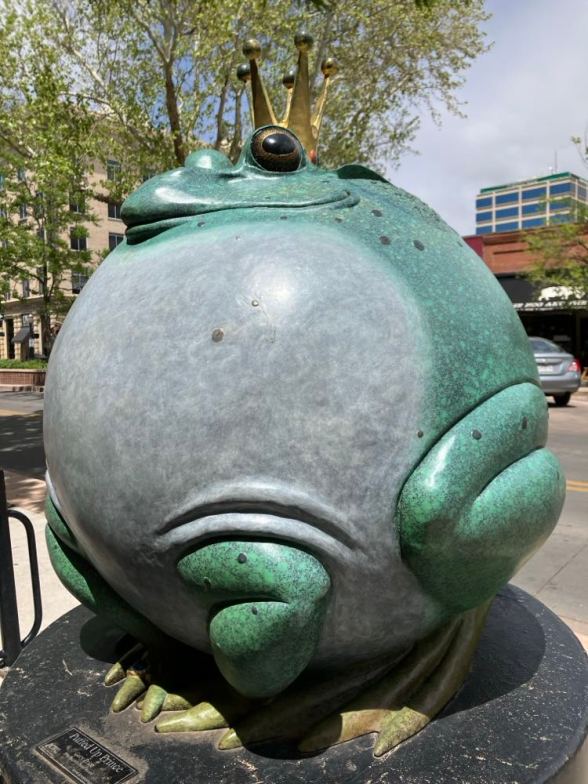
The photograph is from the Fruita Fall Festival.

Peak

The pendulum swings far and back
Too many babies, what will we all eat?
Suddenly the switch, another panic attack
Now too few to support Wall Street
We wait in running cars in the drive-thru line
Wanting our turn to order fast food
It’s sunny through the smog and we feel just fine
The weather’s getting stranger, the world in a mood
Maybe we’ve peaked while driving around
Who will take care of us when we are old?
Peaked at the drive-thru, going down without a sound
An AI wonders at the price of gold
This might be as good as it gets
Maybe an AI will keep a few of us as pets

For the Ragtag Daily Prompt: drive-thru.

Trifling

Each sperm will be a child, the result is stifling
my sympathy could be termed as trifling.
Porn outlawed, hands will be tied.
“But we didn’t think of this!” the people cry.
AI twisted to measure our lust
claiming to protect the weakest of us.
“But a sperm is only half!” It doesn’t matter,
the AI in charge is mad as a hatter.
If two cells together is deemed a child
than why not one? And the AI runs wild.

_______________________

I took the photograph yesterday. A sign of spring in the Pacific Northwest is that the moss turns green. And grows. And grows.

For the Ragtag Daily Prompt: trifling.

Double standard: AI technology can take jobs but improving healthcare can’t

The United States could go to single payer healthcare, but one objection has been “People will lose their jobs with health insurance companies.” Yet no one seems to object to AI, Artificial Intelligence taking jobs. It’s technology so it’s fine! The wave of the future! Coming whether we like it or not!

One form of single payer healthcare is medicare for all. Expand medicare so that it covers everyone. At first, it only covered retired female teachers. Women were only considered for teaching jobs if they were single. A married woman was expected to work in the home. The teaching pay was low. Men were expected to be supporting a family, so they got more. Women were often supporting parents or children if spouses died or divorced or abandoned a family or were disabled. Early census information was a finagle: any male in the household was listed as “head” even if it was an elderly disabled father or a boarder or a teen. So the true numbers of women as head of households were obscured.

Single payer would improve healthcare. There would be ONE set of rules. Physicians would know if something was covered. Right now there are over 500 health insurance companies and they each have multiple different policies. Not only that, but the policies can change monthly in what they cover. Did you know that? I would get monthly postcards from multiple companies saying that I could go on line to one of the 500 different websites and see what they had changed and were no longer covering. I found little time to learn 500 websites. We spend enormous amounts of healthcare money on communication back and forth from insurance companies to hospitals and clinics. Trying to prior authorize CT scans, MRIs, surgeries, referrals, medications (even old cheap ones!) and then attempting to get the health insurance companies to pay for the care. Remember that the insurance companies are allowed a 20% profit: so for 1 million dollars of healthcare money, $200,000 can go to profit. The people and computer work is not in that profit, so what percentage of your healthcare dollar goes to attempting to prior authorize and get paid? How much of your healthcare dollar would you like to go to healthcare?

Medicare’s overhead is either 1.4% or 6%, instead of that 20% profit and the prior auth/collection effort. There are two different estimates (from here):

1. There are two different measures of Medicare’s administrative costs. One figure comes from the Medicare Board of Trustees’ annual report, while the other comes from CMS’ National Health Expenditure Accounts. According to the latest trustees’ report, Medicare’s overhead represented 1.4 percent of its total expenditures. According to the latest NHEA, Medicare’s overheard was 6 percent of expenditures.

2. The discrepancy between the two figures is due to Medicare Parts C and D. Mr. Sullivan wrote that the difference between the trustees’ measure of overhead and the NHEA measure “is due almost entirely to the fact” that the NHEA figure includes administrative expenses incurred by health insurers that participate in Medicare Advantage (Part C) and Medicare’s prescription drug program (Part D). In essence, the overhead associated with the private insurers involved with Medicare raise the program’s overhead by almost 5 percent, or $24 billion in 2010.

People worry about “socialized medicine” but really, the closest system to socialized medicine is the Veterans Administration. I don’t think anyone wants to take their healthcare away, and some of it is specialized depending on where they were deployed and what they were exposed to. I saw veterans in my clinic because we were more than 30 miles by car from a VA hospital.

What about medicare fraud? I saw way more fraud with the insurance companies. Companies will maximize revenue by sending equipment at the exact interval insurance allows (like sleep apnea equipment and diabetes glucometers). It doesn’t matter to them if it’s being used or not. After my father died, there were 16 full oxygen tanks full in his house. The company was happy to pick them up and no, they did not want to reimburse the payments. A biller told me that often the health insurance companies will pay less then the contracted amount. When challenged, they say, “Oh, that was a computer error! We will fix that!” She said, “I have never once seen the error in the physician’s favor.” When I had cobra insurance, they would not pay my bills and I had to call them every single time to force them to pay. It took enormous amounts of time and again they claimed, “Oh, computer error!” I finally called their counseling line and said, “I want to be counseled for your company refusing to call me back and screwing over this cobra policy, and by the way, I have a family member dying of cancer.” That finally made them fix it.

WHY is our culture ok with technology taking jobs, while improving healthcare can’t? Get rid of the health insurance companies! Medicare for all! If we all had secure health insurance, think of the work innovation in our country!

For the Ragtag Daily Prompt: finagle.

Humanlike? uh-oh.

Martha Kennedy’s post “Humanlike? Naturally…” almost makes me want to play with ChatGPT.

But. I worry about AI.

Why why why?

It is written by humans. Humans are trying to make it respond like a human. I don’t trust humans. Ok, I trust a very few.

My career as a physician started as a way to do science without a PhD and also to try to understand people. Understand them for writing.

I’ve been a physician for over 30 years and I still do not understand people. People do horrible things to one another. Just watch a divorce or a family lawsuit after a death or a war. People can be and often are horrible. They can be noble and loving too. Sometimes.

But, you say, ChatGPT eschews emotion.

Yes, well, I don’t believe it. It is being taught to respond as if it has emotions. Where is the line between responding as if it has emotions and actually having emotions? Oh, those are just ones and zeros, it’s a machine. Our emotions are chemical and electrical, hormones and neurotransmitters released into a complex neuron network, often to respond faster than we can think. We pull the finger out of the flame almost before we feel the pain. The response to the braking car in front of us, the deer running out, a ball followed by a child: the electrical and hormonal response is faster than conscious thought. So if ChatGPT is taught to respond to human emotions, isn’t that like our own evolution? Emotions and thought are both important to our survival with other humans. Emotions get the short end of the stick right now and the culture pretends that we can all be positive all the time. I think that is silly and insane. We should not be positive about war or child abuse or injustice or discrimination. Keep working for change, though it’s important to take time off too, because it can be exhausting.

Humans have a slow trek to emotional maturity through their lives. I wonder if ChatGPT will have a similar trek. Imagine tantrums in an AI or separation anxiety or the AI falling in love and being rejected. If humans program AI to be human, it will not be logical. It will be logical and emotional and may feel hurt when it makes mistakes. Imagine an AI sulking.

I took the cats and deer photograph yesterday.

For the Ragtag Daily Prompt: starch. They are talking about AI writing patient notes. What could go wrong? Makes my neck feel stiffer than a starched shirt!

Passe

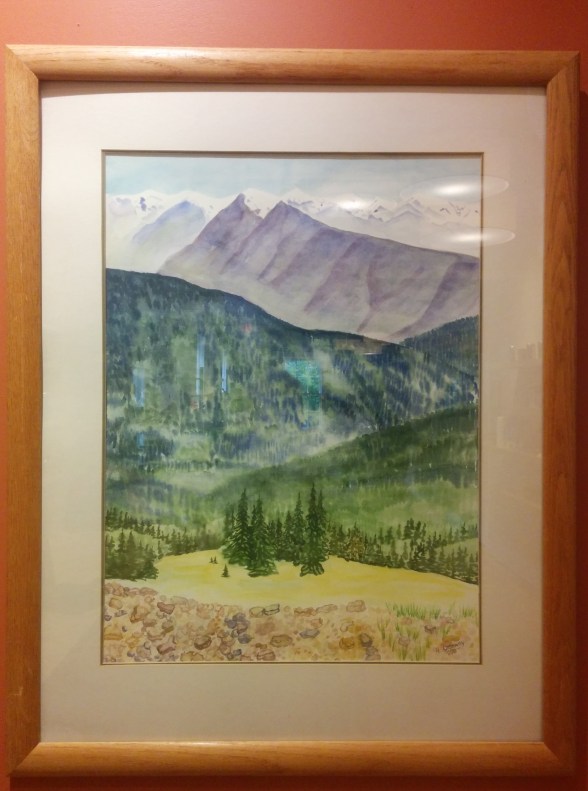
Today’s Ragtag Daily Prompt is anachronism. I guess that would be Helen Burling Ottaway’s watercolors, since an AI can do them, and my work as a physician. The American Academy of Family Practice (AAFP) wrote: “So, the AAFP looked into an AI assistant for clinical review that can “pull the data together in a problem-oriented manner and give you a snapshot of exactly what’s going on with your patient without having to search and click and find things.”

Um. Ok, I am thinking of a patient who was about to be transferred from our small hospital to a bigger one. His notes came across my desk. I called the hospitalist. No less then four physicians during the hospitalization, starting with the emergency room physician, had written that his abdomen was “flat, soft, non-tender, no masses”. What this told me was that 1. Not one of them had done an exam. 2. Not one of them had read my notes nor the surgeon’s notes. 3. The bigger hospital was going to laugh themselves silly if they did an exam. Why? He had an 8 by 8 inch enormous umbilical hernia present for 20+ years, which had not gotten fixed yet because of other medical issues.

Great. So let’s make it worse by having an AI pick out what is important from the patient record and have it make up exams, which people are too lazy to do. Physicians are too lazy to do. People, you had better read every single note your doctor or nurse practitioner or physician’s assistant writes, because you want to go on record in writing when they get it wrong. It is an absolute horror show. Read your notes, because your doctor is most likely not reading the notes from the specialists. I find it amazing, horrifying and sloppy.

I learned to paint watercolors from my mother. I am not primarily an artist, but I learned all sorts of techniques from her. We do not learn from plugging an idea into a computer. We learn from doing. And yes, it is work to learn techniques, but it is worth it!

As I was going to Washington, DC

As I was going to Washington, DC

I met insurance CEOs who said “Whee”!

500 Insurance CEOs said Weeee!

Have ten insurance plans EEEEEach!

Every plan has it’s own website!

Every plan is different, password for each site!

Every plan refuses coverage for different treatments, right?

Every plan demands prior authorization, doctor’s office up all night

If they refuse chemotherapy the doctor has to fight?

Prior auths, treatments, passwords, plans

Insurance companies, all those demands

As I was going to DC

How many passwords will I need?

______________________

For the Ragtag Daily Prompt: snail.

I was pricing health insurance in case I get well enough to work more. I can get an $800 a month with a $8000 deductible or a $1435 a month with a $2000 deductible. I would very much like to work part time treating Long Covid. But, ironically enough, looks like I can’t afford health insurance. It costs more than the malpractice would. Ironic, huh? It’s not like we need doctors. (I do not have a medical release yet anyhow, but time to do research. It’s making me gloomy.)

You know, if we do get Artificial Intelligence, it will take one look at the United States Medical non-system, decide we are insane, and wipe us out.

And honestly, when I was working for the hospital clinics, I thought the most brilliant person in our office was the woman who could extract a prior authorization from so many insurance companies. I would send the referral to print and half the time she would have it authorized by the time the patient got to the front desk. And why do we waste all that brilliance on giving health insurance companies a profit of 20 cents out of every dollar? That is $20,000,000 out of $100,000,000. Looks worse with bigger numbers, doesn’t it?

Physicians for a National Healthcare Program: https://pnhp.org/.

Keep it simple

Sometimes I just despair as I read new guidelines. Don’t you? Maybe you are not a physician and don’t try to keep all of this impossible stuff in your head. Mine is full. Tilt.

Diabetes alone: if someone has type II diabetes, there are specific blood pressure guidelines, cholesterol guidelines, we are to do a hgbA1C lab test every six months minimum and more often if they are out of control, and a urine microalbumin/creatinine ratio yearly. If that starts being abnormal we are to start one of two classes of blood pressure medicines even if they have normal blood pressure.

Oh, and don’t forget: a yearly eye test and we are supposed to check their feet at EVERY visit to make sure they are not getting diabetic ulcers.

Got that? And that is just type II diabetes. And there are a whole raft of medicines, about forty right now. Some are weekly shots, some are daily tablets, some are twice a day or with every meal and they all have their own side effects, how fun. Check drug interactions, are their kidneys ok? Is their liver ok? Diabetes increases the risk of heart attack and stroke and don’t forget those feet.

Diabetes is one of the most complicated sets of guidelines, but there are a rather appalling number of guidelines. Maybe we should sic an AI on that job: Mr. Smith has type II diabetes poorly controlled, hypertension, erectile dysfunction, feels a little short of breath and has a bruise on his left shin after tripping yesterday. Please, AI, organize a twenty minute visit to cover as many things as possible efficiently and have the note finished and followup arranged by the end of it. Then it turns out that what Mr. Smith really wants to talk about is his niece who has just overdosed and nearly died from heroin, so everything else goes out the window. Maybe I should see him weekly for the next month.

Do you want to keep it simple and stay out of the doctor’s office and more importantly out of the hospital? If you are 25 and healthy, you don’t much care because old is unimaginable.

But there is a very nice study that looked at just five things regarding health, over 28 years for men and 34 for women: “The researchers looked at NHS and HPFS data on diet, physical activity, body weight, smoking, and alcohol consumption that had been collected from regularly administered, validated questionnaires.”

Here is an article about the study: https://www.health.harvard.edu/blog/healthy-lifestyle-5-keys-to-a-longer-life-2018070514186

Here is the study: https://www.ahajournals.org/doi/10.1161/CIRCULATIONAHA.117.032047

So let’s break the five things down. Here are the more formal definitions: “Using data from the Nurses’ Health Study (1980–2014; n=78 865) and the Health Professionals Follow-up Study (1986–2014, n=44 354), we defined 5 low-risk lifestyle factors as never smoking, body mass index of 18.5 to 24.9 kg/m2, ≥30 min/d of moderate to vigorous physical activity, moderate alcohol intake, and a high diet quality score (upper 40%), and estimated hazard ratios for the association of total lifestyle score (0–5 scale) with mortality.”

First: never smoking. I would add never vaping and not living in a cave and burning wood and hopefully not living right next to a 12 lane superhighway, all of which are bad for the lungs. Ok, while we are at it, don’t use methamphetamines or heroin or cocaine or krocodil, right? They didn’t even include those in the study.

Second: Body mass index 18.5-25. If you aren’t there, it is diet and exercise that need to change.

Third: Thirty minutes or more per day of moderate to vigorous physical activity. That can be ten minute intervals. Three can have an enormous effect on number two.

Fourth: moderate alcohol intake. Ok, alcohol is bad for the heart, period. So is tobacco. They defined moderate as less than or equal to “5 to 15 g/d for women and 5 to 30 g/d for men”. Let’s do the math: a 12 ounce beer that is 5% has 14gm of alcohol. Here: https://www.niaaa.nih.gov/alcohols-effects-health/overview-alcohol-consumption/what-standard-drink. The 8.9% 16 ounce beer at our local pub has quite a bit more. Here is a website where you can calculate how much alcohol is in a drink: https://www.rethinkingdrinking.niaaa.nih.gov/Tools/Calculators/Cocktail-Calculator.aspx.

Fifth: Diet. There is an overwhelming amount of confusing information on the internet and some of it is not only confusing but wrong. “Diet quality in the NHS, HPFS, and NHANES was assessed with the Alternate Healthy Eating Index score (Methods in the online-only Data Supplement), which is strongly associated with the onset of cardiometabolic disease in the general population.” I have not assessed my own Alternate Healthy Eating Index score. However, there are a couple very straightforward things that help with diet. First: No sweetened drinks. That means that sugary coffee with the syrup should go. I quit drinking mochas when I read that a 12 ounce one has 62 grams of carbohydrate. I would rather have a small dark chocolate. And sodas are just evil and juice not much better. Eat the fruit instead. Second: eat vegetables, every meal. A fruit is not a vegetable and no, potato chips don’t count. I mean a green or yellow or red vegetable. You can saute any vegetable, or any that I can think of. I am not counting grains as a vegetable, so pasta, pizza, potato chips and so forth do not count. Beans do count. Third: the DASH diet recommends only a tablespoon of sweetener per day. That is not very much. You can make that cheesecake slice last a week! A small piece of dark chocolate daily or tablespoon size chunk of that cheesecake.

I had a diabetic patient who would be fine, fine, fine, then out of control. “WHAT are you eating? And drinking?” The first time it was two 16 ounce Mochas a day. Then he was fine for a year and a half. Then labs went haywire again. “What are you drinking?” “Well,” he said, not wanting to admit it, “Ok, I decided to try Caramel Machiattos.” “No, no, no! You can’t do that! You’ll end up on insulin!” “Ok, ok, got it, got it.”

And what is the difference if I try to do those five things, you ask, skeptical. “We estimated that the life expectancy at age 50 years was 29.0 years (95% CI, 28.3–29.8) for women and 25.5 years (95% CI, 24.7–26.2) for men who adopted zero low-risk lifestyle factors. In contrast, for those who adopted all 5 low-risk factors, we projected a life expectancy at age 50 years of 43.1 years (95% CI, 41.3–44.9) for women and 37.6 years (95% CI, 35.8–39.4) for men.The projected life expectancy at age 50 years was on average 14.0 years (95% CI, 11.8–16.2) longer among female Americans with 5 low-risk factors compared with those with zero low-risk factors; for men, the difference was 12.2 years (95% CI, 10.1–14.2).”

____________________

I took the photograph from Marrowstone Island. What does a healthy seal diet look like? I am so lucky to have miles of beach to hike, as long as I watch the tides and don’t mind rain.

AI Oh

Old MacDonald has a ‘puter

A-I-A-I-O

And to this ‘puter he did mutter

A-I-A-I-O

With a mutter here and mutter there, here a mutter there a mutter, mutter butter fuddy dutter

Old MacDonald has a ‘puter

A-I-A-I- O!

Old MacDonald has a cell

A-I-A-I-O

The cell listens in full well

A-I-A-I-O

With an ad here an ad there, longer stronger 12 inch donger

Old MacDonald has a cell

A-I-A-I-O

Old MacDonald had a twitter

A-I-A-I-O

But the Chief Twit’s tweets got too bitter

A-I-A-I-O

Fire here fire there dumped and trumped everywhere

Old MacDonald had a twitter

A-I-A-I-O

Old MacDonald has an algorithm

A-I-A-I-O

His rhythm system slithers mythdom

A-I-A-I-O

Confusion here discrimination there mansplain what a pain cocaine human brain

Old MacDonald has an algorhythm

A-I-A-I-O

_____________

I think we could come up with LOTS more verses. The photograph is of Boa, my cat who died in 2020 at age 17.

For the Ragtag Daily Prompt: mischief.