that

Whenever I think

that
is what I don’t want to be

the Beloved laughs
and orders me
to be that

as if I’ve called it
that

the angels surround me
curious

it’s my passion
anger
fear
that calls them

motes from heaven
fall on me
from their wings

and I weep

and step forward
and fall
fall
fall

becoming
that

quit

I’ve quit

again
stop start

stop
quit

I don’t think I’ll go back
it wastes the days
makes me so sick
takes so little for me to overdo

I resent lost time
and suffering

my body doesn’t want it
and tells me so
ferociously

alcohol you say?

that too

but I was talking about men


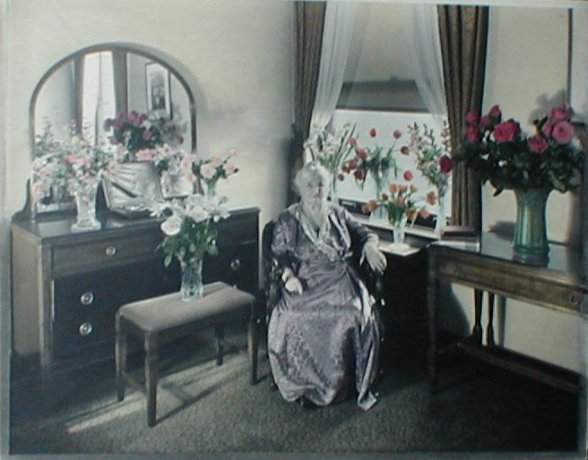
The photograph is my mother’s father’s mother. I have one of the originals. The back is stamped: Battle Creek, Michigan. So she was having a “rest cure” at Dr. Kellogg’s famous health retreat.

Stress and the sympathetic nervous system

People talk about adrenal fatigue: what is it that they mean? And how can we address it?

When we are relaxed, or less stressed, we make more sex hormones and thyroid hormone.

When we are in a crisis, or more stressed, we make more adrenaline and cortisol.

The pain conference I went to at Swedish Hospital took this a step further. They said that chronic pain and PTSD patients are in a high sympathetic nervous system state. The sympathetic nervous system is the fight or flight state. It’s great for emergencies: increases heart rate, dilates air passages in the lungs, dilates pupils, reduces gut mobility, increases blood glucose, and tightens the fascia in the muscles so that you can fight or run. But…. what if you are in a sympathetic nervous system state all the time? Fatigue, decreased sex drive, insomnia and agitated or anxious. And remember the tightened fascia? Muscle pain.

When we are relaxed, the parasympathetic system is in charge. Digesting food, resting, sexual arousal, salivation, lacrimation, urination, and defecation. So saliva, tears, urine, and bowel movements, not to mention digesting food and interest in sex. And muscles relax.

If the sympathetic nervous system is in overdrive, how do we shut it off? I had an interesting conversation with a person with PTSD last week, where he said that he finds that all his muscles are tight when he is watching television. He can consciously relax them.

“Do they stay relaxed?” I asked.

“I don’t know.” he replies, “but my normal is the hyperalert state.”

“Maybe the hyperalert state, the sympathetic state, is what you are used to, rather than being your normal.”

He sat and stared at me. A different idea….

So HOW do we switch over from the sympathetic to the parasympathetic state?

Swedish taught a breathing technique.

Twenty minutes. Six breaths per minute, either 5 seconds in and 5 seconds out, or 6 in and 4 out. Your preference. And they said that after 15 minutes, people switch from the sympathetic to the parasympathetic state.

Does this work for everyone? Is it always at 15 minutes? I don’t know yet. But now I am thinking hard about different ways to switch the sympathetic to parasympathetic.

Meditation.
Slow walking outside.
Rocking: a rocking chair or glider.
Breathing exercises.
Massage: but not for people who fear being touched. One study of a one hour massage showed cortisol dropping by 50% on average in blood levels. That is huge.
Playing: (one site says especially with children and animals. But it also says we are intelligently designed).
Yoga, tai chi, and chi kung.
Whatever relaxes YOU: knitting, singing, working on cars, carving, puttering, soduku, jigsaw puzzles, word searches, making bean pictures or macaroni pictures, coloring…..and I’ll bet the stupid pet photos and videos help too….

My patient took my diagrams and notes written on the exam table paper home. He is thinking about the parasympathetic state: about getting to know it and deliberately exploring it.

More ideas: http://www.wisebrain.org/ParasympatheticNS.pdf

I like this picture of Princess Mittens. She looks as if she has her head all turned around. Isn’t that how we get with too much sympathetic and not enough parasympathetic nervous system action?

Or

For yesterday’s daily prompt: Or.

I am looking through old photographs and wanting to escape, back. Hide. This is from 2007, my daughter on the beach. Nostalgia, but also the picture is imperfect. The horizon is not level. But I love the colors and she is so happy. The water, the sky, serendipity…

…because I am afraid of polarization and anger in our country and I am afraid, very afraid, when I read that the KKK plans a victory march. And then that turns out to be false: yet my son’s friend hears people chanting “No more safe space.” on campus on the night of the election.Β  I won’t get lost in nostalgia or an idealized vision of the past. And I want my daughter to be able to run with joy….

Update on marijuana 2016

I attended the Swedish Hospital Update on Chronic Pain in Seattle two weeks ago on the stormy Friday. The power went out and we were without slides from about noon on.

The first two hours and three lectures were about marijuana. Including medical marijuana and one speaker for and one against. So here are some of my notes.

In 1960 and 1970, the marijuana had about 4% THC. Now some strains have 30% THC, so long term there is no data about what 30% THC will do to a person rather than 4%. THC in strains ranges from 0% to 30% and CBD from 0 to 3.5%. However, those two are not the only active ingredients, so to speak. 537 constituents have been identified that work at the cannabinoid receptor…. that is impressive. I think it might take a while to sort out what they do.

At any rate, we don’t know what smoking 30% THC will do, because it’s new. 4% had pretty minimal psychotropic effects. 30% has a lot more. The average now is 12%. Hashish is closer to 66% and hash oil 81% THC. A patient recently told me that she fainted within the last year. She got butter from the fridge at a friend’s and buttered her toast. Turned out it was THC infused butter and she was taken by surprise on a walk 30-60 minutes later. Luckily someone was with her and she was not hurt.

Recent data is showing that there is not much tolerance smoking 12% THC regularly. However, higher doses show tolerance in about 2 weeks in a study of HIV patients with dronabinol, which is 40% THC. Another study of multiple sclerosis patients with 15/15% CBD:THC reduced pain, reduced spasticity and did not show tolerance.

There is anecdotal evidence about seizures, but no study yet. There is some evidence that CBD reduces THC induced paranoia and/or hallucinations. THC side effects from dronabinol include drowsiness, unsteady gait, delusions, hallucinations, mood change and confusion.

The growers are being very creative in names and marketing. This is re recreational pot.
There are hundreds of names and hundreds of varieties and they make interesting claims as to effects. For example:

AK47 with 36.6% THC and 0.3% CBD ….. creative, euphoric and hungry
sage with 27.5% THC and 0.7% CBD ….. attentive
flow with 23.2 % THC and 0.6% CBD ….. happy, relaxed, alert
Super Sour Diesel 22.7 % THC and 0.8% CBD ….. attentive, giggly, hungry
707 Headband with 22.1% THC and 0.7% CBD ….. euphoric, lazy, inspired

How amazing the difference less than a percent of THC makes… oh, wait. There aren’t clinical trials on this, hon, this is MARKETING.

Onset for oral is 30-90 minutes
peak in 2-4 hours
half life 8-12 hours but sometimes 20 hours

sublingual tincture
onset 30-45 minutes
peak 60 minutes
half life 3-5 hours

Smoked onset quicker and I did not get those numbers.

The emergency rooms in Colorado saw lots of people who were “trying it” but if they had only tried smoking marijuana in the 1970s, a strain with a much higher percentage made many people sick or hallucinate or frightened. The gummi bears look just like the ones for kids, so kids got sick. More sick people with edibles, as some eat too much.

People using THC before age 25 who have risk factors for schizophrenia are more likely to develop it. Family history, other hallucinatory drugs, mental health problems. The age 21 limit should be taken very seriously.

In Arizona re medical marijuana, 90% of the prescriptions were from only 24 physicians. In Colorado, 94% of the patients applying for medical marijuana did so for “severe pain”. Two of my friends in their early 20sΒ  got medical marijuana permits in California for “back pain”, um, ok, hooey. Some people DO have severe chronic pain….

The history of medical marijuana is that Eli Lilly produced a medical version from 1850-1940 for pain. It was removed in 1942. In 1970 it became a schedule one, that is, illegal, drug. There are a few randomized clinical trials for pain, the best ones with high CBD/low THC treatments. Marijuana smoke alone has not been proven to cause lung cancer, but combined with tobacco or other smoke, the evidence is that it is synergistic and makes things worse faster. Dependence can occur, an increase in antisocial personality disorders and there is a withdrawal syndrome for dependent folks. For the small number of people I have had working hard to stop, sleep is the most difficult issue. Anxiety as well.

If people state that they use pot a small amount a couple of times a week, their urine sample should clear after a week. If it’s not clear they 1. couldn’t stop and/or 2. were using quite a bit more.

As far as Washington state law, it was described as a mess. Physicians can’t prescribe, they can only “attest” that the person has a problem treatable by medical marijuana. To attest, the physician has to sign a document saying that they are sure that not only has the patient READ the law chapter 69.51A RCW but also “understands the requirements of being a patient”. There are 24 sections. The physician doing this part of the talk said that he would only prescribe to non-driving MS patients in wheelchairs. Because he finds it hard to read the law himself, so the signing that the patient has read and understood it…. well, the driving legality issue is huge. And the provider, including NDs (naturopaths) and ODs (Doctor of Optometry) in Washington can attest. They are then immune in Washington but not at the federal level.

Every marijuana store is legally obliged to have a medical marijuana consultant present at all times that they are open. The medical marijuana consultant has 20 hours of training to get certified. Patients that are certified with an attestation can grow 6 to 15 plants but ONLY after they have been entered into a database which includes the person who signed the attestation and a photo of the patient. If they grow without being entered, they are breaking the law.

Use of THC long term, the risk of addiction is 25-50%. 17% of the addicted folks started during adolescence. Addiction is currently estimated at 9% of people who have tried it overall. About 30% of users have “problem use” and starting before age 18 increases the problem use 4-7 times. The DSM-V has diagnostic criteria for “marijuana overuse syndrome”, including not being able to stop even though the person wants to. Risk factors for addiction and problem use include early use, family history, PTSD (especially sexual abuse), bipolar diagnosis, ADHD, conduct disorder, oppositional defiant disorder. Mediating factors include parental disapproval, parental supervision, academic competence, higher perceived risk and availability.

And am I attesting? No. My MS patients get the attestation from the neurologist if they want it….

Medical marijuana consultant training: http://www.doh.wa.gov/YouandYourFamily/Marijuana/MedicalMarijuana/RulesinProgress/MedicalMarijuanaConsultantCertification
Washington State Medical Marijuana attestation form: http://www.doh.wa.gov/Portals/1/Documents/Pubs/630123.pdf
WA law: http://app.leg.wa.gov/RCW/default.aspx?cite=69.51A
And pain clinics getting closed down: http://www.seattletimes.com/seattle-news/health/pain-patients-scramble-for-care-after-clinic-crackdown/

The tree trunk is a bonsai from the Lan Su Chinese Garden in Portland. I like the thorns…..

Fraud in medicine: why “help” won’t help

This article:Β  Doctors wasting over two thirds of their time doing paperwork showed up on Facebook yesterday.

The problem is that “hiring people to help with paperwork” will not help.

Why? We’ve already done that and it’s a huge mess.

For example: I was referred to an Ear Nose and Throat Specialist at one of the Seattle Mecca hospitals. I had to travel two hours and then in the waiting room I was given a four page patient history to fill out. I filled it out. I had been referred by a Neurologist, who sent a letter and note. After I filled out the forms, HIPAA and “you will pay if your stupid insurance won’t” and address and consent to be treated and yada yada…. I waited.

At last I was shown to a very luxurious room. There a medical assistant asked me many of the same questions that I’d filled out on the form and which were already in the letter and note from the neurologist. She typed these into the EMR- electronic medical record. Then she left. And I waited.

At last the distinguished otolaryngologist entered the room. He said, “I see that you are here for chronic sinus infections.”

“No.” I said. “I am not.”

Silence.

“I see that you did not read anything I filled out and I am a physician and I drove two hours to see you.”

Silence. “Um.” he said. “Uh, why are you here?”

“Strep A sepsis twice and we want to know if my tonsils should be removed.”

Right. So… all that paper you fill out before the physician saw you? Yeah, like, my impression is that physicians don’t read it until after you leave. And maybe mostly don’t EVER read it.

I plan to find out the next time I have to see a specialist. I will write “you don’t read this anyhow, so I am not filling this shit out” on page 2 and see if the specialist notices. Bet you money they don’t. Though when they yell at their staff for not entering my medication allergies or the review of systems, they might notice.

So… I am a primary care physician. What do I do?

A new patient has one form: name, address, insurance information, hipaa and “you pay if your insurance doesn’t”.

I do the health history myself in the room entering it in the first visit, which takes 45 minutes to an hour. WHOA! INEFFICIENT! Nope. Actually it is brutally efficient. For four reasons:

One — I enter it myself and ask the questions myself and I am really fast at it.

Two — now I know the person, because I went over all of it: complaint, history of present illness, past medical history, social history, allergies, review of systems, and I ask people to bring all their pills including supplements to the first visit and I enter them too. And I look at the bottles. I don’t like vitamins with 6667% of the Recommended Dietary Allowance of any vitamin, lots of vitamins now have herbs in them too and I would not recommend taking cow thymus, labeled as bovine thymus.

Three — Now I don’t have to spend time reading forms filled out in the waiting room or a history entered by someone else, because I don’t have time to do that anyhow. I did it all in the visit. I will still have to read old records and any labs or xray results or consult notes or pathology reports and hey, where do you think the waiting room paperwork falls in that priority list? Yeah, like never.

Four — I hand people a copy of the note as they leave and ask them to read it and to bring corrections if I got it wrong. They go from thinking that I am a drone staring at the laptop to saying, “Hey, she typed nearly everything I said (and she has three spelling errors).”

Because the truth is that medicine is really complicated now and it just doesn’t help to have more people “do the paperwork”. I have to read the notes and labs and reports myself, because I am the physician.

There are three things that WOULD help:

1. One set of rules. Hello, the insurance companies, all 500ish of them send us postcards and emails every week saying “Hey, we’ve changed what we cover, meaning we cover less and we have new improved and more complicated prior authorization rules! Go to our website to read all about it.” Guess how often I have time to do that. NEVER NEVER NEVER. I read medicare’s rules. So medicare for all, single payer is partly to have ONE SET OF RULES. I can memorize miles of rules, but not if they are changing in 500 companies every week. Shell game. Also, prior authorization means “your insurance company is making your doctor fill out paperwork in hopes that they can delay or refuse the care your doctor thinks is best for you.”

2. One electronic medical record. Right now there are about 500 of them too and none of them talk to each other so we are all “paperless”. Ha. It’s worse than ever, because we get 100 pages or 200 or 300 of printed out electronic medical record for every single new patient. I need two more big file cabinets for my “paperless” office. Hong Kong did it in 9 months. What, are we wimps? Make a decision.

3. Standardization of lab and xray and home health and physical therapy and nursing home and rehab and hospital order forms. Because every stupid lab form is different: not only arranged differently but also the lab panels are different, the requirements for what that lab wants to fill the order is different and the results are arranged differently on the page. Hello. Stupid, right? Any efficiency expert would laugh.

And that’s how we could really help doctors help patients.