For Cee’s Flower of the Day.
From Mount Townsend, June 2017.

For Cee’s Flower of the Day.
From Mount Townsend, June 2017.

For Cee’s Flower of the Day.

I woke this morning thinking about a poem my sister wrote, titled I am a princess guarded by dragons snorting and grumbling and rumbling in wagons.
I am the princess guarded by dragons snorting and grumbling and rumbling in wagons
I am the princess guarded by dragons
by Christine Robbins Ottaway
snorting and grumbling and rumbling in wagons
I am the princess surrounded by briars
with wretchedly nasty folk starting briar fires
I am the princess with long, tangled hair
I cut it myself and I climbed down from there.
I am the princess, asleep ’til a kiss
woke me, he shoke me, all after was bliss
I am the princess who sat at her wheel
spinning, my fingers bled, hating the feel
I am the princess for whom you fought wars
Raggedly, jaggedly, murderous spars.
I am the princess, a wildvirginqueen
commanding with glory that none had foreseen
I am the princess who made wild things grow
I fought for my daughter, in winter below
I am the princess, I wore a great gown
Now cowboy pjs, I’d rather dress down.
________________________________
I did not want to be a princess when I was a girl. It seemed like a dead end career. The happiest day of a girl’s life was when she got married and what happened after that? Well, in the Disney animated movies, all adult women were either evil witches or evil stepmothers, or dead in childbirth. Until recently there were no live adult women on the throne who were not evil. And certainly the Queen in Frozen II has been attacked mercilessly by the Internet for being a woman without a man. Perhaps it would be okay if she were named Elizabeth.
I wanted to be a superheroine, not a princess. A secret identity was great and Spiderman had just as much angst as I had. I could be myself AND a superheroine. Princess seemed impossible and you had to be nice all the time and you had to talk to mice or spin straw into gold or be the daughter of a king. I did not want it.
Once I went to the Unitarian Church and my minister gave a sermon on each of the four types of Unitarians. That day was about mystics. I thought “Mystics, what hooey!” but by the end of the sermon I thought, oh, I’m a mystic. And a secret romantic. How exactly do I square that with my refusal to have anything to do with Princesses.
My sister was much more comfortable with the Princess Archetype than I was. I wanted a career that would support me and children, because even if my wedding was supposed to be the happiest day of my life, I still noted that half of marriages ended in divorce. And what about men? Almost no one celebrates the virgin male and I don’t think I’ve ever heard anything about marriage being the happiest day of a man’s life. What is the story there?
My version is titled: I am the princess
I am the princess guarded by logic
By science, degrees and words pedagogic
I am the princess staying in school
seeming obedient to misogynist rule
I rack up a degree, residency next
study the landscape, study the texts
I am the princess who longs for a kiss
various frogs taste worse than horse piss
I am the princess flaying a man
who was already dead, to learn what I can
I am the princess, no wars fought for me
I fly under the radar, no one can see
I am the princess, perhaps I’m a queen
hide in a small town, nearly unseen
Treating my people while staying awake
Try to avoid being burned at the stake
I was a princess hiding from most
raising my offspring, I’d rather not roast
__________________________________________
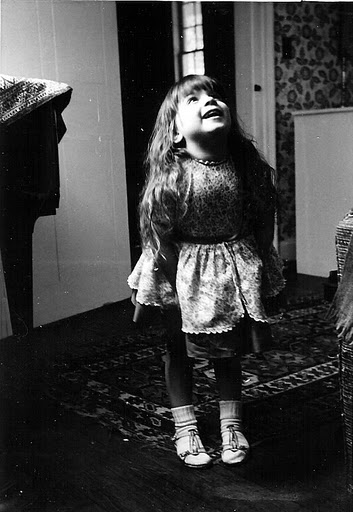
The photograph is from the Great Port Townsend Bay Kinetic Sculpture Race and is not me or my sister.
My sister’s blog: https://e2grundoon.blogspot.com/2009/01/chemo-not-in-vain.html

I keep reading bits about despair and about how a generation of children is being “ruined” by the pandemic.
Not so, I say. There is hope. We need to support each other to survive and then to thrive.
This generation WILL have a higher than average ACE score. If the Adverse Childhood Experience scale is from zero to eight, children in this time period will have at least one higher point than average and many will have three or four or more. Loss of a parent, a sibling, beloved grandparents during covid. Increases in domestic violence, child abuse and addiction. These are all part of the ACE score.
What does this do to children? They have survival brain wiring. They will do their best to survive what is happening. A friend and I both have high ACE scores, 5 or more, and we are both oppositional defiant. We showed this in different ways. He grew up in the same community. He escaped from home and knew all the neighbors. He walked to the local church and attended at age 3 or 4. He has lived in this community all his life.
His oppositional defiance showed up at home, where he consistently refused to obey. And in school, where he confounded and disobeyed teachers and passed anyhow.
My family moved every 1-5 years. I hated moving. I wouldn’t talk to kids in a new school for a year. It was very difficult. So my oppositional defiance was very very internal. I hid in books and in my head. In 6th grade I got in trouble for hiding novels inside the school book I’d already read. I also would just not listen and my respect for the teacher got even lower when she would be angry that I knew the answer to the question once she’d repeated it. I wasn’t listening because I was bored. She was the first teacher that I thought, well, she is not very bright. The next year they stuck me in the honors class and I stopped being bored, though I still questioned practically every opinion every teacher had. I wanted evidence and I did not believe it just because the teacher said it.
I am not saying that oppositional defiance is in every high ACE score. I don’t know that. Why oppositional defiance? Imagine you are a small child and you are beaten. There isn’t rhyme or reason. You can’t predict when the adult will be out of control. Why would you behave “well” if it makes no difference? You might as well do what you want, because nothing you do will change the adult. Or imagine you are a small child who is with one person, passed to another, then to another. You may not exactly trust adults after two or three repetitions. And you want to survive.
There is an increase in addictions, behavioral health diagnoses, and chronic illness in adults with a high ACE score. A researcher when I first heard a lecture about it said, “We think perhaps that addiction is a form of self medication.” I thought, oh, my gosh, how are we ever going to treat THIS? Well, we have to figure that out now, and we’ve had 30 years to work on it.
I was very comfortable with the oppositional defiant patients in clinic. I got very good at not arguing with them and not taking their behavior personally. They might show up all spiky and hostile and I might be a little spiky and gruff back: sometimes that was enough. I think the high ACE score people often recognize each other at some level, though not always a conscious one. With some people I might bring up ACE scores and ask about their childhood. Sometimes they wanted to discuss it. Sometimes they didn’t. Either was ok.
One thing we should NOT do is insist that everyone be “nice”. We had a temporary doctor who told us her story. Her family escaped Southeast Asia in a boat. They had run out of water and were going to die when they were found by pirates. The pirates gave them water. They made it to land and were in a refugee camp for eight years or so. She eventually made it to the US. She was deemed too “undiplomatic” for our rural hospital. I wondered if people would have said that if they knew her history and what she had been through. It’s not exactly a Leave it to Beaver childhood, is it? When she was telling us about nearly dying of thirst in the boat, my daughter left her chair and climbed on my lap. She was under ten and understood that this was a true and very frightening story.
We can support this generation of children. This has been and is still being Adverse Experiences for adults as well. Family deaths, job loss, failure of jobs to support people, inflation. Remember the 1920s, after World War I and the last pandemic, of influenza. “On October 28, 1919, Congress passed the National Prohibition Act, also known as the Volstead Act, which provided enabling legislation to implement the 18th Amendment.” (wikipedia). There were forces trying to legislate behavior, as there are now. The result in 1920s of making alcohol illegal was speakeasies, illegal alcohol, and violence. Some people acted wild after WWI and the influenza pandemic and some people tried to lock down control, by controlling other peoples’ behavior. It did not work then and it will not work now. The wildness is out of control grief, I think, grief dysfunctional and drinking and shooting and doing anything and everything, legal or not. We remember how the 1920s ended too. Let us not repeat that. Let us mourn and grieve and support each other and support each other’s decisions and autonomy.
Blessings.
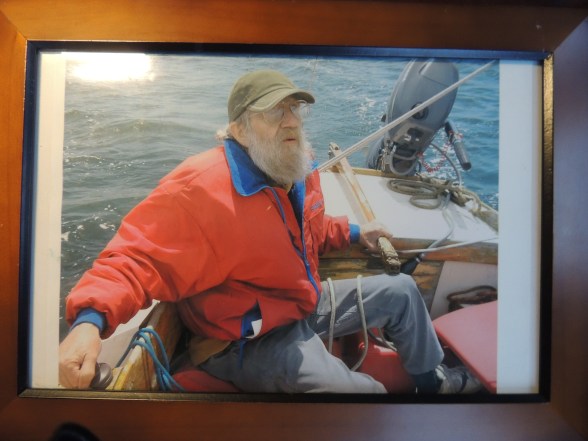
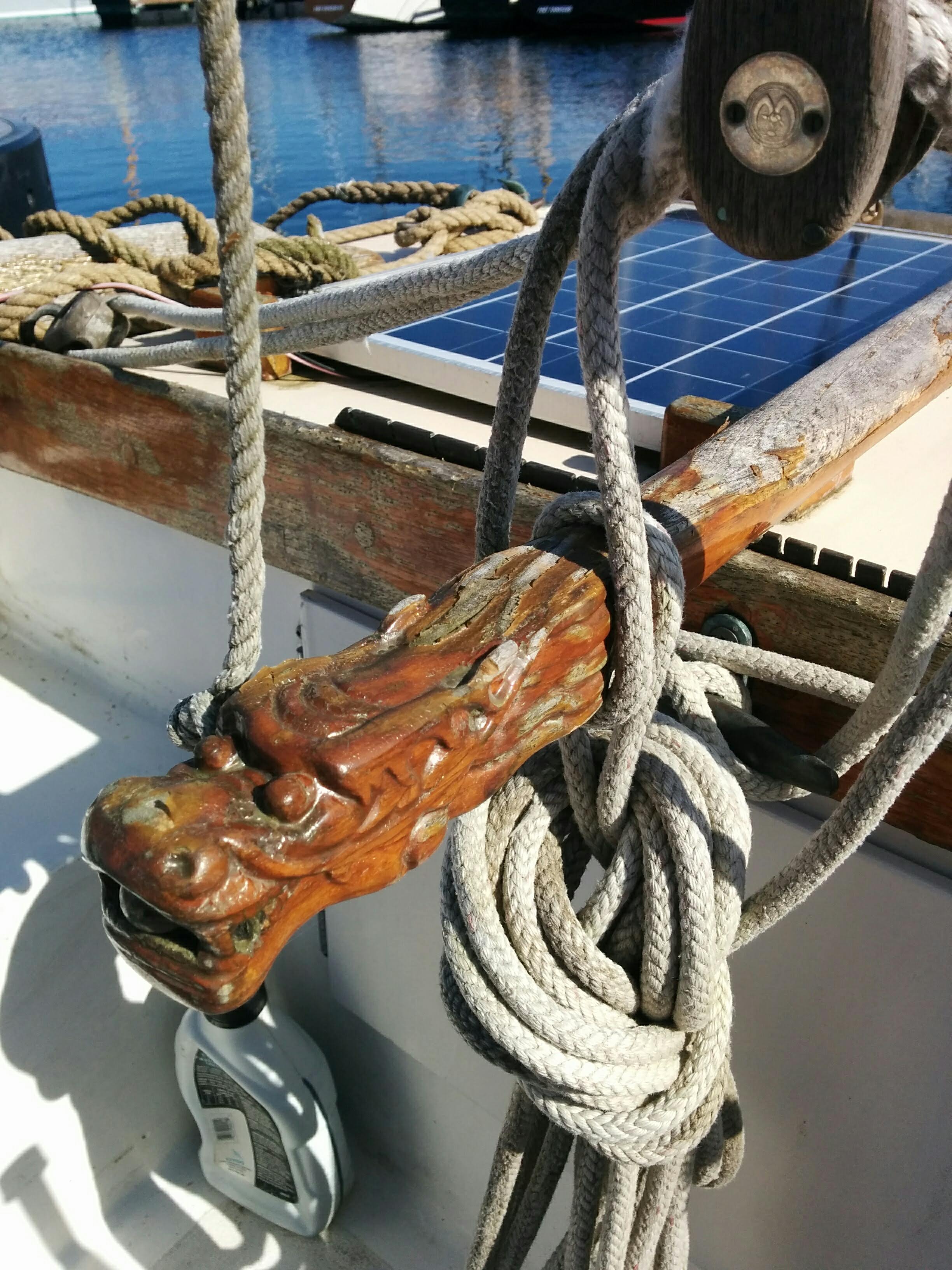
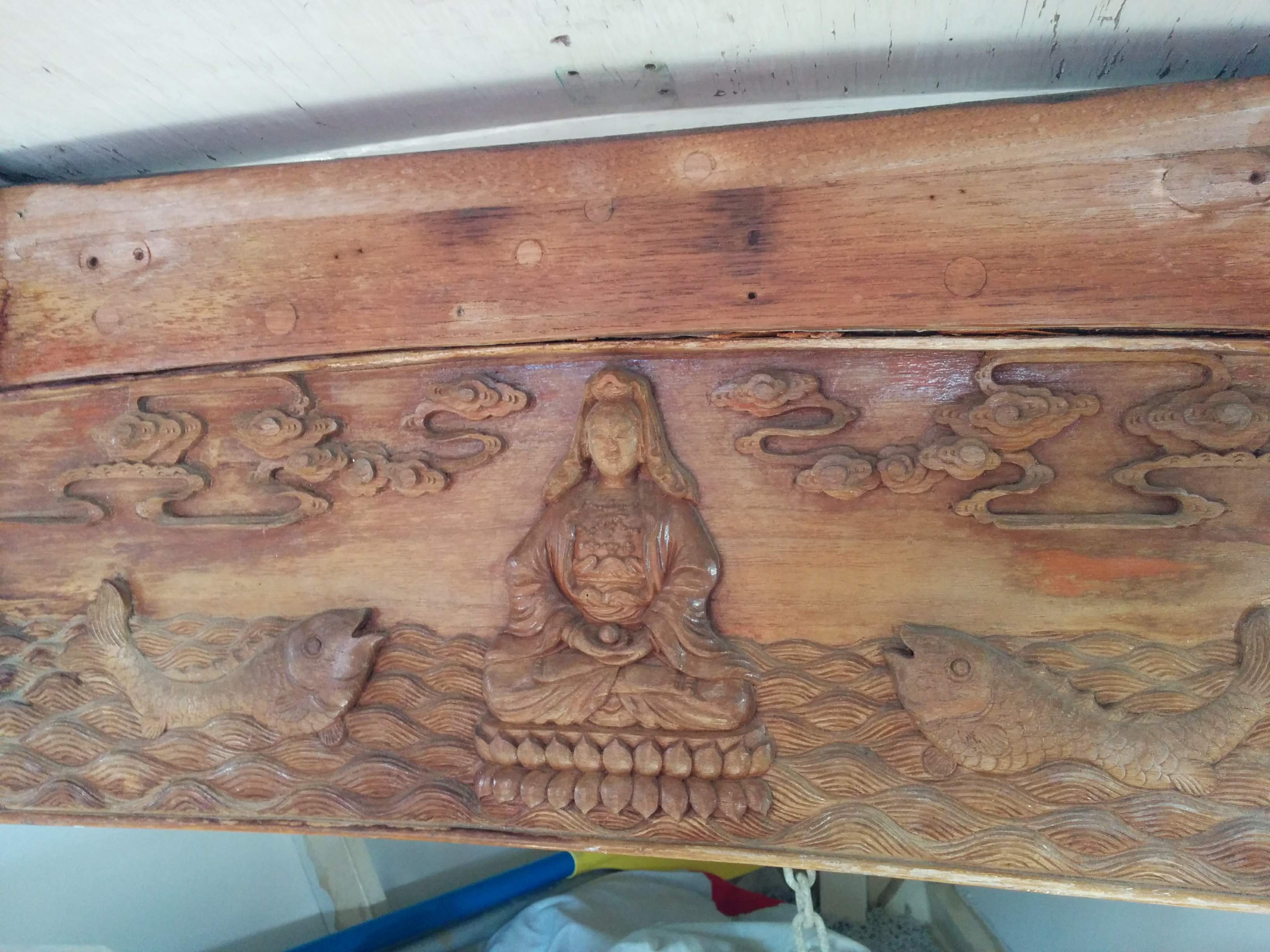
A photograph of a photograph. This is my father, Malcolm Kenyon Ottaway, sailing Sun Tui, our 1960s boat. A 23 foot sloop built in Hong Kong by American Marine. The tiller is a dragon with the world in it’s mouth and inside there is a carving of Kwan Yin.
My father died in 2013. I still have the boat. Needs some work, but hoping I can sail again soon.
I can’t credit the original photographer because I don’t know who it is. It might have been me.
For the Ragtag Daily Prompt: sail.


For Cee’s Flower of the Day.
The Ragtag Daily Prompt is halo, and I wrote this yesterday, after a discussion with a new friend about angels and my angel dream.
______________________________
angels
light angels fall into dark
dark angels fall into light
there is no separation
we are longing for the Beloved
we are longing to be reunited with the Beloved
we have never been separate
we are one
light falling in to dark
dark falling in to light
seeing both is grace
no separation


I saw a meme today about gratitude. It is saying that some people look at a garden and see thorns and weeds, but others see the roses. That we need to have gratitude. I think this is simplistic and papers over the trauma and grief that some people have. If they have endured a highly traumatic childhood, who am I to say they should focus on the roses? They may have a very good reason to see if there is something like a thorn that can hurt them before enjoying the roses.
I work with many patients with high Adverse Childhood Experience scores and mine is high too. I don’t tell my patients that they should have gratitude. I tell them “You survived your childhood. You have crisis wiring. Good for you. Some of your learned crisis survival wiring may not serve you as well now as it did when you were a child.” Then we discuss whether they want to work on any aspects and the many many different approaches. One example: a man who sleeps very lightly. He said that it was lifelong. When asked about his childhood he says, “We would have to leave in the night when there was shooting in my neighborhood. It was a very dangerous area.” I said, “I am not surprised you sleep lightly. You HAD to in childhood to survive. Is this something you want to try and change?” He thought about it and decided, no. Once it was framed as learned in childhood to survive, he stopped worrying about “normal”. He was satisfied that the way he slept was “normal” for him and he wanted to wake up if he heard shooting.
I think we have to ask why a person sees thorns and weeds in a garden before we judge them. My first thought with a new and angry or hostile patient is always, oh, they have been badly hurt in the past. What happened? I don’t worry that the anger is at me. I know it’s not at me, it’s at the system or a past physician or a past event. Under the anger there are other emotions, usually fear or humiliation or grief. I have brought up Adverse Childhood Experience scores on the first visit sometimes. One person replies, “I am a 10 out of 10.” The score only goes up to 8 but I agree. He was a 10. He stated once, “The military loved me because I could go from zero to 60 in one minute.” Very very defensive and very quick to respond. The response may seem extreme and inappropriate to other people: but it may feel like the only safe way to be to my patient.
I grew up hiding any grief or fear in my family, under anger, because grief or fear would be made into a story told for laughs. In college, a boyfriend told me I was an ogre when I was angry. I started working on it then and it was difficult to tame that. The person who took the longest was my sister: she could make me explode until I was in my residency. Medical training was excellent for learning emotional control, at least, on the surface. After my mother died, I had to do the next piece of emotional work: open the Pandora’s Box of stuffed emotions, mostly fear and grief, and let them out. It was such hard work that my day where I saw the counselor for an hour was harder than my ten hour clinic day. I did the work, for two long years. Blessings on the counselors who stood by me while I worked through it.
I do not think we are ever done with that sort of work. I think, what do I need to learn next? What is this friend teaching me? Why is this behavior frustrating me and I have to look in my inner mirror. Why, why, why?
Blessing on your healing path and may you not be judged.
Link about ACE scores: https://www.cdc.gov/violenceprevention/aces/about.html
Sometimes I do feel like a fossil, now that I am middle aged. For the Ragtag Daily Prompt: fossil.

Is this a tree?
I would not call this a tree. I would call it a cone. It contains seeds. It is not a tree.
A pregnancy is called an embryo until 8 weeks after conception and then a fetus until birth. It is not a baby, any more than a seed is a tree. Here is a link to a picture of the embryo developing:
https://en.wikipedia.org/wiki/Human_embryonic_development#/media/File:HumanEmbryogenesis.svg
It’s a bit difficult to call the embryo a baby.
After 8 weeks (10 weeks from the last menstrual period) the developing pregnancy is called a fetus. It cannot survive outside the womb. A term pregnancy is 37 weeks, and the due date is at 40 weeks. The earliest survival, certainly not natural, is around 24 weeks. This takes heavy intervention and technology, a premature infant on a ventilator for months. There is risk of damage to the eyes from high oxygen and risk of spontaneous brain bleed and cerebral palsy, because the newborn can weigh half a pound. Once born, the fetus is termed a baby.
This is important from a medical standpoint and pounded into us as physicians. WHY? Because in a trauma situation, the life of the mother comes first. In Obstetrics and Family Medicine, the life of the mother comes first. In Oncology, the life of the mother comes first. My sister was diagnosed with stage IIIB ductal breast cancer at age 41. She was engaged and it turned out that she was pregnant. She wrote this essay on her blog, Butterfly Soup:
The hardest loss of breast cancer.
She had an abortion and chose chemotherapy, because it was her or the fetus. If she had chemotherapy pregnant, at that time she was told that it would probably kill the fetus or cause terrible birth defects. If she held off on chemotherapy for seven months, her oncologist thought she would die. She had a very very aggressive cancer and she already had a daughter who needed her.
She lived until age 49, with multiple rounds of chemotherapy, radiation, gamma knife radiation, whole brain radiation. And she lived until her daughter was 13. Without the abortion, her physicians thought she would have died when her daughter was 7.
My ethics in medicine are that patients have autonomy. I would NOT have wanted my sister to choose to refuse chemo and try to bring a baby to term while dying of breast cancer. However, it was HER CHOICE, not mine. It was private and no one else’s business and how dare people make moral judgements about another person’s medical choices. I give my patients CHOICES. They can choose not to treat cancer and go into hospice. They can choose surgery or refuse it. They can choose to treat opioid addiction or refuse. They may die of a heroin overdose and I grieve. I try to convince them to go to treatment and I give them nalaxone to try to reverse overdoses. I refuse a medication or treatment that I think will harm my patients, but my patients have autonomy and choices. That extends to women and pregnancy as well.
It is NOT a baby in the womb, however emotionally attached people are to this image. It is an embryo first and then a fetus. And in a car wreck, the woman comes first and the fetus second.
For the Ragtag Daily Prompt: explain.

For Cee’s Flower of the Day.
BLIND WILDERNESS
in front of the garden gate - JezzieG
Discover and re-discover Mexico’s cuisine, culture and history through the recipes, backyard stories and other interesting findings of an expatriate in Canada
Or not, depending on my mood
All those moments will be lost in time, like tears in rain!
An onion has many layers. So have I!
Exploring the great outdoors one step at a time
Some of the creative paths that escaped from my brain!
Books, reading and more ... with an Australian focus ... written on Ngunnawal Country
Engaging in some lyrical athletics whilst painting pictures with words and pounding the pavement. I run; blog; write poetry; chase after my kids & drink coffee.
Coast-to-coast US bike tour
Generative AI
Climbing, Outdoors, Life!
imperfect pictures
Refugees welcome - Flüchtlinge willkommen I am teaching German to refugees. Ich unterrichte geflüchtete Menschen in der deutschen Sprache. I am writing this blog in English and German because my friends speak English and German. Ich schreibe auf Deutsch und Englisch, weil meine Freunde Deutsch und Englisch sprechen.
En fotoblogg
Books by author Diana Coombes
NEW FLOWERY JOURNEYS
in search of a better us
Personal Blog
Art from the Earth
𝖠𝗇𝗈𝗍𝗁𝖾𝗋 𝖶𝗈𝗋𝖽𝖯𝗋𝖾𝗌𝗌.𝖼𝗈𝗆 𝗌𝗂𝗍𝖾.
Taking the camera for a walk!!!
From the Existential to the Mundane - From Poetry to Prose
1 Man and His Bloody Dog
Homepage Engaging the World, Hearing the World and speaking for the World.
Anne M Bray's art blog, and then some.
My Personal Rants, Ravings, & Ruminations
 KO Rural Mad As Hell Blog

You must be logged in to post a comment.