drkottaway’s werewolf theory

Papers about antibodies and immune system responses are proliferating. About Chronic Lyme disease, fibromyalgia, chronic fatigue, long haul Covid-19. We are near the tipping point of understanding vastly much more about the immune system, though understanding what is happening and being able to “fix” it are poles apart. You have to invent the germ theory before you can invent an antibiotic.

Allopathic medicine currently says that behavioral health disorders are caused by “neurotransmitter imbalances” in the brain. That’s a bunch of vague hooey, isn’t it? There is one mouse neuron that has been studied and has 300 different kinds of receptors for serotonin. Scientists blocked one and the mice acted obsessive compulsive. That was one kind of receptor. They are trying to figure out the other 299 and what they do in combination. Does this sound like we understand the brain? No, it doesn’t.

BUT there are papers about antibodies. Antibodies can mimic neurotransmitters, like dopamine, like serotonin, like adrenaline, like norepinephrine. Hmmmm. With multiple different types of receptors for each neurotransmitter, the antibodies could be specific for some receptors and not others. The antibodies could block the receptor, like the wrong key in a lock. Or the antibody could act like a key and turn the receptor on.

One barrier to understanding Long Haul Covid-19 and chronic fatigue as autoimmune diseases is that they do not cause a rise in the usual inflammatory markers. Those are the ESR (erythrocyte sedimentation rate) and CRP (um, I forget — oh, C-reactive protein). This does not mean that there is no inflammation or that these are not autoimmune disorders. This means we have not found a diagnostic marker. Rheumatoid arthritis can be “sero-positive”, with a positive rheumatoid factor marker. Or it can be “sero-negative”, with a negative rheumatoid factor lab, but it’s still rheumatoid arthritis.

What does this have to do with werewolves? Great question! I am thinking about the adaptive advantage of making antibodies to our own neurotransmitter receptors. How could that POSSIBLY be an advantage? What it means is that when someone is very very ill, or very very stressed, or both, at a certain point the immune system starts making crisis antibodies. These cause neurotransmitter and other symptoms. Brain fog, obsessive compulsive disorder, anxiety, muscle pain, fatigue and on down some very long lists. A recent study of fibromyalgia patients looked at 8 antibodies. One was an antibody to the GABA receptor. All of the patients had some of the antibodies, none of them had all of them, and they all had different patterns. So there is no marker and the neurotransmitter antibody could explain brain function changes.

Why werewolves? I am thinking of the old legends that are embedded in multiple countries and languages. Werewolves, demons, vampires, angels. My fourth pneumonia has left a problem: I can’t tolerate gluten any more. We did the antibody tests last week. I think they will be negative, because my gluten intolerance is relatively mild. I can have a tiny bit. People with bad celiac really can’t have any. I may have an antibody that is either a low level or one that has not been described yet. So with repeated infections, four pneumonias plus the exposure to my mother’s antibodies to tuberculosis in the womb, I now have what is looking like a permanent change in diet. This pneumonia started in March 2021, so it’s over a year. I had diverticulitis after that in August. I ate a piece of tempura two months later and thought, ooops, that has gluten! The next day I hurt in the same place as the diverticulitis and decided that I would stay well away from gluten for a while.

The adaptive advantage of having antibodies that change our diet or character or make us stronger or weaker would be to force us to change. To leave a community. To ask for help. To hide during a pandemic. To fight or be suspicious of everyone. Being a grumpy werewolf might save your life in a pandemic, as long as you don’t break any laws and eat someone. A friend likes the dark and hibernates and likes protein best: vampire or bear? I am not sure, maybe a vampire bear. Chronic fatigue seems to “save” or at least stop people from working 20 hours a day and driving themselves to illness. I am not saying that chronic fatigue is good or fun: but it might be adaptive. Brain fog and stiff muscles: zombies, anyone?

Can we do anything to prevent ourselves from getting these mysterious but probably autoimmune disorders? Yes. Lower stress. BUT WE ARE IN A PANDEMIC. Yes, but we can still lower stress. Here are three things to do:

  1. Do not work yourself into the ground, into illness, into the grave. Take breaks.
  2. BREATHE. A simple exercise to quiet the nervous system is to breathe in four seconds and out for seconds. You have to pay attention or count, unless you do it as part of facing a wall meditating, but it works. The veterans I worked with agreed that this works and they are not an easy crowd to please.
  3. LOLCATS or whatever makes you laugh. Sit under a tree. Throw rocks in the water at the beach. Play with a child’s toy with or without the child. (Remember to share.) Sit in a rocking chair and rock gently. Go for a walk, slowly, no ear buds. Listen to the birds. Watch the tops of trees move in the wind. This quiets the sympathetic fight or flight response and switches us to the relaxed parasympathetic. Do this every day at least once.

These all quiet the nervous system which in turn quiets the immune system.

But wait, some people are in a war zone or a disaster zone or an earthquake! Yes. Help them. Get them out. Send something locally or internationally. Give something to your local “buy nothing” group or Heifer or one of the groups in your town: Rotary, Soroptmists, Elks, your local Area Aging help group.

And that is Drkottaway’s Werewolf Theory, a work in progress, under study. I need NIH West. Contact me to start the fund drive.

____________

References:

Overview of fibromyalgia: https://www.verywellhealth.com/autoimmunity-neuroinflammation-in-fibromyalgia-5197944

Fibromyalgia as an autoimmune disorder: https://spondylitis.org/research-new/fibromyalgia-might-be-an-autoimmune-disorder-a-new-study-says/

They have given human antibodies from fibromyalgia patients to mice. The mice get fibromyalgia. https://www.nature.com/articles/s41584-021-00679-y

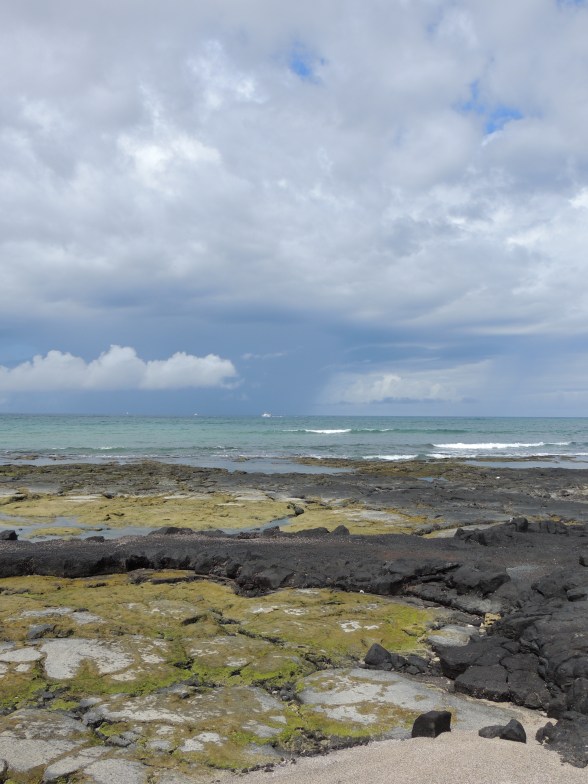
I took the photograph of Sol Duc today.
Practicing Conflict II

Practicing conflict II

In Practicing conflict, I wrote about practicing conflict by arguing different sides of a topic inside my head. I wrote that I don’t fear conflict and have learned to enjoy arguing with myself. I am a physician and physicians argue all the time.

What? No they don’t. Well, the doctor persona does not argue with the patient much. Some doctors give orders to patients, others try to negotiate, some try to convince. But behind the scenes, doctors are more like the Whacky Racer Car with the Cave Guys, running with their feet and hitting each other with clubs.

In residency in Family Practice at OHSU in Portland, Oregon, I start on General Surgery during internship. This is in the early 1990s and there was not much in the way of “disruptive physician” rules. I have to cover Trauma and Plastic Surgery and General Surgery at night on call. The resident is present but I get paged first for patients on the floor. I learn that I should go to all Trauma pages in the emergency room. If I know what is happening with the new Trauma patient, it’s a lot easier to handle the phone calls for more drugs and so forth. Also, the resident is less mean to me.

We attend the Trauma “Grand Rounds”. These are unreassuring to a new intern. A resident presents a trauma patient, giving the history in the accepted formal order. The Faculty Trauma Surgeons interrupt, disagree with management of the patient and yell. They yell at the resident and at each other. The upper level residents yell too, being well trained. The Trauma Surgeons do not agree with each other. They are inflammatory and rude. I am shocked initially: medicine is not a cookbook, is not simple and it appears that it is a controversial mess. It turns out that medicine IS a controversial mess.

There is not as much yelling on the next rotation. At that time Trauma Surgeons yelled more than any other set of doctors that I ran across. They yelled in the ER, at each other, at the staff, at the nurses, at the residents. The culture has changed, I suspect, but that’s how it was then.

I take Advanced Trauma Life Support as a third year resident. The Trauma Surgeons at OHSU helped write the course. They don’t agree with it. On some questions the teaching Surgeon says, “The answer to this question is (c), “ followed by muttering loudly, “though I totally don’t agree with that and I would do (b).” Another Trauma resident or surgeon then might start arguing with him, but they moved on pretty quickly, to teach the current agreed best practices in the book. Which change every few years. Great.

Years later (2009) I join the Mad as Hell Doctors, to go across the US talking about single payer. They are a group from Oregon. Physicians for a National Healthcare Program are a bit cautious with us the first year: we might be whackos. We have an RV with our logo and we have a small fleet of cars and what do you think we do in the cars? We argue. Or discuss. Or whatever you want to call it. We spend the driving dissecting issues and how to present things best and tearing apart the last presentation and rebuilding our ideas. The group does 36 presentations in 24 days. Each presentation takes an hour to set up, two hours to do and another hour to break down and debrief. We get more and more exhausted and cranky and um, well, argumentative, as the trip proceeds. Even though I think of the Whacky Racer Cave Guys running with their feet and bonking each other with clubs, this is the most wonderful group of doctors I have ever been with. A common goal that we all want to get to, discussing and disagreeing on strategy all the way! I feel closer to those physicians in a week then I feel to any of the physicians that I’ve worked with for the last 9 years in my small town. Conflict with a common goal.

Doctors are TRAINED to argue, even with themselves, to document every decision in the chart with reasons why they have reached that decision. And that they have thought about all of the reasons for say, a low potassium, thought of every possible cause and worked their way through testing. The testing always has two strands. One strand is rule out the things that could kill the person NOW, even if rare. The other strand is what is common? You have to think about both at the same time, always. And argue with yourself about which tests should be done, in what order, what is most important, how do you treat the person while awaiting results, and have I missed anything? And if we aren’t sure, we call another doctor, run it by them, wait for them to shoot holes in our logic or to say, no, I can’t think of anything else.

We can deal with conflict. We must deal with conflict. The world is too small not to deal with conflict, with disagreements, with different viewpoints and positions and ideas. If doctors can do it every single day at work, then everyone else can too. Trying to see all the positions and possible diagnoses saves lives in medicine. We need to extrapolate that to everything else. Try to see other positions, try to understand them, to respect them. We can and we must.

Blessings.

Here are the Whacky Racers:

And Madashell Doctors blog: http://madashelldoctors.com/category/uncategorized/page/3/

For the Ragtag Daily Prompt: discuss.

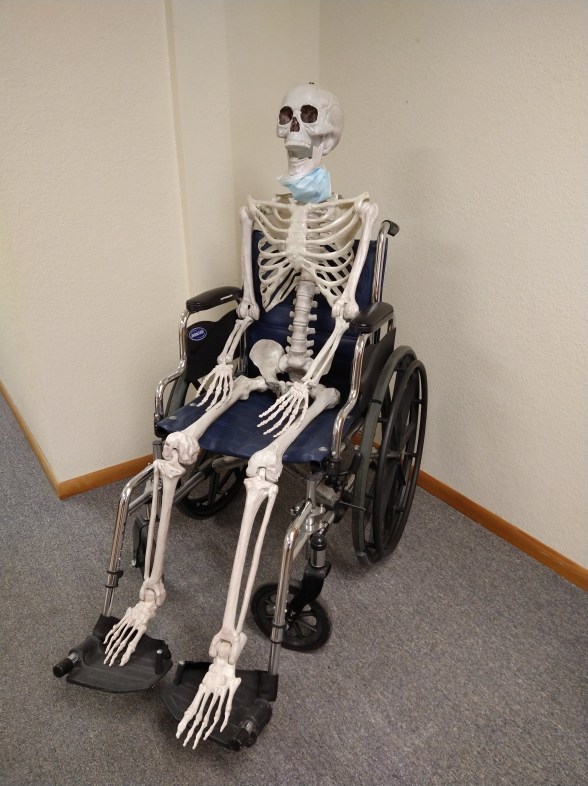
The photograph is from my clinic once we had stopped seeing patients and were selling everything. Mordechai was our clinic skeleton, made of plastic, from China. This was in January 2021.

Covid-19, Long Haul and the immune system

“Whether immune-mediated secondary OCD could also develop as a consequence of COVID-19 poses a highly relevant research question to be elucidated in the near future [35, 36]. The first studies of their kind have demonstrated infection-triggered neuronal antibody production against various antigens in COVID-19 patients who were presenting with unexplained neurological symptoms [37].” from https://www.nature.com/articles/s41398-021-01700-4

Um, yes. It is looking highly likely that chronic fatigue, fibromyalgia, and Long Haul Covid-19 are all immune system responses. They are not simple at all. They can involve antibodies, cytokines and killer T cells and probably other things.

Antibodies: the difficulty here is that we all make different antibodies. It’s all very well to say that people with PANDAS and PANS make antibodies to Dopamine 1 and 2 receptors, tubulin receptors and lysoganglioside receptors, but people each make different antibodies. The antibodies can attach and block the receptor or can attach to the receptor and turn the key: act like dopamine, for example. Dopamine makes people tachycardic, a fast heart rate. If dopamine receptors are blocked, that could be a source for “brain fog” and feeling down.

Cytokines: I worked at the National Institutes of Health back in the 1980s before medical school. We were studying interleukin 2 and tumor necrosis factor for cancer treatment. Building 10 had mice on the north south axis and human patients on the east west. It was fascinating. Now I am reading a current book on the immune system. There has been a lot of research since 1988. Cytokines are released by cells and are immunodulating agents. They are a form of communication in the immune system.

Killer T cells: When antibodies coat a cell, there are immune system cells that kill and/or eat the coated cells. This is good if it is an infectious bacteria or a cell infected with virus, but it is bad if it is your own joint cells or your heart cells or, horrors, brain cells. In rheumatic fever, antibodies to strep A attack the patient’s own cells as well as the strep A cells. This is called “pseudo autoimmune” but I am starting to suspect that all the autoimmune disorders are responses to stress or infection or both.

So if you are still reading, you are saying wait, this is awful, what can we do about it?

Our understanding of the immune system is better than 1988 however… it still has a ways to go. I think that Covid-19 and Long Haul Covid are going to seriously accelerate the research in this area. Meanwhile there are some things people can do to “down regulate” or quiet down the immune system.

If antibodies are causing some of the problem, we need to quiet them down. With severe PANDAS in children, plasmapheresis filters the blood and filters out antibodies. However, the body keeps making them. Infection must be treated first, but then the initial antibody response lasts for 6-8 weeks. Then the body makes memory antibodies and cells to remember. With reinfection, the response lasts for 2-4 months and then subsides if the infection is gone.

Treat infection first. Then treat urgent symptoms, including urgent psychiatric symptoms. Then work can start on the sympathetic nervous system, quieting down to the parasympathetic state. This is not easy with Long Haul Covid-19 or chronic fatigue or fibromyalgia because people are afraid, confused, in pain, exhausted. I have written about the sympathetic and parasympathetic nervous systems here and here. Start with slow breathing, four seconds in and four seconds out. It takes practice.

I have been getting feedback at the pulmonary rehab. When I arrive, they take my pulse, 02 saturation and blood pressure. They put the pulse oximeter on and often I am up in the 90s. I slow my breathing and watch my pulse drop. One day I came in relaxed and my initial pulse was 71. When I was a little late, it started at 99 and came down. The therapist took it off when I got my pulse down to 90. We can check our own pulse, the number of heart beats in one minute, or a small pulse oximeter is about $30.

We can’t really “fix” the immune system with drugs. Steroids can quiet inflammation but they make us more susceptible to infection and raise blood sugar and cause multiple problems when used chronically, like osteoporosis. Plasmapheresis is expensive and requires specially trained nurses. Doesn’t a breathing exercise sound a lot more DIY and cheaper too? You got this. Practice, practice, practice.

sorrow

Most of the time I am fine (I miss you I miss you I miss you).
I am busy during the day (You said I needed my own life).
What shut you down, I wonder (the family event).
You said I always try to learn daily (you say you refuse to change).
I have friends that love me and my kids (you say you do not love me).
I don’t think I know what love is (your actions felt like love sometimes).
Mostly I don’t think about you (sometimes it is very dark).
I hope that you are well (I wish I wanted you to be happy without me).
I am patching my heart again (for you I use elk sinew).
The deer remind me (life goes on, even when one doesn’t want it to).

A previous poem, when my sister died: The deer remind me.

tv questions

https://fivedotoh.com/2022/07/27/fandangos-provocative-question-175/

  • What country do you live in? United States
  • How many televisions do you have in your home? One
  • On average, how many hours a day do you watch TV? None. I think it has not been turned on since my son was in college. About 9 years.
  • What kinds of programs do you typically watch (e.g., news, sports, movies, dramas, sitcoms, reality shows)? None.
  • Do you watch programs as they are aired or do you record them and watch them at other times? NA
  • Do you mostly watch “network” TV? Premium cable channels (e.g., HBO, Showtime)? Streaming channels (e.g., Netflix, Hulu, Prime Video, Disney+, Apple+)? I do have Netflix and have watched one movie in the last 3 months. My daughter was here for a month and we did watch an anime together that my son recommended.
  • How often, if at all, do you use other devices than television (e.g., computers, smartphones) to watch programs? I watched a continuing medical education program about diversity studies put on by Mayo Clinic yesterday. I have to knit or do dishes or draw or else my mind wanders off. I say “watched” but I rarely looked at the screen. I watched this on my laptop. I rarely watch any sort of video or news, I would rather read the news and prefer still photographs to videos. I check minimal news most days, but prefer to spend much of my time outdoors.

I took the photograph before chorus dress rehearsal with my phone two days ago. The buck was very unconcerned about our presence and was only about 12 feet away.

Adverse Childhood Experiences 14: Hope

I keep reading bits about despair and about how a generation of children is being “ruined” by the pandemic.

Not so, I say. There is hope. We need to support each other to survive and then to thrive.

This generation WILL have a higher than average ACE score. If the Adverse Childhood Experience scale is from zero to eight, children in this time period will have at least one higher point than average and many will have three or four or more. Loss of a parent, a sibling, beloved grandparents during covid. Increases in domestic violence, child abuse and addiction. These are all part of the ACE score.

What does this do to children? They have survival brain wiring. They will do their best to survive what is happening. A friend and I both have high ACE scores, 5 or more, and we are both oppositional defiant. We showed this in different ways. He grew up in the same community. He escaped from home and knew all the neighbors. He walked to the local church and attended at age 3 or 4. He has lived in this community all his life.

His oppositional defiance showed up at home, where he consistently refused to obey. And in school, where he confounded and disobeyed teachers and passed anyhow.

My family moved every 1-5 years. I hated moving. I wouldn’t talk to kids in a new school for a year. It was very difficult. So my oppositional defiance was very very internal. I hid in books and in my head. In 6th grade I got in trouble for hiding novels inside the school book I’d already read. I also would just not listen and my respect for the teacher got even lower when she would be angry that I knew the answer to the question once she’d repeated it. I wasn’t listening because I was bored. She was the first teacher that I thought, well, she is not very bright. The next year they stuck me in the honors class and I stopped being bored, though I still questioned practically every opinion every teacher had. I wanted evidence and I did not believe it just because the teacher said it.

I am not saying that oppositional defiance is in every high ACE score. I don’t know that. Why oppositional defiance? Imagine you are a small child and you are beaten. There isn’t rhyme or reason. You can’t predict when the adult will be out of control. Why would you behave “well” if it makes no difference? You might as well do what you want, because nothing you do will change the adult. Or imagine you are a small child who is with one person, passed to another, then to another. You may not exactly trust adults after two or three repetitions. And you want to survive.

There is an increase in addictions, behavioral health diagnoses, and chronic illness in adults with a high ACE score. A researcher when I first heard a lecture about it said, “We think perhaps that addiction is a form of self medication.” I thought, oh, my gosh, how are we ever going to treat THIS? Well, we have to figure that out now, and we’ve had 30 years to work on it.

I was very comfortable with the oppositional defiant patients in clinic. I got very good at not arguing with them and not taking their behavior personally. They might show up all spiky and hostile and I might be a little spiky and gruff back: sometimes that was enough. I think the high ACE score people often recognize each other at some level, though not always a conscious one. With some people I might bring up ACE scores and ask about their childhood. Sometimes they wanted to discuss it. Sometimes they didn’t. Either was ok.

One thing we should NOT do is insist that everyone be “nice”. We had a temporary doctor who told us her story. Her family escaped Southeast Asia in a boat. They had run out of water and were going to die when they were found by pirates. The pirates gave them water. They made it to land and were in a refugee camp for eight years or so. She eventually made it to the US. She was deemed too “undiplomatic” for our rural hospital. I wondered if people would have said that if they knew her history and what she had been through. It’s not exactly a Leave it to Beaver childhood, is it? When she was telling us about nearly dying of thirst in the boat, my daughter left her chair and climbed on my lap. She was under ten and understood that this was a true and very frightening story.

We can support this generation of children. This has been and is still being Adverse Experiences for adults as well. Family deaths, job loss, failure of jobs to support people, inflation. Remember the 1920s, after World War I and the last pandemic, of influenza. “On October 28, 1919, Congress passed the National Prohibition Act, also known as the Volstead Act, which provided enabling legislation to implement the 18th Amendment.” (wikipedia). There were forces trying to legislate behavior, as there are now. The result in 1920s of making alcohol illegal was speakeasies, illegal alcohol, and violence. Some people acted wild after WWI and the influenza pandemic and some people tried to lock down control, by controlling other peoples’ behavior. It did not work then and it will not work now. The wildness is out of control grief, I think, grief dysfunctional and drinking and shooting and doing anything and everything, legal or not. We remember how the 1920s ended too. Let us not repeat that. Let us mourn and grieve and support each other and support each other’s decisions and autonomy.

Blessings.

Covid-19: Long Haul III

The CDC has guidelines for Long Covid and it can qualify for disability in the United States.

Here: https://www.cdc.gov/coronavirus/2019-ncov/long-term-effects/index.html

And here: “As of July 2021, “long COVID,” also known as post-COVID conditions, can be considered a disability under the Americans with Disabilities Act (ADA). Learn more: Guidance on “Long COVID” as a Disability Under the ADA, Section

Here is the list of “most common” symptoms from the CDC:

General symptoms

  • Tiredness or fatigue that interferes with daily life
  • Symptoms that get worse after physical or mental effort (also known as “post-exertional malaise”)
  • Fever

Respiratory and heart symptoms

  • Difficulty breathing or shortness of breath
  • Cough
  • Chest pain
  • Fast-beating or pounding heart (also known as heart palpitations)

Neurological symptoms

  • Difficulty thinking or concentrating (sometimes referred to as “brain fog”)
  • Headache
  • Sleep problems
  • Dizziness when you stand up (lightheadedness)
  • Pins-and-needles feelings
  • Change in smell or taste
  • Depression or anxiety

Digestive symptoms

  • Diarrhea
  • Stomach pain

Other symptoms

  • Joint or muscle pain
  • Rash
  • Changes in menstrual cycles

There are recommendations for a work up by physicians. Depending on symptoms, this may include labs, ECG, echocardiogram (heart ultrasound), CT scan and other tests.

A friend has just gone through those four tests . They are “normal” except for her heart rate. At rest her heart rate is 70 with a normal oxygen level. Walking, her heart rate jumps to 135. Over 100 is abnormal in this athlete who is NOT exerting heavily.

So WHAT is going on with NORMAL testing? I think this is “Covid-19 Viral Pneumonia”, a complication of Covid-19, just as “Influenza Viral Pneumonia” is a complication of influenza. Ralph Netter MD has an illustration of lungs from a person who died of influenza viral pneumonia: the lungs are swollen and inflamed and bruised. WHY is the testing “normal” then? The swelling is throughout the lungs, so a chest x-ray sees it as all the same density and a CT scan also sees it as all the same density. The lungs may have mildly decreased breath sounds, but the sounds are even throughout the lungs. The useful TEST is a walk test. I have tested patients with “walking pneumonia” in clinic for years: get a resting heart rate and oxygen level. Then have my patient walk up and down the hall three times and sit back down. Watch the heart rate and oxygen level. If the heart rate jumps 30 beats up or is over 100, the person needs to continue rest until the heart rate stays under 100 or jumps less than 30 beats. It is important to observe the heart rate until they recover. Sometimes the oxygen saturation will drop as the heart rate comes down, and some people qualify for oxygen. Steroids do not seem to work for this. The length of time to healing is not totally surprising, because a lobar pneumonia that is visible on chest xray takes 6-8 weeks to fully clear. It is not too amazing that a bad walking pneumonia could also take 6 weeks or more to clear. If the person returns to work too soon, they prolong the lung inflammation and they are at risk for exhaustion and for a secondary pneumonia. The treatment is REST REST REST and support.

Do they need oxygen? Currently oxygen is covered only if the person’s oxygen saturation drops down to 88%. However, I think that oxygen would help recovery and make them less exhausted. With my first walking pneumonia, which was influenza, my walking heart rate was 135 and my resting heart rate was 100. Both were abnormal for me. Neither I nor my physician could figure it out. This was in 2003. I did look in my Netter book: I took one look at the painting of the influenza lungs and shut the book. “Oh.” I thought. “That’s why I can’t breathe.” The image is here, though I wish it were bigger.

It took two months for my heart rate to come down, the lung swelling to improve, and me to return to work. I read the text of Dr. Netter’s image a year later and then I read an entire book about the 1918-1919 influenza. Since then I have walked people who come in complaining of exhaustion after a “cold” or “bad cough”. Viruses can cause this and so can bacteria: mycoplasma pneumonia, chlamydia pneumonia, pneumococcal pneumonia, legionella and strep A. If the fever is gone, the infection has probably resolved, but it still can take days or weeks for the lung tissue to recover.

For Covid-19, I would add a third test: walking with weights. We test cardiac patients by asking if they can carry two bags of groceries up a flight of stairs. That is 3 Mets, a measure of the heart load. We need to measure the lung load as well. If the lung tissue is swollen, the amount of airspace is cut down and can be half normal. The heart attempts to take up the slack. The person may tolerate a heart rate of 135 for a while, but it is like running a marathon. If they are older or have heart disease, this can trigger a heart attack. I would walk the person carrying hand weights, and see the recovery.

Also, brain fog is unsurprising. If your oxygen level is borderline, it is darn hard to think. I write really strange songs when I am hypoxic. I get goofy and feel weird. The fast heart rate also feels like anxiety: I think that the body is trying to tell me to rest.

The definition of Long Covid is symptoms after 30 days. Please see your physician if you are still ill and continue to have symptoms.

Blessings.

Here is a recent article about T-cells and inflammation in the lungs of Covid-19 patients: https://www.ncbi.nlm.nih.gov/pmc/articles/PMC8460308/

and this: https://www.frontiersin.org/articles/10.3389/fimmu.2020.589380/full

behavioral health, cancer, and the immune system

There are more and more articles about immune causes of “behavioral health” diagnoses.

The latest I’ve read is about schizophrenia:

https://www.nature.com/articles/s41598-020-63776-0

Auto-antibodies are antibodies that we make against something else that then attack a part of ourselves. The most well know version of an auto-antibody is Rheumatic Fever, where an antibody to streptococcus A attacks the joints or skin or heart. I had a patient in Colorado who needed a new heart valve at age 10 or 11 because of Rheumatic Fever.

I have written a lot about PANDAS and PANS (respectively Pediatric Autoimmune Neuropsychiatric Disorders Associated with Strep A and Pediatric Acute Neuropsychiatric Syndrome) because an older psychiatrist was suspicious that I have PANS. I have had pneumonia four times and it is accompanied by anxiety and fear, part of which turns out to be hypoxia and tachycardia. I think a heart rate of 135 makes just about ANYONE feel anxious. It feels awful.

But what about other Behavioral Health Diagnoses? Remember, we are on the DSM V, the fifth manual of psychiatric diagnoses. We have not had markers or a clear cause. That is, we are aware that serotonin is low in the intracellular spaces in the brain with depression but we don’t know what the mechanism is, what the cause is and what exactly is happening in the neuron or brain cells. A paper on a particular rat neuron said that there were 300 different types of serotonin receptors on that neuron. Blocking one type caused rats to act in an obsessive compulsive manner. But there are 299 others and then combinations. Whew, there is a lot to be learned about the brain.

Fibromyalgia can be caused by autoantibodies, at least some of the cases: https://www.sciencedaily.com/releases/2021/07/210701120703.htm

Chronic fatigue: https://pubmed.ncbi.nlm.nih.gov/34441971/

Lupus and fibromyalgia overlap: https://pubmed.ncbi.nlm.nih.gov/9207710/

Autoimmune disorders are more common in women. We think this is because of pregnancy. The woman’s immune system has to tolerate a pregnancy where half the genetic material is from the father. Yet the immune system also has to recognize “not me, infection” and be able to distinguish that from the pregnancy. This is tricky. The most common autoimmune disorder currently is believed to be Hashimoto’s Thyroiditis, where there are self antibodies to the thyroid. Post covid could potentially beat this out.

Chronic fatigue and fibromyalgia have been orphan diseases in that we do not have an inflammation marker that defines them. The ESR (erythrocyte sedimentation rate) and CRP (um) are usually normal. These are often elevated in rheumatological disorders. Not having a marker doesn’t mean that the muscles are not painful and doesn’t mean that the fatigue is not real.

I am hopeful that we are on the cusp of a true revolution in medicine, with more understanding of the immune system and behavioral health disorders, as well as post covid, fibromyalgia and chronic fatigue. I worked at the National Cancer Institute in the 1980s before medical school, with Steve Rosenberg, MD. He was trying to get the immune system to fight cancer.

Now there has been a cancer treatment with 100% success: an immune treatment for people with rectal cancer with a particular immune profile. This is AMAZING! https://www.zmescience.com/science/experimental-trial-cancer-complete-remission-02725735/

Only 18 patients, but 100% success! No surgery.

The patch for the National Cancer Institute shows a man fighting a crab: Cancer, the crab. Dr. Rosenberg talked about Sysiphus, who was rolling a stone up a mountain eternally while it rolled back on him. From here: Later legend related that when Death came to fetch him, Sisyphus chained Death up so that no one died. Finally, Ares came to aid Death, and Sisyphus had to submit. In the meantime, Sisyphus had told his wife, Merope, not to perform the usual sacrifices and to leave his body unburied. Thus, when he reached the underworld, he was permitted to return to punish her for the omission. Once back at home, Sisyphus continued to live to a ripe old age before dying a second time.

Maybe the stone has reached a resting place. Blessings and peace you. Please peace me.

Covid-19: Hope for Long Haul

I want to offer hope to the people with Long Covid-19. Having been through four bad pneumonias, with increasingly long recovery times, and now disabled for doing Family Medicine, I have experience to share. First I want to talk about chronic fatigue and fibromyalgia.

I am a piler, not a filer. Including in my brain. I have been adding to the chronic fatigue and fibromyalgia pile since I was in medical school.

In residency a new patient questions me. “Do you believe in chronic fatigue?” he says, nearly hostile.

“Yes,” I reply, “but I don’t know what it is or what causes it or how to fix it.”

For years different causes were suggested. Often infections: EBV, mononucleosis, lyme disease. Some people didn’t have any infection. I did note even in residency that my chronic fatigue patients all had one thing in common: they were exhausting.

Does that sound terrible? They were all type A, high achievers, often super high energy. Often they got sick or crashed when they were working three jobs, or working 20 hours a day on their own business, or doing something that sounded insanely exhausting and unsustainable. And most of them wanted that back. “Ok, wait. You were working 20 hours a day, seven days a week, got sick and THAT is what you want to get back to?”

None of the chronic fatigue people seemed to be type B.

Eventually I read that one in ten people with ANY severe infection can get chronic fatigue.

Then I work with the U of Washington Telepain Clinic, on zoom. They start studying functional MRIs of the brains of people with fibromyalgia.

They use a thumbscrew. They put a measurable amount of pressure on a person with no fibromyalgia. The person reports 3-4 out of 10 pain. The brain lights up a certain amount in the pain centers on the MRI. The doctors can SEE it. Then they test the fibromyalgia people with the same amount of thumbscrew pressure. The fibromyalgia people report 8-9/10 pressure and they are not lying. The pain centers in the brain light up correspondingly more. So they ARE feeling 8-9/10 pain.

Is this a muscle problem? A brain problem? Or both?

It appears to be both. Chronic fatigue and fibromyalgia and other disorders with pain out of proportion to the physical findings were being called “central pain processing disorders”.

I thought of chronic fatigue as a sort of switch. As if at a certain level of stress or exhaustion or infection the body would throw a switch. And force the person to rest.

I wondered if the type B people just rested and got over it, while the type A people fought it like tigers. Which seemed to make it worse.

And now we have Covid-19. The study getting my attention is saying that 20%, or 1 in five people age 18-64, have Long Haul symptoms. Over 65 it is 25%, one in four. And it can happen in people with no preexisting conditions. Preexisting conditions or not, this sucks. The two biggest complaints are lung related and muscle related.

I have chronic fatigue following my third pneumonia in 2014. I might be just a little type A. I went back to work too soon (6 months after the pneumonia) and after a half day would crash asleep at 3 pm. For another 6 months. Now that I have had the fourth pneumonia and have been off for a year and been on oxygen, I feel better than I have since before 2014, even though I still need oxygen part time. Guess I was in denial about the chronic fatigue. NOT ME!

So, dear reader, learn from me and don’t be like me. The biggest thing that I have had to get through my thick type A skull is that when my body wants rest, I need to rest. This can be hella annoying, as my son would say. I have to pay attention to my energy level and decide what to do. And some of my precious energy has to go to things like laundry and paying bills! How very frustrating. My markers are energy level and also pulse. My pulse tells me when I need oxygen and when I am really sick. With the first pneumonia back in 2003, influenza, my resting pulse stayed at 100. My normal then was about 65. When I stood up, my pulse went to 135. It was EXHAUSTING to stand up. I had to rest half way up one flight of stairs. It was hard to walk two blocks to pick my daughter up from primary school. And I looked fine. Neither my doctor nor I could figure it out. I finally guessed that it was lung tissue swelling and hoped it would go down eventually. It did, but it was a full two months and my doctor partners thought I was malingering. I tried not to wish it on them. It sucked and I felt awful back at work, but my pulse had finally come down. We even did a heart ultrasound, but all it showed was a fast heart rate. My chest film looked “normal”, because the tissue swelling is throughout the lungs, so it cannot be seen on a chest xray. It was very weird, but I recovered. And all the descriptions of Long Covid sound like my lung swelling. Fast heart rate, difficulty breathing, muscle pain and terrible fatigue. Go back to the couch.

Go back to the couch and wait. Do what you have to but if your heart rate is over 100 when you get up, you have to rest. Otherwise you will prolong it. Seriously.

More later. Peace me and sending love and peace.

Anna’s hummingbirds can survive below freezing temperatures by slowing their metabolism at night, until it warms up in the morning. Talk about resting!