Perspective: beneath the clouds

Beloved why?
I am glad for your love
and warmth
and connection
and my cat’s
and my adult children
friends
family
patients
work
and why? Beloved

A high Adverse Childhood Experience Score
Two alcoholic parents
One sick with tuberculosis through pregnancy
Letters from the hospital to her mother
After birth
Never mention me
As if I do not exist

She told a story that she dreamed
she gave birth to kittens
played with them
and gave them away

Not a dream of joyously welcoming her new baby
Me.
Yet I didn’t hate her or my father
My damaged parents
My damaged sister
Who followed their path, not mine
There was nothing I could do
Only three years old when she was born
Try to shield and mother her
As best I could

Why Beloved
I have tried so hard to grow
to love
to forgive
and yet I have no human lover

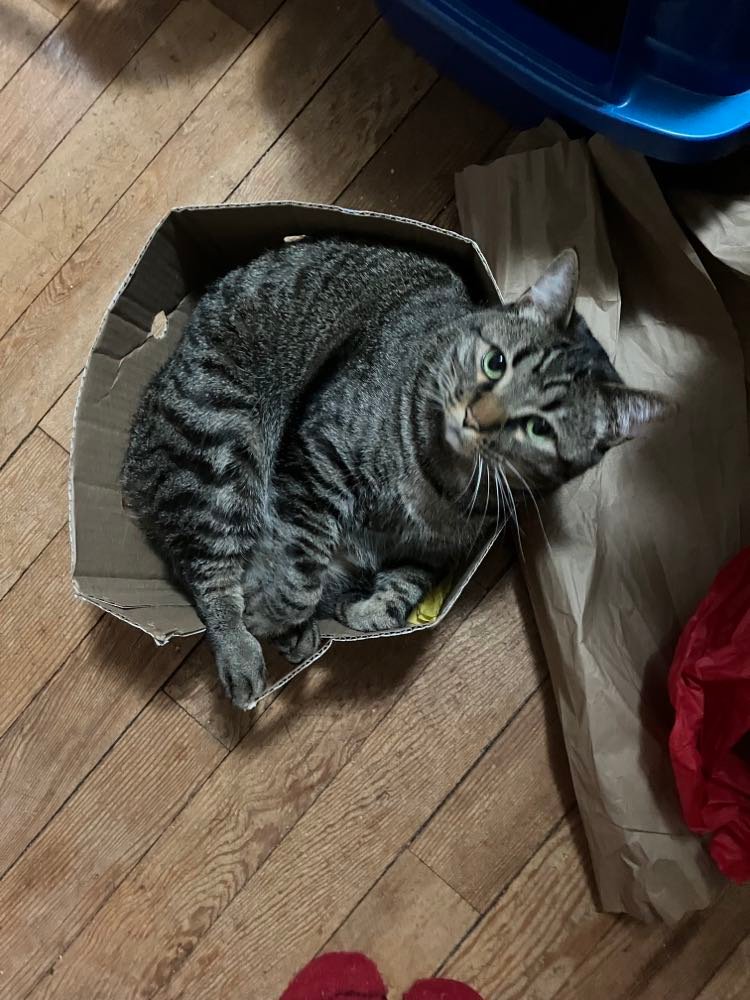
My cat jumps on my notebook
And interrupts this writing
She is happier to welcome me home
Than any man I’ve ever dated

My daughter’s boyfriend picks her up
at the airport and has made her dinner

If I am a failure at love with a partner
Or too smart or damaged or difficult
To love
For humans
At least my children have both found love
And if I were to choose me or them
Yes, I’d choose them

Is that why, Beloved?
Sacrifice to heal the next generation?
It is worth it.

And yet, that small child part of me
That even as a toddler thought the adults were unpredictable, dangerous, mean when drunk as they laughed.
She is angry at them, Beloved
She is angry at you, Beloved
Or at people
Or at the universe
She still believes in every cell, in her bone marrow, in the vast universe in her mind

that she too could be, should be

loved.

Climbing the walls

When my father died, he left me a will written more than 40 years earlier. He and my mother and my maternal grandparents were all pack rats. It was a house and two barns and ten years worth of some mail. A mess.

After working on it for a year, I felt like I was in knots and couldn’t relax. I was quite sick of counseling and wanted to do body work instead. I found a massage person and worked with him for over a year.

On the first visit he talked to me and then had me stand and walk around. “You are head forward and your toes are gripping the floor.” “I am not!” I said, lifting my toes. He was right, though. I had to relearn how to walk for two weeks, lifting my toes up.

I went to see him once last spring, knotted up again. I thought I was much better at unknotting during the work. I asked, “So am I pretty relaxed?”

He laughed. “You’re NEVER relaxed. Your baseline is 7/10 but you notice that you are tight when you get up to a 9 or 10.” He said that relaxed was 1-3.

I was hurt and annoyed. All that work and he’d never said that and never given me tools. I tried to contact him by email but he either didn’t remember what he said or just wouldn’t deal with it.

I was grumpy.

Meanwhile in clinic, I was teaching the breathing technique to try to relax, to go from sympathetic fight or flight, to parasympathetic. Breath in for a slow count of 4 seconds, then out for a slow count of 4 seconds. I thought, well, I should do it more too. I decide that when I wake up, I will do the breathing technique.

It promptly put me back to sleep. I have used slowing my breathing to go to sleep. I also had three years in college and after where I did daily zen meditation, facing the wall, on a zafu, for forty minutes. Add my flute playing and singing in chorus for the last 24 years and I can do the count way past four. My mind, however, is a very busy place, and meditation often felt like letting a cage full of crazy monkeys out. They all wanted attention. My understanding of zen is that I am supposed to let the monkeys show up but not hold on to them, converse with them, or let them hold the floor. Return to the breath.

When we wake up, we have a cortisol burst in the morning. It gets us going. I am pretty sure that I have some adrenaline too. The slowed breathing calms that right down. According to the pain clinics, twenty minutes of slowed breathing calms almost everyone down into the parasympathetic state. I don’t think that the high Adverse Childhood Experience people are used to parasympathetic. Honestly, looking at the movies and television and video games, I think our culture is not used to it either.

The breathing in the morning is working. My neck and shoulder muscles are more relaxed (in spite of computer use). Maybe I am down to a 5/10! That would be huge progress, right?

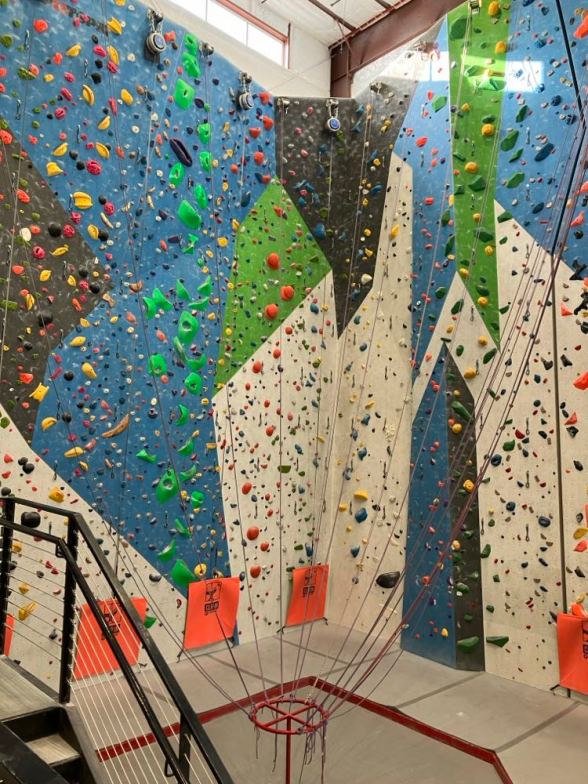
And my muscles love the climbing walls, too. Not that I am that good at it, but my muscles really like the intensity and focus. It is so different from clinic, where everything is focused on listening to the patient, typing as they talk, watching, sensing, trying to get a handle on what is happening with them. The wall is like clinic in focus, but my whole body is involved and there is lots of reaching and stretching out of that contained focus.

Sol Duc seems to be good at slow breathing. Cats go from 1/10 to 10/10 in just a heartbeat, or that’s my impression.

There is no alabaster in this house. Not a bit. Perhaps I will meditate on that.

For the Ragtag Daily Prompt: meditate and alabaster.

Adverse Childhood Experiences 15: Guidelines

I wrote Adverse Childhood Experiences 14: Hope quite a while ago.

The American Academy of Pediatrics has a guideline that physicians should introduce and screen for Adverse Childhood Experiences. The American Academy of Family Practice is skeptical, here: https://www.aafp.org/pubs/afp/issues/2014/1215/p822.html. Here are two more writeups: https://www.aafp.org/pubs/afp/issues/2020/0701/p55.html and https://www.aafp.org/pubs/fpm/blogs/inpractice/entry/screen_for_aces.html.

It is difficult to screen for ACE scores for the same reason that it is difficult to screen for domestic violence and to talk about end of life plans. These are difficult topics and everyone may be uncomfortable. Besides, what can we DO about it? If growing up in trauma wires someone’s brain differently, what do we do?

I don’t frame it as the person being “damaged”. Instead, I bring up the ACE score study and say that first I congratulate people for surviving their childhood. Good job! Congratulations! You have reached adulthood! Now what?

With a high ACE score comes increased risk of addictions (all of them), mental health diagnoses (same) and chronic disease. Is this a death sentence? Should we give up? No, I think there is a lot we can do. I frame this as having “survival” brain wiring instead of “Leave it to Beaver” brain wiring. The need to survive difficulties and untrustworthy adults during childhood can set up behavior patterns that extend into adulthood. Are there patterns that we want to change and that are not serving us as adults?

This week a person said that they blow up too easily. Ah, that is one that I had to work on for years. Medical training helps but also learning that anger often covers other feelings: grief, fear, shame. I had to work to uncover those feelings and learn to feel them instead of anger. Anger can function as a boundary in childhood homes where there are not adult role models, or where the adults behave one way when sober and an entirely different way when impaired and under the influence. There may be lip service to behave a certain way but if the adult doesn’t behave, it is pretty confusing. And then the adult may not remember or be in denial or try to blame someone else, including the child, for “causing” them to be impaired.

What if someone had a “normal” childhood but the trauma all hit as a young adult? I think adults can have trauma that changes the brain too. PTSD in non-military is most often caused by motor vehicle accidents. At least, that is what I was told in the last PTSD talk I went to. Now that overdose deaths have overtaken motor vehicle accidents as the top death by accident yearly in the US, I wonder if having a fentenyl death in the family causes PTSD. Certainly it causes trauma and grief and anger and shame.

I agree with the American Academy of Pediatrics that we should screen for Adverse Childhood Experiences. We need training in how to talk about it and how to respond. I have had people tell me that their childhood was fine and then later tell me that one or both parents were alcoholics. The “fine” childhood might not have been quite as fine as reported initially. One of the hallmarks of addiction families is denial: not happening, we don’t talk about it, everything is fine. Maybe it is not fine after all. If we can learn to talk to adults about the effects on children and help people to change even in small ways, I have hope that we will help children. We can’t prevent all trauma to children, but we can mitigate it. All the ACE scores rose during the Covid pandemic and we are still working on how to help each other and ourselves.

Here is another article: https://www.aafp.org/pubs/fpm/issues/2019/0300/p5.html.

Blessings.

For the Ragtag Daily Prompt: open wound.

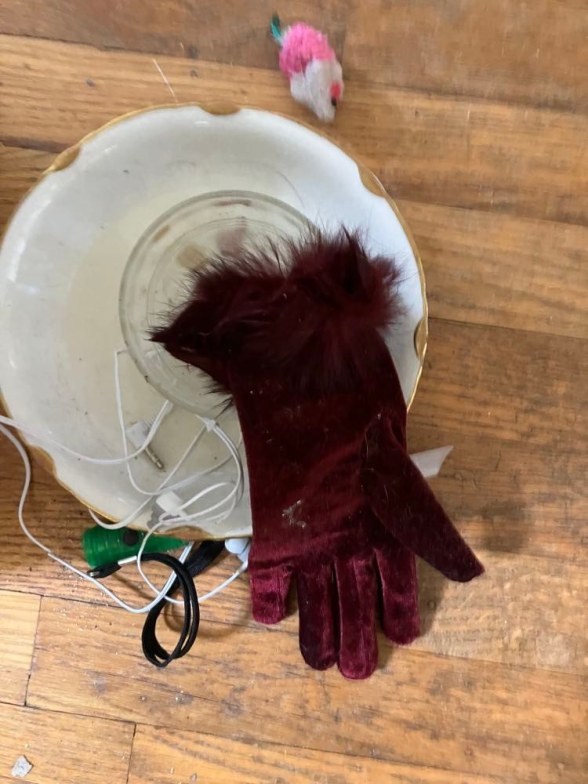
The photograph is one of Elwha’s cat art installations. He would pile toys on his bowl. Two bowels because I need to keep out the little ants. Sol Duc would do it too but not as often. I fed them in separate rooms. They would pile things on the bowl whether there was food left or not.

Elwha is still missing, sigh. That is a wound. The photographs are from March 2023.

Comfortable with monsters

I am comfortable with the monsters in my dreams.

I dream of monsters howling and I go to them. They could be sick or hurt or need help! I must go to them! And the monsters are very noisy but they are babies. Abandoned and dirty and dark and hungry and cold.

This has nothing to do with my childhood. Do you believe me?

I have a pack and supplies in the dream. I carry the monsters up up into the light. I feed them and bathe them and diaper them and wrap each one in a blanket and hold them. They howl until they are too tired to howl and then they sulk. At first they do not know how to respond to kindness and love. But they learn and grow and are beautiful.

I am not comfortable with the angels.

I dream that all the stars start falling and then I see that they are angels. I am so frightened, why must they fall? I don’t want to be an angel and then I am falling and crying. The angels are at perfect peace with falling but I am not. I don’t understand, Beloved. Why do the angels fall?

I ask the Beloved over and over. My poems are questions. Why, Beloved, why?

The angels fall down and up, over and over. They are good then bad, or labeled bad, then labeled good.

Just like people.

The angels are seen as black or white. But I see them as black on white heaven or white on black heaven, it doesn’t matter. Do not let the color be a label. And after someone falls, they are burnt in the sky. They are seen as a devil or a monster!

Angels falling, fallen, monsters.

And I am here for the monsters. Who are angels, in disguise.

_______________________

For the Ragtag Daily Prompt: disguise.

Shame and anger in overuse illnesses

“amongst those who treat addicts of any kind generally agree that anger and shame help no one and is actively counter-productive.”*

Wait.

I have to think about that statement.

I do not agree at all.

Ok, for the physician/ARNP/PAC, anger at the patient and shaming the patient are not good practice, don’t work, and could make them worse. BUT anger and shame come up.

In many patients.

Sometimes it goes like this with opioid overuse: the person shows up, gets on buprenorphine, and is clean.

It may be a long time since they have been “clean”.

One young man wants to know WHY I am treating him as an opioid overuse patient. “Why are you treating me like an addict?”

I try to be patient. I recommended that he go inpatient, because I don’t think we will cut through the denial outpatient. Very high risk of relapse. “You have been buying oxycodone on the street for more than ten years.”

“I’ve been buying it for back pain, not to party.”

“Did you ever see a doctor about the back pain?”

“Well, no.”

“Buying it illegally is one of the criteria of opiate overuse.”

“But I’m not an addict! I’ve never tried heroin! I have never used needles!”

“We can go through the criteria again.”

He shakes his head.

He is in denial. He is fine. He doesn’t need inpatient. He is super confident, gets work again, is super proud.

And then angry. “My family still won’t talk to me!”

“Um, yes.”

“I’m clean. I’m going to the stupid AA/NA groups! Though I don’t need to. I’m fine!”

“What have you noticed at the groups?”

“What a bunch of liars!” he says, angry. “There are people court ordered there and they are still using! I can tell. They are lying through their teeth!”

“Obvious, huh?”

“Yeah!”

“Did you ever lie while you were taking the oxycodone?”

Now he ducks his head and looks down. “Well, maybe. A little.”

“Do you think your family and friends could tell?”

He glances up at me and away. “Maybe.”

“Your family may be angry and may have trouble trusting you for a while.”

“But I’ve been clean for four months!”

“How many years did you tell untruths?”

“Well.”

Shame and anger. Anger from the family and old friends, who have heard the story before, who are not inclined to trust, who are hurt and sad. The first hurdle is getting clean, but that is only the first one. Repairing relationships takes time and some people may refuse and they have that right! Sometimes patients are shocked that now that they are clean, a relationship can’t be repaired. Or that it may take years to repair. My overuse folks are not exactly used to being patient. And sometimes as they realize how upset the family and friends are, they are very ashamed. And some are very sad, at years lost, and friendships, and loved ones. I have had at least one person disappear, to relapse, after describing introducing someone else to heroin. He died about two years later, in his forties.

Shame and anger definitely come up in overuse illness.

The above is not a single patient, but cobbled together from more than one.

______________________

*from an essay titled “F—ing yes, I’m a fatphobe” on everything2.com. Today there are two with that title. The quotation is from the second essay.

Qia and the monsters

Qia is three. She is scared.

“Don’t be scared or go to your room.”

Qia wants help. She is scared of the monster, FEAR, the giant monster, but her father won’t listen. She sniffles and tries, but she can’t stop crying. She goes to her room, because her father has turned his back. Her mother is drawing. They are busy. They don’t like it when she is scared.

FEAR is enormous and pushes into the room with her. She cries harder in her room with the door closed. No one can hear her now except FEAR. FEAR is large and has horrible drippy teeth and too many arms and keeps swatting at her. Qia gives up and lets FEAR swat her. She sits on the bed with her knees up and puts her head on her arms.

FEAR rages around her room.

After a while Qia is tired of crying. She lifts her head off her arms.

FEAR is smaller. Still bigger than her father, bigger than her mother, but just standing and looking at her. FEAR looks tired too.

Qia pats the bed beside her. FEAR hesitates and looks scared. Qia waits. FEAR shuffles over and sits beside her on the bed.

The room is very quiet. Qia finds a scrap of tissue and blows her nose. She looks sideways at FEAR.

FEAR’s head is down and FEAR seems to be crying. Qia reaches out and takes FEAR’s paw. One of the paws. There are a lot.

FEAR holds her hand tightly and then leans against her. Qia wiggles over a bit more to give FEAR room. FEAR sighs and then snuggles down onto the bed, massive drippy toothy head in Qia’s lap.

Qia strokes FEAR’s fur. It is very soft and dark purple.

FEAR is the first monster that Qia makes friends with. There are many more.

_________________

I was thinking about this story even before the Ragtag Daily Prompt: bugbear.

Negotiating peace

I spend a long day wrestling with love
arguing with myself back and forth
I am no angel descended from above
Those undeserving of my love make me wroth
yet my core argues that it still loves them
and agrees their cruelty’s beyond the pale
I snarl and cough and choke on bitter phlegm
Defend my self staying far away and hale
My core agrees I shall not tolerate abuse
Forgive yet we despair we’ll ever reconcile
They show no guilt nor shame for their misuse
My core says let them be: she is so mild
Negotiation done: Agreed. I may love those who I love
But I leave contact with them to the angels and Beloved.

_____________________

Sonnet 10

Walk with rabbits

Some days I can’t chuckle
when the news rolls in
my heart could buckle
shootings again

US gun habits
What’s up doc? Dagnabbit.

Shootings on the year of the rabbit
dancers dead as they celebrate
Why are guns such a habit?
I refuse to fill my heart with hate

Gun sales stab it
Year of the rabbit

Forgive but do not reconcile
let my resolve not buckle
mental health takes a while
let no demented chuckle

Fearful gun habits
online snared like rabbits

They argue they must defend their homes
daughter teacher on the line
fearful males online alone
think that guns will make them fine

Fear is a habit
Stop being rabbits

Leave your basement
Help another
Walk the pavement
Earth as mother

Make it a habit
To walk out with rabbits

_______________________

For the Ragtag Daily Prompt: chuckle.

Petty lie

What old deep wound causes you
to hurt me and other friends you’ve had
in past. What terrors hidden in that brew
make you glory in making others sad?
You boast to me of throwing people out
of your life forever, never friend
again. You don’t explain what crimes reroute
your heart to where you never speak again
to him or me. How many people discarded
from your heart and at what interval?
How many “friendships” have you departed?
And yet you boast that others call you spiritual.
“Friends forever,” you said. I wonder why
you tell yourself and me that petty lie.

______________________

Sonnet 8

trauma bunnies

We can work it out, the song says. But no, maybe not, not always.

Trauma bunnies together. Walking. Why would you walk with me, I am so down? Oh, you are a trauma bunny too. Walking on the beach, slowing down, looking at rocks. The walks get longer and longer. You bring FOOD and tell me I have food insecurity. I laugh. But it is true.

Comparing notes about childhood. You say yours was worse. Yours was terrifying. You ran away over and over and over, but came home. Small children need food and shelter. You get older. A neighbor says if you run away now, you will never stop running. You do not run away permanently. But you still run.

My childhood has no bruises to the skin. But the bruises to the heart are a nightmare. You finally say that I win, my childhood was worse. But I was not trying to win, I want to say. I was just telling you as you’ve told me.

We have both survived damage and coped. I have the resource of a grandmother with money who paid for medical school. I apply without telling my parents, after my mother says, “You don’t want to be a doctor. It’s too much work.” I am a poet, a writer, being a doctor so I can study people and have children and be certain there is food. Job security. And food security, true. With a husband or without.

You fight school all the way, but when you are told that you will be a failure or in jail, you decide that you will prove them wrong. You are still proving it. You won’t tell how you make your money, not to the locals, but the new car every two years tells them you have money. And it’s the wrong kind of car: a liberal car for a professed conservative. It stands out.

We start playing trauma bunnies after six months. You want me to come to dinner and I turn New Yorker and direct: is this a date? You are surprised. I set the boundaries and you think about it. And say yes.

But trauma bunnies is not as much fun as the beach. We get close and intimate and then you run. When you run, I run too: the other way. I don’t chase you. You haven’t experienced that before. You keep coming back. Why aren’t I chasing you? Because I too am a trauma bunny, remember?

Back and forth: close and far, together and apart. All holidays become times when you run, so that I will not be part of the family. I announce that I am now your mistress and you can’t be with my family either. Back and forth. Closer and then you refuse to come to my son’s wedding. Far again.

You say the summer will be very busy. You say your focus is music. You say we can go to one beach. One beach? For the whole summer? I run to europe and you are surprised. I ask, are you too busy to have me around? No, you say. But when I return, you have a friend staying with you. Intimacy disappears.

I am tired of it. My daughter is here.

At last I bring up sex: are we done with that?

No, you say. We have visitors.

Wouldn’t stop me, I say.

You say, sex is still on the table. Then you hem and haw. You say sex is not important, you can take or leave it. The friendship is more important. Well, the friendship is most important, but sex IS important to me and hello, it’s damn insulting of you to say you can take or leave it. Leave. This is all triggered by your yearly family get together. You need me at a distance so you won’t be tempted to invite me. You don’t want me there so I am distanced again.

And I am done, done, done. I dream of a small child, a wild woman, a woman doctor and someone new: a quiet woman. I think about the quiet woman and I ask the other three. Yes, they say.

The quiet woman is the adult. Not the mask of the professional, not the wild defense fighter, not the small child. The small child has healed. She is the connection to the Beloved, to the source of the poems. She blesses the others. The quiet woman takes over.

The quiet woman takes over. She says goodbye, farewell, Beloved keep you and bless you, you may contact me any time.

You are in your cave alone and do not answer.

You may end up there, alone, alone, alone. You want freedom most of all, you say. Another song: freedom is another word.

Yes it is. People can change and grow. But some want to and some don’t and sometimes we don’t grow at the same time.

Yes, says the quiet woman. Sometimes we don’t grow at the same time.

Fade to quiet.

______________________________

I took the photograph from a canoe at Lake Matinenda in Ontario, Canada.