For Cee’s Flower of the Day.
Spring plum

For Cee’s Flower of the Day.

An old friend died this morning. She was a college friend of my parents and has known me since birth. I will miss her quite terribly.
She and I took a road trip in September. She had lost thirty pounds, not on purpose. I thought I had better do the road trip while we could. We went from Michigan to visit five households of old friends in Wisconsin. I lived with her and her family for a year during college in Madison, Wisconsin in the early 1980s. She is a beloved mentor.
She also introduced me to all sorts of groups. She has an amazing record collection.
I went with her to see Warren Zevon in Madison.
The painting is my photograph of one of her oil paintings. It is about 3 by 5 feet and gorgeous.
Dona nobis pacem and much love.
For the Ragtag Daily Post: filter.

Templates in primary care medicine suck.
Why? The problem with templates in primary care medicine is they focus on getting a specific list of questions answered for something like ear pain or back pain. They miss the weird stuff. They miss the outliers.
I hated the templates when we got our first electronic record in the early 2000s. The doctors who liked computers spent a year picking the system. Then they trained all the clinics for one week and we all went live. One of the biggest problems was that they liked computers and talked the language. We didn’t. We quit asking questions within a week, because when we asked a question it 1. Was a user problem and 2. They treated us like we were stupid and 3. They answered in Geek, which we did not understand.
We quit asking questions. The nurses and I all filed for workman’s comp because our shoulders locked up. Our shoulders hurt. We figured out how to get the stupid thing to work. Every doctor and nurse and PAC and nurse practitioner worked to figure it out on our own.
Two years later, they set up some standards for use. We resisted again, because they gave us orders in Geek and anyhow, we had no respect for them and we didn’t care. Change what we were doing? After no support for two years? Good luck!
It took me two years and three months to get the system to write what I considered a good clinic note. I had contacted an outside specialist three months in and asked how our notes were.
“You want me to be honest?” he said.
“Yes.”
“They suck. They are useless.”
“That’s what I thought.” I went on fighting the system and hating it. I won, eventually. Parts of my note continued to suck, but I figured out how to work around the stupid templates and put in some REAL information.
Now wait, you say, is the template totally useless?
In some situations, like emergency rooms, it may be very useful. It helps keep a harried ER team with four people from a car wreck from missing something. And if you are an ENT, otolaryngologist, you do see a lot of ear and mouth and throat things, so templates may help. But I think they are terrible for primary care.
They are good for billing, though. If you have all the boxes checked, the insurance company pays, and you can move on to the next victim. The insurance companies pay more if you see more people in a day. That is why our administration said, “See people for one thing per visit.”
However, that is not ethical. Say it is a 70 year old diabetic with atrial fibrillation on coumadin with a bladder infection. You cannot just say bladder infection and slap them on sulfa. For one thing sulfa screws up the coumadin and puts them at risk for bleeding. For a second, diabetes can affect kidney function and so can age and you have to adjust antibiotic dose for lower kidney function. For a third, if their glucose levels are out of control, the infection may not be controlled by an antibiotic. It’s not one thing. And the average patient has 4 chronic disorders in a study way back in the early 2000s. That means some people have none, some people have eight or more and most people have 3-5. Hypertension, diabetes, toe fungus, chronic shoulder pain, heart disease, the list goes on and on.
In any visit, I am alert for the things the DON’T fit. One time I am doing a new patient visit for back pain and note that she is hoarse. I bug her about the hoarseness. She admits it is continuous and has been there for two months. I do two referrals, because continuous hoarseness can be laryngeal cancer.
When she returns, she thanks me. She has vocal cord polyps, not cancer, but needs laser surgery. “You didn’t have to do that but you did.” she says. And do I feel good about not ignoring it? The visit went over time, but I’d rather go over time than miss laryngeal cancer, right?
We were taught to let the patient talk. Open ended questions. They’ve done studies that doctors cut people off from telling their stories very very quickly. If you let people talk, sometimes they say something that doesn’t fit the template, and we have to pay attention. Sometimes a comment or a couple comments are the clue, the key, the thing that doesn’t fit. Don’t force it into the template. Pay attention instead.
_______________________
The very serious group of people is a county medical meeting, 2014.

Some diagnoses take months or even years. How can that be?
A patient comes to me with right shoulder pain. His pain is “out of proportion to the exam”. His shoulder exam does not fit with a rotator cuff tear, he has good range of motion, it is weird. I hospitalize him and ask orthopedics to see him.
The orthopedic surgeon agrees with me. It is not a musculoskeletal shoulder problem. We do xrays and labs. We do a chest xray as well as a shoulder xray because on the right side of the body, the recurrent laryngeal nerve goes down to the diaphragm and then returns to the shoulder and neck. So sometimes shoulder pain on the right is referred pain from a problem or tumor or pneumonia at the base of the lung.
His chest xray is normal.
We are having trouble controlling his pain even with morphine.
I call the general surgeon. My patient has some small lymph nodes in his supraclavicular spaces. We actually have lymph nodes all over, but many are hidden deep in muscles or under bone. We can feel them in the neck, the supraclavicular space, under each arm and in the groin.
The surgeon says there isn’t anything large enough to biopsy.
I call the oncologist in the next county. We are too small a rural hospital and do not have an oncologist at that time. I say, “I think he has cancer, but I can’t find it.” The oncologist listens to the story. He agrees. We do a chest and abdominal CT scan and some blood tests. The patient has had his colonoscopy. Nothing.
I send the patient to the oncologist’s bigger hospital. They can do some tests that I can’t. A bone scan and a PET scan.
The oncologist calls me. “I think you are right, but we can’t find it yet. Send him back when there is something to test.”
My patient goes home with pain medicine.
He then calls me every week or two. “It still hurts,” he says. “Please come in and let me do another exam,” I say. “No,” he says and hangs up. I am a Family Practice physician so his partner is also my patient. She comes in and rolls her eyes. “He complains, but he won’t come in!”
At last he shows up in the emergency room and now he has enlarged supraclavicular lymph nodes. The general surgeon biopsies them. It is an undifferentiated carcinoma. That means we don’t know where it is from. We don’t know the primary.
The oncologist says, “Send him down, so we can do the tests again.”
The patient is at home and refuses.
I call the oncologist back. “He’s refusing.”
“Oh.” says the oncologist. “Well, we can treat it with chemo blindly. We can try to figure out the primary and treat it more exactly. Or he can choose hospice.”
Ok, yes, three choices. I call and leave a message to go over the choices with him.
He comes up with a fourth choice: he refuses to talk to me at all.
I call his partner. “Yes,” she says, “He’s grumpy.”
“We are happy to help with whatever choice he makes.” I say.
“I’ll tell him.”
He continues to refuse to talk to me or the oncologist. Eventually he goes back to the emergency room and goes to hospice at the local nursing home.
I tell the oncologist. He comforts me. “Yes, sometimes we are pretty sure there is a cancer, but it has to get big enough to find.”
I am not comfortable with that but medicine is way more complex and messier than people realize. Sometimes it is really nice to have a patient with something where I know what it is AND it can be treated. Appendicitis. Gallstones. Strep throat.
But sometimes it is complicated and can take months or even years. Stay present and keep checking in.
Diagnostic quest.
_____________________
The boat is returning to the water after work in our boatyard. Healed and seaworthy.
For the Ragtag Daily Prompt: quest.

From Kai Tai Lagoon, three days ago. You will start to think it is sunny here. Nope, rain since.
For Cee’s Flower of the Day.


Taken two days ago at Kai Tai Lagoon.
For Cee’s Flower of the Day.

Would I do this? A nerve ablation for chronic pain?
Two people mentioned nerve ablation to me this week: one in the back and one in the knee. Would I do this?
Holy denervation, Batman. I’d like to think that I wouldn’t, but pain does suck.
The problem is that pain is information, even chronic pain. The current thinking in medicine is that chronic pain is some sort of glitch in the wiring or the brain where something keeps hurting even if we can’t see much of an injury.
Like grief or a broken heart or the death of a loved one.
Those pains can soften, but do they entirely go away? The death of loved ones doesn’t. It’s been a decade since my sister died of cancer and I still think of things that would make her howl with laughter. She understood me in a way that no one in the world does: ok, except for my children. My children are adults now and out in the world and observing other parenting and non-parenting and disastrous young adult choices. My son now has a high school classmate dead of opioid overdose. A topic for another essay.
Back to chronic pain. Medicine in the United States does patients a terrible disservice by talking about the spinal discs all the time. 99 times out of 100, the pain is NOT a disc. The back is very complicated, with 6 layers of muscles, and some of those muscles are only an inch long. They all have to work together in a fluid way. Often, we forget this. Our muscles try to obey us and we lock them into a terrible position and they try and try and try: and then tear and hurt.
Lock them? Yes. We have three main types of muscle: fast twitch fatigable, fast twitch non-fatigable and slow twitch. Slow twitch don’t get much attention in the United States MORE AND FASTER dysfunctional ADHD culture. Slow twitch muscles are the posture muscles. If you lock them in one position, they will stay there. Even when you get up from the computer or desk or bent over picking strawberries.
When the muscles lock, remember that they are all attached to bones. Every muscle attaches to at least two sites. Picture a muscle that crosses the knee joint locking into a shortened position. Now, do you think the knee moves normally? NO, it doesn’t. And if the muscle is tight and locked, the knee joint can be damaged by not being able to move freely.
Now, think about your back. You have seven cervical vertebrae, 12 thoracic and five lumbar. So 24 separate bones, and then other bones, like ribs, attached by tendons and ligaments and muscles. You pull a muscle in your lower back playing pickleball. It hurts. When the muscle is injured, it tightens up to protect itself. The surrounding muscles can tighten as well, and then that area doesn’t move right. The other muscles and joints have to attempt to take up the slack! They can’t move normally either! All too often I ask what people did when their back started hurting and all they did was take something to mask the pain and keep going.
Pretty dysfunctional.
So what do I want you to do with a new injury? RICE. Rest, ice, compression, elevation. Rest the muscle. It’s hurt. Ice for ten minute intervals in the first 48 hours, not heat. Heat increases bleeding and swelling. Muscles can bleed if they are torn. You have had a bruise sometime in your life, right? You won’t see a deep muscle bruise, and personally I have trouble looking at my own back. You may add heat after the first 48 hours. Usually the peak of swelling and bleeding is by 48 hours. Compression: if it is an ankle or an elbow, an ace wrap holds the joint still and reduces swelling. You can press ice on your back, or lie on an ice pack. Go ahead and shower but not super hot at first. Elevation for arms and legs: gravity helps reduce swelling and pain.
What if it’s been hurting for a year? Your blog was too late!
Check your posture first. If you have been avoiding moving a part of your body, you need help. If your posture is terrible, you really need help. Take breaks at the computer! Get up and walk! And see your primary care person. Physical therapy, occupational therapy, massage therapy. Pay attention to what makes the pain worse and what makes it better. Alcohol or pot might make if hurt less, but that’s not fixing the problem and could make it worse. Muscle relaxants are not great either. The muscle tightened up to keep from tearing, remember? And scar tissue can form in muscle. You need to work with someone to gently break down that scar tissue without tearing the muscle again. So muscle memory is for injuries too. If a muscle has been traumatized, it has scarring and it remembers. It may tear more easily and will tighten up more easily. Listen to your muscles. They do not just tighten with trauma, they also tighten with stress and are more at risk for injury. Learn how to reduce your stress, go into a parasympathetic relaxed mode, and help your muscles.
For long term chronic pain, I think of present injury, old injury and then brain and emotional injury. We are often afraid of injury, that we will be hurt, that it will hurt forever, that we will be disabled and be alone and starve. Our culture for the most part celebrates the young and strong and the survivors. I don’t think we have a “chronic pain day” where the whole country thanks the people who have chronic pain and work anyhow, to take care of each other and their families. Maybe we should have that. The emotional part of chronic pain must be addressed too.
I would be very cautious about having a nerve cut, or ablated. The exception for me is the abnormal heart pathways that cause arrythmias. Yes, I think ablating them is a good treatment, but we still try other things first. There can be complications of any surgery.
___________________
The photograph is me and my ex dancing at our wedding in 1989. Swing dancing is a delight and you have to not injure your partner or yourself! We noticed that even one drink would affect our dancing and our favorite place to dance was at Cabin John Park, which had no alcohol at all. Posture is important. I think the photographer on this one was my ex’s uncle but we also had a dance friend who took wonderful photographs.

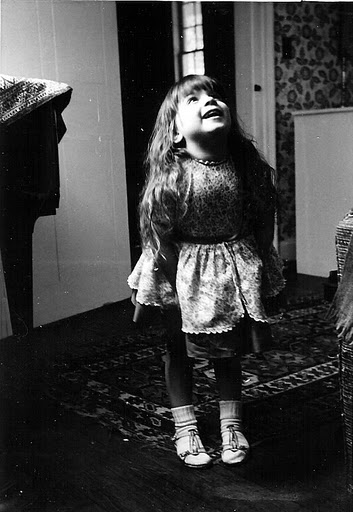
My son was an Extroverted Feeler when he was little. Let’s call him EF.
We move in the middle of his first grade. From Colorado to the Olympic Peninsula, arriving on December 31, 1999. Y2K. The computers do not stop the next day and the world does not implode. My mother has recurrent cancer.
He starts school. He is in a three year class in public school with two teachers. It is a first, second, third grade mixed class. There are fifty kids and he is starting in January.
His mother is bananas because she is trying to learn a whole new set of patients, phone numbers, specialists and local medical slang. His father hates moving and lies on the couch. His grandmother is not doing well. He doesn’t have any friends yet. He misses his Colorado friends and his teacher. He is gloomy.
His father takes him to get his hair cut.
They return and I nearly swallow my tongue. The EF has a triple mohawk. A central spike of hair, shaved on both sides, and then another spike on each side. He and his dad thought it up. I tell myself: it’s just hair, it’s just hair, it will grow back! Horrors.
Two weeks later the EF is cheering up a bit and has a friend. Why? Apparently the haircut garnered attention. Within a week, not only does every kid in his class know his name, but most of the parents do too. “Who is that kid with the triple mohawk?” The EF is very pleased.
He gets a triple mohawk once more. By now I am ok with it.
After that he gets normal haircuts. His grandmother dies, but he has some friends now. His mother is less bananas over time and his father knows the name of every checker at the grocery store and all the coffee shops and the golf pros.
There was a cartoon where a mother is telling her son not to stare at a person with a mohawk. “But mom, don’t they get mohawks so that people will stare?” Uh, good point!
____________________
For the Ragtag Daily Prompt: mohawk.

I have a Sea of Love poem, too.
Two versions. I am sure there are more. I hope you feel loved.
And a music video of the second:
BLIND WILDERNESS
in front of the garden gate - JezzieG
Discover and re-discover Mexico’s cuisine, culture and history through the recipes, backyard stories and other interesting findings of an expatriate in Canada
Or not, depending on my mood
All those moments will be lost in time, like tears in rain!
An onion has many layers. So have I!
Exploring the great outdoors one step at a time
Some of the creative paths that escaped from my brain!
Books, reading and more ... with an Australian focus ... written on Ngunnawal Country
Engaging in some lyrical athletics whilst painting pictures with words and pounding the pavement. I run; blog; write poetry; chase after my kids & drink coffee.
Coast-to-coast US bike tour
Generative AI
Climbing, Outdoors, Life!
imperfect pictures
Refugees welcome - Flüchtlinge willkommen I am teaching German to refugees. Ich unterrichte geflüchtete Menschen in der deutschen Sprache. I am writing this blog in English and German because my friends speak English and German. Ich schreibe auf Deutsch und Englisch, weil meine Freunde Deutsch und Englisch sprechen.
En fotoblogg
Books by author Diana Coombes
NEW FLOWERY JOURNEYS
in search of a better us
Personal Blog
Art from the Earth
𝖠𝗇𝗈𝗍𝗁𝖾𝗋 𝖶𝗈𝗋𝖽𝖯𝗋𝖾𝗌𝗌.𝖼𝗈𝗆 𝗌𝗂𝗍𝖾.
Taking the camera for a walk!!!
From the Existential to the Mundane - From Poetry to Prose
1 Man and His Bloody Dog
Homepage Engaging the World, Hearing the World and speaking for the World.
Anne M Bray's art blog, and then some.
My Personal Rants, Ravings, & Ruminations
 KO Rural Mad As Hell Blog
You must be logged in to post a comment.