crossroads

Regardless of how the vote goes, I will keep speaking up.

It is so painful to have woman after woman saying, “I have stories too.”

And to the “nice” men who say, “I can’t believe that sort of thing. I can’t read about it. It hurts too much.” YOU are silencing too. YOU are part of the problem. As long as YOU refuse to listen, refuse to speak up, refuse to read about it: YOU PRETEND TO YOURSELF THAT IT IS NOT HAPPENING TO YOUR WIFE, YOUR SISTER, YOUR MOTHER, YOUR DAUGHTER. YOU PRETEND THAT IT ONLY HAPPENS TO “THOSE” WOMEN, THAT THEY ARE FEW, THAT IF THEY HAD TAKEN PRECAUTIONS IT WOULD NOT HAVE HAPPENED, THAT YOU ARE PROTECTING “YOUR” WOMEN.

Speak up, “nice” men. Are you ASKING the women in your life? Or are you silencing them?

Sweet Honey in the Rock: Joanne Little.


Launch Day

beautiful

5000 Poppies's avatar5000 POPPIES

I cannot believe how quickly that time went.

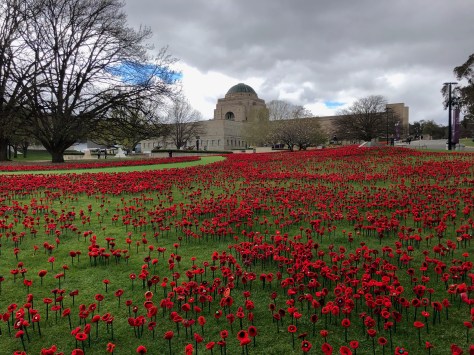
Today was the launch of our amazing tribute to the Fallen of WWI on the lawns of the Australian War Memorial in Canberra.  Nearly six years in the making, and just as Margy and I envisioned it at the AWM all that time ago.  And Phil’s spectacular embodiment of that vision is genius!

IMG_1736(1)

It feels like forever and no time at all.

62,000 beautiful handcrafted poppies … representing 62,000 lives lost in WWI.

IMG_1733

It is sobering.

And it is also sobering to walk through our field, and really feel the meaning behind every one of those blooms.

The depth of feeling that went into the making … handmade by our magnificent tribe from all over the world … with love, honour and respect.

And the stories that came with the blooms … some tragic, some heroic, some heartwarming, but all very, very…

View original post 106 more words

speaking up 3

Here are speaking up and speaking up 2.

More events in my life:

I am on the metro in Washington, DC. It is not rush hour. I am reading my book.

I suddenly realize  as the metro stops, my car is empty. I am the only one in the car. One man gets on. I am hyperalert. He walks down the car and sits next to me.

The car starts up. I stare at my book.

“Hi.” he says, “What’s your name?”

I don’t answer.

“C’mon. What’s your name?”

“I am reading my book. I don’t want to talk.”

“C’mon, baby, be nice.”

I stand up, purse and book. “Excuse me.” I step by him and stand at the metro car door. I get off that car at the next stop and move to the next one with people on it. Shaking with both the threat and anger, that I have to deal with this.

2. I take a dance class in Washington, DC. I work at the National Institute of Health. I leave my car at NIH and ride the metro.

One night I get off the metro at NIH and I am riding up the escalator, with my backpack.

A man, clearly drunk, steps up on the escalator beside me, and says “Hi, baby, what’s your name?”

“LEAVE ME ALONE!” I snarl and stomp up the escalator. It is dark and there are very few people at the stop and in the lot. I am in danger from this drunk.

I am walking fast at the top, away from the escalator, when I hear running steps behind me. WHACK! He takes a swing at me and runs off. He hits my backpack and not me. I am screaming at him.

He is gone. I run to my car, get in, and sit there, hands on the wheel. Shaking. There is a part of me that wonders what I would do if he crossed the road in front of my car.

My next class is not dance. I take tae kwon do.

3. I have used my tae kwon do once so far. Where? In first year medical school.

No way, you say.

Yes, way.

We have lecture after lecture in the same hall. We usually sit in the same places. I am newly married. The guy behind me starts tickling my neck during a lecture, with a pen. I twitch a couple times and then hear muffled giggles and realize that it’s the person behind me.

I stiffen and wait until I am really ready. Breathe. The tickle comes. I snap a basic block back and forward: and have his pen.

He SCREAMS!

The whole class turns towards us. The lecturer stops, staring. I am facing forward, holding the pen down low, not moving. He has the entire room staring at him, everyone but me. He doesn’t say a word. You could hear a …. pen…. drop.

The lecturer shakes his head and continues.

I keep the pen.

Just think, he’s a doctor.

I took the photograph when we were in Wisconsin. I went to UW Madison. I like being a badger.

The extroverted feeler and the teacher

For the Ragtag Daily Prompt: brace.

My sister was an extroverted feeler.

In fourth grade, she started getting sick a lot. My mother noticed a pattern. My sister was sick on Monday. She was avoiding school like crazy.

My parents were having difficulty figuring it out. EF’s grades were great. She was unhappy.

Then my parents went to a parent teacher conference.

My mother told this story: “The teacher said that EF came to her desk and asked to borrow a paper clip. Later, she came and asked to borrow a second paperclip. The teacher then produced the two paper clips. “Your daughter made braces with the paperclips. For her teeth!” The paperclips were bent.

“Um. Don’t you think that is sort of creative?” asked my mother.

“No.” said the teacher.

My mother would laugh telling the story and say, “After that, I pretty much let EF miss every Monday. I would not have wanted to go to school with that teacher either.”

The chances of a poet reaching us are slim

I wrote this after working at Madigan Army Hospital in 2009 for three months as a temporary doctor. I am posting it here because Shoreacres sent me this link about poetry and medicine.

____________________

I would pray if I could. It seems ludicrous to pray for a poet, but there it is.

It started with two soldiers. The Army was embedding a behavioral health specialists (the new politically correct term for mental health specialists) in units starting before 2010. Soldiers were trained in suicide prevention, instructed to stay with a buddy if they made any comments about suicide. A soldier was to walk his or her buddy directly to the behavioral health specialist or to to higher rank. As soldiers went on their fourth and fifth tours, post traumatic stress disorder, depression and traumatic brain injuries were rampant. Unfortunately, psychologists basically felt like they were putting Power Ranger band-aids on hemorrhaging brain arteries. It wasn’t working.

A soldier was accompanying a convoy in Iraq when an IED went off. Right through the bottom of a convoy truck. The driver died screaming from an arterial groin bleed. Two of the eight soldiers were killed. The truck was abandoned and the rest of the convoy got back to the safe (mostly) zone. That soldier had the glassed ghost look in her eyes and got quiet. The usual response was to avoid someone’s eyes and hope for the best, but another soldier wouldn’t let her alone. She kept asking, “Tell me. What happened?”

The first soldier finally snarled out part of the story.

The second soldier pinned a poem to her pillow, describing the event. Our first soldier came in screaming and threw the crumpled ball of paper at her chest. “That’s not what happened! That’s not how I felt! Not even close!”

“Well, what DID happen!” The rest of the unit tried to hide in plain sight or disappeared to the bathroom or got really interested in books or watching the same video over and over, but the two of them stood face to face and went at it. Words, not fists. The crumpled paper was retrieved, the poem rewritten. It took two weeks before soldier one suddenly said, “That’s it. That’s pretty good. For a poem.” But she was back, her gruff foul mouthed efficient self.

Of course it wouldn’t have gone anywhere if the behavioral health specialist hadn’t joked about it to his superiors. The Army was really desperate. In spite of all the work, the suicide rate was still challenging the combat death rate, and there just weren’t enough people to deploy.

The Army went looking for poets. Four were promptly deployed into units. Two of them turned out to be pretty useless, but the other two: the units thrived. Word started getting around. The poets were swamped with people from other units.

The recruiting campaign: “We want you, yes we do, poet show your heart so true!” was painful, but the Army did not care. And poets stepped forward from within the ranks! Don’t ask, don’t tell turned on it’s head. In spite of the medical community’s cries for waiting until more scientific studies were done, and the press and cartoonists drawing pictures recruiters welcoming wimpy pale asthenic writers with open arms, the Army embedded a poet in every unit, right beside the behavioral health specialist. Oh, of course they tried prose too. The academics had a field day fighting about why prose didn’t work. But it didn’t.

It’s the height of irony that we’re cut off with everything we need, except a poet. A water source, food, ammunition. We’re holding our position. Our back up poet is dead ten days ago, but our main poet got an IED blast. Traumatic brain injury, two weeks ago. We can’t get him out, of course. You would think someone would bleed if they were that bad, but he just can’t hold on to any memory. The soldiers tell him their stories, he struggles and tries, but he can barely hold on to one line. Can’t read, though he can write. Can’t see very well either.

The whole unit is starting to look glass-eyed and haunted. Smith asked to go in the jail yesterday and for the door to be closed. He promptly started screaming. It got quiet after a while so they went in. He was sitting on bunk. “Ok.” he said. “I might come back tomorrow.” Some soldiers are writing their own limericks or free verse. It’s ironic that it hurts morale so much, knowing there’s help available. Knowing the chances of a poet reaching us in time are very slim.

________________________

I will use this for the Ragtag Daily Prompt: comeback.