walls fall down

small beloved that I love
with my small body and soul
come in the yard and play with me
walls fall down

big Beloved that I love
that is all inside and out
come outside and play with me
walls fall down

small beloved that I love
you don’t love me back
I will love you anyhow
walls fall down

big Beloved that I love
loves me back no matter what
my heart opens like a door
walls fall down

small beloved that I love
blessings on your life
I will long to see your face
walls fall down

big Beloved that I love
let all walk in peace
loving kindness, safe and free
walls fall down


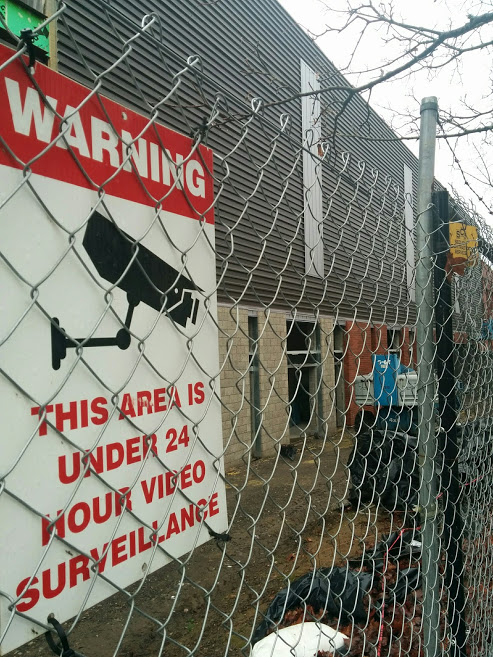
I took the photograph in Portland, Oregon. Walls… but this wall is around a school that is being rebuilt and the fence is to keep people out of the construction site, safe, and to protect the machinery and supplies for the repair. How do we balance safety and freedom, growth and kindness?
Reveal

The bird napping in the tree is a great blue heron. In the last two posts, the heron had its head tucked under its wing. I did not try to get closer because I did not want to disturb the nap any more. The clue from a distance was that the heron is only about 30 feet up in the tree and looked huge: too big for an owl or a hawk and not an eagle.

The Kai Tai Lagoon Nature Park is right down the hill from my house, about 5 blocks, and near Safeway and two blocks from our busiest road. And we have lots of birds….

Pain as a vital sign

A recent article in the Family Practice News says that a survey of 225 physicians reveals that 33% of them think that the opioid crisis in the US is caused by over prescribing opioids. 24% said aggressive patient drug seeking and 18% said it is due to drug dealers. How quickly things change.

In 1996 pain was declared the fifth vital sign, after temperature,  pulse (heart rate), respiration rate and blood pressure. I disagreed with it because it focused on pain, by telling the nurses in the hospital and the outpatient providers to always to ask about pain. I thought it would be better to focus on level of comfort than pain. I thought we were using opioids far too freely and I thought that patients were getting addicted. The pain specialists said that we had to treat pain, and we were given very few tools other than opioids. Primary care providers were told that they could be sued for too much or too little pain medicine.

I also disagreed with it because pain is NOT a vital sign. That is, the level of pain does not correlate with illness. If a person has a high fever of 104 I am sure they are sick, a fast or very slow heart rate, a blood pressure too high or two low, they are breathing too fast: these are vital signs. They often correlate to illness and help us decide if this is outpatient, urgent or emergent. But pain does not. A chronic pain patient may have a pain level of 8/10 and yet not be an emergency or in a life-threatening state at all. That does not mean that they are lying or that we don’t wish to help with pain.

In June, 2016, the American Medical Association recommended dropping pain as a vital sign. https://www.painnewsnetwork.org/stories/2016/6/16/ama-drops-pain-as-vital-sign. The Joint Commission for Hospital Accreditation dropped pain as a vital sign in August, 2016. https://www.jointcommission.org/joint_commission_statement_on_pain_management/

Why? Not only were people getting addicted to opiates, but they were and are dying of unintentional overdoses: sedation from opiates with alcohol, with anxiety medicines such as benzodiazepines, with soma, with sleep medicines such as ambien and zolpidem. If the person is sedated enough, they stop breathing and die. The CDC declared an epidemic of unintentional overdoses in 2012: https://www.cdc.gov/mmwr/preview/mmwrhtml/mm6101a3.htm and said that more US citizens were dying of prescription medicines taken as instructed then from motor vehicle accidents and guns and illegal drugs.

So the poem below and a second poem I will post tomorrow reflect how I thought about pain as a vital sign. It is not a vital sign, because a high pain level does not tell me if the person is critically ill and may die. It does not correlate. Pain matters and we want to treat it, but the first responsibility is “do not harm”. Letting people get addicted and killing some is harm.

Also, opioids have limited effectiveness and high risk for chronic pain. I have worked with  The University of Washington Pain and Addiction Clinic since 2010 via telemedicine. They say that average improvement of chronic pain with opioids is about 30%. Higher and higher doses do not help and increase the risk of overdose and death. And the risk of addiction.

I think of pain as information. Studies of fibromyalgia patients with functional MRI of the brain show that they are not lying about their pain. In a study normal and fibromyalgia patients were given the same pain stimulus on the hand. The normal patients said that they felt 3-4/10 pain. The fibromyalgia patients felt 7-8/10 pain with the same stimulus and the pain centers lit up correspondingly more in their brains. So they are not lying.

Why would opioids only lower chronic pain about 30% even with higher doses? The brain considers pain important information. We need to snatch our finger away from a flame, stop if we smash our toe, deal with a broken bone. I think of opioids like noise cancelling headphones. Say you are listening to music. You put on headphones/take round the clock opioids. Your brain automatically turns up the gain: the music volume or the pain sensors. Now it hurts again. You take more. The brain turns up the gain. Now: take the noise cancelling headphones off. The music/pain is too loud and it hurts! With music we can turn it down, but the brain cannot adjust the gain for pain quickly.

We do not understand the shift from acute pain to chronic pain, yet. The shift is in the brain. I think that we are too quick to mask and block pain rather than use the information. Now the recommendations for opioids are to only use them for 3-5 days for acute pain and injury. For years I have said with any opioid prescription: try not to take them around the clock and try to decrease the use as soon as possible. Some people get addicted. Be careful.

If we don’t hand people a pill for pain, what can we do? There are more and more therapies. Jon Kabot Zinn’s 30 years of studying mindfulness meditation is very important. His chronic pain classes reduce pain by an average of 50%: better than opiates. Pain and stress hormones drop by 50% in a study of a one hour massage. Massage, physical therapy, chiropracty and acupuncture: different people respond to different modalities. Above all, reassuring people that the level of pain in chronic pain does not correlate to the level of illness or ongoing damage. And pain is composed of at least three parts: the sharp nocioceptive pain, nerve pain (neuropathic) and emotional pain. We must address the emotional part too. We have no tool at this time to sort the pain into the three categories. My rule is that I always address all three. That does not mean every person needs a counselor or psychiatrist. It means that we must have time to discuss stress and discuss life events and check in about coping.

In the survey of 225 providers, 50% estimated that they prescribe opioids to fewer than 10% of their patients. 38% said less than half. 12% estimated that they prescribe opioids to more than half their patients. The survey included US primary care, emergency department and pain management physicians.

Handing people a pill is quicker. But we can do better and primary care must have the time to really help people with pain.

Vital Signs I

In the hospital now
I am told we have a new
Vital sign
Like blood pressure and pulse
We are to measure
Pain
And always treat it

Sometimes I wonder

Mr. X is in the ICU
I tell his family
He may die

On a scale of one to ten
What is his wife’s pain?
His daughter’s
We are not treating them
Only Mr. X

We try to suppress pain
Signals from our nerves
Physical pain is easier

I think of our great forests
We suppressed fire

And that was wrong
If fire is suppressed
Undergrowth builds up
Fuel levels rise
Fire comes
Rages out of control
All is destroyed

If fires burn
More naturally
More regularly
What is left?

At first it looks desolate
The tall trees are burnt
Around their bases
But they live
Adapted to the fire
Majestic pines
Revealed
Would our values were as clear

Some pines
Seeds
Pinecones
Will only germinate
In fire
When the undergrowth
Is cleared
Conditions are right
For new growth

Perhaps pain is our fire
Grief is our fire

If we block pain
Where does it go?
Does the fuel build?

I wonder if the tall pines
Fear fire
Would they avoid it
If they could

Perhaps suppression
Is not the answer

Perhaps we can change
Remain present
Acknowledge pain
As normal
As joy

Perhaps if I
Step into the fire
I can remain
Present
For you

And you will be
Less alone
Less afraid

I open my doors

Let the fire burn

poem written before 2009

CDC guidelines for treating chronic pain: https://www.cdc.gov/drugoverdose/pdf/guidelines_factsheet-a.pdf

March for people

My daughter and I marched yesterday.

She decided to come home from college for the weekend, planning to leave Saturday night. I decided not to go to the Seattle Womxn’s march, but do the Port Townsend one and asked her to join me.

We went out to breakfast and then to our small downtown. I no longer have television and look at news sites daily though a bit erratically, so neither of us had a pink hat. I wore my Mad As Hell Doctors t-shirt, my lab coat from working at the National Institutes of Health with the National Cancer Institute Patch, my Rotary name badge and pins gathered from going across the country trying to get medicare for all, single payer health care, from 2009 until now.

to womxn'smarch 089.JPG

Four bus loads went from our county to the Seattle march. We heard that the Bainbridge ferry was FULL. That is, they couldn’t not take any more walk on people. Another thirty people or more flew to the Washington DC march. And in Port Townsend, my guess is that we still had 200-300 people, women, men and children, people in wheelchairs, babies, gay, lesbian, straight, bi, trans, that marched from a small park downtown to the Haller Fountain. Galetea, naked statue at the fountain, sported a pussy hat.

to womxn'smarch 104.JPG

Our local organizer spoke and our House Representative, Derek Kilmer.

to-womxnsmarch-139

Older women spoke about demonstrating over and over in their lives. A friend of mine called me up to help her sing Holly Near’s Singing for Our Lives, making up new verses on the fly. They invited people to speak.

to womxn'smarch 152.JPG

I spoke: “I am one of your local doctors. I want to be able to treat anyone who comes to my clinic. We are one nation: health care for all. No discrimination: medicare for all.”

to womxn'smarch 157.JPG

to womxn'smarch 114.JPG

to womxn'smarch 150.JPG

Home then, and tired. My daughter has decided she wants to learn guitar, to play while people sing. I taught her basic chords and basic strumming. We sang Jamaica Farewell. She picks it up immediately, after all of those years of viola. And she will take one of my father’s guitars back to college.

And this is amazing: https://www.nytimes.com/interactive/2017/01/21/world/womens-march-pictures.html?smid=fb-share

Blessings all around.

Physicians for a National Health Care Program: http://www.pnhp.org/

https://dailypost.wordpress.com/prompts/successful/